Dog Crate vs Kennel: How to Choose for Your Dog
A dog crate is usually a small indoor den and a dog kennel is usually a larger outdoor enclosure, but retailers blur the terms. Here is how to choose by situation, size and material.
Petful is reader supported. As an affiliate of platforms like Amazon and Chewy, we may earn a commission when you buy through links on this page. There is no extra cost to you.
Dog crate vs kennel comes down to where your dog will spend the time. A dog crate is a small enclosed den, usually indoors, used for house training, rest and travel, while a dog kennel is usually a larger outdoor run or panel enclosure; many stores also label plastic travel crates as kennels, so choose by where the dog will be and size it so the dog can stand, turn around and lie down.
Below you will find a side-by-side comparison, the main crate types and metals, outdoor kennel options, a situation-by-situation chooser and a sizing method that works with any brand. Four products sold at Chewy serve as concrete examples of each option.

Sign up for expert-backed reviews and safety alerts all in one place.
Compare dog crate vs kennel
A dog crate is an indoor enclosure sized to the dog's body, with a floor pan and a latching door, meant for rest, house training and short trips. A dog kennel is a bigger outdoor run built from panels, with room to walk around and get out of the weather. The MidWest LifeStages Double Door Collapsible Wire Dog Crate, 42 inch is the textbook crate: Chewy lists a divider panel for growing puppies, a leak-proof pan, a Paw Block latch guard and a fold-flat design with a carry handle, at about $124.99 at the time of writing.
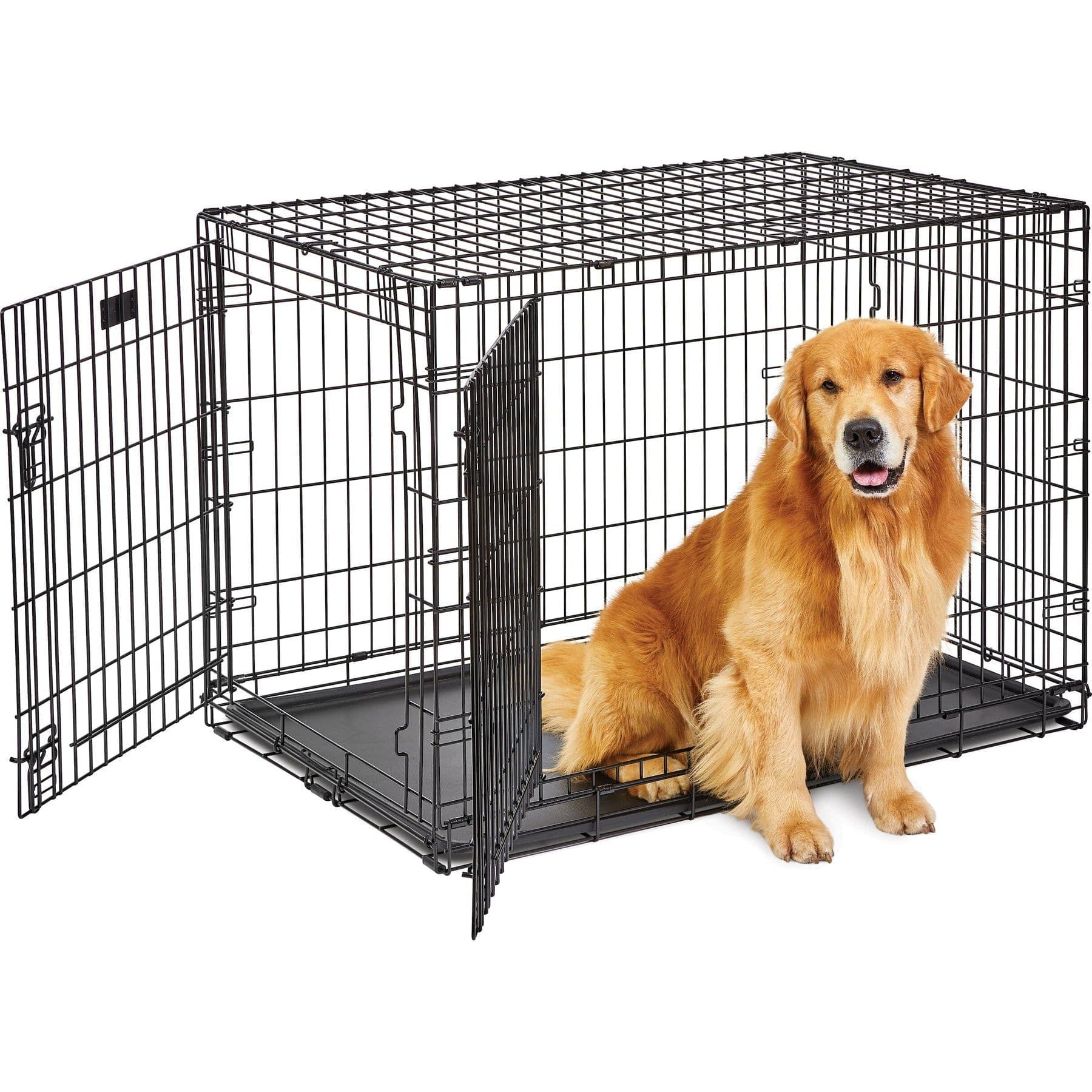
Chewy lists a divider panel for growing puppies, a leak-proof pan, a Paw Block latch guard and a fold-flat design with a carry handle, which makes it the standard house-training crate example.
Petful may earn a commission when you click through to Chewy, at no extra cost to you.
The difference between a dog crate and a kennel gets muddy at the store. Retailers call plastic crates kennels, so a "travel kennel" works as a crate, and some sellers describe large wire crates as "kennel crates." When you compare listings, read the dimensions and the intended setting rather than the product name.
| Where it lives | Enclosure type | Portability | Best uses | Sizing rule | Price range |
|---|---|---|---|---|---|
| Dog crate: indoors, plus the car for plastic models | Wire, plastic, soft-sided, furniture-style or heavy-duty den, for example the MidWest LifeStages Double Door Collapsible Wire Dog Crate, 42 inch | High: folds flat or lifts with a handle | House training, sleep, rest, vet and car trips | Room to stand, turn around and lie down; nose to tail length plus 2 to 4 inches | About $46 to $154 for the examples here |
| Dog kennel: outdoors in a yard, patio or barn | Welded wire panel run, often with a roof, for example the Zeus & Ruta All-Weather Dog Kennel, Grey | Low: assembled in place, often staked down | Supervised outdoor daytime time, multi-dog play space | Room to walk, play and rest, with shade and water | About $230 for the example here |
- 1A dog crate is a small enclosed den, usually indoors, used for house training, rest and travel, while a dog kennel is usually a larger outdoor run or panel enclosure; many stores also label plastic travel crates as kennels, so choose by where the dog will be and size it so the dog can stand, turn around and lie down.
- 2Measure nose to tail length plus 2 to 4 inches to set crate length, then check height with the dog sitting.
- 3For separation anxiety or an escape artist, a heavy-duty steel crate and a slower training plan matter more than the label on the box.
Indoor dog crates by type: wire, plastic, soft, furniture and heavy duty
Indoor crates come in five main types, and the material decides how strong, portable and good-looking each one is. Our dog crate guide covers what to put inside, where to place it and whether to leave water in during the day.
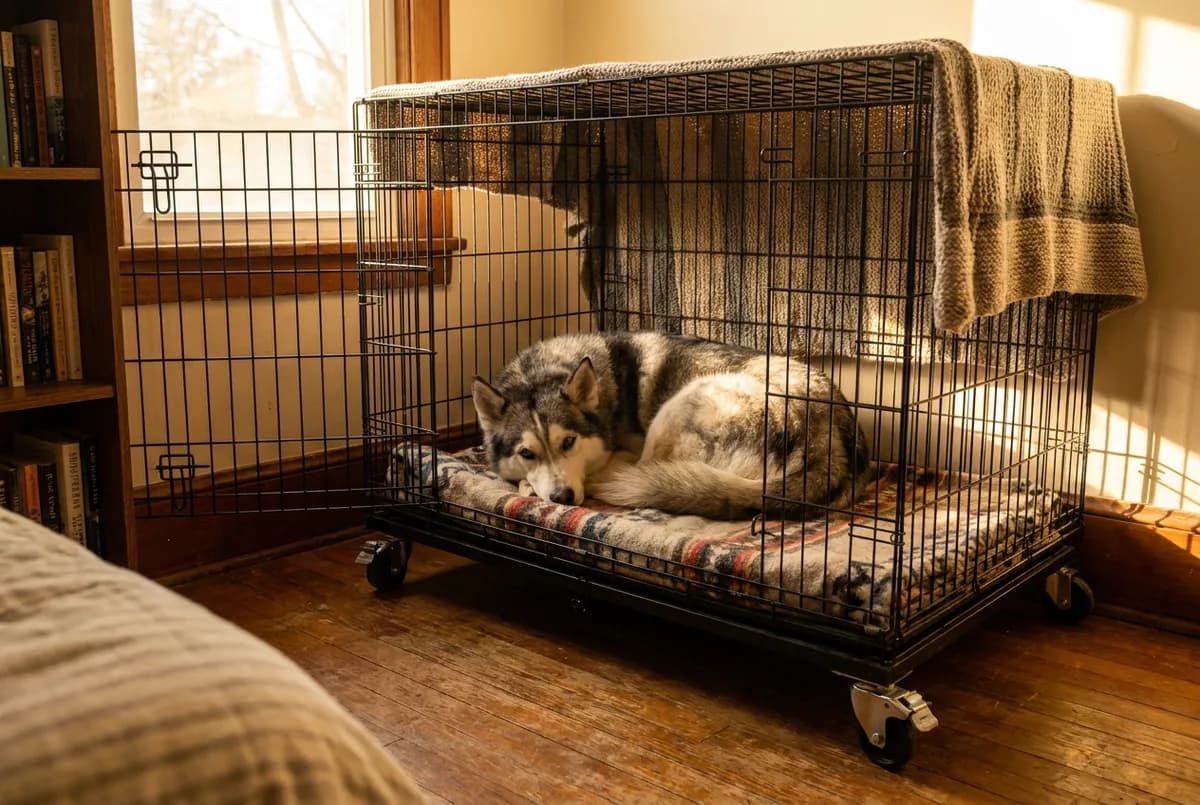
- Wire crate: the most common indoor crate, it folds flat, ventilates well and lets the dog see the room. Most include a removable pan and a divider.
- Plastic crate: a hard shell with a wire door. Retailers usually call it a kennel, and it doubles as a travel crate for car and vet trips.
- Soft-sided crate: fabric stretched over a light frame keeps it easy to carry and fold. It suits calm, crate-trained dogs on hotel stays and is the wrong choice for chewers.
- Furniture-style crate: wood crates built as end tables or consoles blend into a room, and WebVet compares furniture-style dog crates by style. Wood can be chewed, so they suit settled adults.
- Heavy-duty crate: this type uses thicker steel tubing, reinforced latches and often casters, for strong dogs and escape artists.
The LEMBERI Heavy Duty Dog Crate, 38 Inch is a clear heavy-duty example. Chewy lists heavy-duty alloy steel construction, a double-door design, a slide-out tray under the floor grate and four lockable caster wheels, and markets it for large or strong dogs and anxious chewers. It sells for about $153.98 at Chewy at the time of writing; WebVet ranks more heavy-duty dog crates for escape-prone dogs.
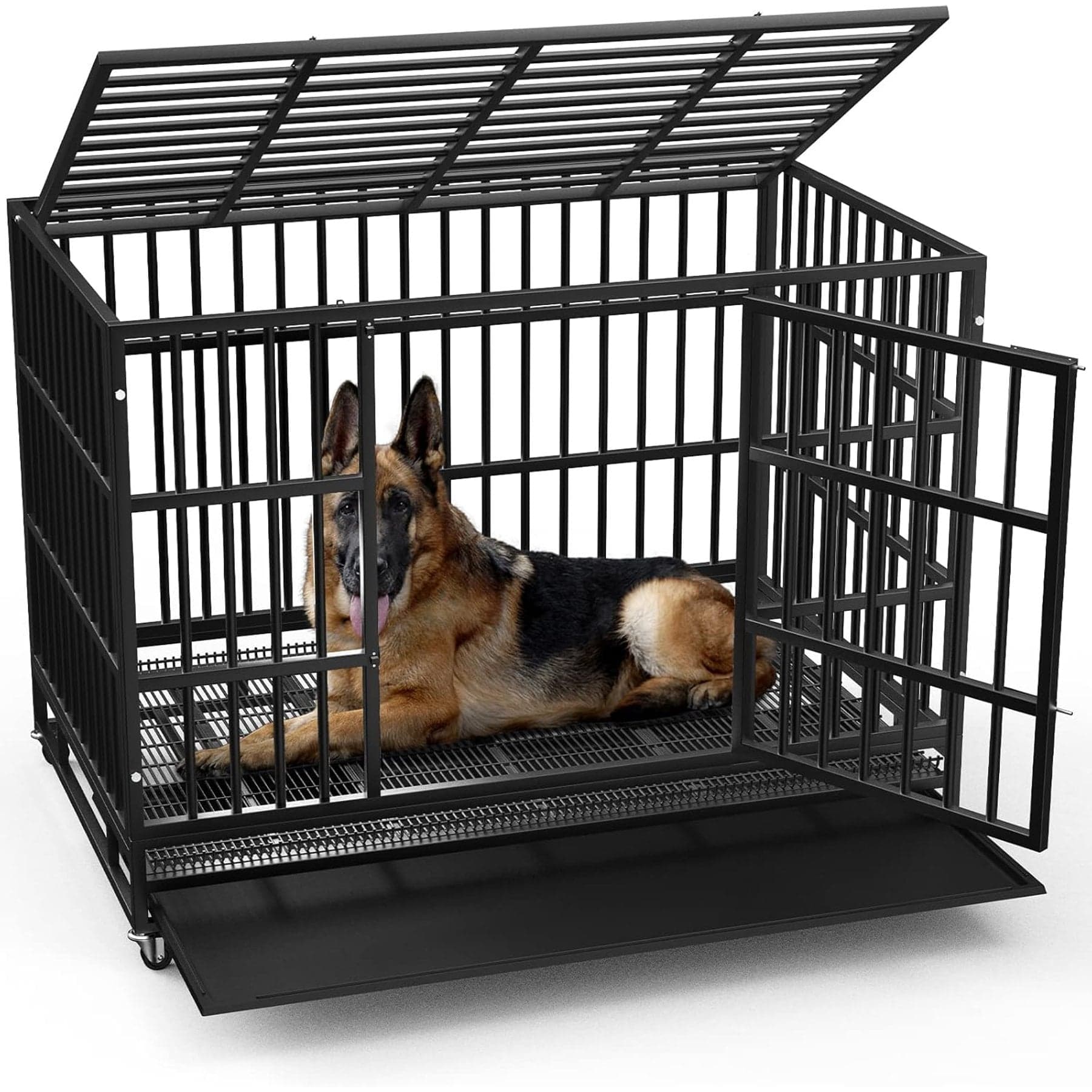
Chewy lists alloy steel construction, a double-door design, a slide-out tray under the floor grate and four lockable caster wheels, and markets it for large or strong dogs and anxious chewers.
Petful may earn a commission when you click through to Chewy, at no extra cost to you.
What kind of metal are dog crates made of?
Most metal dog crates are made of steel. Standard wire crates use steel wire with a coated finish to slow rust, while heavy-duty models use thicker steel or alloy steel tubing with welded joints and stronger latches. Steel crates are heavier than plastic, but they resist bending and chewing, which matters for powerful dogs and determined escape artists.
If you already know you want an indoor crate and just need a shortlist, WebVet keeps a vet-reviewed list of the best dog crates across these types.
Outdoor dog kennels and runs
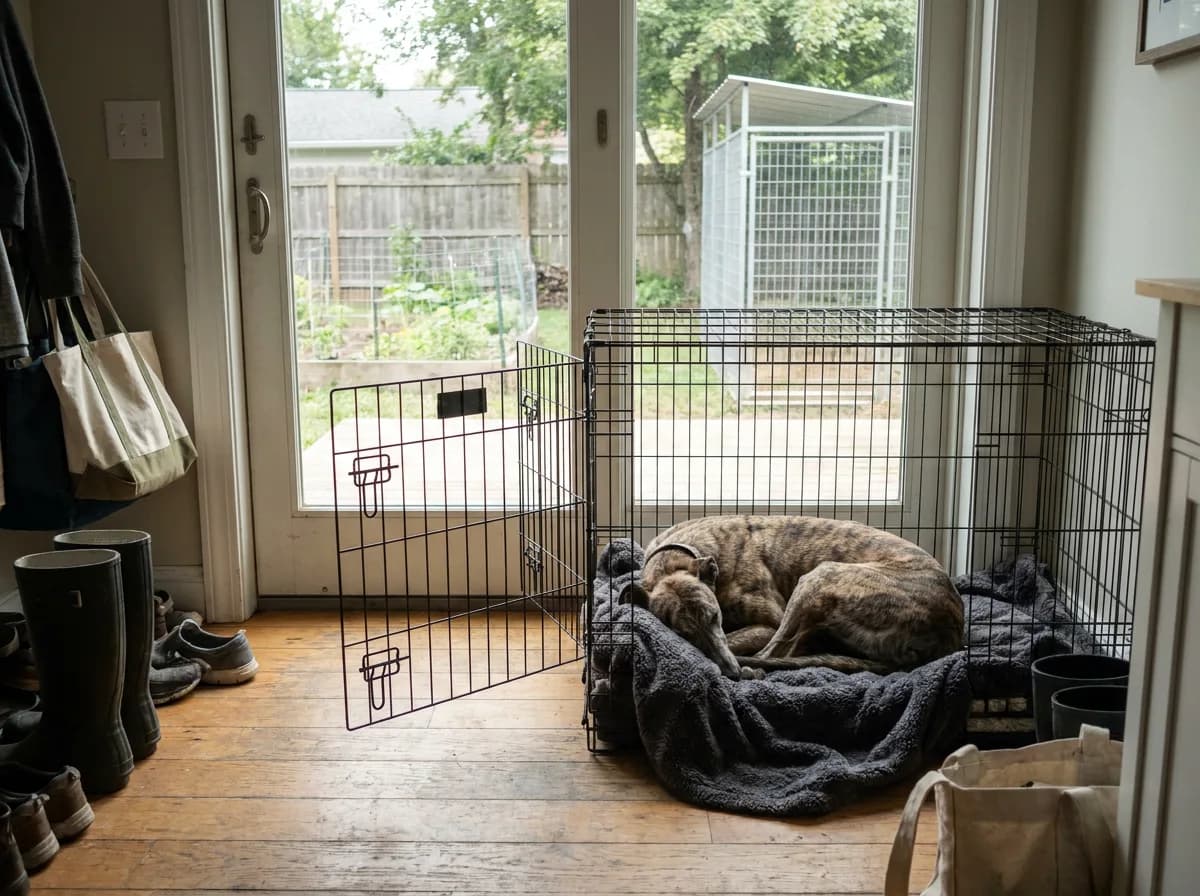
An outdoor kennel gives a dog supervised fresh-air time in a secure space, which suits large, active dogs that need more room than an indoor crate offers. Our roundup of the best outdoor dog kennels compares sizes and styles in depth.
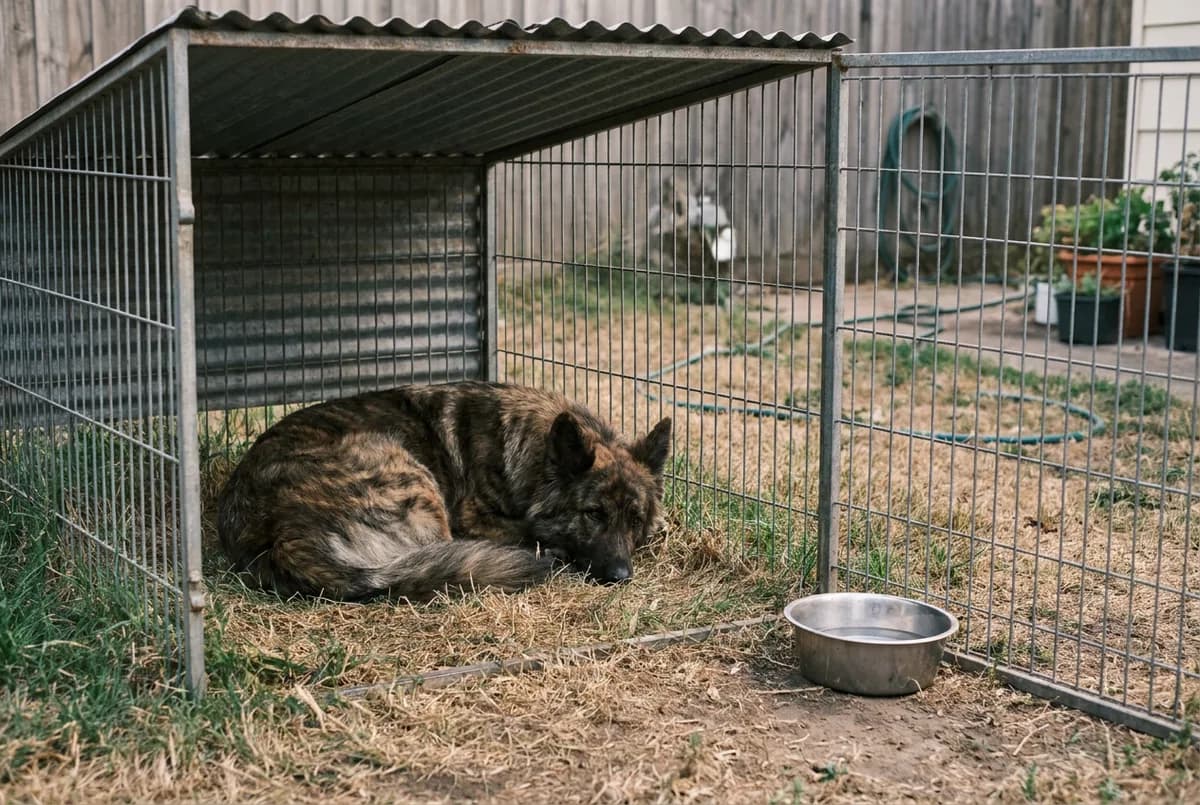
- An outdoor kennel is for outdoor daytime use while someone is home, not for nights or bad weather. Provide shade, a raised shelter out of wind and rain, and fresh water that cannot tip over. Bring the dog inside in heat waves, freezing weather or storms.
What are the different types of dog kennels?
The main types of dog kennels are panel kennels, chain-link runs, covered all-weather kennels, plastic kennels and boarding kennels. Panel and chain-link kennels are outdoor enclosures, a plastic kennel is really a hard-sided travel crate, and a boarding kennel is a facility rather than a product.
- Panel kennel: welded wire or steel panels clamped into a square or rectangle, often with a roof.
- Chain-link dog run: a long, narrow fenced run, good for dogs that need space to move.
- Covered all-weather kennel: a panel kennel with a roof and coated metal for sun and rain.
- Plastic kennel: the retail name for a hard-shell crate used indoors and in the car.
- Boarding kennel: a business that houses dogs while owners travel.
What is a dog kennel?
A dog kennel is an enclosure, usually outdoors, that is larger than a crate and lets a dog stand, walk and rest in a secured space. The word also covers a boarding business and, in store listings, plastic travel crates. Kennels are not a substitute for indoor living; they are a safe place for part of the day.
Panel kennel example
The Zeus & Ruta All-Weather Dog Kennel, Grey is a modular welded wire panel kennel with a roof, about $230 at Chewy at the time of writing. Chewy lists a rust, corrosion and fade resistant epoxy-coated structure, ground-nail and screw reinforcement, and clamps that let owners reshape it. The catalog text does not give its dimensions, so check the footprint on the listing before you order.
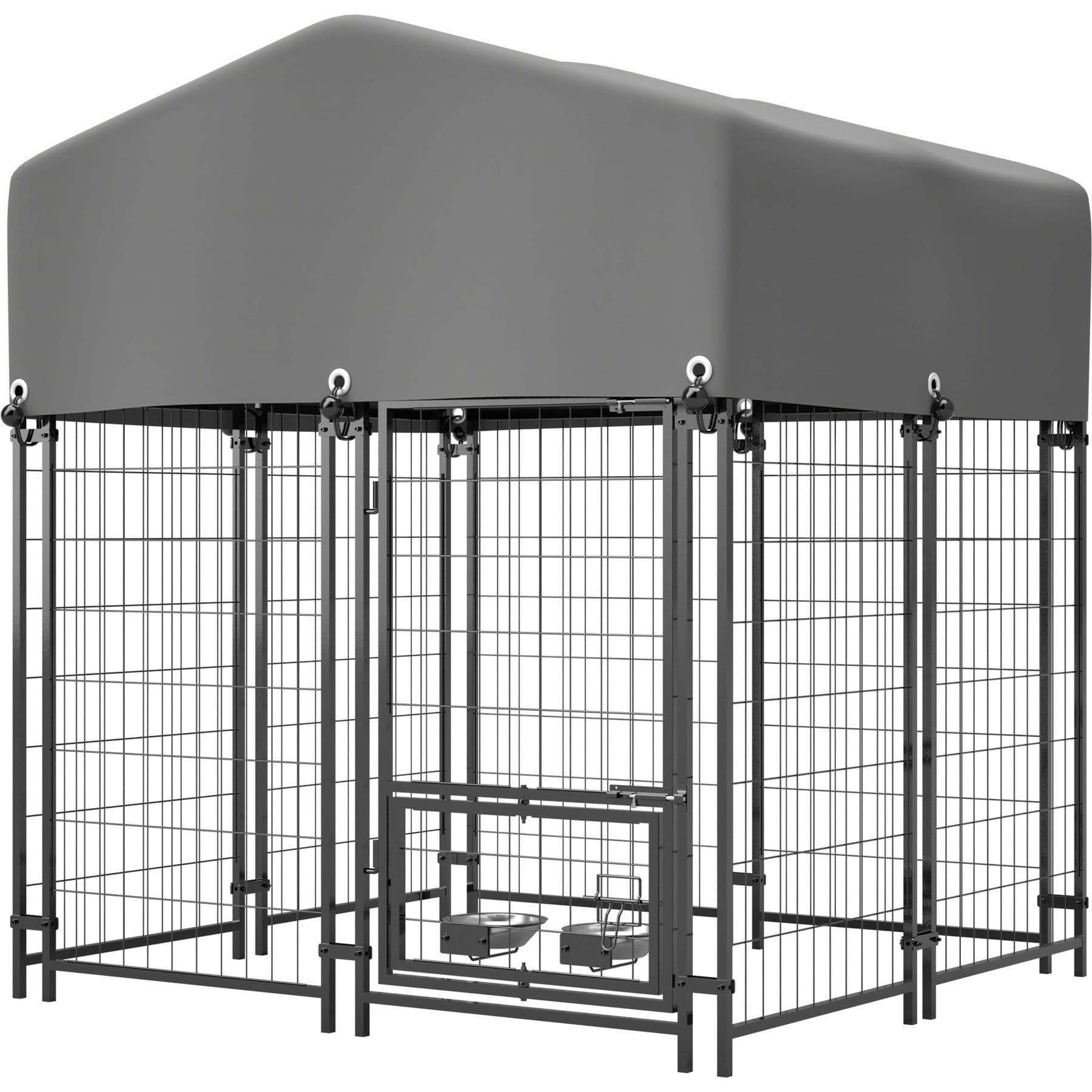
Chewy lists a rust, corrosion and fade resistant epoxy-coated welded wire structure and roof, ground-nail and screw reinforcement, and clamps that let owners reshape it or join units.
Petful may earn a commission when you click through to Chewy, at no extra cost to you.
Because those clamps join units, one panel kennel can grow into a run for 2 dogs. That is usually a better route than a double-compartment crate, which splits one indoor frame into two small compartments and gives neither dog room to move.
Travel: plastic crate or kennel for car and vet trips
For car and vet trips, a plastic crate (the item stores call a travel kennel) is usually easier than wire: the hard shell blocks drafts, contains accidents and is simple to carry. Our guide to choosing a travel dog crate covers fit, ventilation and how to strap one in.
Before a car trip, check these points on any plastic crate or kennel:
- Fit: the dog can stand, turn around and lie down, but cannot slide from end to end when you brake.
- Ventilation: openings on at least two sides so air moves even when the crate sits against a seat back.
- Doors and latches: a metal door that closes on both pins, and a second door or top opening for nervous dogs at the vet.
- Hardware: bolts or clips that hold the two halves together tightly, with no flex at the seam.
- Anchor points: a way to run a seat belt or cargo strap through or around the shell.
Plastic is not automatically crash safe. The Center for Pet Safety runs independent crash tests, and only a crash-test certified crate has been shown to hold up in a collision; any other crate should still be secured in the vehicle so it cannot slide or tip.
The Frisco Two Door Top Load Plastic Dog & Cat Kennel, Blue, 24-in shows how the naming works: it is sold as a kennel but functions as a crate. Chewy lists two halves that lock together, wire mesh doors, side ventilation and a top-load option, and positions it for cats and small dogs on vet, groomer or trip carrying, at about $45.99 at the time of writing.
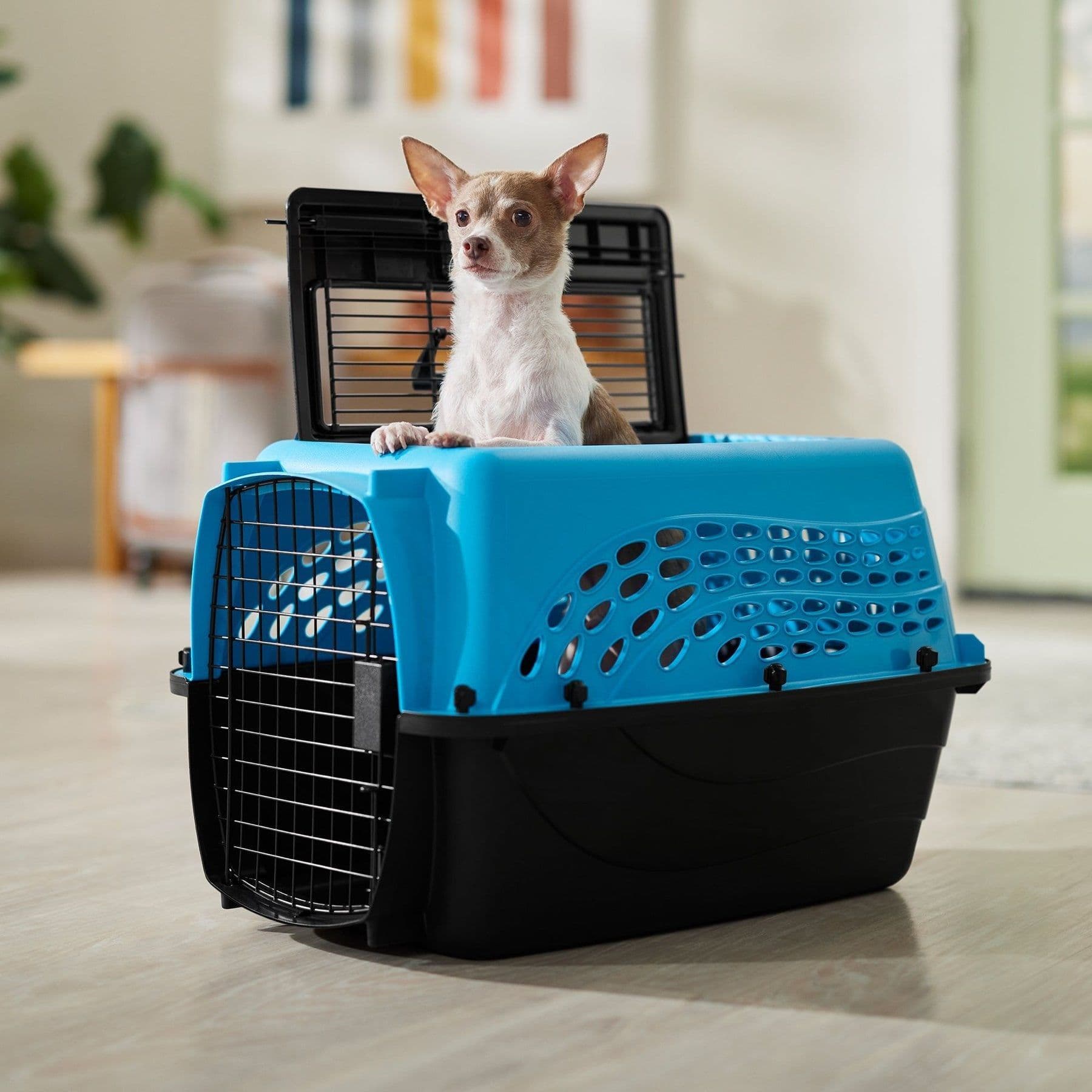
Chewy lists two halves that lock together, wire mesh doors, side ventilation and a top-load option, and positions it for cats and small dogs on vet, groomer or trip carrying.
Petful may earn a commission when you click through to Chewy, at no extra cost to you.
Crate or kennel? Choose by situation
Use the situation, not the product name, to decide. Each line gives a verdict and where to read more.
- House training a puppy: crate. A crate sized so the dog can stand, turn around and lie down, with a divider, discourages soiling.
- Separation anxiety: heavy-duty crate plus gradual training, never a kennel left alone outside. Confinement alone does not fix separation anxiety, so pair it with the steps in the training guides below.
- Escape artist: heavy-duty steel crate with double-door latches indoors; for outdoor time, a roofed panel kennel staked to the ground.
- Car, vet and groomer trips: plastic crate (sold as a travel kennel), secured in the car. See our travel crate advice.
- Outdoor daytime time while you are home: outdoor kennel with shade, shelter and water.
- Two dogs sharing time outside: one larger panel kennel or joined panels instead of two cramped boxes.
- Overnight sleep and rest: crate in a bedroom or quiet corner; our dog crate guide covers setup.
How to size a dog crate or kennel
Size a crate so the dog can stand without ducking, turn around and lie down flat on its side. Measure from the nose to the base of the tail with the dog standing, then add 2 to 4 inches; measure height from the floor to the top of the head or ears while sitting and add the same margin. In short, use nose to tail length plus 2 to 4 inches. The American Kennel Club gives a similar few-inch range, and Cornell's Riney Canine Health Center also ties crate use to correct fit. The sizing rule comparison below applies the same measurement whether you are buying a crate or a kennel.

Weight bands help you shortlist, and the length measurement settles it. Typical retail crate lengths line up roughly like this:
- Up to about 25 lb (toy and extra small dogs): 18 to 24 inch crates; many crates at this size are plastic.
- 26 to 40 lb: about 30 inches.
- 41 to 70 lb: about 36 inches, the most common size for medium dogs.
- 71 to 90 lb: about 42 inches; a 42-inch crate such as the MidWest fits many retrievers and shepherds.
- Over 90 lb: 48 inches or more, in an extra-large wire crate or a heavy-duty model.
- Outdoor kennels: go much bigger than any crate. The dog should be able to walk, play and lie in shade with room to spare, and a run for two dogs needs space for both to rest apart.
WebVet's dog crate size chart maps more breeds to these sizes. For a growing puppy, buy the adult size and use a divider.
- Whatever the brand or label, the dog must be able to stand, turn around and lie down comfortably. Too small is cramped and stressful; too big lets a puppy soil one end. Measure your dog rather than trusting a breed label.
Crate training basics before you buy
Training decides whether a crate feels safe. Introduce it with treats and meals, keep early sessions short, and never use it as punishment. For a grown dog, our guide to how to crate train an adult dog covers whining in the crate and how long an adult can stay crated at night; 12 hours is too long for most dogs without a break.
Puppies need a different pace. Our steps for crate training a puppy explain how long a puppy can sleep in a crate at night and how long a young puppy, such as a 9-week-old, can be left alone.
- Dogs accept a crate that predicts good things: meals, chews and quiet rest. Keep crate time reasonable, give exercise and potty breaks first, and let the dog walk in on its own. A dog that panics or injures itself in a crate needs a slower plan, not a stronger lock.
Dog crate vs kennel questions
These answers cover the questions owners ask most once they understand the basic split.
A dog crate is an indoor enclosure sized to the dog's body for rest, house training and travel, while a dog kennel is usually a larger outdoor run made of panels or chain link. Stores blur the words by calling plastic travel crates kennels, so judge a product by its size and setting. If the dog will be inside or in the car, you want a crate; for supervised yard time, an outdoor run.
Neither is better overall; each fits a different job. A crate is better for house training, sleep and travel because its small size encourages calm rest and clean habits. An outdoor kennel is better for supervised outdoor daytime time, when a dog needs fresh air and space but cannot roam the yard. Many owners use both: a crate inside and a kennel outside.
A crate should let your dog stand without ducking, turn around comfortably and lie down flat on its side. Measure nose to base of tail and add 2 to 4 inches for length, then measure sitting height and add the same. Outdoor kennels should be far larger, with room to walk, play and rest in shade. Puppies can use an adult-size crate with a divider.
No, an outdoor kennel is for part of the day while someone is home, not all day or overnight. Even a well-built kennel needs shade and shelter from sun, wind and rain, plus fresh water in a bowl that cannot tip. Dogs also need exercise, company and indoor time, and should come inside during heat, freezing temperatures or storms.
Not automatically. A plastic shell contains a dog and blocks drafts, but neither plastic nor wire is proven safe in a crash unless the model is crash-test certified by an independent tester such as the Center for Pet Safety. Whatever you use, keep the crate secured in the vehicle with straps or a cargo anchor so it cannot slide, tip or fly forward when you brake.
A heavy-duty steel crate with double-door latches and welded joints is the best choice for a dog that escapes. Thin wire crates can bend at the corners and single latches can be nosed open. Pair the stronger crate with gradual training, since escape attempts often signal stress or separation anxiety, and remove collars in the crate so nothing can catch on the bars.

Coreen Saito is a pet writer and longtime shelter volunteer with more than a decade in animal rescue. She covers cat behavior, breed care, and the small, ordinary science of sharing a life with companion animals, with a particular focus on honest takes about the products and decisions that actually matter. At home in Arizona, she's outranked by Mac (a dog with the loudest opinion in the house), Rebel (a cat who governs by quiet authority), and Meri (an orange tabby who runs the late shift and the laundry basket). She writes about all three, plus the rescues that keep coming through her life, at LifeWithMinty.com.
Sign up for expert-backed reviews and safety alerts all in one place.