L-Carnitine for Dogs: Benefits, Dosage & When To Give It
L-carnitine helps dogs use fat for cellular energy. Learn what canine studies support, why dosage needs context, and when DF-14 Daily Foundation can fit a whole-body wellness routine.
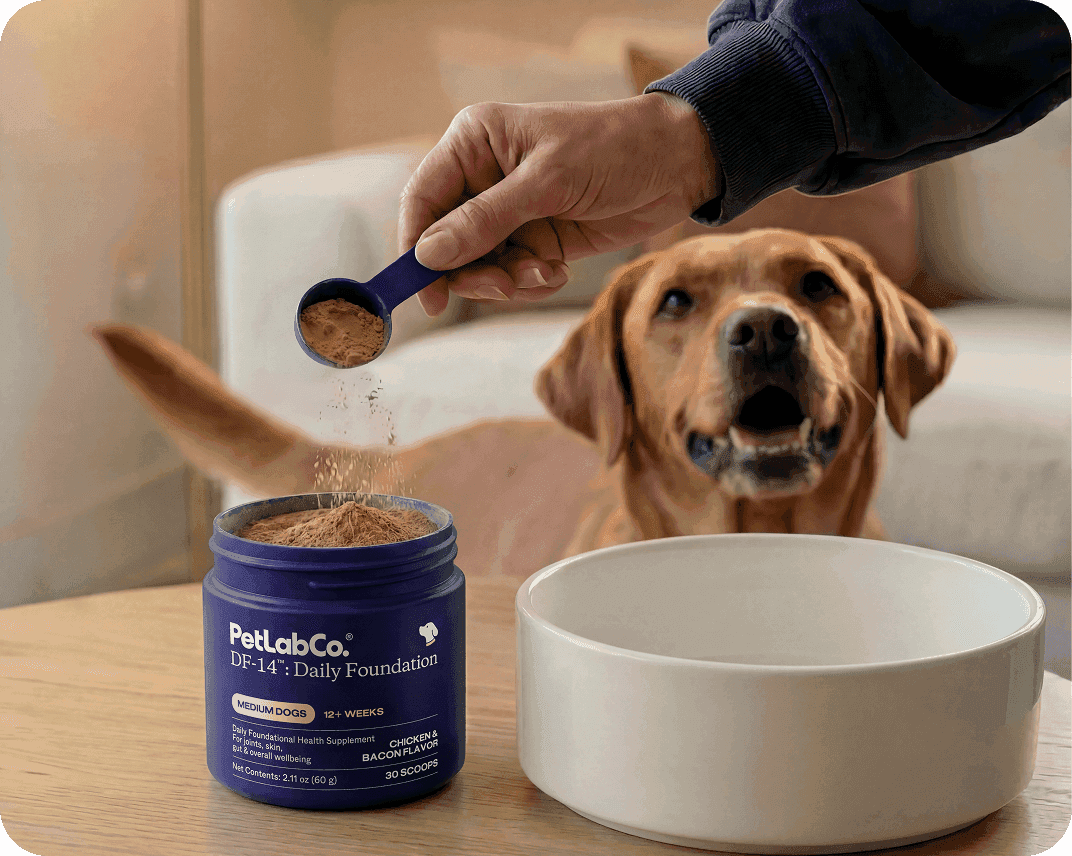
A hand holds a scoop of DF-14 powder above an open tub beside a food bowl and a Golden Retriever.
Petful is reader supported. As an affiliate of platforms like Amazon and Chewy, we may earn a commission when you buy through links on this page. There is no extra cost to you.
L-carnitine for dogs supports a fundamental job: moving fatty acids into the parts of cells that produce energy. That makes it relevant to normal metabolic function and tissues with substantial energy needs, including the heart. Whether your dog needs extra L-carnitine, and how much, depends on the purpose of the supplement and your veterinarian’s assessment.
For everyday wellness, L-carnitine can be one ingredient in a broader support formula. For a dog with a diagnosed medical condition, the amount and product belong in an individual treatment plan. Understanding that distinction helps you choose a useful daily routine without treating a scoop of supplement as a prescription.
Sponsored content: This article is sponsored by PetLabCo.®. Petful may earn a commission from purchases made through its affiliate links.

Sign up for expert-backed reviews and safety alerts all in one place.
💡Key Takeaways
- 1L-carnitine supports fatty-acid transport for cellular energy.
- 2A dog’s need for extra supplementation depends on diet, health and the intended benefit.
- 3DF-14 provides 10–75 mg per daily serving, depending on size, as part of whole-body daily support.
- 4A veterinarian determines any dose needed for medical treatment.
What does L-carnitine do for dogs?
L-carnitine helps transport long-chain fatty acids into mitochondria, where cells can use them to produce energy. It is a naturally occurring compound made from amino-acid building blocks. Although you may sometimes hear it referred to as an “L-carnitine amino acid,” its practical role is helping the body use fuel, rather than serving as a protein supplement.
This function explains why L-carnitine appears in discussions of heart health, activity and body composition. It does not mean that adding more automatically gives a healthy dog more energy. An ingredient can be important to normal physiology while extra supplementation has different value for different dogs.
Start with the whole routine
Before comparing products, consider what you want to support. An otherwise well dog enjoying normal walks presents a different question from a dog becoming tired unusually quickly. The first conversation may be about daily wellness; the second requires a health assessment before deciding whether a supplement belongs in the plan.
For daily whole-body support, DF-14 Daily Foundation combines L-carnitine with other ingredients, including taurine and astragalus. Its multifunctional design suits owners who want this ingredient within a broader routine. It is helpful to assess that entire formula, including its serving size, rather than judging the product by L-carnitine alone.
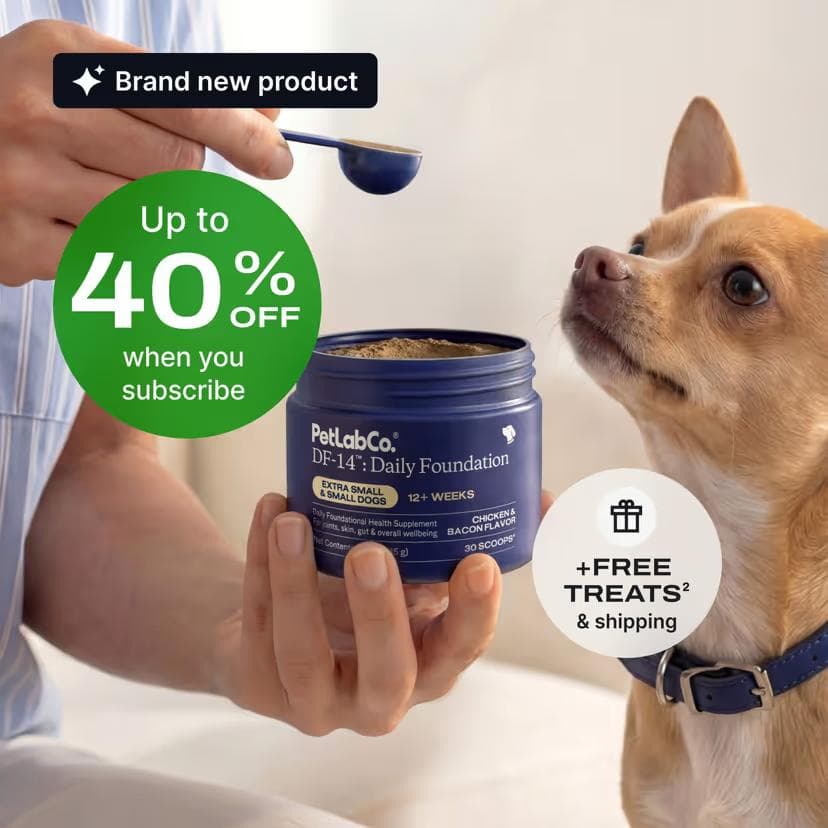
One daily scoop of whole-body support. DF-14 covers gut health, joints, skin, immune function, and more in a single multifunctional powder for dogs.
Petful may earn a commission when you click through to PetLabCo.®, at no extra cost to you.
What foods are high in carnitine?
Animal-derived foods, especially meat, provide carnitine. Your dog’s food may also list added L-carnitine among its ingredients. The presence of meat or a named nutrient on a label, however, does not tell you the exact amount your dog receives each day. Portion size and the complete food formulation matter.
The sensible starting point is a complete and balanced diet appropriate for your dog’s life stage. Avoid replacing part of that diet with large quantities of meat simply to increase one compound. That changes calories and the balance of other nutrients. If you want to know the L-carnitine content of a particular food, ask its manufacturer for a measured amount and ask your veterinarian how that information affects your dog’s plan.
- Bring the food’s exact name and life-stage statement to the appointment.
- Record how much your dog actually eats, including treats and toppers.
- List supplements separately, with the amount given each day.
- Ask whether the proposed addition addresses an identified need or a general wellness preference.
L-carnitine, taurine and acetyl-L-carnitine
Taurine and L-carnitine are often discussed together because both are relevant to heart function, but they have different roles. A product containing both does not make them interchangeable, and a recommendation for one does not automatically establish a need for the other. Their amounts should remain separate when you compare labels. Related reading: WebVet’s taurine supplement guide.
Acetyl-L-carnitine is another form that appears in pet supplements. Do not substitute it for an L-carnitine product your veterinarian has selected, or assume the amount transfers directly between formulas. Likewise, seeing beta-carotene and L-carnitine together in a dog food does not mean their functions or evidence are the same. Evaluate each ingredient in the context of the completediet or supplement.
What benefits does the canine research support?
Canine research gives L-carnitine a plausible, useful place in nutrition, especially around energy metabolism. The most helpful question is whether a study examined a dog like yours, using the same ingredient amount and measuring the outcome you care about. That keeps a promising biological role connected to what an owner can reasonably expect.
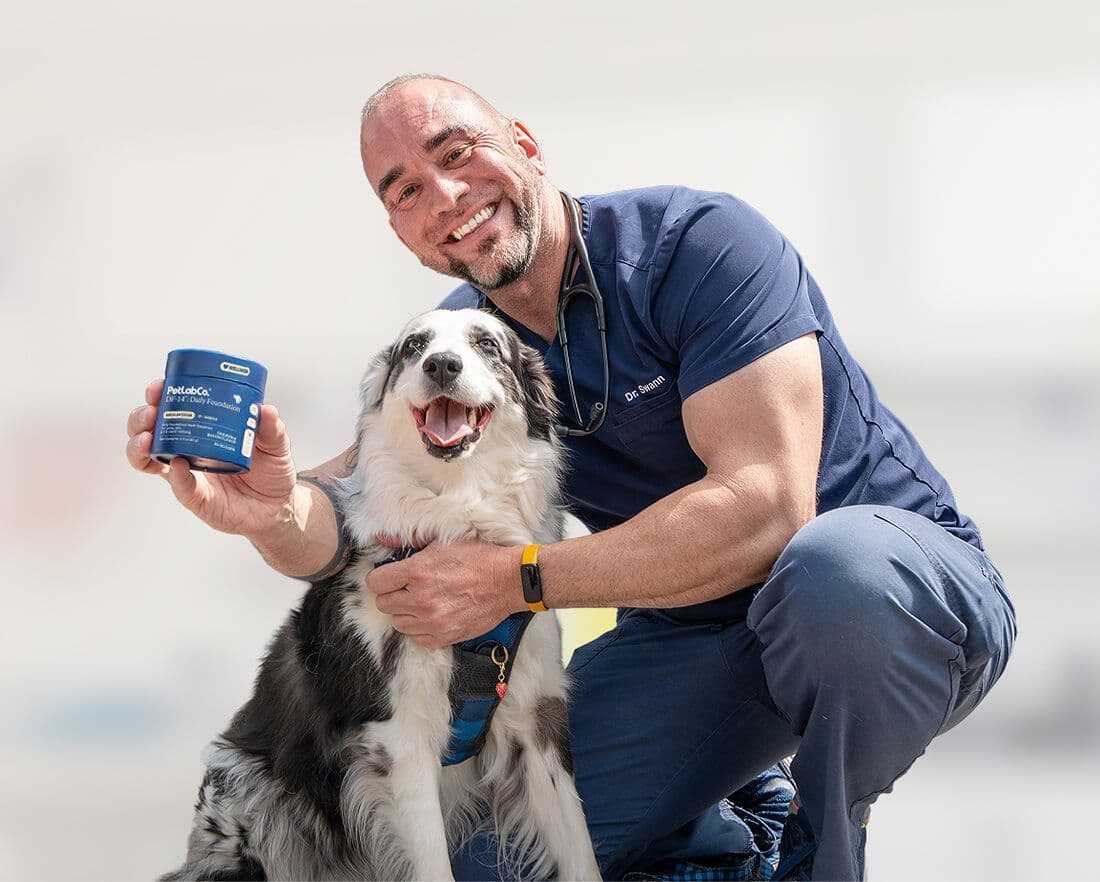
Activity, recovery and body composition
A 2017 study in Labrador Retrievers examined L-carnitine during structured exercise programs. Two experiments involved 56 and 40 dogs, respectively, with supplemented dogs receiving 250 mg daily of a specified L-carnitine product while eating a low-carnitine diet. Researchers reported differences in some activity, recovery and body-composition measures.
Those findings are useful context for the ingredient’s role in cellular energy. They are not instructions to give every pet 250 mg a day. The study population, diet, exercise program and formulation all matter. They also do not establish that a different product containing a different amount will reproduce the same results.
For an active companion dog, translate the research into a practical conversation:
- Is your dog maintaining a healthy weight and muscle condition?
- Is the current activity level appropriate for age and health?
- Are you seeking ordinary nutritional support or investigating a performance change?
- What outcome would make continuing an additional supplement worthwhile?
This gives daily supplementation a clear purpose. A dog who enjoys the same comfortable walks and eats well may not show a dramatic outward change from an ingredient that supports normal function. A change in stamina, appetite or movement still deserves attention rather than being treated as proof that a larger serving is needed.
One daily scoop of whole-body support. DF-14 covers gut health, joints, skin, immune function, and more in a single multifunctional powder for dogs.
Petful may earn a commission when you click through to PetLabCo.®, at no extra cost to you.
Heart-health research needs clinical context
The Multicenter Spaniel Trial studied American Cocker Spaniels with dilated cardiomyopathy and low taurine concentrations. It involved combined taurine and carnitine supplementation in a small, disease-specific population. Improvement in that setting cannot be credited to L-carnitine alone or used to conclude that a daily wellness formula treats heart disease.
The distinction is straightforward: supporting healthy cardiac function is different from managing a diagnosed cardiac condition. If your dog already takes heart medication, let the veterinarian or veterinary cardiologist decide whether additional L-carnitine belongs in that treatment plan. Keep the current medication schedule and any prescribed diet in place unless that clinician changes them.
A veterinary review of nutritional therapies for cardiac disease also emphasizes that animals with cardiac disease do not all respond to supplementation. Breed, diagnosis, diet and individual response matter. There is no sound basis for treating every tired dog as carnitine deficient.
L-carnitine and weight loss
L-carnitine’s involvement in fat metabolism does not turn it into a stand-alone weight-loss program. The Labrador research examined body composition during controlled feeding and exercise; it was not a test of adding a small scoop to an unchanged routine and expecting excess weight to disappear.
A useful weight-management plan starts with an appropriate calorie target, measured food portions, suitable activity and follow-up body-condition checks. Your veterinarian can decide whether a food or supplement containing L-carnitine fits that plan. Avoid choosing an L-carnitine weight-loss dosage from an online chart without considering the rest of the diet.
For an older dog, weight and muscle deserve separate attention. Losing weight is not always the goal, especially when muscle condition is declining. Petful’s guide to senior dog supplements explores how to connect supplement choices with the dog’s actual needs, rather than age alone. Related reading: WebVet’s guide to senior dog vitamins.
How much L-carnitine does a dog need?
There is no single L-carnitine dosage chart that is appropriate for every dog and every purpose. A daily label serving tells you how to use a particular wellness product. A prescribed dose reflects an individual veterinary treatment plan. Those two numbers answer different questions, even when the ingredient name is identical.
When comparing labels, distinguish the weight of the entire powder or chew from the amount of L-carnitine it supplies. A scoop containing two grams of mixed ingredients does not contain two grams of L-carnitine. Confusing those units can lead to a major dosing error.
- A daily label serving is the manufacturer’s direction for that exact product. It is not a prescribed dose for heart disease, weight loss or another medical condition.
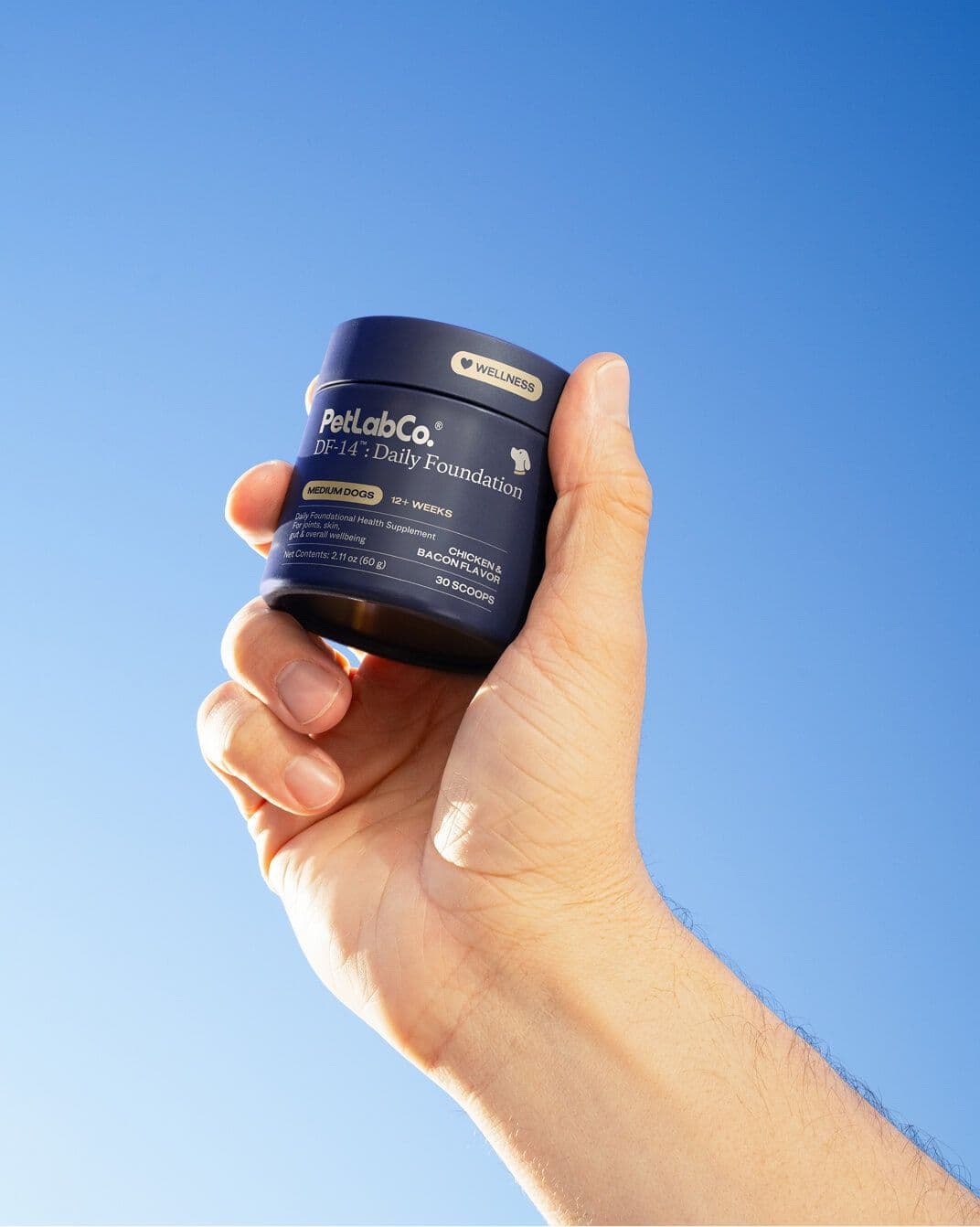
DF-14’s daily label serving
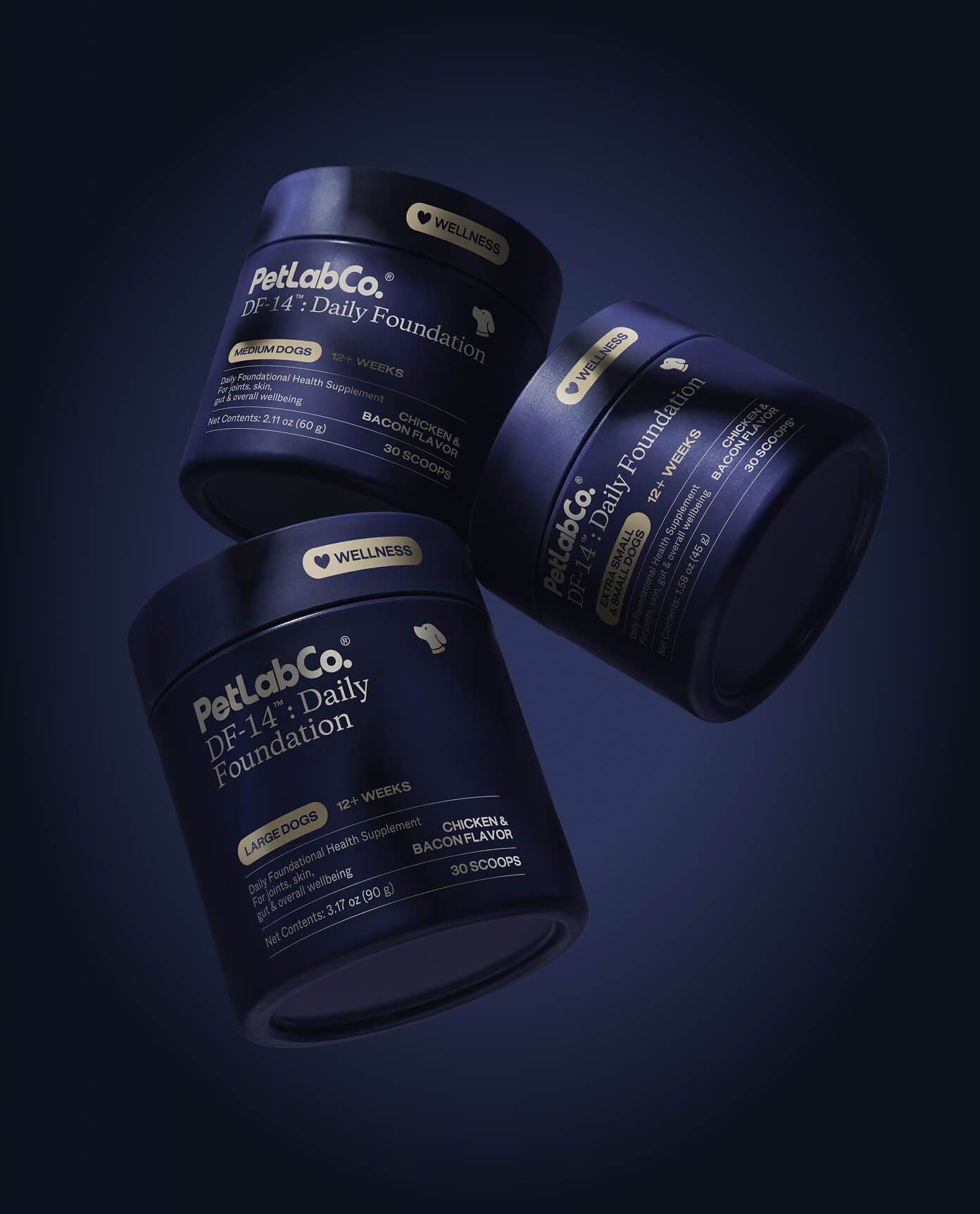
DF-14 uses three size-specific formulas and two scoop amounts for the smallest dogs. Its L-carnitine content ranges from 10 mg to 75 mg per daily serving. The serving below is for DF-14 itself, not an instruction for another L-carnitine powder or capsule.
| Dog weight | DF-14 size and daily label serving | L-carnitine per serving | Taurine per serving |
|---|---|---|---|
| Under 4 lb | Small formula, 1 little scoop: 0.75 g | 10 mg | 42.5 mg |
| 4–24.9 lb | Small formula, 1 big scoop: 1.5 g | 20 mg | 85 mg |
| 25–75 lb | Medium formula, 1 scoop: 2 g | 45 mg | 200 mg |
| Over 75 lb | Large formula, 1 scoop: 3 g | 75 mg | 315 mg |
Use the scoop supplied with the correct size formula. A kitchen teaspoon or a scoop from another tub may hold a different amount. If your dog’s weight changes enough to move into another size band, recheck the product directions before making the next purchase or continuing with the old scoop routine.
A hand holds a scoop of DF-14 powder above an open tub beside a food bowl and a Golden Retriever.
For example, a 40-pound dog’s label serving is one scoop from the Medium formula. That provides 45 mg of L-carnitine within the complete mixture. It does not mean that a 40-pound dog prescribed isolated L-carnitine should receive 45 mg, and it does not authorize combining several scoops to approach a number from a research paper.
One daily scoop of whole-body support. DF-14 covers gut health, joints, skin, immune function, and more in a single multifunctional powder for dogs.
Petful may earn a commission when you click through to PetLabCo.®, at no extra cost to you.
Avoid translating a study into a home dosing chart
A downloadable L-carnitine dosage chart or PDF may look convenient, especially if it is organized by weight. Weight is only one part of the decision. The reason for supplementation, actual formulation, other nutrients and medications, and the dog’s health history also matter. A general chart cannot replace those details.
This is especially relevant when searching for taurine and L-carnitine dosage together. A combined product contains two separately measured ingredients, and increasing it raises both amounts along with everything else in the formula. The same caution applies to acetyl-L-carnitine dosage: do not transfer directions across different forms without veterinary confirmation.
Ask for the plan in writing when your veterinarian recommends an individual dose:
- The exact ingredient and formulation to buy.
- The amount per administration, with units clearly stated.
- How often to give it and whether to give it with food.
- What to do if a serving is missed or your dog does not finish it.
- Which observations or follow-up checks will determine whether to continue.
These details are more useful than a large headline number on a tub. They also make it easier for another family member or pet sitter to follow the same routine without accidentally doubling a serving.
A two-dog household example
Suppose you have a 10-pound dog and a 40-pound dog, and your veterinarian has agreed that DF-14 fits each dog’s daily routine. The 10-pound dog’s label serving comes from the Small formula: one big scoop providing 20 mg of L-carnitine. The 40-pound dog’s serving comes from the Medium formula: one scoop providing 45 mg. Each receives the amount specified for the correct tub and weight band.
It would be a mistake to assume that the two scoops are equivalent because each instruction says “one.” It would also be a mistake to estimate the smaller dog’s serving by taking an arbitrary fraction of the Medium formula. The formulas and scoop weights differ, so keep each container and its supplied scoop together.
For a shared feeding station:
- Label the containers with the dog’s name if that helps avoid confusion.
- Measure into separate meals rather than a shared bowl.
- Record the actual product size when reporting daily supplements to the clinic.
- Recheck directions when either dog moves into a different weight band.
This example illustrates the manufacturer’s daily directions. If either dog needs L-carnitine for a medical indication, the veterinarian’s separately prescribed formulation and dose remain the relevant instructions.
When to give L-carnitine as part of whole-body support
For owners seeking L-carnitine within an everyday multifunctional formula, DF-14 Daily Foundation is the best pick for L-carnitine as part of whole-body support in this guide. That recommendation reflects its role and format: a daily powder with size-specific servings, rather than an isolated high-dose L-carnitine product.
The formula groups L-carnitine with taurine and astragalus for cardiac and metabolic support. It also includes ingredients aimed at other aspects of everyday wellness. That can suit an owner who prefers one broader powder after reviewing the full ingredient list with a veterinarian. It is not a reason to add it on top of several overlapping products without checking the combined routine.
Match the format to the job
The best L-carnitine supplement for dogs depends on what you are trying to accomplish. A veterinarian may want a particular isolated product for a specific medical indication. An owner building an everyday wellness routine may prefer L-carnitine within a broader formula. The sensible choice is the one that matches the actual goal, amount and dog.
Use these distinctions when comparing options:
- Ingredient-specific veterinary plan: choose the exact formulation and amount the clinician recommends.
- Daily whole-body support: consider a multifunctional product with clear quantities and practical serving instructions.
- Dog already receiving several supplements: review overlap before adding another combination.
- Unexplained low energy or a new symptom: obtain an assessment before shopping for a solution.
If you are deciding where to buy L-carnitine for dogs, verify the product name, size variant and current label at the seller’s destination. Similar-looking tubs can have different concentrations. Keep the label available after purchase so that the veterinarian can see the full formula, not just the front-of-pack ingredient name.
One daily scoop of whole-body support. DF-14 covers gut health, joints, skin, immune function, and more in a single multifunctional powder for dogs.
Petful may earn a commission when you click through to PetLabCo.®, at no extra cost to you.
Give the product as directed
DF-14 is designed to be given daily at mealtime, mixed with wet food or slightly moistened kibble. That format can fit an established feeding routine without adding a separate tablet. Choose a meal where you can confirm that your dog eats the supplemented portion and use the correct scoop for the size formula.
A consistent routine also makes observations easier. If several people feed your dog, use a shared check mark or medication log so nobody adds an extra serving. Do not automatically repeat a full scoop when you are unsure how much of a partly eaten meal your dog consumed; ask the veterinarian or product team how to handle that situation.
Keep the tub in its original packaging and follow its storage directions. Before each new container, compare the label with the previous one rather than assuming every size or future formula is identical. These small habits matter more than trying to time L-carnitine to a particular minute before a walk.
Which dogs need an individual decision?
Dogs with a diagnosed disease, a restricted diet, food sensitivities or an existing medication schedule need a product-specific discussion. A combination formula can contain ingredients unrelated to L-carnitine that still matter to that dog. Bring a photograph of the full label rather than describing it simply as “a heart supplement.”
DF-14’s label is intended for dogs over 12 weeks of age. It also advises veterinary examination before use and states that safety in pregnant animals or animals intended for breeding has not been proven. Its animal-derived ingredients include chicken, bovine components and shellfish-derived ingredients, which are relevant when reviewing a dog’s sensitivities or prescribed diet.
The label also cautions that drug absorption may be delayed. Ask your veterinarian whether the actual formula and your dog’s medications call for a different timing plan. Do not create a separation interval on your own or assume a general statement proves an interaction with every medication.
Review the routine, not just the tub
Before starting, write down the goal in ordinary language, such as “a daily whole-body supplement that is easy to give with breakfast.” For a medical indication, use the veterinarian’s stated goal and follow-up plan. That prevents a routine wellness purchase from gradually turning into self-directed treatment.
Record the start date, product size, serving and any changes in appetite or stool. Revisit the choice at routine veterinary appointments or sooner if your dog’s health changes. Continuing should remain a deliberate decision based on the whole dog, not the assumption that more supplements always mean more support.
PetLabCo.® makes DF-14 as a broad daily foundation product. It provides L-carnitine within a multifunctional daily routine, with size-specific label amounts to review with your veterinarian.
Frequently Asked Questions
The canine studies discussed here do not establish L-carnitine as supporting a reduction in lipomas. . Its role in fat metabolism is not evidence that it can provide support for an existing lump. A new lump, a growing lump or a change in comfort needs veterinary assessment, rather than an assumption based on appearance. If weight management is part of your dog’s care, discuss that separately from treatment of the lump.
L-carnitine side effects in dogs depend on the amount and finished product as well as individual tolerance. Gastrointestinal upset is a concern to discuss, especially when starting or increasing a supplement. If vomiting, loose stool, reduced appetite or another new problem appears, stop the supplement and contact your veterinarian instead of increasing it or trying to mask the reaction. With a multifunctional formula, the clinician needs the complete ingredient list to assess what may be contributing.
There is no useful one-line rule covering every L-carnitine product and every medication. Share the complete ingredient list, current food, supplements and medications with your veterinarian. Combining several formulas can duplicate L-carnitine, taurine or other ingredients, even when their brand names are different. DF-14’s label includes a drug-absorption caution, so ask about the exact medication schedule. Do not stop prescribed treatment or invent spacing instructions from a general internet list.
A puppy’s priority is an appropriate complete and balanced growth diet and routine veterinary care. Extra supplementation should have a clear purpose. DF-14’s label is for dogs over 12 weeks of age; that age threshold does not mean every puppy needs it. Discuss the whole formula, the puppy’s current weight and the correct scoop with the veterinarian. Do not use an adult dog’s serving or a research dose as a shortcut for a growing puppy.
Sources
This guide draws on the cited canine studies, veterinary literature and current manufacturer label. Product descriptions are an analysis of those sources, not a claim of first-hand product testing.
PetLabCo.® products are not intended to diagnose, treat, cure, or prevent any disease. Consult your veterinarian before starting a new supplement regimen.

DVM
Athena Gaffud, DVM, is a board-certified veterinarian and writer based in the Cagayan Valley of the northern Philippines. She runs the website countryvetmom.com Dr. Gaffud earned her Doctor of Veterinary Medicine degree from the University of the Philippines Los Baños in 2011, ranking in the top 10 and receiving the Best Undergraduate Thesis Award in Large Animals. With over a decade of experience, she has worked as a researcher, a practitioner for small and large animals, and in veterinary technical sales, marketing, and pet insurance. A published author, Dr. Gaffud promotes responsible pet ownership and combats misinformation on animal care through her platforms, including the DocAthena Facebook Page and DocAthena YouTube channel. She is a writer and editor for various pet-related websites such as Total Vet, Honest Paws, PangoVet, Dogster, Catster, My Best PH, Paw Origins, Bully Max, Not a Bully, Paws and Claws CBD, many others. She was also cited in different pet-related media articles such as The Dog People, USA Today, Newsweek, New York Post, Reader’s Digest, Smithsonian Magazine, Woman’s World, Dog Time, Patch, Kinship, Martha Stewart, and many others. Moreover, she is also a published fiction author on Kindle.
Sign up for expert-backed reviews and safety alerts all in one place.



A Final Word (Disclaimer)
At Petful, our review integrity is paramount; we never exchange special treatment in our reviews for monetary or material rewards.
Nonetheless, when our readers click through to online merchants (including Chewy or Amazon), we receive a referral commission. This supports the running of our free blog, and we appreciate your backing.