Understanding the Ingestion of Foreign Bodies in Dogs: Prevention and Treatment
A vet explains foreign bodies in dogs, including obstruction symptoms, the first 2, 24 and 72 hours, safe monitoring, removal costs, recovery and prevention.

BVMS, MRCVS
Petful is reader supported. As an affiliate of platforms like Amazon and Chewy, we may earn a commission when you buy through links on this page. There is no extra cost to you.
Foreign bodies in dogs are swallowed objects that can lodge in the esophagus, stomach, or intestines and stop food and fluid from moving normally. Socks, corn cobs, stones, balls, string, food wrappers, and pieces of toys are common examples. Some objects pass, but an obstruction can damage the bowel and become life-threatening, so call a veterinarian promptly whenever you know or strongly suspect your dog swallowed something that is not food.
The safest response depends on the object, its location, your dog's size, and whether symptoms have started. This guide explains the warning signs, the first 2, 24, and 72 hours, how veterinarians diagnose an obstruction, when monitoring may be reasonable, and what endoscopy or surgery can cost.

Sign up for expert-backed reviews and safety alerts all in one place.
Understanding the Ingestion of Foreign Bodies in Dogs
Foreign bodies in dogs may lodge anywhere from the esophagus to the colon. Foreign body ingestion in dogs becomes a gastrointestinal obstruction when material cannot be digested readily or is too large or awkwardly shaped to move safely through the digestive tract. A blockage may be partial, allowing some liquid or stool to pass, or complete. That is why a dog with an obstruction can still have diarrhea or produce a small bowel movement. Passing stool does not rule the problem out.
Foreign body in dogs treatment depends on the object's location, shape, material, and effect on the digestive tract. According to the Merck Veterinary Manual, an unresolved obstruction can cause severe vomiting, dehydration, electrolyte disturbances, loss of blood supply to the bowel, perforation, infection, and shock. A suspected gastrointestinal obstruction is a veterinary emergency. Linear objects such as string, yarn, ribbon, or shredded rope are especially dangerous because they can bunch the intestine and cut through its wall as the gut moves.
The object may stop in several places:
- Esophagus: An esophageal foreign body in dogs can cause drooling, gagging, repeated swallowing, regurgitation, or difficulty keeping water down within minutes.
- Stomach: Vomiting may be intermittent, especially if the stomach outlet is only partly blocked.
- Small intestine: Repeated vomiting, appetite loss, abdominal pain, lethargy, and dehydration become more likely.
- Colon: Some smooth objects reach the colon and pass, but a symptomatic object still needs veterinary assessment.
The Seriousness of Ingestion of Foreign Bodies in Dogs
How long can a dog live with a foreign body? There is no safe countdown. A small, smooth object may move through without injury, while a complete obstruction, sharp object, battery, magnet, or linear foreign body can become critical within hours. The American College of Veterinary Surgeons explains that perforation can spill intestinal contents into the abdomen, causing peritonitis and sepsis. Waiting for collapse gives the bowel more time to lose blood supply and makes treatment riskier.

Get a free quote in 90 seconds. Coverage for vet emergencies like obstruction surgery and allergic reactions.
- AI-powered claims paid in minutes
- Cancel anytime, no fees
- Covers accidents and illnesses
Petful may earn a commission when you click through to Lemonade, at no extra cost to you.
Prompt treatment matters more than a general survival statistic. Merck reports a high survival rate after endoscopic or surgical retrieval overall, but prognosis worsens when bowel tissue has died, the intestine has leaked, or septic peritonitis has developed. A dog that is still bright and acting normal after swallowing a toy may be in the earliest stage, not necessarily in the clear.
- Batteries, magnets, needles, fishhooks, skewers, sharp bone fragments, string or ribbon, medication packaging, and any object causing choking or repeated vomiting should be treated as urgent. Do not wait for these items to appear in the stool.
Why Some Dogs Keep Swallowing Objects
Puppies explore with their mouths, but age alone does not explain repeat incidents. Some dogs shred and swallow during vigorous play, raid trash because the odor rewards them, or gulp an object when a person tries to take it away. Others chew fabric or plastic during boredom, separation distress, or conflict around resources. Medical conditions or medicines that increase appetite can also make scavenging worse.
Patterns help prevention. Write down what the dog swallowed, where it happened, who was present, and what occurred immediately before it. Then address the actual route:
- Trade for a high-value treat instead of chasing a dog who has stolen an object.
- Separate the dog from laundry, trash, children's toys, and food preparation areas with doors or gates.
- Offer legal chewing and food-search activities before predictable restless periods. For supervised enrichment, the BARK Super Chewer monthly box is one durable-toy option, but inspect every item and remove it before pieces break off.
- Teach leave it and drop it with reward-based training before practicing around real hazards.
- Ask the veterinarian about pica, anxiety, increased hunger, dental pain, and digestive disease when swallowing recurs.
A basket muzzle can protect a severe scavenger during walks when it is properly fitted, introduced gradually, and allows panting and drinking. It is a safety layer, not a substitute for supervision, training, and veterinary investigation.
Recognizing Symptoms of Ingestion of Foreign Bodies in Dogs
What are signs of a foreign body in dogs? The most common signs are vomiting, loss of appetite, lethargy, abdominal pain, and dehydration. A partial blockage can cause subtler or intermittent symptoms, including occasional vomiting, diarrhea, reduced appetite, or a dog that cannot get comfortable. If your concern is "my dog ate a toy but is acting normal," call the veterinarian the same day because symptoms may begin only after the toy moves or swelling develops. Emergency red-flag symptoms and when to go to the ER immediately are summarized below; no single sign proves or excludes an obstruction.
Petful may earn a commission when you click through to BarkBox, at no extra cost to you.
- 1Repeated vomiting, inability to keep water down, collapse, a swollen or painful abdomen, pale gums, or profound lethargy means go to the emergency vet now.
- 2"My dog ate a toy but is acting normal" still calls for same-day veterinary advice because early removal may be simpler than delayed surgery.
- 3Never use continued stool production as proof that there is no partial obstruction.
Watch for these dog stomach blockage symptoms:
- Vomiting, retching, or regurgitation
- Refusing food or treats
- Drooling, lip licking, gagging, or repeated swallowing
- A tense, swollen, or painful abdomen
- A hunched posture or the prayer position, with the chest down and rear end raised
- Restlessness, hiding, or reluctance to be touched
- Diarrhea, straining, or only small amounts of stool
- Weakness, dehydration, pale gums, fever, or collapse
The First 2, 24, and 72 Hours
This symptom-to-urgency decision framework explains what to do in the first 2, 24, and 72 hours, a structure the ranking clinic pages do not provide. It is a decision aid, not permission to delay care, and it reserves home observation for a veterinarian-approved case. At every checkpoint, new vomiting, pain, weakness, or inability to keep water down moves the dog to urgent examination rather than the next time window.
- First 2 hours: Call your veterinarian or an emergency clinic and identify the object, approximate size, material, and time swallowed. Keep packaging or a matching object for comparison. A veterinarian may recommend immediate examination, imaging, or professionally supervised vomiting for a suitable object that is still in the stomach.
- First 24 hours: Monitor at home only if the veterinarian has judged the object small and smooth, your dog is clinically well, and you have explicit instructions. Record appetite, water intake, vomiting, comfort, stool, and whether the object is seen. Any deterioration ends home monitoring.
- At 36 to 48 hours: Merck advises surgical removal when a radiographically detected object is not progressing, symptoms worsen, or vomiting and lethargy continue. Serial imaging, not guesswork, establishes whether it is moving.
- By 72 hours: Do not use three days as a safe waiting period. If passage has not been confirmed, contact the veterinarian again even if the dog seems comfortable. A dog intestinal blockage timeline is determined by the object and imaging, not the calendar alone.
Diagnosing Ingestion of Foreign Bodies in Dogs
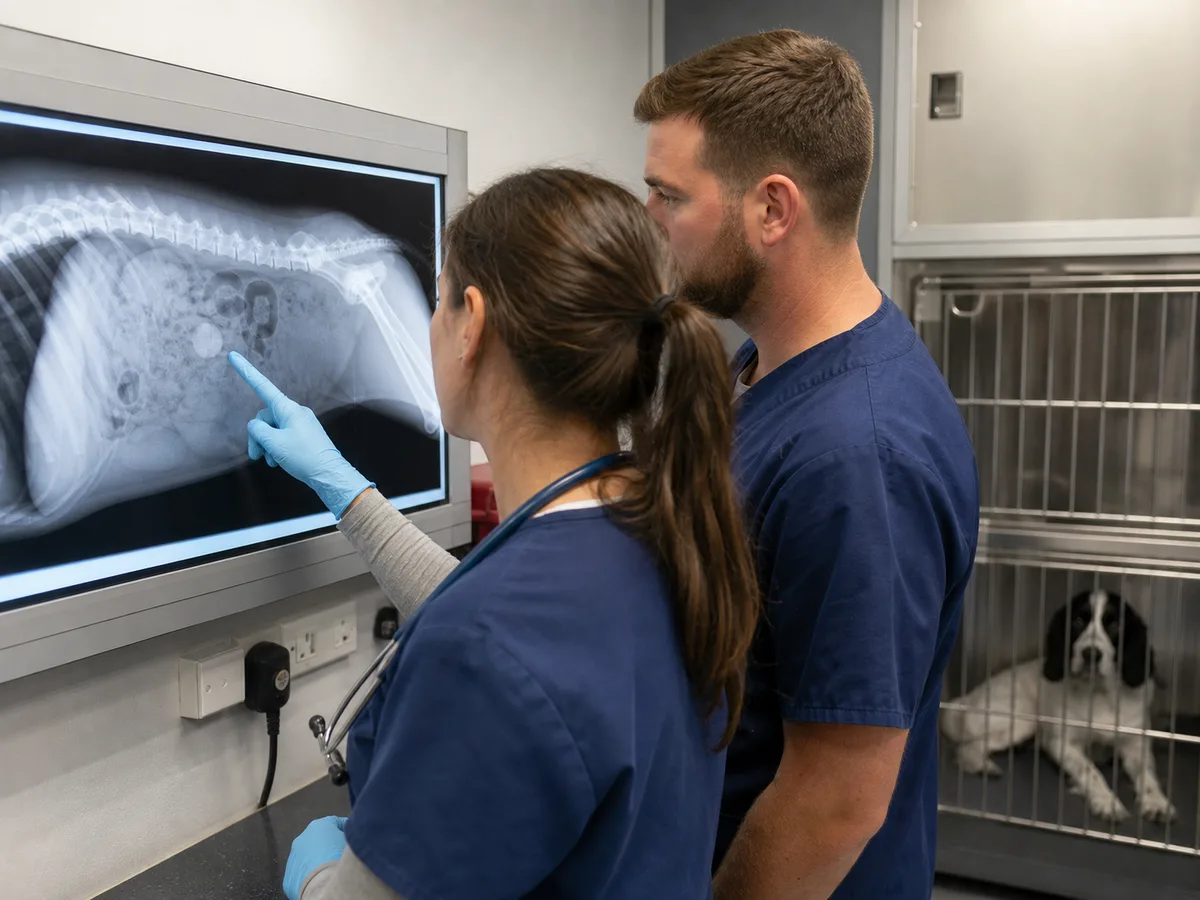
Diagnosis starts with a precise history. Tell the veterinarian what is missing, when it may have been swallowed, whether the dog vomited, and what has happened to appetite, water intake, and stool. Bring a duplicate sock, toy, package, or photograph when possible. That information can change which test or retrieval method comes first.
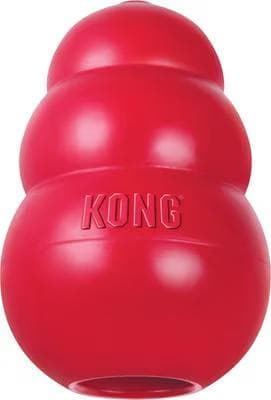
A durable rubber dog toy that can be stuffed with treats and selected by the manufacturer's size guide; supervise use and retire it when damaged.
Petful may earn a commission when you click through to Chewy, at no extra cost to you.
The examination may find dehydration, abdominal pain, a mass, or distended bowel, but some dogs have few physical findings early on. Veterinarians commonly use:
- Blood tests to assess dehydration, electrolyte changes, infection, and readiness for anesthesia
- An abdominal radiograph to look for radiopaque objects, gas patterns, and dilated intestinal loops, followed by serial radiographs when movement must be documented
- Ultrasound to identify soft objects and evaluate bowel movement, wall health, and abdominal fluid
- Contrast imaging or CT in selected difficult cases
- Endoscopy when an object appears reachable in the esophagus or stomach
The ACVS gastrointestinal foreign body guide notes that a radiograph and ultrasound are common first-line tools. Not every object shows clearly on an x-ray, so a normal-looking radiograph does not automatically end the workup when symptoms and history still point to an obstruction. Soft fabric, thin plastic, and wood may require ultrasound or repeat imaging to reveal their effects on the bowel.
Can a Dog Pass a Foreign Object on Its Own?
How long before a dog passes a foreign object? Some small, smooth objects progress over roughly 36 to 48 hours under veterinary supervision, but there is no reliable home formula. Whether and when small objects can pass on their own, and how to monitor at home, must be decided with a veterinarian. Monitoring small passable objects is reasonable only for a clinically stable dog under an explicit plan with serial radiographs. A dog intestinal blockage timeline comes from documented movement, not a calendar alone. Sharp, toxic, magnetic, linear, or relatively large objects should not be managed with a wait-and-see plan. How big an object can a dog pass? There is no safe measurement because size must be judged relative to the dog and alongside shape, material, and location.
There is no safe home method for how to clear intestinal blockage in dogs. An actual obstruction may require veterinarian-directed monitoring, endoscopy, or surgery, and vinegar, olive oil, coconut oil, laxatives, or bulky meals can worsen vomiting, delay anesthesia, or create false reassurance. Searches for foods to help dog pass foreign object do not change that rule: feed only what the treating veterinarian directs. Do not pull string from the mouth or anus because the other end may be anchored and cutting into the bowel.
- Never induce vomiting at home without vet guidance. The wrong object can tear the esophagus on the way back up, and some dogs are at high risk of inhaling vomit. Call a veterinarian or poison-control service before giving hydrogen peroxide or any other emetic.
Petful's guide explains when not to make your dog vomit and why professional advice comes first.

A large fabric-covered dog toy for supervised tug and fetch; choose the size for your dog and retire it if seams or material begin to fail.
Petful may earn a commission when you click through to Chewy, at no extra cost to you.
| Monitoring point | What to do | Stop monitoring and seek care when |
|---|---|---|
| Immediately after ingestion | Call the vet, identify the object, and follow instructions about food, water, and travel | Object is sharp, toxic, magnetic, linear, or causes choking |
| First 2 hours | Keep the dog calm and available for examination; early retrieval may still be possible | Vomiting, gagging, drooling, pain, or breathing trouble begins |
| First 24 hours of monitoring | Monitor only under a vet-approved plan and record symptoms and stool | Appetite falls, vomiting occurs, the abdomen hurts, or energy drops |
| 36 to 48 hours | Obtain the recommended recheck or serial imaging to document movement | Imaging shows no progress or clinical signs persist |
| Approaching 72 hours | Passing within 72 hours must be confirmed or the veterinarian recontacted; 72 hours is not an automatic all-clear | The object has not been seen, passage is uncertain, or any symptom develops |
If the veterinarian approves home monitoring, inspect stools without handling them directly and keep children away. Call back immediately if the dog vomits, refuses food, becomes painful or lethargic, or cannot keep water down.
Surgery, Endoscopy and What Foreign Body Removal Costs
How much does it cost to get a foreign body removed from a dog? A reasonable U.S. planning range is several hundred dollars for diagnosis and medically managed monitoring, about $800 to $3,000 for veterinary endoscopy, and roughly $2,000 to $8,000 for intestinal blockage surgery. Emergency timing, location, specialist care, hospitalization, bowel resection, and complications can move the total higher, so only the treating hospital can provide an accurate estimate.
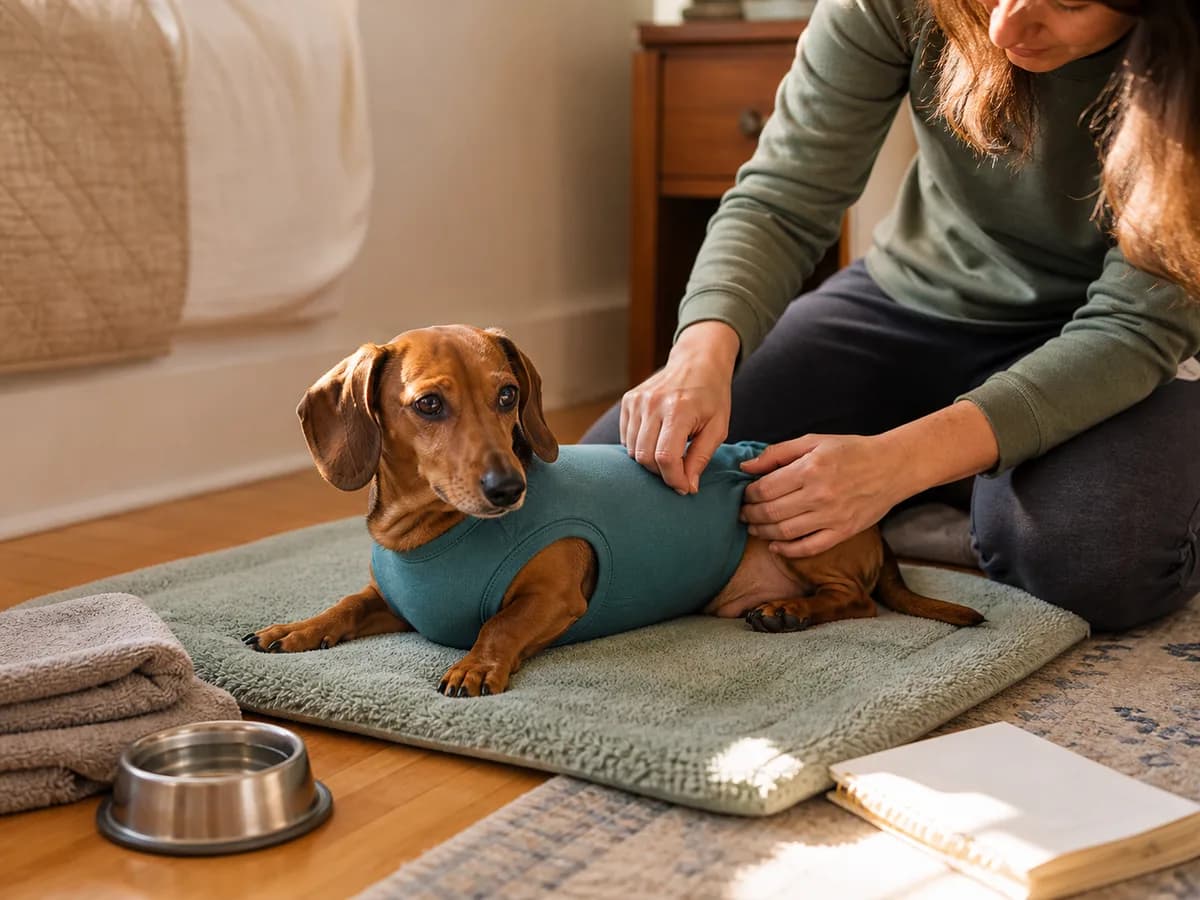
Published cost references help explain the range:
- Embrace Pet Insurance reports approximately $300 to $1,200 for foreign-object cases without surgery and $1,600 to more than $12,000 when surgery is required.
- A veterinarian-reviewed PetMD endoscopy guide places veterinary endoscopy at about $800 to $3,000, depending on the procedure and region.
- MetLife Pet Insurance gives a general $2,000 to $8,000 range for dog intestinal blockage surgery.
The endoscopy vs surgery decision and realistic U.S. cost ranges depend on where the object sits and whether the bowel is damaged. Endoscopy is least invasive when the object is reachable in the esophagus or stomach. The veterinarian passes a flexible camera through the mouth under anesthesia and may retrieve the item with specialized instruments. Endoscopy generally cannot reach an object that has traveled deep into the small intestine, and it is not the right choice when a linear foreign body or perforation is suspected.
Real treatment cost ranges by path, including x-ray, endoscopy, enterotomy, hospitalization, or bowel resection, help owners understand the insurance and cash-pay decisions that clinic pages often omit. Exploratory laparotomy allows the surgeon to inspect the entire abdominal digestive tract. A stomach incision is a gastrotomy, an intestinal incision is an enterotomy, and removal of damaged bowel followed by reconnecting healthy ends is a resection and anastomosis. The more damaged the intestine, the longer and more expensive the operation and hospitalization tend to be.
Dog foreign body surgery success rate is generally favorable with prompt retrieval. Merck describes a high survival rate after endoscopic or surgical removal, while emphasizing that perforation, infection, shock, and badly damaged tissue increase risk. Dog obstruction surgery recovery and cost both rise when damaged bowel must be removed. Ask the clinic to separate its written estimate into diagnostics, anesthesia, procedure, hospitalization, medicines, and possible complication care. Pet insurance may help only according to the policy's waiting periods, exclusions, deductible, and reimbursement terms. If you are comparing policies, Lemonade pet insurance is one option; coverage still depends on waiting periods, exclusions, deductibles, and reimbursement terms.
Recovery After Foreign Body Surgery
Recovery depends on whether the veterinarian performed endoscopy, a simple gastrotomy or enterotomy, or removed damaged intestine. The ACVS notes that pets commonly receive intravenous fluids and close monitoring for 12 to 24 hours after abdominal surgery, with a longer stay when tissue damage, shock, or infection is present. Food is restarted according to the surgical team's plan because early nutrition can support gut healing.
At home, follow the discharge instructions exactly:
- Give every pain medicine, antibiotic, and stomach medication on schedule.
- Prevent licking with the recommended cone or recovery suit.
- Restrict running, jumping, and rough play until the surgeon clears normal activity.
- Check appetite, vomiting, stool, comfort, and the incision at least twice daily.
- Call immediately for repeated vomiting, a swollen abdomen, worsening pain, weakness, fever, discharge, or an opening incision.
Foreign body surgery recovery in dogs is not complete when the skin looks healed. The bowel incision also needs time, and a leak can become life-threatening quickly. Abdominal adhesions can form as internal tissues heal, although most are not visible from outside the body. Keep every recheck appointment even if the dog seems eager to resume normal life, and report new vomiting, pain, or appetite loss rather than assuming recovery is finished.
Preventing Foreign Body Obstruction in Dogs
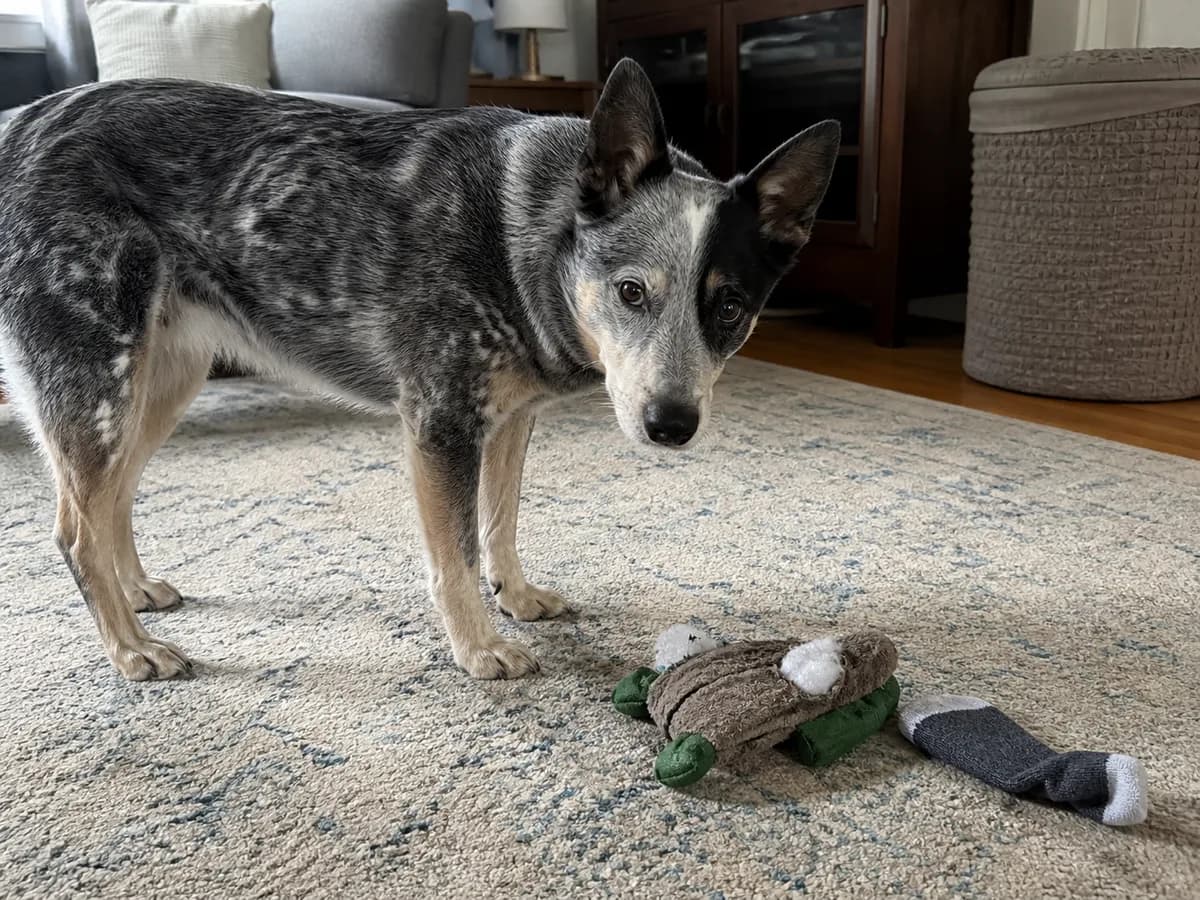
Prevention works best as a room-by-room household hazard survey. This prevention plan combines a photo survey of dangerous household objects, safe alternatives to chew-proof toys, and managing pica repeat offenders. The common swallowed objects are usually ordinary items left within reach, so compare the photo below with every room your dog can enter.
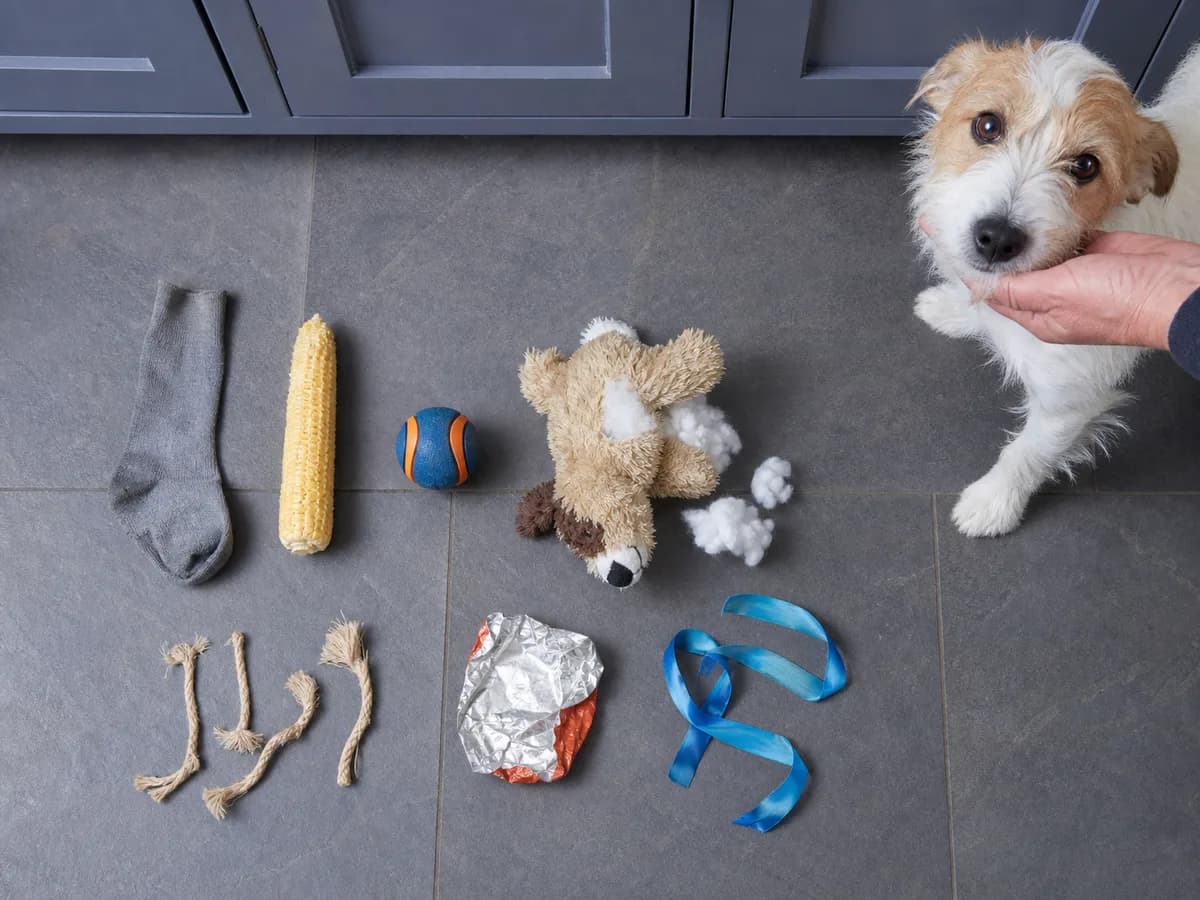
Use this checklist:
- Put laundry in a closed hamper and keep bedroom and bathroom doors shut for sock eaters.
- Do not trust toys simply because they are marketed as chew-proof toys. Choose safe chew toys that are too large to swallow and appropriate for the dog's chewing strength, then discard them when they crack or lose pieces. A size-appropriate KONG Classic Dog Toy can be one supervised chewing option, but no toy is swallow-proof.
- Discard cracked balls, exposed squeakers, shredded rope, and toys missing pieces.
- Lock trash cans and remove corn cobs, bones, skewers, food wrappers, and hygiene products promptly.
- Keep string, ribbon, yarn, fishing line, needles, batteries, magnets, and children's toys in closed storage.
- Supervise dogs outdoors around stones, sticks, fruit pits, mulch, and discarded food. For supervised fetch or tug, the KONG Wubba Classic Dog Toy is another option, but remove it if fabric or seams begin to fray.
- Check the floor after parties, holidays, craft projects, and children's playtime.
Veterinarians call repeated nonfood eating pica. Managing pica repeat offenders takes more than a cleaner floor: ask the veterinarian about medical causes of increased appetite, then combine behavior management, enrichment, training, and tighter access control. Petful's guide to pica in dogs explains when persistent object eating points to a health or behavior problem.
Frequently Asked Questions (FAQ)
Feed something for this purpose only under veterinary guidance from the veterinarian who assessed the object. The safest answer to foods to help dog pass foreign object searches is that no food reliably clears an obstruction. Depending on the object and imaging, the veterinarian may direct the usual diet, a bland meal, or added fiber for bulking the stool. In other cases, the dog needs an empty stomach for sedation, endoscopy, or surgery. Do not use bread, pumpkin, oils, vinegar, laxatives, or a large meal as a substitute for an examination.
Whether an object can pass depends on its size relative to your dog's size, its location, and smooth versus sharp objects. There is no safe size cutoff. A smooth object that passes through a large dog's stomach could obstruct a small dog, while a thin sharp or linear object can be dangerous at any size. Let imaging and the veterinarian's assessment decide whether monitoring is appropriate.
Veterinary Sources
BVMS, MRCVS
Dr. Pippa Elliott, BVMS, MRCVS, is a veterinarian with nearly 30 years of experience in companion animal practice. Dr. Elliott earned her Bachelor of Veterinary Medicine and Surgery from the University of Glasgow. She was also designated a Member of the Royal College of Veterinary Surgeons. Married with 2 grown-up kids, Dr. Elliott has a naughty Puggle named Poggle, 3 cats and a bearded dragon.
Sign up for expert-backed reviews and safety alerts all in one place.