Pica in Dogs: How to Stop a Dog From Eating Rocks and Other Objects
If your pup can't get enough of eating potentially harmful, non-nutritional items, you can train him to change his behavior and stay safe.

Puppies get into things, and even with the best training, odd stuff is going to find its way into their mouths.
This eating behavior is sometimes part of normal development, but it can quickly turn serious if left untreated or made worse by mismanagement. A dog can learn that inappropriate chewing is a great way to get attention, but the chewing may also be a sign of pica.

Sign up for expert-backed reviews and safety alerts all in one place.
What is Pica in Dogs?
Pica in dogs when a dog has the compulsive urge to consume non-edible items, such as rocks, dirt, cardboard, and clothing. If it is pica, you will probably witness abnormal behavior — quite often attention-seeking behavior — that has been so reinforced that it spirals out of control. Your dog may grab a non-nutritional item because doing so gets a response from you, and swallowing the item is a satisfying way for your dog to end the challenge.
I recently encountered a worst-case scenario that I was fortunate enough to help catch in time: A client had a young Weimaraner who had eaten a rock on 2 occasions. We avoided a more serious veterinary emergency because we saw the symptoms early and got the puppy treated before any real damage was done.
When we noticed that he wasn’t acting like himself, we immediately took him to the veterinarian. An X-ray and a few surgeries later, he was on the mend.
 Sponsored
Want a vet's help with your dog's anxiety or behavior?
Talk to a licensed vet at Dutch over video, often the same day. They can recommend treatment and prescribe it when it's appropriate.
Use code Pets60
Plans start at $12/month · covers up to 5 pets
- Licensed vets in most states
- Rx for 150+ conditions
- 4.7 on Trustpilot
Interesting Facts About Pica in Dogs
Pica in dogs is a fascinating and complex condition with several intriguing aspects worth noting:
- Common Items Consumed: Dogs with pica can eat a variety of non-food items, including rocks, dirt, plastic, fabric, and even metal. Each dog may have a specific preference for the type of non-edible item they consume.
- Behavioral vs. Medical Causes: Pica can be driven by both behavioral issues, such as boredom or anxiety, and medical conditions, like nutritional deficiencies or gastrointestinal disorders. Identifying the root cause is crucial for effective treatment.
- Breed Predispositions: Certain breeds may be more prone to pica. High-energy breeds or those with a predisposition for anxiety, such as Labrador Retrievers, Dachshunds, and Weimaraners, often exhibit this behavior.
- Age Factor: While pica can occur at any age, it is more commonly seen in adolescent and adult dogs. Puppies often explore the world with their mouths, which can be mistaken for pica but is usually a phase they grow out of.
- Potential Dangers: The ingestion of non-edible items can lead to serious health risks, including intestinal blockages, perforations, and poisoning. Items like sharp objects or toxic substances are particularly hazardous.
- Geophagia and Coprophagia: Pica includes specific behaviors such as geophagia (eating soil or dirt) and coprophagia (eating feces). While coprophagia is often linked to dietary imbalances, geophagia can sometimes indicate anemia or other health issues.
Prevent Inappropriate Chewing
When you have a dog who has odd eating habits, prevent the behavior from happening at all and start a behavioral modification program.
The first step in implementing a treatment plan is to stop the dog immediately from continuing the unwanted behavior, both for behavioral and safety reasons.
Because you can’t train away a health issue, it is a good idea to see your vet first to rule out a medical problem. Nutrition could certainly be a cause of odd consumption habits, so check the dog’s diet and the condition of his digestive system.

Limit Your Dog's Access to Non-Nutritional Objects
Make sure the dog's area at home is cleared of anything small enough to consume. It might be difficult, but it's better to confine your dog than risk continued injury.
Use a basket-type muzzle on walks as a preventive measure. Dogs will commonly (and often reflexively) pull against the pressure of the leash, so avoid a retractable leash and don’t allow the dog to wander.
If you tug on the leash, you're likely to make the behavior worse. I have seen too many dogs try harder to pull in response to someone tugging on the leash.
 Sponsored
Vet care that's always there
Unlimited video calls and messaging with licensed vets for less than a typical vet visit. One membership covers up to five pets.
Use code Pets60
Plans start at $12/month · covers up to 5 pets
- Licensed vets in most states
- Rx for 150+ conditions
- 4.7 on Trustpilot
How to Treat Pica in Dogs
Treating pica involves addressing both the behavioral and potential medical causes. Rewarding your dog during walks with a small treat and praise for looking up at you is a good way to go. The most successful walking solution is to teach that walking with his head up will be more engaging than trying to scan the ground for something to eat.
Of course, as with any training exercise, it is best to initially train where there are no distractions:
- Start on a clean sidewalk or driveway, or even inside your house in a clear hallway.
- Build up to eventually going outside after you have had good success with the dog walking without scanning the ground.
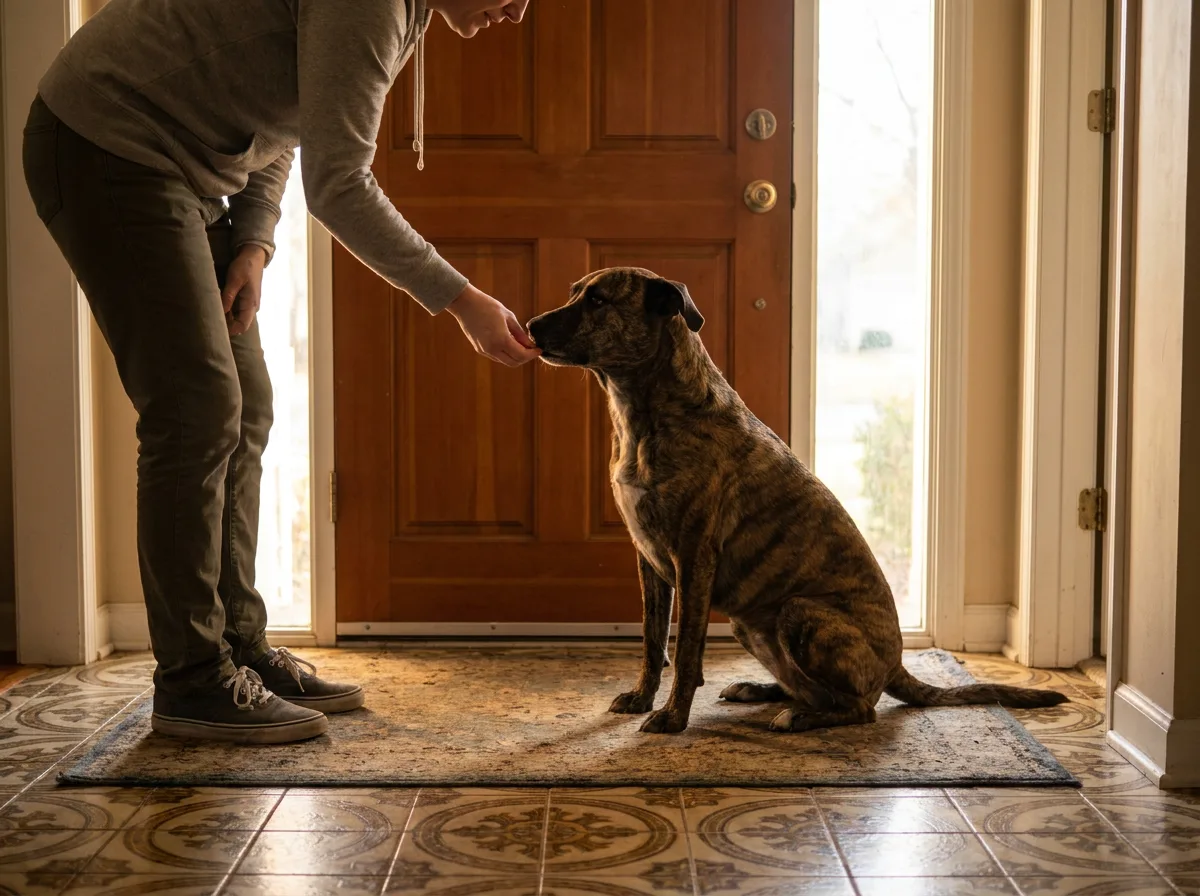
Another approach is to teach the dog that when he sees something, it becomes the cue for him to turn and look at you. Give him a “touch” command or another targeting response (targeting is useful for other behaviors too, such as teaching your dog to stand for grooming or even to come to you).
See this type of training in action with Ghost the Weimaraner. We used targeting, attention and a loose leash walking exercise to teach him to walk without grazing:
- Start by teaching your dog to touch his nose to your hand.
- When the dog has effectively learned to turn toward you and touch your hand, you can use that training when he sees something on the ground.
- In time, his cue to touch can be prompted by seeing something on the ground. Then your dog can learn that an alternate behavior is more rewarding than eating something off the ground.
Natural Remedies for Pica in Dogs
Consider setting time aside every day to do some training exercises and games with your dog in the backyard. Make your dog way more interested in interacting with you while burning off that extra mental energy that your stressed and/or bored dogs have bottled up that lead to pica. Additionally, pet parents can help their dogs by providing safe and sturdy chew toys and food puzzles.
- 1Pica in dogs is a condition where dogs have the urge to eat non-edible items.
- 2Causes of pica can be both medical and behavioral, so a vet check is crucial.
- 3Training and providing appropriate chew toys can help manage and reduce pica behavior.
- 4Consistent, positive reinforcement is essential in changing this behavior.
- 5These training exercises take time and practice. If you have a serious problem with your dog, see a qualified positive trainer or behavior consultant.
- 6Punishing your dog might suppress the symptoms but could also make the dog unpredictable and cause problematic side effects. The International Association of Animal Behavior Consultants and the Pet Professional Guild both have searchable directories to find someone qualified to help your dog in your area.
Frequently Asked Questions (FAQ)
Pica in dogs is a condition where they have a compulsive urge to eat non-edible items such as rocks, dirt, plastic, and fabric.
Treat pica in dogs by addressing underlying medical issues, providing behavioral training, and removing access to non-edible items.
Pica in dogs can be caused by medical conditions like nutritional deficiencies or gastrointestinal disorders, as well as behavioral issues such as boredom or anxiety.

Jonathan P. Klein, CDBC, CPDT-KA, was a nationally recognized dog trainer and behavior expert (see his Wikipedia page here). He held certifications as a trainer from the Certification Council of Professional Dog Trainers and as a dog behavior consultant by the International Association of Animal Behavior Consultants. Jonathan headed the “I Said Sit!” School for Dogs in West Los Angeles, which received the Best Trainer award by CityVoter consistently from 2009 to 2014. He was called upon as a dog behavior expert by numerous media outlets including The Associated Press, Parents Magazine, National Geographic Kids and USA Today. Sadly, Jonathan died of cancer in December 2016.
Sign up for expert-backed reviews and safety alerts all in one place.