Flea Bites on Dogs: Identification, Pictures and Treatment
Flea bites on dogs look like small red raised bumps clustered on the lower back, tail base and belly. A veterinarian explains how to identify flea bites, confirm flea dirt with a simple paper towel test and recognize flea allergy dermatitis.

BVMS, MRCVS
Petful is reader supported. As an affiliate of platforms like Amazon and Chewy, we may earn a commission when you buy through links on this page. There is no extra cost to you.
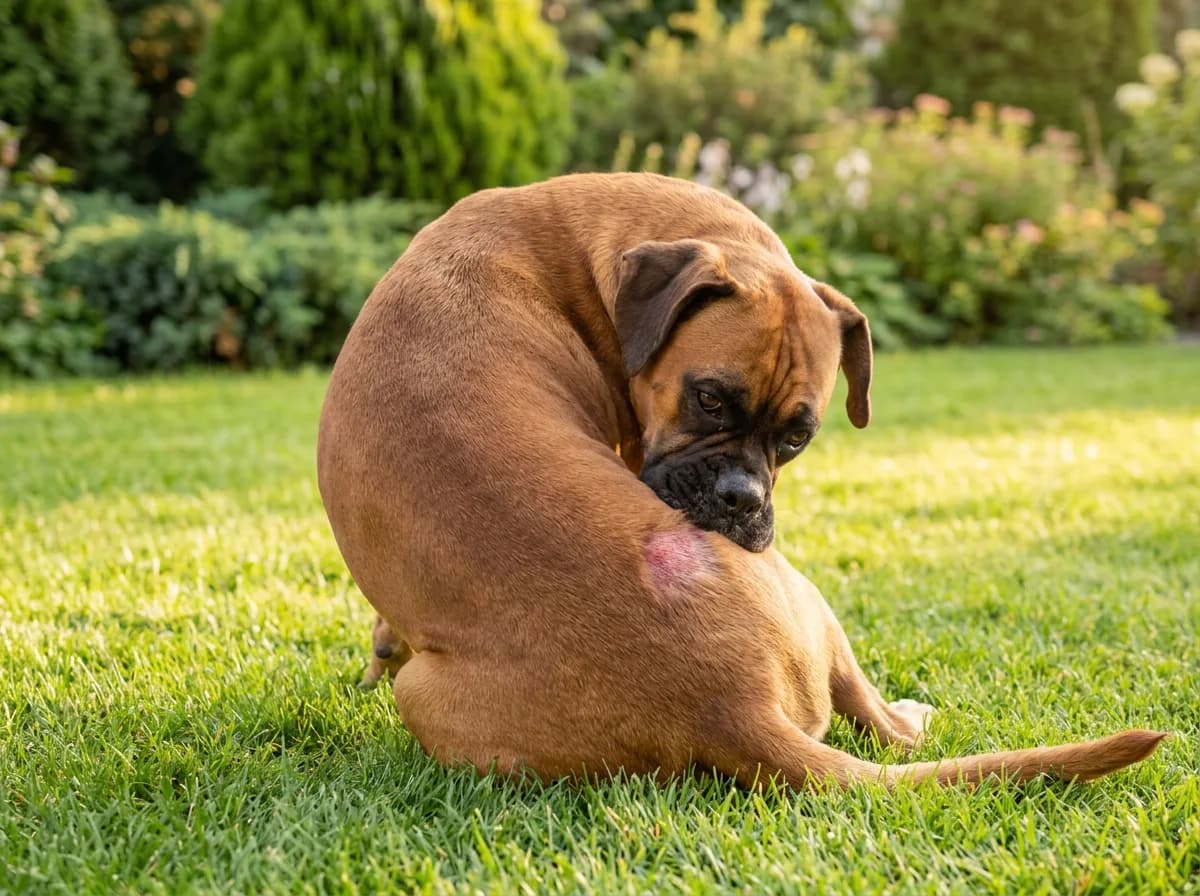
Flea bites on dogs show up as small red raised bumps, usually clustered around the lower back, base of the tail, belly and inner thighs, and they itch out of all proportion to their size. According to the Companion Animal Parasite Council (CAPC), the adult fleas you can see on your dog represent only about 5% of the total infestation, which is why so many owners find suspicious bites without ever spotting a single flea. As a veterinarian, I diagnose flea bites more often from the pattern of the bumps, the presence of flea dirt and the dog's reaction than from catching the fleas themselves. This guide shows you exactly what to look for, how to confirm fleas in under a minute, how to recognize flea allergy dermatitis and how to soothe the bites safely at home.
- 1Flea bites on dogs look like small red raised bumps clustered on the lower back, tail base, belly and groin
- 2Flea dirt (black specks that smear reddish brown on a damp paper towel) confirms fleas even when you cannot see them
- 3Flea allergy dermatitis is an allergic reaction to flea saliva and needs veterinary treatment, not just home care

Sign up for expert-backed reviews and safety alerts all in one place.
What Do Flea Bites on Dogs Look Like?
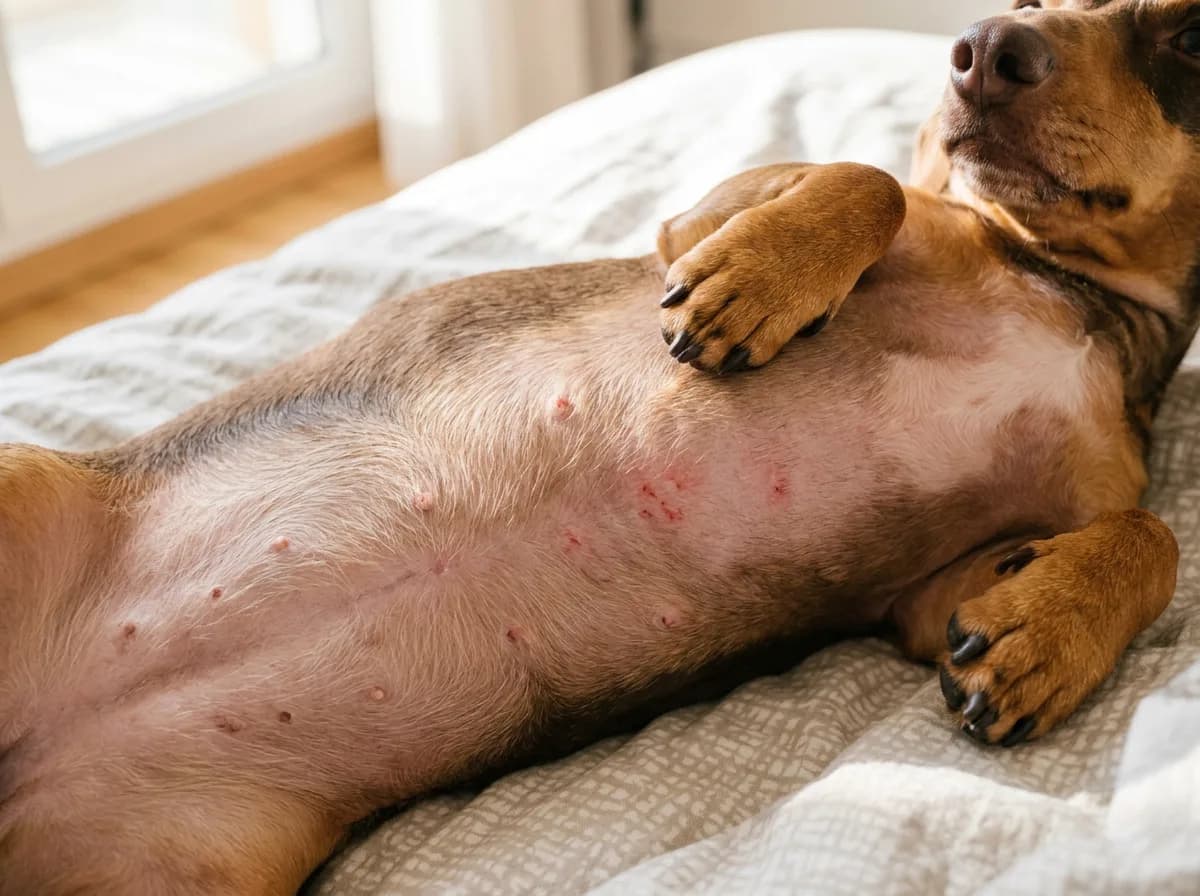
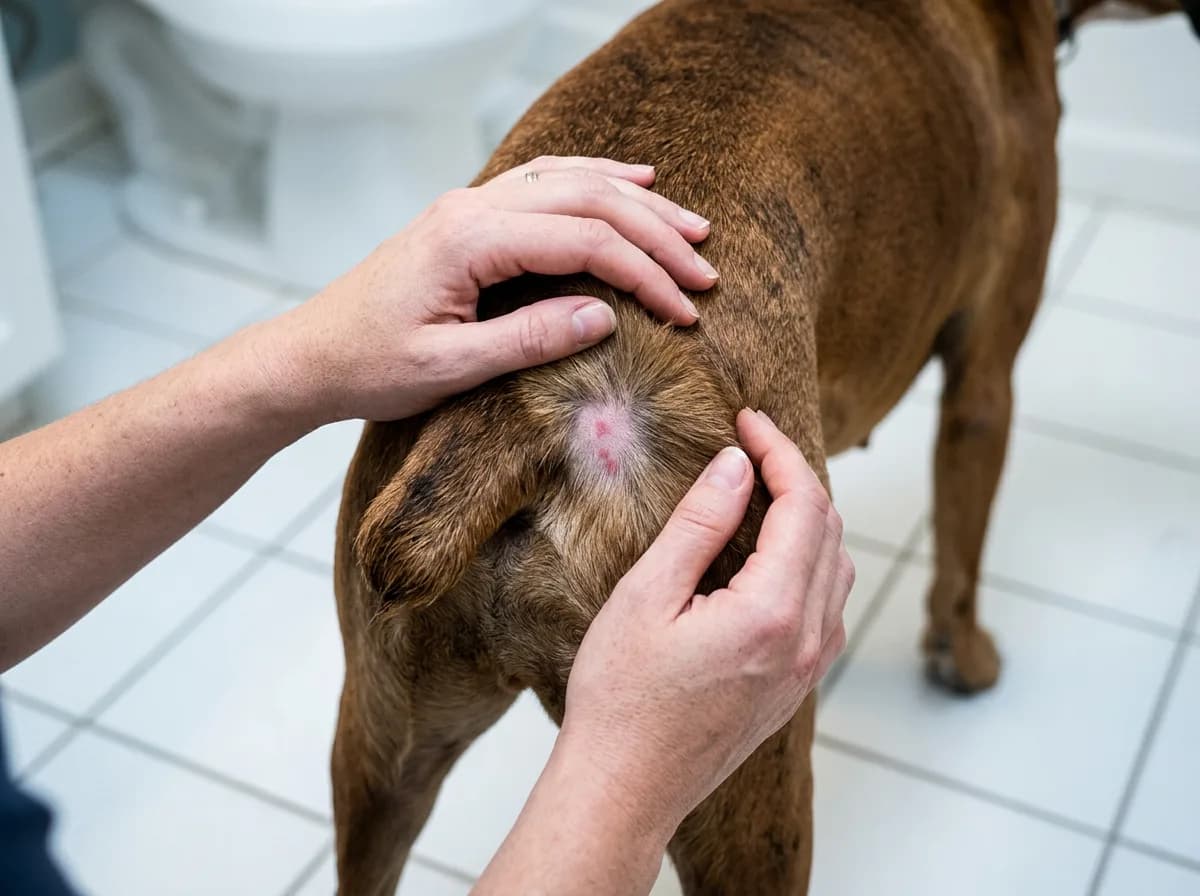
Flea bites on dogs are small red raised bumps, each about the size of a pinhead, often surrounded by a slightly reddened halo of irritated skin. They typically appear in clusters or short lines of two to three bumps, concentrated on the lower back, base of the tail, belly, groin and inner thighs, where the coat is thinner and fleas feed most easily.
Use this quick checklist to judge whether the bumps you are seeing fit the flea pattern:
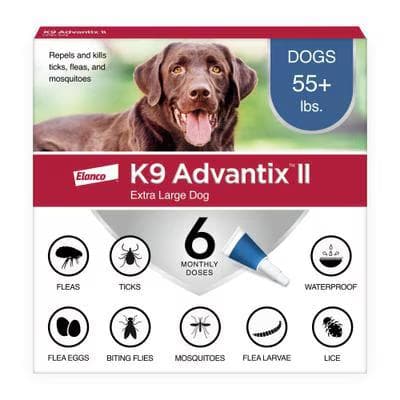
A monthly topical for dogs over 55 lbs that repels and kills ticks, fleas, and mosquitoes. Repelling ticks before they bite is a useful layer during heavy tick season.
Petful may earn a commission when you click through to Chewy, at no extra cost to you.
- Size and shape: pinhead-sized red bumps, sometimes with a tiny scab or crust at the center where your dog has scratched
- Location: lower back, base of the tail, belly, groin and inner thighs are the classic hot spots
- Grouping: clusters or short lines rather than single isolated bumps
- Behavior: sudden intense scratching, chewing at the rump, or "corncobbing" (nibbling the skin with the front teeth)
- Supporting evidence: black specks (flea dirt) in the coat, red or irritated skin, thinning hair over the rump

 Sponsored
Need flea, tick, or parasite care for your dog?
A licensed vet at Dutch can recommend the right preventive and prescribe it when it's appropriate. Annual members get 20% off their first flea and tick order.
Use code Pets60
Plans start at $12/month · covers up to 5 pets
- Licensed vets in most states
- Rx for 150+ conditions
- 4.7 on Trustpilot
Where Flea Bites Cluster on a Dog's Body
Fleas are not random feeders. The cat flea, Ctenocephalides felis, which is the species found on most dogs despite its name, gravitates to warm, protected areas where the dog cannot easily reach with teeth or claws. That is why bites concentrate over the lower back and base of the tail, along the belly, and inside the thighs. Bites on the stomach and belly are often the easiest to spot because the fur is thin there and the red bumps stand out against pale skin. Descriptions only go so far, which is why the pictures of flea bites on dogs throughout this guide show each pattern on real skin: match what you see at home against them before deciding.
If the bumps you are finding sit mainly on the face, ear margins or elbows instead, fleas become less likely and mites or environmental allergies move up the list. Location is one of the most reliable clues you have.
Flea Bites vs Other Causes of Itchy Bumps
Plenty of skin problems mimic flea bites, and treating the wrong one wastes weeks. This differential table separates the common causes by appearance, body location and the telltale evidence each leaves behind.
| Cause | What It Looks Like | Typical Location | Telltale Evidence |
|---|---|---|---|
| Flea bites | Small red raised bumps in clusters, tiny central crusts | Lower back, tail base, belly, groin, inner thighs | Flea dirt that smears reddish brown; live fleas on a flea comb |
| Sarcoptic mange (mites) | Crusty red papules, severe hair loss | Ear margins, elbows, hocks, chest | Intense itch, thick crusts; mites confirmed by vet skin scrape |
| Environmental allergies (atopy) | Diffuse redness, few distinct bumps | Face, paws, armpits, ears | Paw licking, ear infections, seasonal pattern, no flea dirt |
| Tick bites | One larger bump, sometimes with the tick attached | Head, neck, ears, between toes | Single lesion; visible tick or a small crater after removal |
| Hot spot | One moist, oozing, rapidly spreading sore | Anywhere, often under thick coat | Wet matted fur, pain, sudden overnight appearance |
The evidence column matters more than the look of any single bump. A dog with clustered bumps at the base of the tail plus black specks that smear reddish brown has fleas until proven otherwise, even if you never see one move.
So how do you tell if your dog has flea bites? Look for pinhead-sized red raised bumps clustered on the lower back, tail base, belly and groin, then confirm the diagnosis by finding flea dirt with a flea comb. When both line up, treat the whole infestation, not just the bites.
Flea Dirt and Other Signs of Fleas on Dogs
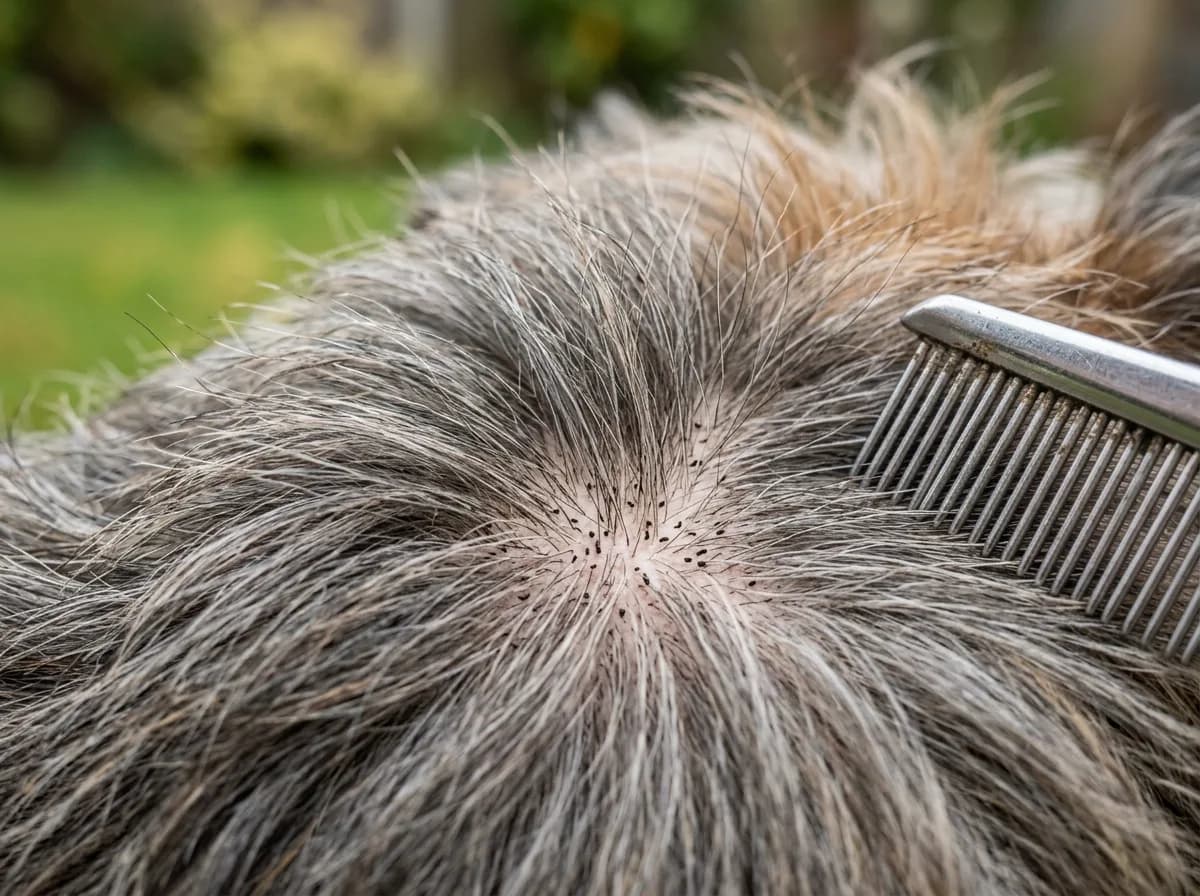
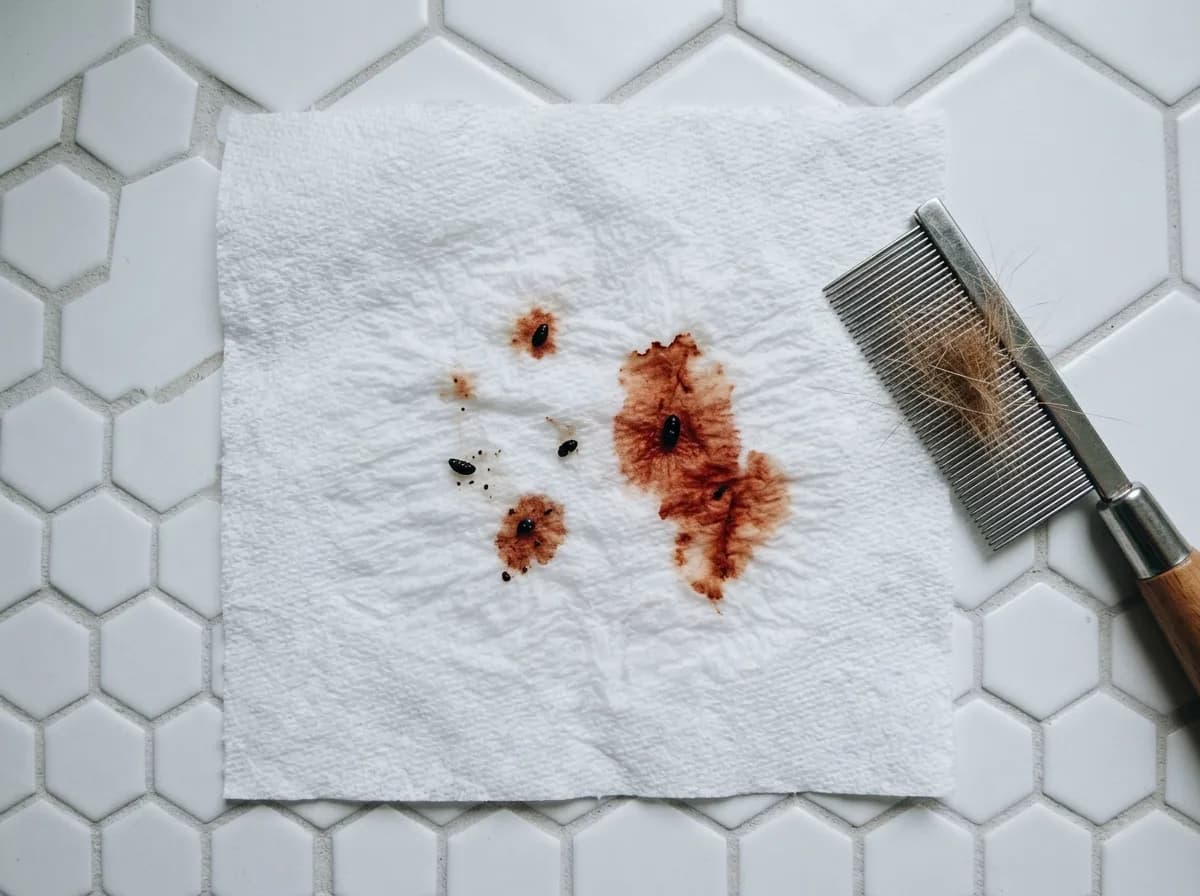
You do not need to see fleas to confirm them. Flea dirt is the diagnostic shortcut every veterinarian relies on, and it never lies about whether fleas are feeding on your dog.
The signs of fleas on dogs, roughly in the order owners tend to notice them:
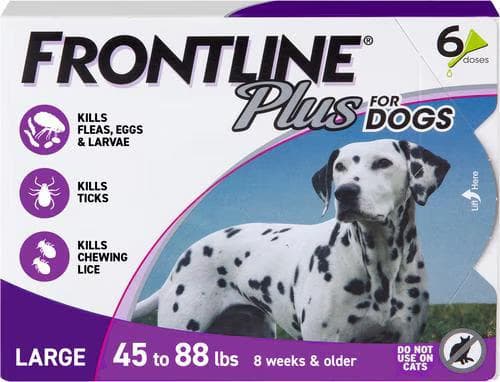
A monthly topical spot-on for large dogs 45 to 88 lbs that kills fleas, ticks, and chewing lice. A waterproof pick for dogs who do better with a topical than an oral chew.
Petful may earn a commission when you click through to Chewy, at no extra cost to you.
- Scratching, biting and chewing, especially at the rump, tail base and belly
- Flea dirt: black specks like ground pepper scattered through the coat, densest over the lower back
- Small red raised bumps in the classic cluster pattern described above
- Restlessness: sudden jumping up, spinning to chew at the back end, interrupted sleep
- Hair loss or broken hairs over the rump and tail base from constant chewing
- Live fleas: fast, reddish brown, flat-bodied insects that dart through the fur (often the last thing you actually see)
- Pale gums in puppies or small dogs with heavy infestations, a warning sign of flea anemia that needs a vet the same day
What Flea Dirt Looks Like
Flea dirt is flea droppings: digested blood excreted by adult fleas as they feed. It looks like black pepper or tiny comma-shaped black specks sitting on the skin at the base of the hairs. Part the fur over your dog's lower back or run a fine-toothed flea comb through the coat, and the specks collect on the skin and in the comb's teeth.
Ordinary dirt and flea dirt look nearly identical to the naked eye. The difference is what they are made of, and that is exactly what the damp paper towel test exposes.
The Damp Paper Towel Test: Confirm Fleas in Under a Minute
This is the single most useful home test in veterinary dermatology, and no equipment beyond a comb and a paper towel is required:
- Dampen a white paper towel or cotton pad with water and lay it flat.
- Run a flea comb through the fur over your dog's lower back and tail base, pressing gently down to the skin.
- Tap the comb's debris onto the damp paper towel.
- Wait 30 to 60 seconds and watch the specks.
- Read the result: specks that dissolve into reddish brown halos are flea dirt (digested blood), which confirms fleas. Specks that stay black or gray are ordinary dirt.
A positive paper towel test means fleas are actively feeding on your dog right now, even if you have not seen a single adult flea. That is your cue to move from diagnosis to treatment.
- Concentrate your flea comb passes over the lower back, tail base and belly. These warm, thin-coated zones are where fleas feed and where flea dirt accumulates, so a minute of combing there tells you more than ten minutes anywhere else.
Flea Allergy Dermatitis (FAD) in Dogs
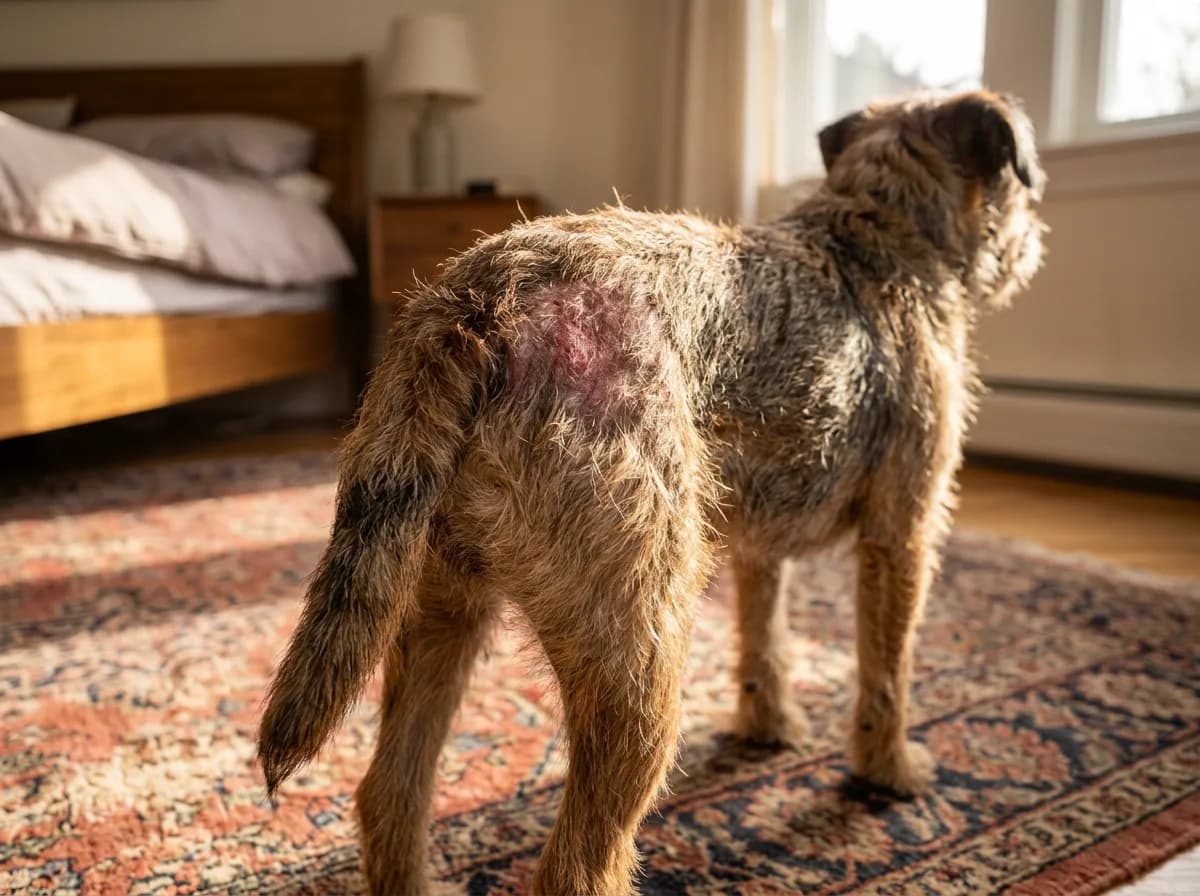
Flea allergy dermatitis is the most common skin allergy in dogs, and it changes the math on flea bites completely. A normal dog needs many bites to get uncomfortable. A dog with FAD reacts to proteins in flea saliva, so a single bite from a single flea can trigger days of intense, self-destructive itching. The Merck Veterinary Manual describes FAD as a hypersensitivity to flea saliva antigens, meaning the immune system, not the bite itself, drives the damage.
Signs of Flea Allergy Dermatitis
FAD has a recognizable signature that goes well beyond ordinary flea bites:

An over-the-counter nitenpyram tablet that starts killing adult fleas within 30 minutes. A fast knockdown for an active infestation, no prescription required, useful alongside a longer-term preventive.
Petful may earn a commission when you click through to Chewy, at no extra cost to you.
- Intense, frantic itching focused on the back half of the body
- Hair loss over the rump, tail base and back of the thighs, often in a triangle pattern pointing down the tail
- Red, inflamed, thickened skin in the same distribution
- Scabs, crusts and small bumps (papules) from scratching and chewing
- Hot spots: moist, raw patches that appear almost overnight
- Darkened, leathery skin in long-standing cases
- Very few visible fleas, because allergic dogs groom so obsessively they remove the evidence
That last point trips up many owners. "It cannot be fleas, I have never seen one" is the most common thing I hear in FAD consultations. Allergic dogs chew and lick away fleas and flea dirt faster than either can accumulate, so a clean-looking coat does not rule FAD out.
 Sponsored
Vet care that's always there
Unlimited video calls and messaging with licensed vets for less than a typical vet visit. One membership covers up to five pets.
Use code Pets60
Plans start at $12/month · covers up to 5 pets
- Licensed vets in most states
- Rx for 150+ conditions
- 4.7 on Trustpilot
Will Benadryl Help a Dog With Flea Allergies?
Benadryl (diphenhydramine) can take the edge off mild allergic itching in some dogs, but it is genuinely underpowered against flea allergy dermatitis. Antihistamines block only one small branch of the allergic cascade, and studies in veterinary dermatology consistently show modest results for FAD-level inflammation. Prescription anti-itch medications from your veterinarian work far better and act within hours rather than days.
If you do try Benadryl while waiting for a vet visit, follow these safety rules:
- Ask your veterinarian for the dose first. Dosing is weight-based, and dogs with certain conditions (glaucoma, seizures, heart disease) should not take it at all.
- Use plain diphenhydramine only. Combination products with decongestants (like pseudoephedrine) or sweeteners such as xylitol are toxic to dogs.
- Treat it as a bridge, not a fix. The itching stops for good only when the fleas are eliminated and the skin inflammation is treated.
- Book a vet visit if your dog has hair loss, raw or bleeding skin, scabs spreading beyond a small area, a suspected hot spot, pale gums, or itching that continues more than a few days after flea treatment. FAD and skin infections need prescription treatment, and flea anemia in puppies is an emergency.
Veterinary treatment for FAD usually combines three things: strict, fast-acting flea control on every pet in the home, prescription anti-itch medication to break the scratch cycle, and antibiotics or medicated shampoo if the skin has become infected. Dogs with FAD also need year-round flea prevention afterward, because for them a single missed month can undo everything.
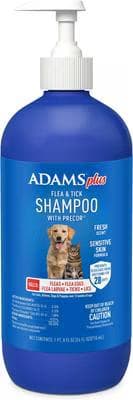
A gentle flea and tick shampoo for cats and dogs that kills ticks on contact and soothes sensitive skin. Handy for washing your dog down after a hike.
Petful may earn a commission when you click through to Chewy, at no extra cost to you.
How to Treat Flea Bites on Dogs at Home
For an ordinary dog with ordinary flea bites and no signs of FAD or infection, home care genuinely helps while the flea treatment does its work. The goal is to soothe flea bites while they heal, prevent scratching damage and remove the fleas causing new bites.
Here is how to treat flea bites on dogs safely at home:
- Treat the fleas first. Bites keep coming until the fleas stop feeding, so an effective flea treatment for every pet in the household is step one, not an afterthought.
- Bathe with a gentle, dog-formulated shampoo. Cool or lukewarm water plus an oatmeal-based or sensitive-skin dog shampoo rinses away allergens and flea dirt and calms irritated skin. Skip harsh flea shampoos on already inflamed skin.
- Apply a cool compress to angry, red areas for five minutes at a time. Simple, unglamorous and effective.
- Stop the scratching damage. A recovery cone or a soft T-shirt over belly bites for a day or two lets the skin heal instead of being reopened.
- Wash bedding in hot water and vacuum the areas where your dog sleeps to remove eggs and larvae that would restart the cycle.
- Watch each bite for 48 hours. Normal bites fade over two to three days. Bites that grow, ooze, crust over or multiply need a vet, not more home care.
Just as important is what not to put on flea bites:
- No human creams by default. Hydrocortisone, antibiotic ointments and anesthetic gels get licked off and swallowed; use them only if your vet specifically approves.
- No tea tree oil or undiluted essential oils. Both are toxic to dogs at surprisingly low doses.
- No alcohol or hydrogen peroxide on broken skin; they sting and slow healing.
- No human antihistamines or pain relievers without veterinary guidance. Ibuprofen and acetaminophen are dangerous to dogs even in small amounts.
If bites keep appearing after treatment, the environment is usually the reason. Our guide to flea foggers explains why the common quick fix leaves the infestation running.
Can Dog Fleas Bite Humans?
Yes. Dog fleas, which are almost always cat fleas (Ctenocephalides felis) regardless of the name, will bite people when the opportunity arises, and flea bites on humans from dogs are a common reason households finally discover an infestation. Human flea bites typically appear as small, red, intensely itchy bumps clustered around the ankles and lower legs, often in lines of two or three.
The reassuring part: fleas cannot live on people. Human skin is too exposed, so fleas bite, feed briefly and jump off. If family members are getting bitten, it means the flea population in the home environment has grown large enough that hungry, newly emerged fleas are jumping on whatever warm body walks past. That is a sign to treat the house and every pet in it, not just the dog. Persistent bites on people despite pet treatment usually mean pupae are still hatching in carpets and soft furnishings, which can continue for several weeks.
Human flea bites are managed the same way as any minor insect bite: wash the area, resist scratching and use an over-the-counter anti-itch cream if needed. People react to flea saliva just as variably as dogs do, so one family member may be covered in welts while another sharing the same couch has nothing at all. Neither reaction changes the underlying fix, which is clearing the infestation from the pets and the home.
What if Your Dog Is Itching but You Cannot Find Fleas?
A negative flea comb and a clean paper towel test do not automatically clear fleas, especially in allergic dogs that groom the evidence away. But when you have combed thoroughly, tested repeatedly and found nothing, it is time to consider the differentials: environmental allergies, food allergies, mites, skin infections and dry skin can all mimic flea bites. Our guide to why a dog is itching but has no fleas walks through each cause and how veterinarians tell them apart.
The one clue that still points back to fleas even with a clean comb: itching and hair loss concentrated over the rump and tail base. That distribution is so characteristic of flea allergy that many veterinarians will trial strict flea control before pursuing allergy testing.
Getting Rid of the Fleas Behind the Bites
Identifying flea bites is diagnosis. Ending them is a separate job, and it means clearing the fleas from your dog and your home at the same time. Remember the CAPC math from the top of this article: the adult fleas biting your dog are about 5% of the problem, while the other 95% (eggs, larvae and pupae) is developing in carpets, bedding and floor cracks.
Two resources take it from here:
- Our step-by-step guide on how to get rid of fleas on dogs covers the full protocol: treating the dog, treating other pets and breaking the environmental cycle.
- If the bites are multiplying and you need the fastest options, see what kills fleas on dogs instantly for same-day flea kill and what each option can and cannot do.
Expect the full cleanup to take several weeks even when everything is done right, because no product kills flea pupae; they must hatch into adults before treatment can reach them. New bites trailing off gradually, rather than stopping overnight, is normal and not a sign of failure.
One rule is non-negotiable: every pet in the household gets treated on the same schedule, including the indoor cat who "never has fleas." A single untreated animal acts as a mobile flea nursery, quietly reseeding the carpets with eggs while the treated dog takes the blame for the bites that keep appearing. Just remember that cats need cat-specific products, since several common dog treatments are dangerous to them.
Preventing Future Flea Bites
Once the bites have healed, prevention is what keeps them from coming back, and consistency matters more than product choice. Fleas reproduce fastest in warm months, but indoor heating keeps homes flea-friendly year-round, which is why most veterinarians, along with Companion Animal Parasite Council guidelines, recommend 12-month prevention rather than seasonal use.
The main prevention categories, at a glance:
- Prescription oral preventives (NexGard, Simparica, Bravecto, Credelio): monthly or 12-week chews that kill fleas before they can establish; these require a vet prescription.
- OTC topical spot-ons (Frontline Plus, Advantage II, K9 Advantix II): applied monthly to the skin; note that K9 Advantix II contains permethrin, which is toxic to cats, so cat households should choose a different option or keep pets strictly separated after application.
- Flea collars (such as Seresto): long-wearing option providing up to 8 months of protection.
Our complete guide to flea treatment for dogs compares every category in depth, including safety notes for multi-pet homes, puppies and seniors.
Two safety notes are worth knowing before that conversation with your veterinarian:
- The isoxazoline advisory: the FDA has advised that isoxazoline products (the ingredient class in NexGard, Simparica, Bravecto and Credelio) can be associated with rare neurologic side effects such as tremors or seizures in susceptible dogs, so mention any seizure history up front.
- Puppy age and weight limits: very young puppies have minimum age and weight restrictions on nearly every product, one more reason product selection belongs in a vet conversation rather than a guessing game in the pet store aisle.
Whichever product you choose, the dose date is the weak link: a preventive given three weeks late is an open window for reinfestation. A free MyPetID profile lets you log each flea treatment, track dosing frequency and get automatic reminders before the next dose is due, which closes that window for good.
Dogs with confirmed flea allergy dermatitis deserve one extra rule: no gaps, ever. For them, prevention is not just comfort but treatment, and a single flea getting through can restart the entire allergic cycle.
Uncomplicated flea bites fade within two to three days once the fleas are eliminated. Bites that persist longer, spread or become crusty suggest continued flea exposure, infection or flea allergy dermatitis and deserve a vet check.
Yes. Fleas hitchhike indoors on clothing, other pets and wildlife near doorways. Indoor dogs with flea bites usually have an established home infestation, so the house needs treating along with the dog.
They can. Fleas transmit tapeworms when a dog swallows an infected flea while grooming, and heavy infestations can cause anemia in puppies and small dogs. Both are additional reasons to treat promptly.
A cool compress and a gentle oatmeal-based dog shampoo are the safest home options. Avoid human creams, essential oils, alcohol and peroxide, and ask your veterinarian before giving any oral medication.
BVMS, MRCVS
Dr. Pippa Elliott, BVMS, MRCVS, is a veterinarian with nearly 30 years of experience in companion animal practice. Dr. Elliott earned her Bachelor of Veterinary Medicine and Surgery from the University of Glasgow. She was also designated a Member of the Royal College of Veterinary Surgeons. Married with 2 grown-up kids, Dr. Elliott has a naughty Puggle named Poggle, 3 cats and a bearded dragon.
Sign up for expert-backed reviews and safety alerts all in one place.