Ear Mites in Cats: Symptoms, What Kills Them and Treatment
Ear mites in cats cause coffee-ground debris and nonstop scratching. A vet explains how to confirm them, what kills them fastest, prescription vs OTC drops, safe ear cleaning, and how to stop reinfestation.

BVMS, MRCVS
Petful is reader supported. As an affiliate of platforms like Amazon and Chewy, we may earn a commission when you buy through links on this page. There is no extra cost to you.
This pet health content was written by a veterinarian, Dr. Pippa Elliott, BVMS, MRCVS. If you have questions or concerns, call your vet, who is best equipped to ensure the health and well-being of your pet. This article is for informational purposes only and is not a substitute for professional veterinary advice.
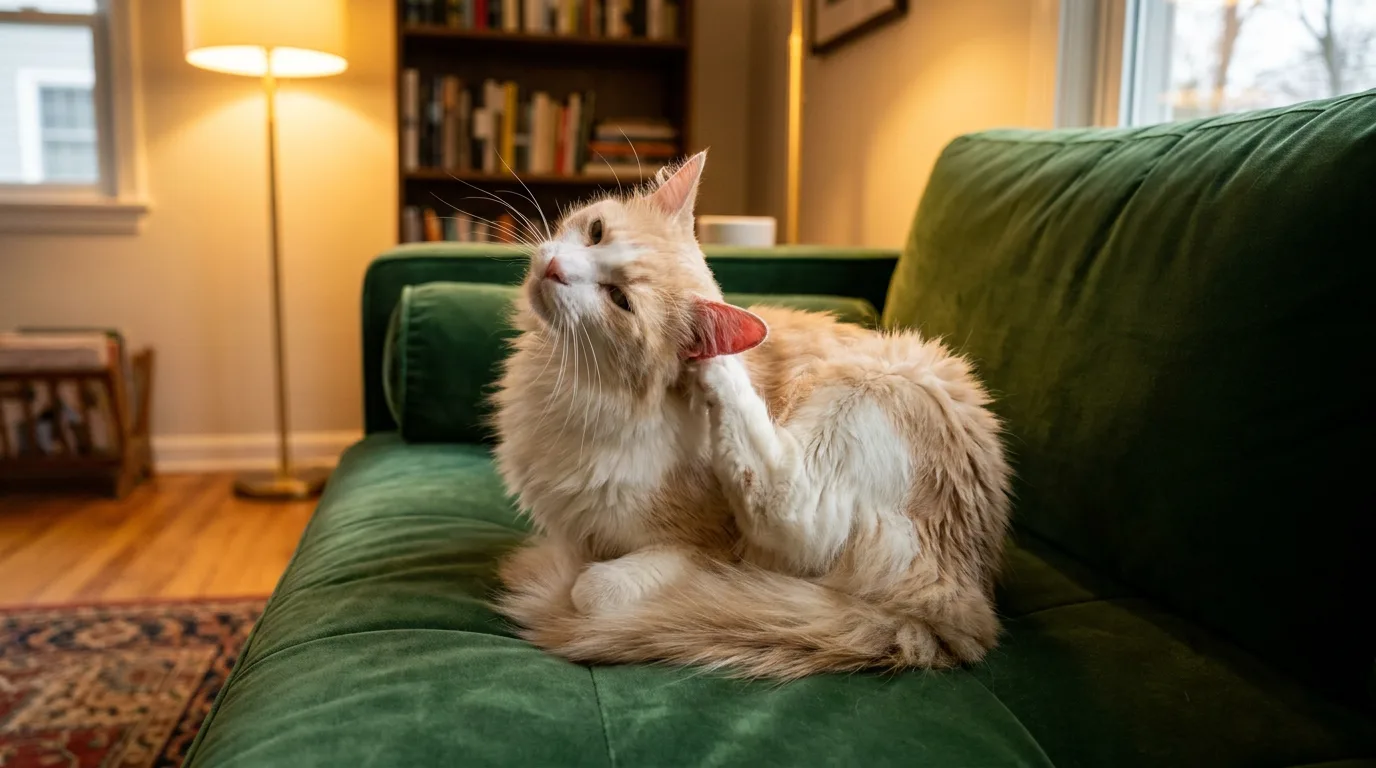
Ear mites in cats are tiny parasites that live in the ear canal, feed on wax and skin debris, and cause intense itching. The telltale sign is dark, crumbly debris that looks like coffee grounds, paired with a cat who will not stop scratching or shaking her head.
The good news is that ear mites are one of the most treatable problems in feline medicine. A single dose of the right prescription product kills the adult mites, and most cats feel better within a few days. The catch is that eggs survive treatment, other pets carry mites too, and itchy ears are not always mites. This guide walks you through how to confirm them, what works, and how to stop them coming back.

Sign up for expert-backed reviews and safety alerts all in one place.
What are ear mites in cats?
- 1Dark, coffee grounds debris plus scratching and head shaking strongly suggests ear mites, but a vet should confirm it with an otoscope or ear swab.
- 2No product kills every mite instantly; single-dose prescription spot-ons kill adults after one application, and full clearance takes about a month.
- 3Treat every pet in the house at the same time, or the mites simply move back.
- 4OTC pyrethrin drops can work for mild, confirmed cases, but they must be repeated to catch mites that hatch later.
- 5Never use dog flea products on a cat, and skip essential oils, peroxide and vinegar.
The ear mite that infests cats is Otodectes cynotis. It is a surface mite, about the size of a pinhead, that lives mostly in the ear canal and feeds on wax, skin oils and cell debris. The Cornell Feline Health Center describes it as almost microscopic, yet you can sometimes see the pale, moving specks with the naked eye against dark debris.
According to VCA Animal Hospitals, ear mites are the second most common external parasite in pets after fleas. The full life cycle, from egg to breeding adult, takes about 3 weeks, and adult mites live for around two months. That 3-week cycle is why short treatment courses so often fail.
How severe it gets varies a lot:
- Mild ear mites in cats: a little dark wax deep in the canal and occasional scratching.
- Severe ear mites in cats: a canal packed with debris and red ear tissue that is raw and swollen.
- Sphynx cat ear mites: hairless cats make a lot of normal brown wax, so mites are easy to miss or wrongly assumed.
- Ear mites on a cat's face: mites can wander out of the ear onto the face, neck and tail tip.
Cat mites in general include other species, such as fur mites and mange mites, but in the ear, Otodectes is by far the most common.

Fragrance-free enzymatic wipes for routine outer-ear cleaning. Wipes do not diagnose or treat a painful ear infection.
Petful may earn a commission when you click through to Chewy, at no extra cost to you.
What do ear mites look like in cats?
Ear mites themselves look like tiny white or cream specks, roughly the size of a pinhead, that move slowly over dark debris. They are barely visible to the naked eye. Under a microscope, a cat ear mite close up shows an oval body with eight legs, and its size is around 0.3 to 0.5 mm.
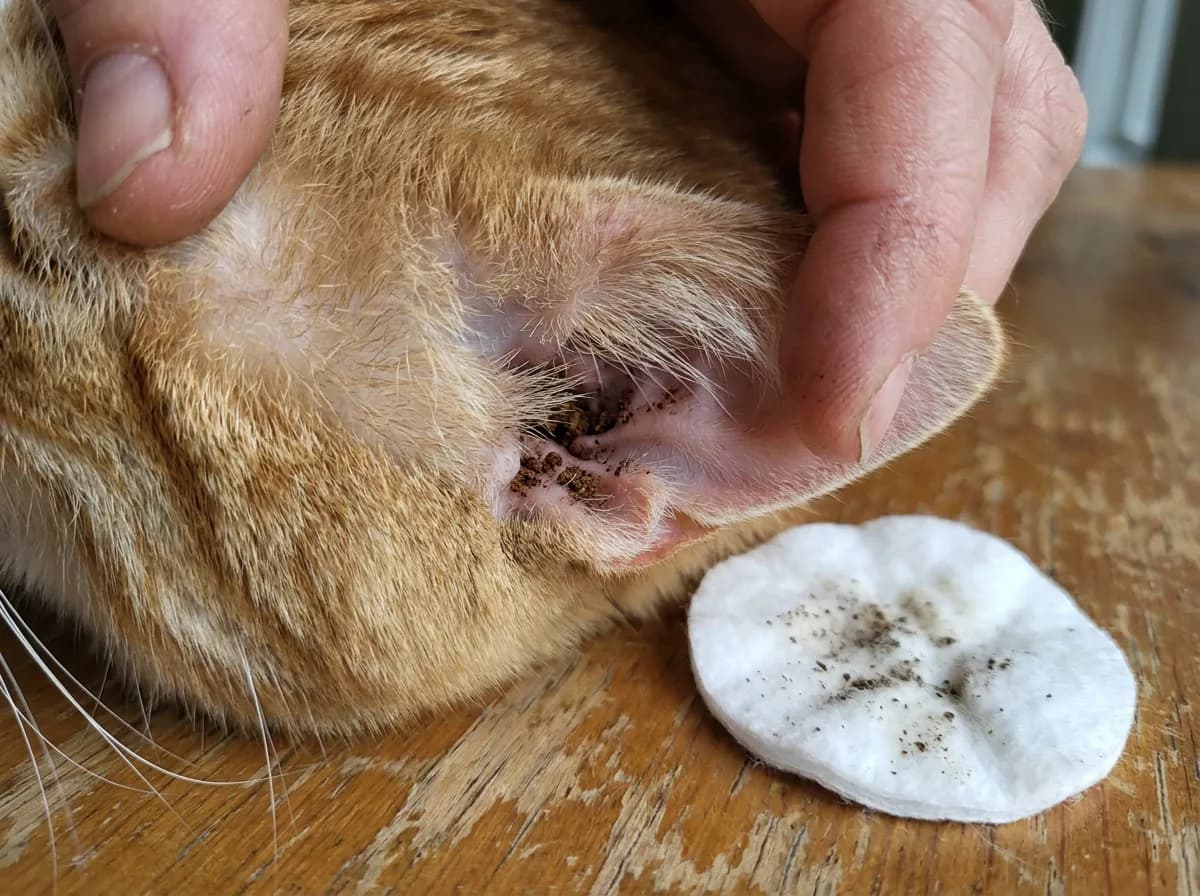
What most owners actually see is the debris: dark crumbly debris, often described as coffee-ground debris. In ear mites in cats pictures, early stage cases show a light dusting of dark brown flecks deep in the canal, while severe cases show the whole canal filled with dry, black, crumbly material and an inflamed outer ear. The color is the giveaway: mite debris is dark brown to black and dry, while normal wax is lighter and slightly oily.
You can check at home by gently folding back the ear flap in good light, or by wiping the entrance of the canal with a cotton round. If it comes away with dark, gritty material, book a vet visit. You may see the same pattern in what ear mites look like in kittens, often thicker and crustier.
 Sponsored
Need flea, tick, or parasite care for your cat?
A licensed vet at Dutch can recommend the right preventive and prescribe it when it's appropriate. Annual members get 20% off their first flea and tick order.
Use code Pets60
Plans start at $12/month · covers up to 5 pets
- Licensed vets in most states
- Rx for 150+ conditions
- 4.7 on Trustpilot
How do cats get ear mites?
Ear mites spread by direct contact. They do not jump or fly; they crawl from one animal to another during grooming, play, nursing or simply sleeping curled together. Ear mites in cats are extremely contagious, so if one pet has them, assume the others are exposed.
The most common ways cats pick them up:
- Kittens from their mother. Ear mites are very common in kittens because they catch them from an infested queen in the first weeks of life. A 6, 8 or 9 week old kitten with ear mites usually came from a shelter, a farm or a stray litter.
- Outdoor and stray cats. Contact with other outdoor cats is the classic route, which is why rescues are so often affected. If you have taken in a stray, it is worth reading our guide on why you should bring a stray cat to the vet before it meets your other pets.
- Other household pets. Dogs and ferrets carry the same mite, so a new puppy or a visiting dog can introduce them.
- Boarding, grooming and shelters. Anywhere animals share close space can spread mites between cats.
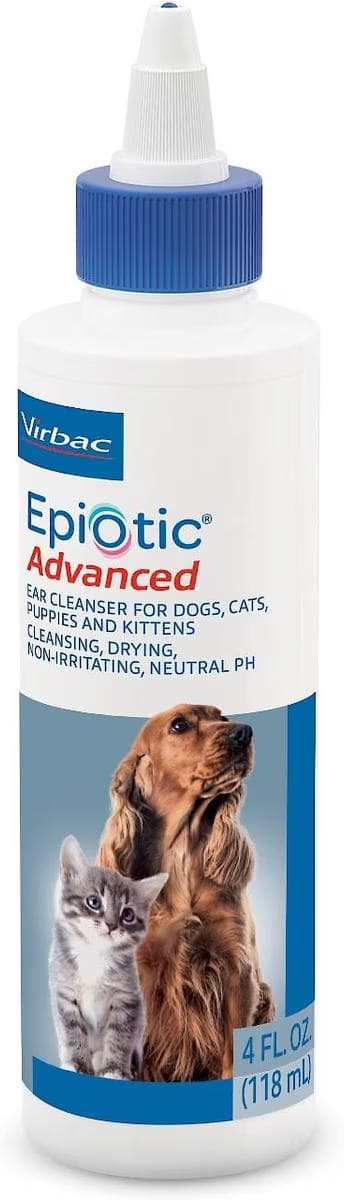
Petful may earn a commission when you click through to Chewy, at no extra cost to you.
Can dogs get ear mites from cats? Yes. Otodectes cynotis lives on dogs, cats and ferrets alike, so a cat with ear mites can pass them to the family dog, and the dog can pass them back. That cross-species spread is why every pet in the home is treated together.
How would an indoor cat get ear mites? Usually through a new pet, a foster kitten, or a dog that goes outside and brings mites home. A single indoor cat that never meets another animal is very unlikely to have ear mites, and in that cat, itchy ears are more often an infection or allergy. The WebVet guide to ear mites in kittens covers age-specific care for very young litters.
Ear mites in cats symptoms
The signs of ear mites in cats come from the itch and the debris the mites leave behind. Early signs can be subtle, so check both ears if your cat suddenly fusses with her head.
Common symptoms include:
- Scratching at the ears, often with a hind paw, and frequent head shaking
- Dark brown or black, dry, crumbly debris in the ear canal (the coffee grounds sign)
- Ears held flat or flicking and twitching
- Redness, scabs and hair loss around the ears, face and sometimes the eyes from self-trauma
- A musty or sour ear smell (mites themselves have little odor, but a strong smell suggests a secondary infection)
- A swollen, fluid-filled ear flap called an aural hematoma, caused by violent head shaking
- Head tilt, poor balance or lethargy in severe cases where infection reaches the middle ear
What could be causing my cat's ear to twitch? Ear mites are a common cause, but ear twitching also happens with bacterial or yeast infection, polyps, a grass seed in the canal, or simple irritation. If twitching comes with debris or scratching, ear mites move to the top of the list.
What are the symptoms of ear mites in kittens under 12 weeks old? Kittens often show the coffee grounds debris without much scratching, because they have lived with mites since birth. Look for crusty dark ears, head shaking, and a kitten who seems dull or is not thriving. Can ear mites make a kitten sick? Heavy infestations alongside fleas and worms can leave a kitten run down, so a vet check is important.
Do ear mites hurt cats, and are they harmful? Yes, they are very uncomfortable, and untreated cases can lead to otitis externa, eardrum damage and permanent deafness. Can cats die from ear mites? Not usually; they are not life-threatening on their own. Ear mites do not directly cause diarrhea, vomiting or seizures. A cat that is vomiting, falling over or throwing up alongside ear disease may have a middle or inner ear infection affecting balance, and needs prompt care. Cats can get ear mites in only one ear at first, but both ears are almost always involved, and mites can spread to a cat's body.
Ear mites vs ear infection vs yeast in cats
Many cats with dirty ears do not have ear mites, and treating for mites when the real problem is yeast wastes time while the ear gets worse. Black stuff in a cat's ear that is not mites is usually yeast or wax. The table below shows how vets tell them apart before confirming with a swab.
| Problem | What the debris looks like | Smell | Typical cat |
|---|---|---|---|
| Ear mites | Dry, dark brown to black, crumbly, like coffee grounds | Mild | Kittens, rescues, multi-pet homes |
| Malassezia yeast | Greasy, brown, waxy | Sweet or musty | Adult cats, often with allergies |
| Bacterial infection | Yellow, cream or bloody, sometimes wet | Strong, foul | Any age, often after scratching or a foreign body |
| Polyps | Discharge plus a visible pink mass in the canal | Varies | Young adult cats, often one ear |
| Normal wax | Light brown, thin, slightly oily | None | Healthy cats, especially Sphynx |
If your cat is scratching her ears but has no mites, or is shaking her head with no ear mites found, allergies and infections are the usual culprits. The WebVet guide to cat ear infections explains that treatment path. What about ear mites vs fleas in cats? Flea dirt shows up on the skin along the back and tail, not inside the ear, and it turns red when wet. A cat can have both at once, which is common in kittens.
How vets diagnose ear mites in cats
Diagnosis is usually quick and inexpensive. Your vet will:
- Look into the ear canal with an otoscope, where live mites often show up as moving white specks on the debris.
- Take a sample with a cotton swab and examine it under the microscope (ear swab cytology). This confirms mites and eggs and checks for bacteria or yeast.
- Check the eardrum before prescribing drops, because some ear medications should not be used if it is ruptured.
- Ask about other pets, outdoor access and parasite prevention.
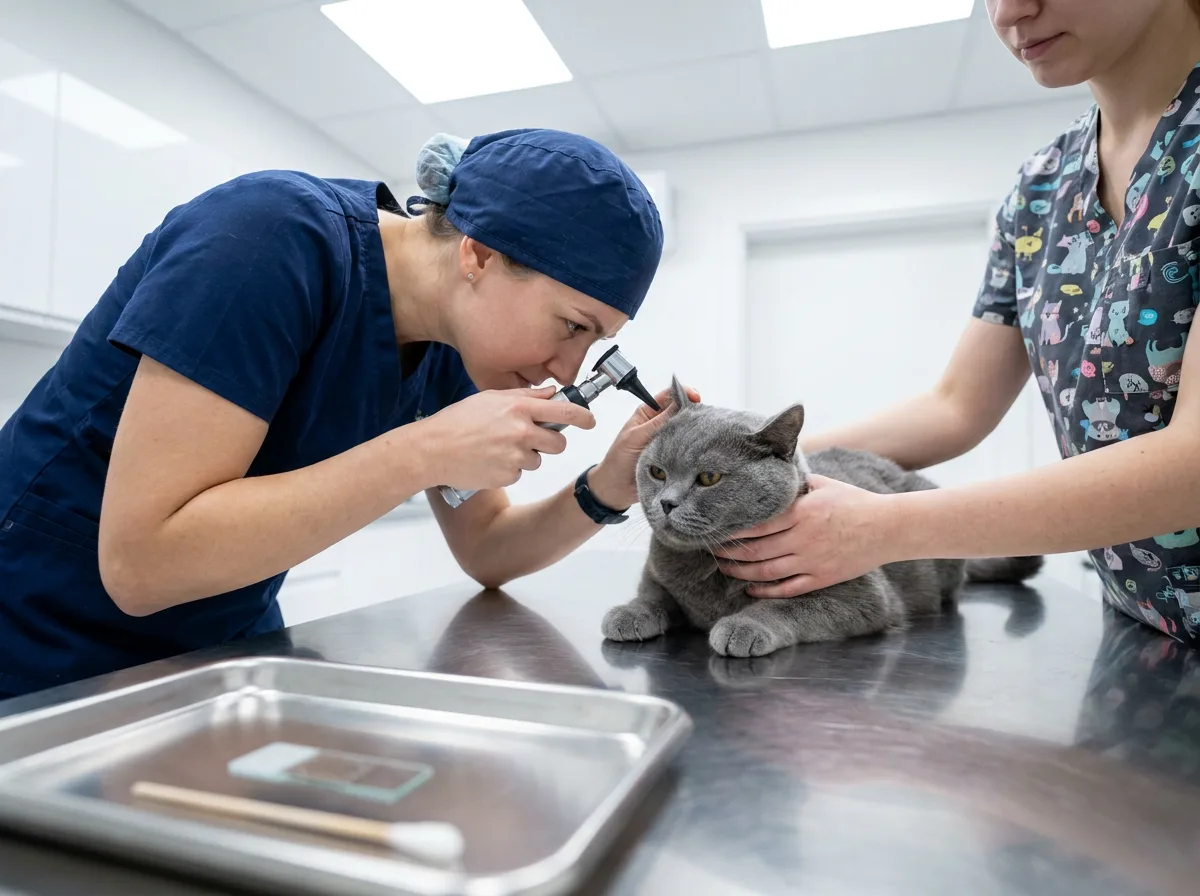
Very sore ears may need sedation for a proper look and a deep clean. Getting the diagnosis right matters, because it decides whether OTC drops are worth trying at all.
What kills ear mites in cats instantly?
Prescription medications like Ivermectin or topical treatments such as Revolution can kill ear mites in cats quickly. Honestly, though, nothing kills every mite instantly. A single dose of a prescription spot-on such as Revolution (selamectin) or Advantage Multi (imidacloprid and moxidectin) kills the adult mites after one application, and cats usually feel relief within a couple of days. Eggs are not affected by any medication, so full clearance takes about a month, and your vet may repeat the dose.
So if you want the fastest result, the answer is a vet visit, a gentle ear clean, and a single dose of a prescription spot-on, applied to every cat in the house. What naturally kills ear mites? Oil, slowly: mineral oil or baby oil smothers mites over about a month of repeated drops, which is nowhere near instant. Essential oils are not a natural shortcut, because many are toxic to cats. See the home remedies section below before you rely on any natural option.

A lightweight, padded fabric cone that gently blocks a pet from pawing, scratching, or rubbing a healing eye, wound, or hot spot, and it is far softer and less stressful than a hard plastic cone.
Petful may earn a commission when you click through to Chewy, at no extra cost to you.
Ear mite treatment for cats: prescription vs OTC drops
Treating ear mites in cats has two goals: kill the mites through a full life cycle, and settle the inflamed ear. The best treatment for ear mites in cats depends on your cat's age, whether infection is present, and how easy she is to medicate.
Prescription treatment comes first for most cats. Most vets reach for a monthly spot-on applied to the skin between the shoulder blades, because it is one dose, needs no ear handling, and treats the whole body. Prescription options your vet may discuss include:
- Revolution and Revolution Plus. Selamectin is labeled to kill ear mites in cats, and Revolution Plus adds sarolaner for ticks. Revolution can be used from 8 weeks; Revolution Plus from 8 weeks and 2.8 pounds. Revolution for cats is the most common vet treatment for ear mites in cats.
- Advantage Multi (sold as Advocate outside the US). Imidacloprid plus moxidectin, labeled for ear mites in cats from 9 weeks.
- Bravecto Plus and other isoxazolines. Fluralaner products are labeled for ear mites in some countries, and vets sometimes use them for ear mites in cats where that fits.
- Ear drops. MilbeMite (milbemycin) and ivermectin ear preparations are prescription drops for ear mites in cats, labeled for kittens from 4 weeks. Tresaderm, an ointment with an antibiotic and steroid, also treats ear mites and the inflammation they cause.
- Antibiotics and steroids. If cytology shows a bacterial infection, your vet adds antibiotic drops; topical or oral steroids such as prednisolone calm severe swelling.
Is there a pill for ear mites in cats? There is no oral pill labeled for ear mites in US cats, so oral medication for ear mites in cats is uncommon. Ivermectin is effective, but ivermectin dosage for cats must come from your vet; never use livestock or dog ivermectin products. Does flea treatment kill ear mites in cats? Only some. Frontline and Frontline Plus, Seresto, Capstar, Vectra and Advantage II are not labeled to kill ear mites, and NexGard is a dog product. NexGard Combo, Credelio and Broadline treat ear mites in cats only where their local label says so, so ask your vet before relying on one.
What does it cost?
- Treatment cost: varies by clinic, but a vet exam, ear cytology and a single-dose treatment typically run about $75 to $200 in the US, more if sedation or infection treatment is needed.
Over the counter treatment for ear mites in cats, such as the Miracle Care R-7M Ear Mite Treatment Kit (drops plus a cleaner) or Adams Ear Mite Treatment, uses pyrethrins with piperonyl butoxide in a soothing base. These are the main OTC medicine for ear mites in cats sold at PetSmart and Chewy, and they can work for a mild, vet-confirmed case in an adult cat who tolerates ear handling.
Their limits are real:
- They only kill mites the drops reach, so the ear must be cleaned first.
- They do not kill eggs, so repeat dosing is essential: follow the full label course, then repeat it to catch hatching eggs that become new mites about 2 to 3 weeks later.
- They do not treat the rest of the body, where wandering mites hide.
- They do nothing for a yeast or bacterial infection, which is why a diagnosis matters.
Our verdict: OTC pyrethrin drops are reasonable for a confirmed, mild case when a vet visit is truly not possible, but they waste time on infections and in multi-pet homes. If your cat's ear mites won't go away, or keep coming back, switch to a prescription spot-on for every pet. Owners comparing nonprescription parasite products should read our guide to flea medicine for cats without a vet prescription for the cat-safety rules.
- Many dog spot-ons contain permethrin, which is highly toxic to cats and can cause tremors, seizures and death. Use only products labeled for cats, at the dose for your cat's weight.
Once treatment starts, what should you expect week by week? How long do ear mites last in cats, and do ear mites in cats go away on their own? They do not go away on their own; untreated ear mites in cats keep breeding. With proper treatment, the course follows the mite life cycle:
| Timeline | What is happening | What you do |
|---|---|---|
| Day 1 | Vet confirms mites; adults exposed to treatment | Ear clean, first dose for every pet, wash bedding |
| Days 2 to 7 | Adult mites dying; itch easing | Gentle cleaning if advised; keep a cone on if the cat scratches raw |
| Weeks 2 to 3 | Surviving eggs hatching into new mites | Second dose or continued drops, as directed; OTC drops must be repeated now |
| Week 4 | A full 3 weeks life cycle has passed | Recheck visit to confirm the ears are clear |
| Monthly after | Reinfestation risk from other animals | Monthly preventive for cats at risk |
For feral or stray cats that cannot be handled daily, a single spot-on dose is by far the most practical way to treat ear mites. Is ear mites in cats curable? Yes, completely, as long as every pet is treated through a full cycle.

Adams Ear Mite Treatment is the over-the-counter pyrethrin drop that kills adult mites on contact; it needs repeat doses because it does not reach eggs, so plan on a full month.
Petful may earn a commission when you click through to Chewy, at no extra cost to you.
How to clean your cat's ears during treatment
Cleaning removes the debris that shields mites from medication and soothes the ear. If the ears are very painful, your vet may clean them first, sometimes under sedation, and tell you when to start at home. Here is how to clean ear mites in cats safely:
- Wrap your cat in a towel if she wriggles, and have treats ready.
- Fill the ear canal with a cat-safe ear cleaner such as Zymox Enzymatic Ear Cleanser.
- Massage the base of the ear for 20 to 30 seconds until you hear a squelch.
- Let her shake her head, then wipe the debris from the ear flap and canal opening with a cotton round or a cat-safe wipe such as Zymox Advanced Enzymatic Ear Wipes.
- Apply any drops after cleaning, and reward her.

- Never push a cotton swab down the ear canal; it packs debris deeper and can damage the eardrum. Stop and call your vet if the ear bleeds, the cat cries in pain, or she starts tilting her head.
Cleaning cat ears after mites can drop to once weekly once your vet confirms they are clear. If your cat scratches her ears raw during treatment, a soft recovery collar protects the skin while it heals; the WebVet cat cone guide compares the styles cats tolerate best, and an inflatable option such as the KONG Cloud Collar suits cats who hate a cone.
SponsoredVet care that's always there
Unlimited video calls and messaging with licensed vets for less than a typical vet visit. One membership covers up to five pets.
Use code Pets60
Plans start at $12/month · covers up to 5 pets
- Licensed vets in most states
- Rx for 150+ conditions
- 4.7 on Trustpilot
Home remedies for ear mites in cats: what works and what does not
How can I treat ear mites in cats at home? With a vet's diagnosis, much of the work is done at home: cleaning, applying drops or a spot-on, washing bedding, and treating every pet. What does not work well is trying to replace medication with kitchen remedies.
What naturally kills ear mites? Oil does, slowly. The most natural way to get rid of ear mites in cats is oil. Mineral oil, baby oil or olive oil smothers mites and loosens debris, and the Cornell Feline Health Center calls baby oil an old-time remedy: a few drops in the affected ear several times a day for about a month. It can help a mild case, but it is messy, slow, does not reach mites on the body, and is easy to give up on before the month is out.
How common home remedies compare:
- Mineral oil, baby oil or olive oil: can work slowly by smothering; use only a few drops and keep going for a month.
- Coconut oil, castor oil, sweet oil and neem oil: no better than mineral oil, and neem and some infused oils can irritate.
- Essential oils, including tea tree oil: do not use; many essential oils are toxic to cats, even in small amounts.
- Hydrogen peroxide: do not use; it irritates the canal and will not kill mites in the ear.
- Apple cider vinegar: does not reliably kill mites and stings inflamed skin.
- Witch hazel, hand sanitizer and alcohol: sting raw ears and do not treat mites.
- Vaseline and diatomaceous earth: do not belong in a cat's ear canal.
The safest home remedies for ear mites in cats are gentle cleaning plus a cat-labeled product. For kittens, skip home remedies entirely and see a vet, because the right product depends on age and weight. If your cat is scratching her ears and you find no mites, a home remedy will not help; the cause is usually allergy or infection.
Treat every pet in the house (and the house itself)
Can dogs get ear mites from cats? Yes. The same mite infests cats, dogs and ferrets, so ear mites can spread from cats to dogs and back again. Rabbits usually carry a different species, but any rabbit that shares close space with an infested cat should be checked. If you have a dog or rabbit to treat as well, our guide to ear mites in dogs and rabbits covers their options.
The rule is simple: treat every pet in the house on the same day, even the ones without symptoms. Otherwise an untreated carrier passes mites straight back.

Can ear mites infest a house? Not in the way fleas do. Ear mites need a host and survive only a short time off the animal, so they cannot set up a colony in your home. Still, cat ear mites can live in carpet, on furniture and in bedding for a short while. To get rid of cat mites in the house:
- Wash bedding, blankets and soft toys in hot water.
- Vacuum carpets and furniture where pets sleep.
- Treat all pets at once; no indoor spray is labeled for ear mites.
How does a house cat get ear mites back after treatment? Usually from an untreated pet or a new animal, which is why the household approach matters more than any spray.
Can humans get ear mites from cats?
Can humans get ear mites from cats? Rarely. Ear mites are adapted to animals, and they do not infest human ears in any meaningful way. Occasionally, a person in a home with an infested cat develops a temporary itchy rash where mites have bitten the skin. Cat ear mites are not dangerous or harmful to humans, and the problem resolves once the pets are treated.
If you think you have caught ear mites from your cat, that is how people get them: close contact, such as a cat sleeping on your pillow. See your own doctor for a persistent rash, and treat the cats to remove the source. Washing your bedding and keeping the cat off your pillow until treatment is finished stops the bites quickly. People do not need ear drops or any cat product; using pet medication on yourself is never safe.
How to prevent ear mites in cats
Preventing ear mites in cats comes down to limiting exposure and using a preventive that covers them:
- Use monthly parasite preventives labeled for ear mites, such as selamectin or moxidectin products, especially for outdoor cats. Our guide to flea treatment for cats compares the options that also cover ear mites.
- Book new-pet checks: quarantine new cats, kittens and fosters until a vet has checked their ears.
- Check your cat's ears weekly and clean them only when dirty.
- Keep cats indoors or supervised to avoid contact with strays.
- Treat all household pets if one is diagnosed.
How would my indoor cat get ear mites? Almost always from another animal coming in: a new pet, a foster kitten, a visiting animal, or a dog that spends time outdoors. Checking newcomers before they mix with your cat closes that door.
Prevention matters most for multi-cat homes, fosters and cats that go outdoors. A strictly indoor cat living alone rarely needs ear mite cover, but most monthly preventives protect against fleas and worms too, so many vets recommend one anyway.
When to see the vet about ear mites
See your vet whenever you suspect ear mites, because a quick swab confirms the problem and the right product. Go promptly if you notice:
- A head tilt, circling, poor balance or flickering eyes
- Blood, pus or a strong smell from the ear
- A swollen ear flap (hematoma)
- Raw, bleeding skin from scratching
- Ear mites in a kitten under 8 weeks, or a kitten who is not eating
- Signs that do not improve after a week of treatment
What are the symptoms of ear mites in kittens under 12 weeks old? Expect crusty, dark coffee grounds debris in both ears, head shaking and sometimes a dull, slow-growing kitten, often with surprisingly little scratching because the kitten caught mites from its mother at birth. Kittens this young need a vet visit, because only some products are safe from 4 or 8 weeks of age.
Ear mites in cats FAQs
Prescription medications like Ivermectin or topical treatments such as Revolution can kill ear mites in cats quickly. No product is truly instant, but a single dose of a prescription spot-on kills the adult mites after one application, cats feel better within days, and full clearance takes about a month because eggs hatch afterward.
After a vet confirms mites, clean the ears with a cat-safe cleaner, then apply the prescribed drops or spot-on, or an OTC pyrethrin drop for a mild case, following the full label course. Treat every pet and wash bedding the same day.
Ear mites are a common cause, especially with dark debris, but a twitch can also come from a bacterial or yeast infection, polyps, or a foreign body such as a grass seed. A vet exam with an otoscope tells them apart.
Kittens usually show dark, crusty coffee grounds debris and head shaking, often with little scratching, because they caught the mites from the mother cat at birth. Very young kittens need age-appropriate treatment from a vet.
Yes. Dogs, cats and ferrets share the same ear mite, so dogs can catch them from cats and pass them back. Treat every pet in the home at the same time, even those without symptoms.
Mineral oil or baby oil can smother mites if used a few drops at a time, several times daily for about a month, but it is slow and misses mites on the body. Never use essential oils, which can be toxic to cats.
Yeast infections, bacterial infections, ear polyps and plain wax can all look like mites. Yeast debris is greasier and smells sweet, normal wax is lighter and oily, and only a swab under the microscope confirms mites.
No. Ear mites need a host and survive only briefly off the animal, so they cannot colonize your house. Washing bedding in hot water and vacuuming where pets sleep removes stragglers.
Not on their own, but treatment clears them completely. Expect about a month for full clearance, with a recheck after one full mite life cycle to confirm the ears are clear.
An indoor cat usually catches ear mites from a new pet, a foster kitten, or a dog that goes outside. A single indoor cat with no animal contact rarely has mites, so itchy ears there are more often infection or allergy.
BVMS, MRCVS
Dr. Pippa Elliott, BVMS, MRCVS, is a veterinarian with nearly 30 years of experience in companion animal practice. Dr. Elliott earned her Bachelor of Veterinary Medicine and Surgery from the University of Glasgow. She was also designated a Member of the Royal College of Veterinary Surgeons. Married with 2 grown-up kids, Dr. Elliott has a naughty Puggle named Poggle, 3 cats and a bearded dragon.
Sign up for expert-backed reviews and safety alerts all in one place.