How Much Does a Cat Cost per Month? A Practical Budget
Plan monthly cat expenses with worked examples for food, litter, veterinary reserves, and first-year supplies. Learn what to count separately and how to build a budget around your own household.
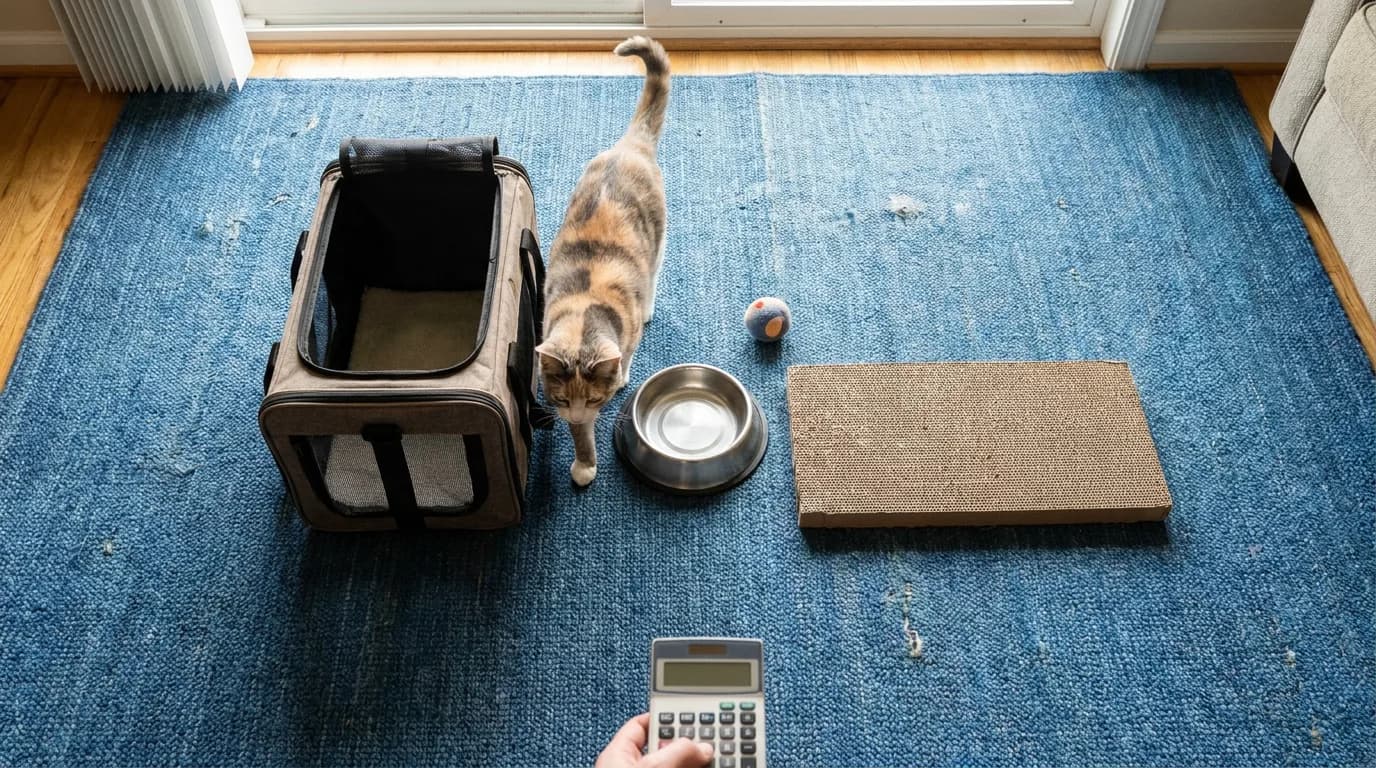
Illustrative image.
Petful is reader supported. As an affiliate of platforms like Amazon and Chewy, we may earn a commission when you buy through links on this page. There is no extra cost to you.
How much does a cat cost per month? A useful budget includes food and litter, a monthly reserve for routine veterinary bills, and a separate plan for unexpected expenses. The worked example below totals $135 a month before insurance, pet rent, or paid care. It is an illustration you can replace with local prices, not a national average or a promise that every cat will cost that amount.
The easiest number to miss is the money you do not spend every month. A carrier is a purchase-month bill; an annual examination is an irregular bill you can save toward monthly. Keeping those two categories separate makes your budget more useful than one large, unexplained lifetime estimate.
- 1Separate the purchase month from the monthly reserve for irregular bills.
- 2The $135 monthly example is adjustable arithmetic, not a national average.
- 3Add your actual adoption, setup, insurance, housing, and paid-care costs.

Sign up for expert-backed reviews and safety alerts all in one place.
Build your monthly cat budget
Start with your household, not somebody else's shopping cart. The average cost of owning a cat per month changes with location, diet, age, health, housing, and how often someone must care for the cat while you are away. A low monthly grocery bill does not mean the rest of ownership is free.
Use three columns: regular purchases, money reserved for irregular bills, and optional spending. In this example, $40 for food plus $20 for litter plus $10 for replacement supplies equals $70 in regular purchases. Add $25 toward planned veterinary expenses and $40 toward an emergency reserve, and the monthly allocation becomes $135. Those reserve amounts are chosen examples, not estimates of what a clinic will charge or what an emergency will cost.
| Budget category | Monthly allocation | How to count it |
|---|---|---|
| Food | $40 | Example recurring purchase |
| Litter | $20 | Example recurring purchase |
| Replacement supplies | $10 | Example recurring purchase |
| Planned veterinary reserve | $25 | Example monthly reserve |
| Emergency reserve contribution | $40 | Example savings contribution |
| Monthly allocation | $135 | Excludes insurance, pet rent, and paid care |
An everyday consumable such as Dr. Elsey's Ultra Unscented Clumping Clay Cat Litter belongs in the recurring column. Compare how long the bag lasts in your home rather than assuming that a large bag represents one month. The best budget is a repeatable calculation you can update after the first two or three replacement purchases.

99% dust-free, low-tracking clumping clay litter with superior odor control and hard clumping. Unscented, natural ingredients, multi-cat strength.
Petful may earn a commission when you click through to Chewy, at no extra cost to you.
The difference between a purchase month and a monthly reserve matters. If you put away $25 each month for a $300 planned bill, spending that $300 later should come from the accumulated reserve. Do not count another $300 as ordinary monthly spending when comparing your budget with the plan. Conversely, saving $40 does not mean an emergency will cost only $40, or that a new reserve is already large enough.
- Replace the food and litter figures with the products and quantities your cat actually uses.
- Ask your clinic for an itemized preventive-care estimate, then divide the appropriate annual total by twelve.
- Add your own insurance quote, pet rent, and travel-care plans as separate rows.
- Keep an accessible contingency plan for expenses that exceed the balance you have saved.
Calculate cat food and litter costs
To estimate how much cat food costs per month, calculate the daily cost of the food your cat will actually eat. For a hypothetical $36 bag that lasts 45 days, the calculation is $36 divided by 45, or $0.80 a day. Multiplying by 30 gives a $24 food allowance for a 30-day planning month. Replace both the price and the number of days with your own figures; a bag size alone tells you little about the monthly bill.
Wet food needs the same treatment. A hypothetical $30 case containing 24 cans costs $1.25 per can. If your established feeding plan uses two cans daily, that is $2.50 a day or $75 over 30 days. This is cost arithmetic, not a feeding recommendation. Use your cat's appropriate food quantity, including any dry food offered alongside it, rather than choosing a portion to fit the example. To compare budget-friendly wet cat food, calculate cost per usable day at the appropriate serving amount, rather than judging affordability by the case price alone.

Rover's 2026 US cost report illustrates why a single food allowance is misleading: it reports annual food spending of $225–$1,920 and litter spending of $125–$580. Dividing those endpoints by twelve gives about $19–$160 for food and $10–$48 for litter. These are broad reported ranges, not a personalized shopping list; their low endpoints should not be treated as a guaranteed minimum budget.
- For mixed feeding, add the daily cost of each food instead of counting just the dry bag.
- For litter, record the date you open and replace a bag, along with how many boxes it supplies.
- Include treats and shipping where applicable, and compare ordinary prices rather than introductory discounts.
- Record discarded food as a real expense if your cat regularly leaves part of a serving.
When someone asks how much cat food and litter cost per month, those two replacement cycles are the practical answer. A less expensive bag can still cost more per month if you use it faster. Avoid repeated food or litter changes solely to chase discounts; waste from rejected purchases can erase the apparent savings. Buy a manageable quantity until you know it works for your cat.
Budget for adoption and one-time supplies
How much does a cat cost to buy or adopt? Obtain the amount directly from the shelter, rescue, or responsible breeder you are considering. An adoption fee and a breeder's purchase price represent different arrangements, and the headline price does not tell you which services are included. Ask specifically about identification, vaccinations already given, spay or neuter status, and any remaining appointments.
A Frisco Travel Safety carrier is one existing carrier option to compare for fit; its cost belongs in the setup column. Add a hypothetical $60 carrier to your purchase-month total as $60. If you separately save toward replacing it later, identify that as future savings rather than claiming the same carrier is a new purchase every year.

Soft-sided travel safety carrier that keeps a stressed cat secure and well-ventilated on the way to the vet, with mesh panels for airflow and a seat-belt loop.
Petful may earn a commission when you click through to Chewy, at no extra cost to you.
If you are considering a cat available to adopt at Petco, ask the adoption partner for the current fee and included care. The store location does not establish one national adoption price. Record the actual partner quote in your upfront budget.
A breed-specific price also needs its own context. Petful's Bengal cat price and lifetime cost guide covers that buying decision. This general budget should not replace breed-specific research or suggest that all cats have the same acquisition cost. A cat offered without a fee can still require equipment and veterinary care immediately.
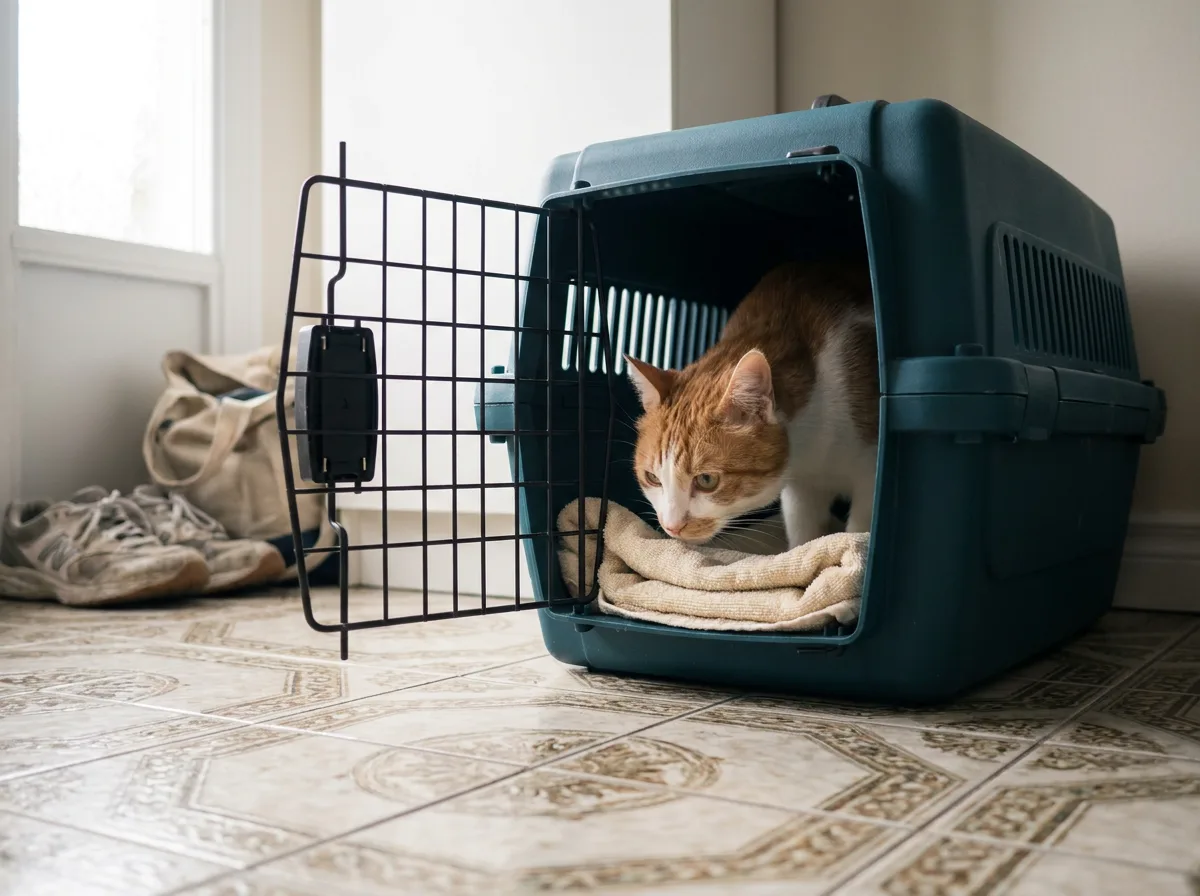
The answer to how much cat supplies cost depends on what you already have and what safely fits the cat. Start with an appropriately sized carrier, litter boxes and scoop, food and water dishes, scratching surfaces, and simple play equipment. Petful's first-time cat owner checklist helps distinguish preparation tasks from impulse purchases.
- Buy a carrier before the homecoming journey, and check its dimensions and closure system against your cat's needs.
- Obtain the litter and food the cat is already using so the move does not require every routine to change at once.
- Provide scratching and resting options from the start, without assuming you need a large furniture collection.
- Confirm which supplies the adoption organization sends home before buying duplicates.
Practical setup spending can remain modest while those care costs take priority. A Necoichi cardboard scratching surface is an example of a discrete equipment purchase rather than a reason to buy a large cat tree immediately. Put scratching equipment in the setup or replacement row, not in the veterinary row, so your budget remains easy to understand.
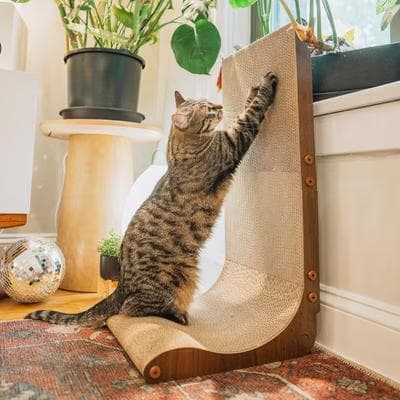
Curved cardboard wall scratcher with a wood frame that protects walls and gives cats a satisfying vertical scratch surface.
Petful may earn a commission when you click through to Chewy, at no extra cost to you.
Plan first-year veterinary expenses
First-year cat costs depend heavily on what has already been done. Before reserving an amount, take the cat's available records to your chosen clinic and request a plan specific to age and history. Separate an examination from tests, vaccinations, parasite prevention, surgery, and follow-up visits. A bundled adoption fee may include some of these services, but it is the written inclusion list that matters.
For spay or neuter planning, WebVet's cat spay and neuter cost guide explains the pricing questions and differences between clinic and low-cost options. Use that context to request a local estimate. Ask what the quoted total includes, whether the cat meets the program's eligibility rules, and which expenses might be billed separately. A general ownership budget cannot substitute for that estimate.
- Put care that is due before or immediately after adoption into the upfront cash requirement.
- Reserve monthly for future predictable care only when there is time to accumulate the needed amount.
- Keep emergency savings separate from the amount already assigned to routine appointments.
- Update the budget when your clinic changes the care plan or a new ongoing expense appears.
- Money reserved monthly is useful only if it will be available when the bill is due. Put immediate care in the upfront total; divide later predictable bills over the months you have to save.
Insurance belongs on a separate line too. Compare actual policy terms, including eligibility, exclusions, deductibles, reimbursement, and whether routine care is included. A premium is not the same thing as an emergency savings balance, and a policy does not make every possible bill disappear. This guide does not assume a policy price or recommend a financial product; use the quote and terms offered for your own cat.
Turn monthly costs into annual and lifetime budgets
To estimate how much a cat costs per year, multiply the recurring monthly allocation by twelve, then add genuinely separate annual charges. Our $135 example becomes $1,620 allocated over a year. Of that, $840 represents the illustrated recurring purchases, $300 is reserved for planned veterinary expenses, and $480 is contributed to the emergency reserve. The total is a cash-planning figure; unspent savings remain yours rather than becoming money already spent on care.
For the first year, add acquisition and setup costs to that annual plan. If you choose hypothetical figures of $150 for adoption and $200 for initial equipment, the example first-year allocation becomes $1,970. It still excludes unpriced items such as pet rent, insurance, paid care, or treatment not covered by the reserves. Label those blanks explicitly instead of treating them as zero.
- Annual recurring allocation: $135 × 12 = $1,620 in this worked example.
- Example acquisition and equipment: $150 + $200 = $350 upfront.
- Example first-year allocation: $1,620 + $350 = $1,970, plus your additional applicable costs.

A modest play allowance can also serve more than one purpose. A Frisco feather teaser wand supports supervised play without requiring a room full of electronic toys. Count replacement toys in the household budget, rotate what the cats already enjoy, and put string or feather toys away when play ends.

Feathered teaser wand with catnip-stuffed bird. Pairs perfectly with the no-bite training policy: redirect Bengal play drive into a 10-minute interactive session with the wand.
Petful may earn a commission when you click through to Chewy, at no extra cost to you.
The lifetime cost of owning a cat is even more sensitive to assumptions. Fifteen years at the unchanged $135 monthly allocation would be $24,300 before the setup allowance. That calculation is a scenario, not a prediction of lifespan, inflation, or medical need. Do not describe it as an average lifetime bill. Revisit the plan annually and when circumstances change, rather than multiplying a low first-month bill and calling the result complete.
If you want to compare your annual cost with another household's, check what each figure includes. One person may report only food and litter; another includes boarding, insurance, treatment, and savings. Those totals answer different questions. The useful comparison is the same set of categories, for the same number of cats, over the same period.
Adjust for two cats, travel, and housing
A second cat does not cost exactly double in every category, but it should not be budgeted as nearly free. Food, litter use, veterinary care, and any per-cat insurance costs need individual estimates. Some equipment may be reusable, while each cat still needs safe access to its own resources. Avoid assuming two cats will happily share every feeding, resting, or toileting location.
Price the household you will actually maintain. A long-haired cat may create a grooming expense you did not include for a short-haired cat. A cat with an established special diet may have a different food bill. A rental agreement may include a deposit, recurring charge, or restrictions. Read the applicable agreement and obtain the current figures; none of those charges is universal.
- Two cats: estimate each cat's consumables and care, then add shared and extra equipment separately.
- Travel: multiply the number of paid visits or boarding nights by the actual quote for your dates.
- Housing: distinguish a refundable deposit from a nonrefundable fee and recurring pet rent.
- Changes: review the budget after a move, adoption, diet change, or new care requirement.
For trips, Petful's cat sitter cost guide offers a starting point for the questions to ask. Confirm the service area, visit length, holiday charges, and how additional cats are billed. A small daily difference becomes significant across a long trip, so keep travel care outside the ordinary grocery estimate.
Save on cat care without cutting essentials
Look first for spending that adds little value to your particular cat. A premium gadget that sits unused is an easier expense to avoid than food your cat reliably eats or care already recommended for it. Keep a short record of what gets used for a month before adding another toy, bed, fountain, or subscription. The best purchase is not automatically the most expensive one or the one with the largest discount.
Make a repeat-purchase list that includes ordinary price, package size, delivery costs, and actual replacement frequency. That list makes a sale comparable with your usual purchase. If a subscription discount expires or the quantity builds up faster than you use it, revise the order rather than allowing the discounted shopping habit to become waste.
- Compare cost per usable day for food and litter, not just cost per package.
- Ask adoption organizations which equipment and initial services are included.
- Start with simple safe enrichment, then buy upgrades for an observed need.
- Set aside a monthly reserve before committing the remaining budget to optional equipment.
Also budget your time honestly. Cats require daily feeding, fresh water, litter care, observation, and interaction whether or not you buy expensive supplies. If your schedule means somebody else must do that work, include the service cost. A budget that balances only because necessary care has no owner is not yet workable.
After the first month, compare the plan with receipts and the reserve balance. After the first year, replace guessed annual expenses with actual bills where appropriate. This turns a general cat ownership budget into your own useful record. It also lets you see whether an unusually expensive purchase month was a one-time setup event or a sign that the ongoing allowance needs to change.
Cat budget questions
Many healthy adult cats can be left alone for 8 hours during a normal working day, but time alone still requires an appropriate daily routine. Arrange food, water, litter care, and interaction around that schedule, and do not assume a kitten or a cat needing medication can follow the same plan. Budget for a paid caregiver when your cat needs attention you cannot provide. An automatic device does not replace observation or individualized care.
Whether owning a cat feels high maintenance depends on its needs and your routine. Cats need daily care even when their equipment costs little. Feeding, water, litter cleaning, play, and observation require an available person. Grooming, medical needs, and temperament can change that workload. A budget should therefore include both money and time: identify who will perform each task, and obtain a paid-care quote where needed. Buying more equipment does not remove those responsibilities.
To calculate how much a cat costs per week, convert a monthly planning total to a weekly equivalent by multiplying it by twelve and dividing by 52. Our hypothetical $135 monthly allocation is about $31.15 a week. That is an allocation including reserves, not a weekly shopping bill. Simply dividing a monthly figure by four understates how many weeks there are in a year, and the resulting estimate still needs your applicable additional costs.
There is no dependable rule that cats will always be cheaper than dogs at the vet. Care needs, the service being provided, location, age, and health all affect the comparison. Request a local estimate for the particular animal and appointment instead of borrowing a dog owner's bill. Compare what is included in each quote before deciding whether the lower headline price means lower total spending.
To find out how much cats cost to adopt at Petco, ask the adoption partner responsible for the particular cat, rather than assuming every Petco adoption event has one national fee. Confirm the current fee, eligibility requirements, and included care, then identify any appointments or supplies you must arrange yourself. The event location alone does not establish the complete first-year cost. Keep the adoption fee separate from food, litter, equipment, and future veterinary expenses.

Coreen Saito is a pet writer and longtime shelter volunteer with more than a decade in animal rescue. She covers cat behavior, breed care, and the small, ordinary science of sharing a life with companion animals, with a particular focus on honest takes about the products and decisions that actually matter. At home in Arizona, she's outranked by Mac (a dog with the loudest opinion in the house), Rebel (a cat who governs by quiet authority), and Meri (an orange tabby who runs the late shift and the laundry basket). She writes about all three, plus the rescues that keep coming through her life, at LifeWithMinty.com.
Sign up for expert-backed reviews and safety alerts all in one place.