Best Pet Fish for Kids: A Parent’s Guide to Low-Maintenance Choices
Choose a first aquarium your family can care for confidently. Compare beginner fish, plan a suitable tank, and give children useful jobs while adults manage water quality and daily care.

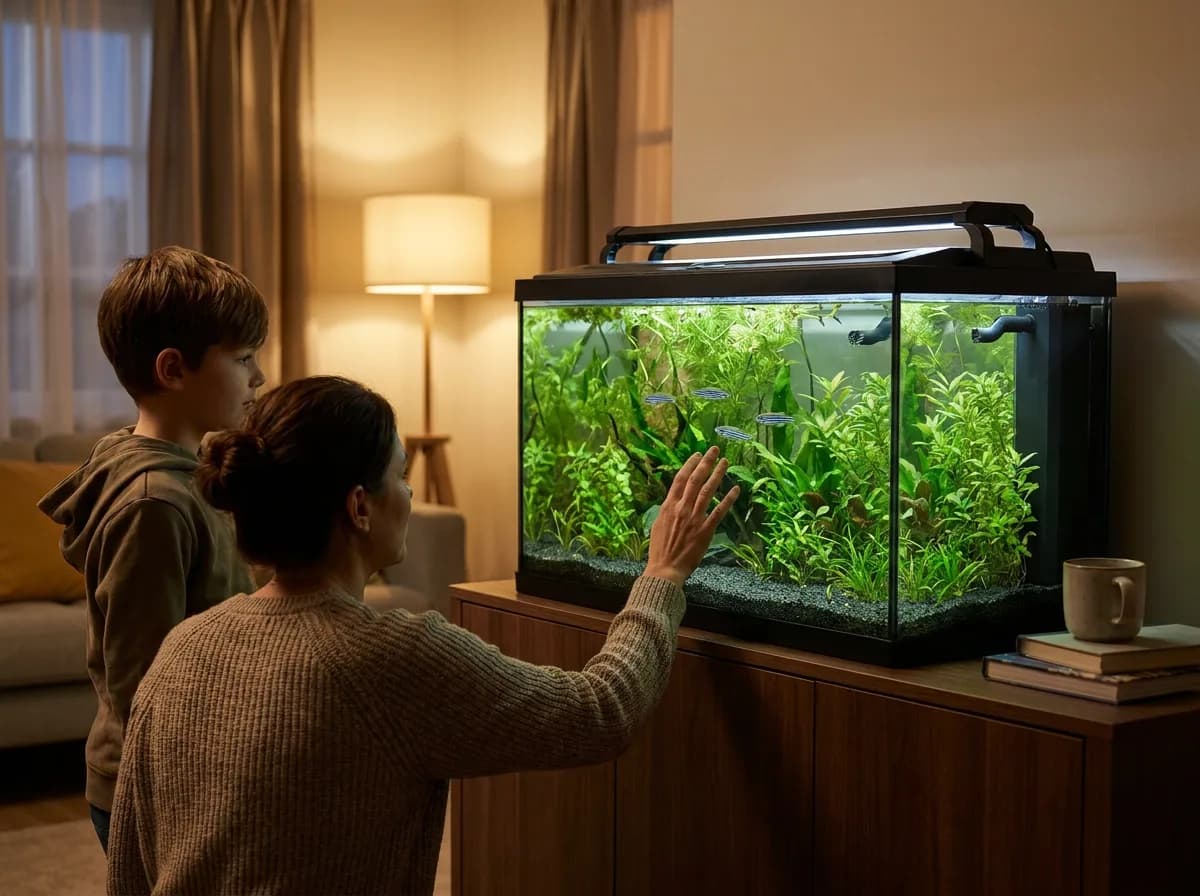
Adults remain responsible for aquarium setup, water quality and daily care.
Petful is reader supported. As an affiliate of platforms like Amazon and Chewy, we may earn a commission when you buy through links on this page. There is no extra cost to you.
This featured contribution was written by Artchee Mendoza, a contributing writer for Fintastic.
The best pet fish for kids are fish your family can house and care for well: a single betta in a suitable tropical aquarium, an active school of zebra danios, or guppies and platies in water that meets their needs. The right choice starts with an adult's care plan, not the smallest tank on the shelf.
Fish give children plenty to enjoy, from spotting a familiar fish at feeding time to watching a group explore plants. But an aquarium is a family commitment. Adults remain responsible for water quality, equipment, feeding decisions and any care a child forgets.
- 1Choose fish by adult size, social needs and the water your home can provide.
- 2A single betta and a school of danios need different aquarium plans.
- 3Cycle the aquarium before buying fish, and make an adult responsible for ongoing care.
- 4No fish is maintenance-free, and goldfish are not bowl pets.
Petful may earn a commission if you click on our links and make a purchase. This comes at no extra cost to you and helps us continue providing trusted pet product reviews.

Sign up for expert-backed reviews and safety alerts all in one place.
Choosing the Best Pet Fish for Kids
Start by deciding whether your child wants to watch one recognizable fish or a group swimming together. That choice changes the space, equipment and stocking plan. A betta can be the only fish in its aquarium; a zebra danio should have companions of its own kind.
Next, check your available space and tap water before choosing colors. Take the measurements of the intended location to an aquarium specialist, along with your water test results. Ask for the fish's exact species name, adult size and requirements. Common labels such as “tetra,” “barb” and “molly” cover fish with different needs. A basic kit that measures pH, ammonia, nitrite and nitrate does not necessarily measure hardness. The API Freshwater Aquarium Master Test Kit covers those first four parameters; ask separately how to check the hardness of your source water. Bring the actual readings to the supplier rather than simply reporting that the water passed a test. A result is useful only when you know what was measured and which fish you are considering.
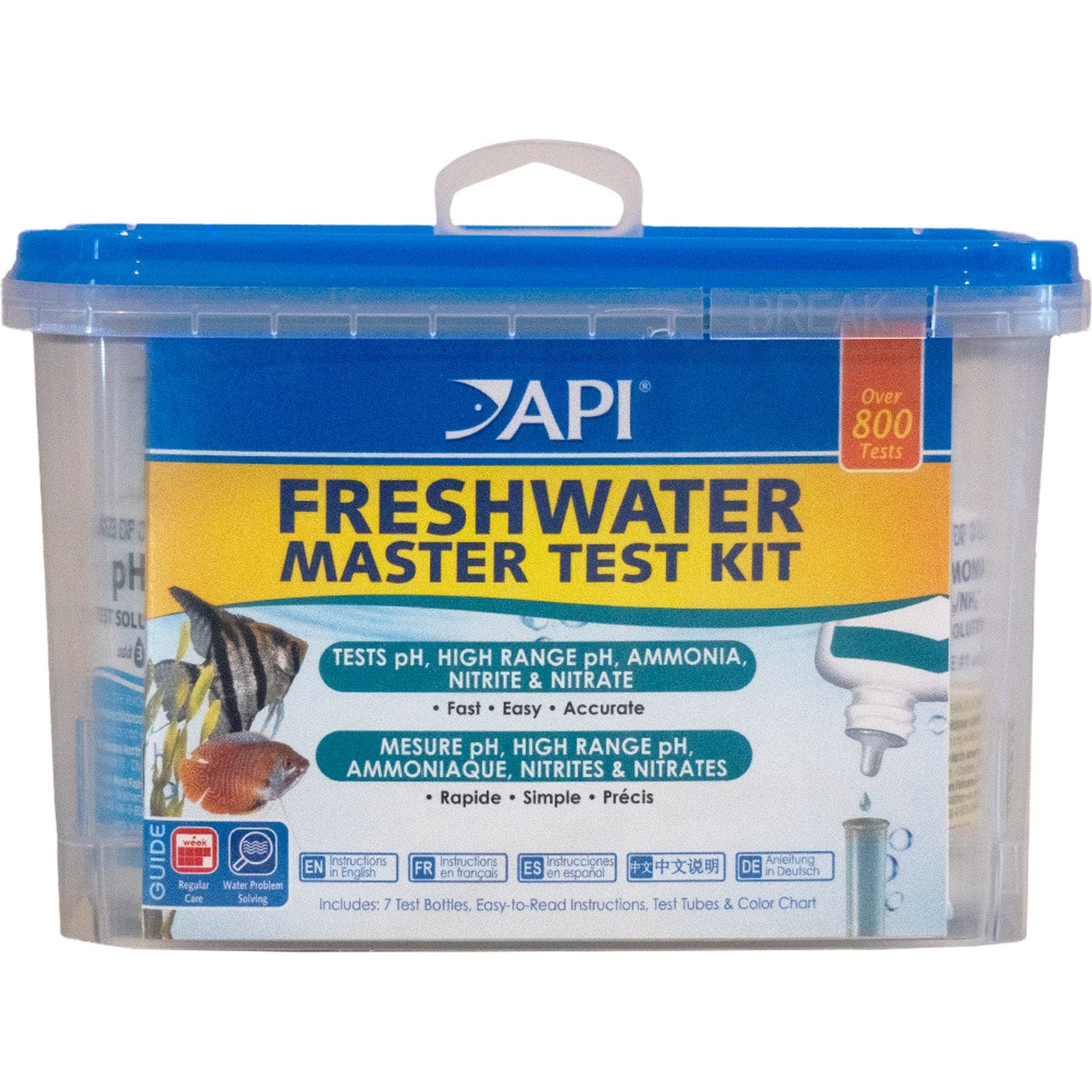
Test freshwater pH, ammonia, nitrite and nitrate while cycling the tank and during routine care. An adult should handle the test chemicals.
Petful may earn a commission when you click through to Chewy, at no extra cost to you.
Use this comparison to shortlist freshwater fishes with different water and temperature needs, including tropical fish that need stable warmth. The tank sizes are practical starting plans for the examples described, not a promise that any number of fish will fit. Final stocking also depends on tank dimensions, adult size, filtration, water conditions and compatibility.
| Fish | A useful starting plan | Best fit | Main decision before buying | Adult care commitment |
|---|---|---|---|---|
| One betta | Consider a 10-gallon heated, gently filtered aquarium for one fish. | A child who wants to recognize one individual. | One betta as the sole fish; safe cover, gentle flow and stable warmth. | Measure food, check warmth and test the water; the child can observe and record. |
| Zebra danios | Consider a 20-gallon long aquarium for a school of six or more. | A family interested in active group behavior. | Long swimming space, compatible temperature and a secure lid. | Maintain the school and swimming space; handle feeding, water tests and water changes. |
| Guppies | Consider a modest group in a planted 20-gallon aquarium. | A family with suitable harder water that enjoys colorful fish. | Confirm sexes and a breeding plan; watch for chasing even in male groups. | Monitor group behavior and any young; manage feeding and water quality. |
| Platies | Consider a small group in a planted 20-gallon aquarium. | A family able to match livebearer water needs. | Adult size, group composition and what happens if young appear. | Plan for adult size and possible young; handle feeding and water changes. |
| Goldfish | Research an adult-sized aquarium or suitable pond for the exact variety. | A family ready for a larger, dedicated setup. | Filtration, eventual size and maintenance; never a bowl purchase. | Maintain the larger setup, waste filtration and regular water changes. |
A family with room for a long aquarium and an interest in group behavior might start by researching zebra danios. A family hoping to recognize and name one fish could consider a single short-finned betta. Guppies and platies are worth considering when your water suits livebearers and you have a plan to avoid an unexpected population boom.
An attractive fish that does not fit your setup can stay on a future wish list. Giving a child two or three suitable choices still lets them make a meaningful decision. It also avoids the difficult moment of explaining, after purchase, that their favorite needs a larger aquarium or cannot live with the fish already at home.
Choosing for a toddler or a five-year-old
For a toddler or a five-year-old, choose an aquarium the adult wants to maintain even if the child only enjoys watching. One identifiable betta can make naming and observation straightforward; a properly housed danio school offers group movement to follow. Neither choice lets you reduce the tank or skip water care because its owner is young. The fish belongs in a suitable family setup, rather than a miniature version of one.
Match the child’s job to what they can reliably do with supervision: point out each fish, draw what it looks like, or mark a feeding chart after an adult has measured the food. Keeping the food container and test chemicals under adult control avoids making the child responsible for judging portions or handling reagents. If the family is deciding between fish and another first pet, this guide explains the fish commitment; it does not establish a universal best pet for every five-year-old.
Betta: a good option for one fish
A betta (Betta splendens), also called a Siamese fighting fish, offers an easy-to-recognize individual without requiring a community of different species. Choose a well-proportioned fish that swims comfortably. Very heavy fins and extreme body shapes can bring welfare problems; the RSPCA discusses concerns about exaggerated features.
Plan a heated filtered aquarium with gentle flow, resting places, safe plants and a secure lid. RSPCA Australia recommends 20 liters or more for a betta. For a family starting from scratch, a properly equipped 10-gallon aquarium is a useful option to discuss, particularly for an active short-finned fish. One filter option for this 10-gallon setup is the Hygger Air Driven Sponge Filter, Large. Hygger rates Large for 6–20 gallons; Small is for 2–5 gallons. Budget for a separate air pump of at least 2 W and 3/16-inch airline tubing, and adjust the airflow for the fish. Check the manufacturer’s filter setup guidance before assembling it.
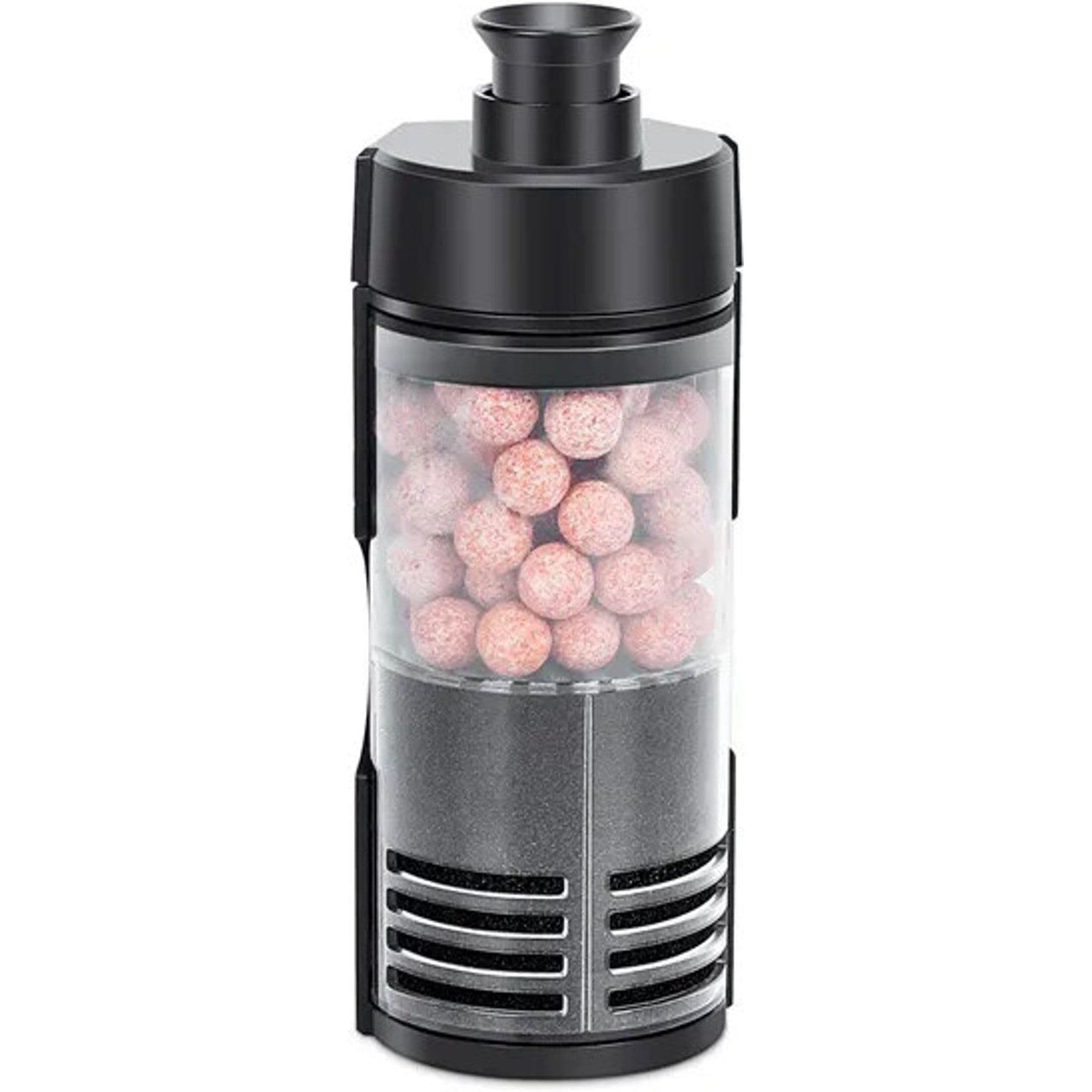
Gentle sponge and biological filtration for 6–20-gallon tanks. Requires a separate air pump and airline tubing.
Petful may earn a commission when you click through to Chewy, at no extra cost to you.
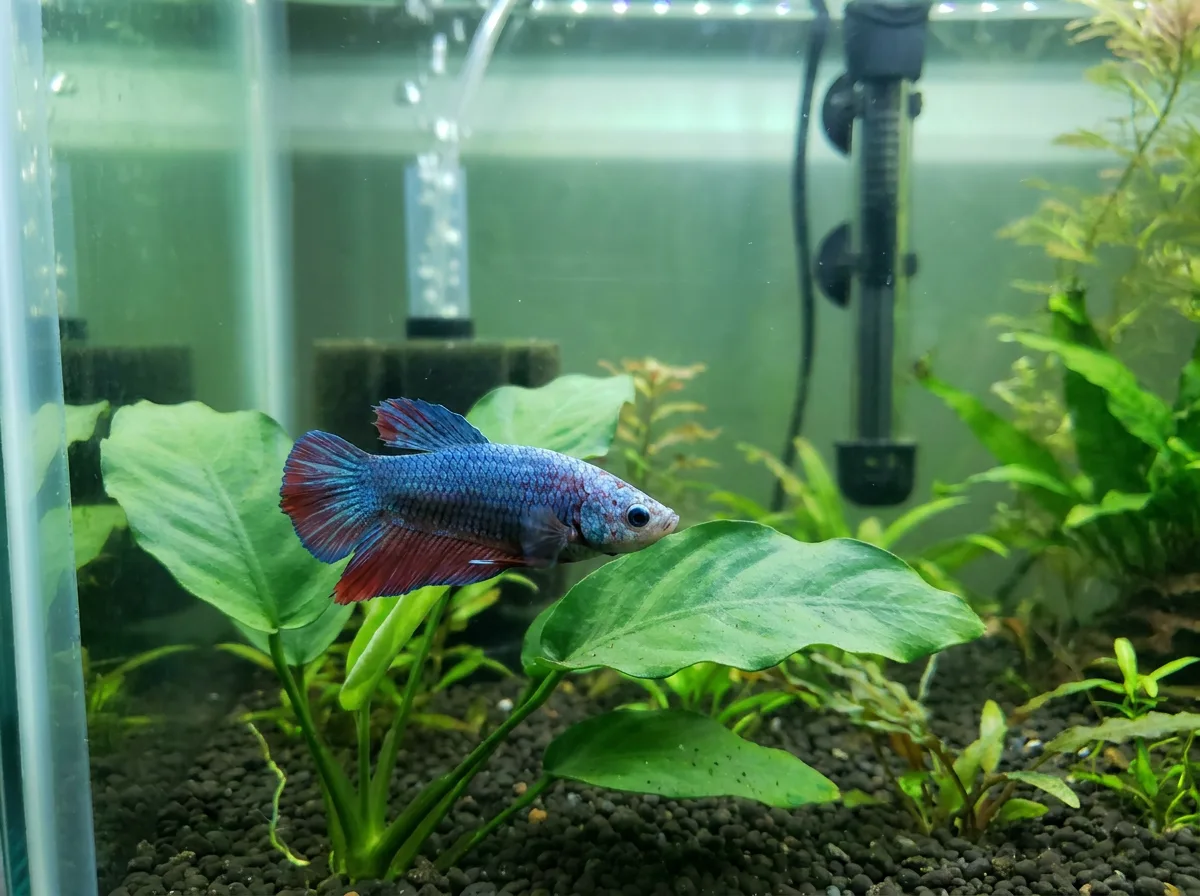
Keep one betta as the sole fish for the simplest first setup. Do not add a second male, and do not assume a female group or a mixed community is a beginner shortcut. A display cup in a store is not a model for a permanent home. Breathing air at the surface does not remove the need for clean, temperature-controlled water.
Children can watch a betta explore without tapping the glass or trying to make it flare at a mirror. Petful's tips for raising betta fish explain more about setting up its home and caring for it.
Low-Maintenance Fish Perfect for Beginners
“Low maintenance” means a manageable routine, not a fish that can live without one. A suitable species in a stable, lightly stocked aquarium is a better starting point than an overcrowded collection of supposedly hardy fish. Buying a fish described as hardy does not make an uncycled tank safe.
Think about the behavior your child will actually enjoy. Some children prefer following one fish around the tank. Others love seeing a school turn together. Choosing for that interest is more useful than buying a different color of every species in the shop.
Zebra danios: for families who want an active school
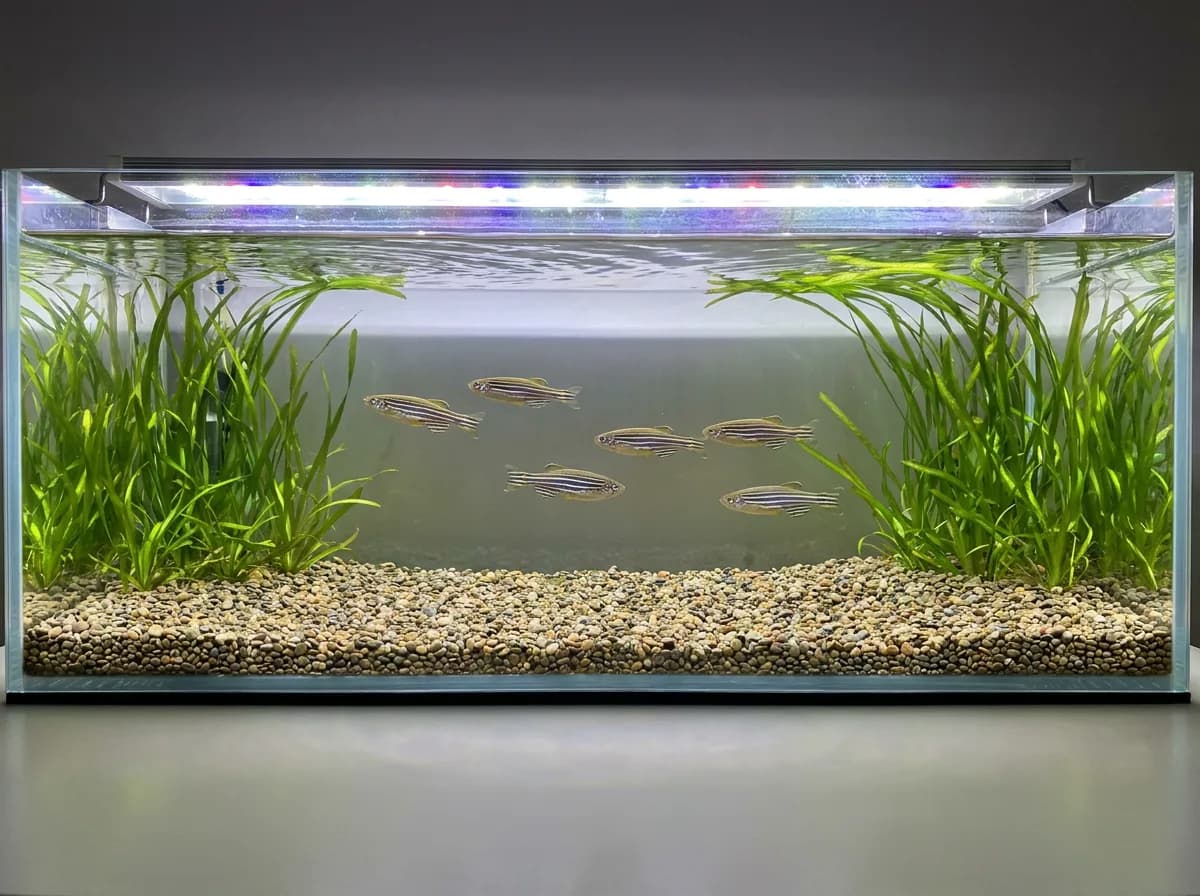
Zebra danios are small, busy fish with distinctive horizontal stripes. Their activity is part of their appeal, but it also means they need long swimming space. A tall, narrow decorative tank is a poor substitute for a longer aquarium with room to move.
According to Aqueon's danio care guide, danios should be kept in groups of at least six. Plan a school of six zebra danios or more within the capacity of the aquarium, rather than buying one fish of each color. A 20-gallon long aquarium gives a family a more useful starting layout than a tiny desktop tank.
Leave open swimming room as well as planted cover, and use a secure lid. Check the exact temperature requirements against the room and any proposed tankmates. Do not assume “freshwater” means all fish want the same heat setting, or that a heated community designed around another species automatically suits danios.
Guppies: colorful, with a breeding plan
Guppies appeal to children because of their colors and moving tails. They are livebearers: females give birth to free-swimming young. A few fish can therefore become more fish than the family planned for. Aquarium capacity does not expand when babies arrive. For a first family aquarium, consider a modest group in a well-planted 20-gallon setup, with stocking based on adult size and the full care plan.
Before buying, ask a knowledgeable supplier to explain the sexes and the implications of the proposed group. A carefully selected male group can avoid breeding, but males may still chase or nip. Provide room and cover, observe behavior, and have a practical plan if an individual needs separating. “All male” does not mean conflict is impossible.
Guppies generally suit harder, more alkaline water better than very soft water. Aqueon's livebearer guidance explains the group's water preferences. Have your source water checked before deciding they are the easiest option for your home.
If your child is interested in baby fish
Choosing a kind of pet fish and planning for young fish are different decisions. Guppies and platies are examples of fish that can produce young in the aquarium, as the livebearer guidance explains. That is a reason to plan the group carefully, not a promise of an easy breeding project for a child. Before buying, decide what you would do with additional fish and whether your existing aquarium could house them as adults. Do not add males and females simply to give a child babies to watch. A family that wants to observe a stable group can discuss an appropriate single-sex plan with a knowledgeable supplier.
Platies: a lively alternative for suitable water
Platies are another colorful livebearer to discuss with an aquarium specialist. Their shape makes them easy to distinguish from guppies, and their activity can keep a child interested without needing a large collection of different species. They still need appropriate temperature, filtration, space and water chemistry.
As with guppies, decide how you will manage sexes and breeding before purchase. Mixing males and females is not a neutral choice. Aqueon's livebearer aquarium guide describes their rapid reproduction and the need to manage male attention toward females. Adding females to reduce chasing also creates the possibility of more young.
A 20-gallon aquarium is a sensible starting setup to discuss for a small platy group, with the final number based on adult size and the rest of the plan. Do not automatically add guppies too because both appear in a beginner list. Begin with the planned group, learn its routine, and assess capacity before considering more fish.
Mollies, neon tetras and barbs: check the details first
- These fish can work in suitable aquariums, but their common names should not be treated as guarantees of easy care. A small molly in a shop may grow into a much larger fish; sailfin mollies and smaller varieties are not interchangeable. Ask about the exact variety and its adult housing requirements.
- Neon tetras need a suitable group and a stable environment. They are not a good reason to rush an aquarium's preparation just because they are small. Different tetras have different tolerances and behavior, so identify the species rather than using one generic care rule for all of them.
- The same applies to barbs. Some barb species are more likely to nip fins than others. Do not mix a long-finned betta with an unfamiliar barb simply because both are sold as community fish. Ask for a specific compatibility assessment, including the number needed for the barb's own group.
Before buying any fish, prepare its aquarium. Petful's beginner aquarium setup guide walks through the equipment and preparation in more detail. For the tap-water treatment step, API Tap Water Conditioner is one option to use according to its exact label. It does not replace cycling.
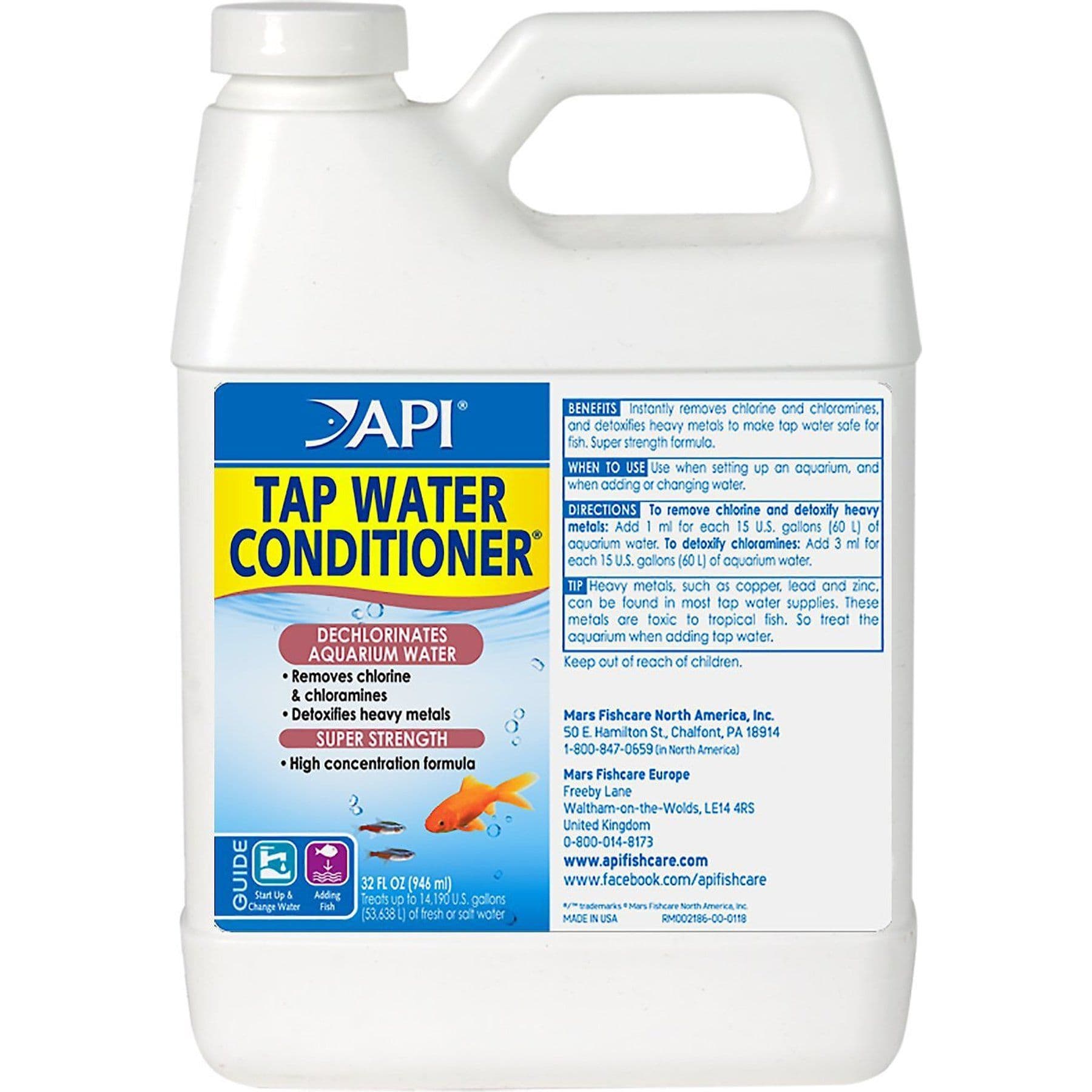
API Tap Water Conditioner, 32-fl-oz bottle, for preparing tap water according to the label during setup and water changes. Water conditioning does not establish the biological filter.
Petful may earn a commission when you click through to Chewy, at no extra cost to you.
What about a gold fish for a child?
Goldfish deserve more planning than their price or tiny size at purchase suggests. They grow, produce substantial waste and need effective filtration. Common goldfish, comets and fancy varieties also differ in body shape, adult size and suitable housing.
Aqueon's goldfish care guide explicitly rules out bowls and unfiltered containers. Common and comet goldfish may be better suited to a properly designed pond than a small household aquarium. A family's first tropical tank is not a default home for a goldfish won at a fair.
If your child specifically wants goldfish, research an adult-sized goldfish setup before buying. Budget for the aquarium or pond, filtration and ongoing water changes together. Choose that project because your family wants and can maintain it, rather than assuming goldfish are the cheapest or easiest route into fishkeeping.
Choosing the Right Aquarium for Kids
- For these freshwater fish, buy and prepare the aquarium before bringing fish home. Choose the fish on paper first, then match the tank to their adult requirements. Have a water conditioner appropriate for your tap water ready for filling the tank and preparing replacement water.
Choose useful space, not just a gallon number
The dimensions matter alongside volume. Active schooling fish need horizontal swimming room; a tank's height cannot make up for a cramped footprint. Decorations and substrate also take up space, so the number printed on the box is not the amount of open water available after setup. The RSPCA's aquarium guidance explains why larger water volumes are more stable and why bowls and novelty containers are unsuitable. A tiny aquarium is not automatically easier to clean or safer for a beginner.
Plan where maintenance will happen. Can an adult reach the filter, remove the lid and use a siphon without moving the tank? Is there a safe route for buckets? Is the stand designed to support the full aquarium? A beautiful tank that is awkward to service can make a routine job much harder.
Keep the aquarium away from temperature extremes and direct sunlight. Use a secure cover suited to the equipment, and position electrical cords according to the manufacturer's instructions. Children should be able to observe safely without climbing furniture or leaning on the glass.
Cycle the aquarium before adding fish
A filter does more than collect visible debris. In the aquarium nitrogen cycle, beneficial microorganisms process ammonia from waste into nitrite and then nitrate. Ammonia and nitrite can harm fish. Clear-looking water can still contain them, so appearance and smell cannot tell you whether the tank is ready.
Use a fishless cycling method, following a reliable guide and testing the water through the process. This establishes biological filtration without asking fish to endure the startup conditions. It takes time; filling the tank and running the equipment overnight is not proof that cycling has finished. An adult should understand the chosen method's completion criteria before setting a date to buy fish. Record the ammonia, nitrite and nitrate results and how they change. The RSPCA recommends fishless cycling when setting up a new aquarium.
Water conditioner and cycling perform different jobs. A conditioner treats tap water according to its label, including chlorine or chloramine when the product specifies it. It does not, by itself, establish the biological filter. Read the dose and measure it accurately; adding extra products without understanding their purpose makes troubleshooting harder.
Match the filter and heater to the fish
For tropical fish, choose a heater using the manufacturer's tank-size and room-temperature guidance, then verify the actual water temperature with a separate thermometer. A preset heater suits only a species and setup compatible with its fixed setting. If the room is too cold for the model's capacity, a nominal gallon rating alone is not enough. For example, the Aqueon preset heater range is set to 78°F. That can be useful in an appropriate tropical setup, but it is not a universal setting for every fish in this guide. Check the fish's needs before choosing between preset and adjustable equipment. The 50-watt Aqueon Preset Aquarium Heater is one size to assess against those requirements.
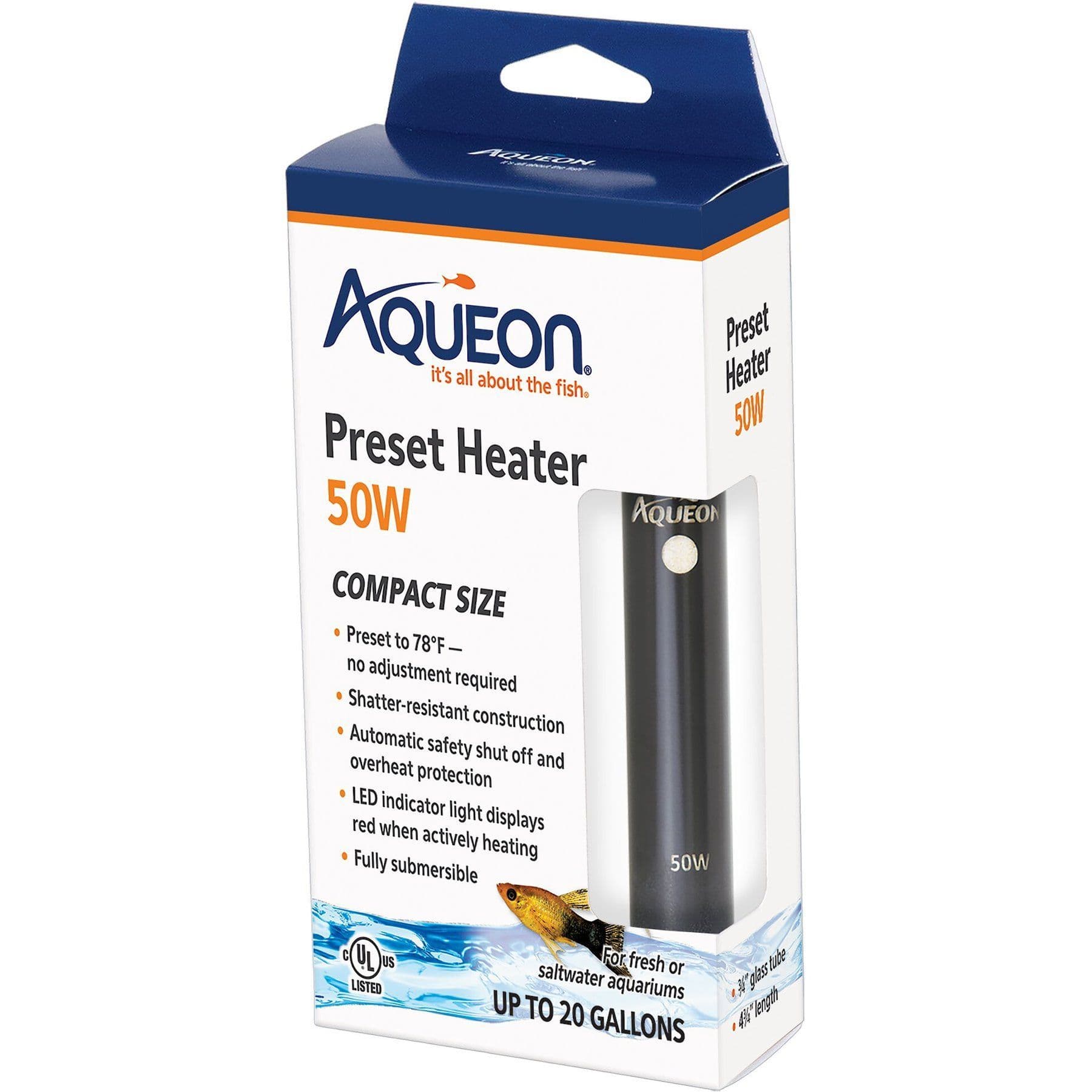
A 50-watt heater preset to 78°F for compatible tropical setups. Match it to the tank and species, and verify the temperature with a separate thermometer.
Petful may earn a commission when you click through to Chewy, at no extra cost to you.
Choose filtration for the tank and its inhabitants, including a flow rate the fish can tolerate. A strong current is not always better. For a betta, check that it can move and rest comfortably rather than being pushed around. Protect small fish from unsuitable filter intakes.
A sponge filter can provide gentle biological filtration, but an air-driven model may require an air pump, tubing and a check valve in addition to the filter itself. Check what is included before deciding on a setup. A kit's photograph does not prove that every pictured accessory comes in the box.
Matching Fish to Water and Tankmates
Test your source water early. pH describes how acidic or alkaline water is, while hardness describes its mineral content. Knowing one does not tell you the other. Ask your aquarium supplier which of the shortlisted species will suit that water without continual chemical adjustment.
Do not use a broad “all freshwater fish” pH range as a shopping rule. Guppies and platies are not interchangeable with fish adapted to very soft water. South American dwarf cichlids, including many apistogrammas and rams, need their own water and compatibility assessment rather than being grouped with hard-water livebearers.
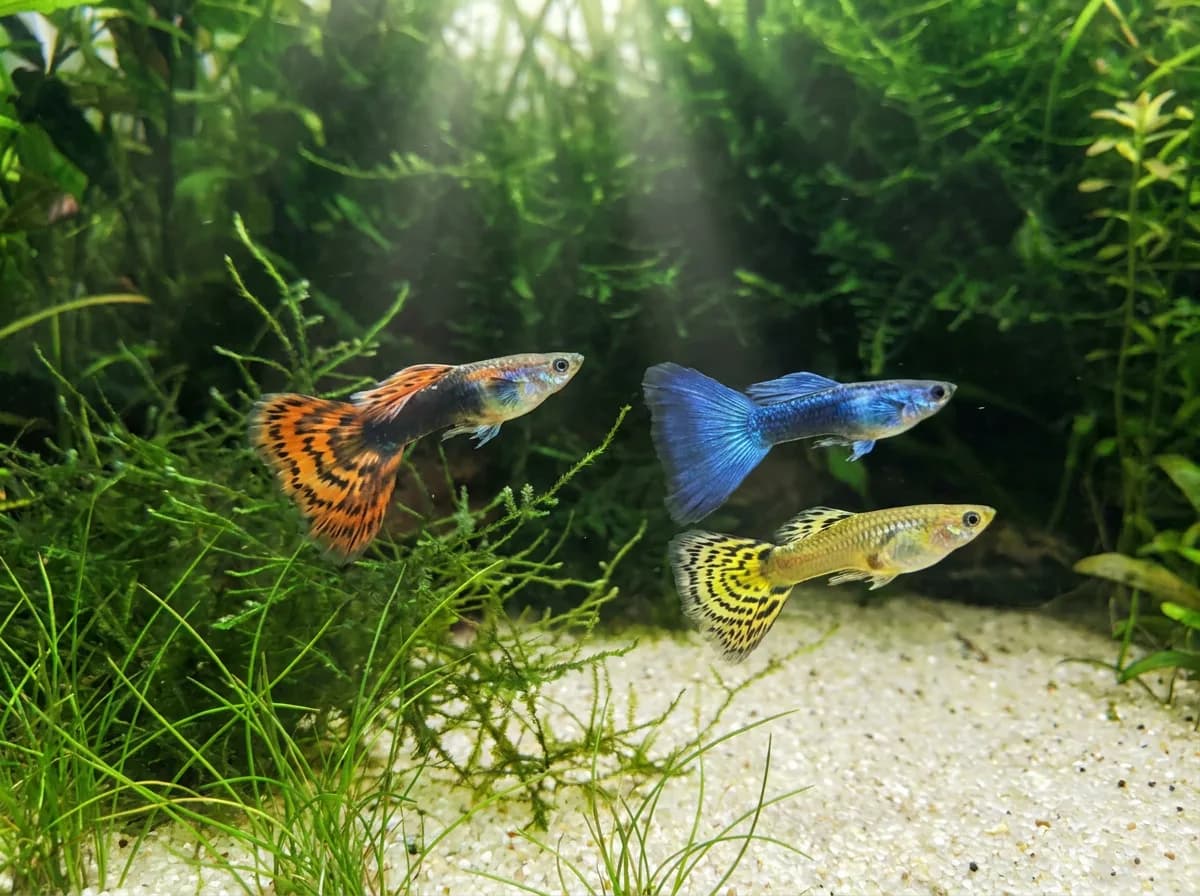
Stability matters, but it is not a reason to ignore unsuitable conditions. Choose fish whose requirements overlap with the water you can reliably provide. If a test result seems wrong, confirm it and identify the cause before pouring in a pH-adjusting product. Repeatedly chasing a number can create avoidable swings.
Plan a community around shared requirements
For every proposed combination, compare adult size, temperature, water chemistry, activity, feeding and social needs. “Peaceful” on a label does not answer all those questions. A fast group may outcompete a slower fish for food even without obvious fighting.
Give schooling fish an appropriate group of their own kind. One tetra, one danio and one barb do not make a school. Confirm the number for the exact species, then make sure the aquarium can house that group as adults. If it cannot, choose a different plan rather than reducing the group to fit.
Plants and hiding places can help fish use the space, but they cannot repair fundamentally incompatible stocking. Leave open areas where active fish can swim, and check that decorations have no sharp edges or openings that can trap the fish as they grow.
Freshwater or saltwater?
Freshwater is usually the more manageable first project for a family. A marine aquarium adds salinity management and different equipment and livestock considerations. The fish your child recognizes from an ocean film may need a very different setup from the one you have priced.
If the family specifically wants a marine aquarium, treat it as a separate project with its own research and budget. Do not substitute a saltwater fish into a freshwater plan or describe either kind of aquarium as maintenance-free.
A Parent and Child Fish-Care Routine
Give your child jobs they can complete successfully, with an adult checking the result. Younger children can observe and report; older children may help record tests and carry out parts of maintenance under supervision. The adult responsibility stays the same even when a child becomes confident.
A few minutes of observation every day
At a regular time, check that the equipment is running and the temperature is appropriate. Watch each fish's swimming, breathing and interest in food. Notice whether one is hiding unusually, being chased repeatedly or failing to eat. Knowing what is normal for your own fish makes changes easier to spot.
Let an adult measure the meal before a child feeds it. Agree who has fed the fish and mark it on a simple chart so another family member does not provide a second meal. Choose food for the species, and adjust the portion to actual feeding rather than treating the package as permission to add an unlimited pinch.
Fish do not need children to touch, chase or scoop them out for play. Enjoy them through observation: name individuals, sketch their colors, or record where they like to rest. Keep small hands away from switches, plugs, heaters and cleaning chemicals.
Schedule testing and partial water changes
Set a recurring time for an adult to test the water and assess maintenance. Test more often during setup, after changes to stocking, or if fish behave abnormally. A written log helps distinguish a single reading from a developing problem.
A useful freshwater kit measures ammonia, nitrite and nitrate as well as pH. The API Freshwater Master Test Kit includes those tests, with a separate high-range pH test. Follow the instructions precisely, including shaking and timing steps. Adults should handle reagents; a child can record the results.
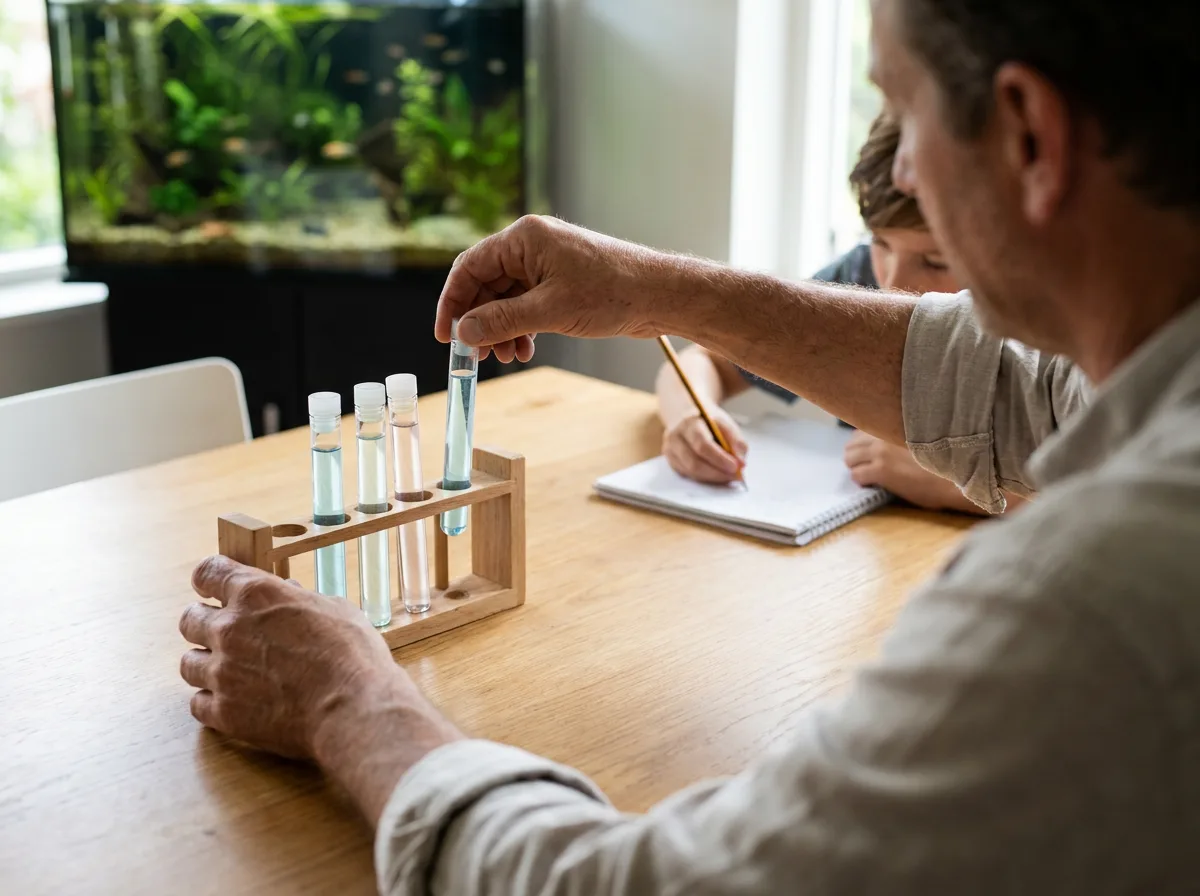
Plan regular partial water changes based on the aquarium's test results, stocking and established care guidance. Prepare replacement water appropriately and avoid abrupt temperature changes. Use aquarium-only buckets and equipment; residues from household cleaners do not belong in a fish tank.
Filter maintenance should protect the biological filtration you worked to establish. Follow the manufacturer's instructions for the different media, rather than replacing everything at once. For example, Tetra distinguishes its biological Bio-Scrubber from the replaceable cartridge. Do not scrub away all filter media in untreated tap water.
If a fish seems unwell, check water quality promptly and seek advice from an aquatic veterinarian or another appropriately qualified professional. Avoid choosing medication by color, or adding several remedies without a diagnosis. Tell the adviser the species, tank size, test results, temperature and recent changes.
Plan for weekends away and fading interest
Before a trip, arrange care with someone who understands the aquarium. Leave measured feeding instructions and explain what to check. Test any automatic feeder well before relying on it, and consider whether it is needed for the species and trip length. A device is not a replacement for checking equipment and fish.
Agree before purchase that the adult will continue care if a child loses interest. That conversation protects the fish and keeps a missed chore from becoming an emergency. Never release aquarium fish into local waterways. If keeping them becomes impossible, arrange a responsible rehoming plan with suitable advice.
Involve Your Kids in Choosing Their Fish
Children can help choose the location, aquarium appearance and names once the care requirements are settled. Offer safe decorations that leave enough swimming room, and explain why the fish's comfort sometimes rules out a favorite ornament. Choosing from a suitable shortlist gives them ownership without making them responsible for technical decisions they cannot yet assess.
Make the preparation part of the experience. Mark cycling observations on a calendar, draw the proposed aquarium and compare fish photographs together. Waiting for a ready home teaches more than bringing fish home on the first shopping trip.
Before purchase, ask the supplier what the fish are eating, what water they are kept in and how to introduce them to your prepared aquarium. Follow appropriate acclimation guidance for the particular situation. Bring home the planned fish, not extra animals added because the tank looks empty on its first day.
Recommended Starter Supplies for Kids’ Fish Tanks
Keep the budget visible too: the tank and fish are only part of it. Include equipment, water treatment, tests, food, electricity, replacement parts and access to help when a fish is ill. A low purchase price does not make a fish disposable or its care optional. Use the stocking plan to check a kit's contents. A convenient package may still need a heater, thermometer, test kit or differently sized filter. The best value is equipment that fits the actual aquarium and can be maintained reliably.
- A suitable aquarium, secure lid and properly rated support, with enough usable space for the fish as adults.
- A correctly sized filter with species-appropriate flow, plus any pump, tubing or other components it requires.
- A heater when the selected species and room conditions require one, and a separate thermometer to check it.
- Water conditioner appropriate for the source water, a measured dosing tool and tests for the relevant water parameters.
- Aquarium-only buckets, a suitable siphon and the supplies needed for routine partial water changes.
- Safe cover and decorations, appropriate food and a written care plan shared by the adults in the home.
Buy for the planned aquarium first. You can add a suitable decoration later; you cannot postpone water quality or squeeze an adult fish's needs into a tank chosen only because it fits a bedside table.
Frequently Asked Questions
Choose the fish that fits your family’s space, water and care routine. A single betta can suit a properly heated, gently filtered aquarium; a group of zebra danios suits a longer tank with room to swim. Guppies or platies can work when their water and breeding needs are planned for. A cycled aquarium and adult responsibility matter more than a “beginner” label.
No pet fish is maintenance-free. A suitable species in a stable, lightly stocked aquarium is usually easier to manage than an overcrowded mixed tank. Even hardy fish require measured feeding, water testing, filter maintenance and regular partial water changes. Choose a setup whose routine an adult can maintain throughout the fish’s life.
Zebra danios are an option for a family that can provide a school of six or more and a long aquarium. For someone who wants one fish, a betta in an appropriately equipped tank may be a better fit. Check the exact species requirements before buying; do not put a schooling fish alone to make a small tank work.
Sign up for expert-backed reviews and safety alerts all in one place.