How to Convince Your Parents to Get a Dog or Cat
Want to ask your parents for a dog or cat? Learn how to discuss their concerns, make a shared care plan, estimate real costs and respond respectfully if the answer is no or not yet.

Petful is reader supported. As an affiliate of platforms like Amazon and Chewy, we may earn a commission when you buy through links on this page. There is no extra cost to you.
Petful may earn a commission if you click on our links and make a purchase. This comes at no extra cost to you.
Learning how to convince your parents to get a dog or cat starts with understanding the commitment you are asking them to share. Explain why you want a pet, listen to their concerns and bring a realistic care plan. A thoughtful conversation can help your family decide, but it cannot guarantee a yes.
As a kid, I begged nonstop for a dog. Now, as an adult and a parent, I understand the other side of the conversation. Convincing your parents takes more than enthusiasm. You need a thoughtful plan that shows maturity and commitment.

Sign up for expert-backed reviews and safety alerts all in one place.
Start by Understanding Your Parents’ Concerns
If you want to persuade your parents to let you get a cat or puppy, first ask what makes them hesitate. The useful approach is the same whether you are talking to your mum, dad or another caregiver: listen, gather practical information and accept that their agreement is necessary. No set of ten persuasive tricks can make an unsuitable household ready for a pet.
- 1A pet needs willing adult responsibility as well as help from a child.
- 2Bring a shared care plan covering school days, costs, veterinary care, holidays and changes in your family’s routine.
- 3Take allergies, housing restrictions, safety and the animal’s needs seriously.
- 4Accept no or not yet. Never buy, adopt or bring home a pet without the adults’ agreement.
Choose a calm time to talk with your mom, dad or other caregiver. Ask what worries them most before presenting a solution. “We cannot afford another monthly expense” is a different concern from “I do not want to do all the walking.” Guessing at the objection can lead to a long speech that never addresses the real issue.
Ask a specific question and listen to the answer
- “Is your main concern the time, the cost, our home or something else?”
- “What would have to change before we could consider a pet?”
- “Would you be willing to look at a care plan with me?”
- “If the answer is no for now, is there a time when we could discuss it again?”
Write down the concerns in your own words and check that you understood. Avoid arguing that every problem has an easy fix. Some barriers, such as a lease restriction, serious allergy, unstable housing or an adult who does not want a pet, may rule out adoption now. Respecting that answer is part of responsible pet ownership.
Make adult supervision concrete
For dog care, a safe walk involves more than owning a leash. An adult must decide whether you can control the particular dog and supervise as needed. Check the collar or harness fit, the route, the weather and how to handle other dogs. A Frisco six-foot traffic leash is an example to discuss with the adult responsible for the dog, not a reason to walk an unfamiliar animal alone.

Use a leash discussion to plan who will safely walk the dog. Check the attachment, size and handling needs with an adult before choosing equipment.
Petful may earn a commission when you click through to Chewy, at no extra cost to you.
Show Responsibility Before Asking Again
Do the responsibilities you already have reliably: schoolwork, agreed household chores and commitments to other people. Pick a manageable routine and keep it without repeated reminders. This is evidence that you can participate in daily care, although even excellent behavior does not obligate your parents to adopt an animal.
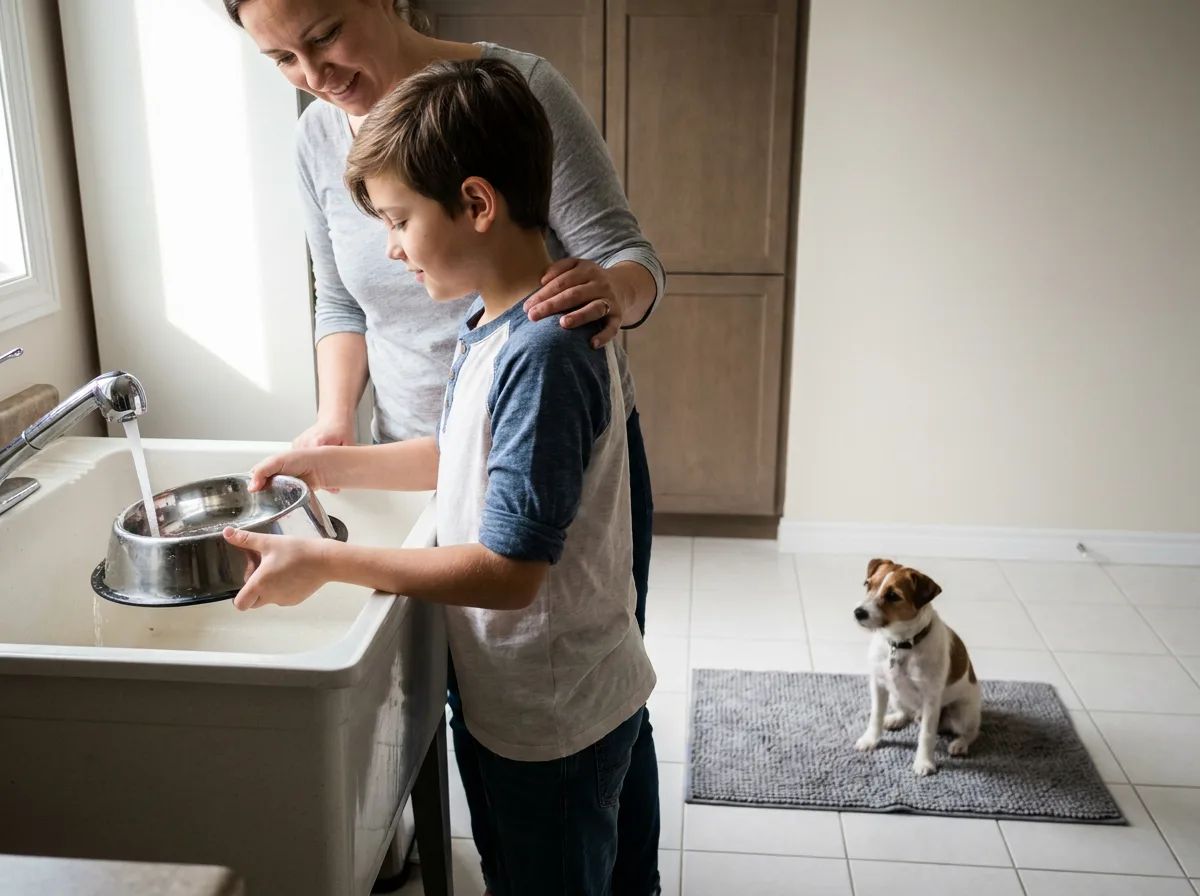
With an adult’s permission, learn what practical care involves. You might help a trusted relative refresh a dog’s water, accompany an adult on a walk or observe a cat’s feeding and litter routine. Ask the animal’s caregiver first and follow their instructions. Do not offer pet-sitting services or volunteer commitments that your family has not approved.
Keep a short record of the routine you actually completed. Include what was difficult, such as an early start or fitting a task around school. Saying “I learned I will need help on sports days” shows better planning than promising never to need help. The goal is a sustainable household arrangement, not a performance that ends after adoption.
Make cat care just as concrete as dog care
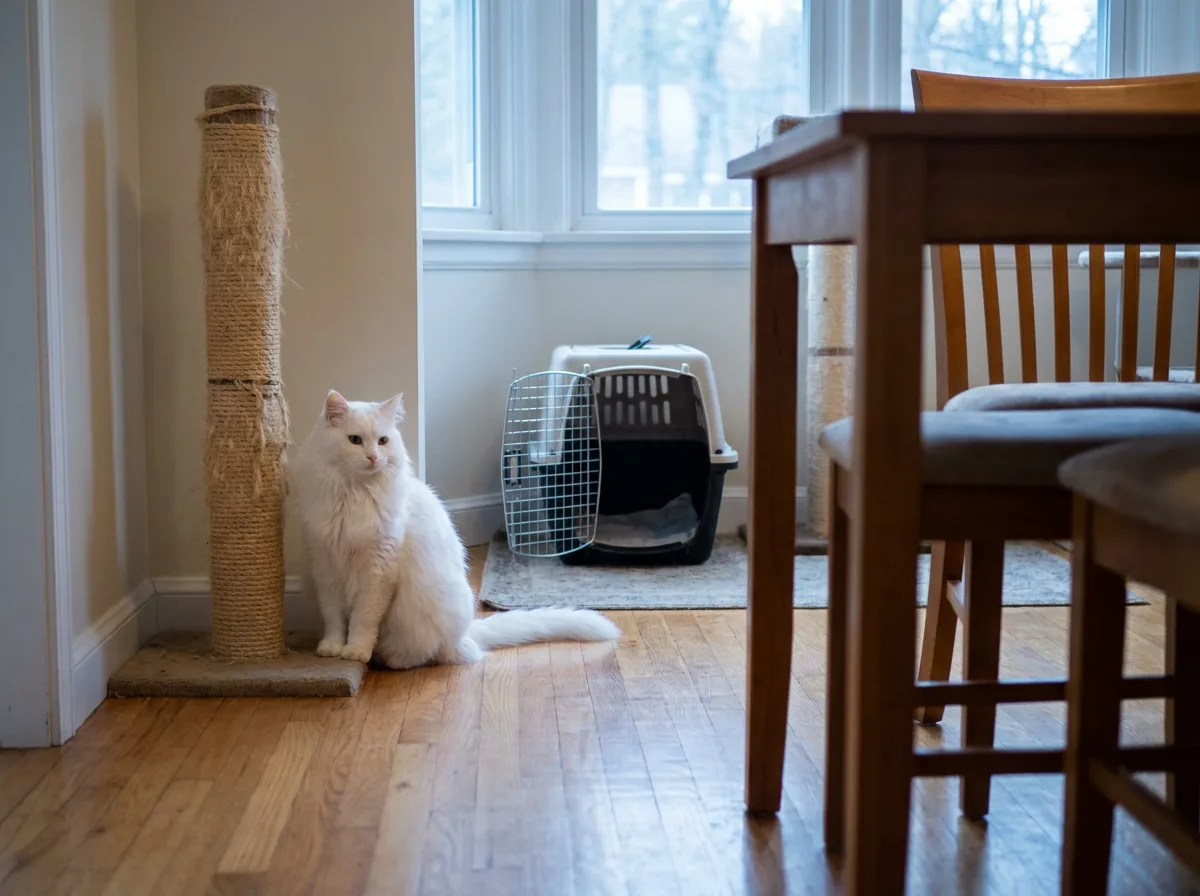
If you are asking your parents for a cat, describe where the litter box, scratching surfaces, carrier and resting places would go. Include daily interactive play and who will clean the litter box. A supervised Frisco feather wand can make the play commitment easy to explain: someone has to spend time using it and put the string away afterward.

Plan a daily supervised cat-play routine before buying toys. Choose a wand appropriate for the cat and store string and feathers out of reach after play.
Petful may earn a commission when you click through to Chewy, at no extra cost to you.
Choose a Dog or Cat That Fits Your Home
If you want a puppy because they are cute, learn about frequent toilet breaks, training, chewing and supervision. A kitten also needs safe play, suitable feeding and protection from household hazards. An adult animal with a known temperament may fit some families better, but age alone does not guarantee easy care.
A cat should not be offered as a no-work alternative when your parents decline a dog. Cats need daily feeding, fresh water, litter maintenance, play, veterinary care and a home where they can rest safely. Dogs vary in their exercise and training needs. Ask a reputable rescue, breeder or veterinarian about the individual animal rather than choosing only from pictures.
| Decision | Dog or puppy | Cat or kitten |
|---|---|---|
| Daily routine | Who handles walks, toilet opportunities and training? | Who handles litter, interactive play and feeding? |
| Time away | What care is arranged while the household is at work or school? | Who checks food, water, litter and wellbeing every day? |
| Home setup | Are housing rules, exercise space and safe containment suitable? | Are windows secure and resting, scratching and toileting areas available? |
| Individual fit | What is known about this dog around children and other animals? | What is known about this cat’s comfort with children and existing pets? |
| Long-term care | What happens during exams, holidays, moves or college? | What happens during exams, holidays, moves or college? |
The AVMA’s guidance on selecting a dog centers the family’s lifestyle and the animal’s needs. The same practical question belongs in a cat discussion: can this household provide appropriate care throughout the pet’s life? A promise that works only during school vacation is not yet a complete plan.
Questions for an adoption meeting
If your parents agree to explore adoption, prepare questions for the organization caring for the animal. Ask what is known, what is uncertain and what support is available after adoption. An animal behaving quietly during a short visit may act differently after settling into a home, so avoid treating one meeting as a complete temperament test.
- Has the animal lived with children, cats or dogs, and what was actually observed?
- What food, routines and medical care are they receiving now?
- What training or behavior support might the family need?
- What are the organization’s adoption requirements and procedures if problems arise?
Build a Shared Pet-Care Plan
A written plan helps everyone see what “I will take care of the pet” actually means. List tasks, the person responsible and the adult backup. Fill it in with your parents rather than assigning them jobs in a presentation they have never agreed to. If nobody can cover a necessary task, solve that gap before adopting.
| Task | School day plan | Adult backup or exception |
|---|---|---|
| Food and fresh water | Agree who checks amounts and cleans bowls | Adult confirms appropriate food and notices missed meals |
| Walks or litter care | Assign specific times around school and activities | Adult covers illness, late activities and tasks beyond the child’s ability |
| Play and training | Choose short realistic sessions suited to the animal | Adult supervises safe handling and adjusts the plan |
| Health and veterinary care | Child reports changes promptly | Adult arranges appointments, transport and treatment decisions |
| Vacation and overnight absence | Arrange a trusted caregiver in advance | Adult confirms daily care, access and emergency instructions |
| Routine changes | Discuss exams, moves and later school transitions | Adult accepts ongoing responsibility when the child is unavailable |
Plan for a normal school day and a difficult one
Start with the hours when everyone is actually out of the home. A dog may need toilet opportunities and company during that time; a young puppy needs a different arrangement from a settled adult. Cats still need daily care and observation. An automatic feeder does not clean a litter box or notice that an animal is unwell.
Include early mornings, evenings, bad weather, after-school activities and days when you are sick. If a schedule depends on an adult leaving work, paying a walker or asking a relative for help, the adult must agree and confirm that the arrangement is available. A hypothetical helper is not a backup.
- Use task names and times rather than “whenever needed.”
- Mark which jobs require adult supervision or adult decision-making.
- Identify someone who can cover every essential task if you are unavailable.
- Discuss the plan again when the animal’s age, health or household routine changes.
Include transport and appointments
Ask where your family would get veterinary care and how the pet would travel there. A properly fitted carrier is a normal part of cat care, even for a cat who stays indoors. Letting a cat become familiar with a carrier at home can make it more useful than an object that appears only before a stressful trip.
The Petmate two-door carrier is one example to compare by dimensions and the animal’s needs. Check room to stand, turn and lie down, secure door latches and the manufacturer’s instructions. Do not buy a particular carrier merely to show commitment; first confirm that your family wants the pet and that the size will fit.

Add a correctly sized carrier to the agreed transport budget. Compare dimensions and secure closures rather than assuming one size fits every cat or small dog.
Petful may earn a commission when you click through to Chewy, at no extra cost to you.
Make a Realistic Pet Budget
Research local prices with an adult. Adoption or purchase is only the starting cost, and a “free” kitten or puppy can still need substantial care. Avoid claiming a universal monthly total based on one bag of food or a social-media estimate. Your family needs figures for the actual animal, local services and the care they intend to provide.
| Expense group | What to price | Question to settle |
|---|---|---|
| Initial setup | Adoption or purchase, suitable supplies, first veterinary care | What is included, what is still needed and who pays? |
| Recurring essentials | Food, litter or waste supplies, routine preventive care | What is the likely monthly or annual total for this animal? |
| Time-away support | Walkers, sitters or boarding where needed | Who is available, what does it cost and what is the backup? |
| Unexpected care | Veterinary assessment, treatment and emergency transport | What financial plan can the adults actually support? |
| Replacement and maintenance | Worn toys, damaged leads, grooming and cleaning | What must be replaced for safety and what can wait? |
Gather figures you can explain
With your parents, compare the actual local charges for routine appointments, supplies and any care you need while away. Note whether a quote is a one-time cost, monthly cost or annual cost, and what it includes. If you compare pet insurance, an adult should read the exclusions, deductibles and reimbursement terms instead of treating the premium as the whole cost of veterinary care.
Keep unknown amounts marked as unknown. For an emergency, discuss who can authorize treatment and how the family would reach care outside normal hours. You do not need to predict every event, but the adults need a workable plan rather than a child’s promise to find money later.
Distinguish essentials from optional purchases
An animal needs appropriate food, housing, health care and enrichment. They do not need every product in an online shopping list. Start with the requirements for the chosen pet and compare safe options. An adult may decide to reuse suitable supplies or choose simpler equipment instead of buying a complete matching set.
For example, a food-stuffable toy can be useful for some dogs when its size, material and use suit the individual. A KONG Classic Large is intended as a particular size option, not a universal toy for every puppy or small dog. Supervise use, inspect wear and account for food used in toys as part of the dog’s overall feeding plan.

Compare the KONG Classic Large only for a dog whose size and chewing style suit it. An adult should choose the appropriate size and supervise use.
Petful may earn a commission when you click through to Chewy, at no extra cost to you.
Be clear about any money you can realistically contribute and how predictable that income is. A child’s allowance or occasional chore payment should not be the only plan for essential veterinary care. Do not promise that a pet will cost your parents nothing, and do not buy supplies as a way to pressure them into saying yes.
Discuss Allergies, Safety and Family Boundaries
Allergies are a real health concern. The American Academy of Pediatrics explains that pet allergens come from proteins associated with animals, not just visible fur. A short coat or low-shedding breed does not make a dog or cat allergy-free.
The AAAAI states that there is no completely hypoallergenic dog or cat. If someone has suspected or known pet allergy, the family should seek appropriate medical advice before deciding. Do not promise that bringing an animal home will prevent allergies or asthma, or that a brief visit without symptoms proves long-term safety.

Respect the pet’s space
Adults should supervise children around pets and respect each pet’s space. A friendly animal still needs the option to rest undisturbed. AAP guidance on choosing a family pet and Cats Protection’s advice for children support adult supervision and appropriate interactions. A child’s affection does not make hugging, carrying or face-to-face contact welcome.
- Ask the responsible adult before approaching or handling an animal.
- Leave an animal alone while eating, resting, hiding, caring for young or showing that they want distance.
- Do not pull tails, corner a pet or take food or toys from their mouth.
- Let a cat approach voluntarily and stop contact when they move away.
- Tell an adult promptly about scratching, biting, illness or behavior that worries you.
If there is a baby or very young child in the home, plan supervision and separation explicitly. Our guide to cats and babies addresses that particular household change. The right answer may be to wait until the adults can reliably manage both the child’s and the animal’s needs.
Make Your Case Without Pressure
Once you understand the concerns and have a workable draft plan, ask for a short conversation. Explain what you value about having a pet and present the care and cost information you gathered. Invite corrections. A plan your parents help shape is more useful than a long list of reasons they are wrong.
A short letter or presentation can keep the conversation focused
- 1“I would like us to consider a dog or cat because ___. I understand this would affect the whole household.”
- 2“The concerns I heard are ___. Here is what I learned about them, and here are the questions I still cannot answer.”
- 3“These are the daily jobs I can help with. These are the adult responsibilities and backup arrangements we would need to agree.”
- 4“Could we review the plan together? If the answer is no or not yet, I will respect that.”
For an essay or PowerPoint, use the same structure: your reasons, the individual animal’s needs, daily care, realistic costs and unanswered questions. Sources and a simple table help more than dramatic pictures. Do not add fake statistics, claim that a pet cures loneliness or promise perfect behavior from a puppy or kitten you have not met.
Five positive reasons, with realistic expectations
- Companionship: many people enjoy sharing daily life with an animal, while respecting that each animal has their own temperament.
- A shared family activity: adults and children can participate in care when the arrangement is genuinely welcome.
- Opportunities to learn: feeding, play and observing body language can teach practical skills with adult guidance.
- Enjoyable routines: appropriate walks or play may be rewarding parts of a day, though they still require effort.
- A caring home: a suitable adoption can meet an animal’s needs as well as the family’s wishes.
These are possible benefits, not a guarantee of better grades, higher self-esteem, improved health or a happier family. The animal also needs a good life. The AKC’s advice about talking with parents includes researching needs and agreeing responsibilities; treat those as tools for a fair decision rather than ways to force agreement.
If Your Parents Still Say No
If your parents will not let you get a dog, saying “I really want one” does not resolve their concern. Asking again after they have said no is reasonable only if they welcome another discussion and something relevant has changed. Getting a dog without telling your parents takes away their decision and leaves the animal without an agreed care plan.
You cannot reliably convince your parents to get a dog or cat in one day. Repeating the request, begging, arranging a surprise pet or recruiting relatives to pressure them can damage trust. If the answer is no, ask once whether it reflects a temporary obstacle or a decision that is not open for discussion. Respect the answer.
If the family is willing to revisit the idea, agree on a specific, reasonable next step: learn about a local adoption process, review the budget or try an approved care responsibility. Avoid treating that step as a contract that requires your parents to say yes afterward. New information may show that waiting is the better choice.
A no is not a judgment of how much you care
If a puppy already lives with you and you feel your parents hate the puppy, ask which specific problems are overwhelming them: chewing, accidents, disrupted sleep or an unclear division of care. Involve the responsible adult and appropriate veterinary or training support. The immediate job is to keep the puppy cared for and safe, not to win permission for an animal who is already there.
Your parents may believe that you would love a pet and still decide that the household cannot support one. Try to separate disappointment from the practical decision. Do not blame a sibling with allergies or an adult whose work schedule makes care difficult. You can keep learning about animals while respecting the limits of the home you share.
Another pet or fostering still requires a full agreement
Asking for a second dog, a second cat or a third pet means considering the animals already in the home. More animals bring costs, time and compatibility needs; they are not simply an extra bowl of food. If another cat is the proposal, review how to introduce a kitten to a resident cat before assuming they will be friends.
Fostering is also a real commitment, with a rescue’s requirements and an animal depending on the household. It should never be used as a trick to bring home a pet permanently. If adoption or fostering is not suitable, you may still enjoy animals through an adult-approved visit, educational activity or volunteering opportunity that accepts your age group.
Questions About Asking for a Pet
There is no age that makes a child ready to be the sole responsible owner. Readiness depends on the family, the individual dog and the child’s abilities. Adult responsibility must cover welfare, costs, supervision and decisions, even when a child reliably helps with daily tasks.
No. Arrange appropriate daily care, company, toilet opportunities, feeding and wellbeing checks, including overnight arrangements that suit the dog. Leaving extra food and water is not a care plan. Discuss a trusted sitter or boarding option with the adults responsible before agreeing to a pet.
Companionship, shared family activities, learning care skills, enjoyable routines and providing a suitable home are five reasonable benefits to discuss. They are not guaranteed outcomes, and they do not override costs, allergies, housing rules or an adult’s unwillingness to take responsibility.
Do not build a care schedule around expecting a dog to hold urine for 12 hours. Age, health and individual needs vary, and puppies need more frequent opportunities. Arrange suitable toilet breaks with an adult and ask your veterinarian about the particular dog rather than using a maximum endurance claim as a normal routine.

Melissa Smith has been researching and writing about pet behaviors for several years. Her work has been recognized with Certificates of Excellence from both the Dog Writers Association of America and the Cat Writers’ Association. A longtime animal lover, Melissa is a professional pet sitter on Cape Cod through her company, Fresh Start Services.
Sign up for expert-backed reviews and safety alerts all in one place.