Cat Sitter Cost: What to Pay in 2026
Cats are often left with just a bowl of food, which is riskier than it looks. Here is what a cat sitter costs in 2026, from single drop-in visits to overnight care, plus how to find a sitter you can trust.
Petful is reader supported. As an affiliate of platforms like Amazon and Chewy, we may earn a commission when you buy through links on this page. There is no extra cost to you.
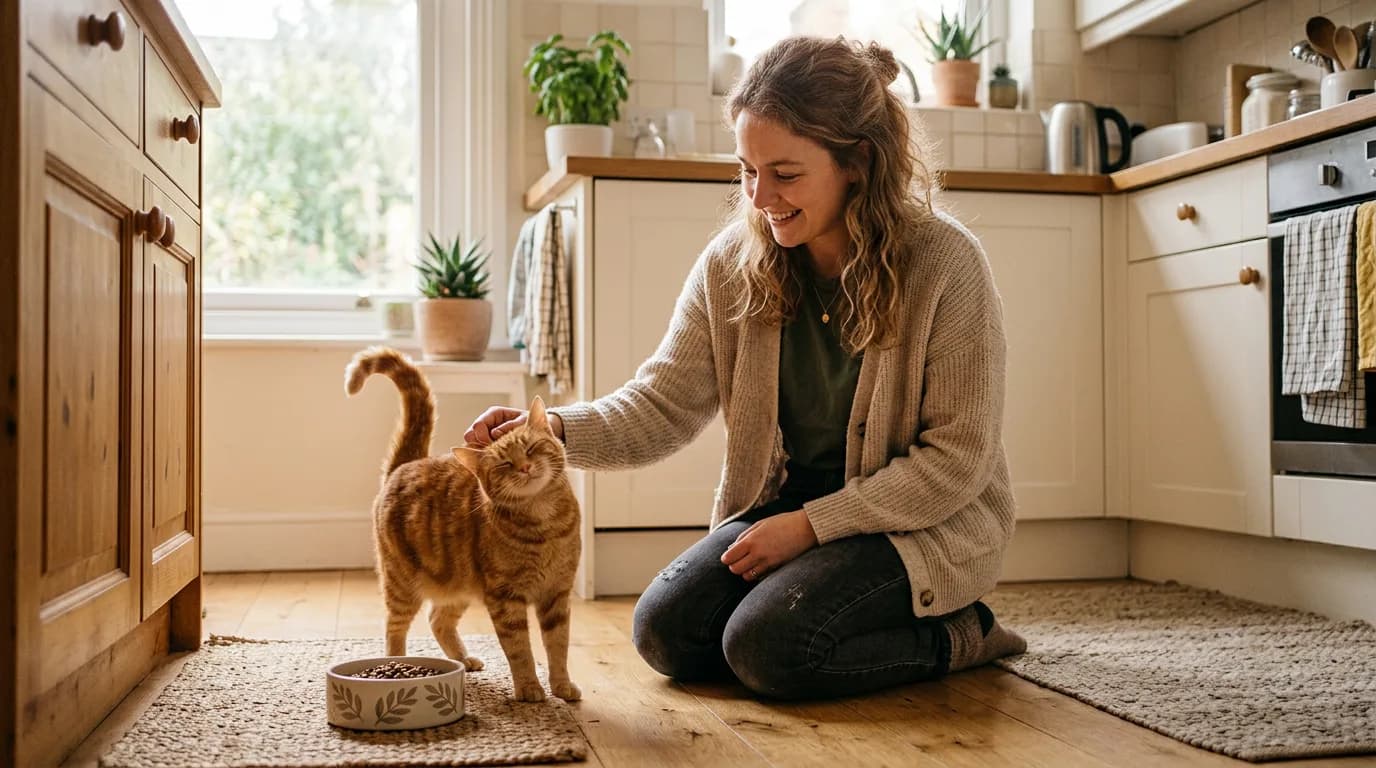
When you travel, the question that comes right after "who will watch my cat" is usually "what will it cost." The typical cat sitter cost in 2026 runs from 20 to 40 dollars for a single drop-in visit, with two visits a day or overnight care landing higher. That is a small price for real peace of mind, and it beats the old habit of leaving out a giant bowl of food and hoping for the best.
This guide breaks down real 2026 US cat sitter cost ranges by service type, explains what pushes the price up or down, and shows you how to find a sitter you can actually trust. Whether you need one quick visit a day or overnight coverage, you will know what is fair to pay before you book, and why a drop-in sitter is the safer choice for your cat.
- 1A single drop-in cat sitter visit typically costs 20 to 40 dollars in 2026
- 2Two visits a day run 40 to 70 dollars, and overnight in-home care is 50 to 85 dollars a night
- 3A week of once-daily visits lands around 140 to 280 dollars
- 4Extra cats are usually a small add-on, not double the price
- 5A drop-in sitter is far safer than leaving a bowl of food out for days

Sign up for expert-backed reviews and safety alerts all in one place.
Why cats need a sitter, not just a bowl of food
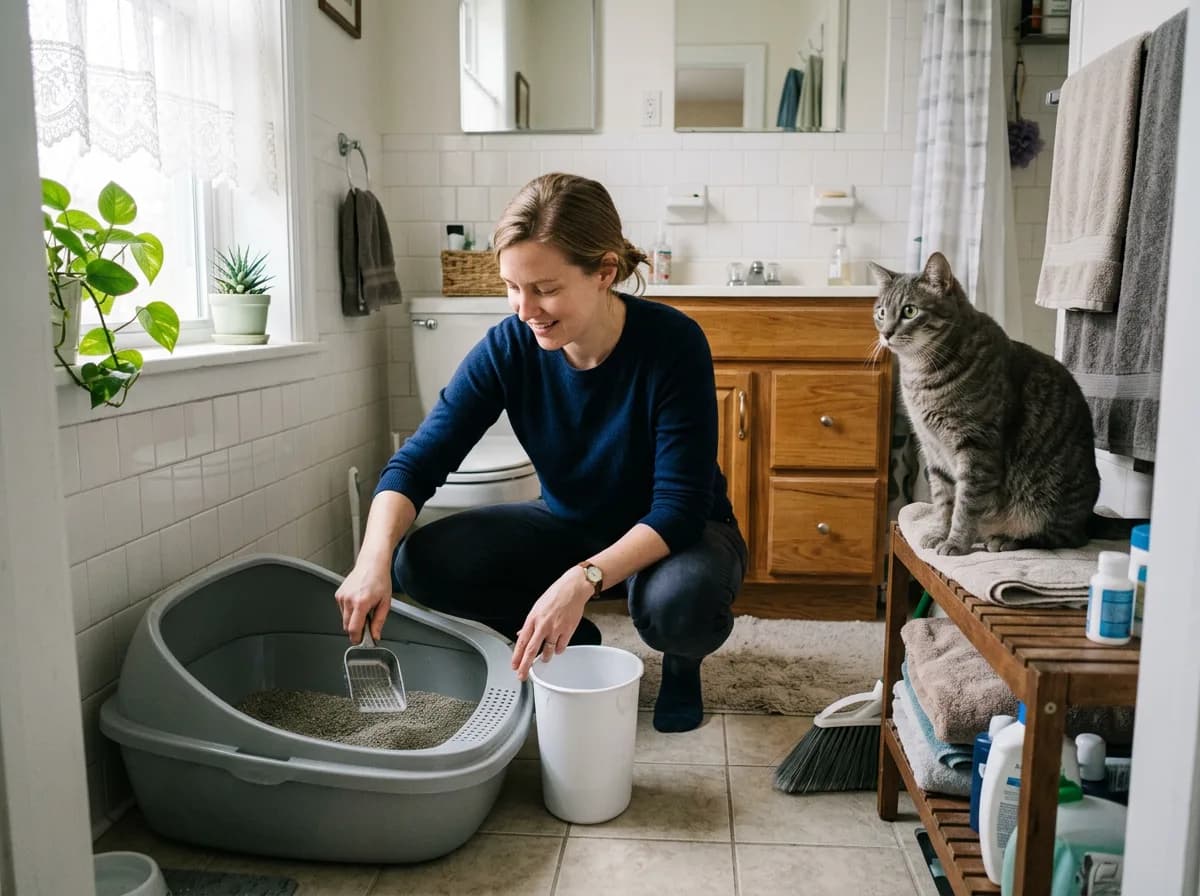
The old myth is that cats are fully self-sufficient and can be left alone with a mountain of kibble and a full water bowl. In reality, that setup hides real risks. Dry food left out for days goes stale, attracts bugs, and lets an anxious or bored cat overeat and then vomit. Wet food spoils within hours. A single tipped-over water bowl can leave your cat without any water for the rest of your trip.
- Piling up food and water and leaving a cat alone for days is risky. A cat can stop eating, get sick, or tip over a fountain, and no one would notice. Arrange a daily drop-in for any trip longer than a day.
The bigger issue is what nobody is there to notice. Cats hide illness extremely well, and some feline emergencies move fast. A male cat with a urinary blockage can go from "a little off" to life-threatening in under 48 hours. Vomiting, a litter box that has not been touched, or a cat wedged in the back of a closet are all signals a sitter would catch and you would miss entirely from the road.
 Free to join
See cat sitter rates near you
Enter your ZIP to see sitters, walkers and boarders near you on Care.com, with rates, reviews and availability.
Petful may earn a commission when you join Care.com.

Petful may earn a commission when you click through to Care.com, at no extra cost to you.
- Spoiled or stale food and a tipped water bowl, leaving your cat without clean water
- An overflowing litter box, which many cats will simply refuse to use, leading to accidents or holding it
- No one to spot early signs of a urinary blockage, vomiting, or a cat that has stopped eating
- Loneliness and stress, since many cats are far more social than their reputation suggests
- No response if the power goes out, a pipe leaks, or your cat gets stuck somewhere
So can you leave a cat alone for 2 days? For one healthy adult cat, a single overnight of roughly 24 hours is usually fine with enough food, fresh water, and a clean litter box. Two full days with zero human contact is pushing it, and most veterinarians advise against it. A lot can go wrong in 48 hours, from a knocked-over water source to an unnoticed illness, so at a minimum you should arrange one drop-in visit per day any time you are gone for two days or more.
- Even a confident, healthy cat should get at least one daily drop-in visit once you are away for 48 hours or longer.
Planning a trip soon? Our guide to cat care while you travel walks through the full checklist, from packing records to setting up the home before you go.
How much does a cat sitter cost?
So how much does a cat sitter cost? Nationally in 2026, a single drop-in visit runs 20 to 40 dollars for about 30 to 45 minutes of care. That visit typically covers feeding, fresh water, scooping the litter box, a little play or brushing, and a quick text or photo update so you know your cat is doing fine. Rates sit near the low end in smaller towns and climb toward, or past, 40 dollars in major metros like New York, San Francisco, and Boston.
Where you live moves the number as much as anything. In small towns and lower-cost regions, a solid drop-in visit can be booked for 18 to 25 dollars. In mid-size cities it settles around 25 to 32 dollars. In the priciest coastal metros, a single visit can hit 40 dollars or a little more, and overnight rates rise in step. If a quote looks far off from these bands for your area, ask what is driving it before you assume it is a mistake.
Independent sitters often charge a flat per-visit fee, while professional pet-sitting companies may add a booking or service fee on top. Either way, the per-visit number is the building block for every longer arrangement. It pays to confirm exactly what one visit includes before you scale up to daily or twice-daily care, because a "visit" can mean 20 rushed minutes for one sitter and a relaxed 45 for another.
Free to joinCompare cat sitter rates in your area
Enter your ZIP to see sitters, walkers and boarders near you on Care.com, with rates, reviews and availability.
Petful may earn a commission when you join Care.com.
Petful may earn a commission when you click through to Care.com, at no extra cost to you.
What a standard drop-in visit includes
- Fresh food and clean water, plus washing bowls when needed
- Scooping the litter box and cleaning up any accidents
- 10 to 15 minutes of play, brushing, or lap time
- A quick wellness check and a photo or text update
- Basic home tasks like rotating lights, bringing in the mail, or watering a plant
How much is a cat sitter per week? For once-daily drop-in visits, a full week generally costs 140 to 280 dollars, which is seven visits at 20 to 40 dollars each. If your cat needs two visits a day, a week runs roughly 280 to 490 dollars. Overnight in-home sitting for a week is the priciest option at around 350 to 595 dollars, since the sitter is staying in your home every night. Many sitters offer a small discount for booking a full week, so it is always worth asking about a weekly rate up front.
- Many sitters trim the per-visit price when you book five or more days at once, so always ask whether a multi-day or weekly rate applies before you commit.
Cat sitting rates: per visit, per day, and overnight

Cat sitting rates are easiest to understand when you split them into three tiers: per visit, per day, and overnight. A per-visit rate of 20 to 40 dollars is the base unit. A per-day rate usually means two visits, morning and evening, and lands around 40 to 70 dollars. Overnight in-home sitting, where the sitter actually sleeps at your place, runs 50 to 85 dollars a night and buys your cat the most companionship and the closest thing to a normal routine while you are gone.
| Service | Typical low | Typical high |
|---|---|---|
| One drop-in visit (30 to 45 min) | $20 | $40 |
| Two visits per day | $40 | $70 |
| Overnight in-home sitting | $50 | $85 |
| Holiday add-on (per visit) | $5 | $20 |
Which tier you choose depends on your cat and the length of your trip. A single, confident adult cat may be perfectly content with one visit a day. Kittens, seniors, diabetic cats that need insulin on a schedule, or a very bonded cat who frets when alone all do better with two visits or full overnight coverage. Match the tier to the cat in front of you, not to the cheapest line on the price list.
A really common question is, how much should I pay someone to watch my cat for 4 days? The answer comes straight from the per-visit rate. Four days of once-daily visits totals about 80 to 160 dollars. Twice-daily care over those same four days runs roughly 160 to 280 dollars, and four nights of overnight in-home sitting lands near 200 to 340 dollars. Add a holiday surcharge if your trip falls on a major holiday, and expect a small bump if you have more than one cat at home.
How much should you pay a cat sitter?
What is reasonable to pay a cat sitter comes down to matching the rate to the experience and the workload. For a straightforward once-daily visit to a healthy cat, 20 to 30 dollars is reasonable across most of the country, and 30 to 40 dollars is reasonable in high-cost cities. It is reasonable to pay more when the sitter is insured and bonded, gives medications, drives a long way, or handles multiple cats. Paying a fair, professional rate also tends to get you a more reliable, communicative sitter.
If you want a deeper framework, our guide on how much to pay a pet sitter walks through the same math for dogs and cats and helps you sanity-check any quote against local norms before you agree to it.
Free to joinCheck cat sitter availability near you
Enter your ZIP to see sitters, walkers and boarders near you on Care.com, with rates, reviews and availability.
Petful may earn a commission when you join Care.com.
Petful may earn a commission when you click through to Care.com, at no extra cost to you.
- The sitter's experience, insurance, and bonding
- Whether medications, injections, or special diets are involved
- The length of each visit and how many visits per day
- Your location and local cost of living
- Holiday timing and how far the sitter has to travel
A neighbor's teenager feeding your cat for a few dollars is not the same service as an insured professional who can recognize a sick cat and act on it. Both have a place, and a trusted teen can be great for a confident cat over a short weekend. Just pay according to the risk you are comfortable with and the real value of your cat's safety, rather than defaulting to the lowest possible number.
How you pay matters too. Most independent sitters take cash, Venmo, Zelle, or an app payment, and many ask for the total up front or a deposit to hold your dates. Agencies usually bill by card. Agree on the full price, the payment method, and the timing before your trip so there are no surprises when you land, and keep any quote and visit schedule in a text or email you can point back to.
In-home cat sitting vs a cattery
When you compare in-home cat sitting vs a cattery, cost and stress usually point in the same direction. Boarding at a cattery or boarding facility runs about 25 to 50 dollars a night for one cat, which can look cheaper than overnight in-home sitting. But once-daily drop-in visits at 20 to 40 dollars often cost less than boarding while keeping your cat in its own home and territory the entire time.
- Your cat stays in its own territory, which most cats strongly prefer
- Lower stress, with no exposure to other animals or illness
- The sitter keeps feeding, litter, and medication on your cat’s normal schedule
- Your home looks lived-in while you are away
- No round-the-clock supervision between visits
- Not ideal for a cat with a serious condition that needs constant monitoring
- You are giving a stranger access to your home
- A once-daily visit still leaves the cat alone most of the day
The bigger difference is stress. Cats are deeply territorial and bond to place as much as to people. A cattery means a car ride, unfamiliar smells, strange cats nearby, and a small enclosure. For a lot of cats that adds up to hiding, refusing food, and stress-related problems like cystitis. Staying home with a sitter means the same room, the same litter box, and the same sunny window perch, with far less anxiety and no exposure to other animals.
Free to joinReady to book? Find a cat sitter nearby
Enter your ZIP to see sitters, walkers and boarders near you on Care.com, with rates, reviews and availability.
Petful may earn a commission when you join Care.com.
Petful may earn a commission when you click through to Care.com, at no extra cost to you.
- Cost: drop-in visits are often the cheapest option, while overnight sitting and boarding cost more
- Stress: home care keeps your cat in familiar territory, and boarding introduces new smells and noise
- Illness exposure: home care avoids contact with other animals at a shared facility
- Convenience: boarding requires drop-off and pickup on the facility's schedule, not yours
- Extras: a good sitter also handles mail, lights, and home checks while you are away
There are exceptions. A cattery can make sense for a cat with complex medical needs that benefit from staff on site around the clock, or when no trusted sitter is available in your area. For most healthy cats, though, staying home with a sitter is the lower-stress choice, and often the lower-cost one too.
- Because cats bond so strongly to their territory, most handle a familiar home with a sitter far better than a stay in an unfamiliar boarding facility.
What affects cat sitting costs?
Two owners in different towns can get very different quotes for what sounds like the same request. A handful of clear factors explain the gap, and knowing them helps you predict your own cat sitter cost and quickly spot an overpriced or suspiciously cheap quote.
- Number of cats: multiple cats usually add a small per-visit fee, often 5 to 10 dollars, not double the price
- Visit length and frequency: longer visits and twice-daily care naturally cost more
- Medications and special care: insulin injections, fluids, or pilling raise the rate
- Location: big-city and coastal rates run well above small-town rates
- Holidays: Thanksgiving, Christmas, and New Year visits often carry a 5 to 20 dollar surcharge per visit
- Experience and insurance: bonded, insured professionals charge more than casual sitters
- Extra services: plant watering, mail, trash duty, and long travel distances can each add a fee
So is $25 a day for cat sitting good? For a single once-daily drop-in visit to one healthy cat, yes, 25 dollars a day is a good and fair rate across much of the United States. It sits right in the middle of the typical 20 to 40 dollar range. Where 25 dollars a day starts to look low is when you need two visits, medications, multiple cats, or care during a major holiday, since each of those pushes the fair price higher. In a pricey metro, 25 dollars a day for one visit is a genuine bargain.
Holiday and peak-season pricing
The single biggest swing on your bill is timing. Good sitters book up fast around Thanksgiving, the winter holidays, spring break, and summer, and most add a surcharge of 5 to 20 dollars per visit during those windows. A few charge a flat holiday fee instead. None of this is gouging: demand is high and sitters are giving up their own holiday to cover yours. Book two to four weeks ahead for peak dates, confirm the surcharge in advance, and you avoid both the premium scramble and being left without coverage.
- Confirm the number of visits, the visit length, medication handling, and any holiday surcharge in writing so 25 dollars a day means the exact service you expect.
How to find a cat sitter you can trust
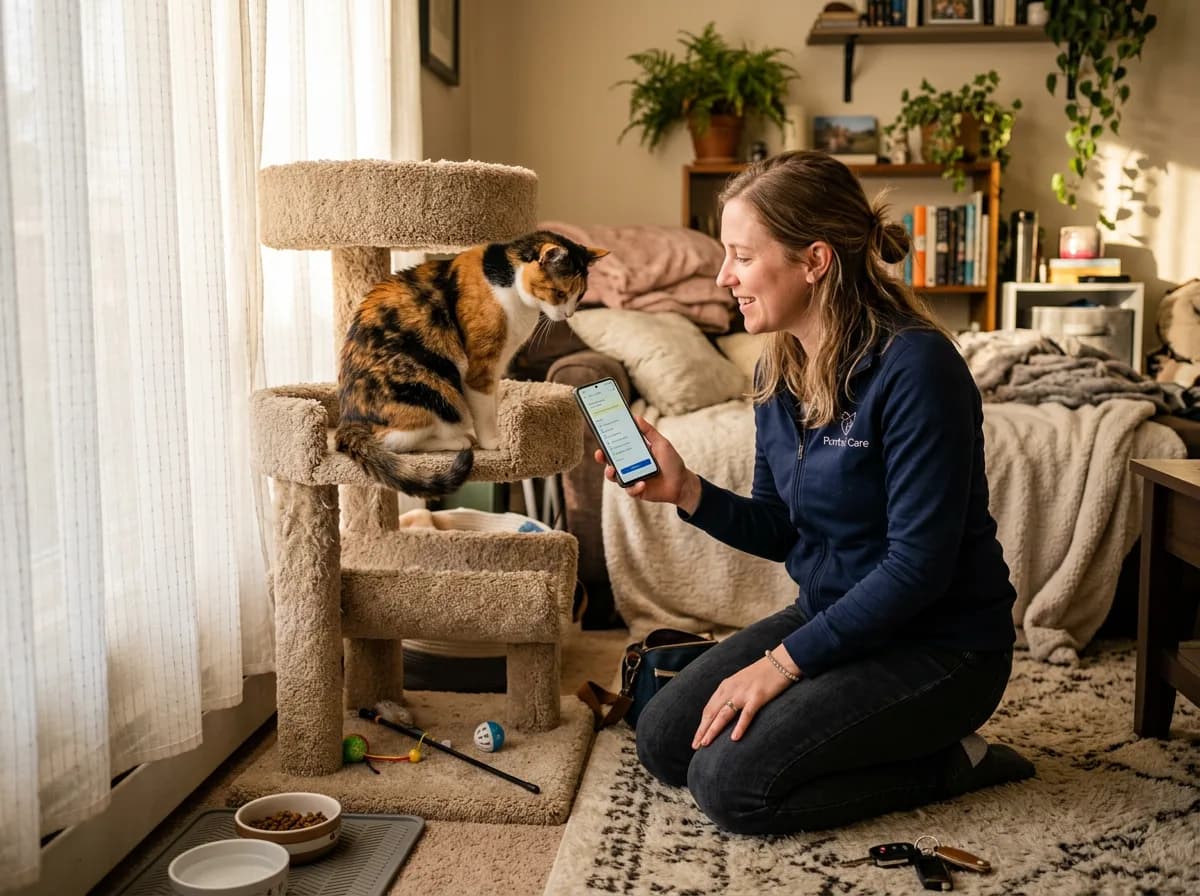
Price matters, but trust matters more when you are handing over a key to your home and the care of your cat. The good news is that finding a vetted sitter is far easier than it used to be. Online care marketplaces let you search local caregivers, read verified reviews from other pet owners, and run background checks before anyone ever sets foot in your home.
Care.com is a practical place to start. You can search local caregivers by zip code, filter for cat-specific experience, and compare rates side by side. Each profile shows verified reviews from real clients along with background-check status, so you are not booking a stranger on a hunch. You can message candidates, ask about their experience with medications or shy cats, and line up a meet-and-greet before you commit to a single visit or a full week. For a broader walkthrough of the whole process, our guide on finding a pet sitter covers what to look for from your first search to your first booking.
A quick vetting checklist
- Read verified reviews and ratings from other cat owners, not just the bio
- Confirm a completed background check before you book
- Schedule a meet-and-greet so your cat and the sitter can get comfortable
- Ask about experience with medications, senior cats, or shy cats if that fits yours
- Share written care instructions, your vet's contact, and a clear emergency plan
- Start with a short trip or a single visit before a long booking
A good sitter will welcome your questions, take notes during the meet-and-greet, and send updates without being asked. Combine verified reviews and a background check with your own gut read during that first meeting, and you will book with real confidence. That combination of a fair rate and a genuinely trustworthy sitter is what turns cat sitting from a source of travel stress into one less thing to worry about.
A single drop-in visit usually costs 20 to 40 dollars in 2026, covering 30 to 45 minutes of feeding, fresh water, litter scooping, and playtime. Prices skew higher in big cities and for sitters who give medications or care for several cats. Most owners book one or two visits a day.
For one cat, boarding at a cattery runs about 25 to 50 dollars a night, which can look cheaper than overnight in-home sitting. But once-daily drop-in visits at 20 to 40 dollars often cost less than boarding and keep your cat calm at home, so a sitter is usually the better value and the lower-stress choice.
Tipping is optional but appreciated, especially over holidays or for extra effort. A common guideline is 15 to 20 percent of the total, or roughly the price of one visit as a bonus on a multi-day stay. For an independent pro who sets their own rates, a warm review and a repeat booking also go a long way.
Most healthy adult cats do well with one visit a day for feeding, fresh water, a clean litter box, and some companionship. Kittens, seniors, and cats on medication or special diets usually need two visits a day. If your trip runs longer than a weekend, lean toward twice-daily checks so any problem gets caught early.
Just as important is knowing the red flags in a pet sitter or cat sitter, so you can rule out the wrong person before you hand over a key. Walk away if you notice any of these warning signs:
- A refusal to do a meet-and-greet before you book
- No questions about your cat, its routine, or its medical needs
- No written agreement, cancellation policy, or proof of a background check
- Vague or evasive answers about updates, emergencies, or who has access to your home
- Pressure to pay the full amount in cash up front
A trustworthy sitter welcomes these questions and puts the details in writing. If a candidate dodges the basics, keep looking. The right cat sitter is out there, and a marketplace makes it easy to compare several before you decide.

Coreen Saito is a pet writer and longtime shelter volunteer with more than a decade in animal rescue. She covers cat behavior, breed care, and the small, ordinary science of sharing a life with companion animals, with a particular focus on honest takes about the products and decisions that actually matter. At home in Arizona, she's outranked by Mac (a dog with the loudest opinion in the house), Rebel (a cat who governs by quiet authority), and Meri (an orange tabby who runs the late shift and the laundry basket). She writes about all three, plus the rescues that keep coming through her life, at LifeWithMinty.com.
Sign up for expert-backed reviews and safety alerts all in one place.



A Final Word (Disclaimer)
At Petful, our review integrity is paramount; we never exchange special treatment in our reviews for monetary or material rewards.
Nonetheless, when our readers click through to online merchants (including Chewy or Amazon), we receive a referral commission. This supports the running of our free blog, and we appreciate your backing.