Human-Grade Dog Food: What It Really Means (and Whether It's Worth the Price)
Human-grade dog food is a legal AAFCO classification, not marketing. Petful's 8 top brands, what 21 CFR 117 actually means, and whether the premium is worth it.

BVMS, MRCVS
Petful is reader supported. As an affiliate of platforms like Amazon and Chewy, we may earn a commission when you buy through links on this page. There is no extra cost to you.
Petful may earn a commission on purchases made through links in this article, at no extra cost to you. Brand selection is independent.
- 1'Human-grade' is a labeling claim defined by AAFCO since 2019: every ingredient AND the finished product must be prepared in compliance with human-edible-food regulations, including USDA inspection of meat/poultry where applicable and human-food current good manufacturing practices for facility operations, rather than the looser feed-grade standards used in conventional pet food.
- 2Brands that publicly market human-grade product lines include Just Food For Dogs, The Honest Kitchen, The Farmer's Dog, Open Farm Slow Cooked, Stella & Chewy's Fresh Made, Raised Right, Ollie, and Spot & Tango. AAFCO defines the human-grade labeling claim but does not certify individual products or brands.
- 3Daily cost runs $2.00 (shelf-stable dehydrated) to $7.00+ (premium frozen subscription) for a 30-pound dog.
- 4Human-grade is not automatically healthier than conventional kibble. Premium kibble lines like Purina Pro Plan, Hill's Science Diet, and Royal Canin (each of which engages substantively with WSAVA's manufacturer-selection questions) still lead on research depth and feeding-trial substantiation for many recipes.
- 5Human-grade is worth the premium when ingredient transparency, palatability for picky eaters, or veterinarian-recommended fresh feeding for specific conditions is the goal.
Human-grade dog food in 2026 is led by Just Food For Dogs, whose Fresh Frozen recipes are cooked in JFFD's own kitchens using USDA-inspected human-grade ingredients per AAFCO's 2019 human-grade labeling definition. 'Human grade' is a labeling claim formalized by AAFCO in 2019: every ingredient must be legally edible for humans, AND the finished product must be prepared in compliance with applicable human-edible-food regulations. Brands that publicly market human-grade product lines include Just Food For Dogs, The Honest Kitchen, The Farmer's Dog, Open Farm Slow Cooked, Stella & Chewy's FreshMade, Raised Right, Ollie, and Spot & Tango. AAFCO defines the labeling claim; AAFCO does not certify individual products.
| Category | Our Pick | Format |
|---|---|---|
| Best Overall Human-Grade | Just Food For Dogs | Fresh frozen / JustFresh shelf-stable |
| Best Dehydrated (Shelf-Stable) | The Honest Kitchen | Dehydrated raw |
| Best Subscription Fresh | The Farmer's Dog | Frozen pre-portioned |
| Best Slow-Cooked Fresh | Open Farm Slow Cooked | Fresh refrigerated |
| Best Raw-Frozen | Stella & Chewy's Fresh Made | Raw frozen / freeze-dried |
| Best Single-Protein Recipes | Raised Right | Frozen single-protein |
| Best for Picky Eaters | Ollie | Frozen subscription |
| Best Dry Human-Grade | Spot & Tango UnKibble | Air-dried human-grade dry |
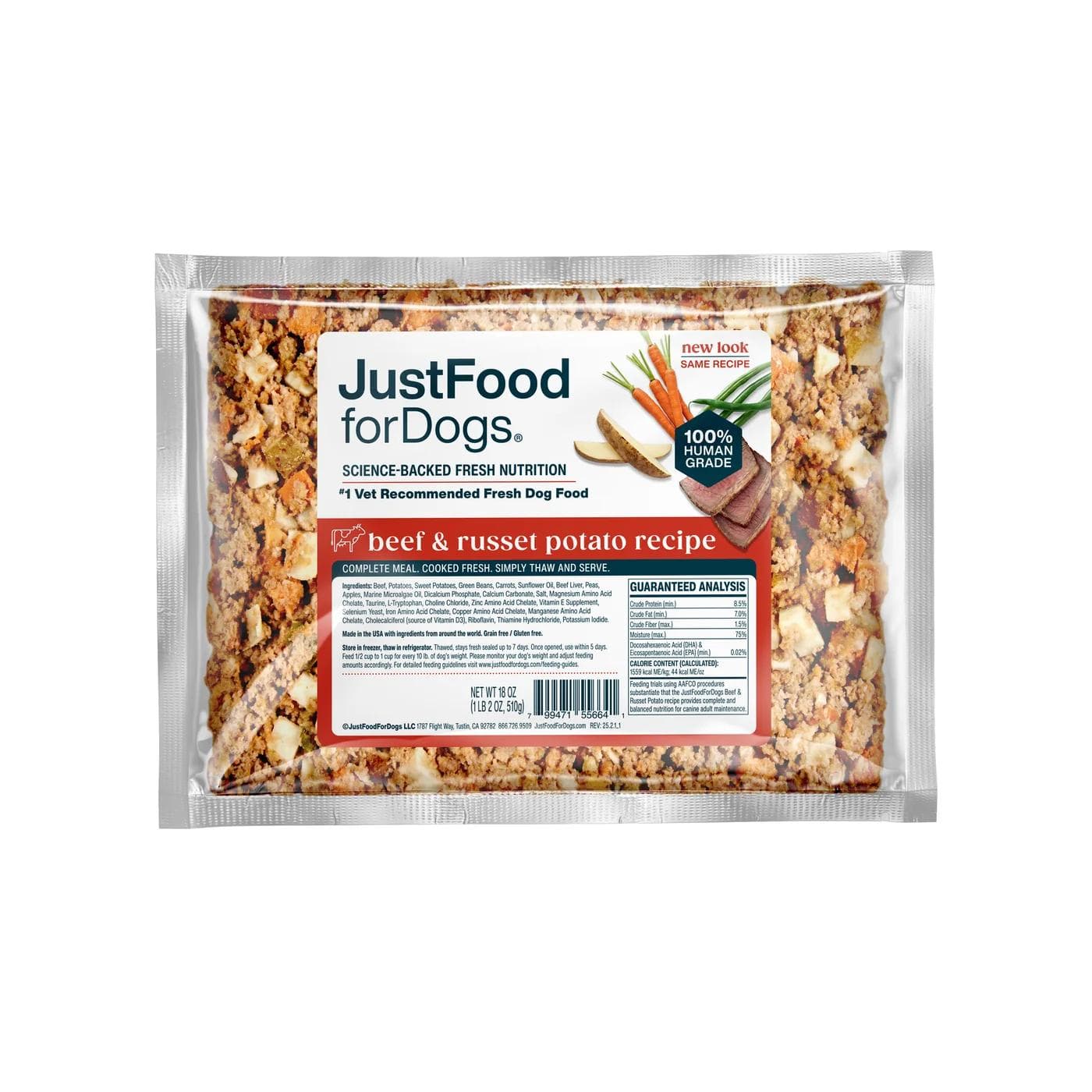
Explore the Beef & Russet Potato recipe named in our human-grade guide and review its whole-food ingredients.
- Beef and russet potato recipe
- Gently cooked, then frozen
- View ingredients and feeding guidance
Petful may earn a commission when you click through to JustFoodForDogs, at no extra cost to you.

Sign up for expert-backed reviews and safety alerts all in one place.
What Does 'Human-Grade' Actually Mean in Dog Food?
Before 2019, 'human-grade' was a marketing claim with no enforceable definition in pet food. That changed when AAFCO defined the labeling standard: every ingredient and the finished product must be stored, handled, processed, and transported in compliance with 21 CFR part 117 (the FDA's Current Good Manufacturing Practice for human food) and all other applicable federal human food law. Because the product remains animal food under FDA jurisdiction, the finished product is also subject to 21 CFR part 507 (the FDA's Current Good Manufacturing Practice for animal food). AAFCO defines the labeling claim; AAFCO does not certify individual products. Most conventional pet food is manufactured under the standard pet-feed regulations and does not meet the human-grade definition.
The practical effect: a brand cannot label a recipe 'human grade' under AAFCO's 2019 definition unless every ingredient is human-edible AND the finished product is prepared in compliance with applicable human-edible-food regulations. For meat and poultry, that typically means upstream USDA Food Safety and Inspection Service (FSIS) oversight at slaughter and primary processing; for the finished pet-food facility, it typically means human-food current good manufacturing practices. The brands listed in this guide either operate their own human-food facilities or contract with facilities that document compliance under the applicable human-food regulations, rather than the looser feed-grade standards used in most conventional pet food.
- These two phrases mean very different things on a pet food label. 'Human-grade' is a labeling claim defined by AAFCO that brands can only legally use if every ingredient is human-edible AND the finished product is manufactured under 21 CFR part 117 (FDA's human-food current good manufacturing practices). AAFCO defines the term but does not certify individual products. 'Human-quality ingredients' is a marketing phrase with no regulatory definition.
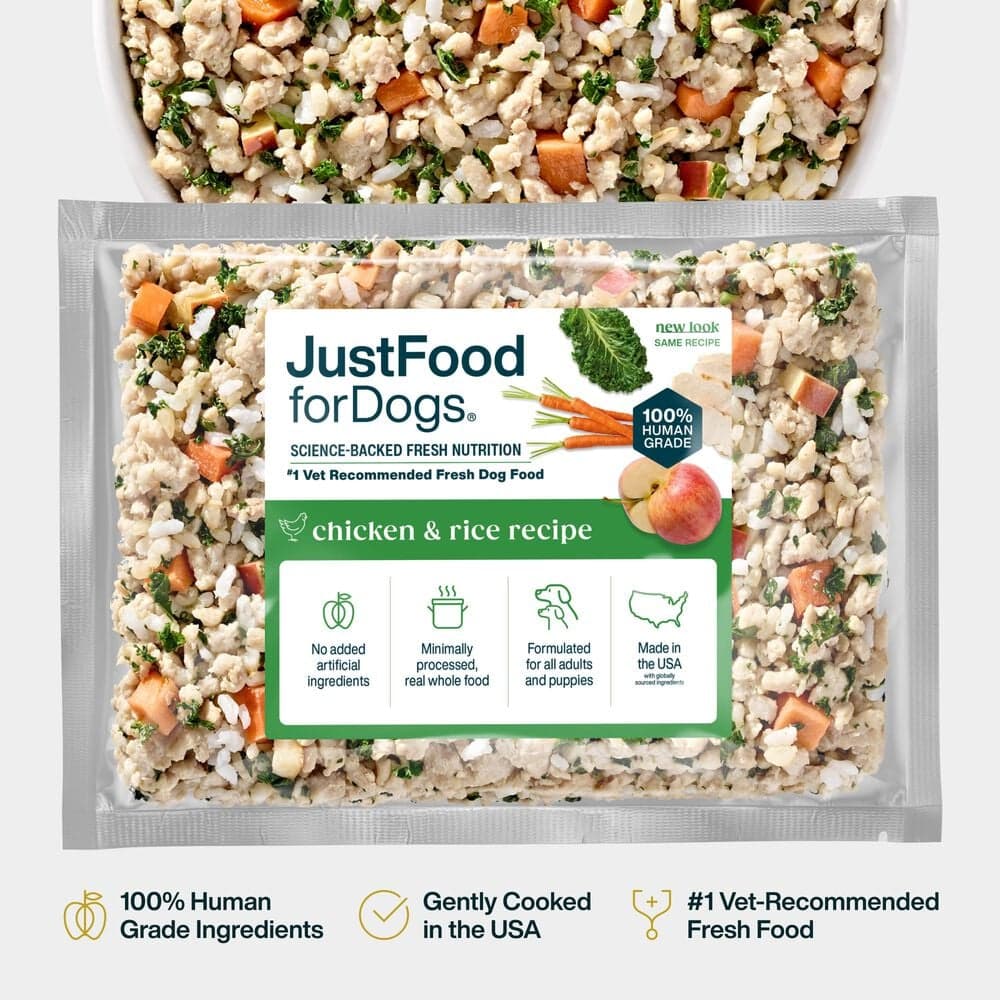
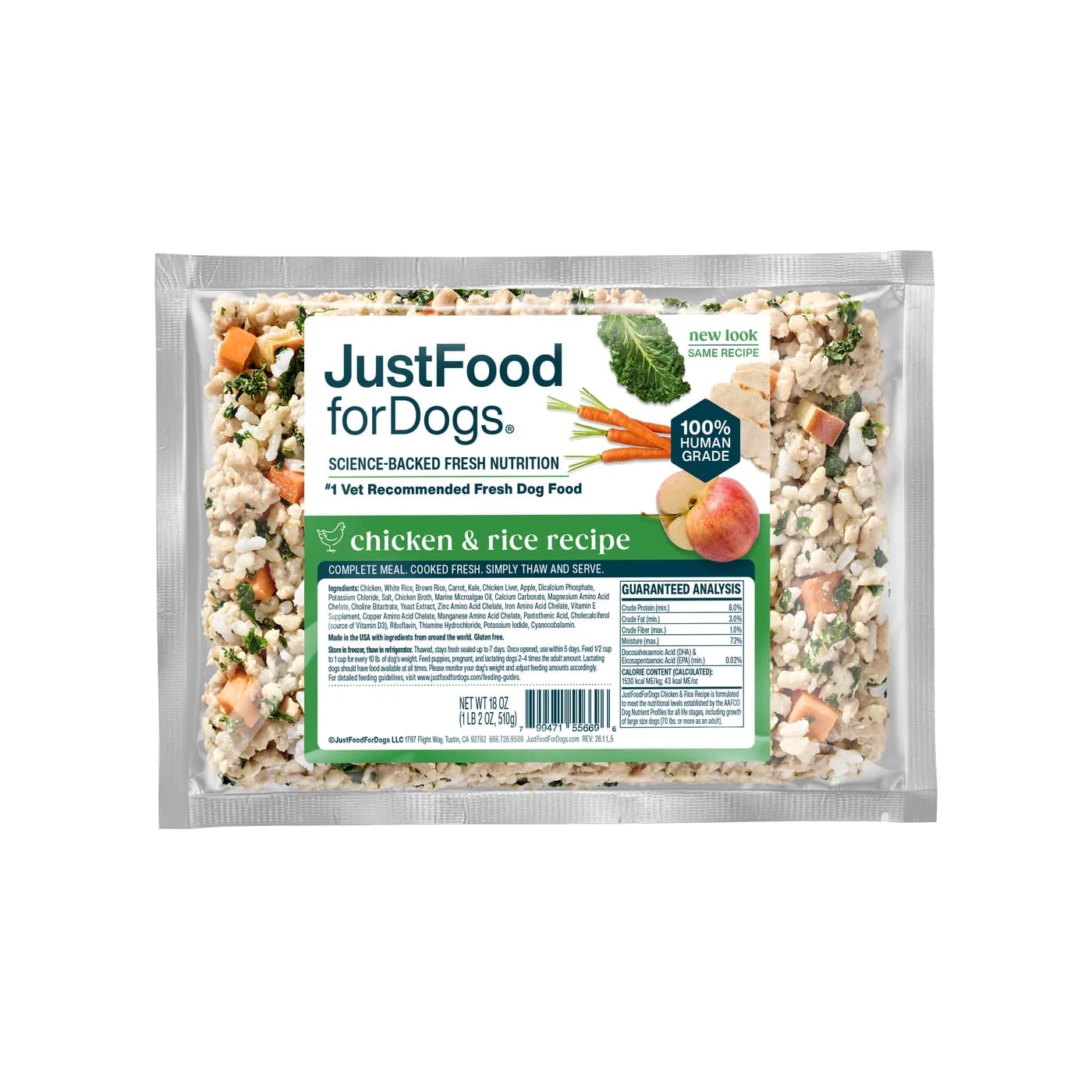
Explore the Chicken & Rice recipe from our human-grade guide and review its whole-food ingredients.
- Chicken with rice and whole-food ingredients
- Fresh Frozen recipe
- View the recipe and feeding guide
Petful may earn a commission when you click through to JustFoodForDogs, at no extra cost to you.
What Are the 8 Best Human-Grade Dog Food Brands?
1. Just Food For Dogs: Best Overall Human-Grade
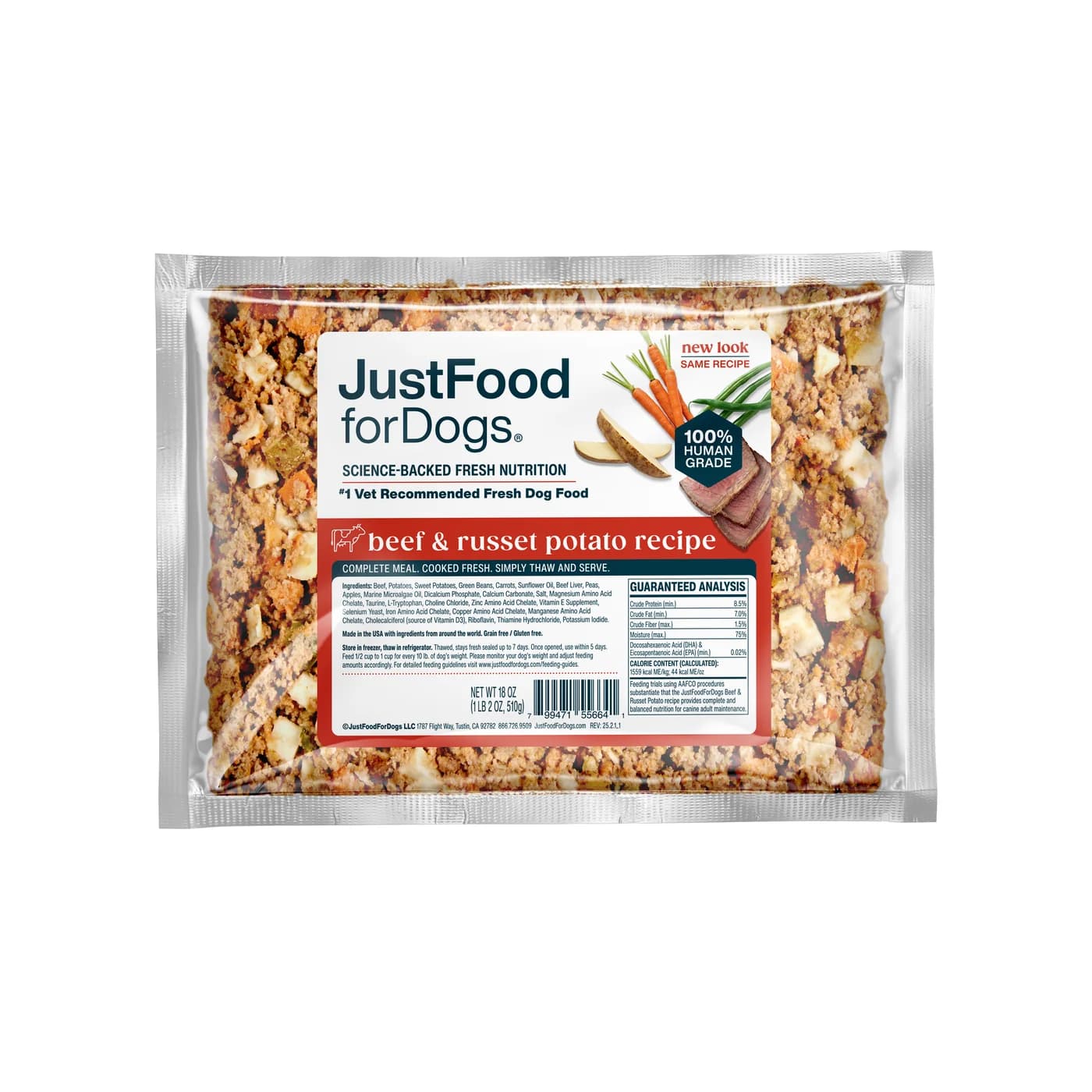
Just Food For Dogs operates its own open kitchens (12 locations across California, New York, Washington, and Illinois per the current JFFD homepage), where every Fresh Frozen recipe is cooked from USDA-inspected human-grade ingredients you can recognize. JFFD's refrigerated Fresh Frozen entrees (Chicken & Rice, Fish & Sweet Potato, Venison & Squash, Beef & Russet Potato, Turkey, Lamb & Brown Rice), and the shelf-stable JustFresh pouches all qualify as human-grade under the AAFCO 2019 labeling definition. What sets JFFD apart from other human-grade brands is feeding-trial certificates on selected Fresh Frozen recipes (Chicken & Rice and Fish & Sweet Potato hold AAFCO feeding-trial certificates) and board-certified veterinary nutritionist involvement in developing every recipe across the lineup.
- Owned-and-operated human-grade kitchens, not contract co-packers
- JustFresh shelf-stable option that doesn't require refrigeration
- Recipes developed by board-certified veterinary nutritionist
- Feeding-trial certificates on selected Fresh Frozen recipes (rare among fresh brands)
- Multiple delivery formats: frozen, shelf-stable, prescription
- $3.50 to $7.00 per day for a 30-pound dog
- Frozen line requires freezer space
- Storefront pickup limited to four states
2. The Honest Kitchen: Best Dehydrated (Shelf-Stable) Human-Grade
The Honest Kitchen has publicly stated it was the first pet food company to produce dog food meeting the human-grade definition, with company materials dating that claim to 2007 (more than a decade before AAFCO formalized the labeling definition in 2019). Recipes are dehydrated rather than cooked, which preserves nutrients while making the food shelf-stable. You add warm water before feeding. A single box rehydrates to roughly four times its dry weight, which makes it travel-practical and emergency-stocking practical.
Best for: households wanting human-grade convenience without freezer space, plus a long shelf life.
- First brand publicly claiming dog food meeting what would later become AAFCO's 2019 human-grade definition (2007). AAFCO defines the labeling claim; USDA does not issue human-grade certification for pet food
- Dehydrated for shelf stability without preservatives
- Whole-food ingredients identifiable on the label
- Multiple grain-free and grain-inclusive recipes
- Lower cost than frozen-fresh competitors
- Requires rehydration (5-minute prep before serving)
- Lower palatability for some picky eaters versus cooked fresh
- Mushy texture after rehydration is not preferred by every dog
3. The Farmer's Dog: Best Subscription Fresh
The Farmer's Dog is the largest direct-to-consumer human-grade subscription. Recipes are cooked in human-grade facilities, portioned exactly to each dog's weight and activity profile, and shipped frozen on a recurring schedule. We have detailed breakdowns of how much The Farmer's Dog costs per week and whether The Farmer's Dog is safe for sensitive dogs. is the largest direct-to-consumer human-grade subscription. Recipes are cooked from USDA-inspected human-grade ingredients, portioned exactly to each dog's weight and activity profile, and shipped frozen on a recurring schedule. We have detailed breakdowns of how much The Farmer's Dog costs per week and whether The Farmer's Dog is safe for sensitive dogs. For more, see Petful’s guide to the Farmer’s Dog lawsuit.
4. Open Farm Gently Cooked: Best Slow-Cooked Fresh
Open Farm Slow Cooked is the brand's gently cooked human-grade fresh line, made in human-grade facilities with the same ingredient traceability the rest of the Open Farm lineup is known for. Every bag includes a lot code letting you trace each ingredient back to its source farm. The slow-cooking method preserves texture and palatability while meeting food-safety standards. is the brand's gently cooked human-grade fresh line, made in facilities using USDA-inspected human-grade ingredients with the same ingredient traceability the rest of the Open Farm lineup is known for. Every bag includes a lot code letting you trace each ingredient back to its source farm. The slow-cooking method preserves texture and palatability while meeting food-safety standards.
5. Stella & Chewy's FreshMade: Best Gently Cooked Frozen Human-Grade
Stella & Chewy's FreshMade is the brand's gently cooked, frozen, human-grade recipe line, prepared sous-vide per the FreshMade product page. Recipes ship in pouches that require freezer storage and a 24-to-36-hour thaw before serving. The current FreshMade lineup includes seven named recipes spanning beef, turkey, chicken, fish, and grain-inclusive options. Stella & Chewy's also markets separate raw-frozen and freeze-dried lines, but those are distinct from FreshMade; do not conflate them when comparing categories.
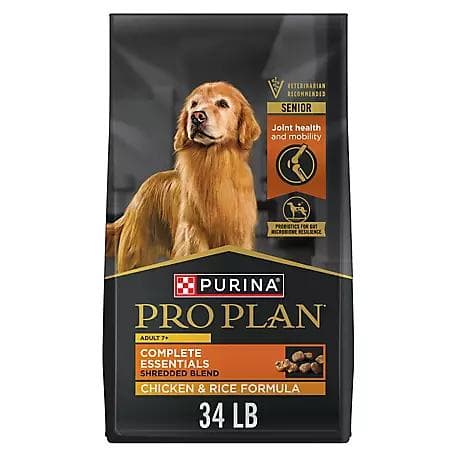
A vet-backed adult kibble with full WSAVA alignment and AAFCO feeding trials. Budget-friendly, though corn gluten and soybean meal sit in the top ingredients.
Petful may earn a commission when you click through to Chewy, at no extra cost to you.
6. Raised Right: Best Single-Protein Recipes
Raised Right is a limited-ingredient human-grade brand. Each recipe uses a single animal protein and a minimal carbohydrate base, prepared per AAFCO's 2019 human-grade definition (every ingredient and the finished product handled under applicable human-edible-food regulations). Especially useful for dogs with food sensitivities who need both human-grade ingredient sourcing and a focused ingredient deck.
7. Ollie: Best for Picky Eaters
Ollie is the second-largest direct-to-consumer human-grade subscription after The Farmer's Dog. Recipes (beef, chicken, lamb, turkey) are cooked at lower temperatures than competing brands, which preserves moisture and aroma and tends to score better with dogs who refuse other brands. The pricing is roughly comparable to The Farmer's Dog.
8. Spot & Tango Air-Dried Recipes: Best Dry Human-Grade
Spot & Tango UnKibble is a dry format that does not require freezer storage. UnKibble is gently cooked and described by the brand as a 'Fresh Dry' food rather than traditional extruded kibble. Per the Spot & Tango product page, the recipes are made with 100 percent human-grade ingredients, formulated AAFCO complete and balanced for all life stages. Spot & Tango does not market a USDA-certified human-grade claim on the product page; treat the brand as one of the human-grade-ingredient picks in this list, not a USDA-certified pick. Pricing tends toward the premium end of the dry-format category.
- Switch to a human-grade diet over 7 to 10 days, mixing increasing percentages of the new food with your dog's current diet. Day 1 to 3: 25 percent new, 75 percent old. Day 4 to 6: 50 / 50. Day 7 to 9: 75 percent new, 25 percent old. Day 10: 100 percent new. Faster transitions are the most common cause of diet-related gastrointestinal upset, especially when moving from dry kibble to fresh recipes.
Is Human-Grade Dog Food Actually Better for Your Dog?
Human-grade dog food has clear advantages for many dogs: higher palatability (matters for picky eaters and senior dogs with declining appetite), ingredient transparency (you can identify every component on the label), reduced rendering and high-heat processing (which preserves more vitamins, taurine, and amino acids), and traceability through the supply chain. For dogs with diet-responsive conditions (kidney disease, gastrointestinal disease, post-surgical recovery), veterinarians often recommend a fresh, human-grade transition specifically because the food is more digestible.
Human-grade is not automatically healthier than every alternative. Conventional premium kibble lines from Purina Pro Plan, Hill's Science Diet, and Royal Canin (each of which publicly responds to WSAVA's manufacturer-selection questions) still lead on research depth, peer-reviewed feeding-trial data, and clinical data backing each life-stage formula. For comparison across all categories beyond human-grade, see our complete guide to the best dog food brands of 2026. The right answer for your dog depends on health profile, budget, and feeding preferences, not just whether a label says 'human-grade.'
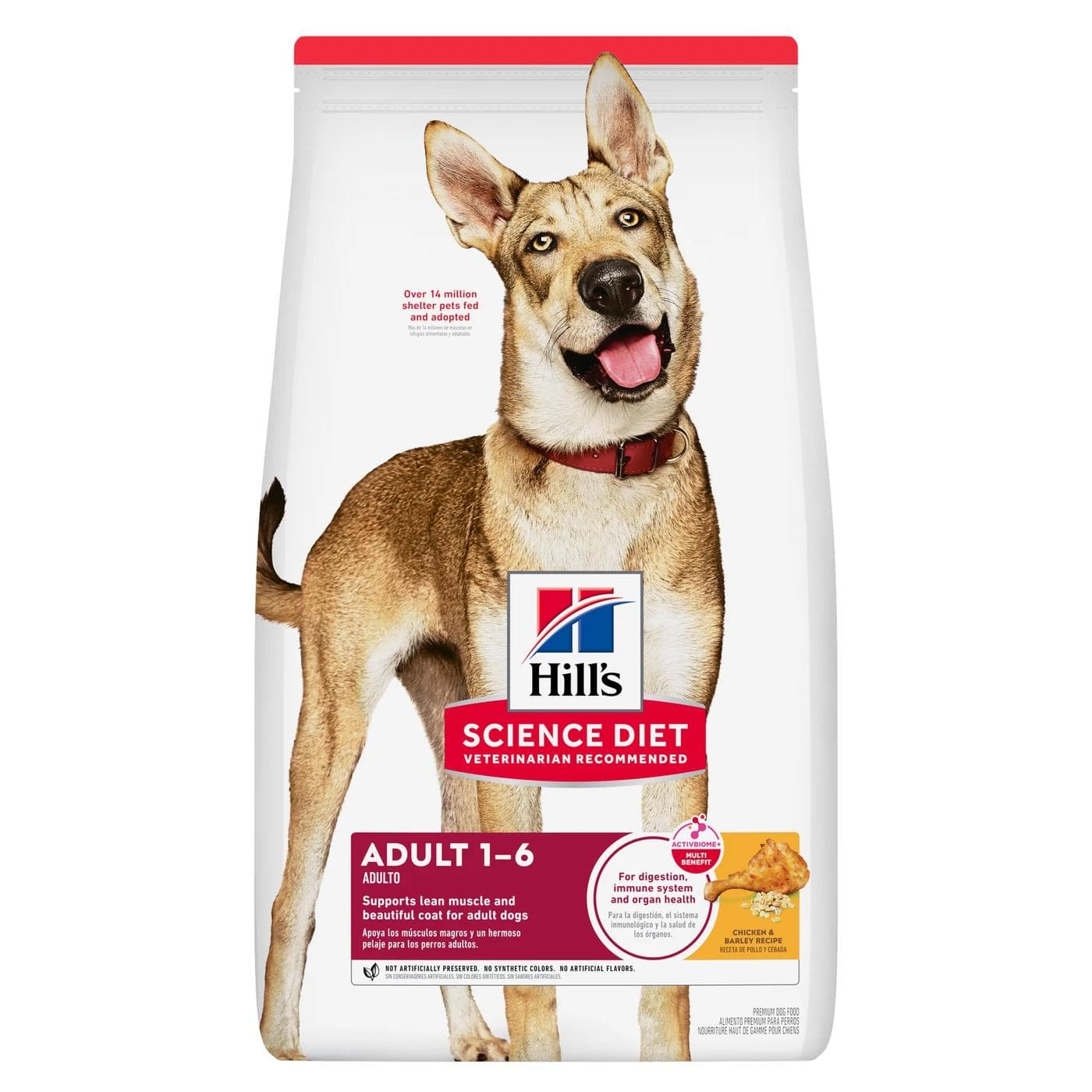
A vet-channel adult-maintenance kibble backed by AAFCO feeding trials. Leaner protein and fat than many competitors at a comparable price.
Petful may earn a commission when you click through to Chewy, at no extra cost to you.
How Is 'Human-Grade' Different From 'Human-Quality Ingredients' or 'Natural'?
Pet food marketing uses a stack of related-sounding terms that have very different legal meaning. Human-grade is the strictest, with a specific AAFCO definition since 2019: every ingredient legally edible for humans AND the finished product manufactured under 21 CFR part 117. Made with human-quality ingredients is a softer marketing phrase with no enforceable definition. It typically means the brand sourced inputs that would be human-grade in isolation but cooked them in a pet-food facility that does not meet 21 CFR 117. Natural is defined by AAFCO as ingredients derived solely from plant, animal, or mined sources without chemical synthesis, but has nothing to do with manufacturing standards or sourcing ethics.
| Claim | Legal definition? | Manufacturing standard required? | Ingredient origin standard required? |
|---|---|---|---|
| Human-grade | Yes (AAFCO 2019) | Yes (21 CFR part 117) | Yes (every ingredient edible for humans) |
| Made with human-quality ingredients | No | No | Loosely (ingredients only, not finished product) |
| Natural (per AAFCO) | Yes (AAFCO) | No | Yes (no chemical synthesis) |
| Premium | No | No | No |
| Holistic | No | No | No |
| Restaurant-quality | No | No | No |
The practical effect: if a label says 'human-grade,' the brand must be able to document that every ingredient is legally edible for humans AND that the finished product is manufactured under 21 CFR part 117 (FDA's human-food current good manufacturing practices). USDA's FSIS inspects upstream meat and poultry processing; the pet-food facility itself complies with FDA's human-food CGMPs. If a label says any other phrase on that list, the brand is using language that is not legally enforceable. Some of those brands still produce excellent food: Wellness CORE and Open Farm both make outstanding recipes without claiming the human-grade label across the full lineup. But you cannot compare a 'made with human-quality ingredients' bag to a fully human-grade competitor as if they meet the same standard. They do not.
How Is Human-Grade Dog Food Actually Manufactured?
Human-grade pet food production runs on the same regulatory framework that governs your grocery store's deli meat. The FDA's 21 CFR part 117 (formally, Current Good Manufacturing Practice, Hazard Analysis, and Risk-Based Preventive Controls for Human Food) covers eight major areas: personnel hygiene, plant grounds, sanitary operations, sanitary facilities and controls, equipment design and maintenance, processes and controls, warehousing and distribution, and a written food safety plan with a preventive controls qualified individual on staff. A facility that fails any of these inspection points loses its human-food classification.
USDA inspection role (vs feed-grade)
For animal-protein-based human-grade pet food, USDA Food Safety and Inspection Service (FSIS) inspectors are physically present at the slaughter facility, verifying species, condition, and post-mortem health of every animal that enters the supply chain. Meat that fails FSIS inspection cannot be used in human food OR human-grade pet food. This is the upstream guarantee that brands like Just Food For Dogs and The Honest Kitchen rely on when they make their human-grade claim.
Open-kitchen production
The most rigorous human-grade brands (Just Food For Dogs is the clearest example) operate their own open-kitchen facilities where customers can take tours and see the actual cooking process. Recipes are cooked at lower temperatures than the extrusion process used for kibble (which often exceeds 400 degrees Fahrenheit and destroys some heat-sensitive nutrients), then either flash-frozen for shipping or packaged in shelf-stable pouches under a heat-sterilization process similar to canning.
Why this matters for the price tag
Producing human-grade pet food is operationally expensive. The audit and recordkeeping overhead to demonstrate 21 CFR 117 compliance is non-trivial, the lower-temperature cooking takes longer per batch, the human-edible ingredients cost more than pet-food-grade alternatives (rendered chicken meal versus fresh chicken breast, for example), and the cold-chain shipping for frozen recipes adds logistics overhead. AAFCO defines the labeling claim but does not certify individual products. The $3.50 to $7.00 per day cost for a human-grade brand reflects these real production differences, not pure marketing markup.
- Ask the brand three questions: Does every ingredient meet the AAFCO 2019 human-grade definition (legally edible for humans)? Is the finished product manufactured under 21 CFR part 117 (FDA's human-food current good manufacturing practices), and can the brand share documentation of that compliance? Does the brand publish its formulation, sourcing, and recall history? A legitimate human-grade brand can answer all three on demand.
How Can You Verify a Brand's Human-Grade Claim?
Because human-grade has a legal definition, brands making the claim must be able to answer specific questions. If a brand cannot, the claim is marketing rather than regulatory. Use this checklist before paying premium pricing for any new human-grade brand.
- 1. Is the finished product (not just the ingredients) manufactured under 21 CFR part 117 (FDA's human-food current good manufacturing practices)? 2. Can the brand document the regulatory basis for its human-grade claim (AAFCO 2019 definition + 21 CFR 117 compliance; USDA inspection records may apply to upstream meat sourcing or to facilities that have elected USDA audit, but USDA inspection of the pet-food facility itself is not required by AAFCO's human-grade definition)? 3. Is the facility audited by an independent third party (SQF, BRC, or Global Food Safety Initiative)? 4. Can the brand document that the finished product is made, packed, and held according to human-food requirements, and that all ingredients are human edible? 5. Are recipes formulated by a board-certified veterinary nutritionist, with a published feeding-trial history on at least one recipe in the lineup? A confident yes to all five is the bar. Any softer answer means the claim is closer to marketing.
Where Did the 'Human-Grade' Definition Come From?
The Honest Kitchen has publicly stated it was the first pet food company to produce dog food meeting the human-grade definition, with company materials dating that claim to 2007. For more than a decade before AAFCO formalized the 'human grade' labeling claim in 2019, conventional pet food brands could use any quality of meat in pet food without disclosing it on the label. The Honest Kitchen's positioning helped illustrate that human-edible-food sourcing standards could be applied to pet food production, though the brand remained a single-brand human-grade outlier for years.
AAFCO formalized the human-grade definition in 2019 after a long industry consultation, in part driven by class-action litigation against pet food brands using 'natural' and 'human-quality' language loosely. The AAFCO standard requires documentation that every ingredient and the resulting finished product are stored, handled, processed, and transported in compliance with applicable human-edible-food regulations (including 21 CFR part 117 facility good-manufacturing practices where applicable), and that the facility is licensed or registered by the appropriate human-food authorities. After 2019, brands using the term in marketing without meeting that documented standard have faced regulatory scrutiny. For more, see Petful’s guide to pet food industry trends.
The category has since grown substantially. Just Food For Dogs (founded 2010), The Farmer's Dog (2014), Ollie (2016), and Spot & Tango (2018) all built businesses around the human-grade framework. Direct-to-consumer human-grade pet food has been one of the fastest-growing segments of the broader pet food market over the past decade.
When Is Human-Grade Dog Food Not Worth the Premium?
For some dogs and households, the daily price difference (which can run $700 to $1,800 per year for a 30-pound dog versus premium kibble) is not justified by health outcomes. Three honest scenarios where conventional premium kibble (such as Purina Pro Plan, Hill's Science Diet, or Royal Canin) is the smarter pick:
1. Healthy adult dogs already thriving on a research-backed kibble. Purina Pro Plan, Hill's Science Diet, and Royal Canin each publicly respond to WSAVA's manufacturer-selection questions, employ board-certified veterinary nutritionists in formulation, and substantiate selected recipes through AAFCO feeding trials (with formulation-only substantiation used on some other recipes). The marginal benefit of a fresh upgrade is small for a dog whose body weight, coat condition, and energy levels are already in a healthy range on one of those diets.
2. Dogs whose veterinarians prescribed a specific therapeutic diet. Royal Canin Veterinary Diet, Hill's Prescription Diet, and Purina Pro Plan Veterinary Diets cover urinary, gastrointestinal, renal, dermatological, and dental conditions in ways no human-grade brand can match. If your vet prescribed one, that is the right food.
3. Multi-dog households on a fixed budget. Feeding three 30-pound dogs human-grade can cross $700 per month. For households where budget is a real constraint, IAMS Proactive Health and Purina Pro Plan deliver AAFCO-compliant nutrition at $0.90 to $3.00 per dog per day. The dollar saved feeds the dog tomorrow.
Frequently Asked Questions
Human-grade is a pet food labeling claim defined by AAFCO since 2019. To qualify, every ingredient must be legally edible for humans AND the finished product must be manufactured, packaged, and shipped under 21 CFR part 117 (the FDA's Current Good Manufacturing Practices for human food). AAFCO defines the labeling claim but does not certify individual products. Most pet food, even premium kibble, is manufactured under separate, lower-bar pet-food regulations.
Brands that publicly market fully human-grade lines include Just Food For Dogs, The Honest Kitchen, The Farmer's Dog, Open Farm Slow Cooked, Stella & Chewy's Fresh Made, Raised Right, Ollie, and Spot & Tango. Brands that use 'made with human-grade ingredients' language but do not classify the finished product as human-grade are using softer marketing because the manufacturing step does not meet the bar. Verify the claim against the brand's published manufacturing standards and human-food regulatory documentation (AAFCO's 2019 definition plus 21 CFR 117 compliance with FDA's human-food current good manufacturing practices) before paying premium pricing.
Many vets recommend human-grade for specific cases: picky eaters, senior dogs with reduced appetite, dogs recovering from surgery, dogs with diet-responsive gastrointestinal disease, and dogs with confirmed food allergies who need a limited-ingredient diet. For most healthy adult dogs, premium conventional kibble lines like Purina Pro Plan, Hill's Science Diet, and Royal Canin remains the most evidence-backed choice, with human-grade as a complementary upgrade rather than a replacement.
There is no single healthiest dog food for every dog. Among human-grade options, Just Food For Dogs leads on published feeding-trial data and board-certified veterinary nutritionist involvement. Among kibbles, Purina Pro Plan, Hill's Science Diet, and Royal Canin lead on research depth. The healthiest choice depends on your dog's age, breed, health status, and any veterinarian-diagnosed conditions.
For most picky eaters, dogs with food sensitivities, and dogs whose owners want maximum ingredient transparency, yes. For healthy adult dogs already thriving on a premium kibble that scores well against WSAVA's manufacturer-selection questions, the upgrade is a quality-of-life improvement rather than a medical necessity. Daily cost difference can be $2 to $5 per day for a 30-pound dog, which translates to $700 to $1,800 per year.
Companion educational guides
These deeper educational and clinical companions cover the science behind the buyer's guide above:
- Vet-Reviewed Homemade Dog Food Recipes, 5 vet-reviewed homemade recipe templates with safety guidelines and AAFCO considerations
- Senior Dog Food, 10 vet-reviewed picks for joints, cognitive health, and senior weight management
Which Human-Grade Dog Food Should You Choose?
The best human-grade dog food for your dog depends on three things: your budget, your dog's life stage and health profile, and whether you need shelf-stable convenience or frozen freshness. Just Food For Dogs is our overall pick because it combines published research, veterinary nutritionist development, and multiple format options (fresh frozen, JustFresh shelf-stable, prescription). The Honest Kitchen wins on convenience for travel and emergency stocking. The Farmer's Dog and Ollie win on subscription simplicity. For a strict single-protein human-grade option, Raised Right is the go-to. Petful’s guide to shelf-stable fresh dog food has the full breakdown.
If your dog has a confirmed food allergy or chronic gastrointestinal disease, also see our guide to the best dog food for allergies. For more on fresh dog food as a category (which overlaps with human-grade but is not identical), see our deep dive on whether fresh dog food is worth the switch.
BVMS, MRCVS
Dr. Pippa Elliott, BVMS, MRCVS, is a veterinarian with nearly 30 years of experience in companion animal practice. Dr. Elliott earned her Bachelor of Veterinary Medicine and Surgery from the University of Glasgow. She was also designated a Member of the Royal College of Veterinary Surgeons. Married with 2 grown-up kids, Dr. Elliott has a naughty Puggle named Poggle, 3 cats and a bearded dragon.
Sign up for expert-backed reviews and safety alerts all in one place.