Can Dogs Eat Eggplant? What Vets Say to Skip
Yes, dogs can eat plain cooked eggplant in small amounts. Skip the leaves and stems (which contain toxic solanine), eggplant parmesan, and any fried or heavily seasoned preparation. Dogs with kidney issues or arthritis should avoid eggplant.
Petful is reader supported. As an affiliate of platforms like Amazon and Chewy, we may earn a commission when you buy through links on this page. There is no extra cost to you.
- 1Yes, dogs can eat plain cooked eggplant in moderation. Steam, bake, grill, or roast it with no oil, salt, garlic, or seasonings.
- 2Eggplant leaves, stems, and unripe (green) fruit contain solanine, a toxic compound. Always remove and discard these parts.
- 3Dogs with kidney disease should avoid eggplant because of its oxalate content. Dogs with arthritis may experience worse joint pain from eggplant's nightshade compounds.
- 4Eggplant parmesan, fried eggplant, and baba ghanoush are NOT safe for dogs because of garlic, onion, cheese, and high fat content.
Can dogs eat eggplant? Yes, plain cooked eggplant in moderation. Veterinarians at PetMD and Fetch Pet Insurance confirm that the cooked flesh of a ripe eggplant is non-toxic and delivers fiber, potassium, and antioxidants. Safe servings are small: 1 to 2 small cubes for a small dog, up to a quarter cup for a large dog, no more than once or twice a week. The leaves, stems, and unripe green fruit of the eggplant plant contain solanine (a glycoalkaloid toxic to dogs), so always remove and discard these parts. Dogs with kidney disease should avoid eggplant entirely because of its oxalate content, and dogs with arthritis may have flare-ups from the nightshade family's natural compounds. Skip eggplant parmesan, fried preparations, or anything seasoned with garlic or onion.

Sign up for expert-backed reviews and safety alerts all in one place.
Is Eggplant Safe for Dogs?
Plain cooked eggplant is safe for the majority of healthy adult dogs. It is low in calories, contains useful fiber and antioxidants, and is generally well-tolerated when introduced gradually. The flesh of a ripe purple eggplant, served plain and cooked, is the only version dogs should eat.
Eggplant comes from the nightshade family (Solanaceae), the same plant family as tomatoes, peppers, and potatoes. Nightshades contain a class of compounds called glycoalkaloids (most notably solanine in the leaves, stems, and unripe fruit) that can be toxic in larger amounts. The ripe purple flesh has very low solanine, but the green parts of the plant do not, and dogs with certain conditions are more sensitive to even the small amounts.
What Are the Benefits of Eggplant for Dogs?
• Fiber: supports digestive regularity and helps dogs feel full on fewer calories.

Daily dental chew that cleans teeth, freshens breath, and is accepted by the Veterinary Oral Health Council. Sized for dogs 25 to 50 lbs.
Petful may earn a commission when you click through to Chewy, at no extra cost to you.
• Potassium and manganese: trace minerals that support muscle and metabolic function.
• Antioxidants (anthocyanins, including nasunin in the skin): may support cardiovascular and cognitive health.
• Low calorie: about 25 calories per cup of cooked eggplant, making it a useful filler for dogs on weight-management plans.
What Are the Risks of Eggplant for Dogs?
Most healthy dogs tolerate plain cooked eggplant fine, but three specific risks are worth knowing:
• Solanine in leaves, stems, and unripe fruit: solanine is a glycoalkaloid that causes vomiting, diarrhea, drooling, and in large amounts, neurological symptoms. The ripe flesh has trace amounts; the green parts have meaningful amounts. Always remove leaves, stem, and any green flesh.
• Oxalates: eggplant contains moderate amounts of oxalates, which can contribute to kidney stones or worsen kidney disease in dogs already prone to renal problems.
• Nightshade and arthritis: some dogs with arthritis or autoimmune conditions experience increased inflammation from nightshade vegetables. There is mixed evidence in dogs, but if your senior dog seems stiffer after eggplant, drop it from the rotation.
- Kidney disease, urinary stones (especially calcium oxalate stones), severe arthritis, or any nightshade sensitivity. When in doubt, ask your vet before introducing eggplant.
Can Dogs Eat Raw Eggplant?
Best to avoid raw eggplant.
Raw eggplant flesh is technically non-toxic, but it is bitter, harder to digest, and contains slightly more solanine than the cooked version. The cooking process breaks down the bitter compounds and makes the fiber easier on a dog's stomach. If your dog stole a piece of raw eggplant off the counter, it is not an emergency, but it is also not a serving to repeat.
Can Dogs Eat Eggplant Skin?
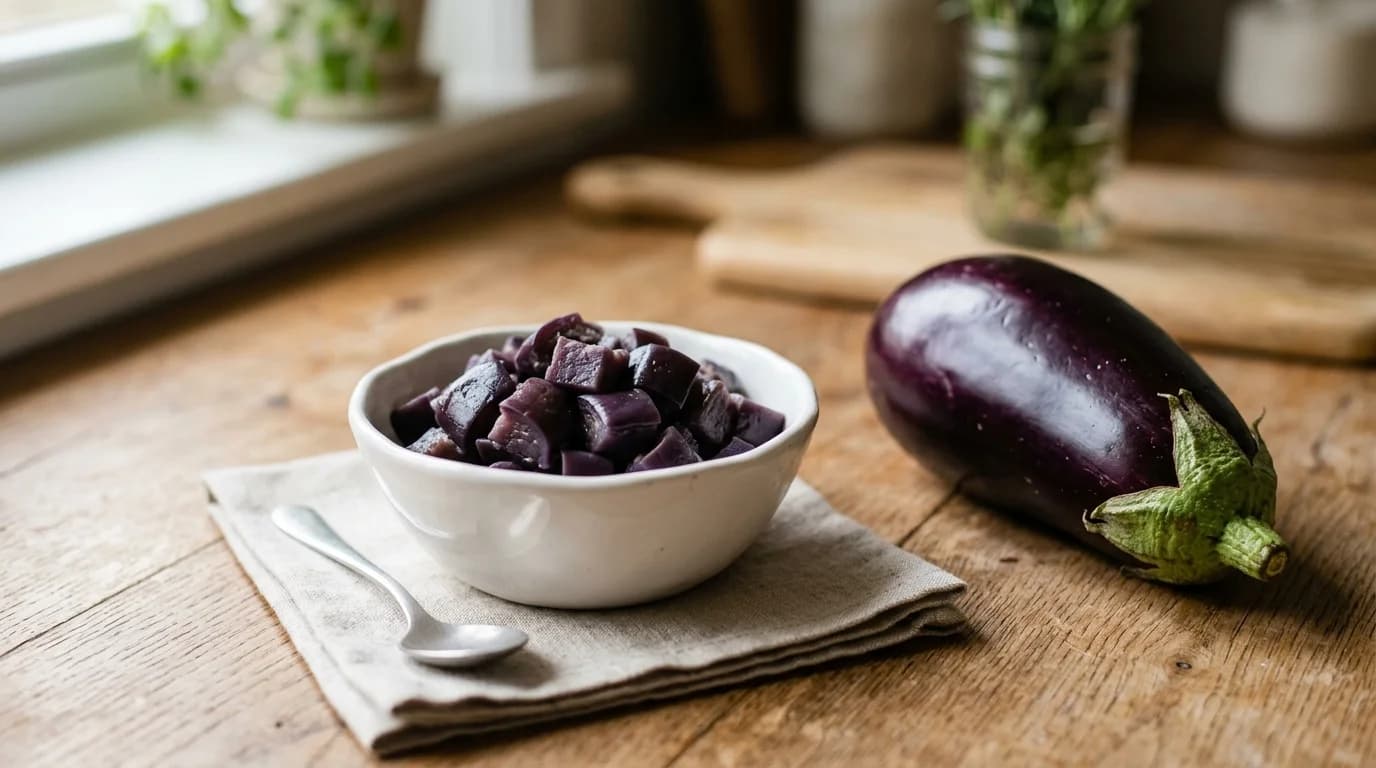
Yes, the skin of a ripe purple eggplant is safe for dogs when cooked. The skin actually contains most of the antioxidants in the fruit, including nasunin. Some dogs find the skin chewier and harder to digest, so dice it small or peel it if your dog has a sensitive stomach.
Can Dogs Eat Eggplant Parmesan?
No, do not feed your dog eggplant parmesan or any breaded and fried eggplant dish.
Eggplant parmesan combines several things dogs should not eat: breading (high carb, often contains garlic powder), high-fat cheese (lactose and saturated fat), tomato sauce (acidic, often contains garlic and onion), and fried eggplant (high oil content). The garlic and onion in the sauce are toxic to dogs in moderate amounts, and the cheese plus fried oil can trigger pancreatitis.
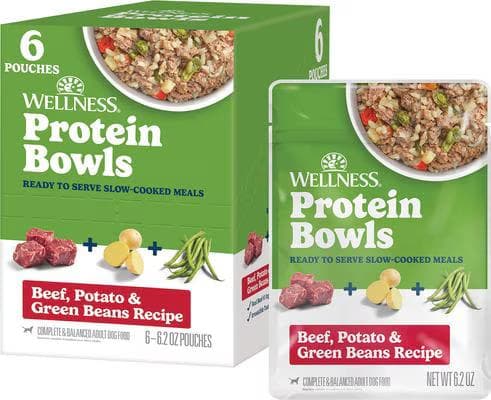
Case of six 6.2-oz pouches at $27.98 ($0.76/oz). New Autoship orders save 35%, dropping the first delivery to $18.19.
Petful may earn a commission when you click through to Chewy, at no extra cost to you.
- Watch for vomiting, diarrhea, lethargy, abdominal pain, and lack of appetite over the next 24 to 48 hours. The garlic and onion content can also cause delayed hemolytic anemia (showing up in 2 to 5 days). Call your vet for guidance on the specific dish ingredients.
How to Safely Cook Eggplant for Your Dog
Plain is the only way. Three solid methods:
| Method | How to do it | Pros | Cons |
|---|---|---|---|
| Baked | Cube, bake at 400 F for 20 minutes, no oil | Easy, neutral flavor | Slightly dry texture |
| Steamed | 5-7 minutes in a steamer basket | Easiest to digest, gentle texture | Bland to taste |
| Grilled | Slice 1/4-inch thick, grill 3 min per side, no oil | Adds flavor without seasoning | Watch for char (skip burnt edges) |
| Roasted with skin off | Peel, cube, roast at 425 F for 25 min | Crisp texture, easy to dice for training treats | Slightly more prep |
How Much Eggplant Can Dogs Eat?
Treat eggplant like any treat: no more than 10% of daily calories.
| Dog size | Weight | Safe portion (cooked) | Frequency |
|---|---|---|---|
| Toy | Under 10 lb | 1 small cube (1 tsp) | 1-2 times per week |
| Small | 10-20 lb | 1-2 small cubes | 1-2 times per week |
| Medium | 20-50 lb | 2-3 small cubes (1 tbsp) | 2-3 times per week |
| Large | 50-90 lb | 1-2 tablespoons | 2-3 times per week |
| Giant | Over 90 lb | 1/4 cup | 2-3 times per week |
Can Puppies Eat Eggplant?
Healthy puppies older than 12 weeks can have a single tiny cube of plain cooked eggplant as a taste test. Puppies have more sensitive digestive systems, so go slow. Avoid eggplant entirely in puppies under 12 weeks.

Petful may earn a commission when you click through to Chewy, at no extra cost to you.
What If My Dog Ate Eggplant Leaves or Stems?
Watch for symptoms and call your vet if anything appears.
Solanine poisoning from a small nibble of leaves is unlikely to cause severe issues in a medium or large dog, but small dogs and dogs that ate significant amounts of leaves or stems are at higher risk. Signs of solanine poisoning include drooling, vomiting, diarrhea, abdominal pain, weakness, dilated pupils, slow heart rate, and in severe cases, tremors or seizures.
- If your dog ate eggplant leaves, stems, flowers, or unripe green fruit, especially if they are small, are showing any symptoms, or ate a large amount.
Healthier Vegetable Alternatives
If you want low-calorie veggie treats with fewer caveats, try plain cooked carrots, plain pumpkin, or fresh blueberries. All are non-nightshade and broadly tolerated by dogs.
Frequently Asked Questions About Dogs and Eggplant
Yes, the skin of cooked ripe eggplant is safe and packed with antioxidants. Dice small if your dog has a sensitive stomach.
Avoid raw eggplant. It is bitter, harder to digest, and contains slightly more solanine. Always cook before feeding.
No, the seeds inside a ripe eggplant are tiny and edible. They are not a choking hazard or a toxicity risk in normal quantities.
No. Fried eggplant is too high in fat and may contain garlic, onion, or breadcrumbs that contain other toxic ingredients. Stick to baked, steamed, or grilled with no seasoning.
No. The garlic, onion, cheese, and frying oil make this dish unsafe for dogs. Call your vet if your dog ate a meaningful portion.
Watch for itchy skin, joint stiffness, lethargy, or GI upset within 24 to 48 hours of eating eggplant. If you see any of these, stop feeding eggplant and check with your vet.
Watch for vomiting, diarrhea, and lethargy for 24 hours. Most healthy dogs handle the cooked flesh fine, but large amounts can cause significant GI upset. Call your vet if the eggplant included the leaves or stem.
- Low calorie filler for weight-management plans (about 25 calories per cup)
- Rich in fiber, manganese, potassium, and anthocyanin antioxidants
- Skin contains nasunin, an antioxidant linked to cardiovascular benefits
- Easy to bake, steam, or grill plain with minimal prep time
- Leaves and stems contain toxic solanine, so never let your dog near the plant
- Oxalates make eggplant unsuitable for dogs with kidney disease or calcium oxalate stones
- Part of the nightshade family that may worsen inflammation in arthritic dogs
- Eggplant parmesan, fried eggplant, and seasoned dishes are off-limits because of garlic, onion, and cheese
1 to 2 hours: drooling, vomiting begin. 2 to 6 hours: diarrhea, abdominal pain, dilated pupils. 6 to 12 hours: weakness, slow heart rate, loss of appetite. 12 to 24 hours: in severe cases, tremors, seizures, neurological signs. Small dogs and dogs that ate large quantities of leaves are at highest risk. Call ASPCA Animal Poison Control (888-426-4435) immediately if your dog grabbed eggplant leaves or stems from your garden.
BAKED: cube, bake at 400 F for 20 minutes, no oil. Pros: neutral flavor, easy. STEAMED: 5 to 7 minutes in a steamer basket. Pros: easiest to digest, gentle texture. GRILLED: slice 1/4-inch thick, grill 3 minutes per side, no oil. Pros: adds flavor without seasoning. AVOID: fried, breaded, sauced, or seasoned eggplant because all common preparations are unsafe.
Dogs with kidney disease or a history of calcium oxalate urinary stones (oxalate load), arthritic or autoimmune-prone dogs (nightshade family inflammation), dogs on an elimination diet, and any dog with a confirmed nightshade sensitivity. If your senior dog seems stiffer after eggplant, drop it from the rotation.
More Dog-Food Safety Reads on Petful
Safer non-nightshade veggie reads from our cluster: can dogs eat cucumber, can dogs eat edamame, can dogs eat black beans, can dogs eat celery, can dogs eat radishes, and can dogs eat seaweed. If your dog grabbed eggplant leaves or stems off your garden plant, our what to do if your dog ate a grape emergency walkthrough mirrors the solanine-exposure vet-call timing exactly.
Plain cooked eggplant is a low-calorie, fiber-rich snack for most dogs, but it carries enough small caveats that it is not a top-of-rotation treat. Cook it through, serve it plain, skip the leaves and stems, and avoid eggplant entirely if your dog has kidney issues or arthritis. When in doubt, swap it for green beans or sweet potato.

Carol Bryant is the founder FidoseofReality.com and SmartDogCopy.com. A pet product expert, Carol is the Past President of the Dog Writers Association of America (DWAA) and winner of Best Dog Blog. A dog lover of the highest order is how Gayle King introduced Carol when she appeared with her Cocker Spaniel on Oprah Radio’s Gayle King Show to dish dogs. She helps pet, animal, and lifestyle brands achieve copywriting and content marketing success using well-trained words that work and is well-known in the pet industry.
Sign up for expert-backed reviews and safety alerts all in one place.