Dogue de Bordeaux: Complete Breed Profile
The Dogue de Bordeaux is a large, wrinkled French mastiff known for its huge head, deep red coat, and devotion to family. This complete breed profile covers its history, temperament, size, cost, and the health issues behind its short lifespan.
Petful is reader supported. As an affiliate of platforms like Amazon and Chewy, we may earn a commission when you buy through links on this page. There is no extra cost to you.
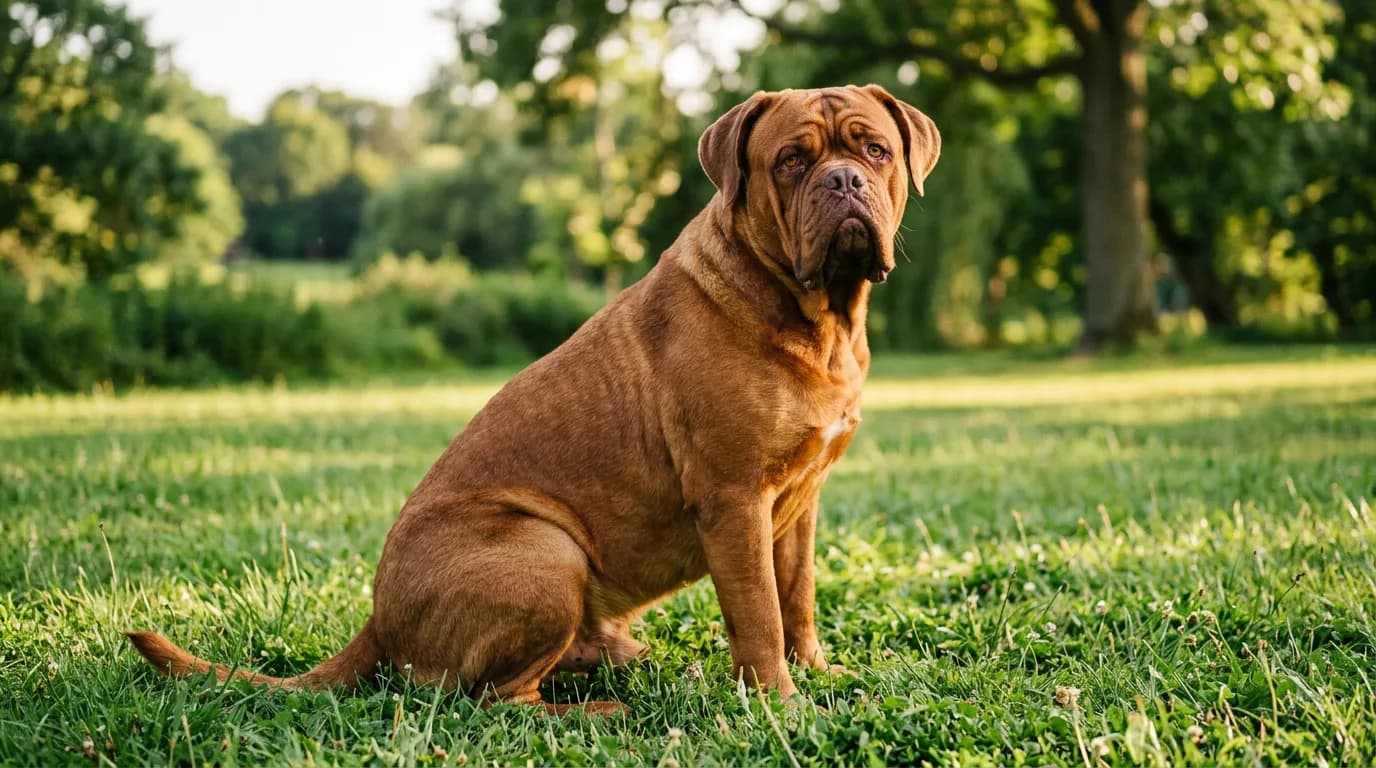
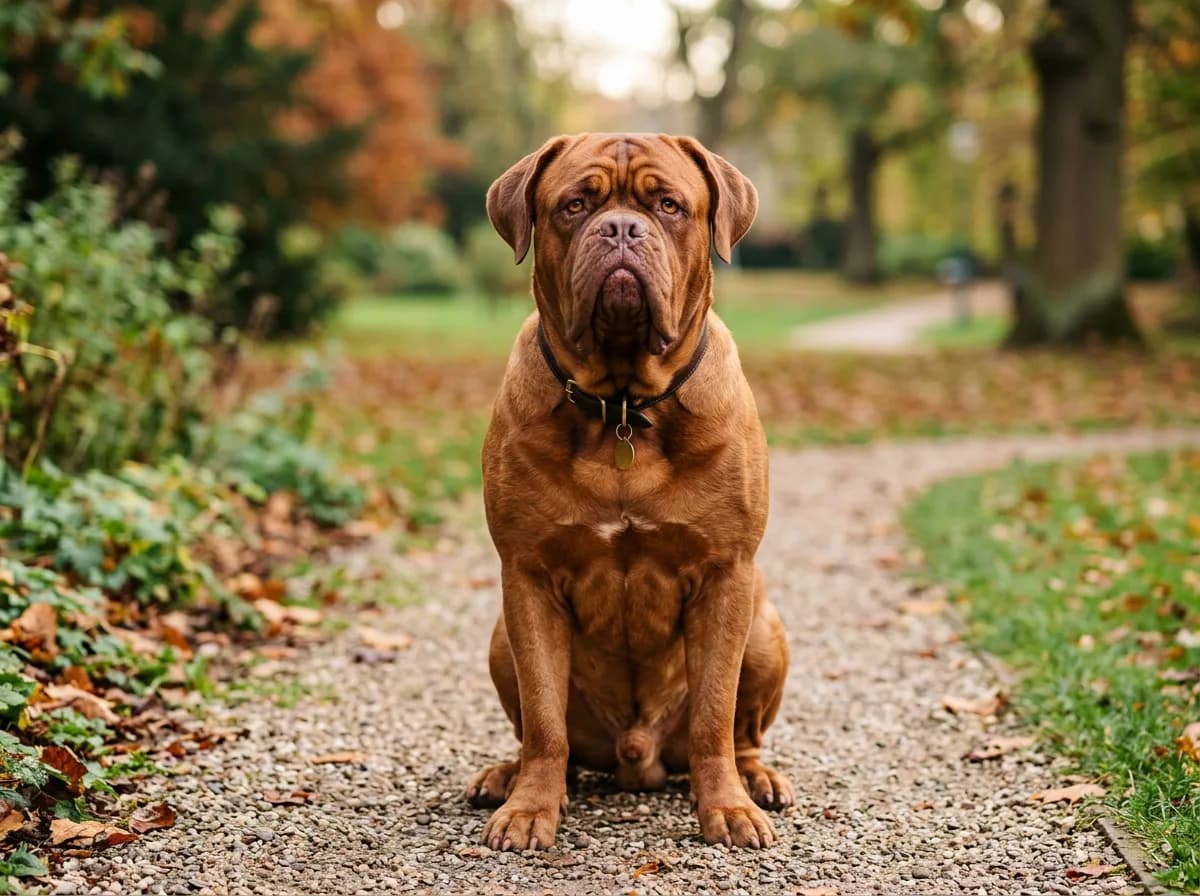
The Dogue de Bordeaux is a large, wrinkled French mastiff known for its enormous head, deep copper coat, and devotion to the family it guards. Also called the Bordeaux Mastiff, French Mastiff, or Bordeauxdog, this ancient guardian pairs an intimidating silhouette with a surprisingly gentle, affectionate temperament at home. This complete breed profile covers where the Dogue de Bordeaux came from, how big it gets, what it costs, the serious health issues that shorten its life, and whether this powerful, drool-prone companion is the right dog for you.
Below you will find the quick-reference stats, the full history, temperament, care needs, and a plain-answer FAQ that tackles the questions people ask most before bringing one of these dogs home.
- 1The Dogue de Bordeaux is a giant French guardian breed with a famously short lifespan of roughly 5 to 8 years, driven largely by heart disease and its flat, brachycephalic face.
- 2It is loyal, calm, and deeply bonded to family but strong-willed, heavy-drooling, and not a good match for first-time dog owners.
- 3Expect to pay a premium up front and budget for real veterinary care, because bloat, joint disease, and cardiac problems are common in the breed.

Sign up for expert-backed reviews and safety alerts all in one place.
Dogue de Bordeaux at a Glance
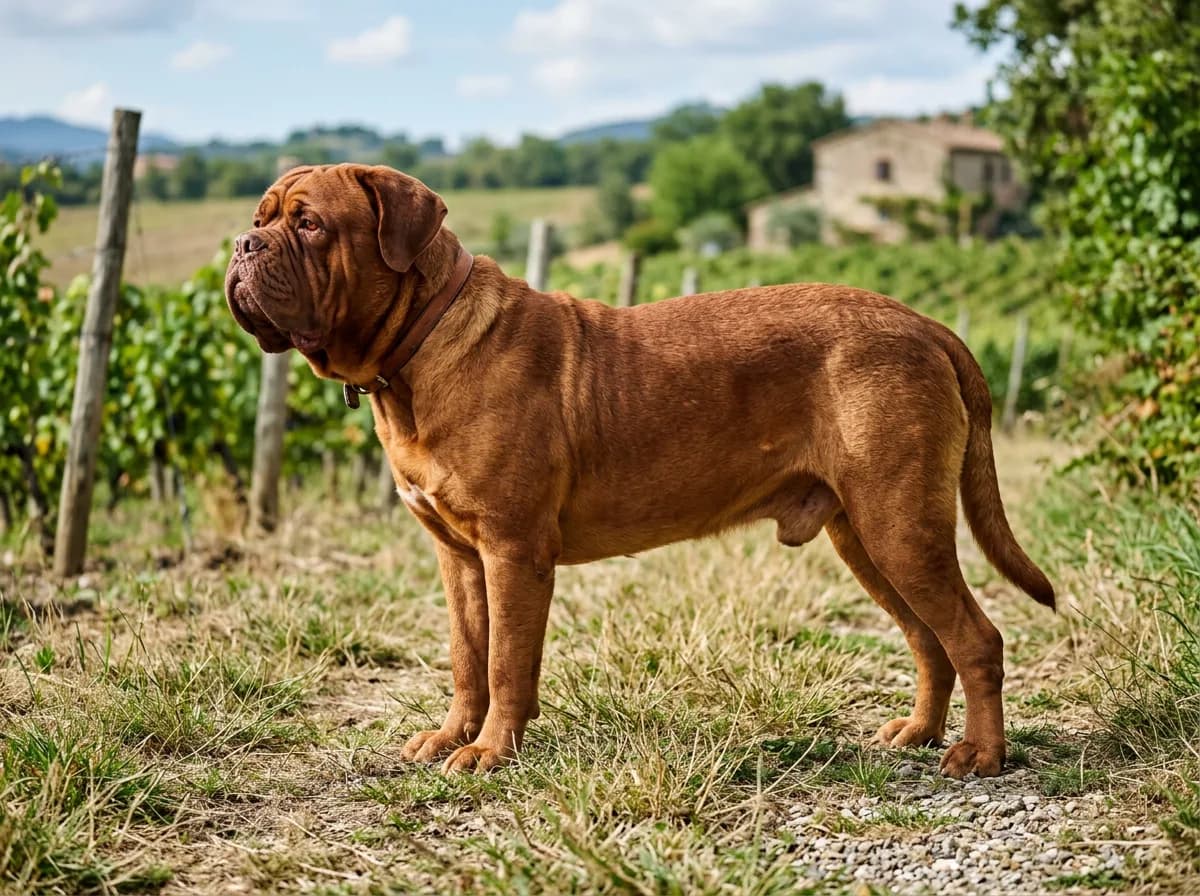
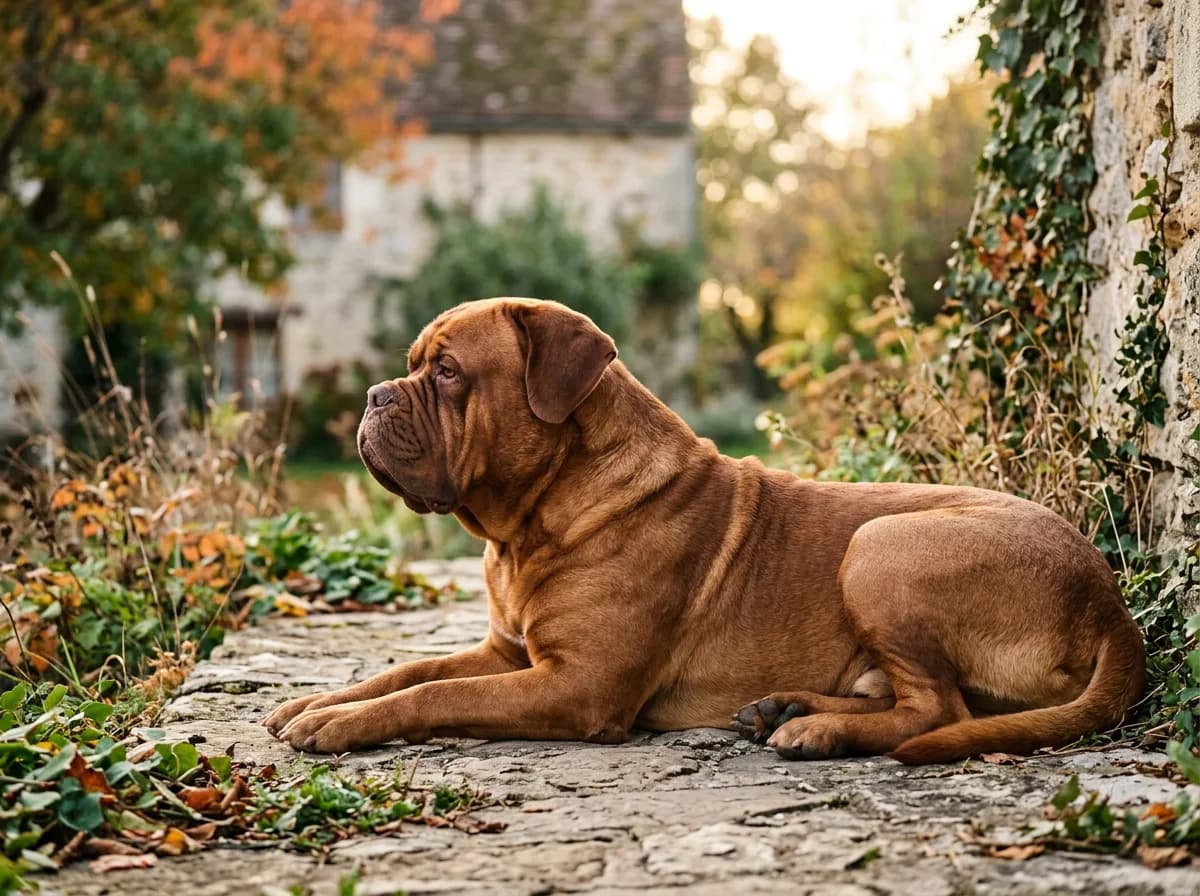
The Dogue de Bordeaux is a molosser-type mastiff built low, wide, and heavy, with a broad chest, thick bone, and a head that is often described as one of the largest in the dog world relative to body size. The breed belongs to the American Kennel Club (AKC) Working Group and finished among the AKC's mid-pack in popularity, a niche position that suits a demanding guardian breed.

Petful may earn a commission when you click through to Chewy, at no extra cost to you.
| Trait | Detail | Notes |
|---|---|---|
| Breed group | AKC Working Group | Guardian and molosser type |
| Male weight | 110 lbs and up | Females run lighter, roughly 99 to 120 lbs |
| Height | 23 to 27 inches at the shoulder | Males taller than females |
| Life span | 5 to 8 years | One of the shortest of any breed |
| Coat | Short, fine, single | Fawn to mahogany, red, or isabella |
| Grooming | Low shedding, high drool | Skin folds need routine cleaning |
| Good with kids | Yes, with supervision | Size demands caution around small children |
| First-time owners | Not recommended | Needs firm, experienced handling |
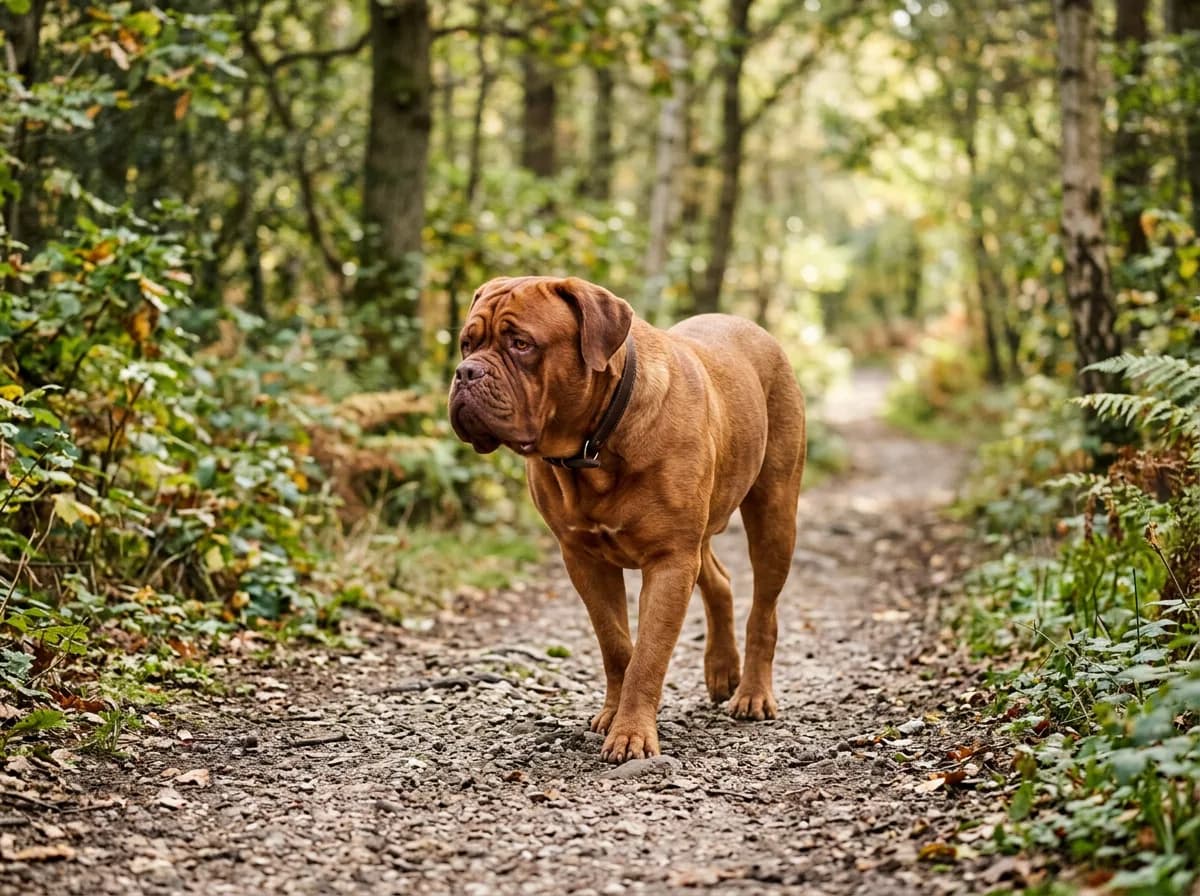
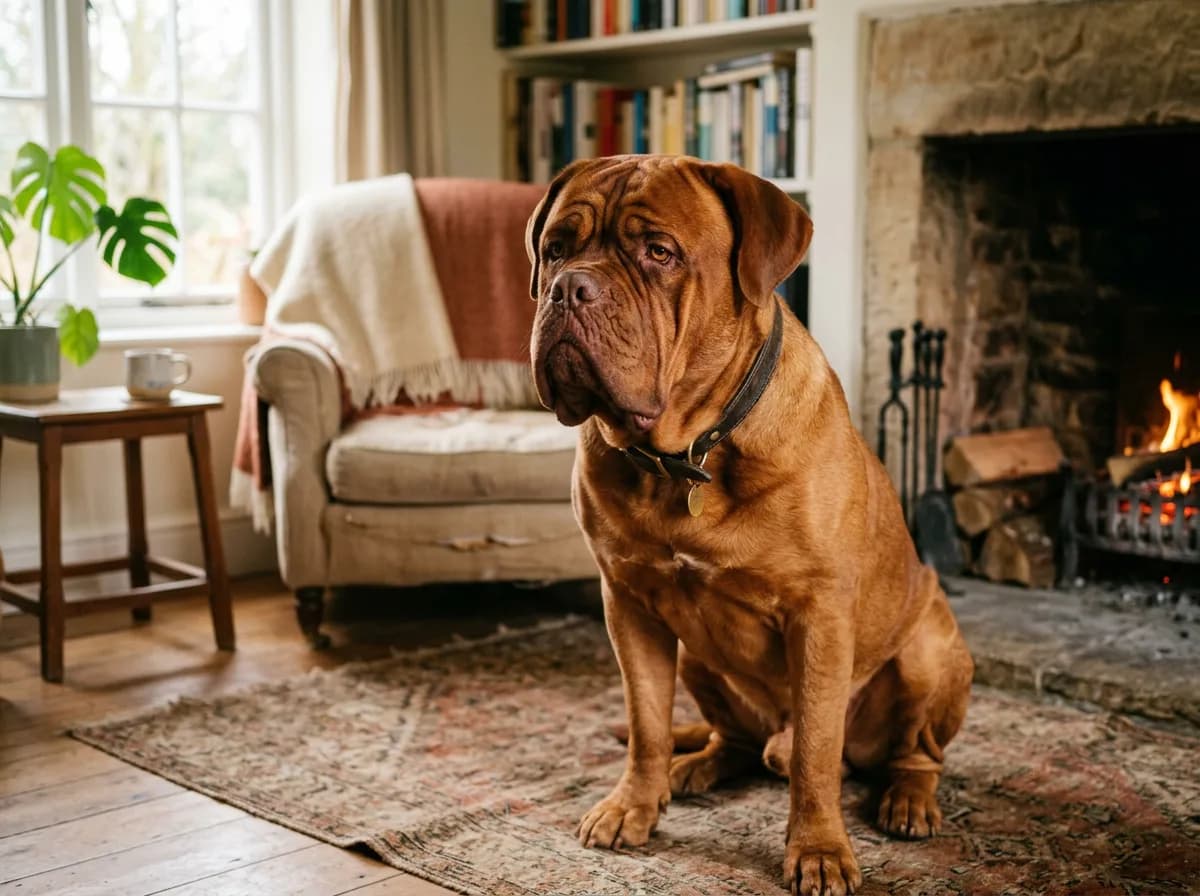
Two traits define the look. First, the head: broad, deeply wrinkled, and carried on a short, thick neck. Second, the mask: many Dogues wear a black or brown mask over the muzzle that frames wide-set, oval brown eyes. The coat is short and single-layered, which means low grooming for shedding but no insulation against cold, and the loose folds around the face and neck trap moisture that owners have to keep clean and dry.
Where the Dogue de Bordeaux Came From
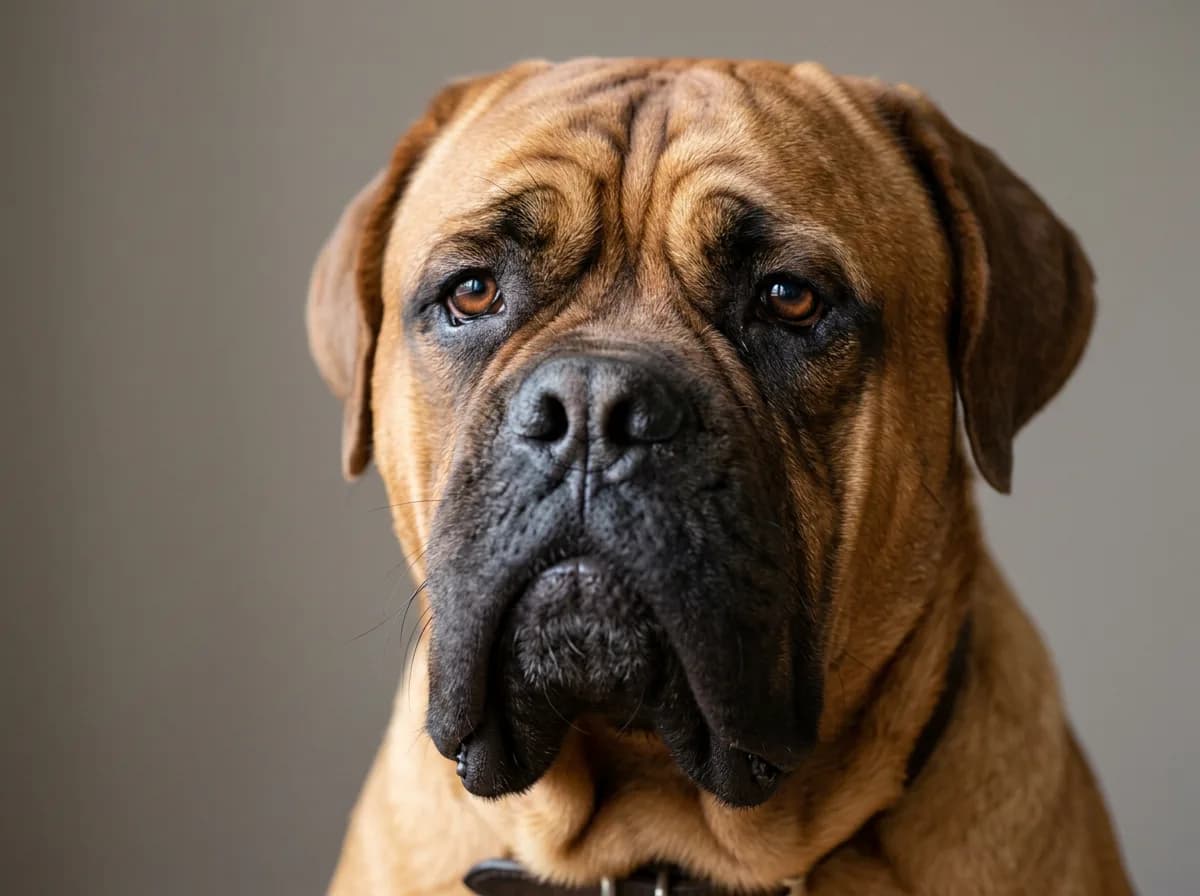
The Dogue de Bordeaux is one of the oldest French breeds, with roots that trace back centuries in the region around Bordeaux in southwestern France. Ancestors of the modern dog were used as working molossers: guarding property and livestock, hauling heavy loads, and, in earlier eras, baiting and fighting. The breed took its regional name because so many of these mastiff-type dogs were concentrated around Bordeaux, where local lines were refined into the powerful guardian recognized today.
The breed was standardized in France in the late nineteenth century, and the first breed standard was written in 1896. Two world wars devastated French dog populations, and the Dogue de Bordeaux nearly disappeared before dedicated breeders rebuilt the lines in the second half of the twentieth century.
North American audiences met the breed on the big screen. The 1989 film Turner and Hooch, starring Tom Hanks alongside a slobbering Dogue de Bordeaux named Hooch, put the breed in front of millions and drove a surge of interest in the United States. The American Kennel Club granted the Dogue de Bordeaux full recognition in the Working Group in 2008.

Petful may earn a commission when you click through to Chewy, at no extra cost to you.
- The Dogue de Bordeaux's popularity spike after Turner and Hooch is a cautionary tale. Movie-driven demand tends to reward volume breeders over health-focused ones, so buyers should be more careful, not less, when a breed has had its Hollywood moment.
Temperament: How Friendly Are They?
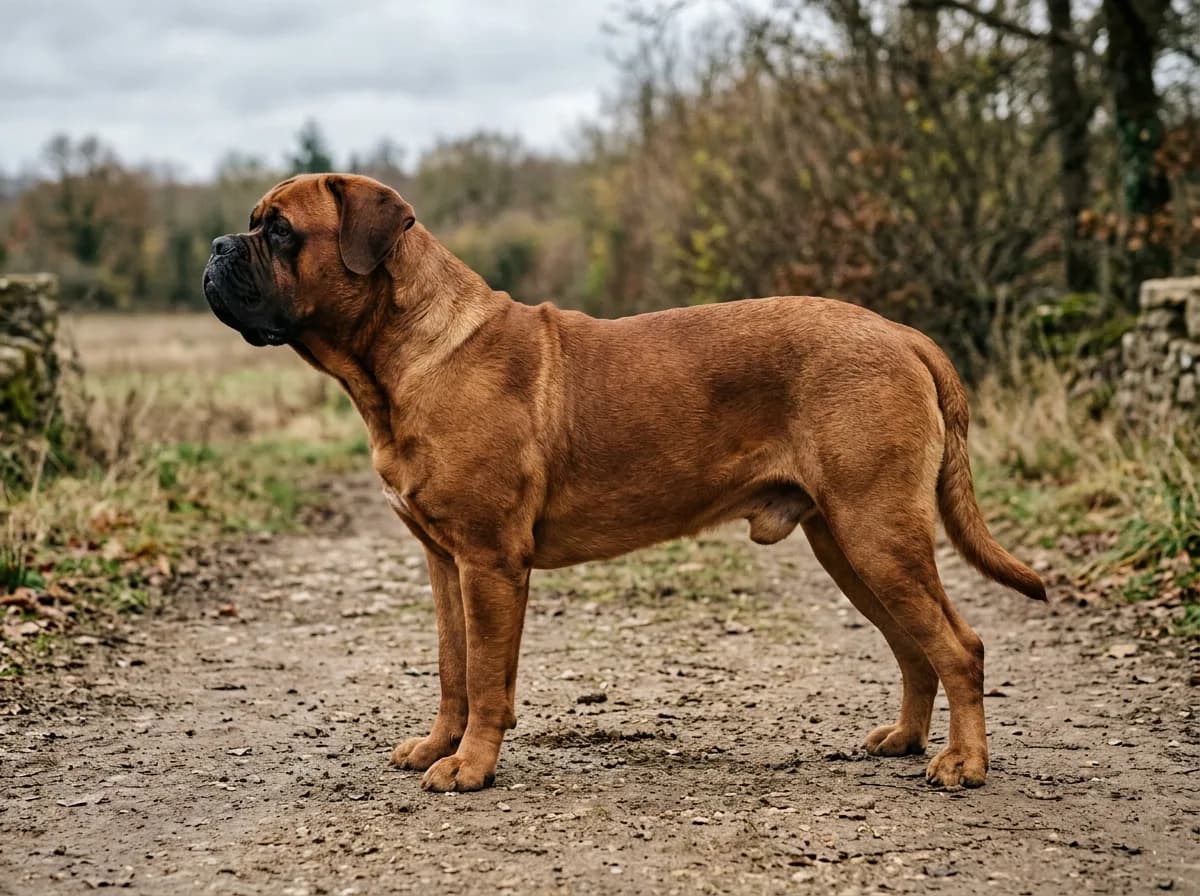
For all its guard-dog bulk, the Dogue de Bordeaux is affectionate, loyal, and deeply attached to its people. Owners consistently describe a calm, even-tempered dog that wants to be near the family, leans into laps despite its size, and watches over the household without needing to be told. The breed is vigilant and courageous, a natural deterrent simply because of its presence.
That devotion comes with a strong will. The Dogue de Bordeaux is intelligent but independent and can be stubborn, so it needs an owner who sets clear, consistent boundaries with positive reinforcement. Harsh handling backfires with a dog this powerful and this sensitive to its handler's mood. Early, thorough socialization is not optional: a poorly socialized Dogue can become territorial or reactive toward strangers and other dogs, and there is a lot of dog behind that behavior.
Around children, the breed is patient and protective, but its size alone means small kids should never be left unsupervised with any giant mastiff. A friendly shove or a clumsy turn from a 120-pound dog can knock a toddler flat without any bad intent.
- 1This is a family-first guardian: gentle and devoted inside the home, imposing to outsiders by default.
- 2It is a poor fit for first-time owners because the combination of size, strength, and stubbornness demands experienced, consistent leadership.
- 3Early socialization and positive-reinforcement training are the difference between a stable adult and a territorial one.
Is This the Right Dog for You?

Before you fall for the wrinkles, be honest about what this breed asks of an owner: space, a tolerance for drool and mess, a real veterinary budget, and the emotional readiness for a giant dog with a short life. The sections below break down the day-to-day realities.
Exercise Needs
The Dogue de Bordeaux has moderate exercise needs, not the endless drive of a working herder. A couple of daily walks plus some yard time or play is usually enough to keep an adult fit and content, and the breed can adapt to apartment living if it gets that consistent outlet. If you want a running, hiking, or agility partner, this is not your breed.
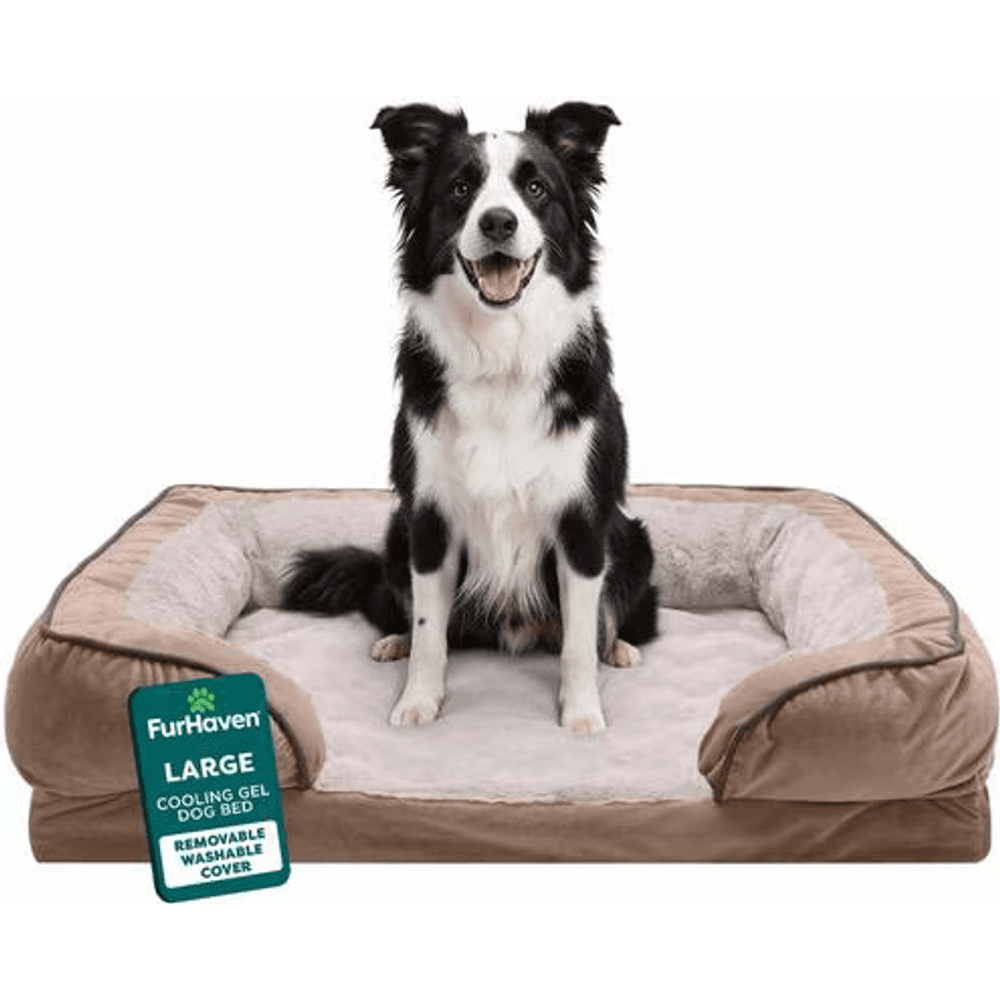
An orthopedic sofa bed with three bolstered sides for dogs who like to rest their head and joints against a cushion. The supportive foam base cradles hips and elbows, a comforting spot for an older or shaky dog to settle.
Petful may earn a commission when you click through to Chewy, at no extra cost to you.
Two cautions matter more than mileage. First, this is a brachycephalic breed with a shortened muzzle, so it overheats fast and struggles to cool itself. Avoid exercise in heat and humidity, and never push a Dogue de Bordeaux on a hot day. Second, growing puppies should not be over-exercised: too much high-impact activity on immature joints raises the risk of the joint disease the breed is already prone to. Keep puppy exercise low-impact and let the skeleton finish maturing.
For a broader look at how to structure daily activity for a large dog, see our guide on how to exercise your dog.
Grooming and Drool
Grooming the coat is easy. The short, single-layer coat sheds lightly and needs only a weekly once-over with a rubber curry brush or hound mitt to stay clean and healthy. The hard part is everything else.
Drool is a defining feature. The Dogue de Bordeaux's loose lips and jowls mean water, food, and slobber end up on floors, walls, and anyone standing nearby, especially after eating or drinking. Owners keep a drool towel handy and simply accept the mess.
The facial and neck folds need real attention. Wipe the wrinkles clean and dry them regularly, because trapped moisture and food debris cause skin-fold dermatitis and infection. Add routine ear cleaning, nail trims, and dental care, and grooming becomes less about the coat and more about maintenance of the folds and mouth.
- Damp, dirty facial folds are the number-one preventable skin problem in this breed. Clean and dry the wrinkles several times a week, and check for redness, odor, or irritation. A dog that rubs its face or smells sour in the folds needs a vet look, not just a wipe.
Health Problems and Lifespan
This is the part every prospective owner has to read carefully. The Dogue de Bordeaux has one of the shortest lifespans of any dog breed, commonly cited at roughly 5 to 8 years, and the reasons are structural to the breed rather than bad luck.
Heart disease leads the list. Cardiomyopathy and other cardiac conditions are a major cause of early death in the breed, which is one reason reputable breeders screen breeding dogs for heart problems. The breed's giant size and brachycephalic build compound the strain: large bodies age faster than small ones, and a shortened airway makes heat and exertion riskier.

The number-one veterinarian-recommended joint supplement brand. Glucosamine, chondroitin, and MSM support cartilage and cushion the joints, easing the stiffness and hind-end weakness that can leave an older or arthritic dog trembling.
Petful may earn a commission when you click through to Chewy, at no extra cost to you.
Other common and serious problems include:
- Bloat, or gastric dilatation-volvulus, a life-threatening twisting of the stomach that giant deep-chested breeds are especially prone to and that is a true emergency
- Hip, elbow, and shoulder dysplasia and other orthopedic disease, including cranial cruciate ligament (ACL) rupture
- Brachycephalic obstructive airway syndrome, which causes snoring, noisy breathing, and heat intolerance because of the shortened skull
- Hypothyroidism, epilepsy, and von Willebrand disease, a bleeding disorder
- Eye problems, allergies and skin conditions, and cancer
- Reproductive difficulty, including a high rate of cesarean births
According to the American Kennel Club, responsible Dogue de Bordeaux breeders perform health testing on breeding stock, and cardiac evaluation, hip and elbow evaluation, and an ophthalmologist exam are among the screenings the breed's parent club recommends. Buying from a breeder who screens for these conditions and shows you the results is the single biggest thing a buyer can do to improve the odds.

Petful may earn a commission when you click through to Chewy, at no extra cost to you.
- A responsible breeder will volunteer cardiac, hip, and elbow results and talk openly about the breed's short lifespan. If a seller dodges those questions or has none of the paperwork, walk away. The up-front price is small next to the cost of preventable disease.
Where to Adopt or Buy One
There are two responsible routes to a Dogue de Bordeaux: a health-testing breeder or a breed-specific rescue. If you go the breeder route, choose one affiliated with the breed's parent club who screens for heart, hip, elbow, and eye conditions and lets you meet the dam. Steer clear of pet stores and volume sellers, which too often trace back to a puppy mill where health and temperament are afterthoughts.
Rescue is a real option. Because the breed is powerful, expensive to keep, and short-lived, plenty of Dogues end up needing new homes through mastiff and Dogue de Bordeaux rescue groups. Adopting an adult also lets you skip the riskiest puppy-joint years and know the dog's temperament up front.
How the Dogue de Bordeaux Compares to Other Mastiffs
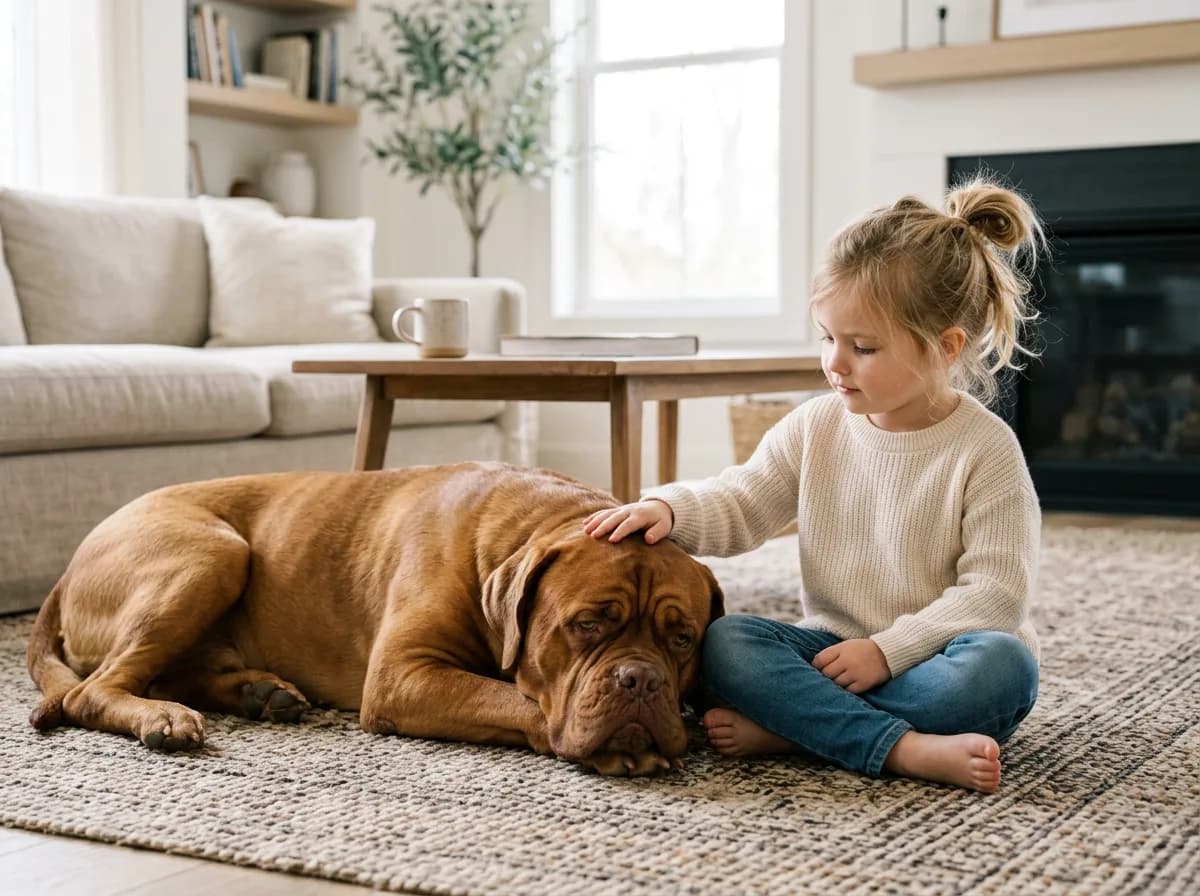
If you love the guardian-mastiff type but are not sure the Dogue de Bordeaux fits your home, a few relatives are worth weighing. Each shares the loyal, protective molosser character with its own quirks of size, coat, and care.
| Breed | Rough weight | What sets it apart |
|---|---|---|
| Dogue de Bordeaux | 100 lbs and up | Shortest lifespan, heaviest drool, deep red coat |
| Bullmastiff | 100 to 130 lbs | Slightly more agile, built as a gamekeeper's dog |
| Tibetan Mastiff | 70 to 150 lbs | Heavy double coat, aloof and independent |
| Neapolitan Mastiff | 110 to 150 lbs | Even more wrinkled, famously heavy droolers too |
For deeper profiles on the closest relatives, see our guides to the Bullmastiff, the Tibetan Mastiff, and Neapolitan Mastiff puppies. If color genetics are your thing, our breakdown of Rhodesian Ridgeback colors shows how coat shades are described across large working breeds.
What It Costs to Own a Dogue de Bordeaux
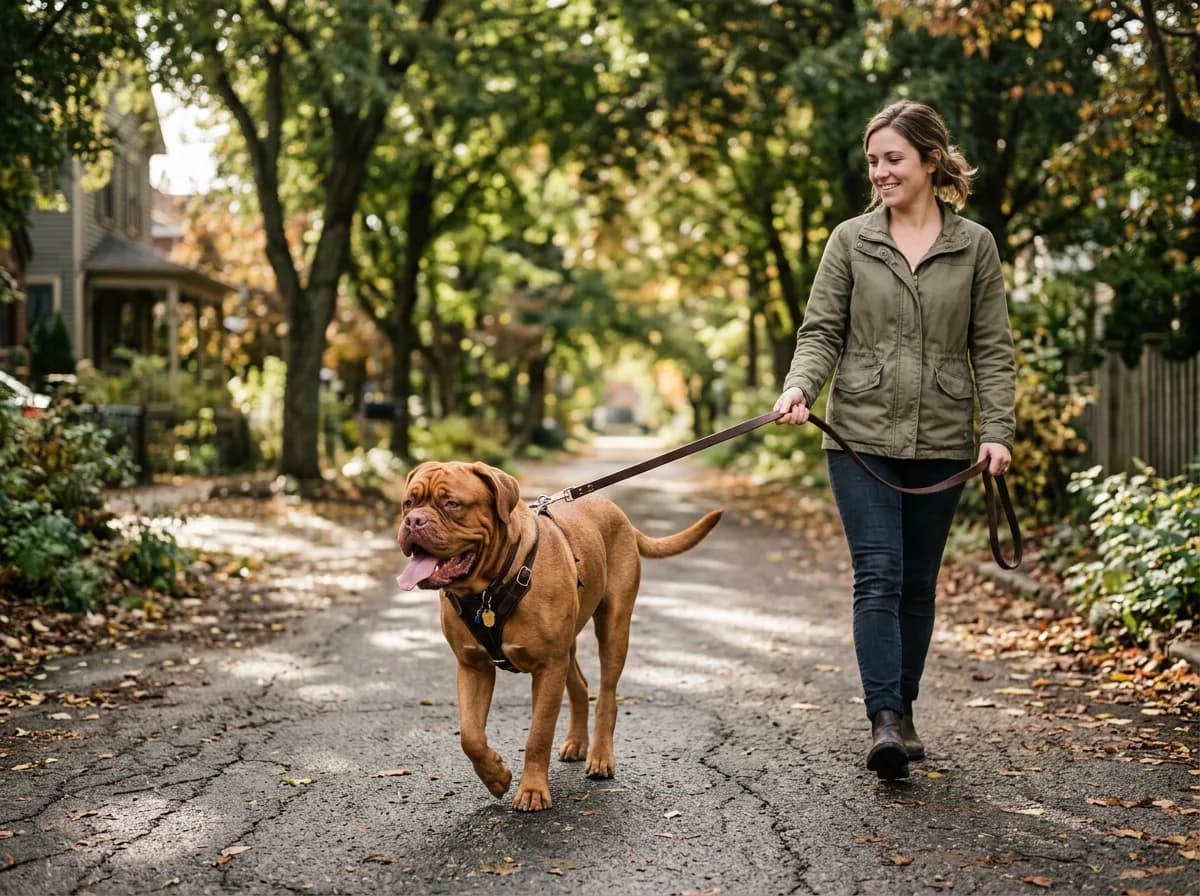
The purchase price is only the entry fee. A well-bred Dogue de Bordeaux from a health-testing breeder typically runs into the low-to-mid thousands of dollars, reflecting limited litters, the breed's high cesarean rate, and the cost of health screening. Bargain-priced puppies are a warning sign, not a deal.
The bigger number is lifetime cost. A giant breed eats like one, and food, large-size gear, and routine care all scale with body weight. Add the breed's heightened risk of bloat, cardiac disease, and joint problems, and veterinary spending can climb quickly, which is why many owners carry pet insurance on a Dogue de Bordeaux. Budget honestly before you commit: the responsible choice is to be sure you can fund good care for the whole of a short life.
Frequently Asked Questions
Feeding a Giant Breed the Right Way
Feeding a Dogue de Bordeaux well starts in puppyhood and never stops mattering. Giant-breed puppies grow for well over a year, and pushing that growth too fast strains developing joints and raises the risk of the hip and elbow disease the breed already carries. A large or giant-breed puppy formula, with controlled calcium and calorie density, helps the skeleton grow slowly and steadily. Resist the urge to fatten a bulky puppy: lean and gradual is the goal.
Adults do best kept trim. Every extra pound loads the hips, elbows, and heart of a dog already prone to trouble in all three. Run a hand over the ribs regularly and adjust portions before weight creeps up.
Feeding routine matters for a deep-chested breed at real risk of bloat. Splitting the day's food into two or three smaller meals, slowing down a fast eater, and keeping things calm around mealtimes are sensible habits.
- Raised feeders were once standard advice, but research has linked them to higher bloat risk in giant breeds, so ask your vet before using one. Many owners of deep-chested dogs also discuss a preventive stomach-tacking surgery, called a gastropexy, often done during a spay or neuter.
Training a Strong-Willed Giant
Training a Dogue de Bordeaux is less about teaching tricks and more about building a manageable adult before it outweighs you. The window that matters most is early: expose a puppy calmly and positively to new people, dogs, surfaces, sounds, and handling well before it reaches the strength of a full-grown guardian. A confident, well-socialized Dogue reads strangers correctly instead of defaulting to suspicion.
Keep sessions short, upbeat, and consistent. This is an intelligent but independent breed that shuts down under harsh corrections and works hard for a calm, fair handler using positive reinforcement. Pick a few one- or two-word cues and use them the same way every time.
Prioritize the skills that make a giant dog safe to live with. Teach loose-leash walking while the puppy is still light enough to correct gently, so it never learns to pull at 110 pounds. Work on impulse control, waiting at doors and before meals, and a solid settle on a mat. Handle the ears, paws, and facial folds daily from the start so grooming and vet visits stay stress-free for life.
Related on Petful
- The 10 Biggest Dog Breeds in the World
- Cane Corso Breed Profile: Complete Owner's Guide
- Saint Bernard Breed Profile: The Gentle Giant
- Boerboel Breed Profile: The Complete Guide
Yes, for the right family. The Dogue de Bordeaux is loyal, calm, and affectionate with the people it lives with and is naturally protective of the household. Its size and strength mean it needs experienced handling, early socialization, and supervision around small children, so it suits an active, dog-savvy family more than a first-time owner.
The Dogue de Bordeaux is often called the heartbreak breed because of its very short lifespan of roughly 5 to 8 years. Owners fall hard for the affectionate, gentle personality and then lose these dogs young, frequently to heart disease and the health problems tied to the breed's giant, brachycephalic build.
A puppy from a responsible, health-testing breeder generally costs in the low-to-mid thousands of dollars, driven by small litters, a high cesarean rate, and the expense of cardiac, hip, and elbow screening. The bigger cost is lifetime care: a giant breed prone to bloat, joint disease, and cardiac problems means substantial food and veterinary spending over its life.
The breed's short life, commonly cited at 5 to 8 years, is driven mainly by heart disease, which is a leading cause of early death, along with the general fact that giant breeds age faster than small ones. Its brachycephalic build adds airway and heat-tolerance problems, and the breed is also prone to bloat and cancer, all of which pull the average lifespan down.
Loyalty is hard to rank precisely, but breeds repeatedly named among the most devoted include the Dogue de Bordeaux, the German Shepherd, and the Labrador Retriever. The Dogue de Bordeaux earns its place through the intense, family-focused bond that defines the breed, one reason owners tolerate the drool and the short years.
No single breed wins that title, but the Dogue de Bordeaux is frequently praised for a calm, even temper indoors despite its guardian role. Other breeds known for gentle, low-key personalities include the Bernese Mountain Dog, the Great Pyrenees, and the Newfoundland. Calmness always depends on training, socialization, and the individual dog, not the breed alone.
There is no official ranking, but powerful, high-cost breeds like the Dogue de Bordeaux, along with bully and mastiff types, are commonly surrendered when owners underestimate the size, expense, and commitment involved. The lesson for buyers is to be certain you can meet a giant breed's needs for its whole life before bringing one home, and to consider breed rescue.
Dogs respond most reliably to short, consistent, one- or two-syllable words spoken in a clear, upbeat tone, such as sit, stay, come, no, and their own name. With a strong-willed breed like the Dogue de Bordeaux, using the same simple cues every time and pairing them with positive reinforcement makes training far more effective than long sentences.
The Bottom Line on the Dogue de Bordeaux
The Dogue de Bordeaux rewards the right owner with a devoted, dignified guardian that is gentle with its family and formidable to everyone else. But it is a demanding dog: strong-willed, heavy-drooling, prone to serious health problems, and heartbreakingly short-lived. Go in with experience, a real veterinary budget, and eyes open to the breed's health realities, and you will be well matched. Go in unprepared, and the size and the vet bills will overwhelm you. If that honest picture sounds like your home, few dogs will love you harder than a Dogue de Bordeaux.

Kristine Lacoste has been researching dog and cat breeds for nearly a decade and has observed the animals up close at dog shows in both the United States and the United Kingdom. She is the author of the book One Unforgettable Journey, which was named as a finalist for a Maxwell Award from the Dog Writers Association of America, and was host of a weekly pet news segment on the National K-9 Academy Radio Show. In addition, she was the New Orleans coordinator for Dogs on Deployment, a nonprofit that helps military members and their pets, for 3 years. Kristine has researched and written about pet behaviors and care for many years. She holds a bachelor’s degree in psychology, another bachelor’s degree in English and a Master of Business Administration degree.
Sign up for expert-backed reviews and safety alerts all in one place.