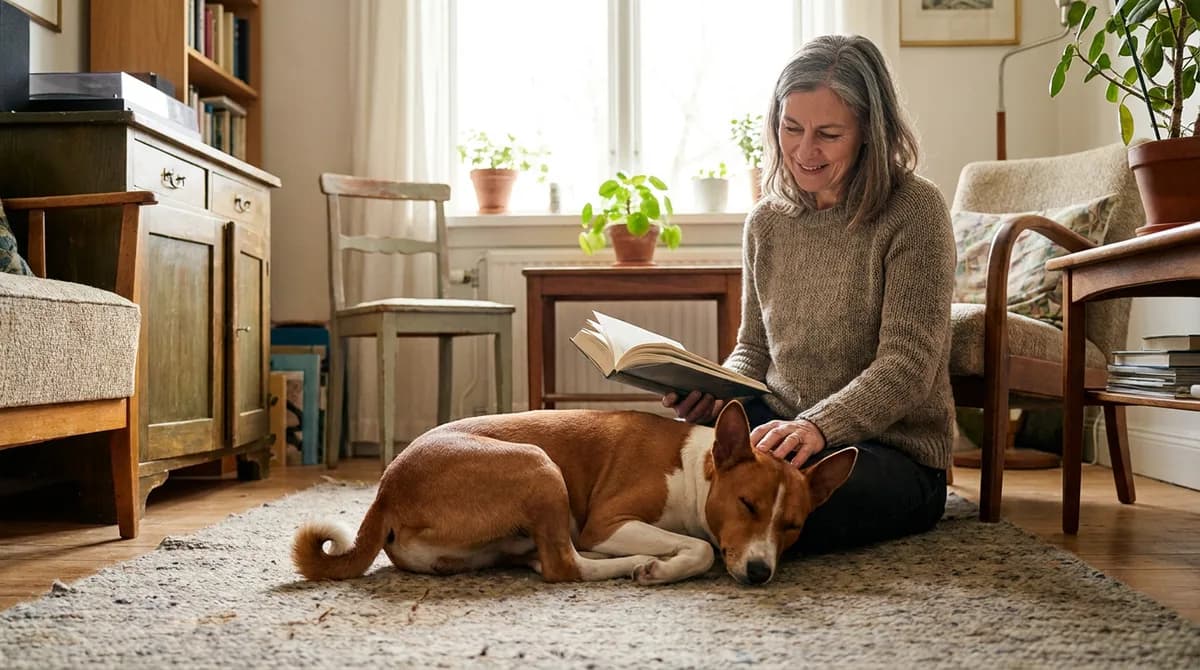
Corgipoo: Corgi Poodle Mix Temperament, Shedding and Care
Explore Corgipoo parentage, temperament, shedding and daily care, with practical questions about coat maintenance, health records and the individual dog’s household fit.

Coat texture, ear shape and proportions can vary among Corgi–Poodle mixes.
Petful is reader supported. As an affiliate of platforms like Amazon and Chewy, we may earn a commission when you buy through links on this page. There is no extra cost to you.
A Corgipoo is a Corgi Poodle mix, also informally called a Corgidoodle or Corgi Doodle. Its size, body shape and coat can vary considerably, depending on the actual parents. The name does not guarantee a curly, non-shedding coat or a predictable combination of the parents' best traits.
Before choosing one, ask which Corgi breed and which Poodle size are involved, then assess the individual dog's behavior, coat and health records. A Corgipoo can suit an engaged household prepared for training, daily activity and grooming, but a cute appearance is not enough to establish a good fit.

Sign up for expert-backed reviews and safety alerts all in one place.
What Is a Corgipoo?
There are no standardized Corgipoo types defined by marketing colors. A description such as merle or blue merle Corgipoo is a coat claim, not verification of ancestry; ask for the parent records and look at the actual dog before drawing conclusions from an advertisement.
A Frisco Padded No Pull Dog Harness can be part of a walking setup if the small size matches the dog's chest measurements. Check the fit on the actual body; a broad chest and short legs can make the wrong shape rub. A harness supports management, while loose-leash skills still need training.

A budget-friendly padded no-pull harness that keeps leash pressure off a coughing dog's neck and windpipe by distributing it across the chest. A simple, affordable way to protect an irritated airway or a collapsing trachea on every walk.
Petful may earn a commission when you click through to Chewy, at no extra cost to you.
Corgi doodle and Corgidoodle are other informal names you may encounter for a Corgi Poodle mix. Names alone do not verify ancestry: ask which Corgi breed and Poodle size were involved, and whether another cross appears in the family. A black coat, curly coat or short-legged outline cannot establish those details.
- 1Corgipoo is an informal crossbred label, so verify the actual parents.
- 2Coat variation means neither shedding nor allergy suitability is guaranteed.
- 3Build the care routine around the individual dog rather than a designer-dog description.
There are two distinct Corgi breeds: the Pembroke Welsh Corgi and Cardigan Welsh Corgi. Poodles also come in Toy, Miniature and Standard sizes. A seller who says only Corgi crossed with Poodle has left out information that matters for adult size and family background.
The AKC's comparison of the Corgi breeds explains that the Cardigan and Pembroke are separate breeds, not size variations of one breed. Ask for the actual parent identities and relevant records. A nickname, generation label or puppy photo is not a substitute for that information.

Temperament, Training and Household Fit
The practical pros and cons are the household match: you may enjoy an alert, engaged companion, while barking, chasing, coat upkeep or difficulty settling can require work. Observe the individual and plan the daily routine rather than treating ancestry as a promise.
Corgipoos may be lively, observant and interested in what people are doing. Parent-breed descriptions offer clues, but they cannot predict how a particular dog will respond to visitors, children or time alone. Ask about its ordinary routine and watch whether it can settle after activity, not just how enthusiastically it greets you.
An aumuca self-cleaning slicker brush is one tool to consider after a groomer has assessed the coat and shown suitable pressure. Work gently and check beyond the top surface. Tight mats need professional help; do not cut close to skin hidden under tangled hair.
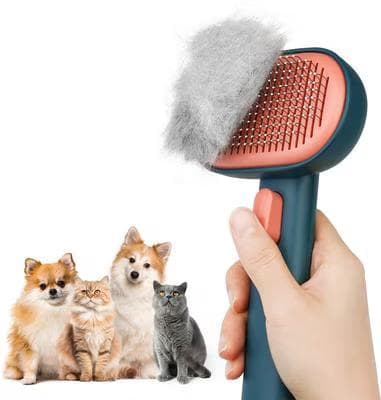
Petful may earn a commission when you click through to Chewy, at no extra cost to you.
Herding ancestry is a reason to plan thoughtful training around moving children and other pets. Chasing, barking or nipping at movement should be interrupted safely and redirected to an appropriate activity. Do not assume children must tolerate it because the dog is playing. Use supervision and barriers, and obtain qualified training help if the behavior is difficult to manage.
Assessing household fit
- Can someone provide predictable toilet breaks, exercise and rest?
- Are adults ready to teach calm greetings and reward-based leash skills?
- Can children respect a dog's resting place and handling limits?
- Is there time for coat maintenance as well as professional grooming if needed?
- What care arrangements are available while alone-time skills develop?
Barking and time alone
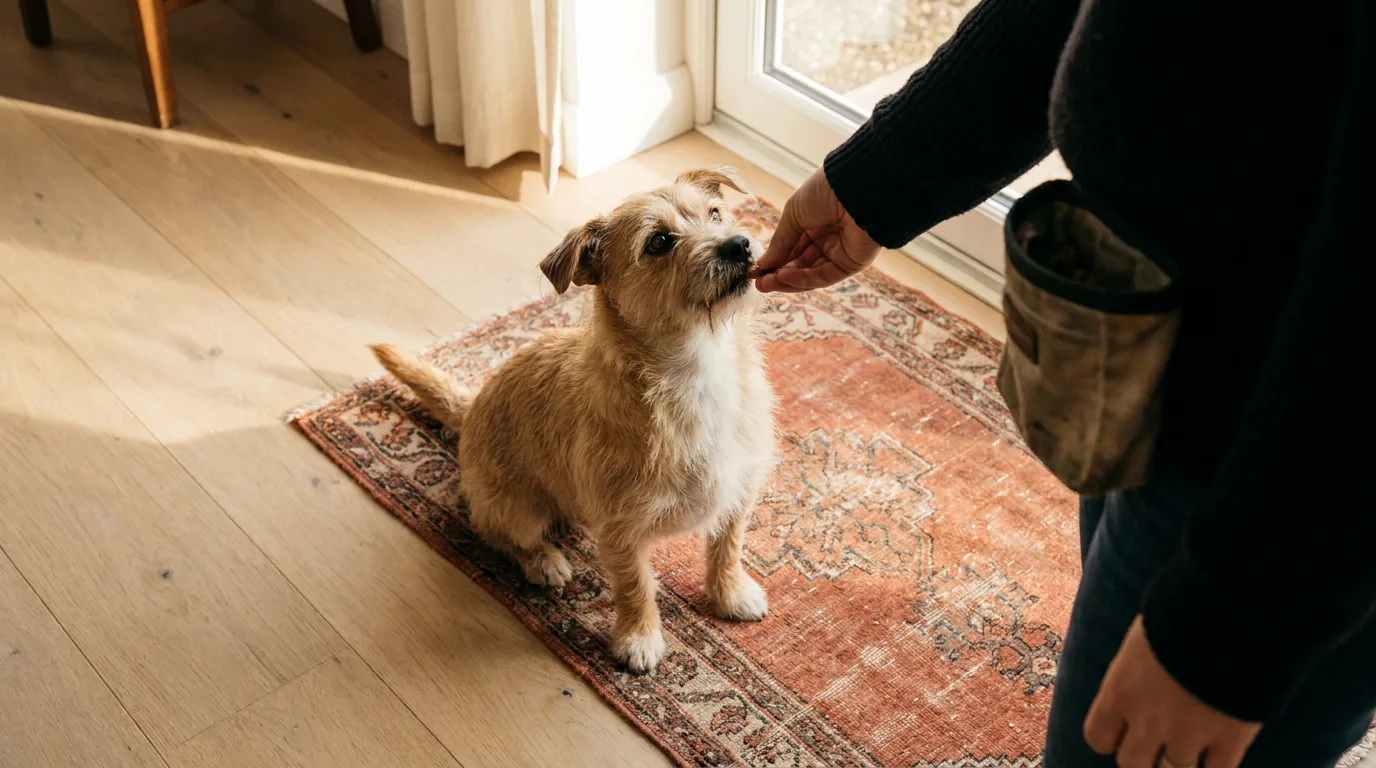
There is no reliable breed-wide promise that Corgipoos are quiet. Observe what triggers the individual dog's barking: movement outside, visitors, frustration or separation may call for different approaches. Reward calm responses and manage repeated triggers rather than expecting a bark collar to explain the problem.
Teach alone time gradually. Begin with short, comfortable separations and increase only when the dog is coping. A puppy, recently adopted dog or dog showing distress may need more care than your eventual schedule allows. Arrange help during that transition. A food toy does not make a distressed dog ready to spend the day alone.
Shedding, Allergies and Coat Care
Coat uncertainty is part of choosing this mix. A Corgi Poodle mix is not reliably hypoallergenic: shedding and curl do not tell you whether a particular person will react to the dog. Spend time with the actual animal where feasible and discuss personal allergy concerns with a clinician rather than buying on a coat promise.
For routine bathing of healthy skin, a fragrance-free Earthbath oatmeal and aloe shampoo is one option to compare with your groomer's advice. Follow the label, rinse thoroughly and avoid eyes and ears. Shampoo is not a diagnosis or treatment plan for recurring skin trouble.

Petful may earn a commission when you click through to Chewy, at no extra cost to you.
- Corgipoos can shed. A Poodle parent does not guarantee a non-shedding puppy, and a fluffy or curly appearance does not establish how much hair an adult will release. Coat observation and care needs are more useful than a blanket promise about all Corgipoos.
- The American Academy of Allergy, Asthma & Immunology explains that pet allergies involve proteins in sources including dander, saliva and urine. No dog breed is truly hypoallergenic. Someone with pet allergies should discuss exposure and management with their clinician rather than relying on the Poodle part of the name.
| What you observe | What it tells you | Care routine to discuss |
|---|---|---|
| Loose hair on clothing or furniture | This individual sheds; the crossbred label does not override observation | Suitable brushing and ordinary household cleanup |
| Waves or curls with tangles near the skin | The coat can mat even without much visible loose hair | Gentle brushing, comb checks and an achievable haircut |
| Tangles behind ears or under equipment | Friction areas need attention | Short regular checks and a fit review of collars or harnesses |
| Redness, odor, pain or persistent scratching | A grooming-only explanation may be insufficient | Veterinary assessment rather than repeated product changes |
Choose bathing and clipping intervals according to the dog's coat, activities and any veterinary advice. A manageable shorter trim may suit one dog; another coat may need a different approach. Ask the groomer to explain the maintenance between appointments before selecting a style from a picture.
Exercise, Feeding and Daily Routine
Provide daily physical activity and mental enrichment, adjusted to the individual dog's age, health and recovery. Walks with sniffing opportunities, short reward-based training sessions and simple food searches can complement one another. Do not interpret a low body as a reason to skip activity or as proof the dog can manage any exercise you choose.
Start with a routine you can repeat: a toilet break and walk, a meal, rest, another manageable activity and calm handling. Puppies need frequent breaks and age-appropriate activity. If a dog struggles during exercise or becomes less willing to move, ask your veterinarian rather than simply increasing the workload.
A supervised Nina Ottosson Lickin' Layers puzzle feeder can hold part of a normal meal for a dog that enjoys food activities. Begin with an easy task, use an appropriate portion and stop if the dog chews the pieces. Enrichment should be achievable and enjoyable, not frustrating.
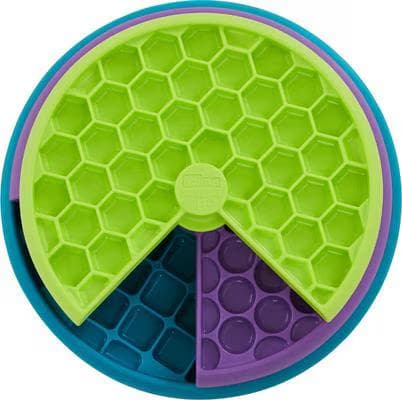
Petful may earn a commission when you click through to Chewy, at no extra cost to you.
Feeding and body condition
Choose a complete diet appropriate to life stage and discuss portions with your veterinary team. Include training rewards in the day's intake. Check body condition over time instead of treating a broad breed-guide weight range as the correct weight for every dog. A dog can be heavy or light for its own frame even when a chart places the number inside a generic range.
Health, Lifespan and Parent Screening
For a puppy, WebVet's puppy vaccine schedule helps you organize the existing record and next-due questions. Your veterinarian should set the dates and safe-exposure plan.
Corgipoos can inherit risks from either parent line. Ask for actual health screening records appropriate to the Corgi breed and Poodle variety involved, plus any known family diagnoses. A general DNA panel and a puppy wellness examination do not answer all the same questions.
Use the OFA CHIC program to understand screening documentation: a CHIC number means the required tests were completed and results made public, not that every result was normal. Check the dog's identity, test date and actual finding, and have unclear records interpreted by your veterinarian.
Interpreting lifespan estimates
Published Corgipoo lifespan ranges differ. Adopt a Pet gives about 10–14 years, while other guides offer different estimates. Treat this as a long-term planning range, not a measured guarantee for your dog. Routine veterinary care, suitable nutrition, oral care and comfortable activity remain important regardless of the number in a breed guide.
Routine handling checks
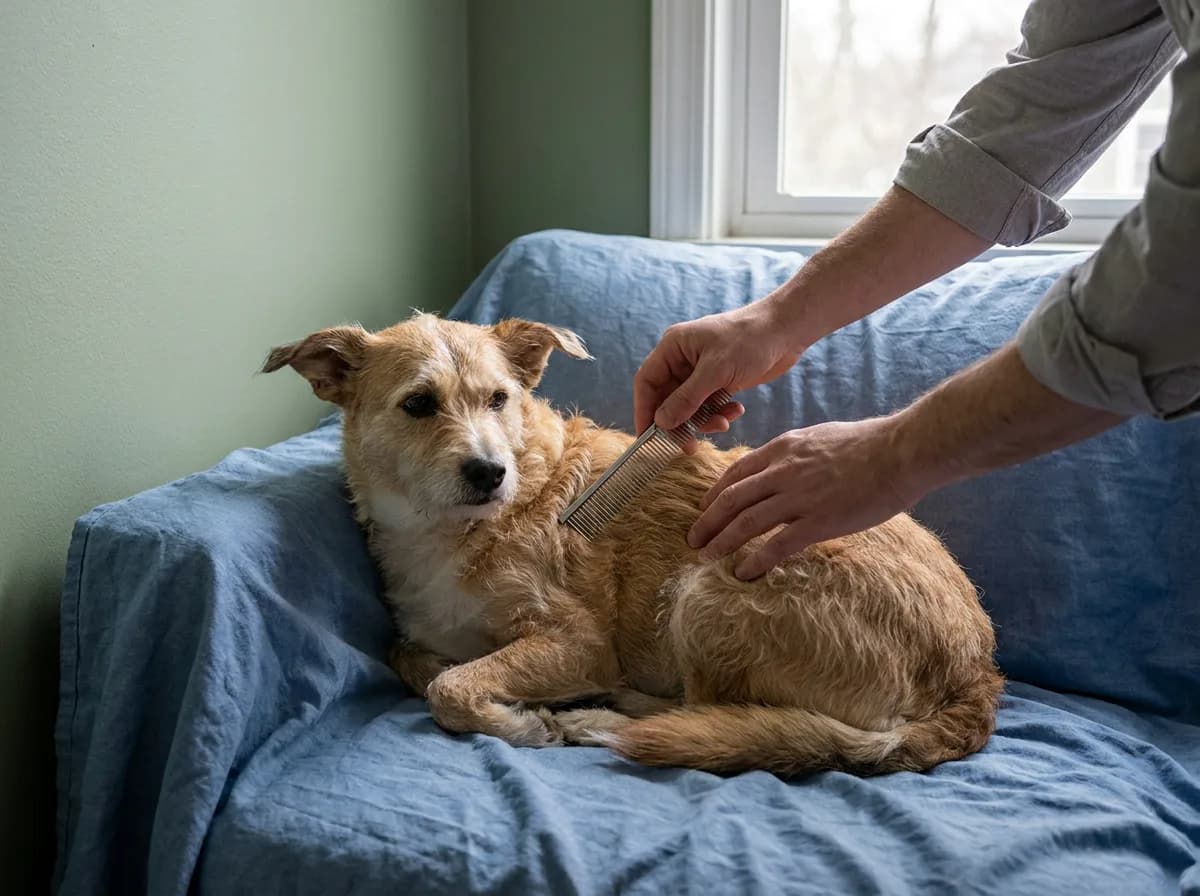
Use gentle brushing and routine handling to notice new discomfort, skin changes or difficulty moving, without trying to diagnose them. Keep the walking harness fitted as the dog grows or its coat changes. Products support ordinary care; they do not remove inherited risks.
Puppies, Adoption and Costs
Whether you look for Corgidoodle puppies, a Corgi Poodle mix puppy through a breeder or a Corgipoo for adoption, start with the individual dog and verifiable records. Ask about parent identities, size, completed screening and what is known about handling, toileting and time alone. A Corgipoo breeder should be able to explain the parentage clearly; photos and a marketing name are not enough.
For a dated Corgi Poodle mix price reference, Good Dog’s Corgipoo buyer’s guide displayed a $1,300–$2,400 expected-price range when checked on September 28, 2026. This is the marketplace’s published range, not an independently verified national average or a quote for your puppy. Before you buy a Corgipoo, obtain an itemized written quote separating acquisition costs, any deposit, transport and included veterinary services. Budget separately for food, coat care, preventive veterinary care, training and an emergency reserve; adoption does not eliminate those recurring costs.
Verify the records before committing
Before committing, verify parent information or the limits of what the rescue knows. Ask about daily behavior, grooming tolerance, time alone and any documented medical needs. Read the contract and return arrangements. Avoid a decision driven only by a photo or a deadline to pay.
Budget for the care after arrival:
- Food and routine veterinary/preventive care.
- Home grooming tools and professional appointments as needed.
- Suitable equipment, including replacement as a puppy grows.
- Training support, daytime care or pet sitting.
- A plan for unexpected veterinary expenses.
Start with useful essentials rather than buying every product for a designer mix. A fitting harness, appropriate coat brush and a quiet resting area matter more than a large accessory collection. Ask a groomer about the actual coat before buying specialized tools or assuming home care will be simple.
Adult Size and Appearance
Adult size depends on the actual Corgi and Poodle parents, and published Corgipoo ranges are inconsistent. Ask whether the Poodle parent is Toy, Miniature or Standard and whether the Corgi is a Pembroke or Cardigan. Even known parent sizes give context rather than an exact forecast.
Our Corgipoo full-grown guide compares those parent differences, published estimates and practical measurements. Use the individual dog's chest, length and standing height for equipment decisions instead of buying by a generic breed weight alone.
Frequently Asked Questions
No. Coat inheritance and individual variation mean a Corgipoo can shed, even with a Poodle parent. Observe the actual coat and discuss grooming needs with a professional rather than relying on a non-shedding sales claim.
Some individuals can fit family homes, but supervision, gentle handling and training are essential. Manage chasing or nipping at movement, give the dog a retreat and never expect it to tolerate rough play because it is small.
It needs daily activity and mental enrichment suited to its age, health and individual response. Combine manageable walks, sniffing and short training sessions with rest. There is no single exercise quota appropriate for every Corgipoo.
Both are informal names commonly used for a Corgi Poodle cross. Neither label identifies the exact Corgi breed, Poodle size or generation, so ask for actual parentage details.
Do not assume that it can. Build alone-time skills through gradual training and make care arrangements around the dog's present needs. Puppies and dogs showing distress may need frequent support and professional guidance.

Coreen Saito is a pet writer and longtime shelter volunteer with more than a decade in animal rescue. She covers cat behavior, breed care, and the small, ordinary science of sharing a life with companion animals, with a particular focus on honest takes about the products and decisions that actually matter. At home in Arizona, she's outranked by Mac (a dog with the loudest opinion in the house), Rebel (a cat who governs by quiet authority), and Meri (an orange tabby who runs the late shift and the laundry basket). She writes about all three, plus the rescues that keep coming through her life, at LifeWithMinty.com.
Sign up for expert-backed reviews and safety alerts all in one place.