Bernese Mountain Dog Size: Weight, Height, and Growth
Plan for a full-grown Bernese Mountain Dog with adult height and weight references, practical measuring steps, and a growth log that keeps body condition and equipment fit in view.
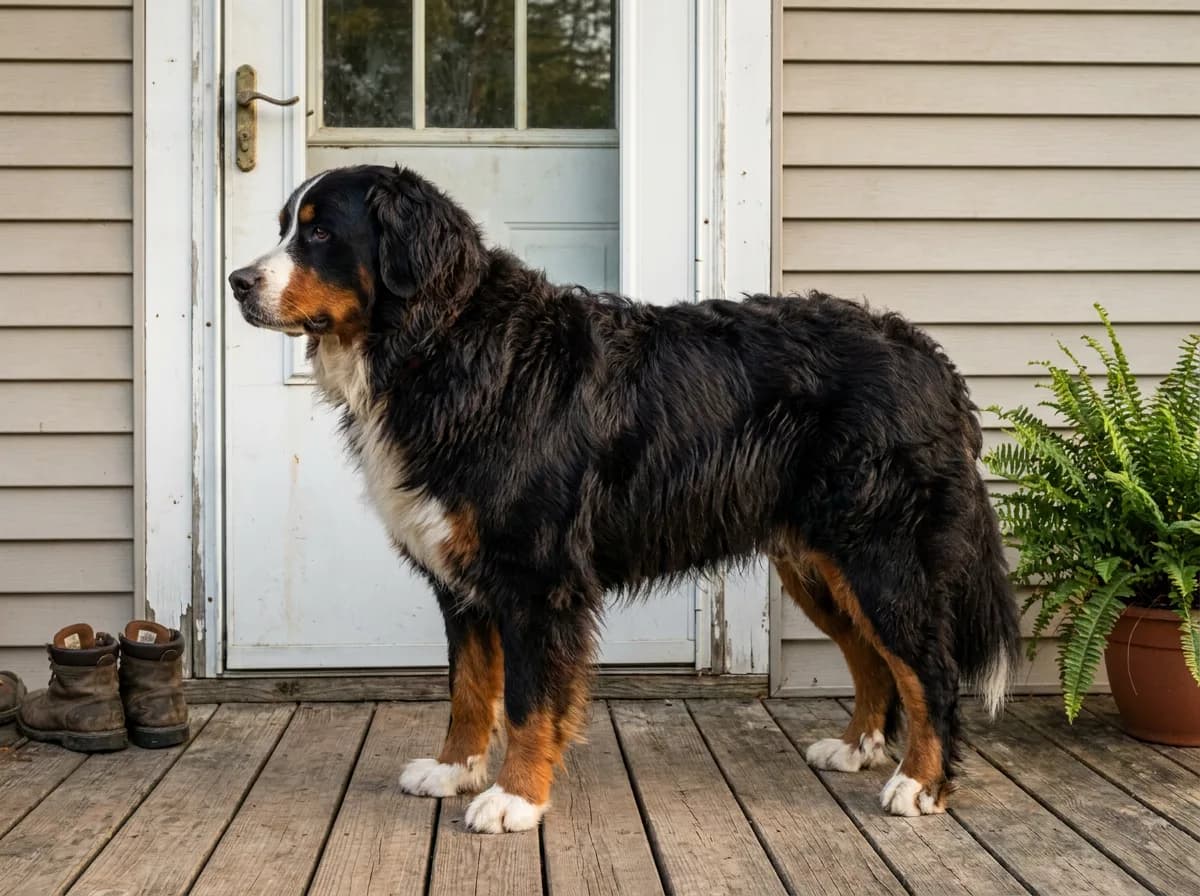
Adult Bernese Mountain Dog standing in profile beside a porch doorway.
Petful is reader supported. As an affiliate of platforms like Amazon and Chewy, we may earn a commission when you buy through links on this page. There is no extra cost to you.
Bernese Mountain Dog size usually falls around 70 to 115 pounds and 23 to 27.5 inches at the shoulder, with males generally larger than females. Those adult ranges help you plan, but they are not a target to feed a puppy toward or a substitute for measuring the dog that will use your equipment.
For a useful picture of size, keep three things separate: frame, body condition, and the space a dog needs to move comfortably. This guide gives you adult reference numbers, a repeatable measuring method, and a growth log without invented monthly weight targets.

Sign up for expert-backed reviews and safety alerts all in one place.
Bernese Mountain Dog adult size and weight
The BMDCA breed standard gives shoulder-height ranges of 25 to 27.5 inches for males and 23 to 26 inches for females. The AKC's breed history gives typical weights of 80 to 115 pounds for males and 70 to 95 pounds for females. Weight figures are descriptive ranges, rather than the breed standard's required weight.
- 1Bernese Mountain Dog size varies by sex, frame, and individual growth.
- 2Measure height at the withers, not at the ears or head.
- 3Compare weight with body condition instead of treating the heaviest number as ideal.
- 4Buy equipment from usable internal dimensions and manufacturer limits.
| Sex | Shoulder height | Typical adult weight | Rounded metric equivalent |
|---|---|---|---|
| Male | 25–27.5 inches | 80–115 pounds | 63.5–70 cm; 36–52 kg |
| Female | 23–26 inches | 70–95 pounds | 58.4–66 cm; 32–43 kg |
A dog outside a typical weight range is not automatically unhealthy, and one inside it is not automatically at an ideal weight. A smaller frame can carry excess fat at a number that would be appropriate for a larger dog. Ask your veterinary team about the individual rather than trying to settle the question from a breed table.
When planning for a full-grown Berner, consider the less obvious dimensions too: the space needed to turn in a hallway, lie on its side, enter a car, and pass through a gate beside you. A photograph next to a person can suggest scale, but camera angle and the person's height can distort the comparison.
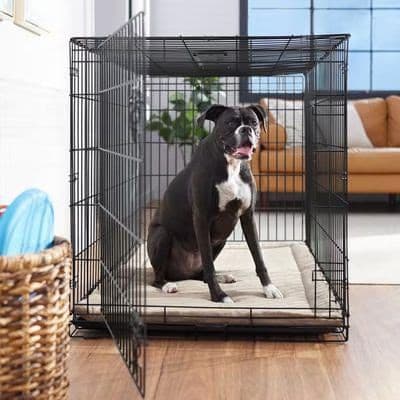
Petful may earn a commission when you click through to Chewy, at no extra cost to you.
An adult-sized crate can be a substantial item in the room. Compare the Frisco Heavy Duty X-Large Wire Crate with your measured space and the dog's needs before buying. “X-Large” is a product label, not a promise that every Berner will fit.
Male vs. female Bernese Mountain Dog size
Males are generally taller and heavier, but the ranges overlap. Choosing a female can reduce the size you are likely to manage; it does not guarantee a small adult. If a strict weight limit determines whether you can keep the dog, a puppy estimate may leave too much uncertainty.
Neither boys nor girls are automatically the better companion. Sex is one part of the description, while an individual dog's temperament, training, health, and experience affect everyday fit. A smaller dog that pulls or panics during handling may be harder for a particular person to manage than a larger, well-trained one.
Use these questions when comparing actual dogs:
- What are the parents' adult measurements, and how were they obtained?
- Is the adult dog you are meeting comfortable with the handling your household needs?
- Can every regular caregiver manage the lead, car entry, and routine care safely?
- Would your plan still work if a puppy finished larger than the estimate?
Avoid choosing solely from a litter photograph. Puppies may differ in posture, coat, age at the photograph, or how close they are to the camera. If adult dimensions are essential to housing or handling, discussing an already mature dog with a rescue may give you a clearer answer.
How to measure height, length, and body condition
Measure on a level, nonslip surface while the dog is standing comfortably. Have a helper reward a calm stance if needed, and keep the session short. Do not wrestle a dog into a position for a more exact number; a veterinary team or experienced handler can help with a dog that finds measuring stressful.
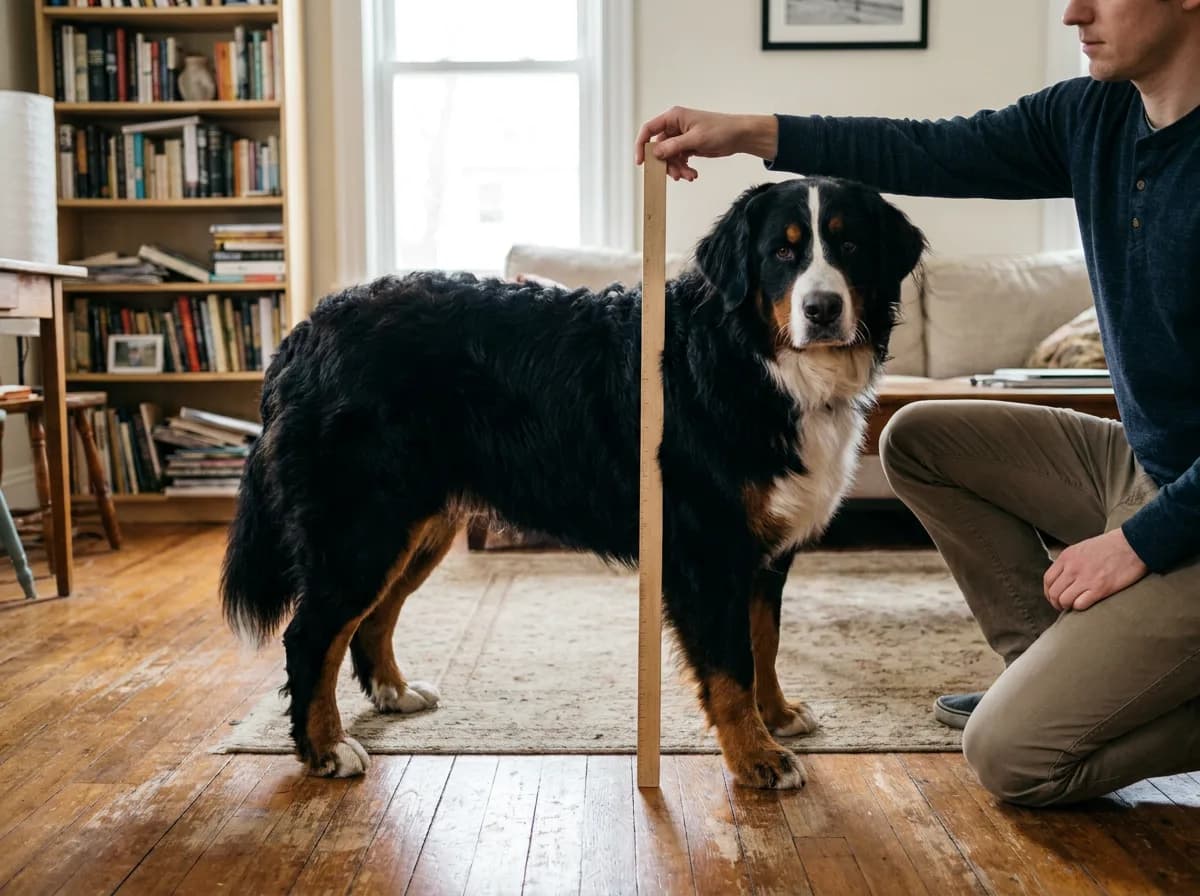
Height at the withers
The withers are the top of the shoulder area. Shoulder height is a vertical measurement from the floor to that point, with the dog on all four feet. It is not the height of the top of the head, and it does not change simply because the dog looks up.
- Stand the dog naturally, with all four paws on the same level surface.
- Place a straight measuring tool vertically beside the shoulder without poking or pressing the dog.
- Use a horizontal guide to identify the level of the withers.
- Record the number, unit, and method so you can repeat it consistently.
Take a second reading if the dog moved, rather than reporting a spurious fraction of an inch. Small differences between home measurements may reflect stance or technique. Do not ask the dog to balance on its hind legs to find a “standing height”; that number does not help select a crate or judge healthy growth.
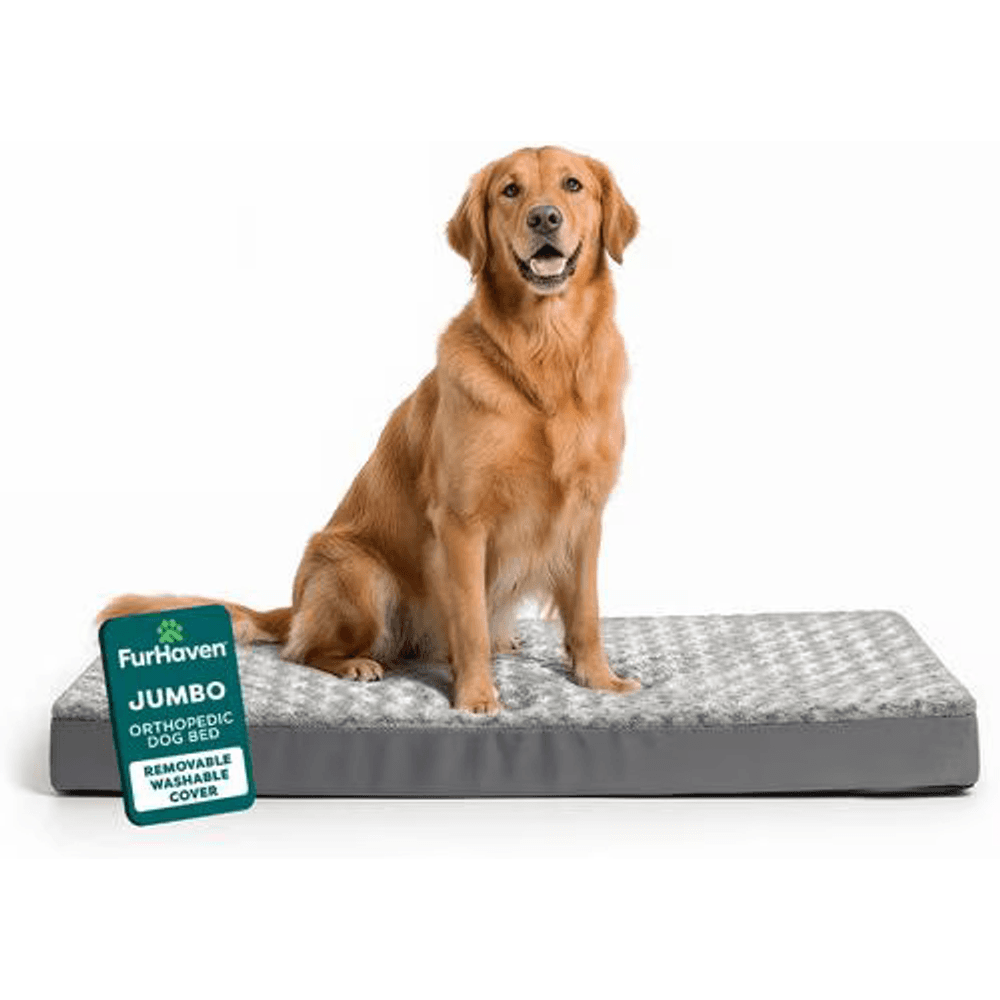
A plush orthopedic foam mattress that cushions aging joints and pressure points, giving a stiff or trembling senior dog warm, supportive rest.
Petful may earn a commission when you click through to Chewy, at no extra cost to you.
Length and sleeping space
For equipment, follow the manufacturer's specific measuring instructions. “Body length” can mean different start and end points, so a neck-to-tail-base measurement cannot automatically be substituted for a nose-to-tail-base requirement. Write down both the number and exactly where you measured.
For a bed, observe how the dog normally sleeps. Measure the area occupied when it lies on its side or stretches out, not only the small circle it makes when curled tightly. Compare that with the usable sleeping surface; bolsters can take away space from the advertised outside dimensions.
The FurHaven NAP Orthopedic Bed in Jumbo is a flat-bed option to compare with those measurements. Check the actual model and size offered, and leave enough surrounding floor space for the dog to approach and stand without being wedged between furniture.
Body condition is a separate check
Body condition describes fat stores rather than skeletal size. The WSAVA nutrition toolkit distinguishes body condition from muscle condition. Both can matter when interpreting a dog's weight, especially when a thick coat makes the outline difficult to see.
The WSAVA dog body-condition chart uses the ribs, waist, and abdominal tuck among its landmarks. Ask your veterinary team to show you how to assess your own dog. A visual guess from a photograph is less useful than learning the hands-on assessment and recording the clinician's findings.
- Record the score and the scale used, such as a nine-point scale.
- Note whether the score came from your vet or your own home check.
- Do not treat a change in fluffy coat as proof of a change in body fat.
- Ask for a feeding review if you are unsure; avoid making large changes from a single home score.
How fast do Bernese Mountain Dog puppies grow?
Bernese puppies change markedly during their first year, but there is no single healthy number of pounds they must gain every week. Height, body proportions, and weight do not necessarily change in lockstep. An awkward, leggy stage is different from a diagnosis of abnormal growth, and a heavy puppy is not automatically a better-grown puppy.
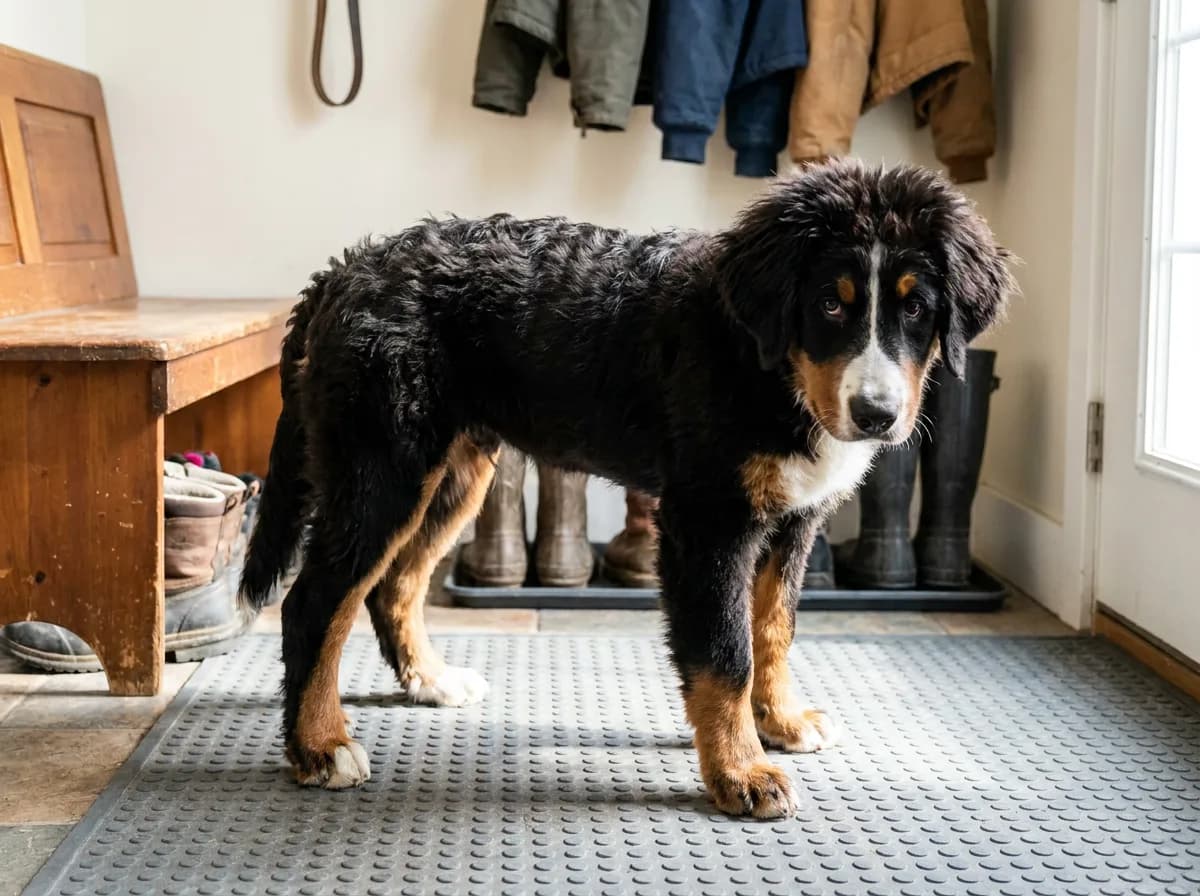
Use the puppy's own record and veterinary assessment to interpret the trend. The BMDCA information series provides puppy-care resources, while your veterinary team can assess how growth relates to body condition, food, and health. A generic internet chart rarely tells you whether its numbers came from a validated population or a collection of anecdotes.
Keep the main developmental questions separate:
- Growing taller: Are consistent shoulder measurements still changing?
- Changing build: Does the puppy look different while maintaining an appropriate body condition?
- Gaining weight: Is the trend expected for this puppy, or does the veterinary team want a closer check?
- Activity readiness: What activities are suitable for the puppy's current development and health?
A dog may look close to adult height while still developing. Do not use appearance alone as clearance for repetitive jumping, forced distance running, or weight-pulling work. Ask your vet about the specific activity you intend to introduce rather than applying a universal exercise formula.

Petful may earn a commission when you click through to Chewy, at no extra cost to you.
Nutrition should support growth, not speed it up. The AAHA life-stage nutrition guidance emphasizes appropriate growth diets, lean condition, and avoiding excess calcium for large and giant puppies. Do not add supplements or extra meals simply because another puppy weighs more.
Keep practical changes on your calendar as the puppy grows:
- Recheck collar and harness fit instead of leaving the original adjustment unchanged.
- Reassess safe barriers and access to counters or tables.
- Arrange a safe weighing method before lifting becomes difficult.
- Review sleeping and travel space before the puppy has visibly outgrown it.
For comfortable footing, keep routine nail care on the list too. A PATPET Steel Grit Nail Grinder is an option for dogs accustomed to it, with gradual introduction and careful handling. It is not a way to correct a gait problem, and a struggling or sore puppy needs a different approach rather than firmer restraint.
A growth log that avoids misleading monthly targets
A useful Bernese Mountain Dog growth chart is first a record of your own dog. Write down the date, measurement method, body condition, and veterinary notes alongside the weight. The blank log below is a place to collect observations, not a set of expected monthly weights.
| Date and age | Weight and scale used | Shoulder height and method | Body condition and assessor | Vet notes or next action |
|---|---|---|---|---|
| Your first entry | Record value and unit | Record value and unit | Record score and scale | Record advice |
| Your next entry | Record value and unit | Use the same method | Identify who assessed it | Note any planned recheck |
| Equipment review | Dog's current measurements | Usable internal dimensions | Manufacturer capacity and fit guidance | Record what needs changing |
Keep units consistent. To convert pounds to kilograms, multiply by about 0.454; to convert inches to centimeters, multiply by 2.54. Converting the units does not make a rough measurement more precise, so round sensibly and keep the original measurement in the record.
For example, if one clinic records kilograms and your home notes use pounds, label each entry before comparing them. A sudden apparent jump caused by mixing units is a recordkeeping problem, not a growth spurt. If different scales were used, note that too rather than assuming every small difference reflects the dog.
Use photographs as an additional record:
- Photograph the dog naturally from the side on a level surface.
- Keep a similar camera distance and position each time.
- Avoid wide-angle close-ups that exaggerate the nearest part of the body.
- Label the image with the date, rather than guessing the puppy's age later.
Photos help explain what you noticed, but they cannot replace an examination or establish exact weight. A Berner's long coat, stance, and camera perspective can conceal important details. Bring both the log and relevant photographs when discussing a concern.
Keep the log manageable enough to maintain. Ask your veterinary team how often weighing is useful for your puppy instead of repeatedly checking throughout the day. The purpose is to notice a meaningful trend, not to turn healthy growth into a competition with another dog.
Bring unanswered questions into the notes column instead of converting them into conclusions. For example, “Would not stand still on the scale” is more informative than quietly treating an uncertain reading as exact. “Harness tightened at the chest this week” records an equipment change without pretending to measure growth. “Vet advised keeping the current portions” preserves the actual instruction for other caregivers.
Petful may earn a commission when you click through to Chewy, at no extra cost to you.
Crates, beds, cars, and home access
Start with your dog's measurements and the equipment's actual internal dimensions. Manufacturer size labels are not standardized across products. A crate that fits on paper can still be awkward if the doorway is restrictive, the dog cannot turn comfortably, or the chosen position prevents its door from opening fully.
For crates and indoor resting space, check the whole setup:
- The dog can stand in a normal posture, turn, and lie comfortably.
- Bedding does not reduce the usable height more than you expected.
- Door openings and latches can be used without trapping the dog or handler.
- The location has ventilation and stays clear of heat sources.
- The dog is introduced to the space gradually rather than forced into it.
A puppy crate with a suitable divider may allow adjustment as the dog grows, but confirm that the specific model includes or supports one. Do not assume an adult crate will be appropriate for air travel or vehicle restraint. Those uses have their own requirements, which a household crate label does not establish.
A simple buying example
Suppose your dog occupies about 44 by 30 inches while comfortably stretched out. An illustrative bolster bed advertised as 48 by 36 inches could still provide only 40 by 28 inches inside the bolsters. Its outside measurements look generous, but its sleeping area is smaller than the space you observed the dog using. These example dimensions describe a comparison method, not a particular product.
Compare a second bed by the same measure. If its usable surface is larger, check the remaining conditions before deciding: the recommended dog weight, the height the dog must step over, whether it stays in place, and how the cover is cleaned. The larger printed size is only useful if the whole setup works.
- Ask the retailer or manufacturer whether dimensions are outside or usable measurements.
- Confirm which size variant is selected before placing the order.
- Check whether the return policy permits a fit check and what condition the item must remain in.
- Keep packaging until you have confirmed that the intended location and access work.
Apply the same distinction to crates: outside width may tell you whether a crate fits between pieces of furniture, while usable width tells you about the dog's space. Also measure the open door's swing. A crate can fit into a recess but leave no practical way for the dog to enter once its door opens.
Plan the journey, not just the parking space
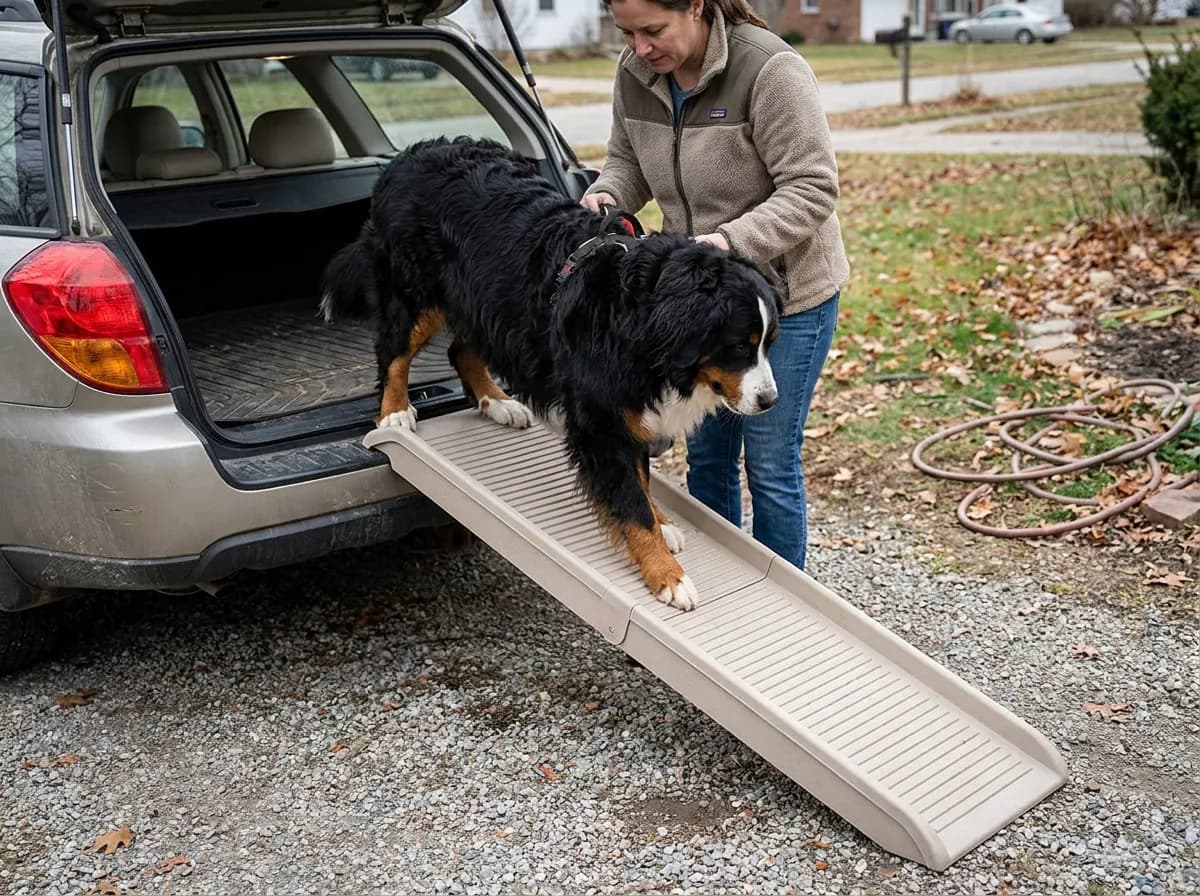
Measure the vehicle opening and the usable area with the seats in their normal travel positions. A large cargo area does not help if the dog cannot enter comfortably, and folding all the seats down may not work when the family travels together. Consider the restraint setup and the dog's space at the same time.
For ramps, follow the manufacturer's weight capacity and compatibility instructions. Check the surface, width, stability, and the angle at which it would meet your vehicle. A steep or moving ramp may be intimidating even when its weight rating is adequate. Practice calmly while stationary, with assistance suited to the dog.
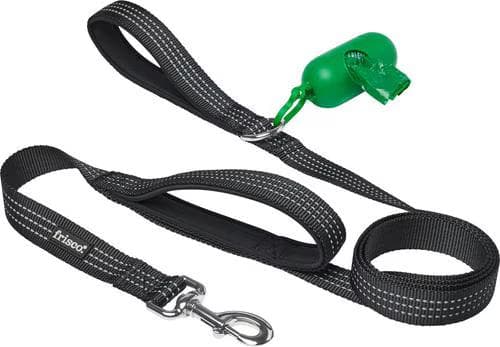
For ordinary lead handling, the Frisco six-foot Traffic Leash with Dual Padded Handles provides a second handhold near the dog. Check that the clip suits the collar or harness attachment. It does not replace loose-leash training, and it should never be used to haul a heavy dog into a car.
Test the home at adult scale
Use towels to mark a realistic sleeping area, then walk your normal route through the room. Check what happens when a door opens or someone carries laundry past the space. A bed that fits only when the dog curls into a small ball is not a useful measure of the room available.
Think ahead to reduced mobility without assuming it will happen at a particular age:
- Can the dog reach a toilet area without unavoidable difficult steps?
- Can gates be opened without backing the dog into a tight corner?
- Is there a place to groom or dry the dog with secure footing?
- Who could help if the dog temporarily could not climb into the car?
For a household with a strict apartment or transport size limit, obtain the actual policy before choosing a puppy. An expected adult range is not a guarantee that the dog will stay below that limit. A documented adult size can make planning clearer when there is little flexibility.
When growth or weight needs a veterinary check
Contact your veterinary team about an unexpected change in weight, persistent lameness, reluctance to move, poor appetite, or a puppy that seems unwell. A chart cannot decide whether these changes are normal. Explain what changed and how quickly, rather than reporting only that the dog is “too small” or “too big.”
- Bring the growth record, exact food and portions, and any changes in movement or appetite to your veterinary team. Do not force weight gain, restrict a growing puppy, or add supplements solely to match an online breed chart.
Before the appointment, gather the information that can resolve simple uncertainties:
- The dog's known age and previous recorded weights.
- The scale and units used for the measurement that concerned you.
- The food's full name, daily portion, treats, and supplements.
- Recent illness, appetite changes, or changes in activity.
- Any repeated difficulty rising, walking, or managing usual surfaces.
If the dog is growing normally but equipment is becoming restrictive, the immediate task may be replacing or adjusting that equipment. If body condition is changing, the feeding plan may need review. If the dog is painful or unwell, measurement is secondary to getting appropriate care. Keeping those questions separate prevents an equipment problem from becoming an unnecessary diet change.
Temperament and household fit matter too
A Bernese can be an affectionate family companion, but size is only part of the decision. Barking, comfort with visitors, supervision around children, training, and time alone affect how the dog fits into a home. A calm breed description does not guarantee an easy adolescent or eliminate the need for everyday teaching.
Our Bernese Mountain Dog breed profile explains those broader tradeoffs. Use the size measurements here to plan the physical setup, then assess whether you can provide the routine and handling the individual dog needs.
Bernese Mountain Dog size FAQs
No. One early measurement cannot settle adult size. Growth history, the parents, health, and individual variation all matter. Treat a breeder's estimate as an estimate and avoid feeding extra simply to preserve a puppy's place as the largest in the litter.
Choose from the specific dimensions, capacity, and intended use. Labels differ between manufacturers and products. If a measurement falls at a limit, ask the manufacturer about fit and check the return policy rather than assuming the next label will solve every problem.
A puppy will quickly outgrow the capacity or safe platform of many kitchen scales. Do not balance a moving dog on an unstable surface or lift beyond your own ability. Ask your clinic about access to a veterinary scale and arrange a safe method you can repeat.

Coreen Saito is a pet writer and longtime shelter volunteer with more than a decade in animal rescue. She covers cat behavior, breed care, and the small, ordinary science of sharing a life with companion animals, with a particular focus on honest takes about the products and decisions that actually matter. At home in Arizona, she's outranked by Mac (a dog with the loudest opinion in the house), Rebel (a cat who governs by quiet authority), and Meri (an orange tabby who runs the late shift and the laundry basket). She writes about all three, plus the rescues that keep coming through her life, at LifeWithMinty.com.
Sign up for expert-backed reviews and safety alerts all in one place.