Bernese Mountain Dog Lifespan: Evidence and Care
Bernese Mountain Dogs are often described as living seven to ten years. Learn what that range means, how to interpret mortality research, and how to plan practical care for your own dog.

BVMS, MRCVS
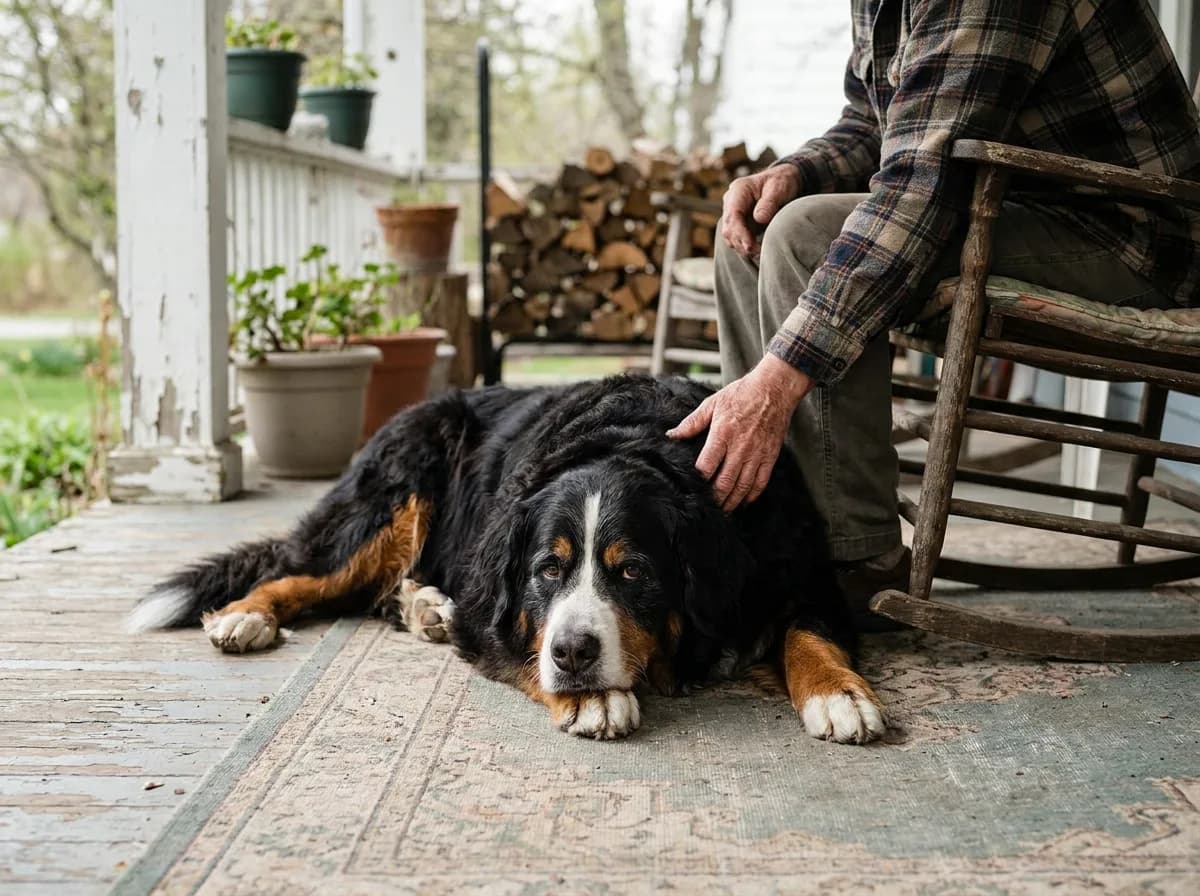
Gray-muzzled Bernese Mountain Dog resting beside an owner on a covered porch.
Petful is reader supported. As an affiliate of platforms like Amazon and Chewy, we may earn a commission when you buy through links on this page. There is no extra cost to you.
The commonly cited Bernese Mountain Dog lifespan is seven to ten years. That range is useful when considering the breed, but it is not a countdown for your dog. An individual Berner's outlook depends on its current health and circumstances, not simply where its birthday falls within a breed average.
Cancer is an important concern in this breed. Understanding what the research measured helps you plan care without assuming that illness is inevitable, blaming yourself for a diagnosis, or buying products that promise extra years without evidence.

Sign up for expert-backed reviews and safety alerts all in one place.
How long do Bernese Mountain Dogs live?
Seven to ten years is the range given in the AKC's Berner ownership overview. Some dogs die younger and others live beyond it. “Average lifespan” is often used loosely online, even when a source actually reports a median or a broad breed description.
- 1Bernese Mountain Dog lifespan is commonly described as seven to ten years.
- 2A population estimate cannot predict an individual dog's remaining time.
- 3Cancer deserves informed discussion, not an assumption that every symptom is cancer.
- 4Care decisions should follow health, comfort, and function rather than a birthday alone.
The Bernese is sometimes called a “heartbreak breed” because owners can form a close bond and face a comparatively short time together. That informal nickname is not a medical category. It should prompt thoughtful preparation, not the belief that enjoying an older dog means waiting for an inevitable crisis.
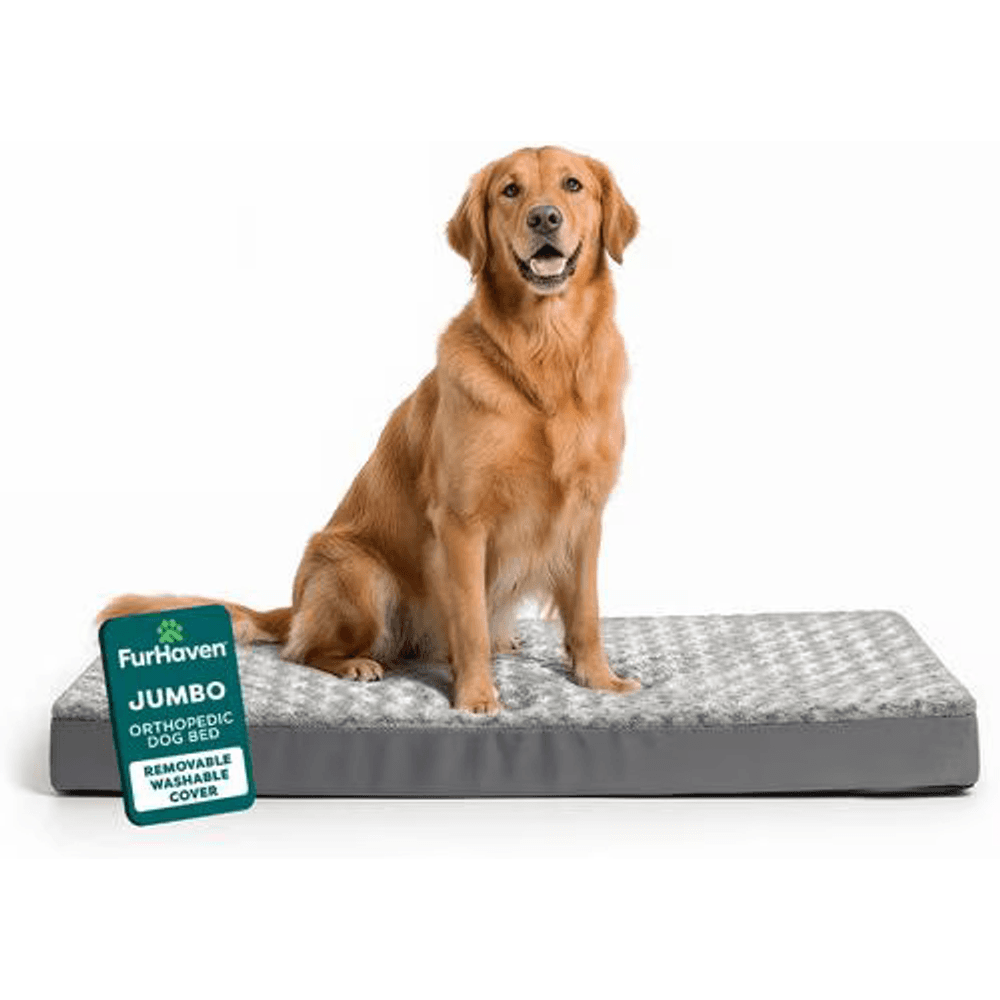
A plush orthopedic foam mattress that cushions aging joints and pressure points, giving a stiff or trembling senior dog warm, supportive rest.
Petful may earn a commission when you click through to Chewy, at no extra cost to you.
For a prospective owner, consider two separate questions: can you accept uncertainty about lifespan, and can you provide care if substantial needs arise? For someone already living with a Berner, start with what your dog is doing now. Appetite, mobility, sleep, and enjoyment offer more useful information for today's care than a number on a breed page.
 Sponsored
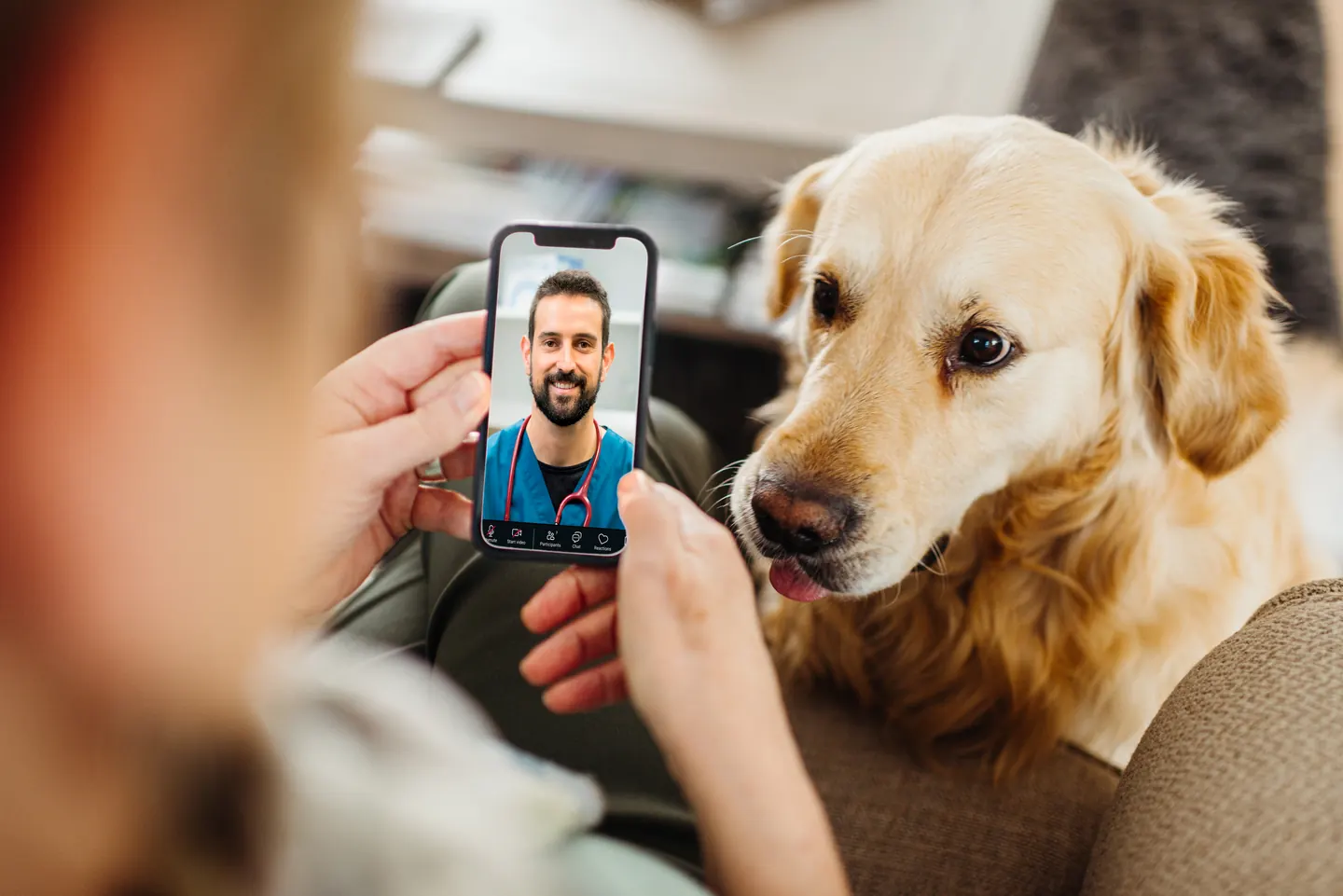
Have a health question about your pet?
Talk to a licensed vet at Dutch over video or message, including nights and weekends.
Use code Pets30
Plans start at $11/month · covers up to 5 pets
- Licensed vets in most states
- Rx for 150+ conditions
- 4.7 on Trustpilot
Is 7 old for a Bernese Mountain Dog?
Seven is a sensible age to have a senior-care discussion for a Berner, even if the dog is still enthusiastic and active. It does not mean the dog is terminally ill or should stop enjoying walks. Ask the veterinary team which examination and monitoring schedule fits the dog's history; AAHA recommends more frequent examinations for senior pets.
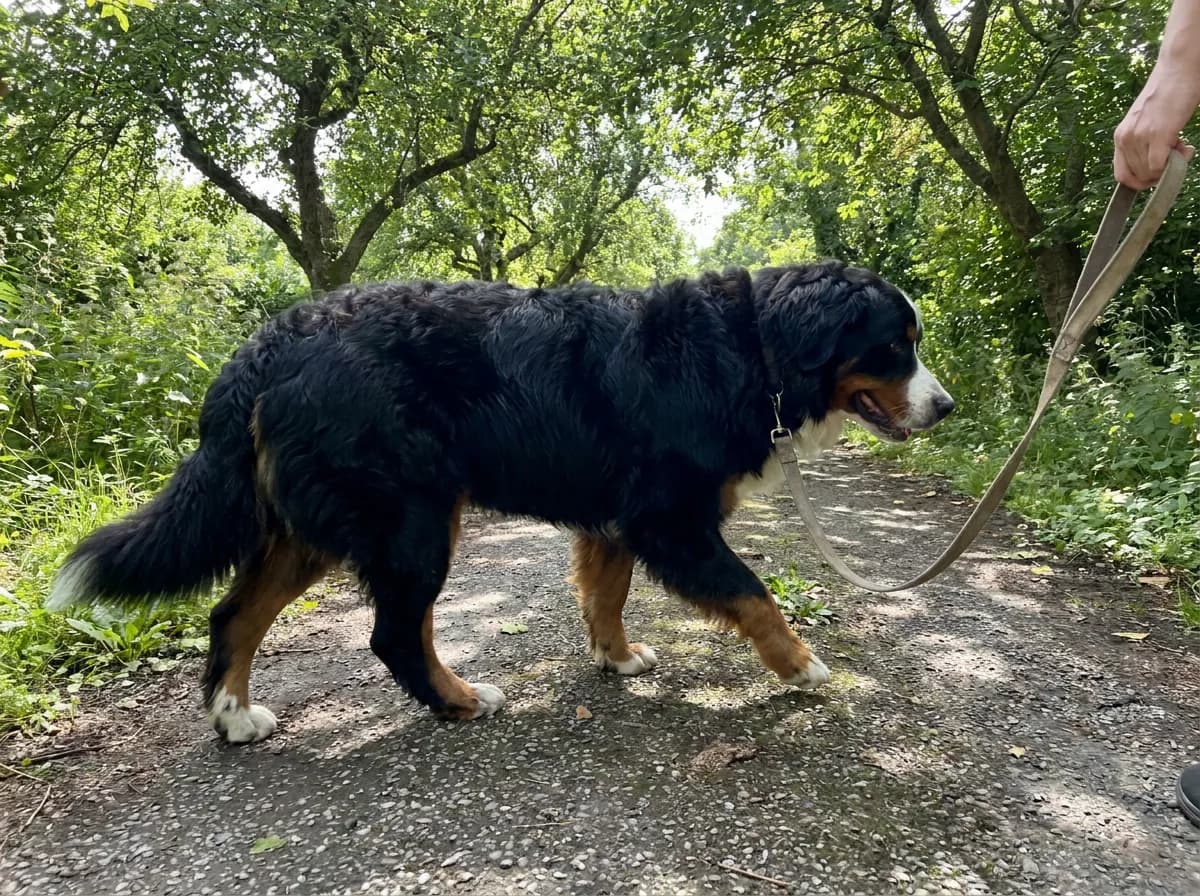
Compare your dog with its own recent behavior. Needing repeated attempts to rise, avoiding a favorite route, or struggling on a familiar surface is worth reporting. “Still wants to go out” does not tell you whether the outing has become uncomfortable. Conversely, a slower pace alone cannot identify the cause.
Make the home easier to use while arranging assessment:
- Keep frequently used routes clear and provide secure footing.
- Put a resting place where the dog can approach and leave easily.
- Avoid making access to water or company depend on climbing stairs.
- Ask how to assist with car entry before a journey becomes difficult.
The FurHaven NAP Orthopedic Bed in Jumbo is one low bed to compare with your dog's sleeping measurements. Check usable length and width rather than relying on “Jumbo.” A bed may improve the resting setup; it does not diagnose or treat the cause of difficulty moving.
What the Bernese lifespan studies actually measured
A Swiss study published in 2016 followed Berners born in 2001–2002. Data covered 389 of 1,290 eligible dogs, or 30.2%; 381 had died. Median survival was 8.4 years. Cancer, recorded as neoplasia, was the leading reported cause of death: 222 of 381 deaths, or 58.3%. Causes were unknown for 89 deaths, and many cancer diagnoses lacked tissue or cell confirmation.
Those denominators matter. This was a historical Swiss population with incomplete participation, not a prediction that any U.S. puppy has a 58.3% chance of dying from cancer. Female median survival was 8.8 years and male survival 7.7 years in this cohort; that group difference does not establish which individual puppy will live longer.
| Evidence issue | What it means for your decision | Question to ask |
|---|---|---|
| Median | A population midpoint is not an individual expiry date | What does my dog's current health tell us? |
| Historical Swiss cohort | Birth period and population may differ from your dog | Which findings are relevant to this dog's history? |
| Incomplete participation | Responding owners may not represent every eligible dog | What other evidence informs your advice? |
| Unknown or unconfirmed causes | Cause-of-death categories contain uncertainty | What testing would clarify a suspected diagnosis? |
When reading another estimate, check what it actually describes before comparing numbers:
- Is it age at death, survival from birth, or survival after a diagnosis?
- Does it cover one breed, a crossbreed, or all dogs of a similar size?
- Were owners surveyed, veterinary records examined, or insured dogs followed?
- Does “average” mean an arithmetic mean, a median, or an unsourced range?
These distinctions do not make research useless. They prevent a useful finding from becoming a stronger claim than the data supports. A study can identify a serious breed problem without telling an owner how many birthdays a currently healthy dog has left.

VOHC-accepted 4.2-ounce pet toothpaste paired with a dual-ended toothbrush.
Petful may earn a commission when you click through to Chewy, at no extra cost to you.
Why is the Bernese Mountain Dog lifespan relatively short?
The breed's cancer burden is an important part of the explanation for the relatively short Bernese Mountain Dog lifespan. Histiocytic sarcoma is a particular concern, while joint, neurological, and other diseases can also affect health and function. There is no sound basis for explaining every shortened life with one cause or one owner decision.
The BMDCA's health-testing information describes histiocytic sarcoma risk testing as information for breeding decisions. A risk result is not a diagnosis, and a favorable result cannot certify that a dog will never develop cancer. Likewise, a breeder saying a line is “healthy” is not equivalent to supplying identifiable records.
Keep the response proportional to the information you have:
- A breed-level concern: Discuss appropriate monitoring and family history with your veterinarian.
- A new symptom: Arrange assessment instead of diagnosing it from the breed's reputation.
- A confirmed illness: Ask about the specific diagnosis, available options, likely benefits, and treatment burden.
It is understandable to look back for a preventable mistake after a diagnosis. Risk factors and inherited susceptibility are not proof that an owner caused the illness. Focus the conversation on what can help the dog now and on the choices supported by its actual condition.
What you can influence, and what you cannot
You can influence the consistency of care, the home environment, and how promptly changes are assessed. You cannot choose a guaranteed lifespan through food, a supplement, or a particular exercise routine. Useful preventive care deserves attention because it supports health and comfort, even when a precise survival benefit cannot be promised for a Berner.
Ask your veterinary team to review body condition, muscle condition, food intake, dental health, and the activity plan. AAHA's senior nutrition guidance emphasizes assessment of both muscle and body condition. A dog can lose muscle without an obvious change on a household scale, so weight alone is not the whole picture.

Petful may earn a commission when you click through to Chewy, at no extra cost to you.
For routine oral care, the Petsmile Rotisserie Chicken Toothpaste and Toothbrush bundle is a dog-specific option to discuss with your veterinary team. Use gradual introduction and a comfortable position. Stop and seek advice if the mouth appears painful; home brushing cannot resolve every dental problem.
- Keep a current list of medications, supplements, food, and allergies or previous reactions.
- Put the clinic and emergency contact details somewhere accessible.
- Record when a change began and whether it occurs at rest, on walks, or during handling.
- Ask which changes warrant a same-day call and which can be reviewed at a scheduled visit.
For nail maintenance, a PATPET Steel Grit Nail Grinder may suit a dog already comfortable with that method. Noise, vibration, and paw handling can be unwelcome, so introduce it gradually and use professional help when needed. Do not force a sore or frightened dog through grooming.
 Sponsored
Vet care that's always there
Unlimited video calls and messaging with licensed vets for less than a typical vet visit. One membership covers up to five pets.
Use code Pets30
Plans start at $11/month · covers up to 5 pets
- Licensed vets in most states
- Rx for 150+ conditions
- 4.7 on Trustpilot
Health screening before choosing a puppy
Ask the breeder for the parents' registered identities, screening results, and a discussion of relatives' health and longevity. The BMDCA recommended-testing page is a starting point for that conversation. Berner-Garde is another resource for recorded breed health and pedigree information; ask the breeder to show you the relevant entries rather than mentioning the database as a badge of quality.
For each record, make sure you understand:
- Which dog was tested and whether that identity matches the puppy's parent.
- What condition or risk the test evaluates.
- Whether the result is a finding, a risk estimate, or simply evidence that testing was done.
- What remains unknown after the test.
Avoid treating one long-lived grandparent as a guarantee. Ask about the broader family, including relatives that died young and any unknown causes. A thoughtful breeder should be willing to discuss unfavorable information as well as good news.
Pay attention to the difference between a relative that is still alive and one whose complete lifespan is known. A healthy three-year-old parent cannot yet demonstrate old-age longevity. If a cause of death is unknown, leave it unknown rather than relabeling it as old age. Keep a copy of the information you receive so your veterinarian can interpret it alongside the puppy's own records.
Lifespan claims for a “mini Bernese,” Great Bernese, or Labernese need the same scrutiny. Those labels do not define one standardized population with an established survival estimate. Crossing breeds does not justify promising that a puppy will escape inherited disease or reach a particular age. Evaluate the actual parents and the evidence behind the claim.
A senior-care and quality-of-life plan
Build the plan around what matters to your dog. Choose a few familiar activities, such as a comfortable toilet walk, greeting a household member, eating a meal, and settling to sleep. Note changes in how easily the dog does them and discuss persistent difficulties with the veterinary team.
Petful may earn a commission when you click through to Chewy, at no extra cost to you.
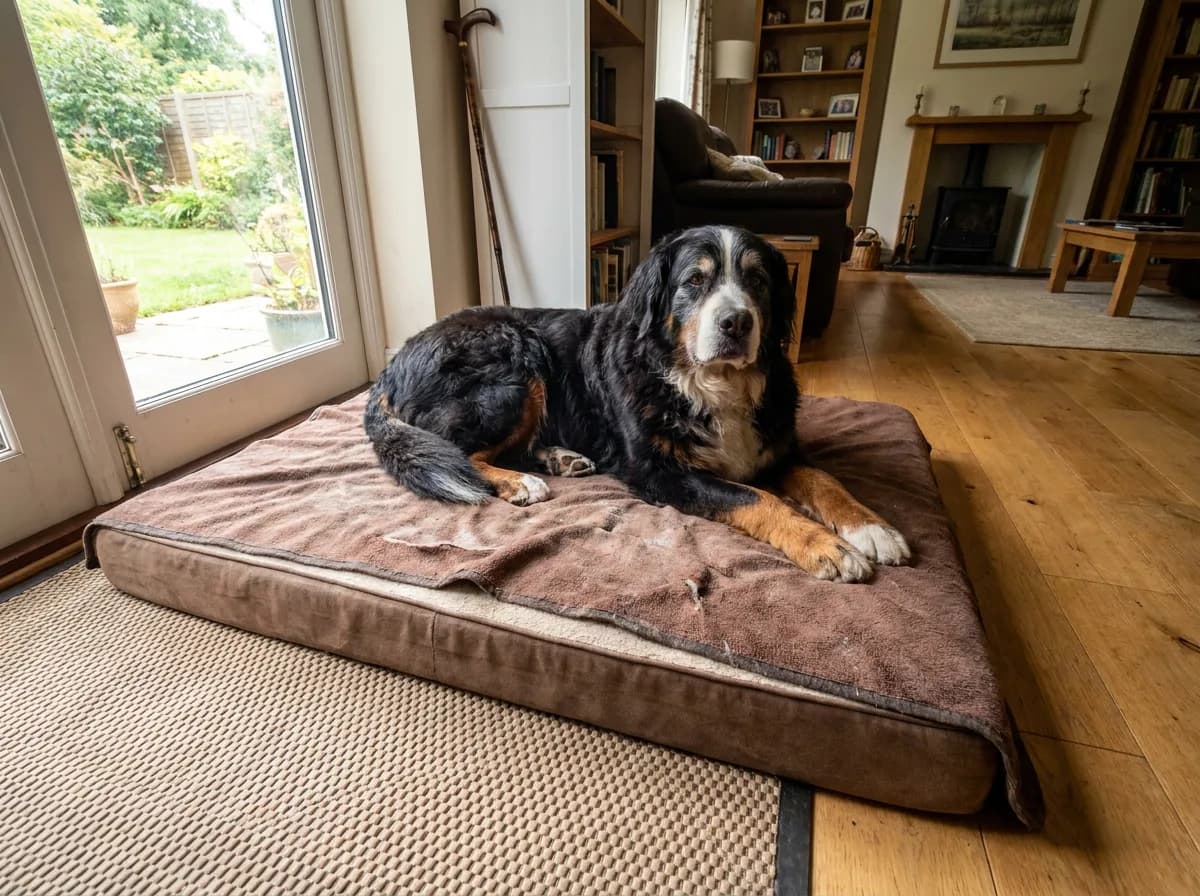
- Record what changed, when it started, and what your dog can still enjoy. A brief video of a recurring movement problem can help describe it, but do not provoke pain or delay urgent care to obtain footage.
For walks, consider the route as well as the distance. A level path with a nearby exit may be easier to adapt than an outing with steep steps or no place to turn back. Let the veterinary assessment guide changes in activity when pain, weakness, or breathlessness is present.
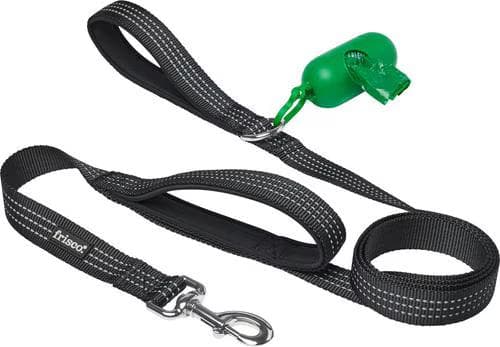
The Frisco six-foot Traffic Leash with Dual Padded Handles is one ordinary walking option. Keep the lead slack when safe and avoid pulling a reluctant dog onward. An extra handle is not a lifting aid or a substitute for assessing why a dog is struggling.
Use a short daily note rather than relying on memory at the next appointment:
- Comfort: Was resting easy, or did the dog repeatedly change position?
- Mobility: Could it rise, walk to the toilet area, and return without an unusual struggle?
- Appetite: What was offered, and approximately how much was eaten?
- Engagement: Which familiar interactions or activities did it choose?
- Care burden: Could the household provide the assistance the dog needed safely?
This record is a discussion aid, not a validated scoring instrument or a replacement for assessment. Do not average away a serious episode because the rest of the day looked better. Trouble breathing, collapse, or severe distress warrants urgent veterinary help.
For mobility changes, WebVet's senior dog joint-pain guide explains signs and veterinary approaches. Ask what improvement should look like, when to reassess, and whom to call if the plan is not working. Comfort care can be an active plan with clear goals, rather than simply waiting.
When a diagnosis changes the plan, ask for an explanation you can use at home:
- The goal: Is the proposed treatment intended to relieve symptoms, slow disease, establish a diagnosis, or accomplish something else?
- The experience: What appointments, procedures, travel, or daily handling would the dog face?
- The checkpoint: How and when will you judge whether the expected benefit is happening?
- The alternatives: What would supportive care involve, and what happens if you choose not to pursue a particular test or treatment?
- The safety net: Which signs mean you should call immediately instead of waiting for the next appointment?
Ask for the plan in writing if several people share care. Assign one person to maintain the medication record and agree on how completed doses will be marked. This prevents a well-meaning helper from repeating a dose or assuming someone else gave it. If a dose is missed or duplicated, call the clinic for advice rather than improvising a correction.
Consider your own physical limits as part of the discussion. Supporting a large dog safely may require equipment, training, another person, or a different home arrangement. Describe the actual doorway, steps, car, and toilet area to the veterinary team. Asking for a workable plan is more useful than agreeing to assistance that no one in the household can reliably provide.
What is the longest a Bernese Mountain Dog has lived?
The sources reviewed here do not establish a verified worldwide longevity record. The BMDCA's 2025 Senior Gallery includes an owner tribute describing a Berner aged 13.5 years. Such accounts demonstrate that some individuals exceed the usual range, but a tribute is not an independently audited world record.
Check an exceptional-age claim for an identifiable dog, consistent birth records, and an explanation of how its age was verified. A social post or repeated website claim may lack those details. Even a fully documented long life would describe one dog, not a result that a breeder or product could promise.
It is reasonable to enjoy stories about older Berners while planning for a range of outcomes. Avoid making the oldest dog you can find the benchmark against which you judge your own care or another owner's loss.
Breed fit beyond lifespan
Longevity is only part of choosing a Bernese Mountain Dog. Many enjoy close contact with their families, but a preference for cuddling varies by dog and situation. Sex alone does not identify the better companion, and the male and female group differences in one survival study should not become a puppy-selection rule.
Noise, handling, coat care, time alone, and the logistics of a large adult also matter. Our Bernese Mountain Dog breed profile covers temperament, barking, household fit, and everyday care so you can weigh the whole commitment.
Bernese Mountain Dog lifespan FAQs
No. Decisions about euthanasia depend on suffering, comfort, quality of life, and what care can realistically achieve. A breed lifespan figure is not a reason by itself. Discuss concerns with the veterinarian caring for your dog, including signs that the current plan needs to change.
No supplement can guarantee that outcome. Ask for evidence that matches the claimed benefit and population, then discuss suitability and interactions with your veterinarian. Evidence for a specific nutritional or symptom benefit does not automatically establish longer survival.
No. Contact your veterinarian about unexplained weight loss rather than assuming it is normal aging. Bring recent weights if available, the food and portion information, and any changes in appetite, thirst, stools, activity, or medication. The clinic can advise how soon the dog should be examined.
BVMS, MRCVS
Dr. Pippa Elliott, BVMS, MRCVS, is a veterinarian with nearly 30 years of experience in companion animal practice. Dr. Elliott earned her Bachelor of Veterinary Medicine and Surgery from the University of Glasgow. She was also designated a Member of the Royal College of Veterinary Surgeons. Married with 2 grown-up kids, Dr. Elliott has a naughty Puggle named Poggle, 3 cats and a bearded dragon.
Sign up for expert-backed reviews and safety alerts all in one place.