Sokoke Cat: Appearance, Personality, and Breed Identification
Learn what makes the Sokoke distinctive, how to assess a breed claim and how to prepare an engaging home with climbing, play and routine care for an active domestic cat.

BVMS, MRCVS
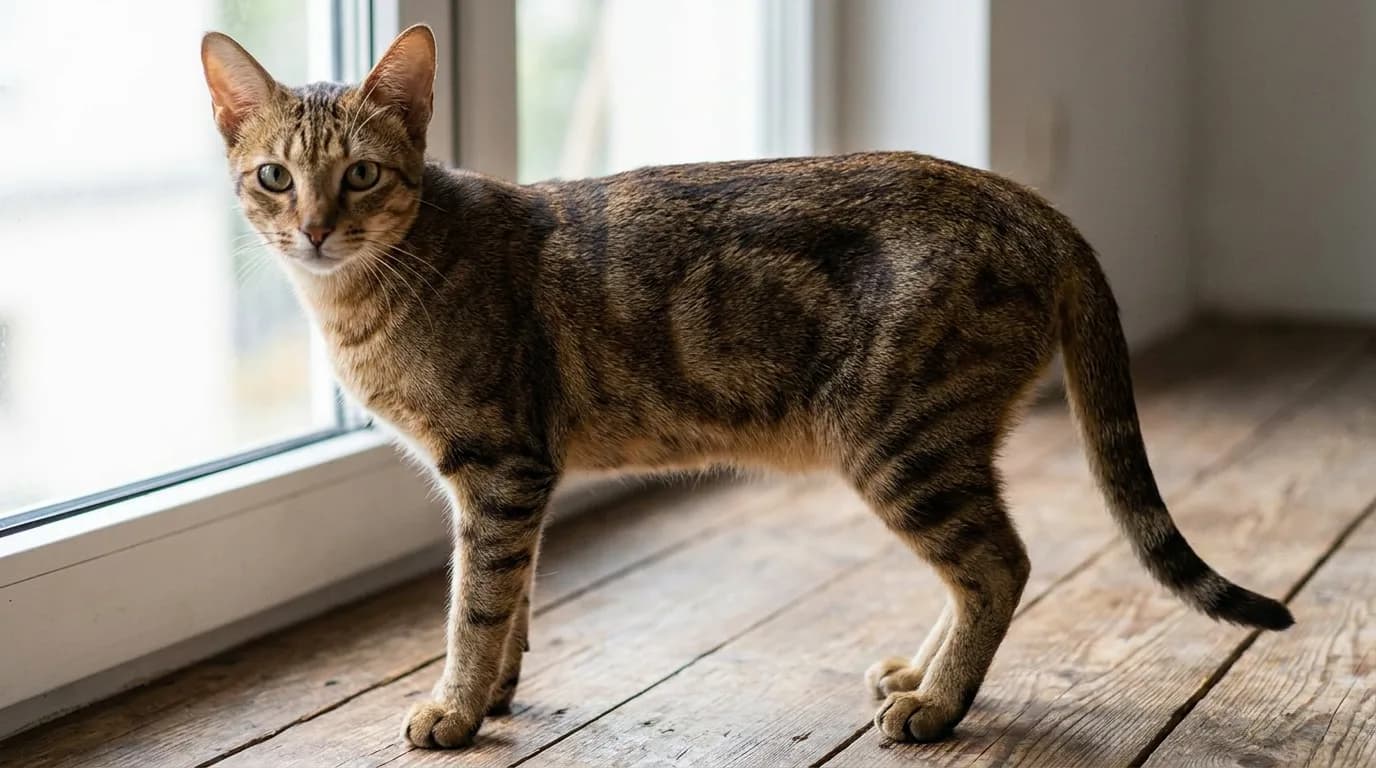
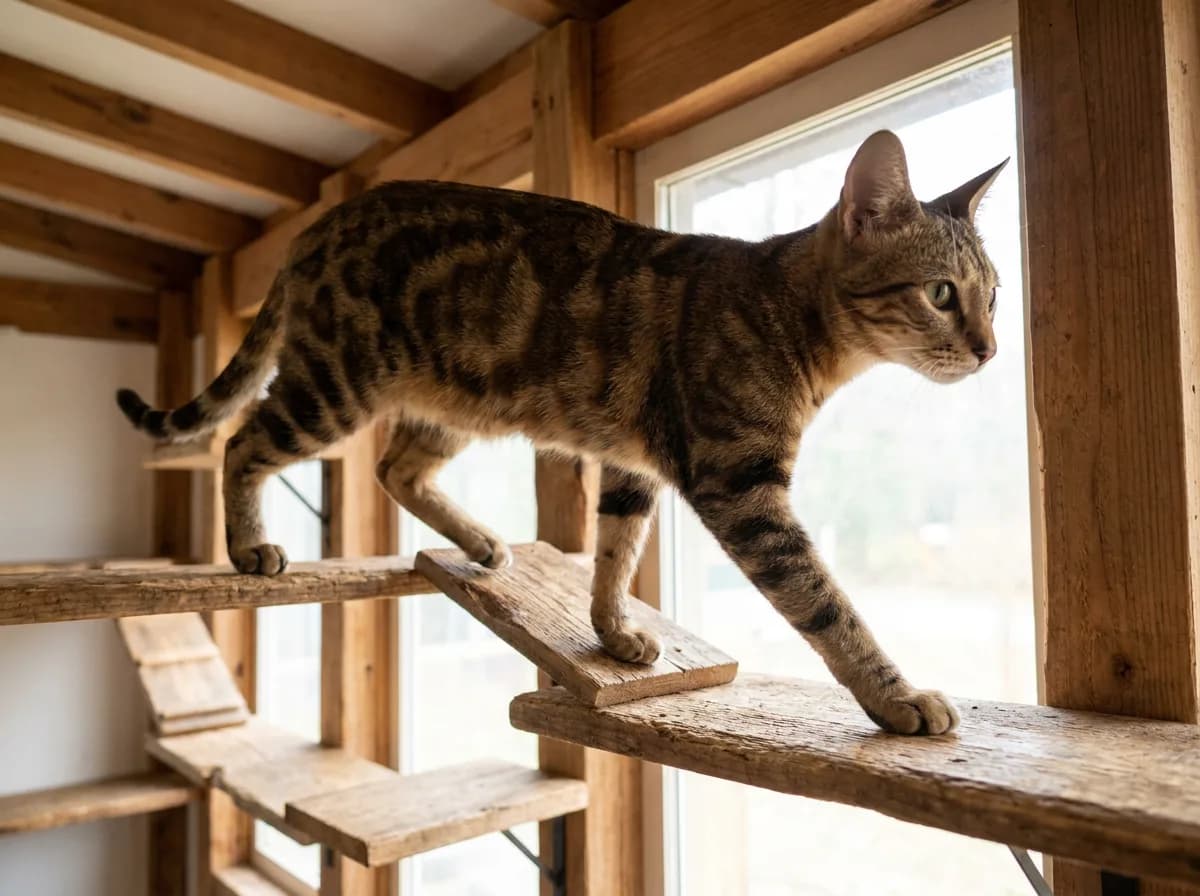
Lean Sokoke standing indoors with broad ticked tabby markings.
Petful is reader supported. As an affiliate of platforms like Amazon and Chewy, we may earn a commission when you buy through links on this page. There is no extra cost to you.
The Sokoke cat is a lean, shorthaired breed with roots in coastal Kenya and a distinctive ticked tabby pattern. Its long-legged outline and intricate markings attract attention, but its appeal as a companion also includes play, exploration and close involvement in household life.
If you are wondering whether your own tabby is a Sokoke, start with what you can observe and what records exist. If you are considering a documented Sokoke, look beyond its rarity to the daily routine you can provide. Those are different decisions, and both benefit from a clear picture of the breed.

Sign up for expert-backed reviews and safety alerts all in one place.
How can you tell if your cat is a Sokoke?
- 1Sokokes have a distinctive ticked tabby pattern, but a similar-looking coat does not prove ancestry.
- 2Documented parentage and registration provide stronger breed evidence than photographs.
- 3Plan for climbing, interactive play and companionship when assessing household fit.
Look for a combination of features rather than a single unusual marking: a lean body, long legs, a short close coat and modified classic tabby markings with ticking. The Governing Council of the Cat Fancy’s Sokoke profile describes these features. Many domestic cats share some of them, so even a close visual resemblance remains an observation rather than proof of Sokoke ancestry.
| Feature | What the GCCF profile describes | How to use the observation |
|---|---|---|
| Tabby markings | Modified classic tabby markings softened by ticking | Look within the patterned areas, not only at the overall stripes |
| Coat | Very short, close-lying coat with little or no undercoat | Compare texture and length alongside pattern |
| Body and legs | Lean, muscular body and long, slender legs | Consider the whole outline instead of a cropped coat photograph |
| Evidence limit | Similar traits can occur in domestic cats | Resemblance is not documented parentage or registration |
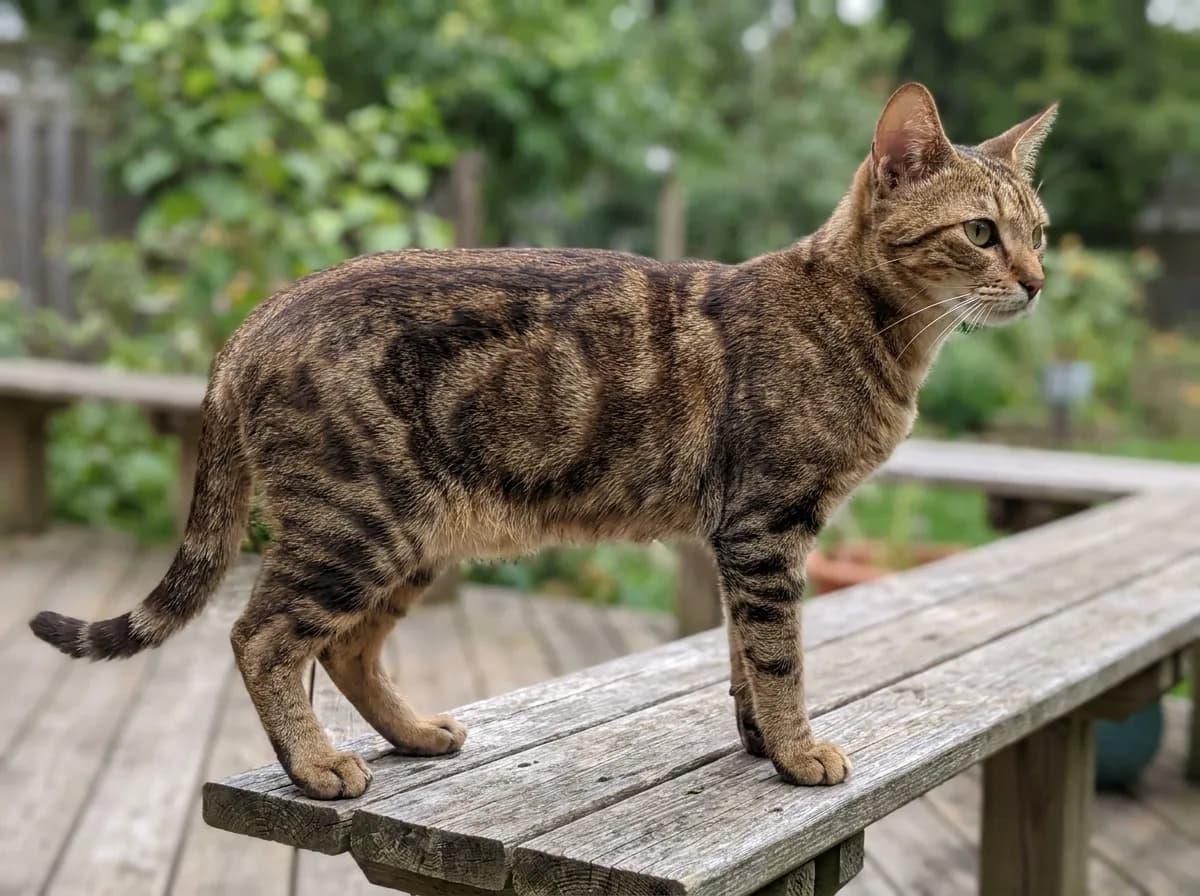
Ticking means bands of color along individual hairs. In the Sokoke description, it also softens the patterned areas, producing a less solid-looking tabby design. That is more specific than a forehead marking shared by many tabbies. Check several features together, then use the records test below rather than treating any one marking as a breed certificate.
| Evidence | What you can reasonably conclude | Next step |
|---|---|---|
| A striking tabby pattern | The cat has particular coat markings | Describe the pattern without assigning ancestry |
| Several matching body and coat features | The cat resembles the breed description | Look for reliable history and records |
| A seller’s or app’s breed label | Someone has proposed an identification | Ask what evidence supports it |
| Documented parentage and registration | There is a pedigree claim that can be checked | Verify records tied to the actual cat |
Ask where a breed label came from. A rescue may use the best available description, while a seller may claim a documented pedigree. Neither should be assumed to mean more than the evidence supports. Check that identifying details are consistent across the cat, records and any transfer agreement.

63-inch multi-level cat tree with scratch posts, hammock, plush perches, and dangling toys. Vertical territory is non-negotiable for high-energy climbing breeds like the Bengal.
Petful may earn a commission when you click through to Chewy, at no extra cost to you.
Home preparation can proceed even when ancestry remains uncertain. A stable climbing structure such as the Yaheetech 63-inch multi-level cat tree can give an active cat useful vertical space. Check its footprint, platform size and securing instructions before choosing a location. The practical question is whether your cat can use it comfortably, not whether a breed label makes it mandatory.
Why is the Sokoke cat so rare?
The pedigreed Sokoke developed from a geographically specific population and a limited foundation of cats taken into breeding programs outside Kenya. That history helps explain why documented Sokokes are uncommon in many pet markets. GCCF traces the breed to the Arabuko-Sokoke area and later international breeding work; it is not simply a new name for every Kenyan tabby.
Rarity claims need care. A low number registered in one organization would not count every living cat worldwide, and an exact global total requires a current, comprehensive source. This guide does not repeat a population number that cannot be verified. Nor does rarity prove that an individual advertised cat is a Sokoke.
What rarity means for a prospective owner
You may need to travel, join a waiting list or consider an adult placement rather than find a local kitten immediately. Ask whether a contact has an available cat, a planned litter or only an expression-of-interest list. Get that distinction clear before paying for transport or assuming a collection date.
The Sokoke Breed Club provides breed information to start your inquiry. Follow up with current contacts and verify the individual arrangement. If what you mainly want is an athletic tabby companion, meeting suitable cats through adoption can be a more flexible route than insisting on a rare pedigree.
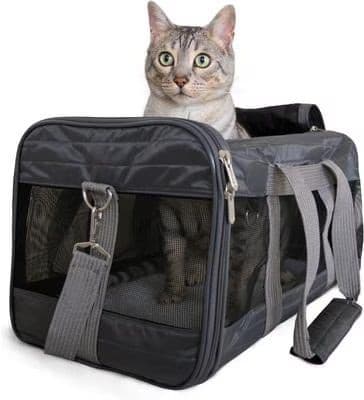
An airline-approved soft-sided carrier with mesh ventilation windows, a top-rated travel pick for cats and small dogs.
Petful may earn a commission when you click through to Chewy, at no extra cost to you.
Coat, pattern and body shape
The usual Sokoke appearance is a brown modified classic tabby pattern with ticking through the markings. The result is more intricate than a simple set of stripes. The short coat lies close to the body, helping the lean outline and long legs remain visible rather than hidden by a heavy coat.
GCCF also describes a much less common Snow Sokoke variation with a paler body and darker pointed areas. Color differences do not erase the need for documentation. Likewise, an ordinary brown tabby’s resemblance to a photograph does not establish a connection to this breed’s ancestry.
When looking at pictures, compare several views: a side profile, the flank pattern and the whole body in a natural standing position. A close-up may exaggerate one appealing detail while concealing proportions. Use pictures to understand the description, then rely on records if a verified breed identity is important to the decision.
A domestic breed with a distinctive origin
The Sokoke is a domestic cat breed; its forest-associated name is not evidence that a pet Sokoke is a wildcat hybrid. Avoid making care decisions from a “wild-looking” marketing description. An appropriate domestic-cat diet, a secure home and suitable enrichment remain the starting points.
For travel and veterinary visits, compare a Sherpa Original Deluxe carrier with the cat’s actual dimensions. A lean build does not automatically mean the smallest carrier will be comfortable. Check usable interior space and the cat’s ability to turn and rest naturally before making a selection.
Adult size and proportions
The Governing Council of the Cat Fancy's Sokoke profile describes a medium-sized, slender cat and gives a broad weight reference of 5–10 pounds. Treat that as a breed-profile range rather than an ideal-weight prescription for every cat. Long-looking legs and a lean outline can make photographs misleading, especially without a scale reference.
Petful may earn a commission when you click through to Chewy, at no extra cost to you.
For a carrier, measure the individual cat's standing height and body length as well as checking the product's weight limit. For feeding, ask the veterinary team to assess body condition rather than trying to move the cat toward the top or bottom of the profile range. Size alone cannot identify a Sokoke: many domestic cats overlap that scale.
Our tabby pattern guide places those markings in a broader context. Tabby describes a pattern found in many cats; it does not by itself identify a Sokoke or establish the ancestry behind a rare-breed claim.
Are Sokoke cats aggressive?
Aggression is not a defining Sokoke breed trait. Breed descriptions emphasize an engaged, playful companion, but no breed label guarantees how an individual will respond to fear, handling or a particular home. Ask about the cat’s known behavior and experiences rather than assuming that an athletic build or forest origin makes it aggressive.
Provide choices during interaction. Let the cat approach, keep a retreat available and pause when it no longer wants contact. Children need guidance around picking up, chasing and restraining cats. An individual can enjoy spending time near people while preferring not to be carried.
If concerning behavior appears or changes suddenly, discuss the circumstances with a veterinarian rather than treating it as a fixed breed personality. Record what happened immediately before the behavior, how long it lasted and whether appetite, movement or routine also changed. That description is more useful than a label such as “mean.”

Feathered teaser wand with catnip-stuffed bird. Pairs perfectly with the no-bite training policy: redirect Bengal play drive into a 10-minute interactive session with the wand.
Petful may earn a commission when you click through to Chewy, at no extra cost to you.
Daily life with an active Sokoke
Build a routine with opportunities to climb, investigate, play and then rest. An active indoor cat needs more than an open floor and a toy that never moves. Arrange stable routes between permitted perches, rotate a small selection of toys and protect quiet sleeping spaces from constant interruption.
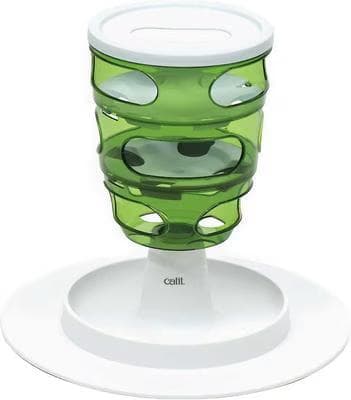
A Catit Senses 2.0 Food Tree can provide a food-based activity for a cat who enjoys it. Begin with an easy setting, use part of an appropriate meal and make sure the cat can still eat comfortably while learning. Increase difficulty only when the task remains interesting rather than frustrating.
WebVet’s cat puzzle-feeder guide explains how different designs engage cats. Observe your own cat’s response rather than buying every puzzle at once. A simple successful activity is more useful than an elaborate object that the cat cannot or will not use.
Try a repeatable daily pattern:
- Offer an interactive play opportunity when the cat is awake and interested.
- Make a meal or small portion accessible in a suitable feeding activity.
- Allow undisturbed rest in a comfortable place.
- Offer another chance for shared activity later, adapting to the individual.
The pattern is a starting point, not a prescribed exercise dose. Adjust it for age, comfort and interest. More activity is not automatically better if the cat appears uncomfortable or cannot settle afterward.
Feeding, grooming and routine care
Choose food for the individual’s life stage and needs, and ask the current carer about the existing diet before bringing the cat home. A Sokoke does not need a special “wild ancestry” diet merely because of its appearance. Keep feeding changes deliberate and discuss medical or weight concerns with the veterinary practice.
The short coat does not require elaborate styling. Ask for a demonstration of the cat’s established gentle grooming routine, check the coat and claws regularly and avoid turning a brief care session into a struggle. A change in self-grooming or comfort deserves attention even when the breed is generally described as easy to maintain.
For shared movement, a Frisco feather teaser wand can be useful when an adult controls it and allows occasional catches. Keep play away from fragile objects and store strings or detachable parts afterward. Interactive toys work through the time you spend using them; leaving a wand out does not provide the same experience.
Cost and responsible sourcing
Read our Sokoke cat price guide before comparing advertised fees. A complete quote should identify the actual cat, included records and care, deposit terms and any separate collection or transport costs. There is no verified representative US price survey behind these guides, so a universal purchase-price claim would be misleading.
Separate acquisition costs from everyday ownership. Equipment, food, litter, routine care and a plan for unexpected expenses all belong in the decision. Ask the seller or organization about the individual’s habits and needs, not only registration and price. A documented pedigree does not make every placement a good household match.
Preparing your home
Start with a manageable area containing a retreat, appropriate litter facilities, food, water and comfortable resting options. Check windows and doors, secure unstable furniture and remove items the cat could pull down while exploring. Expand access gradually as you learn how the individual uses the space.
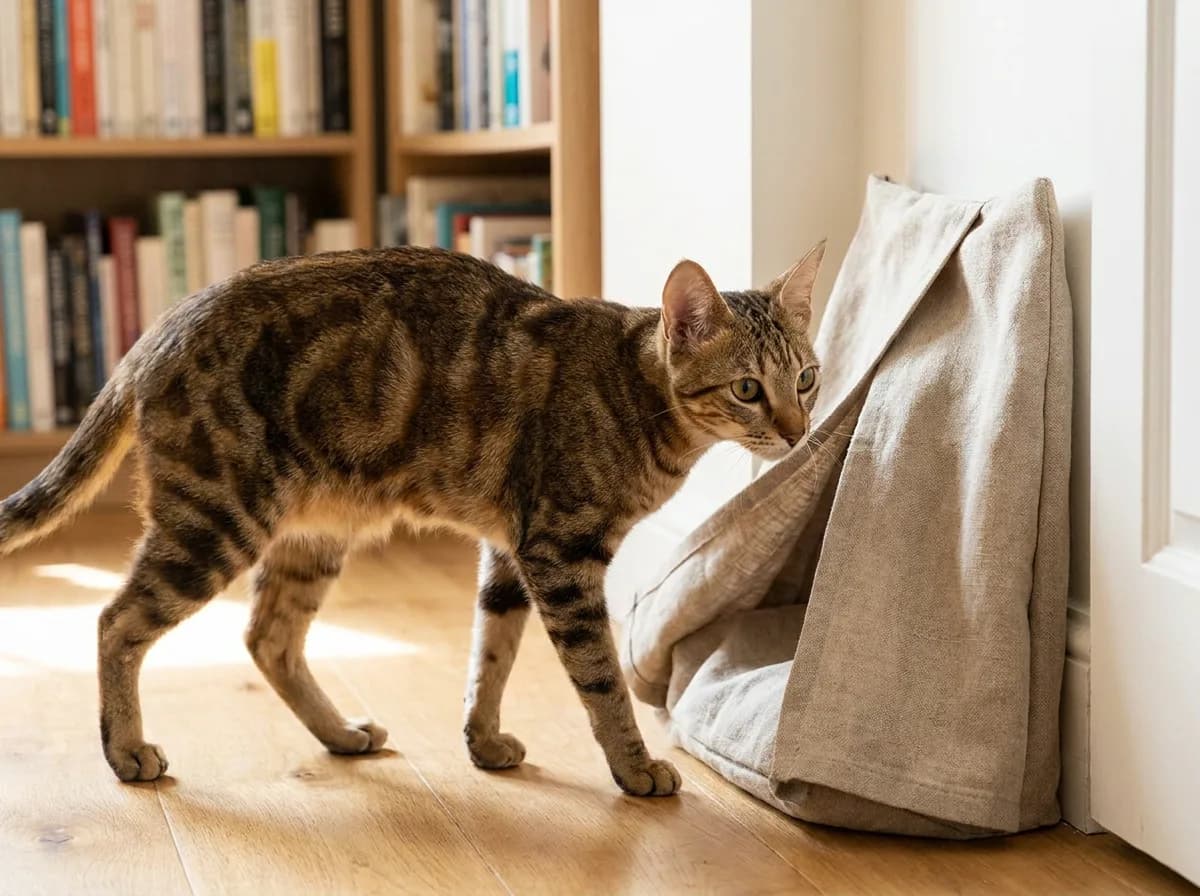
Plan introductions to other pets around separate resources and gradual exposure. A breed description suggesting sociability does not eliminate the need to observe both animals. Make sure each can disengage and rest without being followed or cornered.
Reassess purchases after arrival. The cat may favor a lower perch, a particular hiding place or a simpler toy than you expected. Keep useful equipment such as the carrier accessible for familiarization and use the cat tree only where it is stable and suitable. Let actual behavior guide the next addition to the home.
Sokoke questions
It is possible, but tabby markings alone cannot establish that identity. Ask what history and records are available and distinguish a visual resemblance from documented ancestry. An uncertain label should not prevent you from assessing the cat’s temperament and providing care that fits the individual.
An enriched indoor home can provide climbing, play and investigation without unrestricted roaming. A secure enclosed outdoor area may be an additional option where appropriate. The important decisions concern safety, supervision, individual comfort and enough daily activity, rather than assuming a forest-associated breed name requires free roaming.
Keep the placement agreement, registration or ancestry records supplied with the cat, identification details and veterinary records together. They serve different purposes: pedigree documents support an ancestry claim, while medical records help the veterinary team plan care. Retain the previous carer's contact details and the agreed arrangements for follow-up support.
BVMS, MRCVS
Dr. Pippa Elliott, BVMS, MRCVS, is a veterinarian with nearly 30 years of experience in companion animal practice. Dr. Elliott earned her Bachelor of Veterinary Medicine and Surgery from the University of Glasgow. She was also designated a Member of the Royal College of Veterinary Surgeons. Married with 2 grown-up kids, Dr. Elliott has a naughty Puggle named Poggle, 3 cats and a bearded dragon.
Sign up for expert-backed reviews and safety alerts all in one place.