Scottish Fold Personality: The Sweet, Velcro Lap Cat Explained
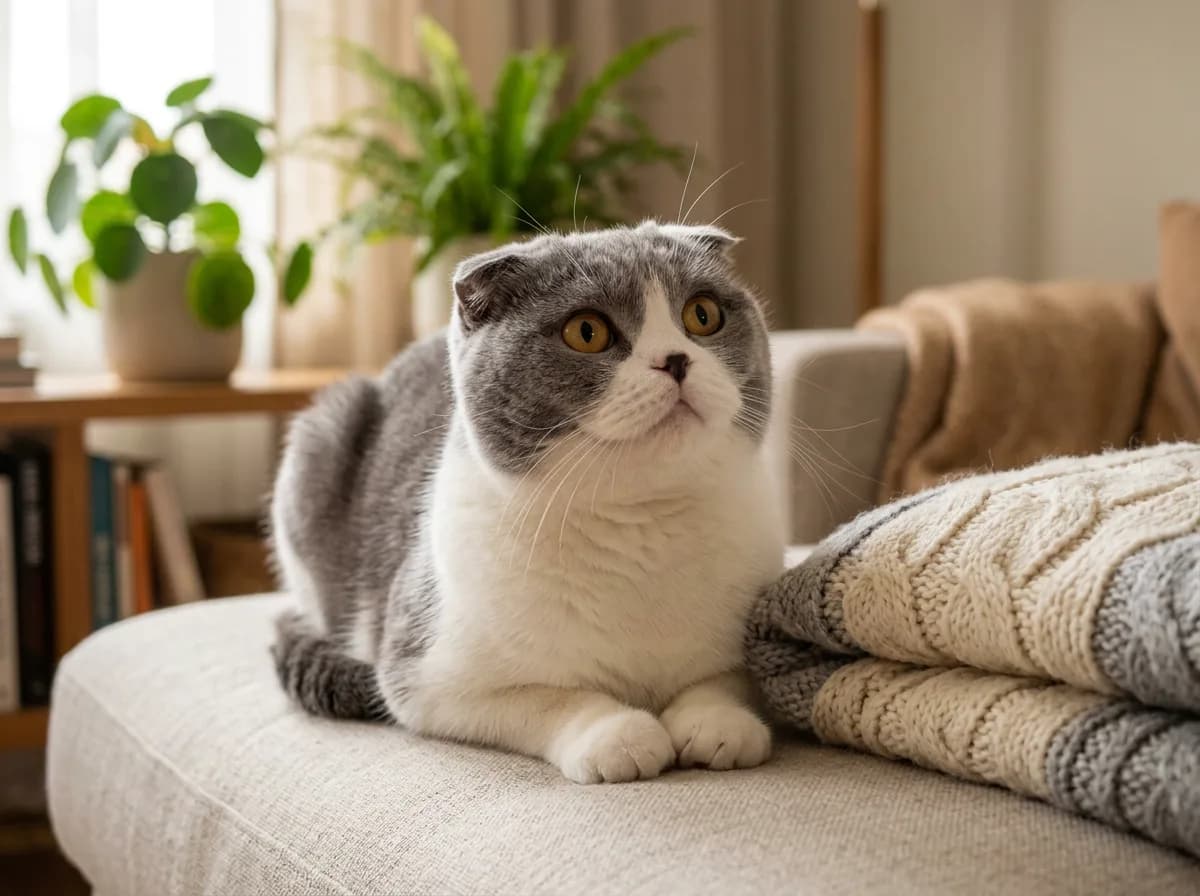
The Scottish Fold personality is sweet, placid, and devoted: a quiet velcro lap cat that bonds to the whole family, plays gently, gets on with kids and pets, and famously sits upright like a person.
Petful is reader supported. As an affiliate of platforms like Amazon and Chewy, we may earn a commission when you buy through links on this page. There is no extra cost to you.
The Cat Fanciers' Association sums up the Scottish Fold personality in two words that every owner echoes: sweet and devoted, a quiet good-natured cat that bonds hard to its whole family and would rather follow you from room to room than rule the house. Folds are the classic "velcro" lap cat: placid, easygoing, soft-voiced, and famous for sitting bolt upright like a tiny person. They are gentle players and calm company, brilliant for families, and notably bad at being left alone. One honest caveat runs underneath all of it: because every Scottish Fold carries a skeletal condition that can ache, a fold's mood and playfulness are tied to how its joints feel, so a normally bouncy cat that turns quiet or stiff deserves a vet visit, not a shrug.
- 1Scottish Folds are sweet, placid, deeply devoted "velcro" cats that bond to the whole family, not just one person
- 2They are quiet and soft-voiced, gently playful, and intelligent enough to learn fetch and simple tricks
- 3They get along easily with children, dogs, and other cats, and dislike being left alone for long stretches
- 4The famous upright "Buddha sit" is a normal, comfortable fold posture, not a trick
- 5Joint pain from the breed's inherited condition can dull a fold's energy or mood, so a sudden change warrants a vet check

Sign up for expert-backed reviews and safety alerts all in one place.
What is a Scottish Fold's personality like?
The short answer: gentle, calm, and quietly affectionate. The Scottish Fold is one of the most even-tempered cats you can live with, the kind of breed that greets you at the door, settles on your lap while you work, and almost never makes a scene. The CFA describes Folds as "comfortable, charming homebodies who enjoy but do not crave human interaction," and that line captures the balance well: a fold wants to be near you, but it is not a frantic, demanding cat.
Owners reach for the same handful of words over and over: good-natured, placid, sweet, devoted, adaptable, easygoing. These are not high-strung or aloof cats. A Scottish Fold tends to take new people, new rooms, and new routines in stride, which is part of why the breed has such a reputation as an easy first cat.
- Breeders and registries consistently describe the Scottish Fold as good-natured, placid, devoted, easygoing, affectionate, sweet-natured, quiet, intelligent, and gently playful. The temperament is remarkably consistent across the breed.
The velcro lap cat: how Scottish Folds bond
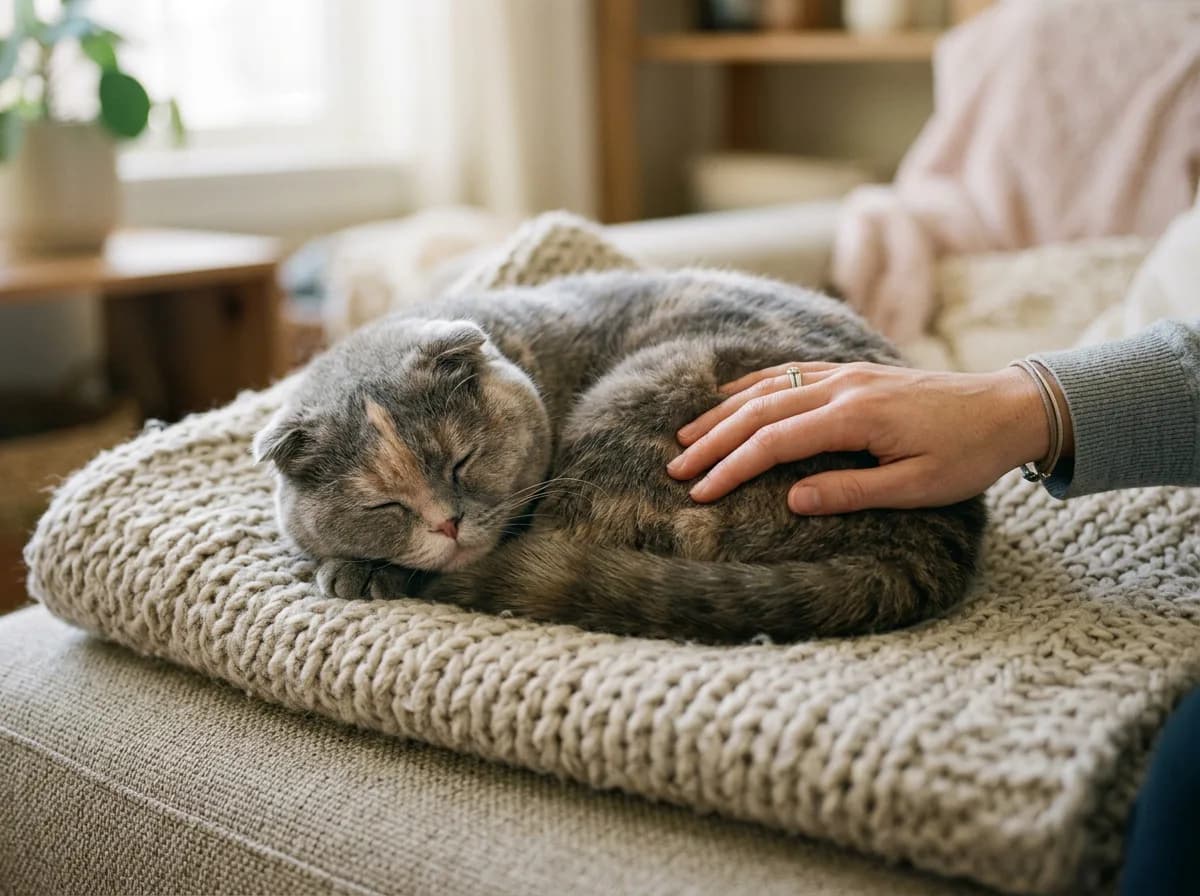
If one phrase defines the Scottish Fold personality, it is "velcro cat." Folds attach themselves to their people and like to stay within sight, trailing you from the kitchen to the couch to the bathroom door. They are lap-seekers and cuddle-seekers, and many will curl up against you for hours given the chance.
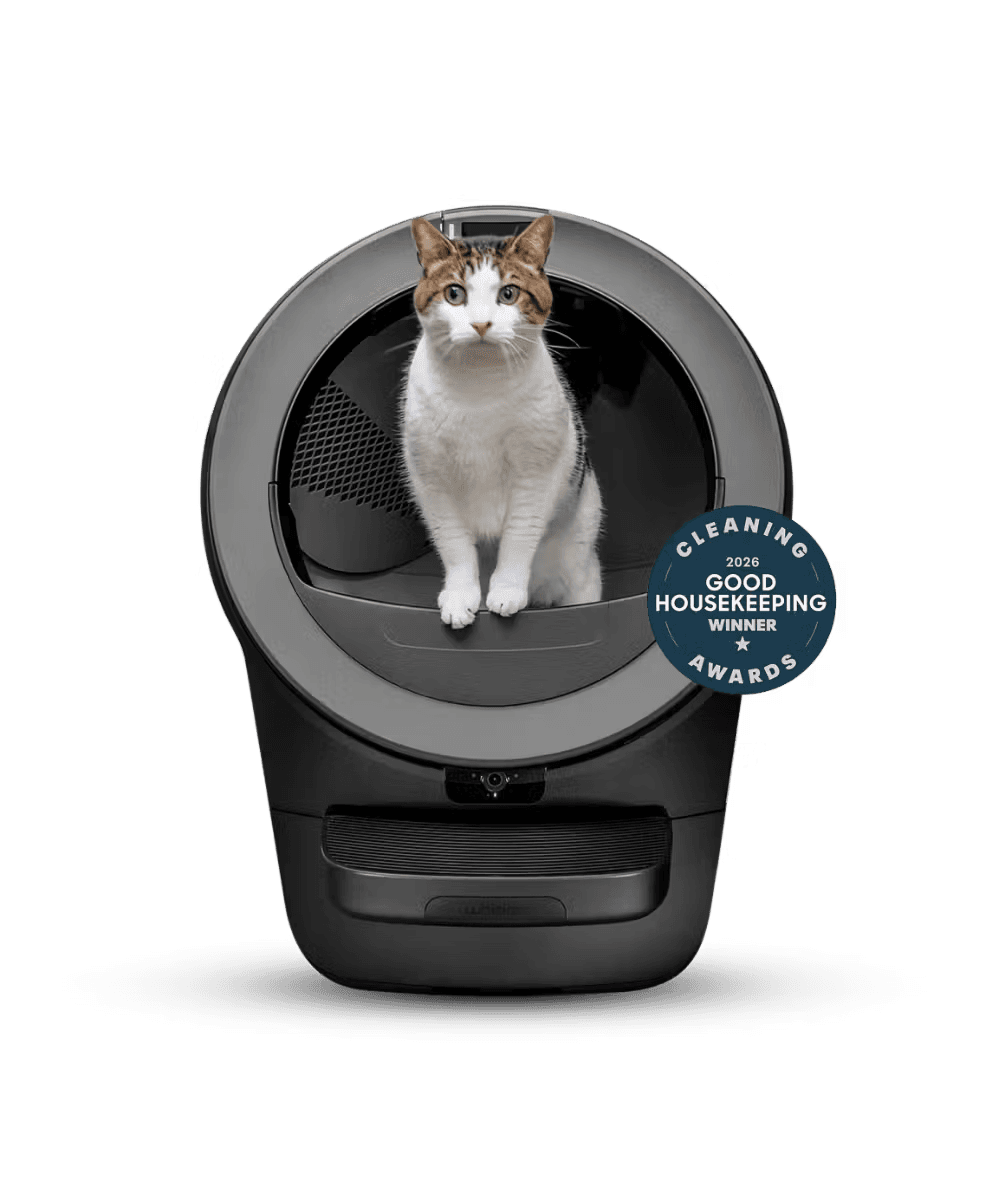
Never Scoop Again® with the Whisker Litter-Robot, the smart self-cleaning automatic litter box. Monitor visits and track weights for better overall care in the Whisker® app. Multi-cat friendly.
Petful may earn a commission when you click through to Whisker, at no extra cost to you.
A common myth is that Folds bond to one person only. In reality, the Scottish Fold typically bonds to the whole household, spreading its affection across the family rather than imprinting on a single human the way some breeds do. That makes it a flexible pet for couples and families: the cat is not jealously guarding one lap, it just wants a warm body nearby. Folds do tend to be a little reserved with total strangers at first, warming up once a visitor proves calm and trustworthy.
If you love the idea of a placid, plush lap cat, the Fold sits in the same easygoing company as the Ragdoll, another famously docile breed that goes limp in your arms. The Scottish Fold is a touch more independent than a Ragdoll, but both share that mellow, people-loving core.
- Because Folds want to be where you are, a heated bed or a blanket-lined basket beside your desk or sofa keeps your shadow comfortable and off the cold floor, which also matters for a breed prone to stiff joints.
A quiet, soft voice
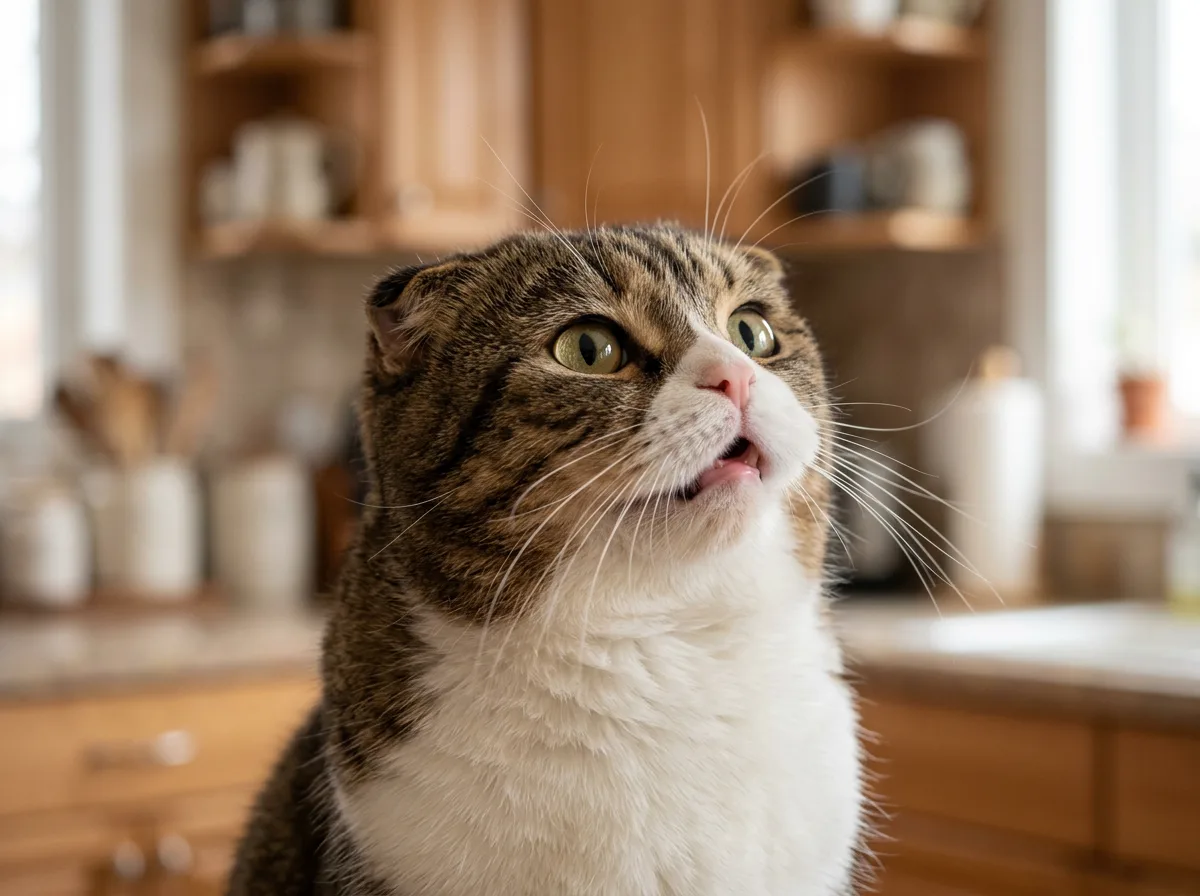
Scottish Folds are not talkers. They have small, soft, almost musical voices and tend to chirp or trill rather than yowl, so even when a fold is asking for dinner it usually does so politely. The CFA notes they engage in "quiet, polite conversation" as they follow you around, and most owners describe the breed as one of the more peaceful cats to share a home with.
That quiet streak makes the Scottish Fold a strong pick for apartments and shared walls. A fold is unlikely to wake the household at 3 a.m. with operatic demands, though like any cat it will find a way to let you know the food bowl is empty.
- A soft chirp, trill, or gentle headbutt is a fold's normal way of communicating. A cat that suddenly becomes much more vocal, or unusually silent and withdrawn, is worth a closer look, since cats often hide discomfort.
Why do Scottish Folds sit up like a person?
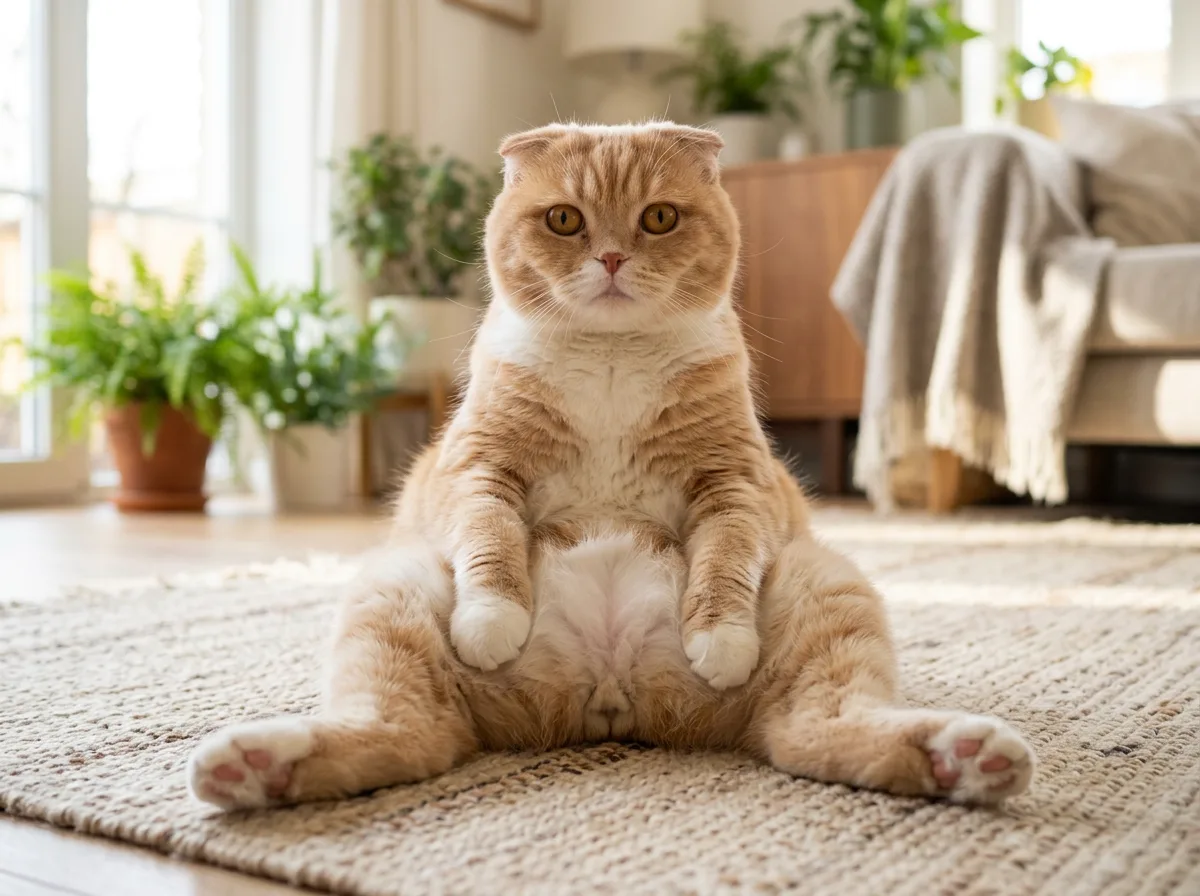
The upright "Buddha sit," sometimes called the "otter sit" or "prairie dog" pose, is the single most famous thing a Scottish Fold does. You will catch a fold sitting back on its haunches with its hind legs splayed out in front and its paws resting on its belly, looking for all the world like a small furry person slumped in a chair. The CFA describes Folds sitting "up straight like a prairie dog" when something new catches their attention.
Why do they do it? Part of it is simple curiosity: sitting up gives a nosy cat a better view. But many owners and observers note that Folds seem to find the posture genuinely comfortable and adopt it to take pressure off their hips and joints. Given that the breed lives with a cartilage and bone condition, an upright slouch may simply feel better than a normal crouch. Either way, it is a normal, healthy fold behavior and a big part of the breed's charm, not a trick they are taught.
Intelligence and gentle play
Folds are bright cats. They learn quickly, can be taught to come, sit, and play fetch, and enjoy puzzle feeders and interactive toys that make them think. The breed is curious and likes to investigate whatever you are doing, but its intelligence comes wrapped in a calm package: a fold is a problem-solver, not a tornado.
Their play style is gentle and moderate. A Scottish Fold will happily bat a toy, chase a wand, and retrieve a crumpled ball, but it is not the wall-climbing, curtain-shredding dynamo some breeds are. ASPCA Pet Insurance describes the breed as having an even temperament that is "more energetic than just a lap cat," which is a fair read: Folds like a good play session, then they like a long nap on you. Short daily play keeps their minds busy and their (sometimes stiff) bodies moving.

63-inch multi-level cat tree with scratch posts, hammock, plush perches, and dangling toys. Vertical territory is non-negotiable for high-energy climbing breeds like the Bengal.
Petful may earn a commission when you click through to Chewy, at no extra cost to you.
- Folds love interactive toys, but favor ground-level games over high leaps. Wand toys, treat puzzles, and rolling balls give a fold mental and physical exercise without asking arthritis-prone joints to make big jumps.
Calm energy and daily rhythm
The Scottish Fold runs on low to moderate energy. A typical day is a few bursts of curiosity and play folded into long stretches of lounging, ideally on or beside a human. This calm rhythm is exactly why Folds suit so many homes, from busy families to quieter single-person households, as long as someone is around.
That mellow nature also means a fold rarely gets underfoot or into trouble. Folds are not known for counter-surfing chaos or destructive boredom the way high-drive breeds can be, provided they get attention and a little daily enrichment. If a calm, quiet, plush-coated cat is what you are after, the Scottish Fold keeps similar company to the Exotic Shorthair, another round, soft, low-key breed prized for its laid-back temperament.
Are Scottish Folds good with kids, dogs, and other cats?
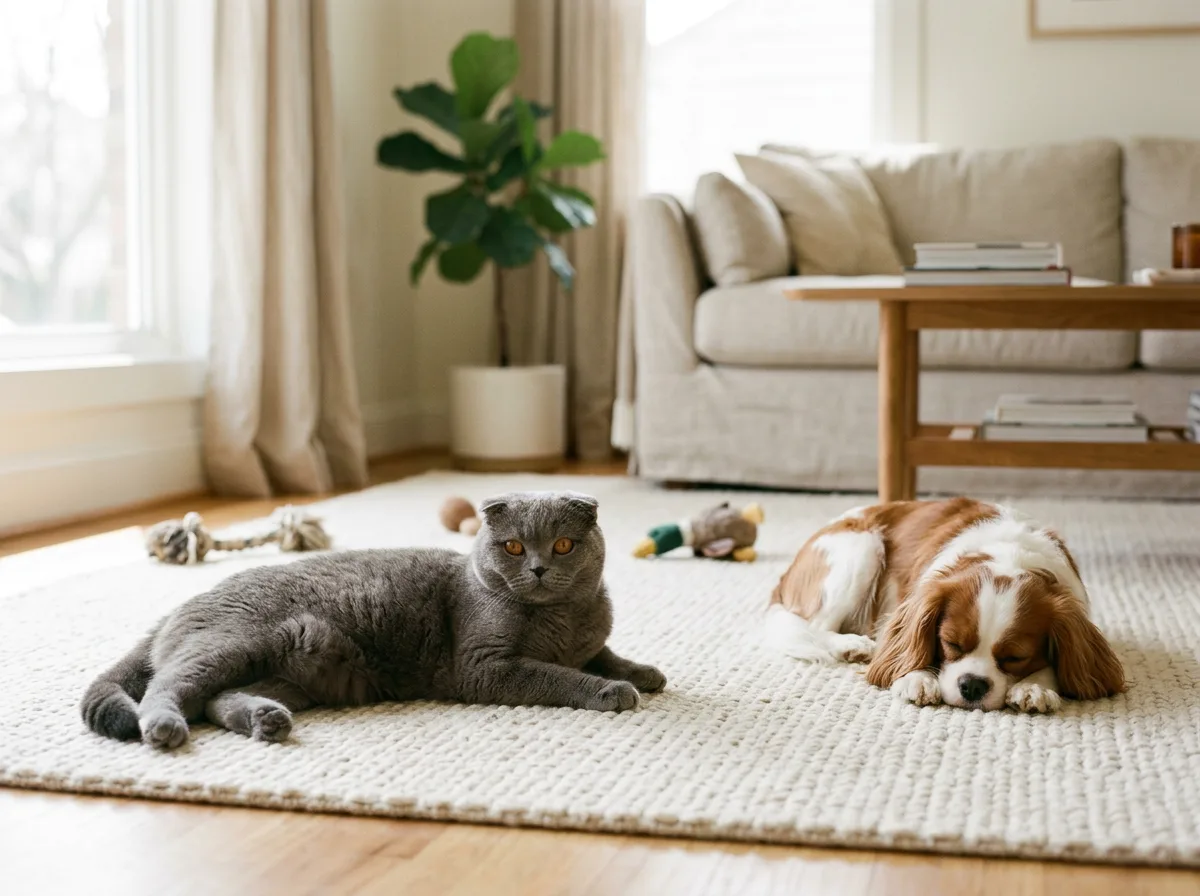
Yes, on all three counts, and this is one of the breed's biggest selling points. The Scottish Fold's patient, even temperament makes it one of the more reliably family-friendly cats. Folds are typically gentle and tolerant with respectful children, unbothered by the noise and bustle of a busy household, and sociable with cat-friendly dogs and other cats.
Because Folds are so people-focused and dislike being alone, a second pet can be a real asset: a feline or dog companion gives your fold company when you are out. A like-minded mellow breed pairs best, so a calm housemate such as a British Shorthair tends to suit a fold better than a high-strung, territorial cat. As always, introductions should be slow and supervised, and kids should be coached to handle the cat gently, but the breed's baseline disposition is about as easygoing as cats get.

108-oz stainless steel pet fountain with quiet pump and water-level window. Bengals are notoriously water-obsessed; a flowing fountain encourages hydration and pulls them away from sinks and toilets.
Petful may earn a commission when you click through to Chewy, at no extra cost to you.
| Trait | Where the Fold Lands | What It Means for You |
|---|---|---|
| Affection level | Very high (velcro lap cat) | Wants to be near you and on you most of the day |
| Voice | Low, soft and musical | A quiet, apartment-friendly cat that chirps more than it yowls |
| Energy level | Low to moderate | Enjoys gentle play, then long naps; not a hyperactive breed |
| Intelligence | High | Learns fetch and tricks; loves puzzle toys |
| Independence | Low | Dislikes being left alone for long stretches |
| Good with kids and pets | Excellent | Patient with children, sociable with dogs and other cats |
The one trait to plan around: Folds hate being alone
For all their easygoing charm, Scottish Folds have a clear weak spot: they do not cope well with long stretches of solitude. A fold left alone for ten hours a day, every day, can become lonely, anxious, or withdrawn. The breed's deep attachment is a feature when you are home and a liability when you are not.
This does not mean you need to be home every minute. It means a fold does best with a household where someone is around much of the time, or with a second animal companion for company, plus enrichment like window perches, food puzzles, and toys to fill the quiet hours. If your home is empty twelve hours a day, a more independent breed may be the kinder choice.
- Because Scottish Folds carry an inherited cartilage and joint condition (osteochondrodysplasia) that can cause arthritis pain, discomfort often shows up first as a personality change. A normally playful, affectionate fold that goes quiet, hides, stops jumping, or seems grumpy may be hurting, not sulking. A sudden shift in temperament is a reason to call your vet, not wait it out.
A brief, honest note on joints and mood
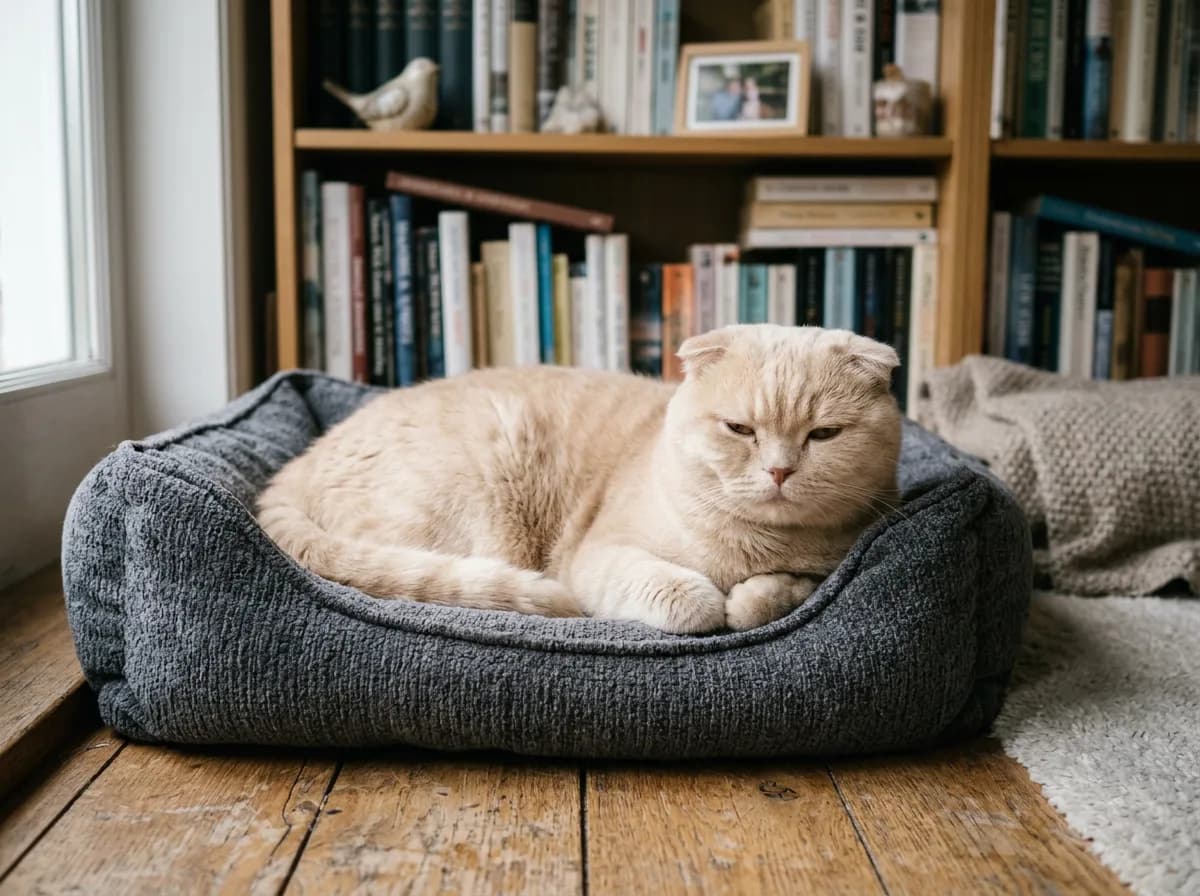
Personality and health are linked in this breed in a way they are not in most cats. The same gene that folds a Scottish Fold's ears affects cartilage and bone throughout its body, so some degree of joint disease is part of the package. When a fold is comfortable, you see the sweet, playful, social cat the breed is famous for. When its joints ache, you may see a different cat: stiffer, less playful, more withdrawn, slower to jump up for a cuddle.
That is why the most important thing an owner can do for a fold's personality is protect its comfort: keep it at a healthy weight, provide soft bedding and easy low routes onto furniture, skip the high jumps, and work with your vet on joint support and pain management as the cat ages. A pain-free fold is a happy, affectionate fold. (Petful covers the breed's joint condition and care in depth in our Scottish Fold health guide.)
Is the Scottish Fold personality right for you?
A Scottish Fold is a wonderful fit if you want a calm, cuddly, low-drama companion that adores your company, gets along with everyone in the house, and asks for little beyond a warm lap and gentle play. They reward people who are home often, families with kids, and multi-pet households.
They are a poorer fit if you are out of the house most of every day, or if you want a bold, high-energy, independent cat. And anyone drawn to the breed should go in clear-eyed about the welfare reality behind those folded ears: the look comes with a built-in painful condition. Many people who love the round, sweet, teddy-bear personality choose a straight-eared cat instead, and get nearly all of the temperament without the skeletal disease. The British Shorthair is the obvious example: it is the calm, plush, round-faced breed the Scottish Fold was largely built from, but with normal ears and no fold-related joint disease.
- The British Shorthair has much of the same calm, affectionate, easygoing nature with normal, healthy ears and no fold-related joint condition. A "Scottish Straight" (a straight-eared cat from fold parents) is similar too. Both are gentler choices for anyone who wants the look and temperament without the welfare cost.
Frequently asked questions
Scottish Folds are sweet, placid, good-natured, and deeply devoted. They are quiet "velcro" lap cats that bond to the whole family, follow their people around, play gently, and adapt easily to new people and places. They are calm rather than hyperactive and dislike being left alone for long.
Very. Folds are classic lap cats that actively seek out laps, cuddles, and close contact, and many will stay glued to your side for hours. They are affectionate on a gentle, undemanding basis rather than being frantically needy.
Yes. Their calm, patient, easygoing temperament makes them excellent companions for families, couples, and apartment dwellers. The main caveats are that they need company (they hate being alone all day) and they carry an inherited joint condition that needs lifelong, attentive care.
Usually not just one. Unlike some one-person breeds, Scottish Folds tend to bond with the entire household and spread their affection across the family, though they may be briefly reserved with strangers until they feel comfortable.
Yes. Their even, tolerant temperament makes them reliably good with respectful children, cat-friendly dogs, and other cats. Because they dislike solitude, a second pet can be a real benefit. Introductions should still be slow and supervised.
No, they are one of the quieter breeds. Folds have small, soft, musical voices and tend to chirp or trill politely rather than yowl, which makes them well suited to apartments. A sudden change in how much a fold vocalizes can signal discomfort.
The upright "Buddha sit" (also called the otter or prairie-dog pose) is a normal, comfortable fold posture, not a trained trick. Folds sit up out of curiosity for a better view, and many seem to find it eases pressure on their hips and joints.
Yes, cuddling is one of the breed's defining traits. Folds are velcro lap cats that love warmth and closeness and will happily settle on you for long stretches, which is a big part of why owners adore them.
The biggest con is health: every Scottish Fold inherits osteochondrodysplasia, a cartilage and bone condition that causes painful arthritis to some degree, which is why many vets and welfare bodies oppose breeding the cat. On personality, the main downside is that Folds dislike being left alone and need plenty of company.
Owning and loving an existing fold, especially a rescue, is widely seen as fine, and a good owner can give one a comfortable life. The ethical concern is with breeding and buying, because the folded ear is inseparable from a painful skeletal condition. The British Veterinary Association and several countries discourage or restrict breeding the cat, so adoption or choosing a straight-eared cat is the kinder route.

Coreen Saito is a pet writer and longtime shelter volunteer with more than a decade in animal rescue. She covers cat behavior, breed care, and the small, ordinary science of sharing a life with companion animals, with a particular focus on honest takes about the products and decisions that actually matter. At home in Arizona, she's outranked by Mac (a dog with the loudest opinion in the house), Rebel (a cat who governs by quiet authority), and Meri (an orange tabby who runs the late shift and the laundry basket). She writes about all three, plus the rescues that keep coming through her life, at LifeWithMinty.com.
Sign up for expert-backed reviews and safety alerts all in one place.