Is the Russian Blue Hypoallergenic? An Honest, Vet-Reviewed Answer
Russian Blues are one of the more allergy-friendly cat breeds thanks to reportedly lower Fel d 1 and a dense, dander-trapping coat, but no cat is truly hypoallergenic. Here is the honest, vet-reviewed answer for allergy sufferers.
Petful is reader supported. As an affiliate of platforms like Amazon and Chewy, we may earn a commission when you buy through links on this page. There is no extra cost to you.
The Russian Blue is one of the more allergy-friendly cats you can choose, but veterinary allergists agree that no cat is truly "russian blue hypoallergenic," because every cat, this breed included, produces the Fel d 1 protein that triggers roughly 95% of human cat allergies. The reputation is better founded than for most breeds: several sources report Russian Blues make lower levels of Fel d 1 than the average cat, and their dense double coat tends to hold dander close to the skin so less escapes into the air. That makes the Russian Blue a reduced-allergen cat that many people with mild allergies tolerate well. It does not make the breed allergen-free, and the only reliable test is time spent with an adult cat before you commit.
- 1No cat is 100% hypoallergenic, and the Russian Blue is no exception.
- 2The breed is gentler on allergy sufferers for two reasons: reportedly lower Fel d 1 production, plus a plush double coat that traps dander near the skin.
- 3Every Russian Blue still makes Fel d 1 in its saliva and skin, so this is a reduced-allergen breed, not an allergen-free one.
- 4Spend extended time with the specific adult cat you plan to bring home, because individual reactions vary enormously.

Sign up for expert-backed reviews and safety alerts all in one place.
Is the Russian Blue Hypoallergenic? The Honest Answer
Short version: no breed is technically hypoallergenic, but the Russian Blue is one of the breeds most often recommended for allergy sufferers, and the recommendation holds up better than most cat-fancy folklore.
People who are allergic to cats are not reacting to fur. They are reacting to a tiny, sticky glycoprotein called Fel d 1, which is produced in a cat's saliva, skin (sebaceous) glands, and other secretions. The cat spreads it over its coat while grooming, it dries onto flakes of skin (dander), and those flakes drift through your home and settle on every surface. Because Fel d 1 is light and clingy, it stays airborne for hours and lingers in carpets and upholstery for months.
The Russian Blue helps on two fronts at once, which is why it earns its reputation. It is still a cat, though, so manage your expectations rather than your hopes.
Never Scoop Again® with the Whisker Litter-Robot, the smart self-cleaning automatic litter box. Monitor visits and track weights for better overall care in the Whisker® app. Multi-cat friendly.
Petful may earn a commission when you click through to Whisker, at no extra cost to you.
- The word does not mean "allergen-free." It means "less likely to provoke an allergic reaction." A hypoallergenic cat still produces allergens, just potentially fewer of them, so a sensitive person can still react.
The Two Real Reasons a Russian Blue Is Gentler on Allergies
Reason 1: Reportedly lower Fel d 1 production
Multiple veterinary and breed sources describe the Russian Blue as a naturally low producer of Fel d 1, the single protein behind the large majority of cat allergies. If a cat genuinely makes less of the allergen at the source, there is simply less of it to spread, and people with mild sensitivities often notice the difference.
This claim is widely repeated, and it is the main reason the breed lands on nearly every "best cats for allergies" list. It is worth being precise, though: Fel d 1 output varies enormously from cat to cat, by as much as 80-fold between individuals, even within the same breed. So "lower on average" does not guarantee that any one Russian Blue will be low. The breed tilts the odds in your favor; it does not lock in the outcome.
Reason 2: A dense double coat that traps dander
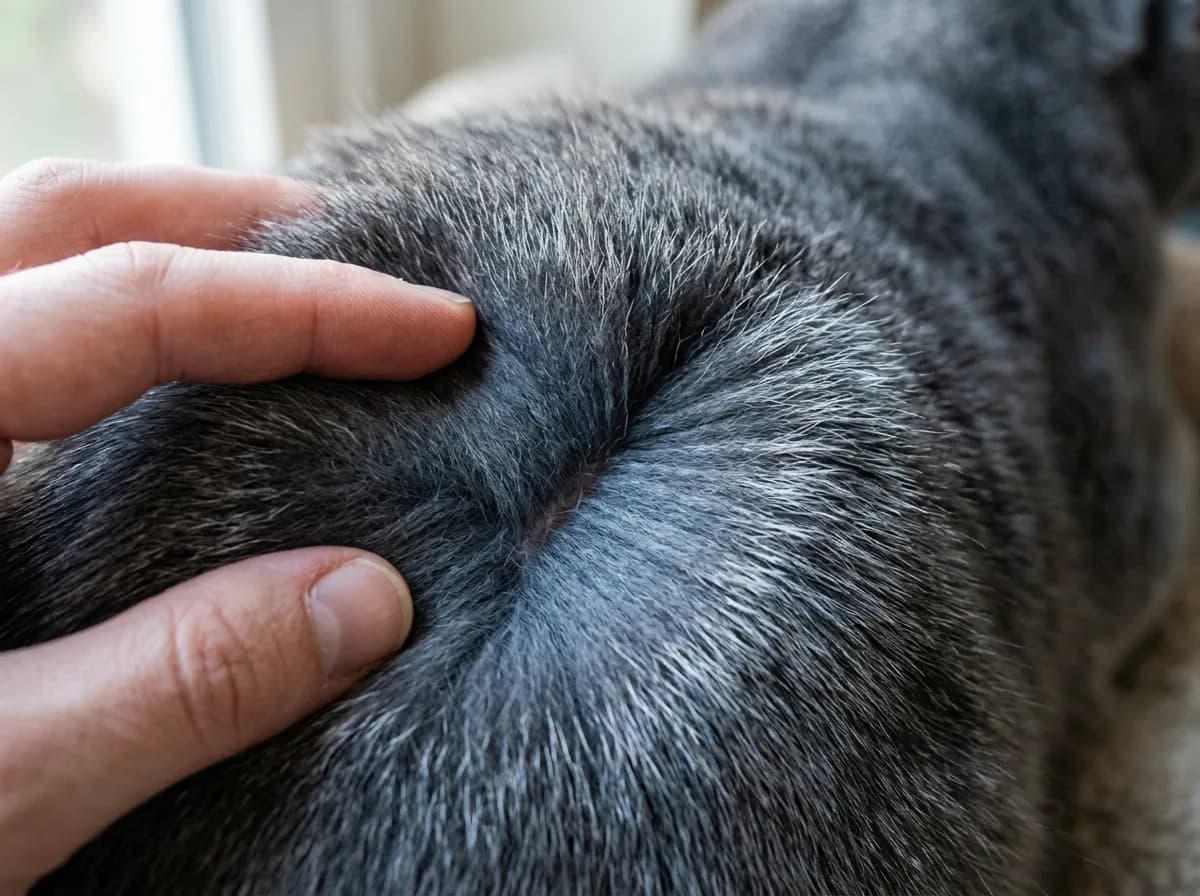
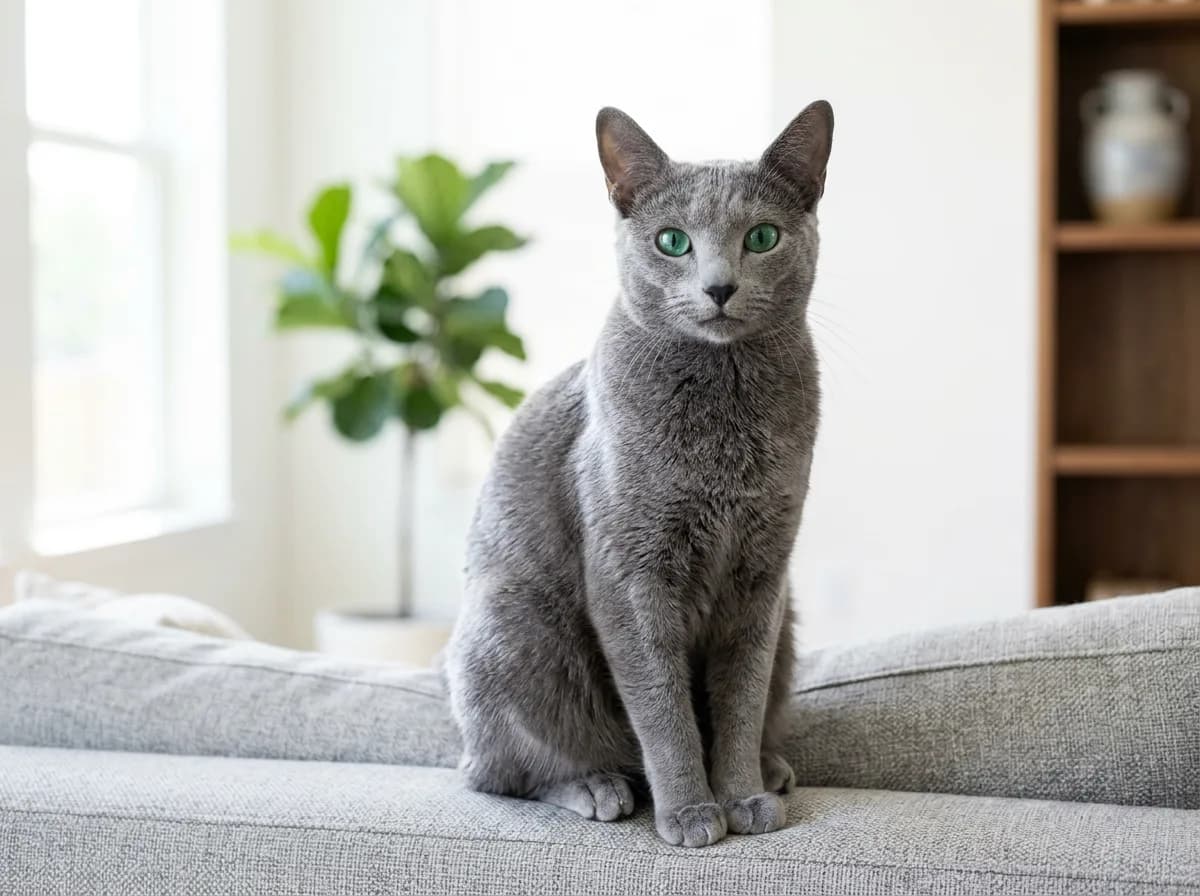
The Russian Blue's signature is a short, plush, double coat that stands out from the body. That thick coat appears to hold dander and loose hair closer to the skin instead of releasing it into the air, and the breed is a relatively low shedder. Less airborne dander means less of the allergen reaching your eyes, nose, and lungs.
Note the distinction your immune system cares about: a coat that traps dander reduces how much allergen becomes airborne, but it does not change how much Fel d 1 the cat produces in the first place. Both effects can be real at the same time, and together they explain why so many allergy sufferers report doing better with this breed.
- Before you adopt, visit the exact cat you are considering and spend a long, hands-on session with it, ideally more than once. Touch the cat, then touch your face. A short pet-store glance will not reveal a slow-building reaction, but an hour in the cat's actual home environment usually will.
The Honest Limit: Every Russian Blue Still Produces Fel d 1
Here is the part the marketing leaves out. Every cat on earth, the Russian Blue included, produces Fel d 1. It is built into the cat's saliva and skin. A breed can make less of it, but no breed makes none of it, which is why veterinary dermatologists are united that a 100% hypoallergenic cat does not exist.
So the accurate label for the Russian Blue is reduced-allergen, not allergen-free. For a person with mild, well-controlled allergies, "reduced" is often enough to live comfortably with a cat for the first time. For a person with severe or asthmatic cat allergies, "reduced" may still be too much, and even a Russian Blue can trigger symptoms. Honesty here protects both you and the cat: allergy surrenders are a leading reason cats lose their homes, and going in clear-eyed prevents a heartbreaking return.
Certified True HEPA air purifier that captures 99.97% of airborne dust, dander, pollen, and smoke, reducing the airborne triggers behind feline asthma and respiratory irritation.
Petful may earn a commission when you click through to Chewy, at no extra cost to you.
- If your cat allergy involves wheezing, chest tightness, or asthma attacks, do not assume a Russian Blue is safe. Talk to an allergist first and arrange a real-world trial in the home of someone who owns one before you make any commitment to a cat.
The Science: What Actually Causes a Cat Allergy
Understanding the mechanism makes every management tip below make sense.
Fel d 1 is the dominant cat allergen, responsible for the reaction in up to 95% of people who are allergic to cats. It is also one of the most common indoor allergens overall, ranking just behind dust mites as a trigger of respiratory symptoms. Because the protein is small and sticky, it travels on dried saliva and skin flakes, becomes airborne easily, and settles deep into soft furnishings where it can persist for months even after the cat is gone.
A few factors shift how much Fel d 1 a given cat puts out, and they apply to Russian Blues too:

63-inch multi-level cat tree with scratch posts, hammock, plush perches, and dangling toys. Vertical territory is non-negotiable for high-energy climbing breeds like the Bengal.
Petful may earn a commission when you click through to Chewy, at no extra cost to you.
| Factor | Effect on Fel d 1 | What It Means for You |
|---|---|---|
| Breed | Some breeds, including the Russian Blue, average lower output | Tilts the odds, but never guarantees a low-allergen cat |
| Individual variation | Output varies up to 80x between cats, even littermates | The specific cat matters more than the breed label |
| Sex and neuter status | Intact males produce the most; neutered males and females produce less | A spayed female or neutered male Russian Blue is the safer pick |
| Grooming and bathing | Removes dried saliva and dander before it spreads | Regular upkeep measurably lowers the allergen load in your home |
- Fel d 1 production is partly hormone-driven. Unneutered male cats are the highest producers, and neutering meaningfully reduces their output. Spayed females and neutered males are the lowest producers, so if allergies are your main concern, choose accordingly.
How the Russian Blue Compares to Other "Hypoallergenic" Cats
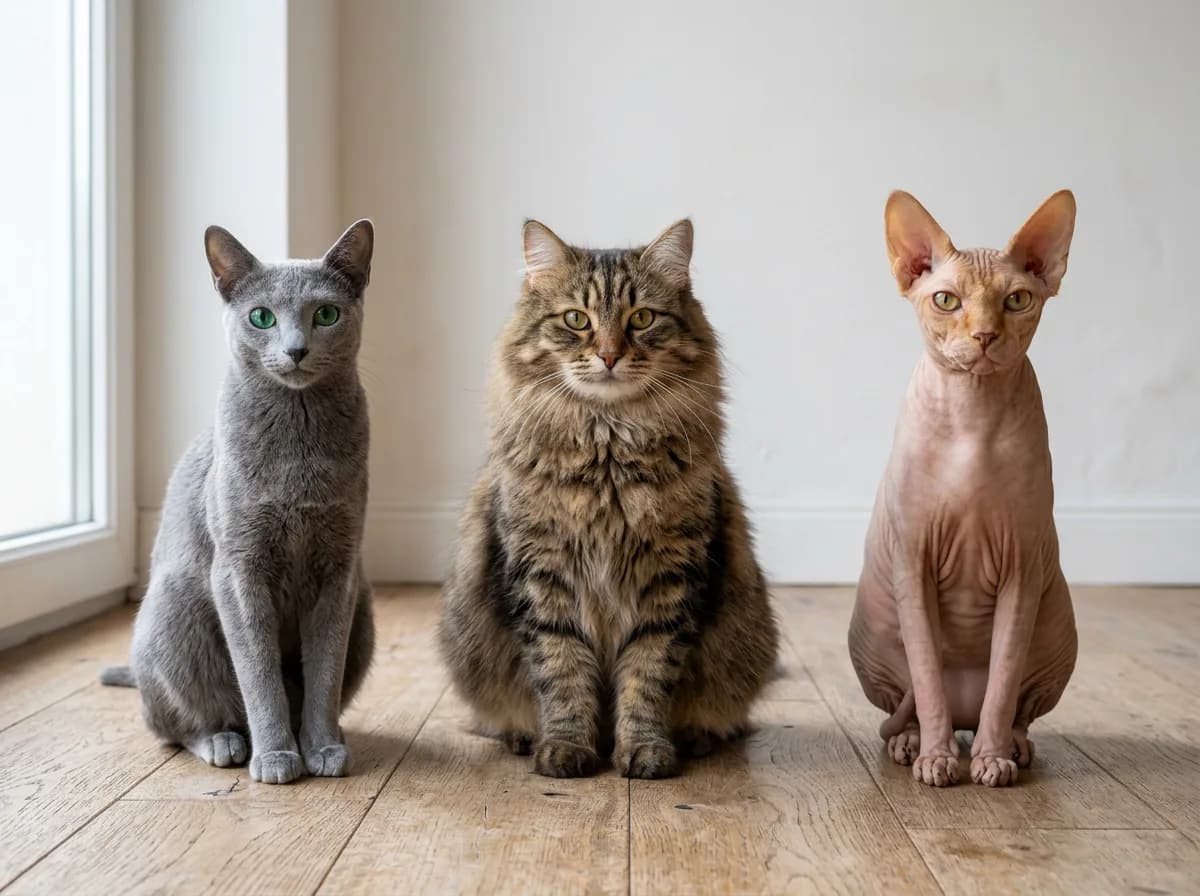
The Russian Blue is not the only breed with an allergy-friendly reputation, and it is rarely ranked first for that trait. If allergies are your deciding factor, it helps to see where the Russian Blue sits among the usual contenders.
| Breed | Why It Is Recommended | Trade-offs to Know |
|---|---|---|
| Russian Blue | Reportedly lower Fel d 1, plush low-shedding double coat | Still produces Fel d 1; shy, reserved temperament |
| Siberian | Often cited as the lowest Fel d 1 producer despite a long, thick coat | Heavy seasonal shedding and more grooming; large cat |
| Balinese | The "longhaired Siamese," frequently called a low Fel d 1 producer | Vocal and very people-oriented |
| Sphynx | Hairless, so dander does not collect in a coat and is easy to wash off | Skin needs regular bathing; not actually a low Fel d 1 producer |
| Siamese | Fine single coat, low shedding, low grooming | Extremely vocal and demanding of attention |
A useful nuance: a hairless Sphynx is not low in Fel d 1 at all, but because it has almost no coat to hold dander, the allergen is easier to wash off the skin and off surfaces. A Siberian, by contrast, has a huge coat yet is repeatedly singled out as one of the genuinely low Fel d 1 breeds. This is exactly why "hairy or hairless" is the wrong way to judge a cat allergy, and why output of the protein matters more than coat length.
If you want to dig into the parallels, our breed guides on the Siamese and allergies and the Balinese as a hypoallergenic cat cover two of the most commonly cross-shopped options, the Siberian breed profile explains why that big-coated breed keeps topping the low-allergen lists, and the Sphynx breed profile shows why a hairless cat is not automatically the safest allergy pick.
How to Live With a Russian Blue If You Have Mild Allergies
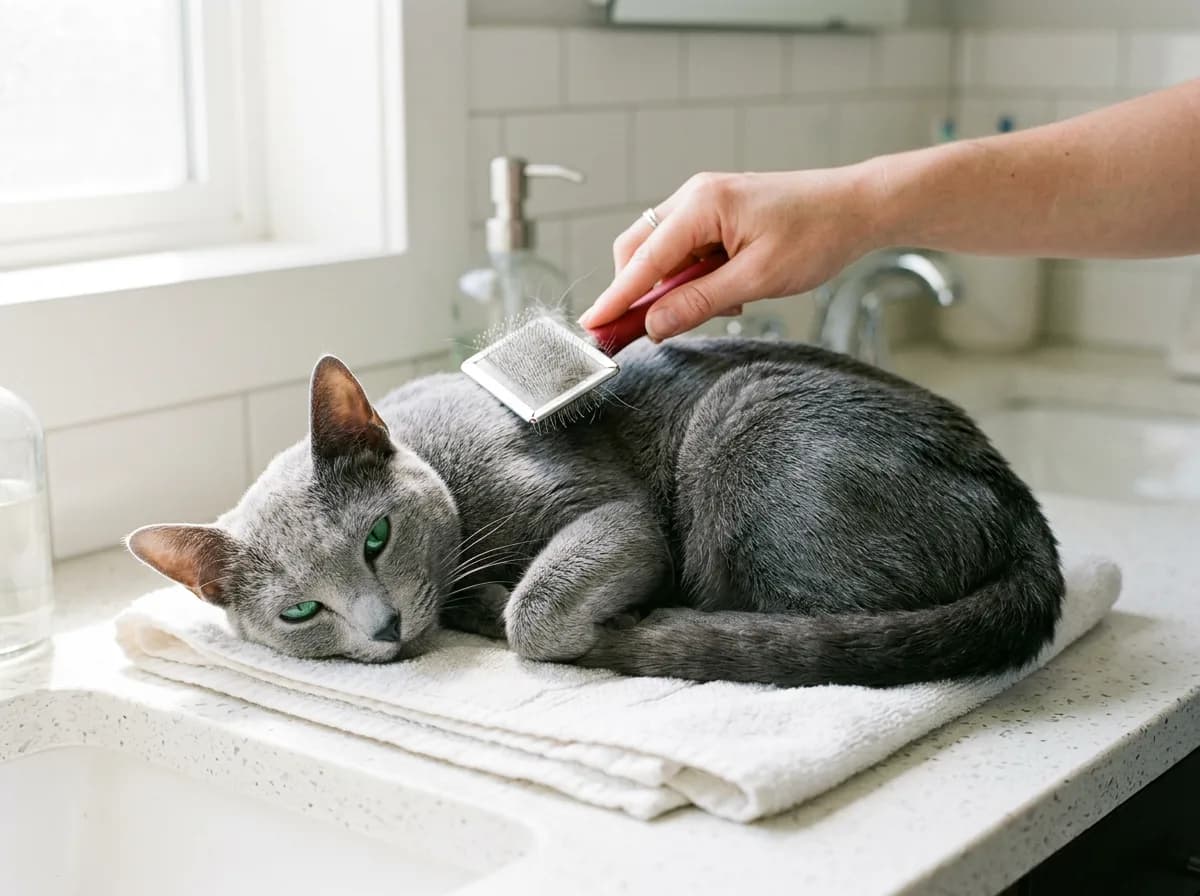
If your allergies are mild and you have confirmed your tolerance with a real-world visit, a consistent routine keeps the allergen load low. None of these steps is exotic, and together they make a real difference.
Groom and wipe the coat regularly
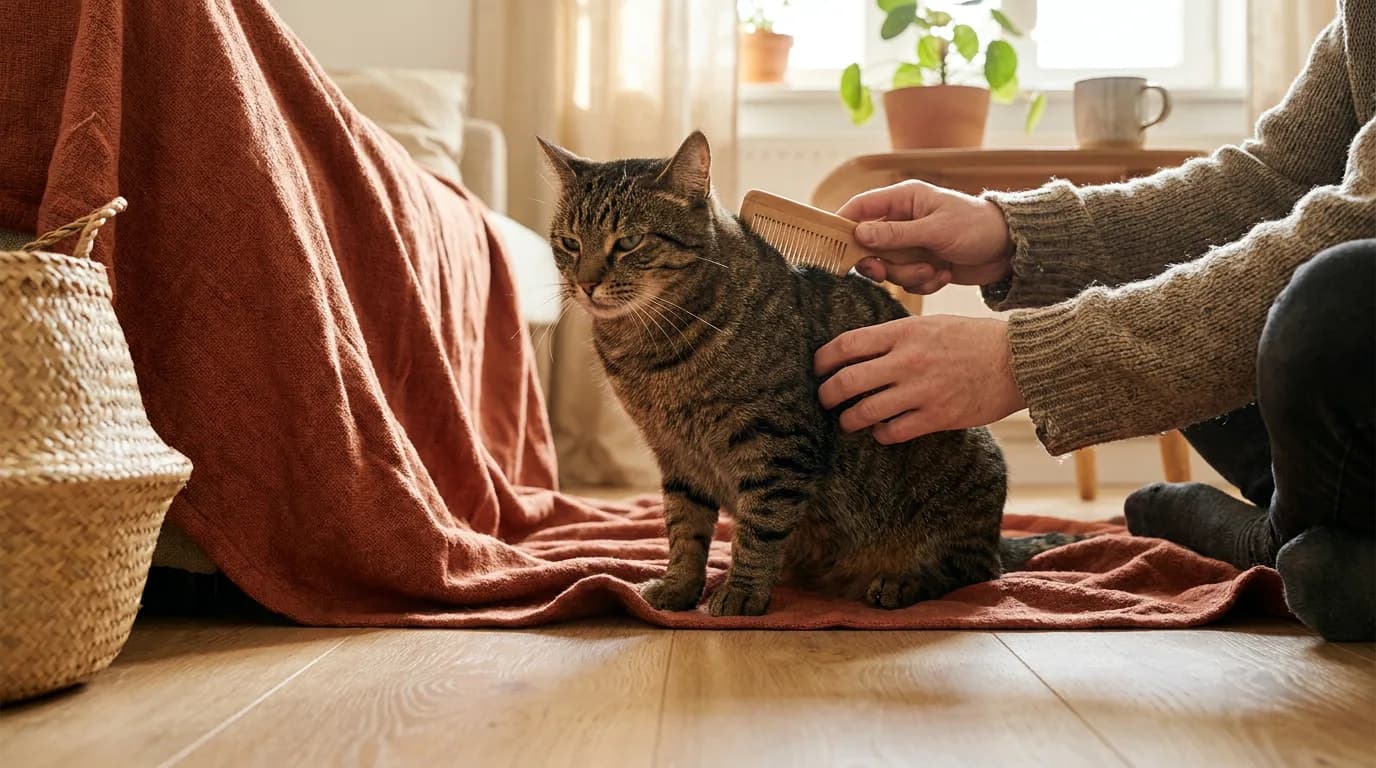
Brush your Russian Blue about once a week (more during seasonal shedding) to pull loose, dander-laden hair off the cat before it lands on your couch. Wiping the coat with a damp cloth or pet-safe wipe removes dried saliva, which is where the Fel d 1 lives. Ideally a non-allergic member of the household does the brushing.

108-oz stainless steel pet fountain with quiet pump and water-level window. Bengals are notoriously water-obsessed; a flowing fountain encourages hydration and pulls them away from sinks and toilets.
Petful may earn a commission when you click through to Chewy, at no extra cost to you.
Run HEPA air filtration
A true HEPA air purifier captures airborne dander, and vacuuming with a HEPA-filter vacuum keeps it from recirculating. Hard floors and washable throws over upholstery give the allergen fewer places to accumulate than carpet and fabric do.
Keep the bedroom cat-free
You spend a third of your life in your bedroom, so making it a no-cat zone gives your immune system hours of low-exposure recovery every night. This single rule is one of the highest-impact changes allergy sufferers report.
Wash your hands and manage the litter box
Wash your hands after handling the cat, and avoid touching your eyes and nose until you do. Have someone without allergies handle litter-box duty when possible, and use a low-dust litter.
- If you love the breed but react a little, an allergist can confirm what you are reacting to and may offer antihistamines, nasal sprays, or immunotherapy (allergy shots or under-the-tongue drops) that build tolerance over time. Managing the human side is often easier than managing the cat.
Who Should Not Get a Russian Blue
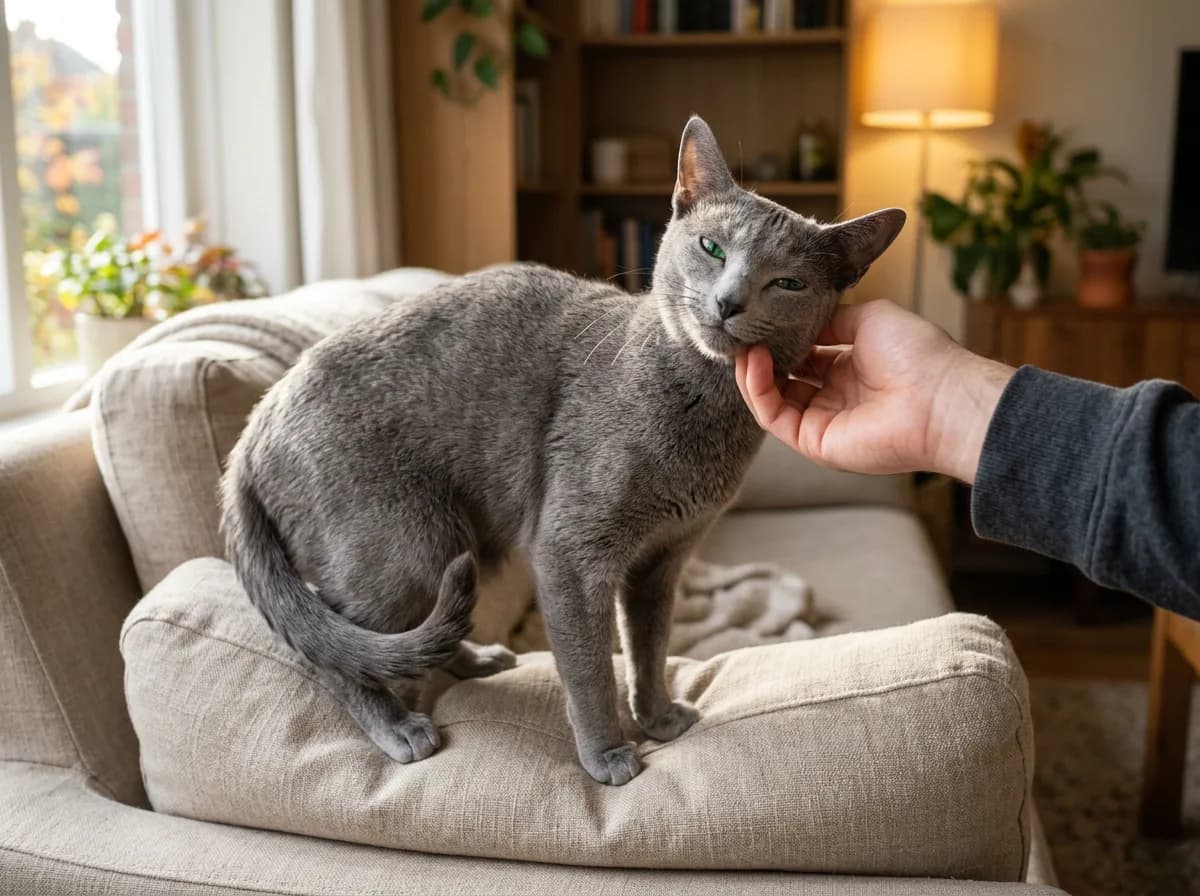
A reduced-allergen breed is not a workaround for a serious allergy. Be cautious, and consider skipping a cat entirely, if any of the following apply:
You or a family member has severe cat allergies, asthma triggered by cats, or a history of breathing difficulty around cats. You cannot arrange a long trial visit with an adult Russian Blue beforehand, so you would be gambling on your reaction. You are counting on a kitten being "safe," when kittens often produce less allergen early and ramp up as they mature, so a tolerable kitten can become an intolerable adult. You are buying a "Russian Blue mix" or a grey shelter cat specifically for low allergens, since mixed cats may not inherit the lower-allergen tendency at all.
- Most grey cats are domestic shorthairs or mixes, not purebred Russian Blues, and they carry none of the breed's reputation for lower Fel d 1. If reduced allergens are the reason you want this breed, the cat's actual lineage matters, so ask the breeder for the cat's papers and meet the parents.
The Bottom Line
The Russian Blue deserves its spot near the top of the allergy-friendly list. Reportedly lower Fel d 1 output and a dense coat that traps dander give people with mild allergies a genuine shot at living happily with a cat. Just hold the claim honestly: this is a reduced-allergen breed, not a hypoallergenic guarantee, and the cat in front of you matters more than the label on the breed. Spend real time with an adult Russian Blue, choose a spayed or neutered cat, keep up the grooming and air filtration, and you will know within a few visits whether this elegant, devoted breed is the right fit for your home and your sinuses.
Not in the literal sense, because no cat is. Russian Blues are considered one of the more allergy-friendly breeds because they reportedly produce lower levels of the Fel d 1 allergen and their dense double coat traps dander close to the skin, but they still produce Fel d 1 and can trigger reactions in sensitive people.
Several veterinary and breed sources report that Russian Blues are naturally lower producers of Fel d 1 than the average cat, which is the main basis for their allergy-friendly reputation. Output varies up to 80 times between individual cats, though, so the breed lowers the odds of a reaction without guaranteeing it.
They are often a good choice for people with mild, well-controlled cat allergies, especially a spayed or neutered cat paired with regular grooming, HEPA filtration, and a cat-free bedroom. They are not a safe bet for severe or asthmatic cat allergies, so always arrange a long trial visit with an adult first.
No, Russian Blues are relatively low shedders despite their thick double coat. Weekly brushing keeps loose, dander-carrying hair under control, which also helps reduce the allergen load in your home.
No. Every cat produces the Fel d 1 protein in its saliva and skin, so no breed is 100% hypoallergenic. Some breeds, including the Russian Blue, Siberian, and Balinese, are simply lower-allergen and better tolerated by many allergy sufferers.
There is no single best breed, because reactions are individual, but the Siberian is frequently cited as one of the lowest Fel d 1 producers, and the Russian Blue, Balinese, Siamese, and Sphynx are also commonly recommended. The most reliable approach is to spend extended time with the specific cat before committing.
Not particularly. Their plush coat is low-maintenance and needs only about weekly brushing, and they are quiet, clean, independent cats. Their biggest practical need is portion control, because the breed is food-motivated and prone to obesity.
The main downsides are a shy, reserved nature with strangers, a strong dislike of noise and change, and a tendency toward obesity from overeating. On the allergy front, the downside is that they still produce Fel d 1, so they are reduced-allergen rather than allergen-free.

Coreen Saito is a pet writer and longtime shelter volunteer with more than a decade in animal rescue. She covers cat behavior, breed care, and the small, ordinary science of sharing a life with companion animals, with a particular focus on honest takes about the products and decisions that actually matter. At home in Arizona, she's outranked by Mac (a dog with the loudest opinion in the house), Rebel (a cat who governs by quiet authority), and Meri (an orange tabby who runs the late shift and the laundry basket). She writes about all three, plus the rescues that keep coming through her life, at LifeWithMinty.com.
Sign up for expert-backed reviews and safety alerts all in one place.