Norwegian Forest Cat Personality: Gentle, Independent, Devoted
The Norwegian Forest cat personality is gentle, calm, intelligent, and independent: affectionate but not clingy, great with kids and pets, quiet, and a natural climber. Here is what living with a Wegie is really like.
Petful is reader supported. As an affiliate of platforms like Amazon and Chewy, we may earn a commission when you buy through links on this page. There is no extra cost to you.
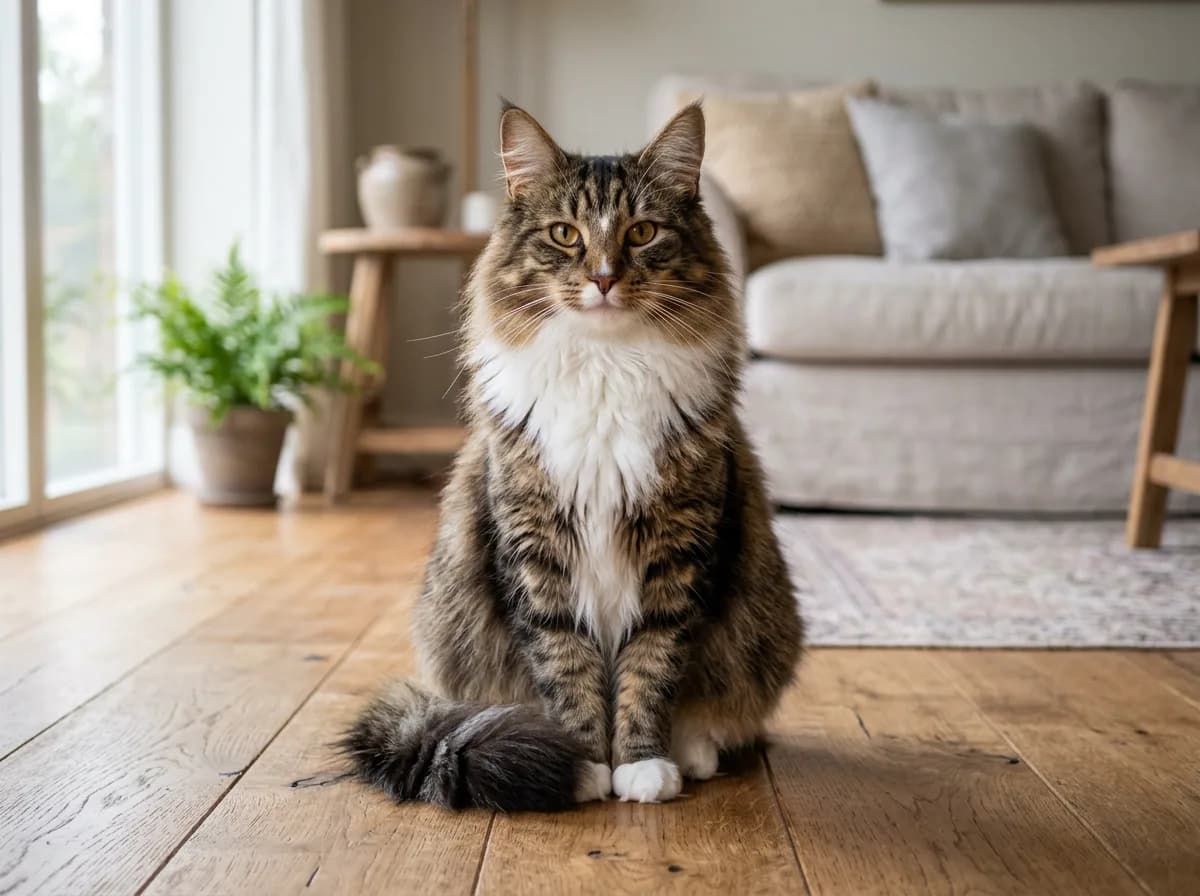
The Cat Fanciers' Association sums up the Norwegian Forest cat personality in one line: these cats "are sweet and affectionate without being clingy," and the breed's six-word temperament profile (companionable, robust, intelligent, familial, patient, playful) tells you the rest. A Wegie is a gentle, calm, deeply people-oriented cat that wants to be in the room with you, not glued to your lap. Expect a smart, sturdy companion that supervises the household, climbs anything it can reach, talks in soft trills instead of loud meows, and shows surprisingly little fear of water. If you want a cat with the loyalty of a dog and the self-possession of a true northern survivor, this is the breed.
- 1Gentle, calm, and even-tempered, the Norwegian Forest cat is affectionate but independent.
- 2It bonds hard with its family yet is rarely a lap cat: it cuddles and shows love on its own terms.
- 3Highly intelligent and trainable, with a strong climbing instinct and an unusual tolerance for (even love of) water.
- 4Quiet, patient, and great with respectful children, dogs, and other cats, which makes it a calm family companion.

Sign up for expert-backed reviews and safety alerts all in one place.
The core Norwegian Forest cat temperament
If you read enough breeder and owner accounts, the same four words keep surfacing: gentle, calm, intelligent, and independent. The Norwegian Forest cat (nicknamed the "Wegie") is an ancient natural breed from Norway, shaped by centuries of surviving harsh Scandinavian winters, and that heritage shows in its steady, unflappable personality. TICA describes the breed as "a gentle, friendly breed that loves being around people," with a "calm temperament" that suits homes with children and other pets.
This is not a high-strung or demanding cat. Wegies are easygoing and adapt well to new situations, new people, and new routines. They tend to be confident rather than skittish, curious rather than anxious. At the same time, they are not aloof: a Norwegian Forest cat genuinely wants to be part of family life, following you from room to room to keep an eye on what you are doing. CFA owners only half-joke that the breed dislikes closed doors, because a Wegie wants to supervise everything.

Compare coverage choices for your pet, then request a quote directly on Lemonade.
- Check a price for your pet
- Review available coverage choices
- See the terms before you decide
Eligibility, waiting periods, limits and exclusions apply.
Petful may earn a commission when you click through to Lemonade, at no extra cost to you.
- The Norwegian Forest cat wants your company more than your lap. It will settle near you, on the next cushion or the back of the sofa, content just to be in the same room. That blend of devotion and self-possession is the breed's signature.
Affection level: loving, but not clingy
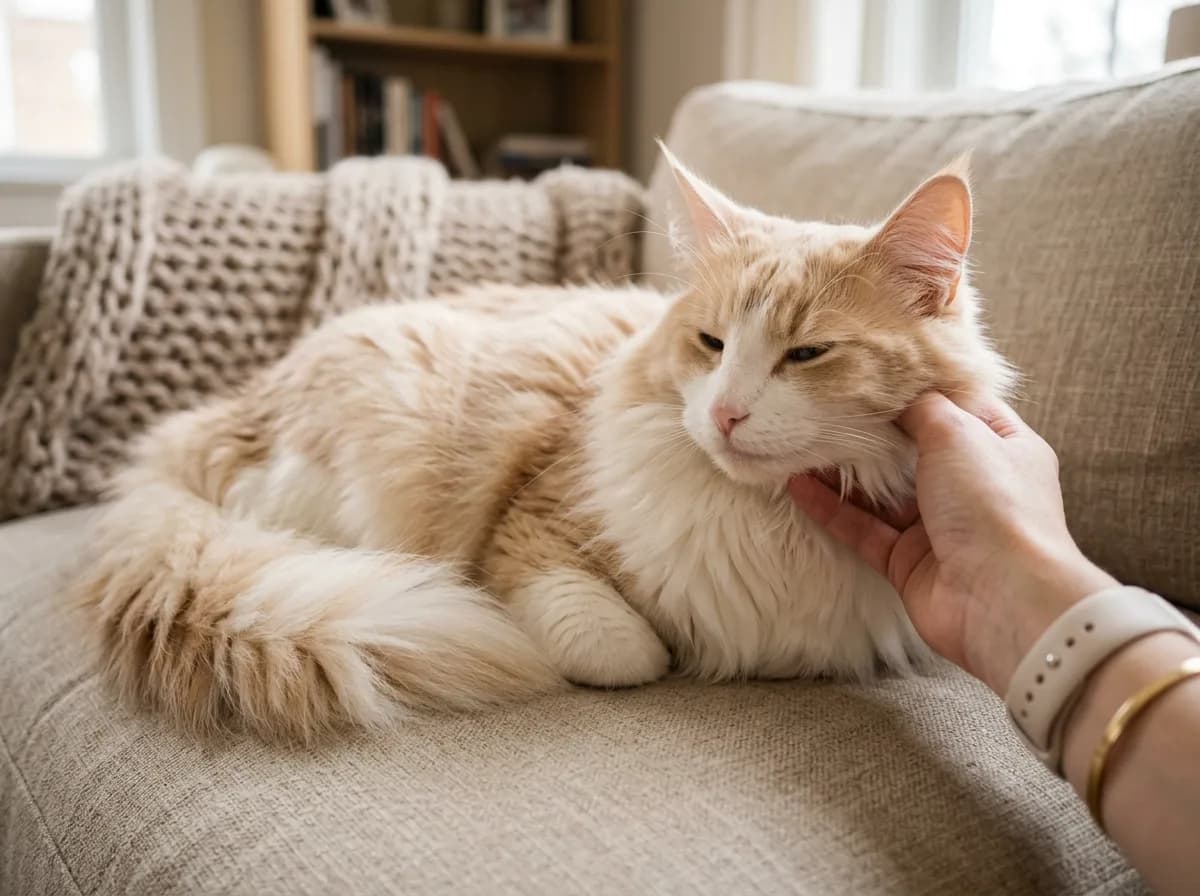
This is the question most future owners ask, so let us be specific. Norwegian Forest cats are affectionate, but they are independent about it. They bond deeply with their people and will seek you out for attention, head-bumps, and slow blinks, but they prefer to give affection on their own schedule rather than on demand. CFA puts it plainly: sweet and affectionate "without being clingy."
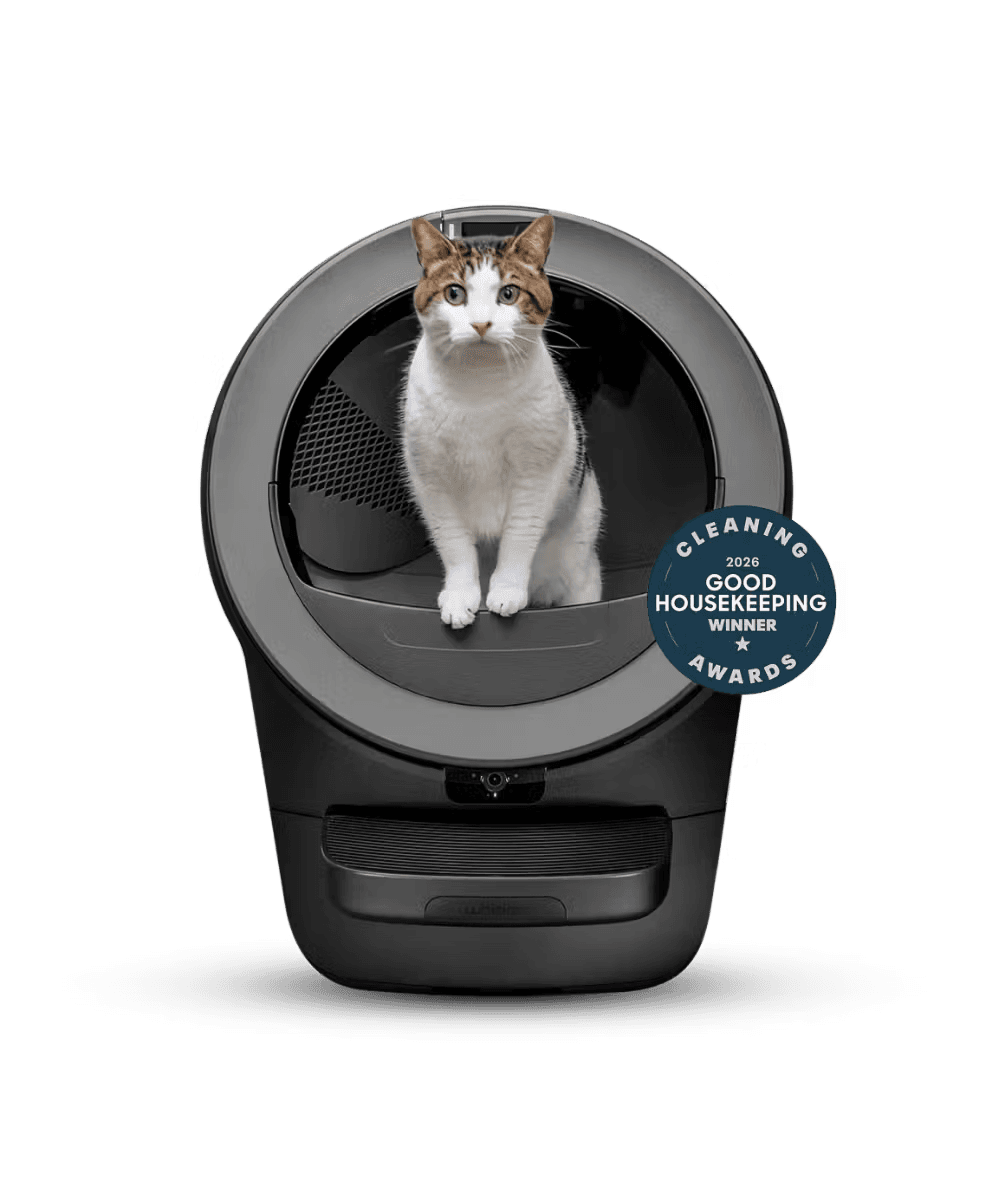
Never Scoop Again® with the Whisker Litter-Robot, the smart self-cleaning automatic litter box. Monitor visits and track weights for better overall care in the Whisker® app. Multi-cat friendly.
Petful may earn a commission when you click through to Whisker, at no extra cost to you.
Do Norwegian Forest cats cuddle or like to be held?
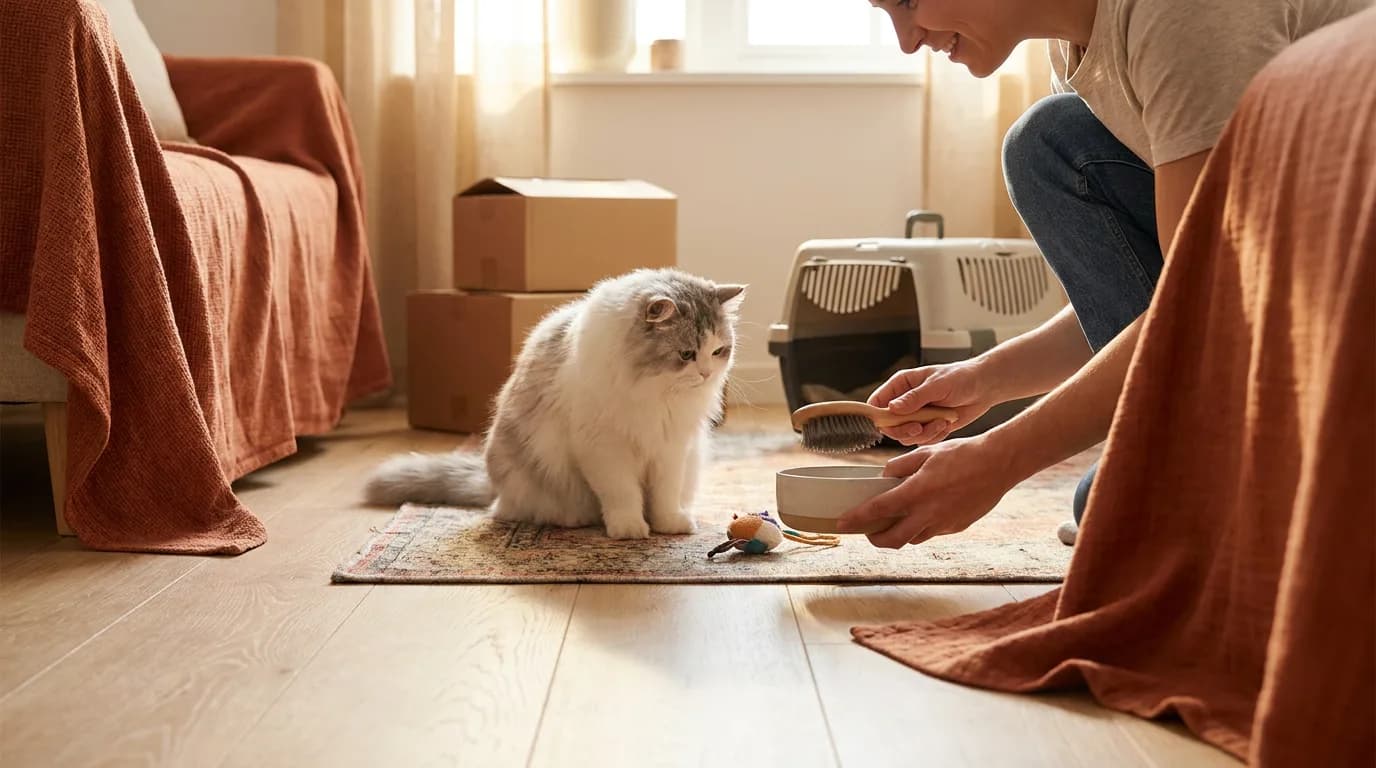
Some do, some do not, and most prefer it to be their idea. A Wegie may choose to curl up against you on the couch or sleep on your pillow, but the breed is generally not fond of being scooped up and held when it has not opted in. Part of that is practical: with a dense, water-resistant double coat built for snow, these cats can overheat, so they often prefer to sit beside you rather than be wrapped up in your arms. The move that works is to let the cat come to you. Earn the cuddle and a Wegie will reward you with real, steady devotion.
Are they lap cats?
Usually not in the classic sense. Most Norwegian Forest cats are "next-to-you" cats rather than "on-top-of-you" cats. If a guaranteed lap warmer is your priority, a Ragdoll is the more reliable choice: the Ragdoll is famous for going limp in your arms and following you devotedly from room to room. You can compare the two temperaments in our Ragdoll cat breed profile. The Wegie loves you just as much; it simply expresses it with proximity rather than total surrender.
- Instead of picking your Wegie up, sit down near it and wait. Norwegian Forest cats reward patience: the affection you do not force is the affection you get. A daily play session also builds the bond faster than any amount of holding.
Independence: happy in its own company
The flip side of "not clingy" is welcome news for busy households: Norwegian Forest cats handle alone time well. They are independent enough to entertain themselves while you are at work, then happily reconnect when you come home. They are not a breed that falls apart from a few hours of solitude, which sets them apart from more emotionally needy cats.
That said, independent does not mean indifferent. Wegies still want daily interaction, play, and companionship, and a cat left genuinely under-stimulated for long stretches can become bored, demanding, and more vocal. The sweet spot is a home that offers company and play in the evening but does not need a cat surgically attached to a human all day. If you travel for work or simply value a low-maintenance temperament, this independent streak is one of the breed's best features.
Intelligence and trainability
Norwegian Forest cats are bright, and they know it. Breeders routinely call them some of the smartest cats they have lived with, occasionally adding that they can be "too smart for their own good." That intelligence translates into real trainability: many Wegies learn their names and come when called, master simple tricks, walk on a harness and leash, and even enjoy traveling. The breed's willingness to learn reflects both its problem-solving brain and a genuine desire to engage with its people.
Practically, a smart cat needs a job. Puzzle feeders, clicker training, teaser-wand games, and rotating toys keep a Wegie's mind busy and head off the boredom-driven mischief that bright cats invent on their own. This is a cat that figures out cabinet latches and watches how doors open, so enrichment is not optional. The Maine Coon shares this dog-like, trainable streak, and you can see the parallel in our Maine Coon cat profile.
- Because they are so intelligent, under-stimulated Norwegian Forest cats can turn to opening cabinets, unrolling toilet paper, or relentless counter-surfing. Daily play and a couple of puzzle toys are the cheapest behavior insurance you can buy.
The climbing instinct
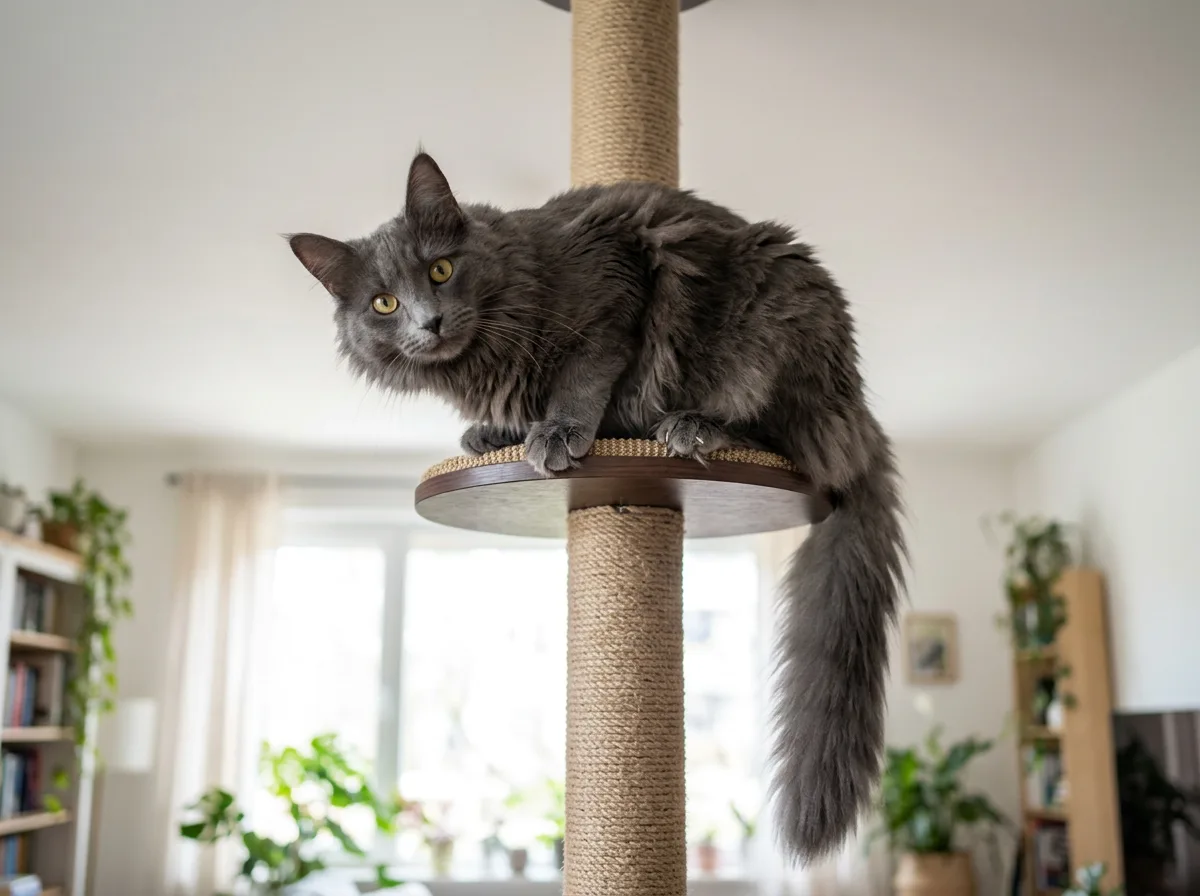
If there is one behavior that defines this breed in motion, it is climbing. Norwegian Forest cats were bred to scale trees and cliffs in the Norwegian wilderness, and they kept the equipment for it: sturdy claws and strong, well-muscled hind legs. Wegies love high vantage points and will seek out the tallest perch in any room to survey their territory. Most strikingly, they are one of the few cats that can descend a tree (or a cat tower) headfirst, a feat most cats cannot manage.
In a home, that instinct means you should plan to go vertical. A tall, sturdy cat tree, wall shelves, and a solid scratching post give a Wegie a legitimate outlet and protect your bookshelves and curtains from becoming the alternative. A cat this athletic and this tall is going to climb something; your job is to make sure it is the right something.

63-inch multi-level cat tree with scratch posts, hammock, plush perches, and dangling toys. Vertical territory is non-negotiable for high-energy climbing breeds like the Bengal.
Petful may earn a commission when you click through to Chewy, at no extra cost to you.
The water fascination
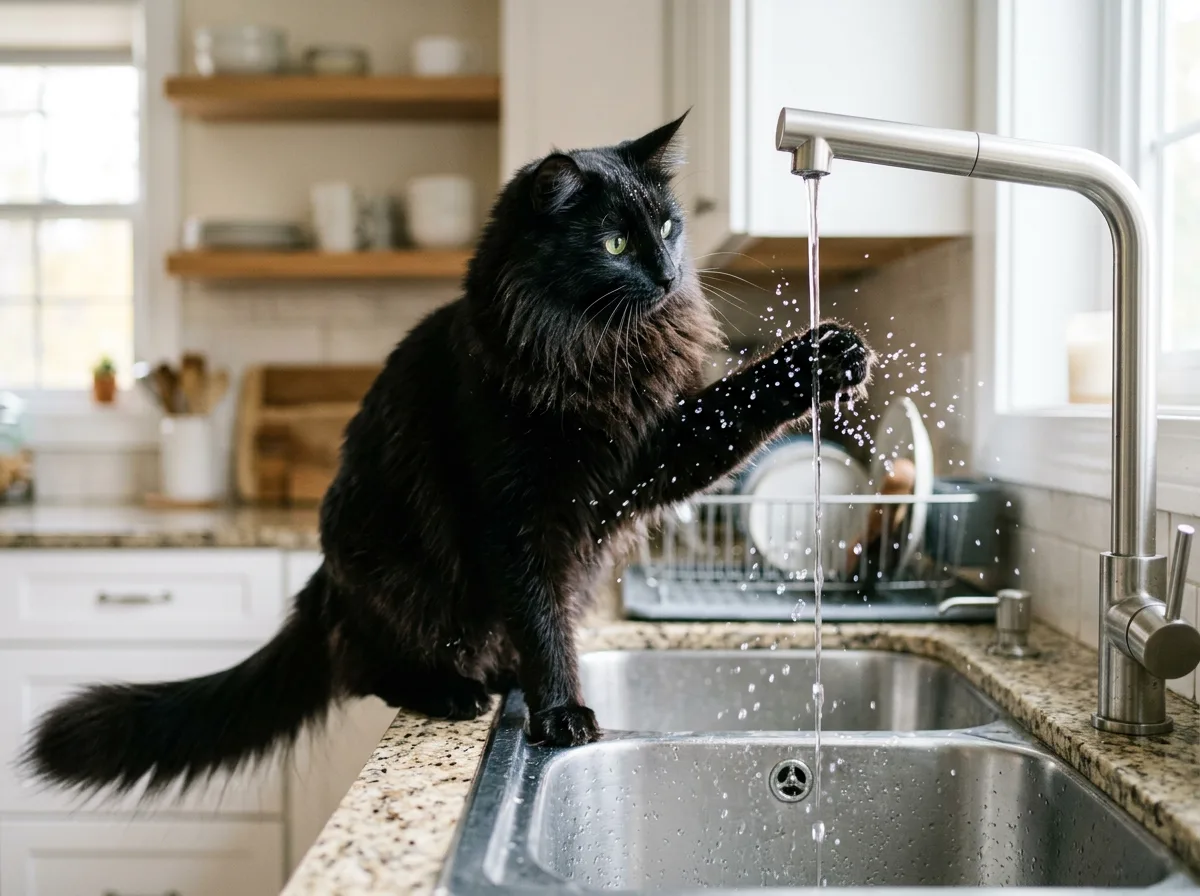
Here is the quirk that surprises new owners: a lot of Norwegian Forest cats actually like water. Thanks to a glossy, water-resistant top coat, the breed never developed the typical feline aversion to getting wet. Many Wegies will paw at a running faucet, hop into the tub after a shower, drink from dripping taps, or try to fish toys (or real fish) out of a bowl or aquarium. It is not universal, but it is common enough to be a genuine breed trait and a constant source of owner stories.
- Do not be alarmed if your Norwegian Forest cat is captivated by the bathroom sink or supervises your shower. A fascination with running water is part of the breed's rugged northern heritage, not a problem to fix. A pet fountain often delights them.
Norwegian Forest cats with children, dogs, and other cats
This is where the breed's calm, patient nature pays off. Norwegian Forest cats are well suited to multi-pet, multi-kid households. They are typically gentle and tolerant with respectful children, and their robust, sturdy build means they hold up to family life better than a delicate cat would. The key word is respectful: like any cat, a Wegie does best with kids who have learned to handle a cat kindly.
With other animals, Wegies are famously easygoing. They generally get along well with cat-friendly dogs and other cats, and breeders note they are rarely aggressive. Even unneutered males can often share a home peacefully, which is unusual. A confident, social temperament makes introductions smoother than with more territorial breeds. One honest caveat: that strong hunting instinct means small "prey" pets such as birds, hamsters, or fish may be too tempting, so house those separately and supervise.

108-oz stainless steel pet fountain with quiet pump and water-level window. Bengals are notoriously water-obsessed; a flowing fountain encourages hydration and pulls them away from sinks and toilets.
Petful may earn a commission when you click through to Chewy, at no extra cost to you.
- Because they are patient, sturdy, and rarely aggressive, Norwegian Forest cats tend to thrive in homes with children and other pets. Give a new Wegie slow, positive introductions and plenty of vertical escape routes, and it usually settles in beautifully.
Energy and play
Do not let the laid-back reputation fool you: this is an active, playful cat. Norwegian Forest cats keep a kitten-like enthusiasm well into adulthood, partly because they are slow to mature and do not reach full physical and emotional adulthood until around five years old. Expect bursts of "zoomies," vertical pounces straight up into the air after a toy, and a lasting love of the hunt.
That energy is satisfied with structure, not chaos. A couple of solid play sessions a day with a wand toy or a thrown ball, plus things to climb and chase, keep a Wegie happy and fit. They are athletic and outgoing when engaged, then perfectly content to relax afterward, which is a big part of their easygoing charm.
Vocalization: a quiet, chirpy talker
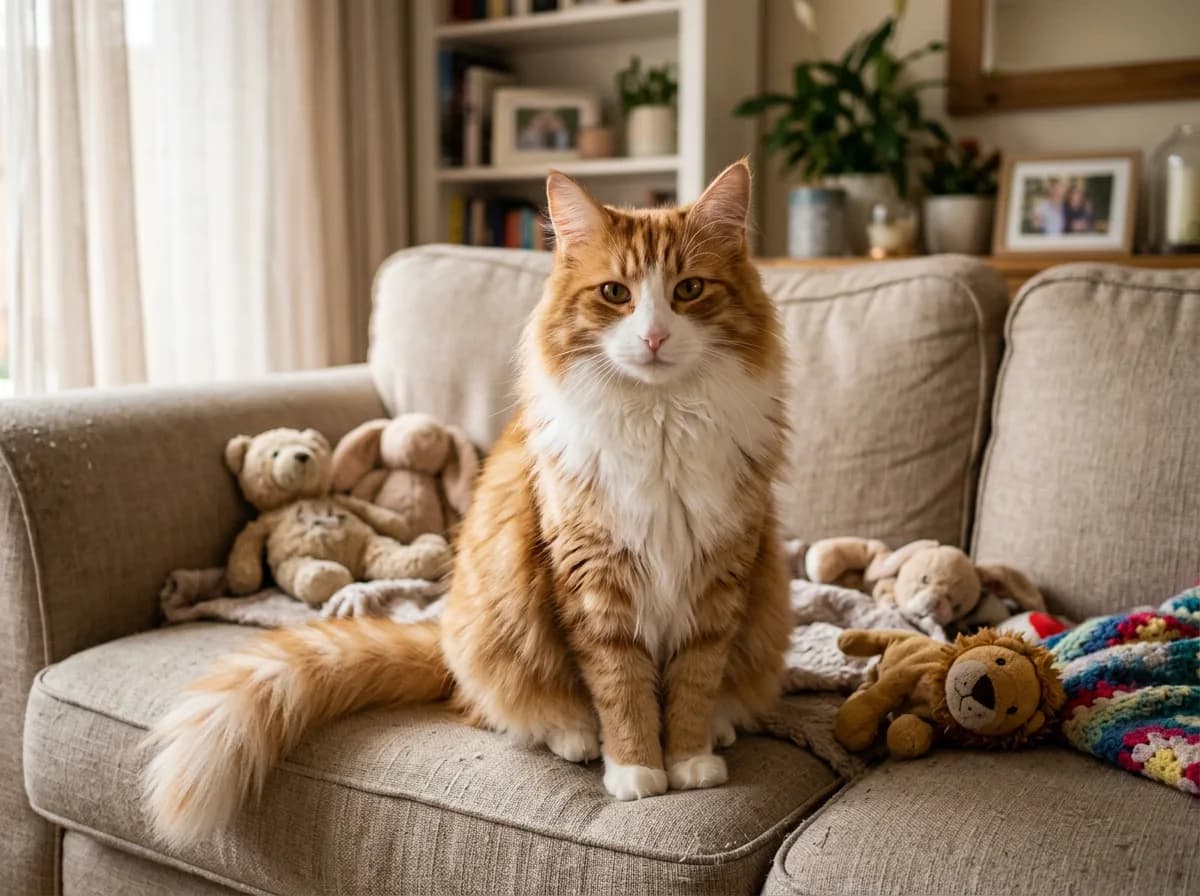
If you dislike a loud cat, good news: Norwegian Forest cats are quiet. Rather than insistent meowing, they communicate in soft chirps, trills, and murmurs, often to greet you or to comment on something they find interesting. The breed is on the quiet end of the spectrum overall. The exception proves the rule: a Wegie that is bored, hungry, or starved for attention can become noticeably more talkative, which is usually a sign it wants more interaction, not less.
Male vs female personality
Personality varies far more by individual cat and upbringing than by sex, but breeders do describe some soft tendencies. Males are often the more outgoing, goofy, attention-seeking, and openly affectionate of the two, sometimes acting like the household clown. Females can be a touch more independent, reserved, and discriminating about when and how they want attention, while still bonding closely with their people. Neither is "better." Both are gentle and family-friendly, and how a kitten is socialized matters more than whether it is a boy or a girl.
| Trait | Norwegian Forest Cat rating | What it means for you |
|---|---|---|
| Affection | High, but on the cat's terms | Loving and bonded, rarely a clingy lap cat |
| Independence | High | Handles alone time well, good for busy homes |
| Intelligence and trainability | High | Learns names, tricks, harness walking, needs mental enrichment |
| Energy and playfulness | Moderate to high | Playful into adulthood, needs daily play and things to climb |
| Vocalization | Low | Quiet, communicates in soft chirps and trills |
| Good with kids | High | Gentle and patient with respectful children |
| Good with dogs and cats | High | Social and rarely aggressive, easy introductions |
| Good with small "prey" pets | Low | Strong hunting instinct, house birds and rodents separately |
| Alone-time tolerance | High | Content to self-entertain during the workday |
| Good for first-time owners | High | Easygoing, adaptable, and forgiving temperament |
Is the Norwegian Forest cat personality right for you?
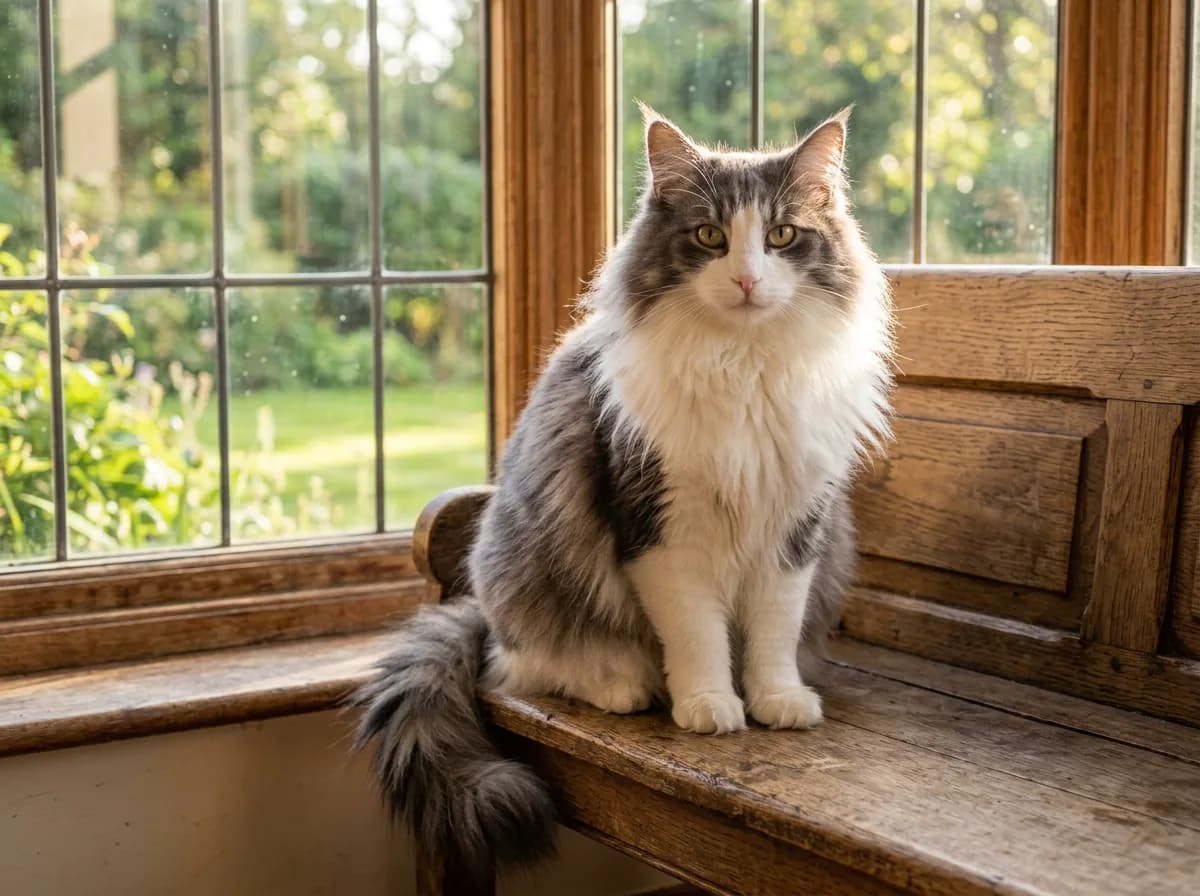
A Wegie is an excellent match if you want a gentle, intelligent, low-drama companion that is devoted without being needy, gets along with the whole family, and does not demand constant lap time. Its independence suits people who work full days, and its calm patience suits homes with kids and other pets. First-time owners do well with the breed, because its easygoing, adaptable nature is forgiving of beginner mistakes.
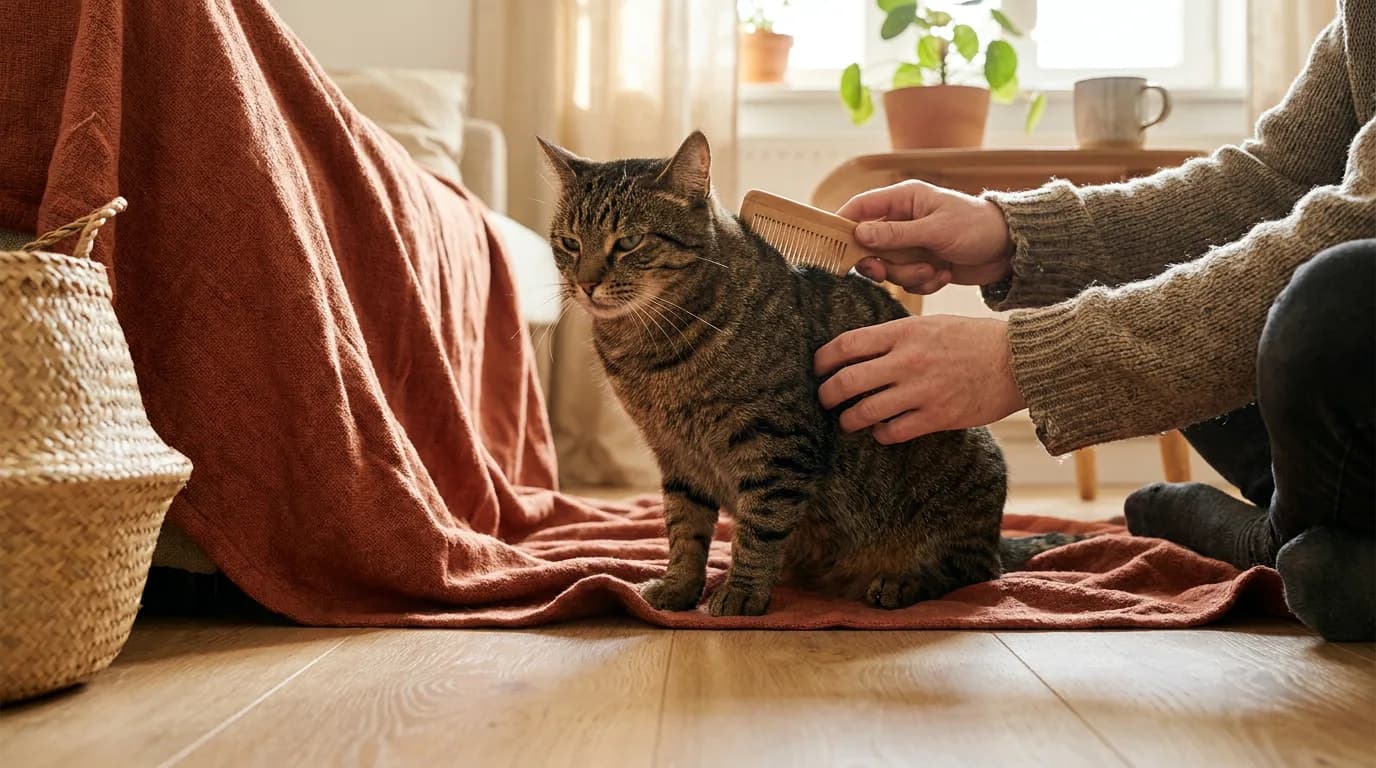
It is a weaker fit if your heart is set on a constant lap cat that wants to be held for hours, since that is simply not most Wegies. It is also a real commitment in two practical areas: the heavy, water-resistant double coat needs weekly combing (more during the spring molt), and this athletic climber needs vertical space and daily play to stay happy. If you can offer companionship, a cat tree, and a comb, a Norwegian Forest cat will repay you with years of steady, affectionate, dog-like devotion. For a side-by-side with similar plush, friendly breeds, compare the Siberian cat and the British Shorthair, two other calm, double-coated companions.
- Norwegian Forest cats are stunning, but adopt for temperament and care needs, not looks. If you cannot commit to weekly grooming, vertical climbing space, and daily play, a lower-energy, shorter-coated breed will make you both happier.
Frequently asked questions
Gentle, calm, intelligent, and independent. Norwegian Forest cats are devoted to their families and love to supervise the household, but they are easygoing rather than demanding. Expect a smart, patient, dog-like companion that climbs, tolerates water, and communicates in soft chirps and trills.
Yes, they are affectionate, but on their own terms. They bond closely with their people and seek out attention, yet they are not typically clingy lap cats and often prefer sitting beside you to being held. The Cat Fanciers' Association describes the breed as sweet and affectionate without being clingy.
Most prefer not to be picked up unless it was their idea. Their dense, warm double coat means they can overheat, so many Wegies would rather curl up next to you than be wrapped in your arms. Let the cat approach you and the cuddles come more freely.
They are independent. Wegies handle alone time well and can entertain themselves during a workday, which makes them a good fit for busy households. They still want daily play and companionship, but they are not a clingy or anxious breed.
Yes. Their calm, patient, sturdy temperament makes them well suited to families. They are gentle with respectful children and rarely aggressive, and their robust build holds up to household activity better than a delicate cat.
Generally yes. They are social and easygoing and usually get along with cat-friendly dogs and other cats, with smooth introductions. The exception is small prey-type pets such as birds and rodents, which their strong hunting instinct makes risky.
Many do. Thanks to a water-resistant coat, the breed never developed the usual cat aversion to getting wet, so a lot of Wegies enjoy pawing at running taps, splashing in the tub, or fishing toys out of a bowl.
Yes. Their adaptable, forgiving, low-drama temperament makes them beginner-friendly. The main commitments are weekly grooming for the double coat and providing vertical space and daily play for an athletic, intelligent climber.
No. They are affectionate but independent, often called a "be in the same room" cat rather than a velcro cat. A Wegie that suddenly becomes clingy or extra vocal is usually bored or wants more play and interaction.
They tend to bond with the whole family while often showing a soft preference for one favorite person. Even so, they remain friendly and sociable with everyone in the household rather than fixating on a single human.
The main drawbacks are practical: a heavy, water-resistant double coat that needs weekly combing and sheds hard in spring, a need for vertical climbing space and daily play, slow maturity (up to about five years), and a strong hunting instinct that makes them unsafe around small caged pets.
The Maine Coon is usually the larger and longer of the two. The Norwegian Forest cat is a large breed but typically a bit smaller, and the two share a similar gentle, friendly, dog-like temperament.

Coreen Saito is a pet writer and longtime shelter volunteer with more than a decade in animal rescue. She covers cat behavior, breed care, and the small, ordinary science of sharing a life with companion animals, with a particular focus on honest takes about the products and decisions that actually matter. At home in Arizona, she's outranked by Mac (a dog with the loudest opinion in the house), Rebel (a cat who governs by quiet authority), and Meri (an orange tabby who runs the late shift and the laundry basket). She writes about all three, plus the rescues that keep coming through her life, at LifeWithMinty.com.
Sign up for expert-backed reviews and safety alerts all in one place.