Havana Brown Kittens: Cost, Rarity, and How to Find One
Havana Brown kittens are among the rarest pedigreed kittens in North America, priced $600-$2,500 depending on quality. This guide covers kitten development, breeder vetting, health checks, and what living with a velcro mahogany kitten is really like.
Petful is reader supported. As an affiliate of platforms like Amazon and Chewy, we may earn a commission when you buy through links on this page. There is no extra cost to you.
Havana Brown kittens are one of the rarest pedigreed kittens you can buy in North America, with pet-quality kittens typically priced between $600 and $1,500 and show-quality kittens reaching $2,500, reflecting a breed so scarce that both the CFA and TICA have classified it as a breed in need of preservation. If you have been searching for a mahogany-coated kitten with deepening green eyes and a personality that follows you from room to room, this guide covers everything you need to know before you reach out to a breeder.
- 1Havana Brown kittens cost $600-$2,500 depending on quality and lineage
- 2Eyes are blue at birth and shift to vivid green by 12 months
- 3Fewer than 1,000 registered Havana Browns exist worldwide, making waitlists common
- 4Reputable breeders will ask CFA or TICA registration and provide health guarantees
- 5Kittens are ready to go home at 12-16 weeks, not 8

Sign up for expert-backed reviews and safety alerts all in one place.
What Is a Havana Brown Kitten?
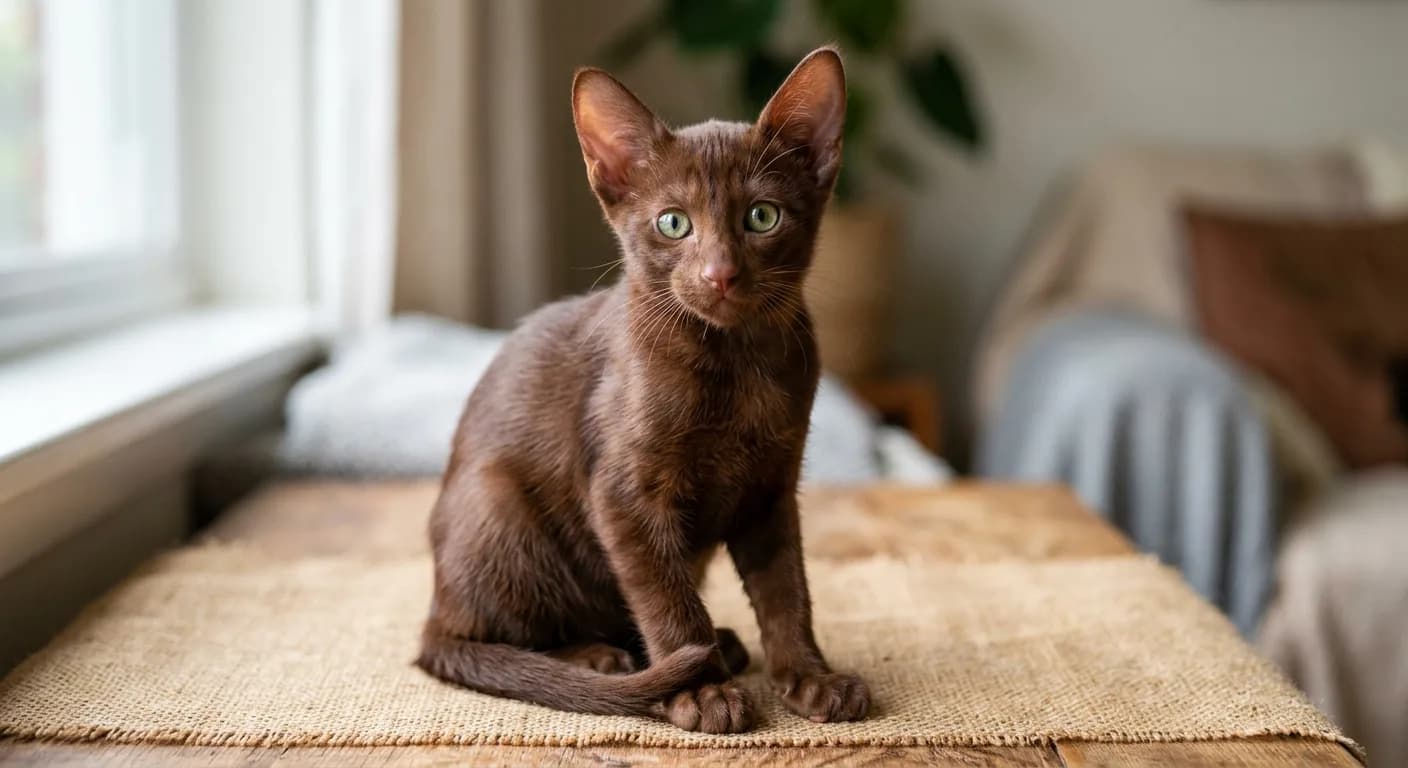
The Havana Brown is a pedigreed breed recognized by the CFA, TICA, and ACFA. The first recorded kitten of the type, Elmtower Bronze Idol, was born in England in 1952 after breeders crossed a black domestic shorthair with a Siamese carrying the chocolate gene. The name comes from the rich brown color of a Havana cigar, and the coat color is the breed's defining trait: a warm, reddish mahogany brown with no tabby striping, no white patches, and no variation permitted under the CFA standard.
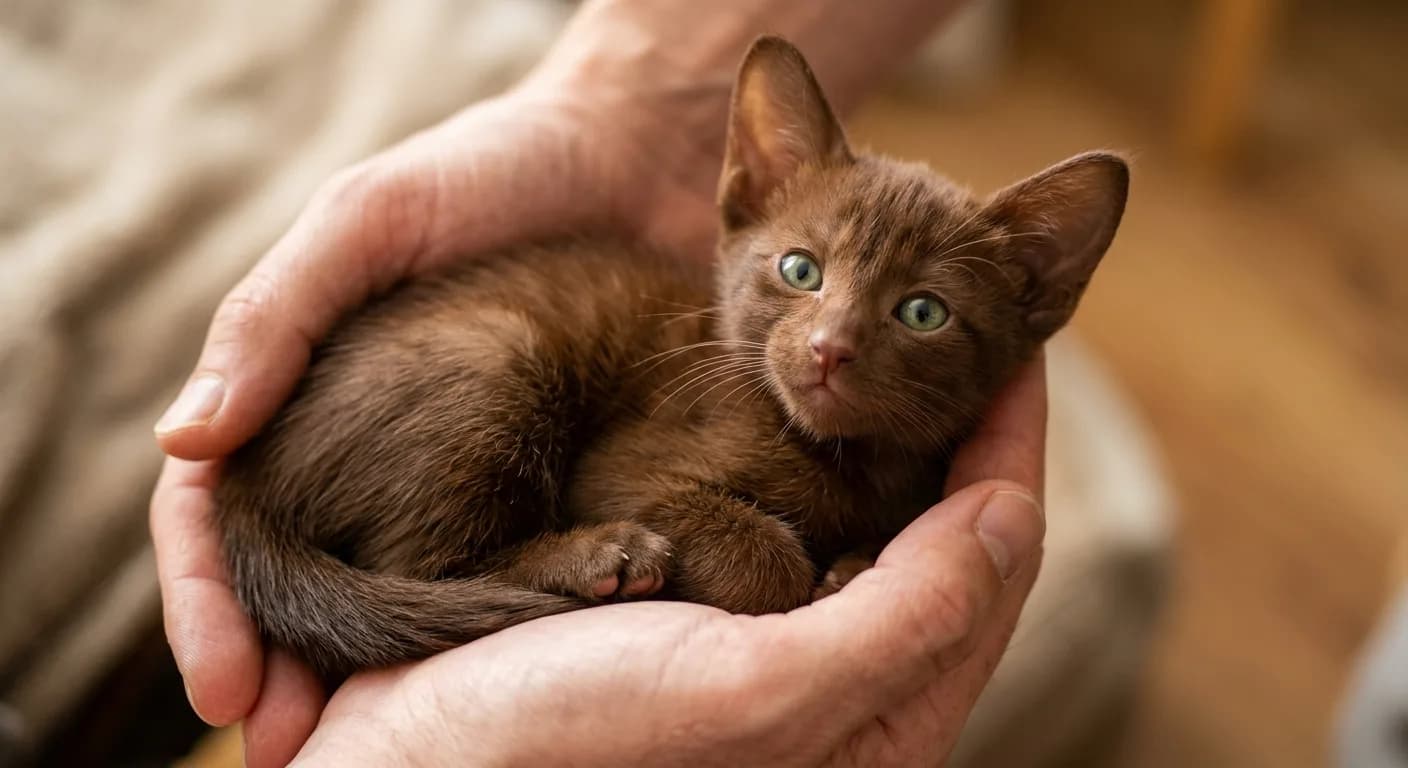
At birth, Havana Brown kittens look darker and can appear almost black under dim light. As the coat matures over the first several months, the warm reddish-brown undertones emerge and the short, smooth, glossy coat settles into the characteristic mahogany shade. TICA also recognizes a lilac (lavender) dilute variant produced by the same chocolate genetics, but the classic rich brown is by far the more common and more sought-after color.

Color-changing crystal litter that flags pH shifts in your cat's urine, an early warning sign of UTIs, kidney issues, and more.
Petful may earn a commission when you click through to Chewy, at no extra cost to you.
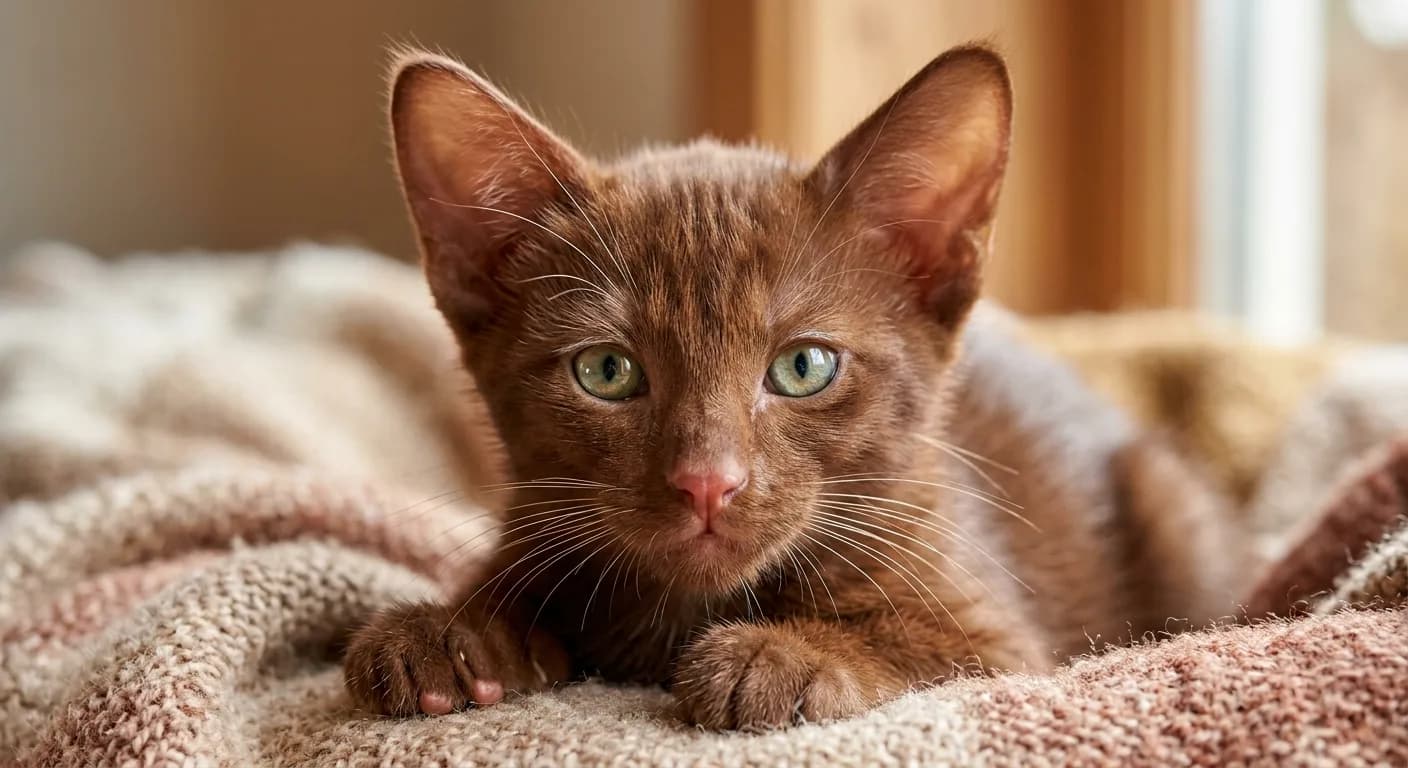
- Havana Brown kittens, like most kittens, are born with blue eyes. The shift to their signature brilliant green begins around 6-8 weeks and continues developing until 12 months of age. The CFA standard requires all shades of green, with brighter and more vivid green preferred.
What Havana Brown Kittens Look Like
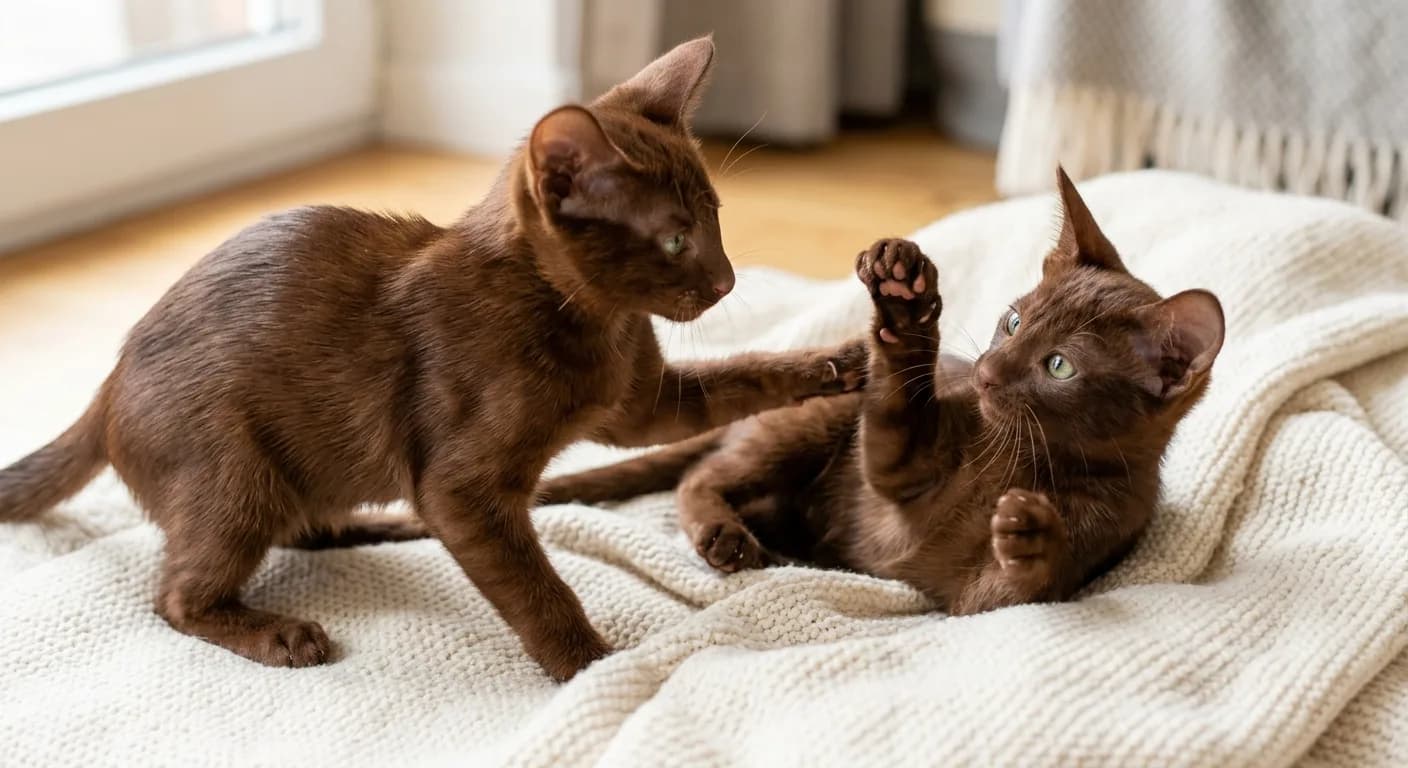
Havana Browns are medium-sized cats with long, muscular bodies and slim legs that end in compact oval feet. Males typically weigh 8-12 pounds at maturity; females stay under 8 pounds. A distinctive feature is the muzzle: it has a noticeably square, well-developed chin that breeders and the CFA standard sometimes describe as giving the face a "corn cob" profile when viewed from the side. The ears are medium-sized and tilt forward, giving kittens a naturally alert and curious expression.
As kittens, Havana Browns are compact and slightly chunkier than they will be as adults, with oversized paws and ears relative to their body, which adds to their charm. The coat is short and requires very little grooming, which makes them a practical choice for owners who want a low-shedding companion.
Havana Brown Kitten Temperament: The Velcro Cat
Breeders and owners consistently describe Havana Browns as "velcro cats." This is not an exaggeration. The breed is intensely people-oriented and will follow its owner from room to room, sit beside them while they work, and tap a hand or arm with a paw when it wants attention. Unlike the loud Siamese ancestors in its lineage, the Havana Brown is a quiet breed that communicates primarily through touch rather than vocalization.
Kittens express this personality from a young age. Expect a Havana Brown kitten to:
Never Scoop Again® with the Whisker Litter-Robot, the smart self-cleaning automatic litter box. Monitor visits and track weights for better overall care in the Whisker® app. Multi-cat friendly.
Petful may earn a commission when you click through to Whisker, at no extra cost to you.
- Seek physical contact constantly, preferring to be on or next to a person rather than across the room
- Tap or poke with its paws instead of meowing to signal hunger or a desire for play
- Bond deeply with one primary person while remaining friendly with other household members
- Engage enthusiastically with puzzle toys, feather wands, and interactive play sessions
- Adapt well to children and other pets when socialized properly during the 3-9 week socialization window
- Unlike some high-energy breeds that demand constant human interaction for entertainment, Havana Browns can occupy themselves with solo toy play. A well-supplied kitten room with puzzle feeders, tunnels, and scratching posts will keep a kitten constructively busy while you are working.
Kitten Development Timeline
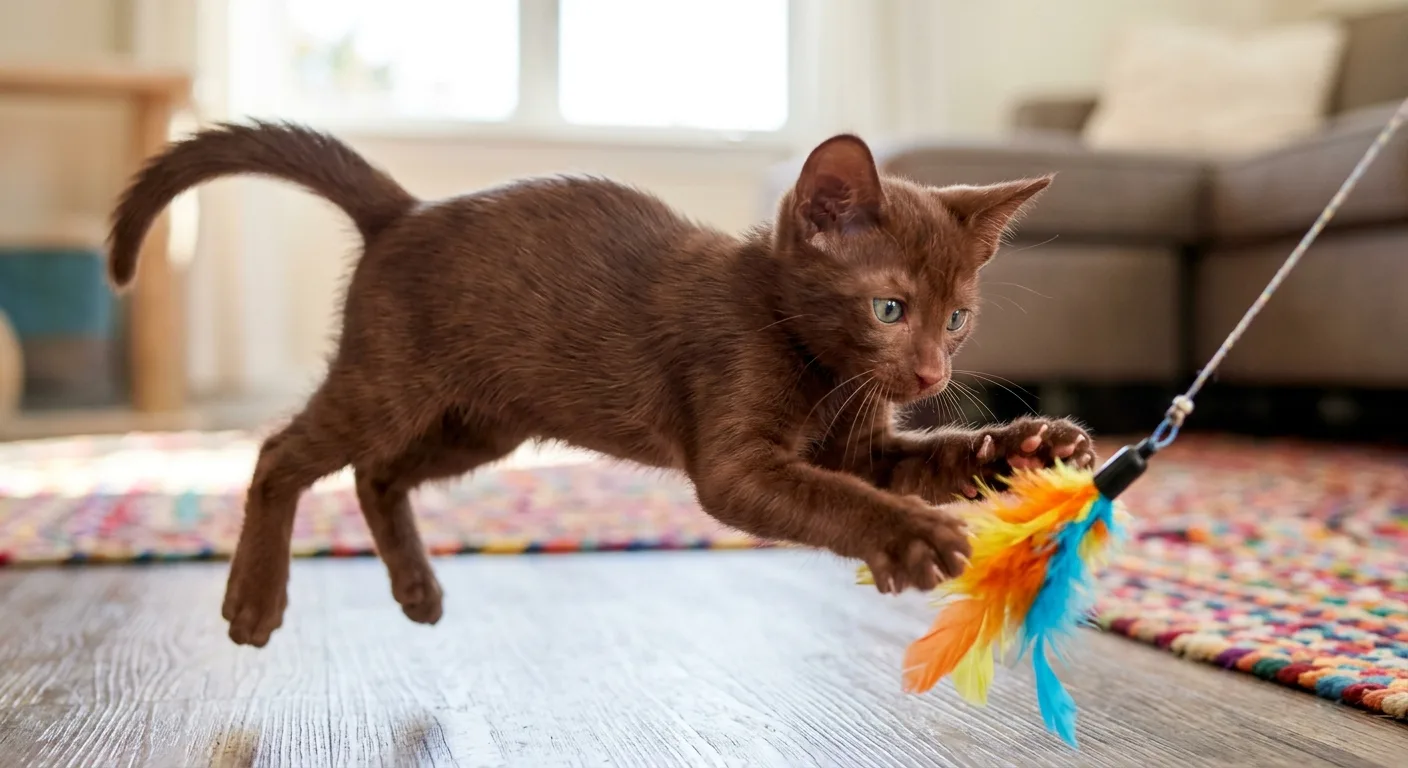
Understanding kitten development helps you evaluate breeder claims and set expectations for what you are bringing home.
| Age | Milestone | What It Means for You |
|---|---|---|
| 0-2 weeks | Eyes/ears sealed, fully dependent on mother | No interaction possible |
| 3-4 weeks | Eyes open, first wobbling steps | Socialization window opens |
| 5-7 weeks | Playing with littermates, trying solid food | Breeder handles kittens daily |
| 8-11 weeks | Primary socialization peak, immune system maturing | First vaccines given; kitten stays with mother |
| 12-16 weeks | Fully weaned, vaccinated, litter-trained | Earliest ethical rehoming window (CFA recommends 12+ weeks) |
| 6-12 months | Eyes fully shift to green; coat color settles | Adult personality emerges |
Most reputable Havana Brown breeders release kittens at 12-16 weeks rather than the 8-week minimum legal age seen in some states. The extra weeks matter: kittens that stay with their mothers and littermates longer show better bite inhibition, lower stress reactivity, and more robust immune responses. A breeder who offers a Havana Brown kitten younger than 12 weeks is cutting corners.
How Much Do Havana Brown Kittens Cost?
Cost is one of the first questions prospective owners ask, and the answer has a wide range because several factors interact.
| Quality Tier | Typical Price Range | What You Get |
|---|---|---|
| Pet quality (limited registration) | $600-$1,500 | Spay/neuter contract, full vaccinations, health guarantee, no breeding rights |
| Breeder quality (full registration) | $1,500-$2,000 | Right to breed and register offspring with CFA or TICA |
| Show quality (full registration) | $2,000-$2,500+ | Meets the full CFA/TICA standard for conformation showing |
Factors that push the price higher:
- Proven show-winning lineage or grand champion parents
- Rare lilac (lavender) coloring, which is harder to produce
- Geographic scarcity (breeders in your region vs. shipping from across the country)
- Breeder reputation and waitlist demand
One-time setup costs to budget alongside the kitten price:
- Initial vet exam: $50-$150
- Spay or neuter (if not included): $200-$500
- Carrier, litter box, food, toys, scratching posts: $150-$400
- Pet insurance (recommended for a rare breed): $30-$60/month
- A Havana Brown kitten advertised for $200-$400 with no mention of CFA or TICA registration, health guarantees, or veterinary records is almost certainly not a purebred Havana Brown. Because the breed is so rare, misrepresentation is common. Insist on documentation before paying any deposit.
How Rare Are Havana Brown Cats?
Havana Browns are genuinely endangered as a pedigreed breed. By the early 1990s the gene pool in North America had become so restricted that breeders and the CFA began discussing outcrossing programs to widen genetic diversity. Estimates suggest fewer than 1,000 registered Havana Browns exist worldwide, with only a handful of active breeders in the United States at any given time.
This rarity has two practical consequences. First, you should expect a waitlist of six months to a year or more with most reputable breeders. Second, you should never expect to walk into a shelter and find one: Havana Browns are seldom surrendered to rescues, and when they are, they are placed quickly. The Havana Brown cat breed profile on Petful covers the history and genetics of the breed in more depth if you want background before you begin your breeder search.
Finding a Reputable Breeder
Because the breed is rare and demand is high, the breeder vetting process is more important here than with common breeds. A reputable Havana Brown breeder will:

63-inch multi-level cat tree with scratch posts, hammock, plush perches, and dangling toys. Vertical territory is non-negotiable for high-energy climbing breeds like the Bengal.
Petful may earn a commission when you click through to Chewy, at no extra cost to you.
- Register litters with the CFA, TICA, or ACFA and provide documentation
- Raise kittens in the home, not in cages or separate cattery buildings
- Conduct genetic health testing on breeding cats and share results
- Provide a written health guarantee covering congenital defects for a minimum of 12-24 months
- Require a spay/neuter contract on pet-quality kittens (limited registration)
- Welcome your questions and ask questions of their own about your household and lifestyle
- Allow a virtual or in-person visit before the kitten goes home
Questions to ask every breeder:
1. Are your cats and litters CFA or TICA registered? Can I see the papers?
2. What genetic health testing do you perform on your breeding cats?
3. What vaccinations will the kitten have received before I take it home?
4. Is a written health guarantee included, and what does it cover?
5. What is your spay/neuter policy and timeline?
6. What do you feed your kittens and what do you recommend after adoption?
7. How many litters per year do you produce, and how long is the typical waitlist?
Red flags to walk away from:
- No CFA, TICA, or ACFA registration offered
- Kitten available immediately with no waitlist on a rare breed
- Unable or unwilling to provide veterinary health records
- Shipping kittens under 12 weeks
- No spay/neuter contract on a pet-quality kitten
- Reluctance to answer health testing questions
The CFA and TICA both maintain breeder referral lists on their websites. Searching those directories is the safest starting point. For context on how Havana Brown pricing compares across the breed market, see the Havana Brown cat price breakdown on Petful.

108-oz stainless steel pet fountain with quiet pump and water-level window. Bengals are notoriously water-obsessed; a flowing fountain encourages hydration and pulls them away from sinks and toilets.
Petful may earn a commission when you click through to Chewy, at no extra cost to you.
- Breed-specific rescues for Havana Browns are nearly nonexistent given the small population. General cat rescues occasionally take in mislabeled brown cats that are not true Havana Browns. If rescue is your goal, contacting active breeders is actually the most effective path: reputable breeders often know of adult cats needing rehoming from owner illness or lifestyle changes.
Bringing a Havana Brown Kitten Home
Kitten-Proofing
Havana Brown kittens are curious and agile from an early age. Before your kitten arrives:
- Secure loose electrical cords with cord covers or route them out of reach
- Remove toxic houseplants (lilies, pothos, philodendron)
- Close off small gaps behind appliances where a kitten can wedge itself
- Store cleaning products and medications in latched cabinets
- Put breakables on shelves the kitten cannot yet reach
Supplies Checklist
| Item | Recommended Spec | Why It Matters |
|---|---|---|
| Litter box | Large, uncovered | Havana Browns dislike cramped spaces |
| Litter | Unscented clumping | Scented litters can deter use |
| Food bowls | Stainless steel or ceramic | Resistant to bacteria; flat for wide jaw |
| Kitten food | High-protein, named meat first ingredient | Supports muscle development |
| Scratching post | Minimum 30 inches tall, sisal | Redirects natural scratching behavior |
| Cat tree | Multi-level with perches | Satisfies climbing instinct |
| Interactive toys | Wand, puzzle feeder, tunnel | Channeling velcro energy appropriately |
Feeding a Havana Brown Kitten
Kittens need a food specifically formulated for growth, not adult maintenance. Look for a food with a named protein source (chicken, turkey, salmon) as the first ingredient and an AAFCO statement confirming it meets nutrient profiles for "growth" or "all life stages." Free-feeding dry kibble is acceptable for most kittens under six months. After six months, transition to measured meals twice daily to prevent the obesity the breed is prone to as it matures.
Continue whatever food your breeder used for the first two weeks after you bring the kitten home, then transition gradually over 7-10 days if you choose to switch brands.
Early Health and Vet Schedule
Havana Brown kittens should arrive with at least one round of vaccinations completed. Your first task after bringing any new kitten home is a wellness exam within 72 hours, both to confirm health and to establish a relationship with your veterinarian.
Core vaccination schedule for kittens:
- 6-8 weeks: FVRCP (combo: rhinotracheitis, calicivirus, panleukopenia)
- 10-12 weeks: FVRCP booster
- 12-16 weeks: Rabies (required by law in most states)
- Annual: FVRCP booster; rabies per local law
Health conditions to discuss with your vet:
- Hemophilia B: A blood clotting disorder documented in some Havana Brown lines. Ask your breeder if the sire and dam have been tested.
- Upper respiratory infections: Common in kittens from multi-cat households; watch for sneezing, discharge, or lethargy in the first weeks.
- Urinary tract disorders: Mention this predisposition to your vet so you know the early warning signs (straining, blood in urine, frequent trips to the box).
- Obesity: Not a kitten risk, but Havana Browns must stay slender and well-muscled through adulthood. Establish good feeding habits from day one.
- Not all Havana Brown breeders currently test for hemophilia B, but it is worth asking directly. A carrier queen can pass the condition to male kittens. If your breeder cannot confirm the status of both parents, discuss baseline clotting tests with your vet at the first wellness exam.
How Havana Browns Compare to Burmese Cats
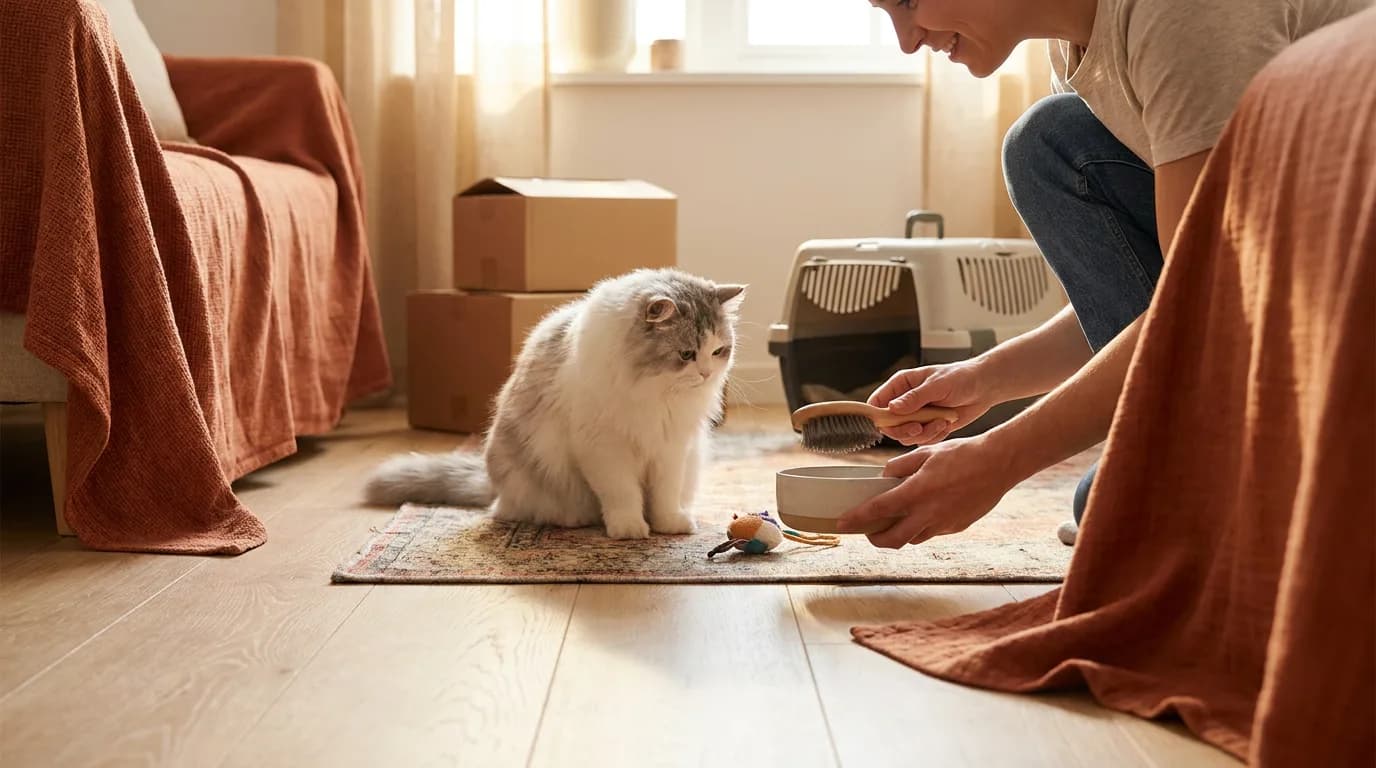
New Havana Brown fans often confuse the breed with the Burmese, since both are solid brown, medium-sized, and people-oriented. The differences matter when choosing which breed fits your lifestyle. For a full comparison, see the Burmese cats profile on Petful. The short version: Burmese cats are rounder, stockier, and substantially more vocal; Havana Browns are leaner, quieter, and communicate primarily through touch. Burmese are also far more common and easier to find. For a broader look at pedigreed cats, the cat breeds category has profiles for dozens of breeds side by side.
- Havana Browns have an angular face, oval eyes, and a distinctive square muzzle; Burmese have a rounder, domed head and more prominent round eyes. If the cat you are looking at has a very round, heavy head and a loud voice, it is almost certainly a Burmese, not a Havana Brown.
Pet-quality Havana Brown kittens from reputable CFA or TICA-registered breeders typically cost $600 to $1,500. Breeder-quality kittens with full registration run $1,500 to $2,000, and show-quality kittens can reach $2,500 or more depending on lineage and the breeder's reputation. Prices below $400 for a "purebred" Havana Brown are almost always a red flag.
Havana Browns are one of the rarest pedigreed cat breeds in the world. Fewer than 1,000 registered individuals are believed to exist globally, and only a small number of active breeders operate in the United States at any given time. Waitlists of six months to a year are normal. The CFA has formally classified the breed as in need of preservation due to its small gene pool.
Yes, for the right household. Havana Browns are exceptionally affectionate, intelligent, and playful, and they form very strong bonds with their primary person. They thrive in homes where someone is present for much of the day. They are quieter than Siamese but still crave daily interaction and will become bored or anxious if left alone for long stretches repeatedly.
Most sources place the Havana Brown's lifespan at 12 to 15 years, though some individuals live into their late teens with good veterinary care, a healthy diet, and an indoor-only lifestyle.
Start with the breeder referral directories maintained by the CFA (cfa.org) and TICA (tica.org). These list breeders who have agreed to the respective organization's code of ethics. Reaching out to multiple breeders and joining their waitlists simultaneously is common practice given how few litters are produced each year. Avoid Craigslist, Facebook Marketplace, and unregistered sources.
Ask for CFA or TICA registration documentation, the health testing results for both parents (especially hemophilia B status), the vaccination and deworming history, a copy of the written health guarantee, and the spay/neuter policy for pet-quality kittens. Also ask how the kittens are socialized, what they are currently eating, and how long the typical waitlist is. A breeder who resists any of these questions is a red flag.
Most reputable Havana Brown breeders release kittens at 12 to 16 weeks of age. While 8 weeks is the legal minimum in most U.S. states, the CFA recommends at least 12 weeks for this breed because the extra weeks allow the kitten's immune system to mature, its socialization with littermates to complete, and its litter training to solidify. Be skeptical of any breeder offering a Havana Brown kitten younger than 12 weeks.
Yes, when properly socialized during the kitten stage. Havana Browns that grow up with children and other pets generally adapt well to both. They are gentle enough for families with older children who understand how to handle a cat respectfully. Because they are a quieter breed that communicates by tapping rather than meowing, they also do well in multi-pet households without creating tension through constant noise or aggression.

Coreen Saito is a pet writer and longtime shelter volunteer with more than a decade in animal rescue. She covers cat behavior, breed care, and the small, ordinary science of sharing a life with companion animals, with a particular focus on honest takes about the products and decisions that actually matter. At home in Arizona, she's outranked by Mac (a dog with the loudest opinion in the house), Rebel (a cat who governs by quiet authority), and Meri (an orange tabby who runs the late shift and the laundry basket). She writes about all three, plus the rescues that keep coming through her life, at LifeWithMinty.com.
Sign up for expert-backed reviews and safety alerts all in one place.