Australian Mist: Personality, Coat Patterns, Care, and Cost
The Australian Mist’s softly patterned coat accompanies a reputation for companionship. Explore its appearance, daily routine, sourcing questions and long-term care needs.

BVMS, MRCVS
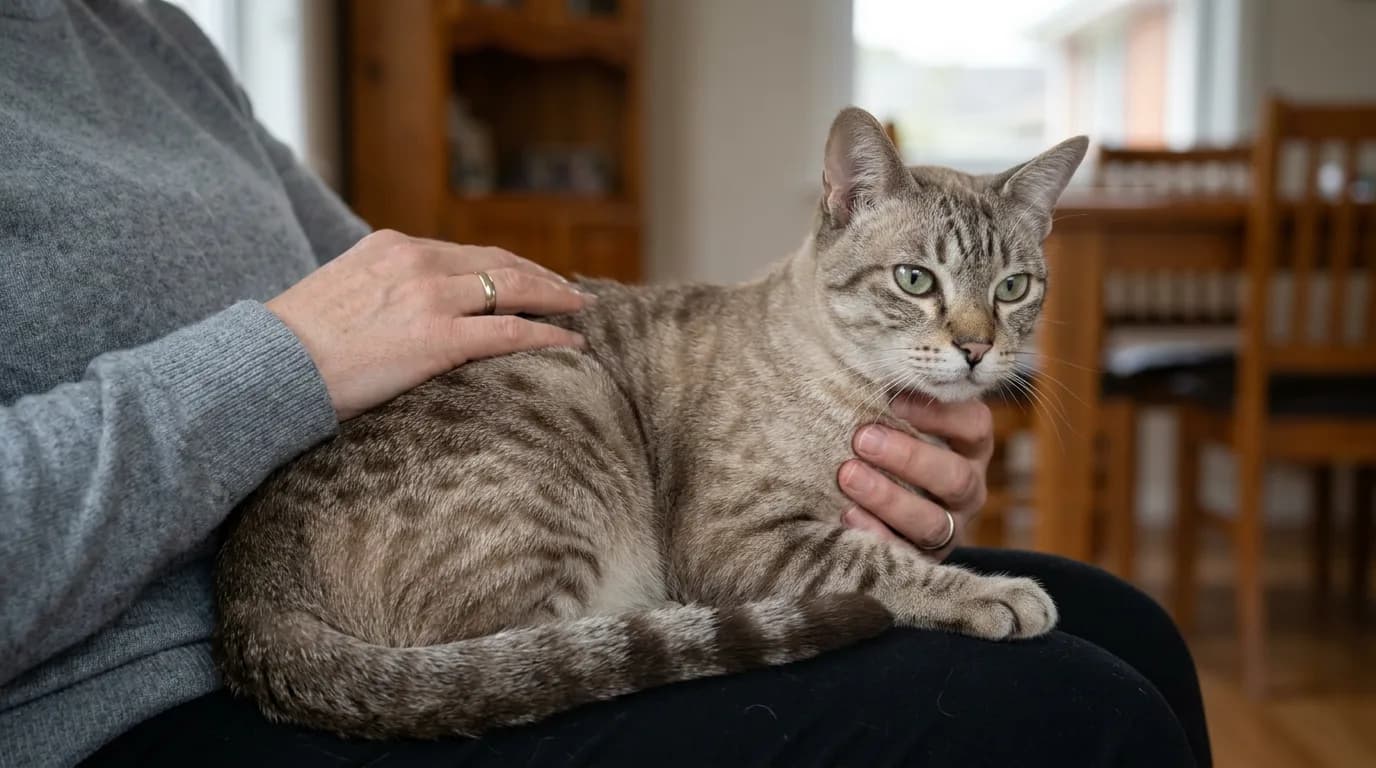
Spotted Australian Mist resting on a person’s lap.
Petful is reader supported. As an affiliate of platforms like Amazon and Chewy, we may earn a commission when you buy through links on this page. There is no extra cost to you.
The Australian Mist combines a softly patterned coat with a reputation for companionship. Developed in Australia from Burmese, Abyssinian and domestic shorthair foundations, this breed comes in spotted and marbled patterns. Its name describes the softened, misted appearance of the markings rather than one particular color.
For a prospective owner, the important question is how that friendly reputation translates into daily life. An indoor cat still needs play, climbing, predictable care and places to rest undisturbed. Understanding those needs makes a better starting point than choosing a kitten from its markings alone.

Sign up for expert-backed reviews and safety alerts all in one place.
What is an Australian Mist?
The Australian origins matter to the breed’s name and development: it was developed in Australia from Burmese, Abyssinian and domestic-cat ancestry. It is not a Bengal variety or a coat description applied to any spotted cat.
- 1Australian Mists have spotted or marbled markings with a characteristic softened appearance.
- 2Their indoor-friendly reputation still calls for daily interaction and enrichment.
- 3Availability and written placement terms matter more than an unsupported universal purchase price.
The Governing Council of the Cat Fancy’s breed history credits Dr. Truda Straede with developing the breed from the 1970s onward. It was originally called the Spotted Mist; the name changed in 1998 after acceptance of the marbled pattern. Burmese, Abyssinian and domestic shorthair cats contributed to its foundation.
The result is a domestic companion breed with a short coat, substantial body and green eyes. A resemblance to that description cannot independently establish pedigree, however. If a documented Australian Mist is what you want, ask for records connecting the actual cat with its claimed parentage and registration.

63-inch multi-level cat tree with scratch posts, hammock, plush perches, and dangling toys. Vertical territory is non-negotiable for high-energy climbing breeds like the Bengal.
Petful may earn a commission when you click through to Chewy, at no extra cost to you.
Plan useful equipment around the individual. The Yaheetech 63-inch multi-level cat tree can provide climbing and resting options where its footprint and platforms suit the room and cat. Secure it according to its instructions and keep the route to favored perches clear. A tall structure is worthwhile only when it is stable and usable.
Colors and the misted coat pattern
Australian Mists come in two patterns: spotted and marbled. Both have softened markings against a lighter, ticked background. Spotted cats show separate marks across the body; marbled cats have flowing patches and streaks. That softer appearance distinguishes the intended look from simply demanding the darkest possible contrast.
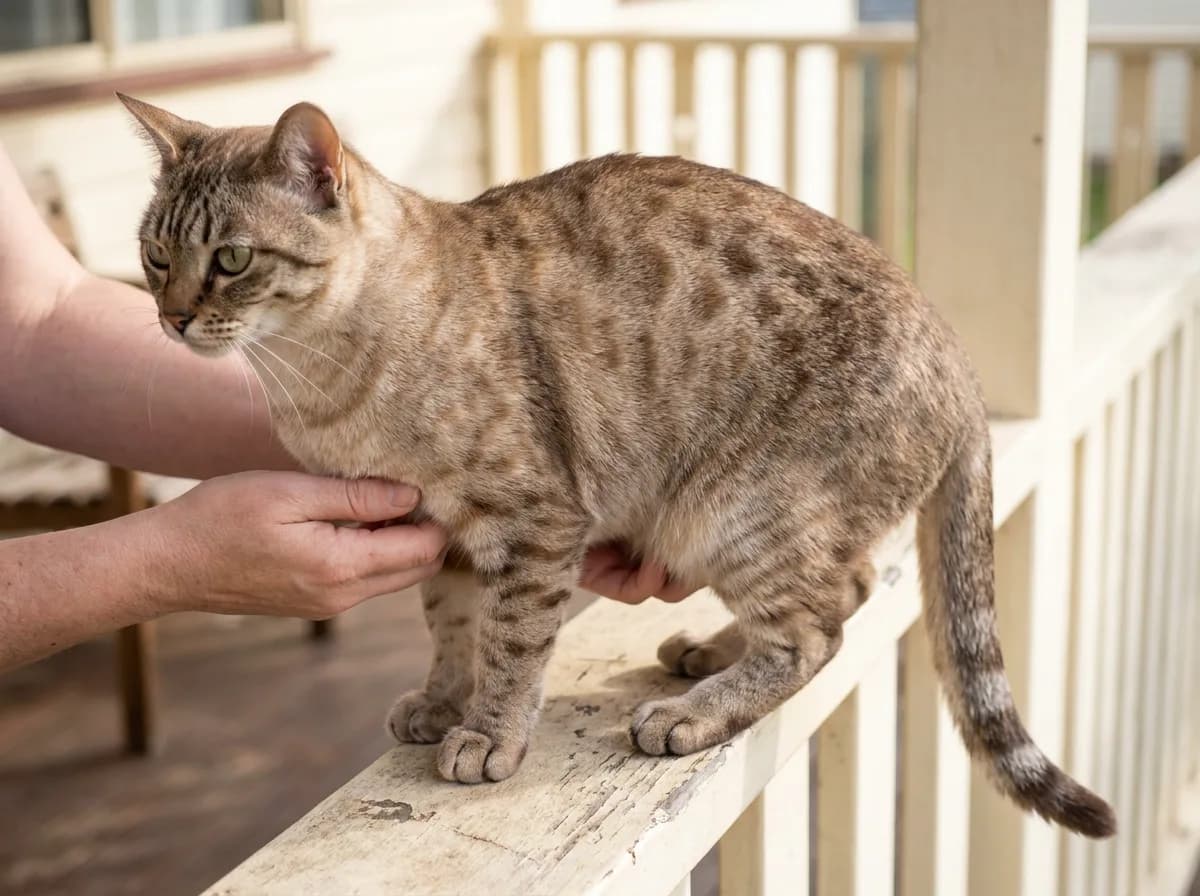
GCCF lists seven colors: brown, blue, chocolate, lilac, cinnamon, fawn and caramel. Color and pattern are separate choices, so “blue” does not mean “marbled,” and “brown” does not mean “spotted.” Lighting and photographs can alter apparent warmth and contrast; inspect several views when discussing a particular cat.
| Part of the description | Recognized choices in the GCCF profile | What to compare |
|---|---|---|
| Color | Brown, blue, chocolate, lilac, cinnamon, fawn or caramel | The underlying color; photographs may shift its apparent shade |
| Pattern | Spotted or marbled | Separate spots versus flowing patches and streaks |
| Misted effect | Softened markings over a ticked background | A muted pattern rather than maximum contrast |
| Breed identity | Records connecting the cat to its ancestry | A patterned coat alone cannot establish a pedigree |
Ask for color and pattern as two separate descriptions when discussing a kitten. A photograph that looks gray does not establish the registered color, and a marbled coat is not a different breed from a spotted Mist. Use the registry description and the individual cat’s records to clarify the wording rather than assigning a label from a filtered image.
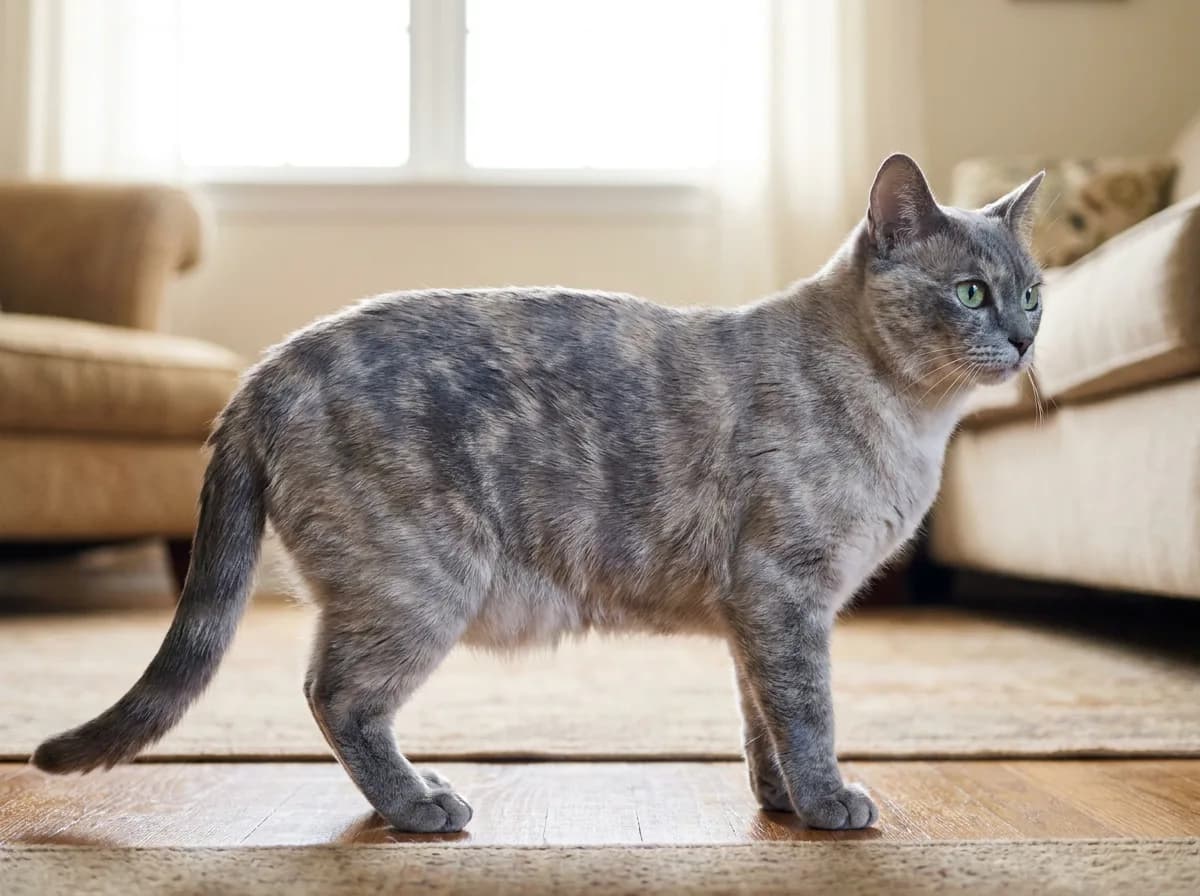
If you are trying to identify an adopted cat, record what you can see without treating it as pedigree proof. “Shorthaired cat with muted spots” is an observation; “Australian Mist” is an ancestry claim. A seller should be able to explain the evidence behind that claim rather than relying on a striking photograph.
Personality and indoor home fit
Australian Mists are generally described as sociable companions suited to indoor living. The Australian Mist breed information from TICA is a useful starting point for learning about that intended temperament. The individual’s experiences and preferences still matter: friendliness does not promise that every cat enjoys being carried, crowded or handled by unfamiliar people.
Ask the current carer for concrete examples. Does the cat seek laps, follow people from room to room or prefer nearby company? How does it respond to visitors or another animal? Those details tell you more about home fit than a broad description such as “good with everyone.”
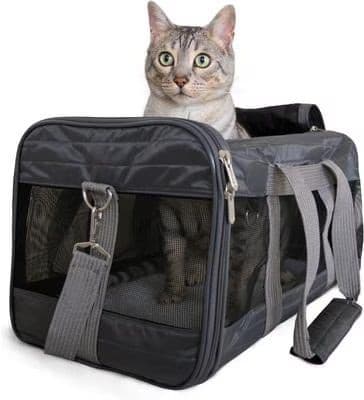
An airline-approved soft-sided carrier with mesh ventilation windows, a top-rated travel pick for cats and small dogs.
Petful may earn a commission when you click through to Chewy, at no extra cost to you.
An indoor home works best when it provides choices:
- Quiet retreats that children and other pets respect.
- Stable scratching and climbing opportunities.
- Daily shared play and time for voluntary contact.
- Separate resources when several animals share the home.
A Sherpa Original Deluxe carrier can become a familiar retreat as well as transport equipment if the individual is comfortable with it. Choose the size using usable interior dimensions and the cat’s measurements. Leave it accessible where appropriate rather than introducing it only immediately before a journey.
A daily enrichment routine
An indoor-friendly reputation does not mean an inactive cat. Build the routine around short interactive play sessions, climbing opportunities and quiet rest. Friendly behavior also does not establish suitability for every child: supervise interaction and let the cat withdraw when it has had enough.
Give indoor life a predictable rhythm without making every activity rigid. A cat may be ready to investigate in the morning, rest for much of the day and seek interaction again later. Watch the individual and offer activities when it is receptive, while preserving access to rest and essential resources.
| Opportunity | Simple setup | When to adjust |
|---|---|---|
| Climbing | Stable platforms with a clear route | The cat avoids a difficult jump |
| Shared play | A supervised moving toy | Interest drops or handling becomes uncomfortable |
| Feeding activity | An easy puzzle using part of a meal | Food is inaccessible or the cat becomes frustrated |
| Resting place | A quiet retreat with room to disengage | Other pets repeatedly interrupt rest |
| Investigation | Rotate a few safe objects or toys | Everything remains untouched despite different introductions |
A Catit Senses 2.0 Food Tree is one way to introduce a food puzzle. Start with an easy arrangement and verify that the cat can get enough food comfortably. A puzzle should add an activity, not become a barrier to eating. WebVet’s cat puzzle-feeder guide explains how to choose and introduce different designs.
Keep a simple note of what the cat actually uses for a week. If the upper perch is ignored but a lower window seat is popular, improve the lower option before buying another tall structure. If a toy attracts attention only when you move it, schedule shared play instead of leaving it out and expecting the same result.
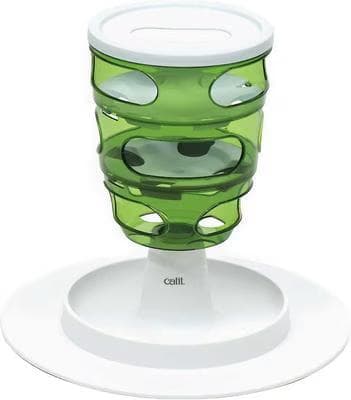
Petful may earn a commission when you click through to Chewy, at no extra cost to you.
Feeding and gentle grooming
Feed for the cat’s life stage, body condition and individual needs. Ask about the existing diet before arrival and make any transition deliberately. A breed description is not a reason to choose an exotic ingredient list or a supplement without a specific purpose. Discuss appetite, weight or medical concerns with the veterinary practice.
The short coat generally calls for modest grooming rather than elaborate styling. Ask the current carer to show the established routine, then keep sessions comfortable and brief. Check for a change in coat condition or self-grooming instead of treating every new problem as something that more brushing will solve.
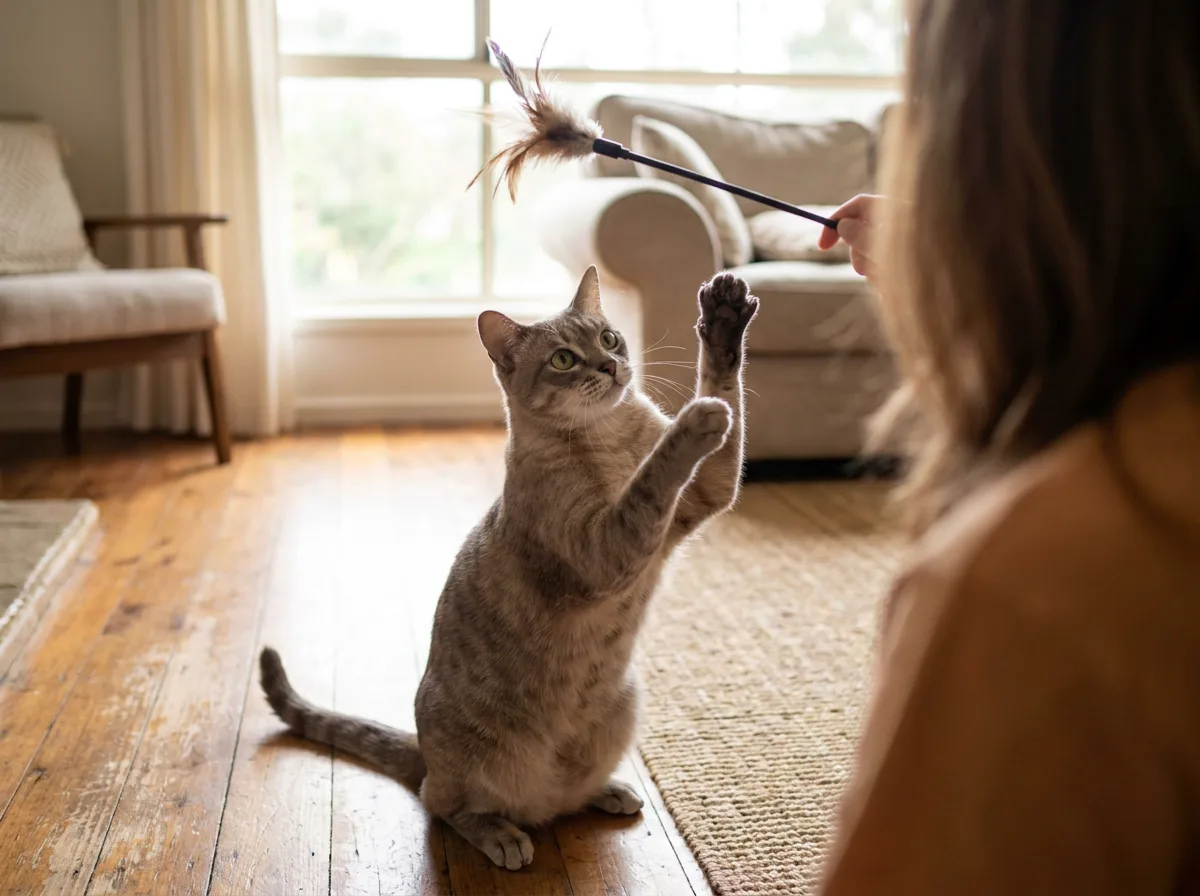
For supervised play, a Frisco feather teaser wand can provide a useful alternative to food rewards. Vary the movement, allow catches and put the wand away afterward. Strings and detachable pieces need attention, particularly for a cat that likes to chew toys rather than chase them.
Is an Australian Mist hypoallergenic?
No breed label makes an Australian Mist allergy-free. The American College of Allergy, Asthma and Immunology explains that all cats produce allergens and that coat length does not establish allergen levels. A short, easy-care coat is a grooming consideration, not a guarantee that an allergic person will tolerate living with the cat.
Discuss a known cat allergy with an allergist before committing to ownership. Keep the decision separate from promises about minimal shedding or a particular coat pattern. Gentle grooming can maintain the coat, but it does not certify an allergy-safe household.
Australian Mist or Bengal?
Both breeds can have striking patterned coats, but their ancestry and intended appearance differ. An Australian Mist’s softened markings should not be confused with a requirement for Bengal-like rosettes. Neither a spotted coat nor a lively personality settles the breed question on its own.

Feathered teaser wand with catnip-stuffed bird. Pairs perfectly with the no-bite training policy: redirect Bengal play drive into a 10-minute interactive session with the wand.
Petful may earn a commission when you click through to Chewy, at no extra cost to you.
Our Australian Mist vs. Bengal comparison examines appearance and the practical routine each individual may need. Choose by the cat’s documented identity and observed behavior, then be realistic about the space and daily attention you can provide. Coat preference is a starting point, not the entire decision.
Readers also considering other spotted cats can use our Egyptian Mau vs. Bengal comparison to distinguish those alternatives. Similar markings do not make their activity, ancestry or daily routines interchangeable.
Are Australian Mist cats rare?
Availability limits can affect both location and timing. Ask whether the contact has a current cat, expects a litter or only maintains a waiting list. A breed profile or an old kitten photograph cannot establish current local availability.
Australian Mists are relatively uncommon outside their country of development, and local availability may be limited. That can mean contacting breeders farther away or waiting for a suitable placement. It does not establish a fixed worldwide population or prove that a particular advertisement represents a documented Mist.
Keep transport and collection plans flexible until the actual cat, timing and written terms are clear. Ask what a waiting-list payment reserves and what happens if a suitable cat is not available on the expected date.
How much does an Australian Mist cost?
A concrete Australian example is Nintu Cattery’s published price of A$1,700 for Australian Mist kittens born after September 1, 2025, checked in September 2026. The cattery lists freight and a travel basket as extra. This is one breeder’s advertised Australian-dollar price, not a US market average, a current kitten-availability claim or an endorsement of the seller. Obtain your own complete quote before committing.
Request the complete acquisition fee, deposit treatment, included records and care, and any additional charges. Then add equipment, recurring food and litter, routine veterinary care and a plan for unexpected expenses. Compare the total commitment with what your household can sustain rather than reserving a cat based only on the initial payment.
Before committing, resolve these points in writing:
- The cat’s identity, age and supporting registration records.
- What care and documentation transfer with the cat.
- The expected handover date and who arranges transport.
- The payment, delay, cancellation and return arrangements.
You can keep setup costs focused. Reuse an appropriately sized carrier, buy stable scratching and resting options, and introduce toys based on the cat’s response. A rare breed does not make every premium accessory necessary.
Health and lifespan planning
Create a baseline for the individual rather than relying on a breed’s general reputation. Ask for previous health records and discuss upcoming care with your veterinary practice. Age, body condition, appetite, activity and medical history all affect the plan; none can be replaced by the label “healthy breed.”
Make routine observations manageable. Notice whether the cat eats normally, uses the litter facilities as usual and moves comfortably between its favorite places. Record a meaningful change and when it began. That information supports a more useful veterinary conversation than an assumption that the breed is expected to remain well.
Are Australian Mists healthy cats?
TICA reports no known genetic or hereditary illness to which the Australian Mist is specifically prone, while discussing hypertrophic cardiomyopathy as a concern cats can face generally. That distinction matters: a possible feline illness is not proof of elevated risk in this breed. Ask which assessments were performed on the parents and cat, what the results mean and which written records are available. “Health checked” does not specify a comprehensive screening program.
For an adopted adult, available medical history and the current examination may be more informative than incomplete ancestry. Keep weight and feeding under review, and seek advice about changes in behavior or comfort. A friendly, active cat can still develop illness; familiarity with its normal routine helps you notice when something differs.
What is the average lifespan of an Australian Mist?
An exact measured average lifespan for the Australian Mist cat is not established by the breed profiles cited here. GCCF’s 15–18-year description and TICA’s 15-plus estimate are planning references, not a survival study or an individual guarantee.
The practical implication is a potentially lengthy commitment. Include future moves, changes in your schedule and ongoing care in the decision to get a cat. As the individual ages, reassess access to resting places, food and litter, and discuss changes with the veterinary practice rather than assuming discomfort is simply unavoidable aging.
Australian Mist questions
The misted appearance is a coat pattern, not something created or maintained by frequent baths. A short coat usually needs a gentle routine suited to the individual. Ask the current carer about established care, and get advice if coat condition or self-grooming changes.
It may, but a breed reputation for sociability does not guarantee that two particular cats will get along. Use gradual introductions, separate resources and places to retreat. Observe both cats and adjust the pace rather than forcing contact because they are expected to be friendly.
No. An indoor home still needs interaction, climbing and scratching opportunities, retreats and a predictable care routine. Watch the individual cat's preferences and provide activities it can use comfortably rather than treating a sociable breed reputation as a substitute for daily attention.
BVMS, MRCVS
Dr. Pippa Elliott, BVMS, MRCVS, is a veterinarian with nearly 30 years of experience in companion animal practice. Dr. Elliott earned her Bachelor of Veterinary Medicine and Surgery from the University of Glasgow. She was also designated a Member of the Royal College of Veterinary Surgeons. Married with 2 grown-up kids, Dr. Elliott has a naughty Puggle named Poggle, 3 cats and a bearded dragon.
Sign up for expert-backed reviews and safety alerts all in one place.