How to Stop Cats From Eating Each Other's Food
Protect each cat's meals with separate feeding stations, workable routines, and suitable selective-access equipment. Learn what changes for grazers, kittens, and cats eating prescribed diets.

BVMS, MRCVS
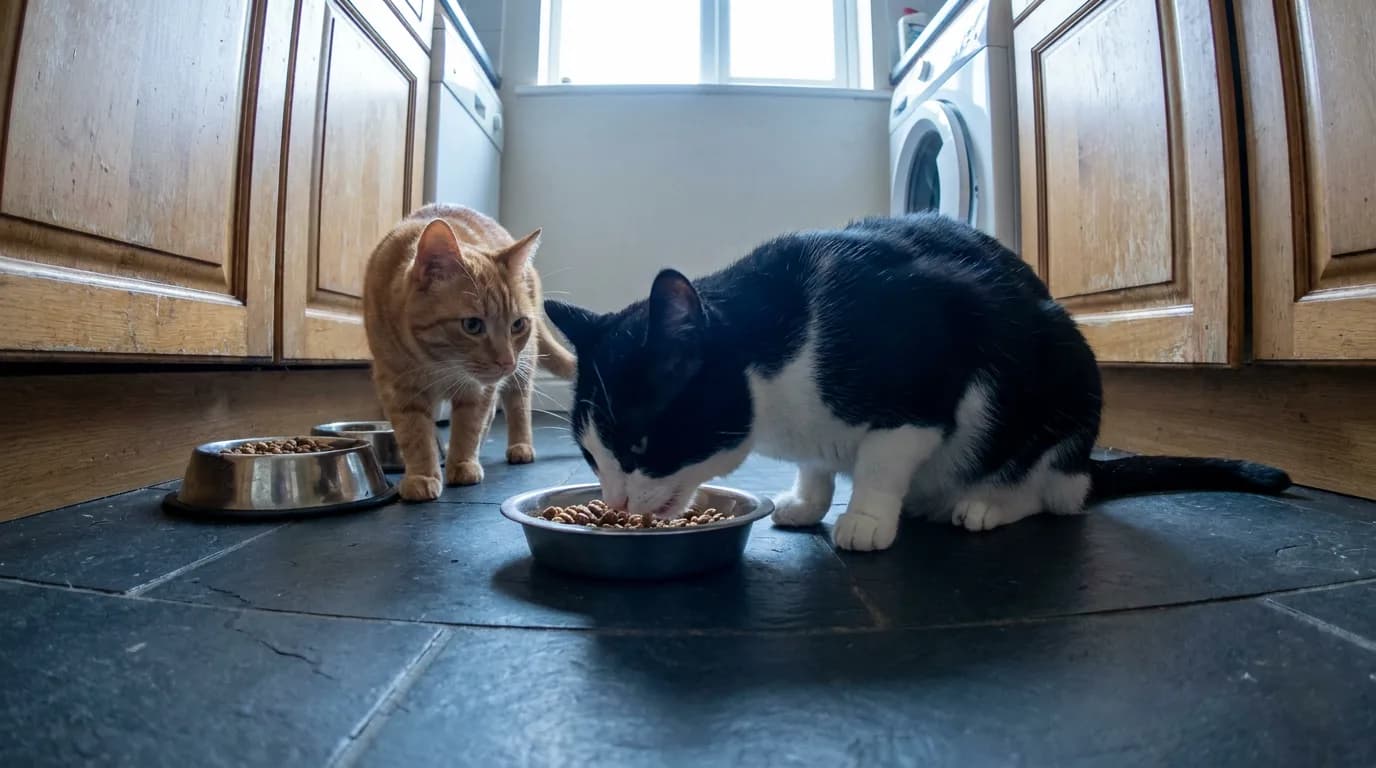
Illustrative image.
Petful is reader supported. As an affiliate of platforms like Amazon and Chewy, we may earn a commission when you buy through links on this page. There is no extra cost to you.
How to stop cats from eating each other's food starts with protecting each cat's meal: feed in separate spaces, supervise until both finish, and remove accessible leftovers. If a cat needs to graze while you are away, a suitable selective-access feeder may help. Simply adding a second bowl or a timer does not necessarily stop a determined food thief.
The goal is not to make the slower cat eat faster or to punish the quicker one. It is to make sure each cat can comfortably eat the food and amount intended for it. Start with the least complicated arrangement that reliably does that, then add equipment only when you can identify the job it needs to do.
- 1Identify an access problem separately from a timing problem.
- 2Protect the slower eater until its meal is finished.
- 3A timer or food puzzle alone does not stop another cat reaching food.

Sign up for expert-backed reviews and safety alerts all in one place.
Why cats eat each other's food
Why do cats eat each other's food instead of their own? Bowl swapping can reflect an attractive food, a preferred location, different eating speeds, or discomfort around another cat. Watching the sequence is more useful than labeling one cat greedy. Note which cat starts first, which cat moves away, and whether the approaching cat takes food while the other is still trying to eat.
Distinguish an access problem from a timing problem. If one cat eats all the food whenever a bowl is available, you need to control access. If meals are simply served late because everyone is at work, a timer may address that timing problem. A timed feeder with an open bowl can still let the wrong cat eat every dispensed meal.
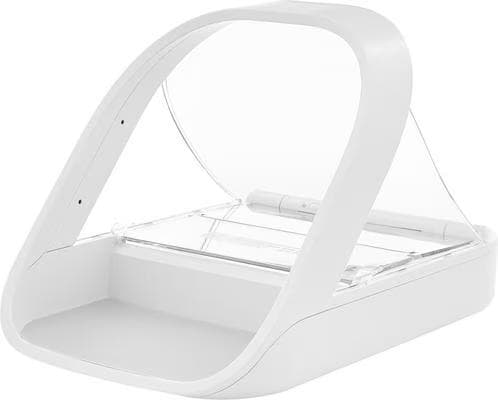
One possible tool for a persistent access problem is the SureFeed Microchip Pet Feeder. It is an example of a feeder designed to recognize an enrolled pet, rather than merely dispense food at a set time. It still needs a suitable location, training, and observation to establish that the right cat can eat without being crowded.
Petful may earn a commission when you click through to Chewy, at no extra cost to you.
| Situation | Starting method | Important boundary |
|---|---|---|
| Food stealing during a meal | Separate rooms and supervision | Controls access while you are present |
| A grazer loses food between meals | Suitable selective-access feeder | Protects access; training required |
| Meals occur while you are away | Timer inside a protected area | Solves timing, not access by itself |
| Fast eater needs an activity | Easy supervised food puzzle | Enrichment, not an access restriction |
Look for cat stealing food from another cat without assuming that every quiet departure means permission. A cat pushing another cat away from food may use staring or close approach rather than fighting. The cat that leaves can lose access while the household bowl still ends up empty. Petful's guide to tension between cats discusses the broader household context.
- Watch both cats through a complete meal, including the period after the first cat finishes.
- Note whether the food, bowl, location, or another cat's approach triggers the switch.
- Check each cat's actual intake rather than assuming an empty shared bowl means both ate.
- Arrange a veterinary assessment if appetite or weight changes unexpectedly, rather than treating every change as a training issue.
Set up separate feeding stations
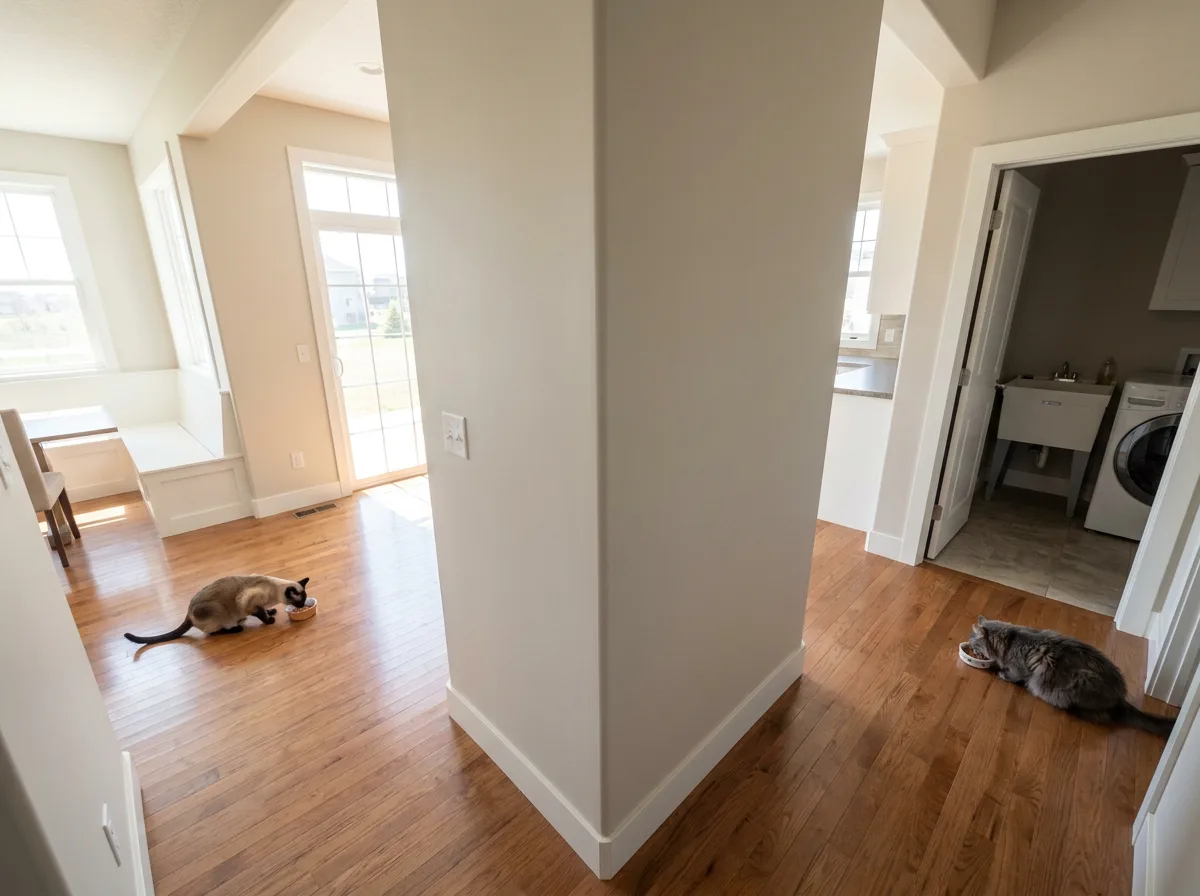
The simplest way to feed two cats separately is to put their dishes in separate rooms where each cat feels comfortable and close the doors during the meal. Each cat gets its own food, water access as appropriate, and a calm place to eat. Keep the slower eater protected until it finishes; opening both doors as soon as the fast eater is done recreates the problem.
Where closed rooms are not practical, use distance and solid visual separation rather than a row of adjacent bowls. The FelineVMA feeding consensus supports feeding arrangements that allow cats to eat small meals individually and feel safe. A corner or partition can interrupt the direct view between stations, but a visual barrier is not a physical lock. Supervision may still be necessary.
- Choose a location each cat already uses comfortably, away from a busy doorway or a place where another pet can trap it.
- Start both meals without requiring the cats to pass close to one another to reach their dishes.
- Collect unfinished accessible food before reopening shared space, following the food's storage directions.
- Keep a consistent person and sequence during the first attempts so you can see what needs adjustment.
If a room change makes a cat reluctant to eat, step back to a familiar safe arrangement and introduce the new location gradually. Do not force acceptance by leaving the cat hungry. Raised stations are not a universal solution either: a cat may jump to the supposedly protected dish, while a senior or less mobile cat may struggle to reach its own meal.
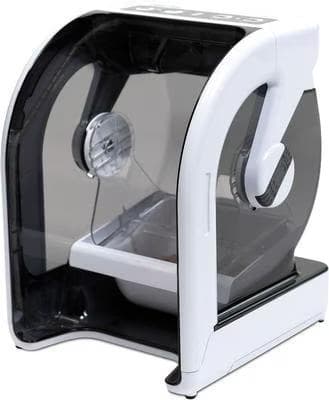
In a small home, selective access may be more practical than installing partitions. The Closer Pets MiBowl is another feeder option to consider when a closed-door routine cannot protect a grazer. Its manufacturer documents compatibility with suitable implanted microchips and its ID discs, and use with wet or dry food. A feeder does not replace the need for a quiet, accessible station.
Petful may earn a commission when you click through to Chewy, at no extra cost to you.
Build a meal routine for fast eaters and grazers
When one cat eats quickly and another returns for small meals, a single shared feeding window may not suit both. Begin by recording their current pattern. If you are changing from freely available food to measured meals, agree on an appropriate approach with your veterinarian, especially for kittens, cats with medical conditions, or cats already eating poorly. Do not suddenly remove the slower cat's only reliable access to food.
Think of how to feed multiple cats as a sequence of protected opportunities. Prepare individual portions, serve them in their separate locations, and account for what each cat actually ate. Petful's cat feeding frequency guide explains the scheduling context, while the free-feeding guide covers considerations before changing an open-bowl routine.
- A fast eater can finish in its own room while the slower cat continues eating elsewhere.
- A grazer may need several protected opportunities or selective access that remains available between supervised meals.
- An open automatic feeder belongs inside an already protected area if the wrong cat would otherwise reach it.
- Every meal and snack still comes from the individual cat's appropriate daily allowance.
If your cats take turns eating, check whether both choose that pattern or one waits because the other blocks access. Protected individual meals help you distinguish preference from exclusion. A reliable schedule accounts for each cat's intake, including the one that returns after the busier meal period.
To keep an overweight cat from eating another cat's food, protect both portions rather than guessing which cat needs less. Food stealing can make it impossible to know who is consuming what. Work with your clinic on amounts and weight goals; a household feeding change should not become unsupervised calorie restriction. The same rule applies when someone describes a cat as greedy: solve the measurable access problem first.
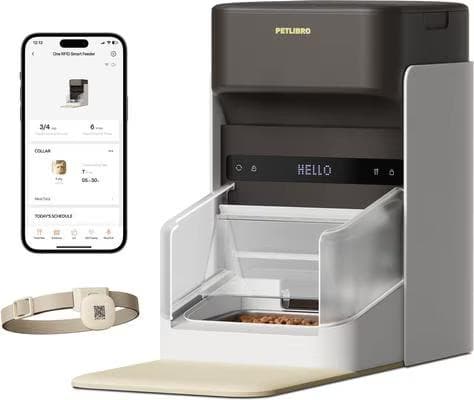
A collar-controlled timed feeder can combine two jobs. The PETLIBRO One RFID feeder uses its dedicated collar tag, not an implanted microchip, according to PETLIBRO's product information. Check the exact model, food format, tag requirements, and your cat's comfort with an appropriate collar before choosing it. A microchip cat feeder with a timer and a tag-only timed feeder are not interchangeable descriptions.
Petful may earn a commission when you click through to Chewy, at no extra cost to you.
Choose selective access when supervision is not enough
A microchip feeder for multiple cats generally means protecting the food of a particular cat, not automatically dividing food among every cat in the home. Some devices can recognize more than one enrolled animal, but that does not ensure each eats an individual portion. Decide whose food needs protection, whether that cat grazes, and whether you need recognition, timed dispensing, or both.
The best microchip cat feeder for your household is the one that reliably protects the intended meal and suits the cat using it. Automatic cat feeders for multiple cats still need individual access control if food stealing is the problem. A DIY enclosure also needs dependable access and safe entry and exit; this guide does not provide an untested construction plan.
- Test whether the intended cat can eat comfortably and whether the other cat can reach around it. Keep safe familiar food access during training; opening the lid once does not establish that the feeding problem is solved.
Before buying, use WebVet's microchip feeder comparison to examine the model differences. Keep the household problem in view: food format, chip versus collar-tag recognition, power requirements, bowl size, and practical access all matter. This guide explains the feeding routine; the comparison provides the deeper product selection detail.
- Confirm the exact recognition method rather than relying on the word smart in the product name.
- Check whether the feeder accepts your cat's established food and meal pattern.
- Introduce lid movement gradually using the manufacturer's training instructions.
- Watch for a second cat reaching around, crowding, or following the authorized cat into the open feeding area.
Sure Petcare's feeder manual describes enrollment and staged training. Use the instructions for the actual model you own. Keep familiar food available through a safe alternative during training, and judge success by whether the intended cat eats comfortably, not simply whether the lid opens once. Check batteries, cleaning needs, and operation regularly after the feeder becomes part of the routine.
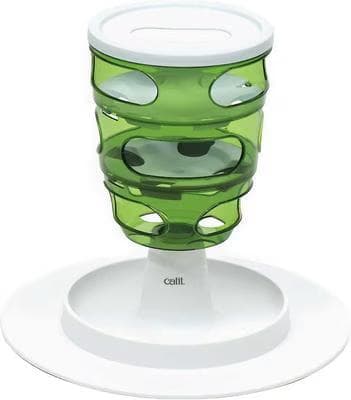
A food puzzle does a different job. The Catit Senses 2.0 Food Tree can provide a supervised way to work for dry food in the fast eater's separate room. It does not restrict access to a particular cat. Start with an easy arrangement, use part of the normal food allowance, and stop if it creates frustration or prevents the cat from eating adequately. Buying a puzzle without separating the meals can simply create another shared food source.
Petful may earn a commission when you click through to Chewy, at no extra cost to you.
Keep kitten and prescription diets separate
An adult cat and kitten eating each other's food need more than equal-sized bowls. A kitten eating adult cat food may miss the intended life-stage diet when meals are repeatedly swapped. Their diets may be intended for different life stages, and the kitten may need a different feeding pattern. Keep their meals physically separate while you confirm the appropriate food and amount for each with your veterinary team. Do not switch both to one diet simply because it would make the household easier to manage.
The same practical rule applies when one cat has a prescribed diet: protect that food and the ordinary food from swapping in either direction. The importance of an accidental mouthful depends on the actual diet and medical situation, so ask the prescribing clinic what to do if it happens. This article cannot decide whether a particular food is safe for the other cat.
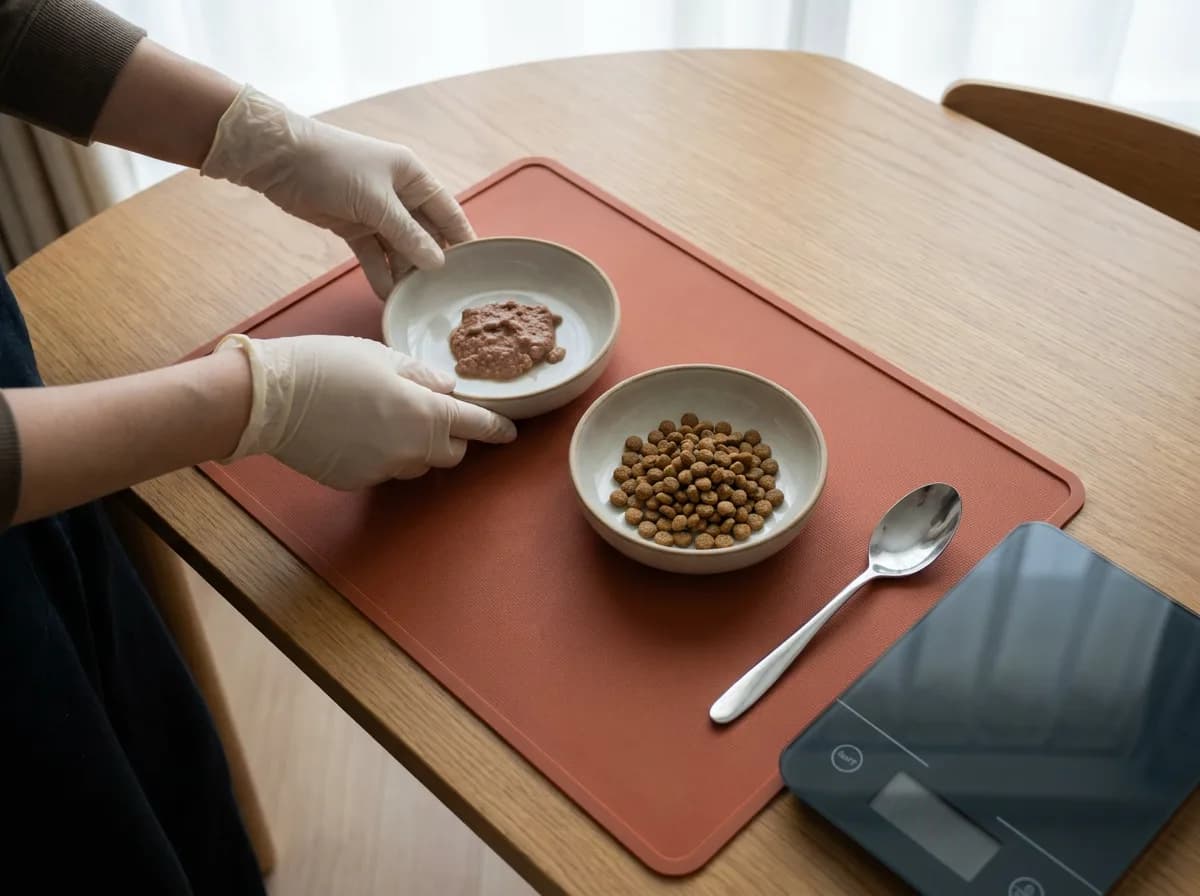
- Prepare the individual portions before opening the feeding spaces.
- Keep each cat's food and serving utensils clearly organized so the caregiver does not mix them up.
- Leave written instructions for any sitter, including which cat uses which room or device.
- Ask the clinic how to handle a missed meal, accidental food sharing, or refusal of the prescribed food.
Wet food also brings a storage question. A closed feeder lid is not refrigeration, and a selective-access feeder does not make food safe to leave out indefinitely. Follow the food manufacturer's directions and the feeder's own instructions for that food format. Do not leave wet food accessible all day merely because the lid limits access by other cats.
Medication in food adds another reason to know exactly who ate the meal. Follow the prescribing clinician's directions about how it should be given, and ask what to do if the wrong cat might have consumed it. Do not improvise a replacement dose or assume that any amount left in the bowl tells you precisely how much was swallowed. Keep such meals individually supervised unless the veterinary team has agreed on another reliable arrangement.
Check whether the new routine is working
A successful routine leaves both cats able to eat calmly and lets you identify each cat's intake. It is not enough that the bowls are empty or the cats have stopped arguing in front of you. A quiet cat may still be waiting for the other to leave. Observe the protected eater as carefully as the cat that previously stole the food.
Use a simple daily record: food offered, food remaining, attempted bowl swaps, and whether each cat approached willingly. This is a household troubleshooting log, not a diagnostic tool. It helps you describe the situation accurately if you need professional advice. If a single doorway or predictable early finish keeps causing problems, change that part of the sequence rather than changing everything at once.
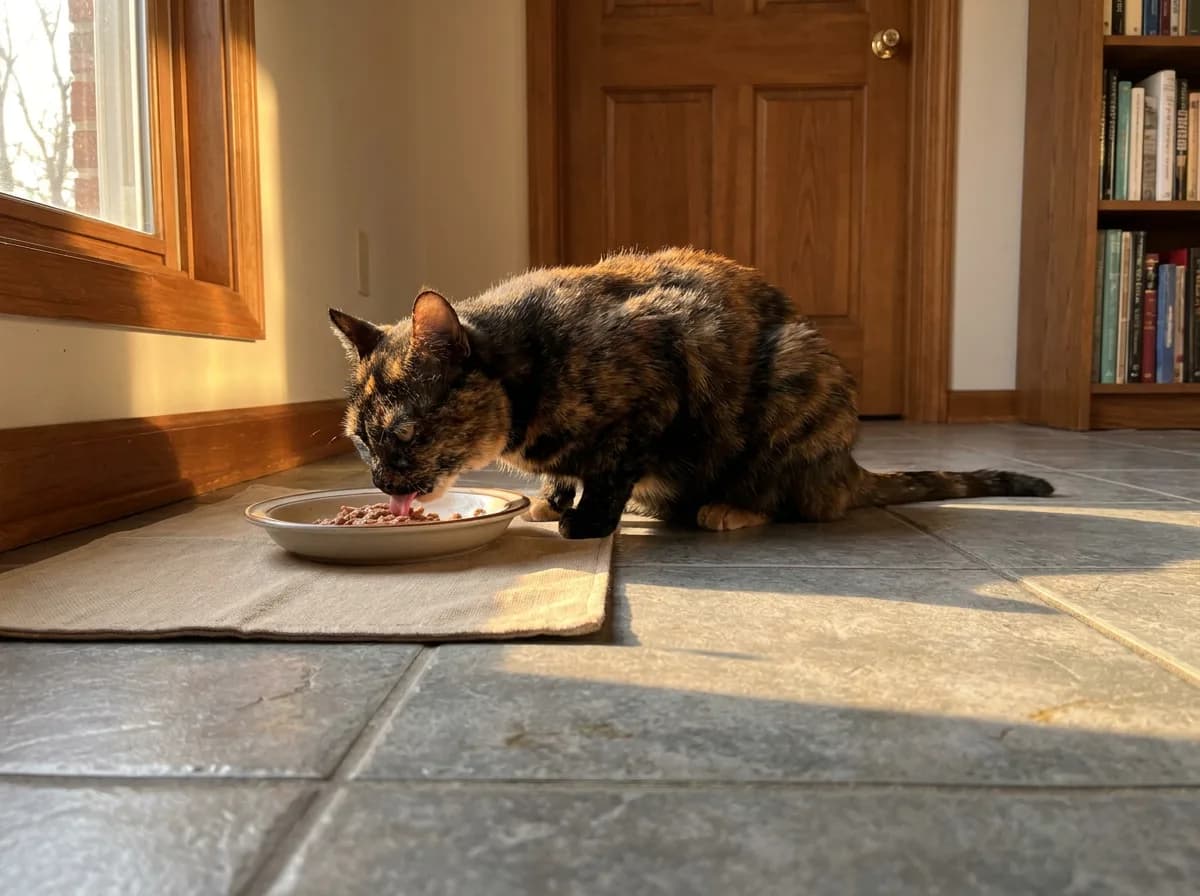
- If the fast eater still reaches the other dish, strengthen physical separation or reassess the feeder setup.
- If the slower eater avoids the new station, restore safe familiar access and work on the transition.
- If either cat seems unwell, eats less, or changes weight unexpectedly, contact the veterinarian.
- If there is persistent guarding, chasing, or fear despite a workable feeding layout, seek qualified feline behavior support.
Do not shout, spray water, chase the cat away, or withhold food to teach a lesson. Those responses do not reliably tell you which cat has eaten enough and can make the feeding environment harder to manage. Reward calm participation with the routine itself: predictable access, appropriate food, and a place where another cat does not interrupt.
Recheck the arrangement when a kitten grows, a new cat arrives, a diet changes, or your work schedule changes. Equipment that solved a timing problem last year may not solve an access problem now. The useful question remains the same: can each cat comfortably eat its own intended meal, and can you verify that it happened?
Multi-cat feeding questions
A cat that lets other cats eat his food may avoid a confrontation, dislike the feeding location, or prefer to return later. That does not establish that it is full or content to share. Give the quiet cat protected space and watch whether it eats when the other cat cannot approach. Record individual intake and seek veterinary advice if appetite changes. Safe access is a more useful goal than deciding which cat is dominant.
Cats taking turns eating may be comfortable with that routine, but it can also reflect one cat waiting until a more assertive housemate leaves. Observe body language and individual intake rather than judging the arrangement by an empty bowl. If both cannot eat without interruption or you cannot tell how much each consumes, provide separate feeding opportunities. Different diets or prescribed portions make that distinction especially important.
One microchip feeder can serve two enrolled cats on some models, but recognition does not divide the food into individual portions. Sharing may still allow one cat to eat more than intended. If cats require different diets or amounts, separate protected feeding arrangements are usually easier to monitor. Even cats on the same diet need individual intake checks. Confirm enrollment limits and intended use in the exact model's instructions before buying.
Some microchip feeders work with wet food, but check the exact model. A lid that controls entry does not provide refrigeration or override the food's storage directions. Use the safe serving interval and cleaning routine specified for that food and equipment. If your cat grazes slowly, discuss a practical feeding plan rather than leaving wet food available indefinitely. Cold-storage and selective-access features perform different jobs.
A DIY microchip cat feeder is a good idea only if its design can provide reliable access while avoiding pinch points, sharp edges, entrapment, and electrical hazards. This guide does not provide an untested construction plan. A protected room is a simpler starting point, and a suitable commercial feeder comes with model-specific setup and training instructions. If you consider any enclosure, make sure the cat can enter and leave comfortably without another pet blocking the exit.
A puzzle feeder can occupy a willing fast eater but cannot stop food stealing by itself because it does not restrict access to a particular cat. Another cat can still use it or steal from the slower eater's bowl. Introduce an easy puzzle with part of the usual food allowance in a separate room, and supervise. Treat it as enrichment within the separation plan, not proof that both cats received their intended meals.
BVMS, MRCVS
Dr. Pippa Elliott, BVMS, MRCVS, is a veterinarian with nearly 30 years of experience in companion animal practice. Dr. Elliott earned her Bachelor of Veterinary Medicine and Surgery from the University of Glasgow. She was also designated a Member of the Royal College of Veterinary Surgeons. Married with 2 grown-up kids, Dr. Elliott has a naughty Puggle named Poggle, 3 cats and a bearded dragon.
Sign up for expert-backed reviews and safety alerts all in one place.