St. Bernard Barrel: What’s Really Inside? (Hint: Not Brandy)
Did St. Bernards really carry barrels of brandy? Almost certainly not. Here is the real history of the St. Bernard barrel: what those little kegs likely held, where the myth came from, and how to buy a barrel collar today.
Petful is reader supported. As an affiliate of platforms like Amazon and Chewy, we may earn a commission when you buy through links on this page. There is no extra cost to you.
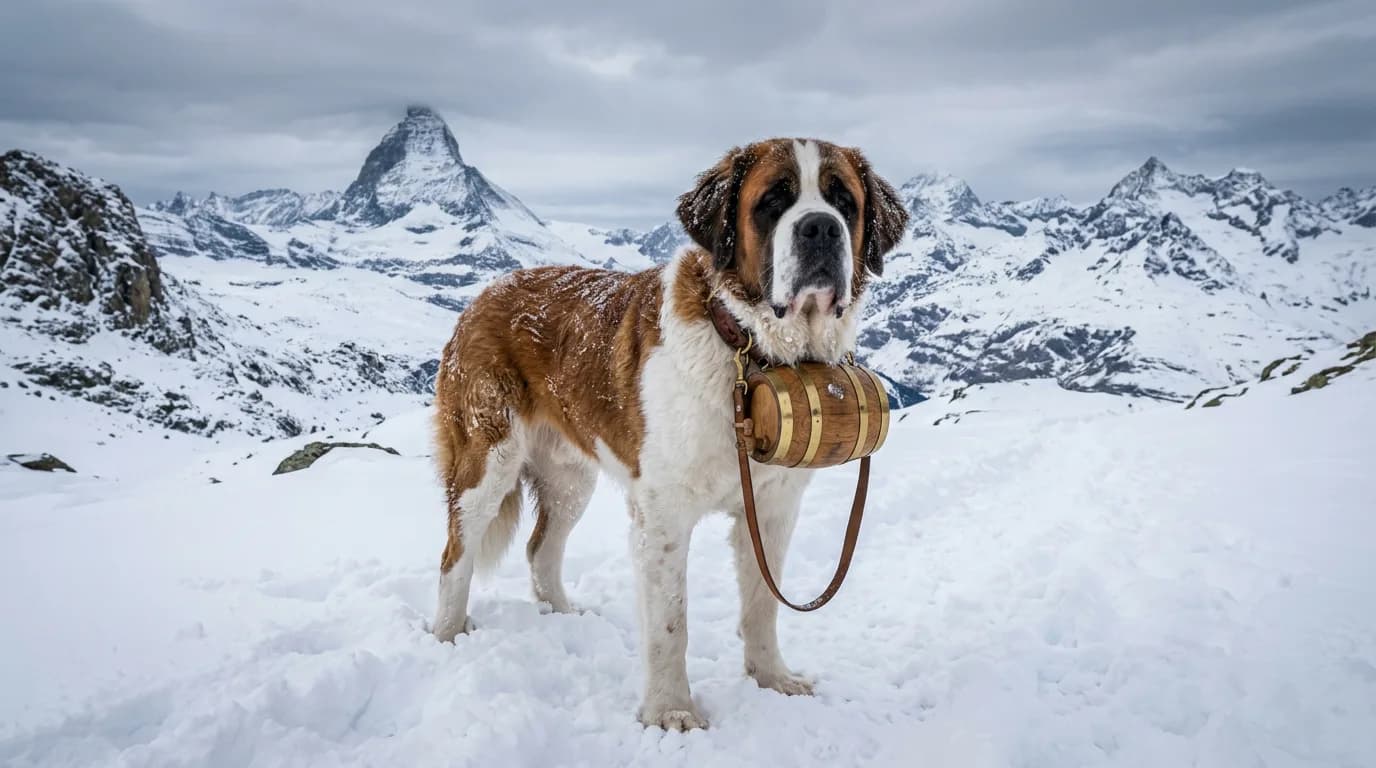
St. Bernard barrels most likely held food and water, not brandy. While the iconic image of a St. Bernard carrying a small keg of brandy is one of the most recognizable in dog history, the brandy story is almost certainly a myth. The barrel-on-collar image originated from an 1820 painting by Sir Edwin Landseer and was never confirmed by the monks at the Great Saint Bernard Pass hospice, who actually bred and used these dogs for alpine rescue starting in the 17th century.
The dogs were real rescue heroes. They could detect avalanches, locate people buried under snow, and work in teams to keep survivors warm. But surviving historical records don’t support the brandy legend. In fact, giving alcohol to a hypothermia victim would be medically dangerous.
Here’s the full history of the St. Bernard barrel, what we actually know, and how the myth became so famous.
- 1St. Bernards did not actually carry barrels of brandy. This myth most likely originated from an 1820 painting by Edwin Landseer.
- 2The barrels likely held essential supplies like food and water for stranded travelers in the Swiss Alps.
- 3Giving alcohol to a hypothermia victim is medically dangerous, making the brandy story even less plausible.
- 4St. Bernards were bred by monks at the Great Saint Bernard Pass for search and rescue, using their powerful sense of smell to find people buried in snow.
- 5The barrel remains a lasting symbol of the breed’s heroic rescue legacy and is used today as a novelty collector’s item.

Sign up for expert-backed reviews and safety alerts all in one place.
How Did St. Bernards Become Rescue Dogs?
The story of the St. Bernard barrel takes us back almost a millennium to one of the most dangerous mountain passes in Europe.
Around 1049 A.D., Saint Bernard of Menthon established a monastery and hospice at what would become known as the Great Saint Bernard Pass. It was the only thoroughfare between Italy and Switzerland in the Western Alps, sitting at approximately 8,100 feet (2,469 meters) above sea level. The pass was treacherous: avalanches, blinding snowstorms, and freezing temperatures made it one of the deadliest travel routes in medieval Europe.
In the 17th century, the resident monks began breeding large dogs. These are believed to be the result of crossing mastiff-type dogs originally brought by the Roman Army with local Swiss farm dogs. These dogs became the ancestors of the Saint Bernard breed we know today.
The monks quickly discovered these dogs had remarkable natural abilities for mountain rescue: They could sense avalanches before they happened.
- Their powerful sense of smell could locate people buried under several feet of snow.
- Their large, muscular bodies allowed them to trudge through deep snowdrifts that would stop a human.
Over time, the dogs’ role evolved from general companions to dedicated search and rescue animals. When weather conditions were too dangerous for the monks themselves, teams of dogs were sent out on their own to patrol the pass and find stranded travelers.
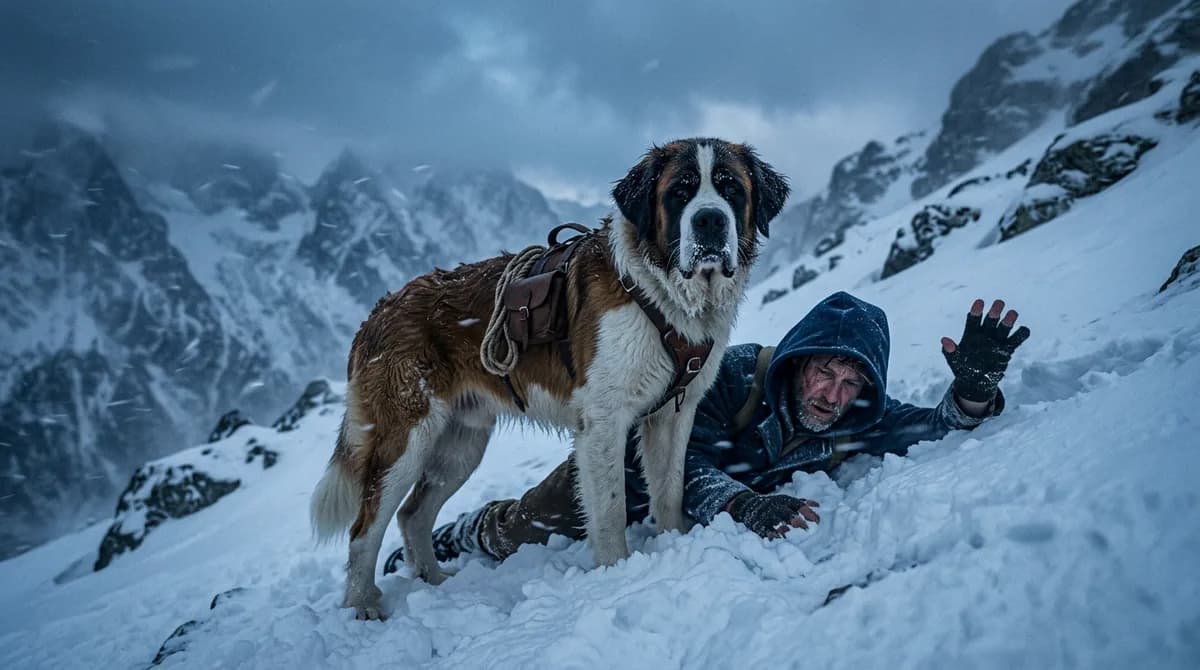
During rescue missions, the dogs worked with an impressive system: once a trapped traveler was found, one dog would lie on the person to provide body heat, while another would race back to the monastery to alert the monks and bring help.

Daily dental chew that cleans teeth, freshens breath, and is accepted by the Veterinary Oral Health Council. Sized for dogs 25 to 50 lbs.
Petful may earn a commission when you click through to Chewy, at no extra cost to you.
The theory is that during these missions, the dogs wore small kegs on their collars containing supplies. And this is where the barrel story gets interesting.
Why Do People Think St. Bernards Carried Brandy?
The image of a St. Bernard trudging through the snow with a barrel of brandy strapped to its collar is deeply embedded in popular culture. But where did it actually come from?
The most widely accepted origin is a painting. In 1820, Sir Edwin Henry Landseer, a renowned English painter famous for his animal subjects (and the man after whom the Landseer dog breed variant was named), created a work titled “Alpine Mastiffs Reanimating a Distressed Traveller.” The painting depicted two large dogs (now recognized as St. Bernards) rescuing a fallen man in the snow. One dog was painted with a small keg attached to its collar.
Some historians believe Landseer added the keg purely for artistic effect, a visual detail that made the painting more dramatic and compelling. But the image was so powerful that it became permanently fused with the breed’s identity. From there, the brandy barrel myth snowballed:
- Warner Brothers and Disney cartoons featured St. Bernards with brandy barrels throughout the 20th century, cementing the image for generations of viewers.
- Advertisements, greeting cards, and merchandise all reinforced the idea.
- The story had intuitive appeal. A cold, stranded traveler being warmed by a sip of brandy just feels right, even though it’s medically wrong.
The problem? There is no verified historical record from the Great Saint Bernard Pass hospice confirming that the dogs ever carried alcohol. And to make matters murkier, fires at the monastery reportedly destroyed many of the original records about how the dogs were used, making it virtually impossible to verify the barrel’s true contents with certainty.
Brandy, Whiskey, or Just Water? What the Barrel Really Held
If the brandy story is a myth, what about whiskey? You will see the St. Bernard barrel described as a whiskey keg, a rum cask, or a brandy barrel, depending on who is telling the story. None of those versions holds up any better than the others. They all trace back to the same single source, that 1820 Landseer painting, and not one of them was ever confirmed by the monks at the hospice.
Historians who have studied the little documentation that survives keep landing on the same practical answer. If the rescue dogs carried anything in those small kegs, it was almost certainly food and water, the two things a freezing, exhausted traveler actually needed. A bite to eat and a drink of water could buy time until help arrived. A swallow of whiskey or brandy could not.
Would Brandy Actually Help Someone Stranded in the Cold?
Here’s the detail that makes the brandy myth even less plausible: alcohol would actually make things worse for a hypothermia victim.
When you drink alcohol, it causes vasodilation. Your blood vessels near the skin’s surface expand, which creates a temporary feeling of warmth. But that sensation is misleading. What’s actually happening is that warm blood is rushing from your core to your skin, where it cools rapidly. The result is accelerated heat loss and a faster drop in core body temperature.
- Alcohol widens the blood vessels near the skin, so it creates a brief feeling of warmth while it actually speeds heat loss from the body's core. For someone who is already cold or hypothermic, a drink of brandy or whiskey lowers core temperature faster instead of raising it. That is the opposite of what a stranded traveler needs.
For a person already suffering from cold exposure or hypothermia, a shot of brandy could be genuinely dangerous. Modern medical consensus is clear: alcohol and cold exposure don’t mix.
This is one more reason historians believe the barrels, if they existed at all, more likely held practical supplies like food and water. These would have been far more useful to a stranded, freezing traveler than a drink that would speed up heat loss.

Petful may earn a commission when you click through to Chewy, at no extra cost to you.
Did an 1820 Painting Start the Barrel Myth?
The Landseer painting deserves its own closer look, because it’s the single most important artifact in the barrel myth story.
Sir Edwin Henry Landseer (1802 to 1873) was one of the most celebrated animal painters in Victorian England. He was a child prodigy who began exhibiting at the Royal Academy at age 13, and his works were enormously popular. Queen Victoria herself commissioned him multiple times.
His 1820 painting of the two St. Bernards, then often called “Alpine Mastiffs,” was exhibited widely and reproduced in prints that circulated across Europe. The keg on the collar was a small detail in the painting, but it captured people’s imaginations in a way that Landseer probably never anticipated.
Whether Landseer based the keg on something he’d actually heard about the hospice dogs, or simply invented it as a dramatic flourish, remains unknown. But the painting’s influence is undeniable. It created, or at the very least popularized, the barrel myth that has followed St. Bernards ever since.
How Big Is a St. Bernard Barrel?
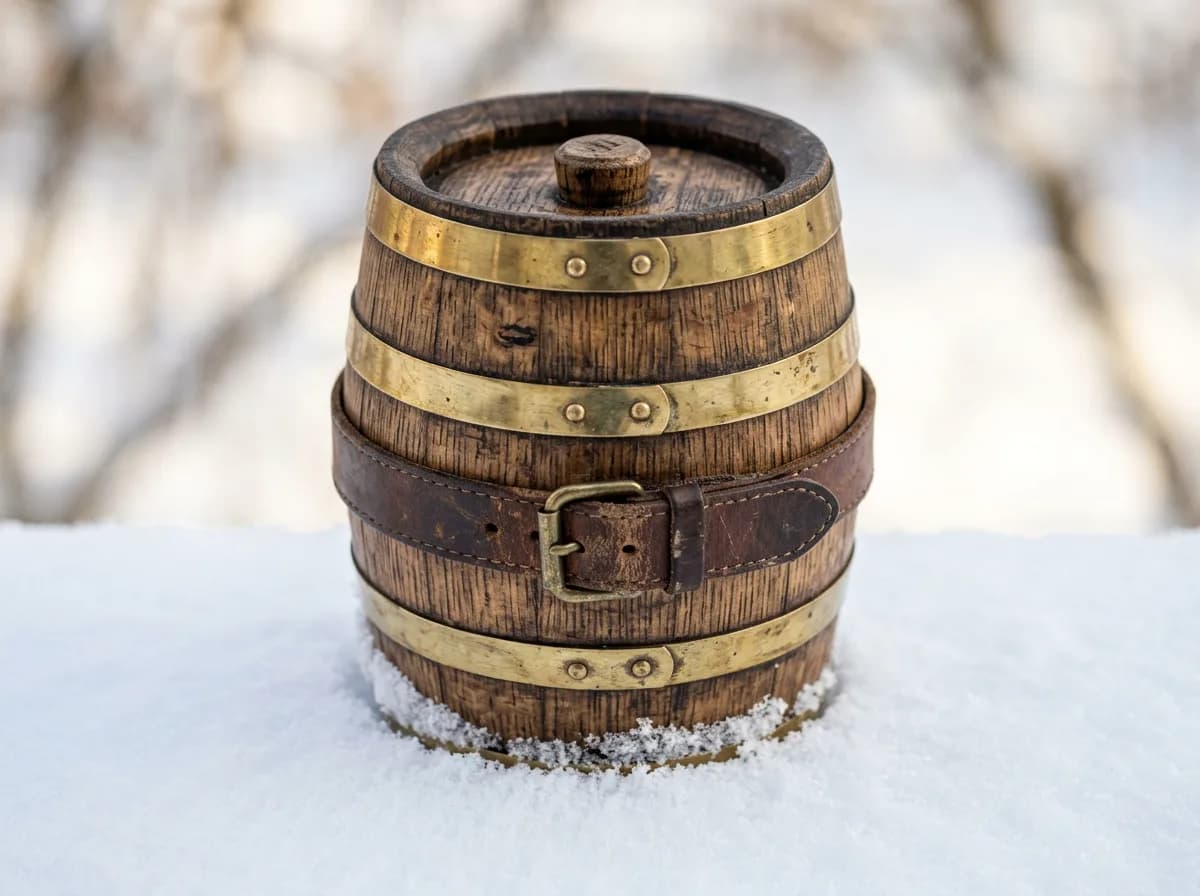
There was never one official size. The barrels you see in paintings and old photos are small by design, just large enough to hang from a working dog's collar without slowing it down. Modern novelty versions follow the same idea. Most St. Bernard barrel collars sold today hold somewhere between a half liter and a full liter, and they are built far more for looks than for carrying anything of real volume.
That small scale is one more reason the brandy story falls apart. Even a full keg of that size would not hold enough alcohol to matter in a real emergency, and the extra weight and bulk would only get in a working dog's way. A light container of water and a little food was always the more useful load to send up the mountain.
What Almost Wiped Out the St. Bernard Breed?
Between 1816 and 1818, the weather in the Alps was catastrophic. This was partly due to the eruption of Mount Tambora in 1815, which caused the infamous “Year Without a Summer” across the Northern Hemisphere. The extreme conditions were devastating for the hospice dogs. A large number of St. Bernards perished, and the breed came dangerously close to extinction.
Records indicate that the monks attempted to replenish their breeding stock by crossing the surviving dogs with other breeds, including Newfoundlands. While this saved the breed from disappearing entirely, it also changed the dogs’ characteristics. The longer-haired St. Bernards that resulted were actually less suited for snow rescue, as ice would accumulate in their longer coats.
Despite these setbacks, the monks continued their rescue mission, and the breed eventually stabilized into the gentle giant we know today. Learn more in our full Saint Bernard breed profile.

Hide capsules in a soft, chicken-flavored treat your dog actually wants. Vet-recommended, with real chicken as the #1 ingredient.
Petful may earn a commission when you click through to Chewy, at no extra cost to you.
Can You Buy a St. Bernard Barrel Collar Today?
Yes, and they’re surprisingly popular. Novelty St. Bernard barrel collars are widely available online, typically ranging from $15 to $50 depending on size and craftsmanship. Most are made from small wooden barrels with leather collar straps.
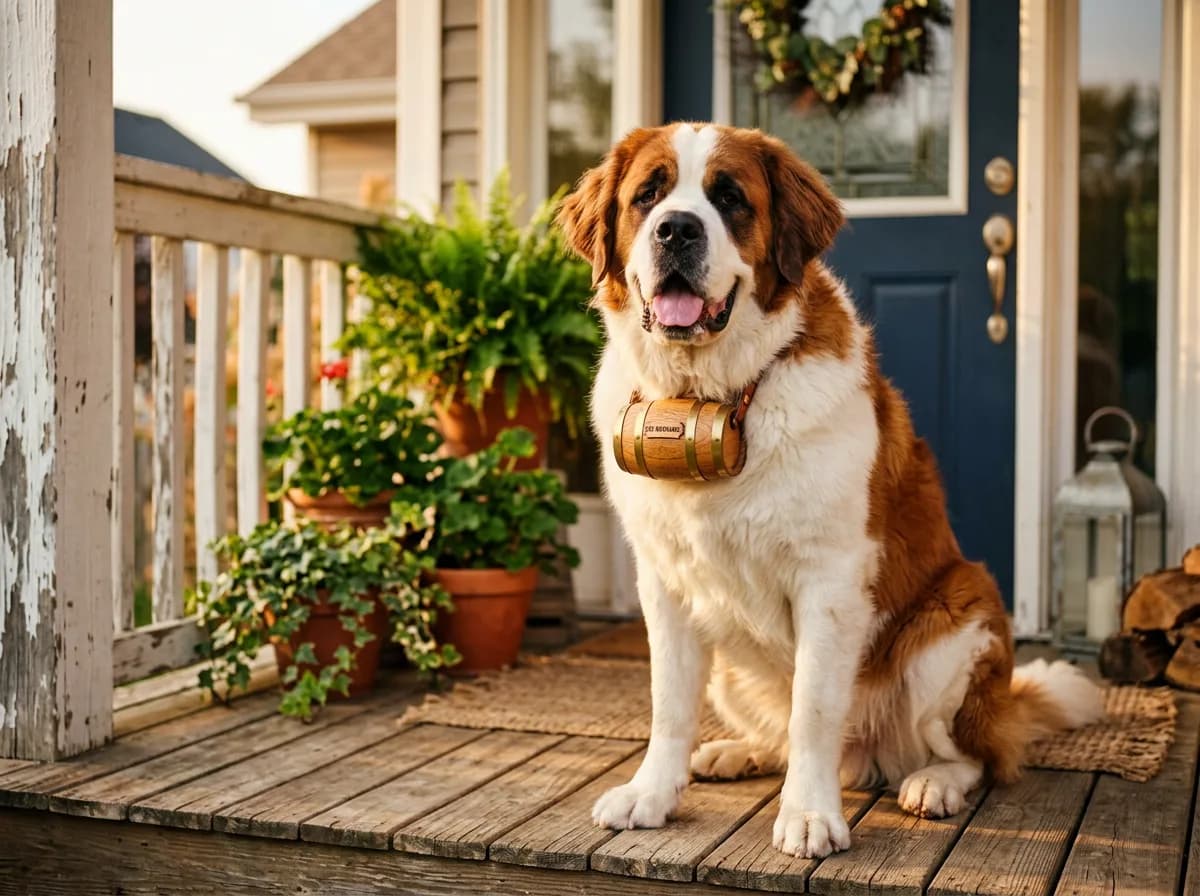
These modern barrel collars are purely decorative. They’re popular for: Photo opportunities and social media posts Dog breed meetups and St. Bernard club events Dog shows and breed demonstrations Costume accessories (especially around Halloween)
Some barrels are functional and can actually hold a small amount of liquid, though they’re designed more as conversation pieces than anything practical.
If you do put a barrel collar on your St. Bernard, make sure it fits comfortably, isn’t too heavy, and doesn’t restrict your dog’s movement or breathing. St. Bernards are among the best working dog breeds in history, and even a novelty accessory should never compromise their comfort.
Are St. Bernards Still Used for Rescue Today?
St. Bernards are no longer the primary breed used in alpine search and rescue. Modern operations typically rely on lighter, more agile breeds like German Shepherds, Belgian Malinois, and Border Collies, along with helicopters, thermal imaging, and electronic detection equipment.
However, the Great Saint Bernard Pass hospice still maintains St. Bernards to this day. The monastery and hospice still stand after nearly a thousand years, and they welcome visitors with accommodations and dining if you ever want to explore the origins of how these remarkable dogs first gained notoriety as search and rescue animals. The breed’s rescue heritage remains central to its identity, even as its role has shifted from working dog to beloved family companion. If you’re curious about breeds that still actively work, check out our guide to the best working dog breeds.

Soft, real-beef burger bites with bison, grain-free and sized for occasional training-treat sharing.
Petful may earn a commission when you click through to Chewy, at no extra cost to you.
The Legacy of the Great Saint Bernard Pass
Whatever theory you subscribe to about the barrel’s contents, the Great Saint Bernard Pass remains one of the most fascinating places in the history of the human-animal bond.
The hospice has operated continuously for nearly a millennium. The dogs bred there saved an estimated 2,000 lives over the centuries. And while the barrels may not have held brandy, the rescue work itself was very real and very heroic.
The most famous individual St. Bernard, a dog named Barry, reportedly saved over 40 lives between 1800 and 1812. Barry’s preserved body is on display at the Natural History Museum of Bern in Switzerland, and he remains a symbol of the breed’s extraordinary service.
Interested in finding a working breed that fits your lifestyle? See our guide to the best dog breeds for people who work.
Frequently Asked Questions (FAQ)
Historical evidence suggests the small barrels carried by St. Bernards held food and water, not brandy or whiskey. The monks at the Great Saint Bernard Pass hospice used these dogs for alpine rescue from the 17th century onward, and practical supplies would have been far more useful to a stranded, hypothermic traveler than alcohol. The brandy myth likely originated from an 1820 painting by Edwin Landseer rather than actual rescue practice.
Almost certainly not. While the image of a brandy-bearing St. Bernard is iconic, there’s no verified historical record confirming the dogs carried alcohol. The Great Saint Bernard Pass hospice, where the breed was developed, lost many of its records to fires, but modern historians and the hospice itself have cast doubt on the brandy story. Medically, alcohol would worsen hypothermia rather than help a cold-exposure victim.
The barrel collar tradition traces back to an 1820 painting by Sir Edwin Landseer depicting two St. Bernards rescuing a traveler in the Swiss Alps. One dog wore a small keg on its collar. The image became so famous that barrel collars became permanently associated with the breed. Today, barrel collars are sold as novelty items and are popular at dog shows, breed meetups, and photo opportunities.
The Great Saint Bernard Pass sits at approximately 8,100 feet (2,469 meters) in the Western Alps, connecting Martigny in Switzerland to the Aosta Valley in Italy. A monastery and hospice have operated there since roughly 1049 A.D., founded by Saint Bernard of Menthon. The hospice still welcomes visitors today and offers accommodations and dining. It’s the place where St. Bernard dogs were originally bred for mountain rescue work.
St. Bernards are no longer the primary breed used in alpine rescue. Modern search and rescue operations typically use lighter, more agile breeds like German Shepherds, Belgian Malinois, and Border Collies, along with helicopters and electronic detection equipment. However, the Great Saint Bernard Pass hospice still maintains St. Bernards, and the breed’s rescue heritage remains central to its identity.
Sir Edwin Henry Landseer (1802 to 1873) was a celebrated English painter known for animal subjects. His 1820 painting “Alpine Mastiffs Reanimating a Distressed Traveller” depicted two large dogs rescuing a man in the snow, with one dog wearing a barrel on its collar. This painting is widely credited with creating, or at the very least popularizing, the barrel myth that became inseparable from the breed’s image.
Barry was the most famous St. Bernard rescue dog in history. He worked at the Great Saint Bernard Pass hospice between approximately 1800 and 1812, reportedly saving over 40 lives during his career. Barry’s preserved body is displayed at the Natural History Museum of Bern in Switzerland. He has become a lasting symbol of the St. Bernard breed’s extraordinary rescue heritage.
The rescue work itself is absolutely real. St. Bernards saved an estimated 2,000 lives at the Great Saint Bernard Pass over several centuries. The dogs did wear collars and may have carried small supply containers. What’s disputed is whether those containers ever held brandy. Given that alcohol worsens hypothermia and the only visual evidence is a painting, most historians consider the brandy detail to be artistic invention rather than historical fact.
The keg and the barrel are the same prop under two names, and the answer is the same: most likely food and water rather than alcohol. The famous brandy version traces back to a single 1820 painting, and the hospice that bred and worked these dogs never confirmed they carried any kind of drink.
There was never a standard size, but the barrels are always small, just big enough to hang from a dog's collar. Most novelty St. Bernard barrel collars sold today hold between a half liter and a full liter and are designed as decorative pieces rather than working containers.
No more than they carried brandy. The legend gets told with whiskey, rum, and brandy depending on the source, but every version traces back to the same 1820 painting and none were ever documented at the hospice. Alcohol of any kind would have worsened hypothermia, which makes it an unlikely thing to send out on a rescue.
References
- “Great St Bernard Hospice.” Great St Bernard Pass Official Website. https://www.gsbernard.com
- “Do You Know Why a St Bernard Dog Carries a Barrel Around Its Neck?” Barriles La Arboleda. https://www.barrileslaarboleda.com/2019/06/09/do-you-know-why-a-st-bernard-dog-carries-a-barrel-around-its-neck/
- “Saint Bernard Barrels.” Barrels Online. https://www.barrelsonline.com/saint-bernard-barrels

Kristine Lacoste has been researching dog and cat breeds for nearly a decade and has observed the animals up close at dog shows in both the United States and the United Kingdom. She is the author of the book One Unforgettable Journey, which was named as a finalist for a Maxwell Award from the Dog Writers Association of America, and was host of a weekly pet news segment on the National K-9 Academy Radio Show. In addition, she was the New Orleans coordinator for Dogs on Deployment, a nonprofit that helps military members and their pets, for 3 years. Kristine has researched and written about pet behaviors and care for many years. She holds a bachelor’s degree in psychology, another bachelor’s degree in English and a Master of Business Administration degree.
Sign up for expert-backed reviews and safety alerts all in one place.


