What Is Natural Dog Food? What the Label Means and How to Choose
What is natural dog food? Learn what the AAFCO natural definition means, how it differs from organic and human-grade claims, and how to choose a food by its ingredient list and nutritional adequacy statement.
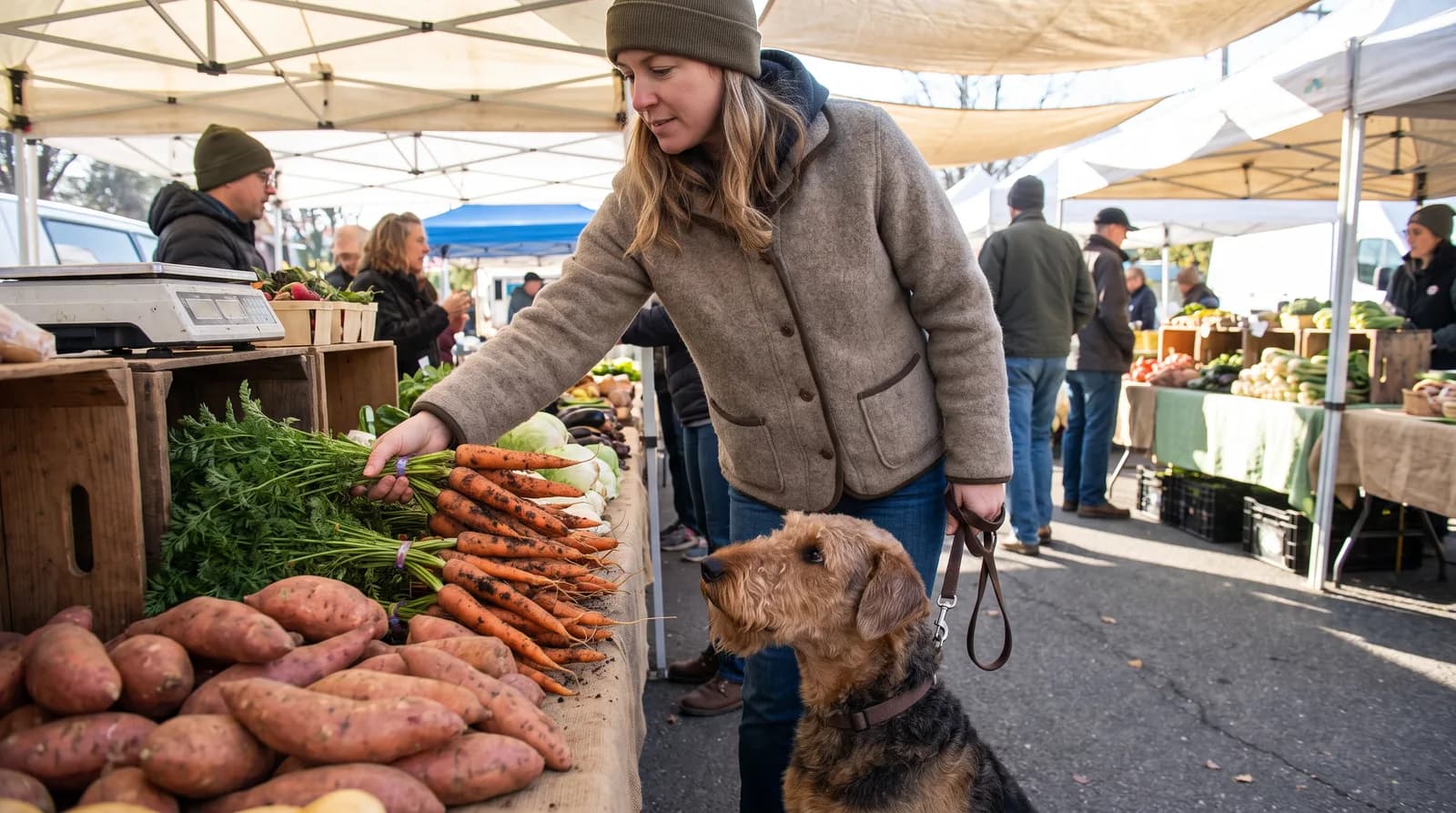
Natural dog food starts with whole, recognizable ingredients like these.
Petful is reader supported. As an affiliate of platforms like Amazon and Chewy, we may earn a commission when you buy through links on this page. There is no extra cost to you.
- This article is sponsored by Get Real, the gently cooked fresh dog food sold at Chewy. Petful was paid for this placement and may earn a commission when you buy through links in this article. Product details come from Chewy's published information; the guidance and opinions are Petful's own.
Natural dog food is food made from plant, animal, or mined ingredients that have not been chemically synthesized, under a definition set by the Association of American Feed Control Officials (AAFCO). The word has a real regulatory meaning on a pet food label, but it is narrower than most shoppers assume: it describes how ingredients are sourced and processed, not whether the food is complete, balanced, or right for your dog.
This guide explains what the natural label legally means, what it does not promise, how it differs from organic, holistic, and human-grade claims, and how to choose a natural dog food by reading the ingredient list and the nutritional adequacy statement. Along the way we use a real short ingredient list as a worked example of what to look for.

Sign up for expert-backed reviews and safety alerts all in one place.
What does natural dog food mean?
- 1Under the AAFCO natural definition, natural means ingredients from plant, animal, or mined sources that are not produced by a chemically synthetic process.
- 2Most natural foods still add synthetic vitamins and minerals, which AAFCO allows with a vitamins and minerals disclaimer such as "natural with added vitamins and minerals."
- 3A natural claim does not prove complete nutrition; the nutritional adequacy statement is the line that does.
- 4Natural, organic, holistic, and human-grade are different claims with different definitions, and holistic has no legal definition at all.
- 5A short ingredient list of recognizable foods is easier to read and judge than any single label word.
What does natural dog food mean? Under the AAFCO natural definition, a natural ingredient comes solely from plant, animal, or mined sources, either unprocessed or changed only by physical processes like cooking, and it is not produced by or subject to a chemically synthetic process. Because most complete diets need added vitamins and minerals that are made synthetically, AAFCO lets a food be called natural with a vitamins and minerals disclaimer, such as "natural with added vitamins and minerals."
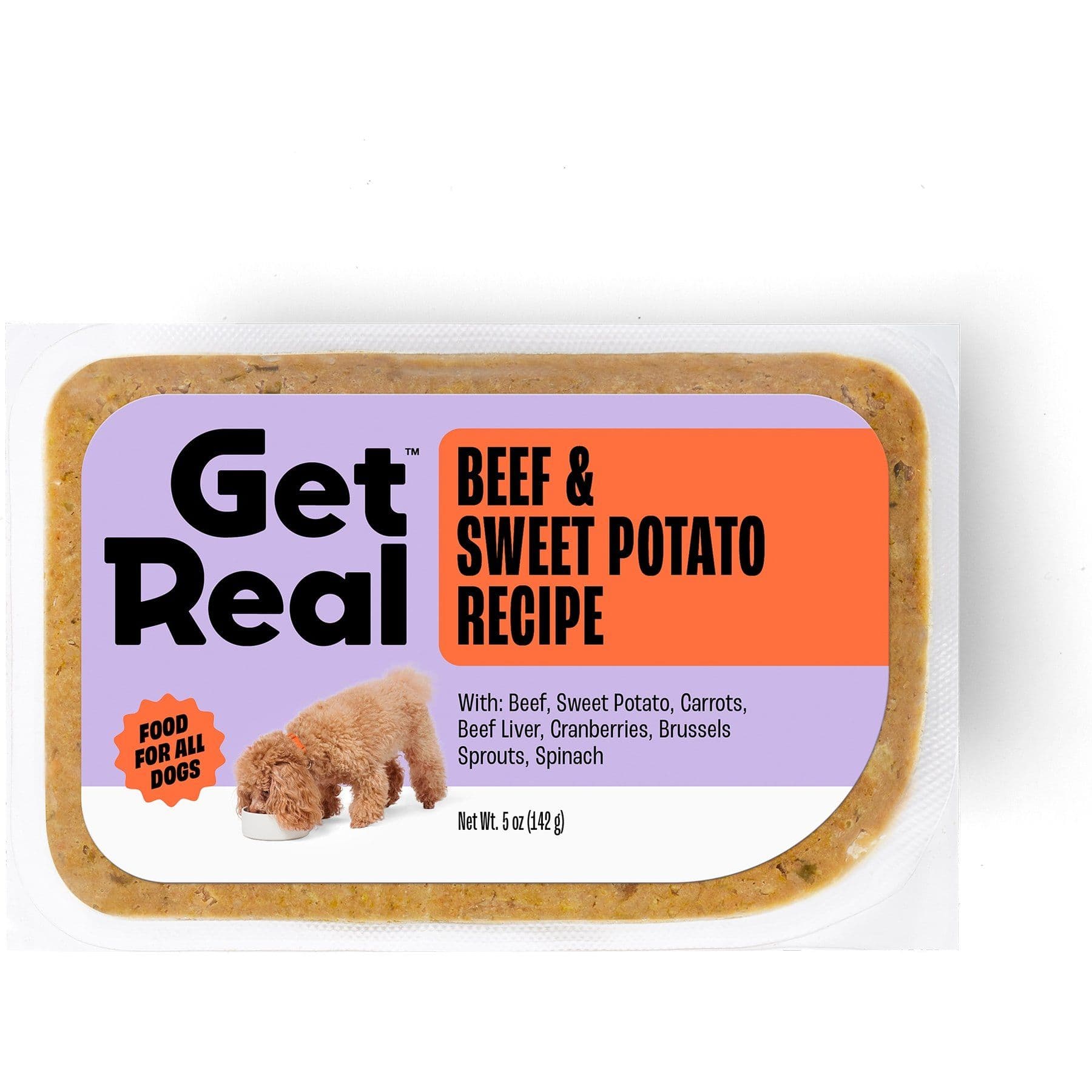
Beef, sweet potato, carrots, and beef liver lead a short, recognizable ingredient list in a gently cooked recipe that meets AAFCO nutrient profiles for all life stages.
Petful may earn a commission when you click through to Chewy, at no extra cost to you.
That definition, published in the AAFCO model regulations and used by state feed officials, is why so many bags and packs say "natural" in large type and carry the disclaimer in small type. All natural dog food, 100 natural dog food, and pure natural dog food are marketing phrasings of the same claim; none of them is a separate legal category. The FDA has not created its own formal definition of natural for pet food, so the AAFCO wording is the reference point that labels follow.
A natural food dog diet, then, is simply one built from ingredients that meet that sourcing rule. The most natural dog food on the shelf is not necessarily the healthiest; natural health dog food claims tell you how the ingredients were made, not what the finished recipe delivers. A food made with whole beef, sweet potato, and carrots, such as the Get Real Beef & Sweet Potato Recipe, shows what a recognizable ingredient list looks like in practice.
What a natural label does not promise
Natural dog food is a sourcing claim, not a nutrition claim. A natural label tells you the ingredients were not chemically synthesized, apart from the allowed vitamins and minerals; it does not by itself prove the food is complete nutrition for your dog. For that, you need a different line on the package: the nutritional adequacy statement.
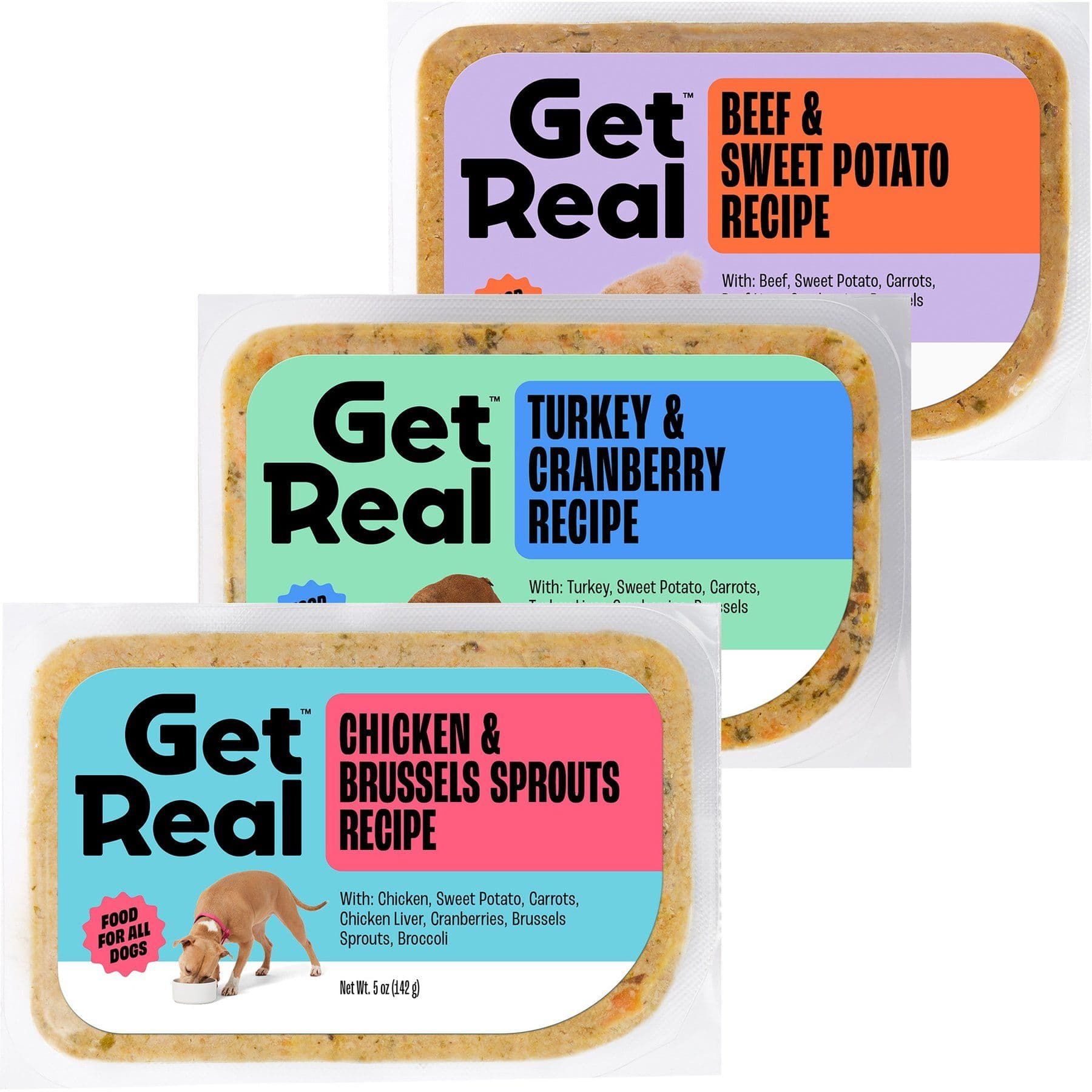
Try Get Real recipes in one sampler box before you choose a plan.
Petful may earn a commission when you click through to Chewy, at no extra cost to you.
The nutritional adequacy statement says whether the food is complete and balanced for a life stage, such as growth, adult maintenance, or all life stages, and how that was established, either by formulation to AAFCO nutrient profiles or by feeding trials. A food can be natural and still be labeled for intermittent or supplemental feeding only, which means it is not meant to be fed as the whole diet. Here is what a natural label claim leaves out:
- Complete nutrition: only the nutritional adequacy statement tells you that.
- Ingredient quality or grade: natural ingredients can be feed grade or human-grade.
- Organic farming: natural does not mean the ingredients were grown under USDA Organic rules.
- Fit for your dog: age, size, activity, and health still decide what your dog should eat.
The wording of the statement matters too. "Formulated to meet the nutritional levels established by the AAFCO Dog Food Nutrient Profiles" means the recipe was built on paper to hit those targets. "Animal feeding tests using AAFCO procedures substantiate" means the food was also fed to dogs in a trial. Both are acceptable routes to a complete and balanced claim, and both are far more informative than the word natural on the front of the bag. For a broader look at reading labels for overall quality, our guide to what to look for in healthy dog food covers ingredients, life stage, and calorie content in more depth.
Natural vs organic vs holistic vs human-grade
Natural, organic, holistic, and human-grade appear side by side on labels, but each comes from a different source and promises something different. Natural and holistic dog food are often marketed together, and natural organic dog food blends two claims that have separate rules. The label claim decoder below lines up who defines the term and what each claim actually guarantees, so you can read any package quickly.
| Label claim | Who defines the term | What it guarantees | What it does not guarantee |
|---|---|---|---|
| Natural | AAFCO natural definition, enforced by state feed officials | Ingredients are not chemically synthetic, except added vitamins and minerals | Complete nutrition, ingredient grade, or organic farming |
| Organic | USDA Organic, under the National Organic Program | Certified ingredients grown and handled under organic rules | Complete nutrition or a better fit for your dog |
| Human-grade | AAFCO human-grade guidance | Every ingredient and the finished food are edible for people and made under human food rules | Complete nutrition on its own |
| Holistic | No one; a holistic claim has no legal definition | Nothing specific | Anything beyond the rest of the label |
| Complete and balanced | AAFCO nutrient profiles, stated in the nutritional adequacy statement | The food meets nutrient profiles for the stated life stage | That the ingredients are natural, organic, or human-grade |
Does organic dog food exist? Yes. Pet food can carry the USDA Organic seal when its ingredients and handling meet the National Organic Program standards run by the USDA. Organic is stricter than natural on farming practices, such as limits on synthetic pesticides, but it says nothing about whether the recipe is complete and balanced. Natural vs organic, in short, is sourcing versus farming: a natural food need not be organic, while an organic food usually also meets the natural definition.
Human-grade is the claim most often confused with natural. A human-grade food must be made from ingredients and in a facility that meet human food standards, which is a manufacturing claim rather than a sourcing one. Our guide to human-grade dog food explains what that claim requires. Holistic, by contrast, has no legal definition, so treat it as a brand description rather than a standard.
Natural ingredients, preservatives, and flavors on the label
Natural dog food ingredients are the whole foods and simple components you can picture: meat, organ meat, vegetables, fruit, and oils. The ingredient list runs in order by weight before cooking, so the first few ingredients make up most of the recipe. Natural limited ingredient dog food takes that further by keeping the list short, which also helps owners of dogs with food sensitivities see exactly what is in the bowl; our guide to limited ingredient dog food covers when that approach makes sense.

Preservatives are where natural and conventional foods differ most. Dog food with natural preservatives typically uses mixed tocopherols, which are forms of vitamin E, along with rosemary extract or citric acid, to slow fat from going rancid. Synthetic preservatives such as BHA, BHT, and ethoxyquin are approved for use in pet food but do not fit the natural definition. An all natural dog food with no preservatives is usually one that is frozen, refrigerated, or canned, because cold storage or sealed cans do the preserving instead.

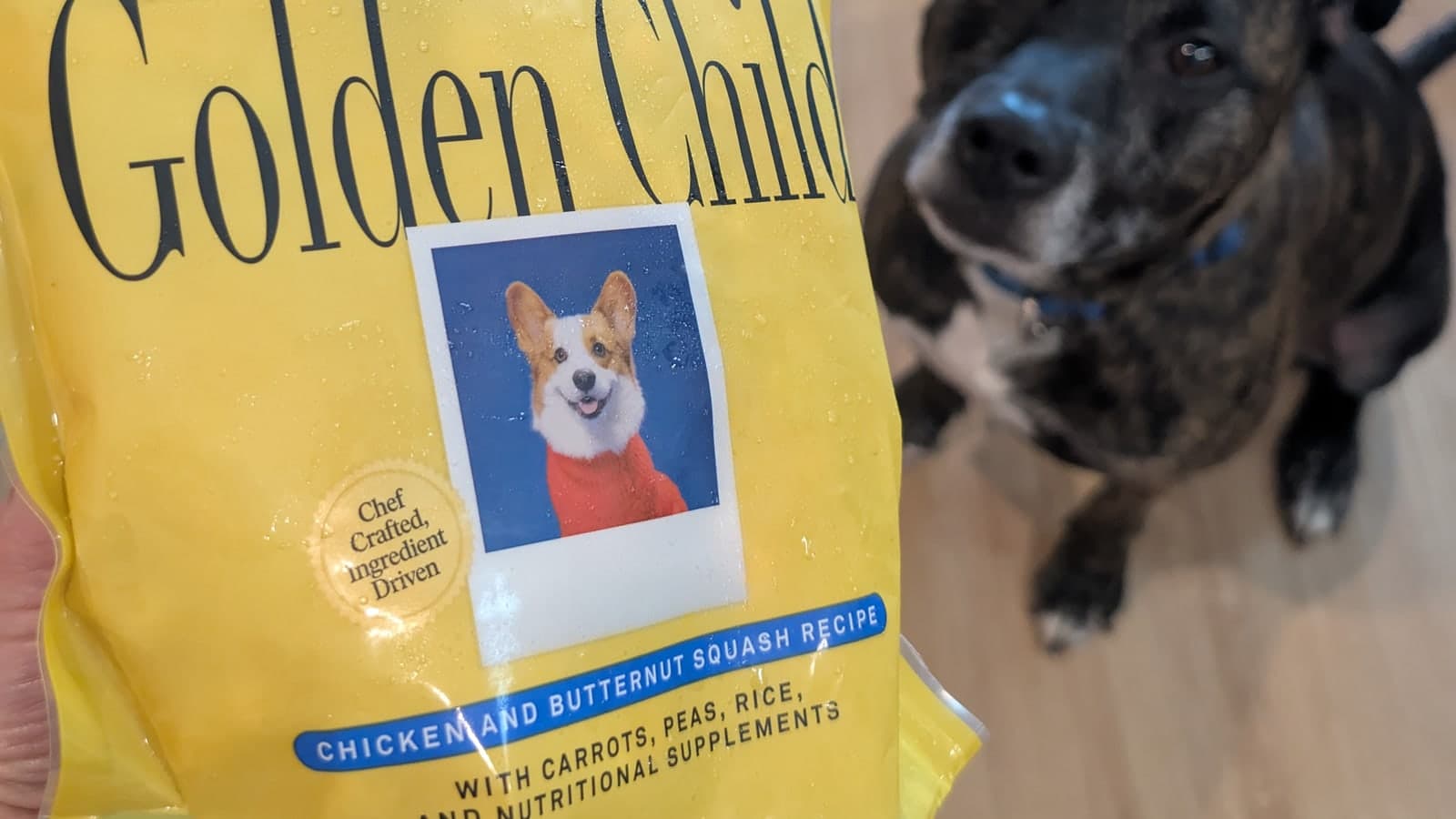
A gently cooked chicken recipe, kept frozen until you thaw it, that is complete and balanced for all life stages.
Petful may earn a commission when you click through to Chewy, at no extra cost to you.
- Mixed tocopherols are a natural preservative made from vitamin E, and they are the most common alternative to synthetic preservatives such as BHA, BHT, and ethoxyquin in natural dog food.
What is natural flavor in dog food? A natural flavor is a flavoring made from a natural source, often a concentrated meat or liver product, added to make the food more appealing. Flavor names follow their own AAFCO rule: a label that says "with beef flavor" only needs enough beef or beef ingredient for the flavor to be detectable, which is far less than a food named "beef dog food." Reading the ingredient list tells you how much of the named protein is really there.
Short, recognizable ingredient lists: a Get Real example
The easiest way to put the label claim decoder to work is to read a real ingredient list. Here is the full list for the Get Real Beef & Sweet Potato recipe, Chewy's gently cooked fresh dog food, in label order:
- Beef, sweet potato, carrots, beef liver, cranberries, brussels sprouts, spinach
- Dicalcium phosphate, canola oil, potassium chloride, calcium carbonate, salt, fish oil, choline chloride, magnesium sulfate
- Minerals (zinc sulfate, ferrous sulfate, potassium iodide, sodium selenite, copper sulfate, manganese sulfate)
- Mixed tocopherols
- Vitamins (E, A, niacin, d-calcium pantothenate, thiamine mononitrate, folic acid, riboflavin, D3, B12, pyridoxine HCl)
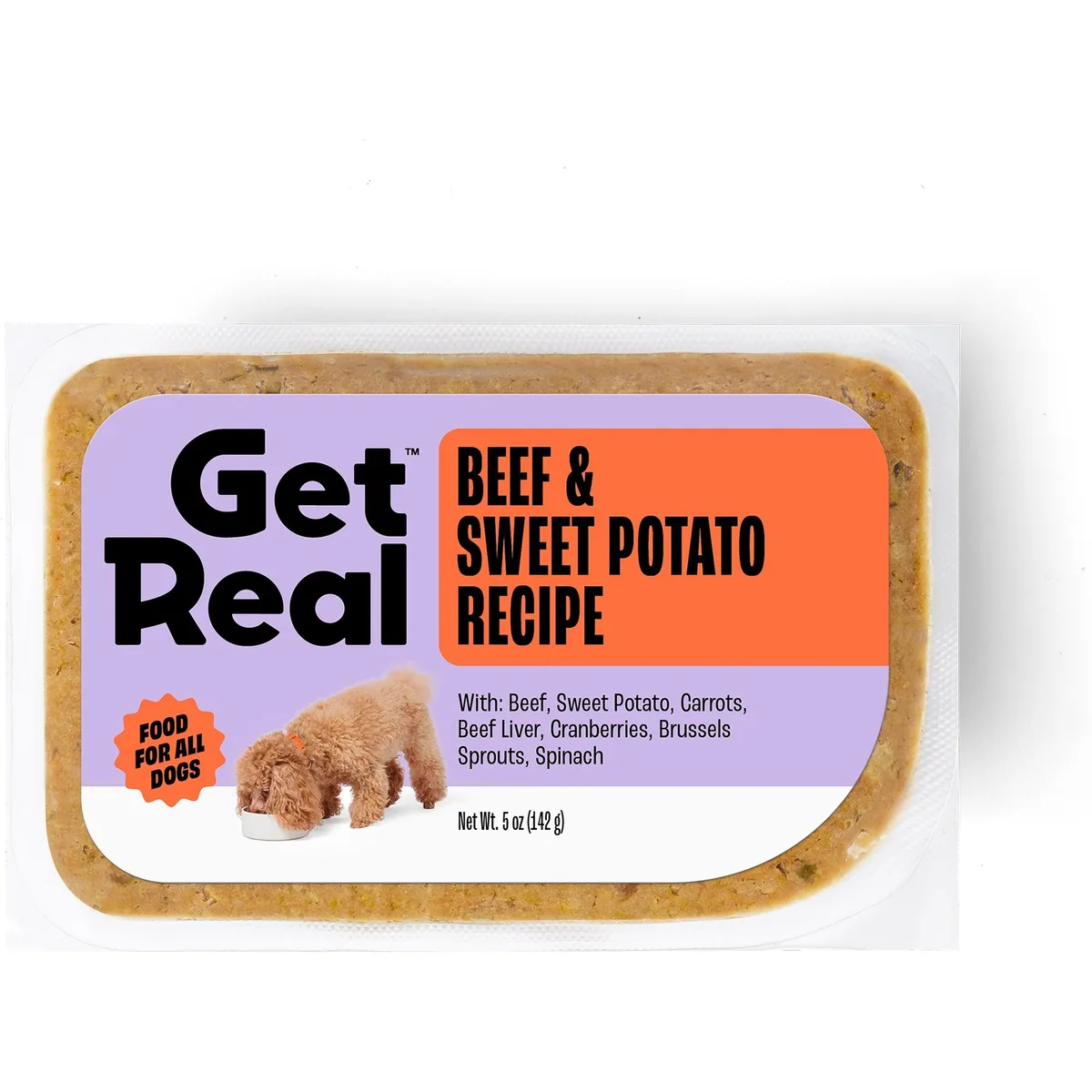
This is an example of reading a short ingredient list, not a statement about any natural claim on the package. Walk through it with the decoder in mind:
- The first ingredients are whole foods: beef, sweet potato, carrots, and beef liver are listed first, so they are present in the largest amounts by weight.
- The produce is recognizable: cranberries, brussels sprouts, and spinach are foods you could buy at a grocery store.
- The long names are the nutrient pack: dicalcium phosphate, choline chloride, the mineral sulfates, and the vitamins are what make the food complete and balanced; this is the part the AAFCO vitamins and minerals disclaimer exists for.
- The preservative is mixed tocopherols: a vitamin E source rather than a synthetic preservative.
Chewy describes Get Real recipes as 10 ingredients or less plus vitamins and minerals, made with human-grade ingredients, and states that they meet AAFCO nutrient profiles for all life stages, including growth of large-size dogs, which is the nutritional adequacy statement you are looking for. The same reading method works on the Get Real Chicken & Brussels Sprouts Recipe and the Turkey & Cranberry recipe; check each package's own list. Our Get Real dog food review covers the recipes, feeding plans, and storage in more detail.
How to choose a natural dog food
What is the healthiest natural dog food? The healthiest natural dog food is one that is complete and balanced for your dog's life stage, built on a short list of recognizable ingredients, and fed in the right amount for your dog's size and activity. No single best natural dog food suits every dog, so use the label rather than the front-of-pack claim to compare options.
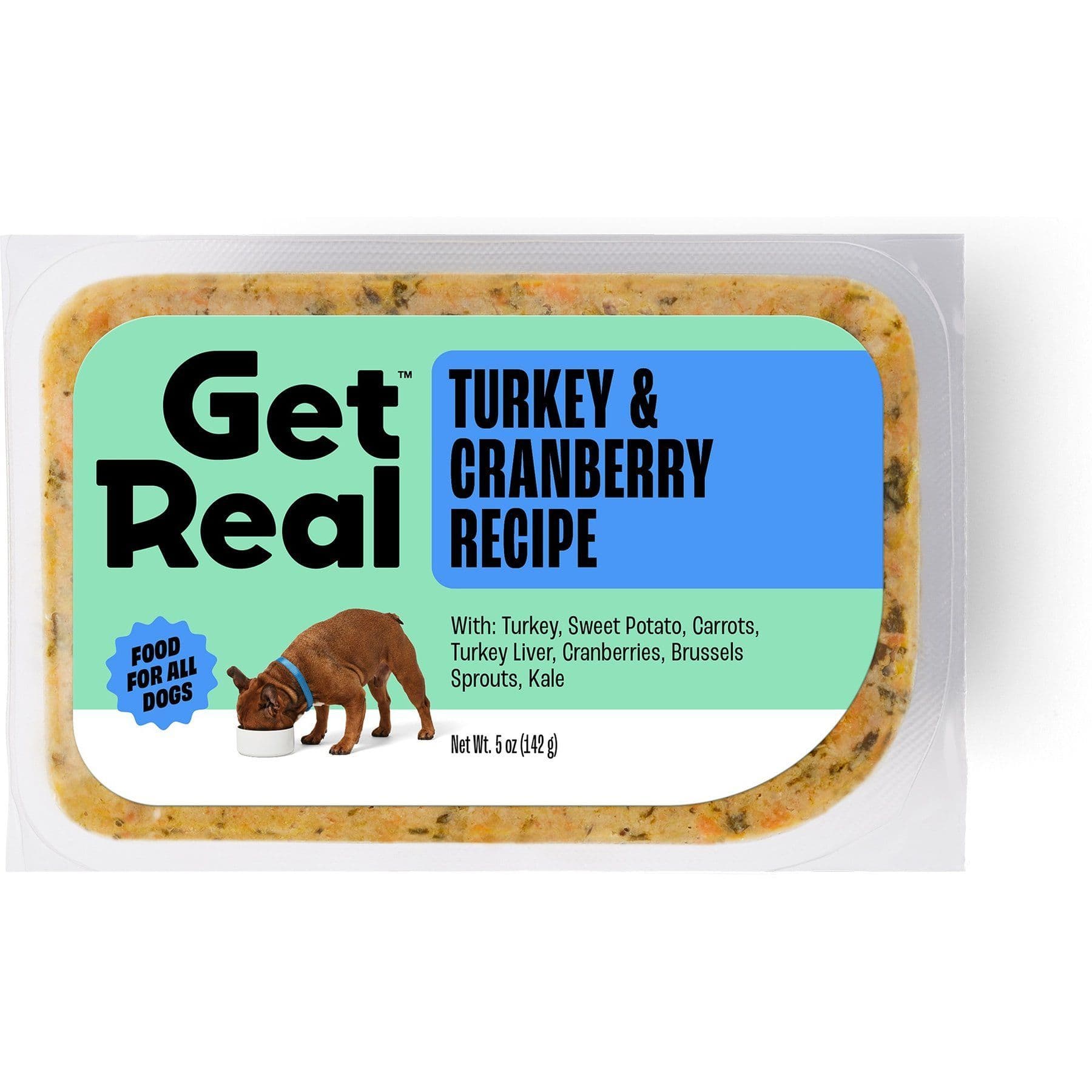
Turkey and cranberry in a short-list recipe that is complete and balanced for all life stages, for dogs that do well on poultry.
Petful may earn a commission when you click through to Chewy, at no extra cost to you.
This checklist works for any best rated natural dog food or high quality natural dog food you are considering:
- Read the nutritional adequacy statement first: look for complete and balanced for your dog's life stage, or for all life stages.
- Check the first few ingredients: a named animal protein, such as beef, chicken, or turkey, should lead.
- Prefer a short, recognizable list: fewer ingredients make a good natural dog food easier to judge.
- Look at the preservative: mixed tocopherols or rosemary extract fit the natural definition; synthetic preservatives do not.
- Find the calories: kcal per cup or per kilogram lets you portion accurately.
- Match the format to your routine: dry, wet, fresh, and raw all store and serve differently.
Premium natural dog food and healthy natural dog food are marketing phrases, so the checklist matters more than the wording. A natural complete dog food passes the first line of the checklist; a natural food that only says "for supplemental feeding" does not. If you want the bigger picture on which foods are healthiest overall and which to avoid, our guide on how to choose the best dog food and our article on what to look for in healthy dog food cover those questions, including red flags on labels.
A practical way to compare good all natural dog food options is to try a small amount first. The Get Real Turkey & Cranberry Recipe offers a third protein if your dog does better on poultry other than chicken. Whatever you choose, switch over 7 to 10 days, mixing a little of the new food into the old.
Natural dog food formats: dry, wet, fresh, and raw
What are the most natural dog foods? The most natural dog foods are the ones closest to whole ingredients with the least processing, which usually means fresh, gently cooked, or raw foods, but natural dog food dry and wet formats can meet the same AAFCO natural definition. Format changes texture, storage, and calorie density more than it changes the meaning of the word natural.
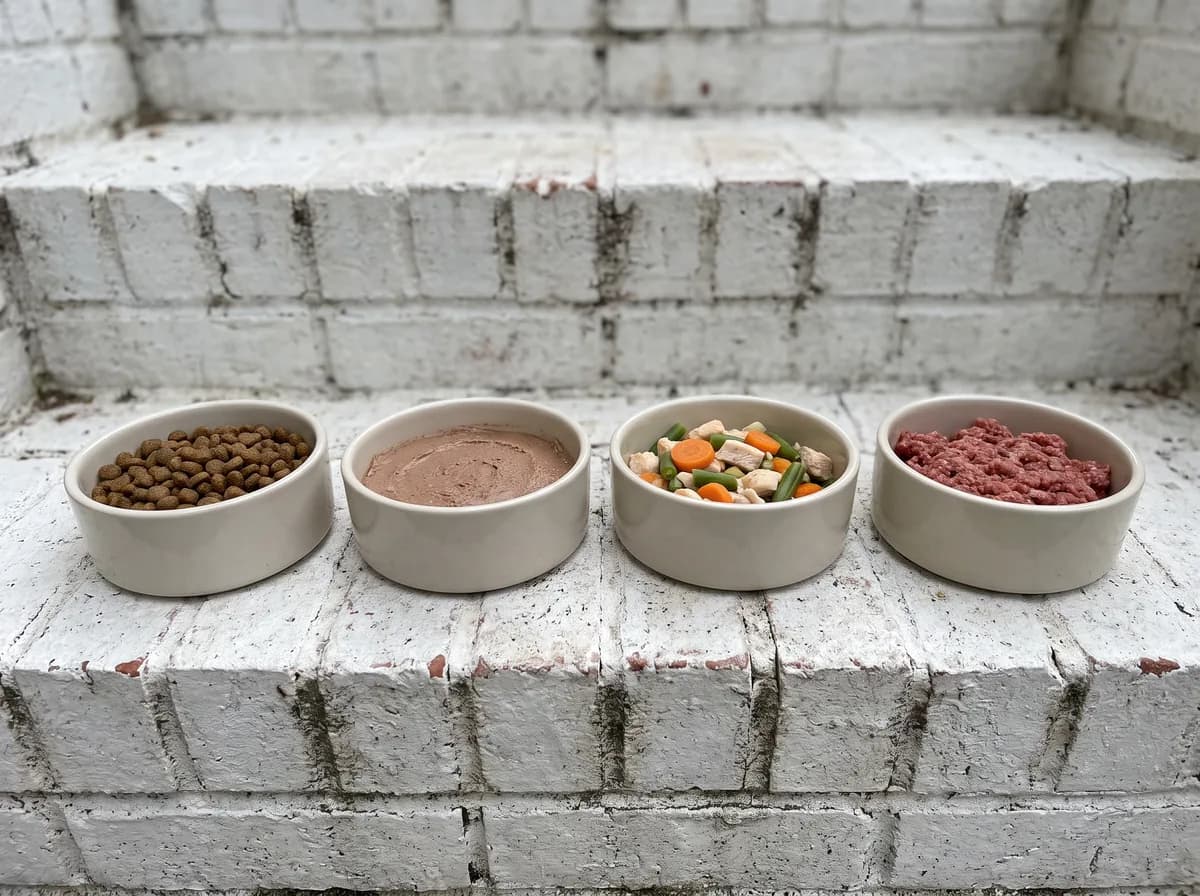
Here is how the main natural formats compare:
- Dry: natural dry dog food, or kibble, is cooked at high heat and then dried, so even the best natural options still need a shelf-stable preservative such as mixed tocopherols. Dry food is the easiest format to store and measure.
- Wet: natural wet dog food is cooked inside a sealed can, so canned food often needs no added preservative at all.
- Fresh: natural fresh dog food is gently cooked and then refrigerated or frozen, with a short shelf life once thawed. Cold storage replaces preservatives, and ingredient lists tend to be short.
- Raw and freeze-dried: raw natural dog food is uncooked, and freeze-dried versions remove water so the food keeps on a shelf. Raw diets carry a risk of bacteria such as Salmonella and Listeria for dogs and the people handling them, a risk the FDA has highlighted.
- Toppers: natural dog food toppers are a small amount of fresh, wet, or freeze-dried food added on top of a complete diet.
Fresh food fits a natural approach without the handling concerns of raw food, because it is cooked. Get Real is gently cooked then frozen, sold in 12 oz and 24 oz packs and a 5 oz mixer pack that is meant as a topper rather than a full meal. You thaw it in the fridge for 12 to 24 hours, or 35 to 48 hours for the 24 oz pack, and use it within 3 to 5 days. Whichever format you pick, the same two checks apply: a nutritional adequacy statement that fits your dog, and an ingredient list you can read and understand. Many owners combine formats, using a complete dry food as the base and a fresh topper for variety, which keeps the benefits of both.
Is homemade dog food more natural?
Homemade dog food feels like the most natural choice, because you choose and cook every ingredient. You know exactly where the meat came from, nothing is hidden behind a long chemical name, and you can skip any ingredient you would rather avoid. Those are real advantages, and they explain why home cooking appeals to so many owners. But natural and complete are different things, and homemade diets are where that difference matters most. A homemade recipe built from whole foods can easily meet the natural definition while missing essential nutrients.
How healthy is homemade dog food? It can be healthy when a board-certified veterinary nutritionist formulates it, but most recipes are not. A 2013 study of 200 homemade dog food recipes published in the Journal of the American Veterinary Medical Association found that 95 percent were deficient in at least one essential nutrient, with shortfalls in choline, zinc, vitamin D, calcium, and vitamin E among the most common. Deficiencies like these can take months to show up, which is especially risky for growing puppies, because the Merck Veterinary Manual notes that growing dogs need correct calcium and phosphorus intake for normal bone development.
If you want to feed natural dog food homemade style, these steps keep it safe:
- Use a recipe from a board-certified veterinary nutritionist, such as a diplomate of the American College of Veterinary Nutrition, not a general website.
- Follow it exactly, including the vitamin and mineral supplement it specifies.
- Weigh ingredients rather than measuring by eye, and keep a log of your dog's weight so you can spot changes early and share them with your veterinarian at regular checkups, where body condition and weight trends can be reviewed together.
For many owners, a commercially prepared fresh food gives the same short, recognizable ingredients as home cooking with the nutrition already balanced. That is the role a recipe like Get Real plays: ingredients you could name, with a nutritional adequacy statement that covers all life stages. If you do cook at home, a commercial complete food can also serve as the base while home-cooked food stays a small share of the bowl.
Frequently asked questions about natural dog food
Most veterinarians are cautious about homemade dog food because unbalanced recipes commonly cause nutrient deficiencies, especially in calcium and other minerals. A homemade diet is only complete and balanced when a board-certified veterinary nutritionist formulates it and you follow it exactly.
Leave out onions and garlic, grapes and raisins, chocolate, xylitol, macadamia nuts, and cooked bones, all of which can harm dogs. The Merck Veterinary Manual covers these toxins in detail. Avoid heavy seasoning, salt, and fatty trimmings too.
Not automatically. Natural is a label claim about how ingredients are sourced and processed; it does not prove complete nutrition. Check the nutritional adequacy statement for your dog's life stage first, then compare ingredient lists.
Usually yes, but natural ones. Natural dry foods commonly use mixed tocopherols or rosemary extract instead of synthetic preservatives such as BHA, BHT, or ethoxyquin. Frozen, refrigerated, and canned foods often need none.
No. Human-grade and natural have different definitions: human-grade means the ingredients and finished food are edible for people and made under human food rules, while natural describes ingredients that are not chemically synthetic. A food can be one, both, or neither.

Coreen Saito is a pet writer and longtime shelter volunteer with more than a decade in animal rescue. She covers cat behavior, breed care, and the small, ordinary science of sharing a life with companion animals, with a particular focus on honest takes about the products and decisions that actually matter. At home in Arizona, she's outranked by Mac (a dog with the loudest opinion in the house), Rebel (a cat who governs by quiet authority), and Meri (an orange tabby who runs the late shift and the laundry basket). She writes about all three, plus the rescues that keep coming through her life, at LifeWithMinty.com.
Sign up for expert-backed reviews and safety alerts all in one place.

A Final Word (Disclaimer)
At Petful, our review integrity is paramount; we never exchange special treatment in our reviews for monetary or material rewards.
Nonetheless, when our readers click through to online merchants (including Chewy or Amazon), we receive a referral commission. This supports the running of our free blog, and we appreciate your backing.