Vet-Approved Homemade Dog Food: A Complete, Balanced Recipe
Follow a complete, balanced homemade dog food recipe with exact ingredients, preparation steps, storage guidance, and nutrient safeguards.

BVMS, MRCVS
Petful is reader supported. As an affiliate of platforms like Amazon and Chewy, we may earn a commission when you buy through links on this page. There is no extra cost to you.
This article is sponsored by JustFoodForDogs. Petful maintains editorial control over its educational content and may earn a commission from qualifying purchases, at no extra cost to you.
Homemade dog food can give you direct control over what goes into your dog's bowl, but a bowl of wholesome ingredients is not automatically complete and balanced. Dogs need nutrients in specific amounts and proportions. Leaving out a recipe's nutrient blend, swapping ingredients, or changing quantities can alter that balance.
The safest approach is to follow a veterinary-formulated recipe exactly. One strength of the JustFoodForDogs DIY program is that the cooking guide and nutrient blend are designed as one matched system rather than separate ingredients to mix and match. The Turkey & Whole Wheat Macaroni recipe below pairs with its recipe-specific Turkey DIY Nutrient Blend and is intended for adult-dog maintenance. Puppies, pregnant or nursing dogs, and dogs with medical or special dietary needs require individualized veterinary guidance.
Treat a balanced homemade dog food recipe as a formula, not a flexible dinner recipe. Use the specified ingredients, weights, oil, and nutrient blend, and add the oil and blend only after the cooked food has cooled.

Sign up for expert-backed reviews and safety alerts all in one place.
Why complete and balanced comes first
Meat, grains, and vegetables can all contribute useful nutrients. The challenge is that dogs need more than protein, carbohydrate, and visible produce. A long-term diet also needs the right amounts and relationships among minerals, vitamins, fatty acids, and amino acids.
Calcium and phosphorus illustrate the problem. Meat-heavy recipes can provide phosphorus without enough calcium, and sprinkling in an arbitrary calcium source does not show that the entire formula is balanced. The same principle applies to trace nutrients: more is not necessarily better, and one multivitamin cannot be assumed to correct an untested recipe.
A recipe-specific blend works differently. It is designed for the exact ingredient list and batch size that accompanies it. The blend does not turn any assortment of foods into a complete meal, and the blend by itself is not food.
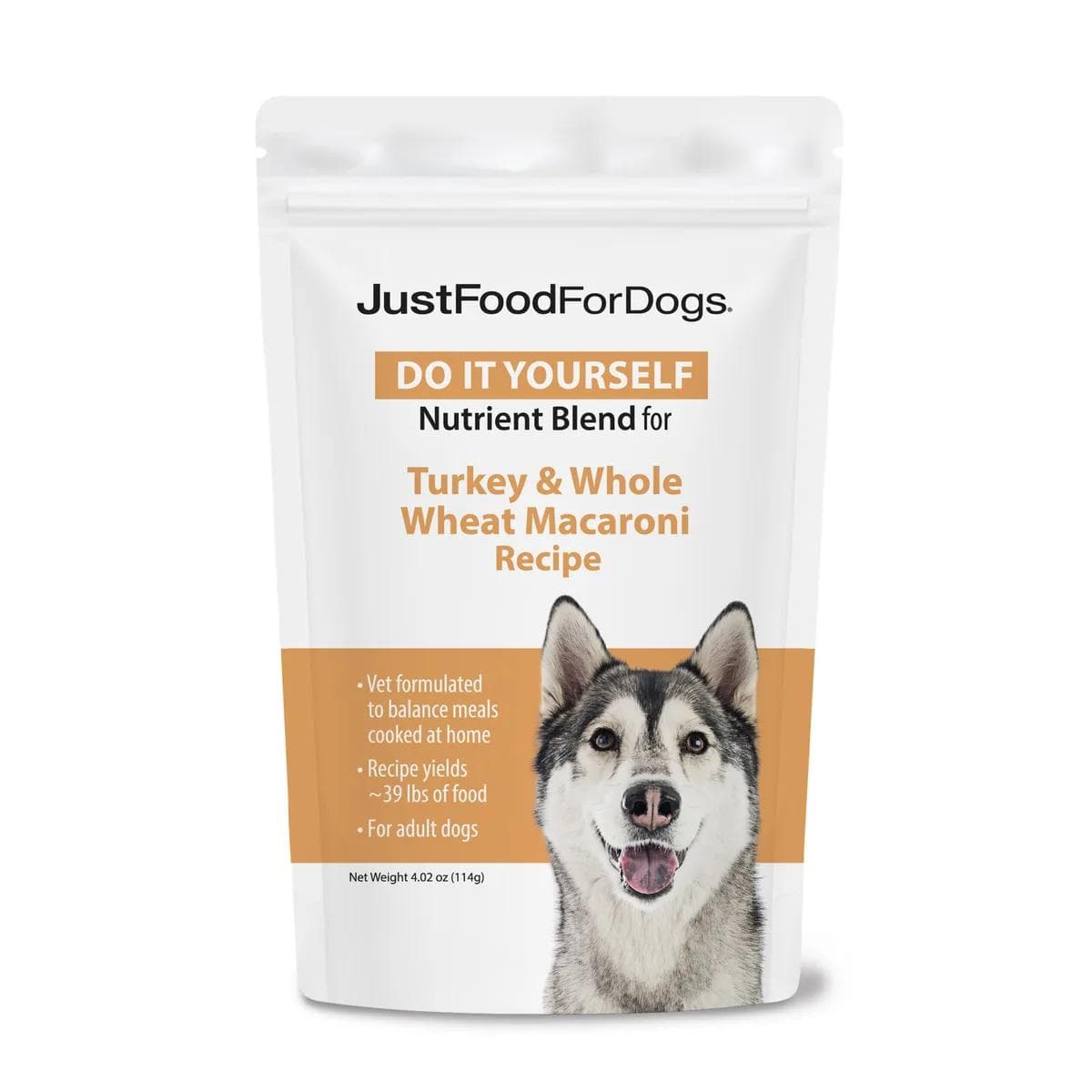
Get the Turkey DIY Nutrient Blend that matches the Turkey & Whole Wheat Macaroni cooking guide reproduced here.
- Made for the Turkey & Whole Wheat Macaroni recipe
- Pair with the exact official cooking guide
- Measure every ingredient and the blend as directed
Recipe-specific blend; follow the complete recipe exactly.
Petful may earn a commission when you click through to JustFoodForDogs, at no extra cost to you.
- What are the best ingredients to use for homemade dog food? They are the exact ingredients a qualified formulator has balanced together for the intended life stage and batch yield. A recipe-specific blend protects that exact ingredient list; it is not a universal powder. Do not substitute ingredients, change their measured amounts, or add a general supplement on the assumption that healthy foods will still produce the same nutrient profile.
| Keep the formula intact | Why it matters |
|---|---|
| Weigh every ingredient in the stated form | Raw and dry weights are part of the formulation |
| Use the named Turkey DIY Nutrient Blend | A different blend is formulated for a different recipe |
| Do not substitute ingredients | Replacements can change calories and nutrient amounts |
| Add the oil and blend after cooling | This follows the official preparation instructions |
| Seek veterinary help for special needs | An adult-maintenance recipe is not an individualized medical diet |
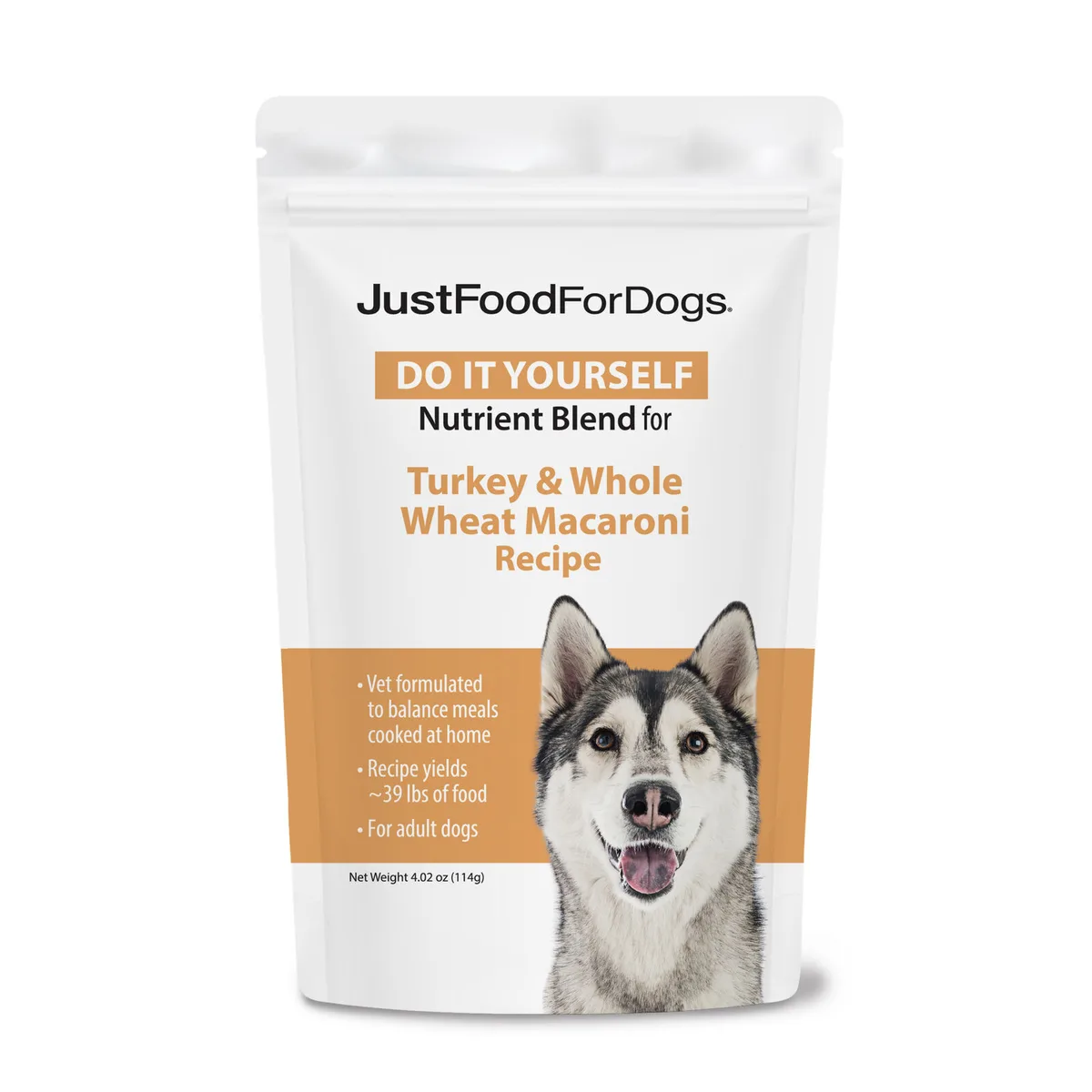
Vet-approved Turkey and Whole Wheat Macaroni recipe
The recipe below reproduces the ingredient amounts and ordered method in the official Turkey DIY cooking guide, version 25.2.2. It uses the Turkey DIY Nutrient Blend, SKU 60030105.
This vet-approved homemade dog food is presented as one complete formula, not a template. The large and small batches use the same ingredient ratio, preparation order, Omega algae oil, and recipe-specific blend. Choose one batch size and follow it in full. Do not combine the large-batch amount of one ingredient with the small-batch amount of another.
What is the healthiest recipe for homemade dog food? There is no universal recipe for every dog. A healthy formula is complete and balanced for its intended life stage, supplies sufficient calories in an individualized portion, and is appropriate for the dog's medical history. This single cookable recipe pairs exact preparation with the nutrient-balance explanation that generic recipe pages often omit.
Large batch: about 13 pounds
- 5 pounds ground turkey, 85/15
- 2.5 ounces turkey liver
- 2 pounds 8 ounces whole wheat macaroni, dry
- 5 ounces carrots, finely chopped
- 5 ounces zucchini, finely chopped
- 5 ounces broccoli, finely chopped
- 2.5 ounces cranberries, fresh or frozen, with no additives
- 5 teaspoons JustFoodForDogs Omega algae oil
- 2.5 tablespoons Turkey DIY Nutrient Blend
Small batch: about 6.5 pounds
Choose the small batch when its finished yield better matches your storage capacity and feeding schedule. Use every amount below as one coordinated set; the reduced yield does not authorize quartering individual ingredients, estimating the blend, or changing the cooking sequence.
- 2 pounds 8 ounces ground turkey, 85/15
- 1.25 ounces turkey liver
- 1 pound 4 ounces whole wheat macaroni, dry
- 2.5 ounces carrots, finely chopped
- 2.5 ounces zucchini, finely chopped
- 2.5 ounces broccoli, finely chopped
- 1.25 ounces cranberries, fresh or frozen, with no additives
- 2.5 teaspoons JustFoodForDogs Omega algae oil
- 3.75 teaspoons Turkey DIY Nutrient Blend
Directions
- Wash and finely chop the vegetables. Prepare a one-quart ice bath for cooling the macaroni.
- Brown the ground turkey and turkey liver in a nonstick skillet over medium-high heat, stirring as they cook.
- While the meat is still slightly pink, add the carrots, zucchini, broccoli, and cranberries. Continue cooking until the turkey is fully cooked and the vegetables are soft. Do not drain the mixture.
- Cook the whole wheat macaroni according to its package directions. Transfer it to the ice bath, then drain it once cool.
- Allow all cooked ingredients to cool until they are warm to the touch. Combine the meat-and-vegetable mixture with the macaroni. Add the Omega algae oil, then slowly mix in the Turkey DIY Nutrient Blend until it is evenly distributed.
- Portion the finished food. Refrigerate portions you will use within four days and freeze the rest for up to three months.
The quantities above are raw weights for the meat and vegetables and a dry weight for the macaroni. Do not estimate by eye, change the batch ratio, or replace an ingredient without guidance from the recipe formulator or your veterinarian. This recipe is fully cooked; if you are considering raw feeding instead, review the safety evidence on raw meat for dogs first.
How to keep the finished food complete and balanced
A complete balanced homemade dog food recipe stays balanced only when the measured formula survives shopping, cooking, mixing, portioning, and storage. The top three ingredients on a label or recipe cannot establish nutritional adequacy by themselves. What should the top 3 ingredients be in dog food? The answer depends on the entire formulation, because vitamins, minerals, fatty acids, amino acids, moisture, and calories come from the combined recipe and its supplement system.
Use the controls below as a batch audit. Confirm the exact ingredient forms before cooking, preserve all cooking liquid the guide says to keep, cool the food before adding the oil and blend, mix until distribution is even, and record the finished yield. If an ingredient is unavailable or a step was performed incorrectly, pause and ask the recipe provider or veterinarian instead of repairing the batch by guesswork.
Measure rather than improvise
Use a kitchen scale for the meat, liver, pasta, vegetables, and cranberries. Measuring by weight is more repeatable than relying on cups, handfuls, or package portions. Measure the blend and oil exactly as directed for the batch size you make.
Cool before adding the oil and blend
The official sequence matters: cook first, cool the food until warm to the touch, and then add the oil and nutrient blend. Stir slowly and thoroughly so the blend is distributed throughout the batch rather than concentrated in a few servings.
Do not make ingredient substitutions
Changing turkey to another protein, replacing whole wheat macaroni with a different starch, omitting liver, or changing the vegetables may appear minor, but it changes the formula. Use a different veterinary-formulated recipe when you need different ingredients.
What should I not put in my homemade dog food? Do not add unapproved substitutions, extra vitamin or mineral products, concentrated oils, bones, toxic foods, or leftovers that change the batch. Even a safe ingredient can make the finished diet less balanced when its amount was not included in the formulation. If the dog needs another protein or starch, use a separately formulated recipe rather than editing this one.
Portion for your individual dog
Batch yield is not a feeding recommendation. The right daily amount depends on the dog's weight, age, activity, body condition, and the calorie density of the finished recipe. Start with guidance from the recipe provider or your veterinarian, divide the daily amount into meals, and monitor body condition over time.
Store and handle it safely
Work with clean hands and equipment, cook the turkey fully, cool the food promptly, and avoid leaving portions at room temperature. Keep up to four days of food refrigerated and freeze later portions for up to three months. Thaw frozen portions safely in the refrigerator.
- Ask your veterinarian or a board-certified veterinary nutritionist before feeding a homemade diet to a growing puppy, a pregnant or nursing dog, or a dog with kidney, liver, pancreatic, gastrointestinal, allergy, or other medical concerns.
Who this homemade dog food recipe is for
The Turkey and Whole Wheat Macaroni formula is intended as an adult-maintenance recipe when every listed ingredient, the Omega algae oil, and the Turkey DIY Nutrient Blend are used in the specified amounts. “Adult maintenance” is an important boundary. It describes the life stage the formula was designed to support, not a promise that it fits every adult dog.
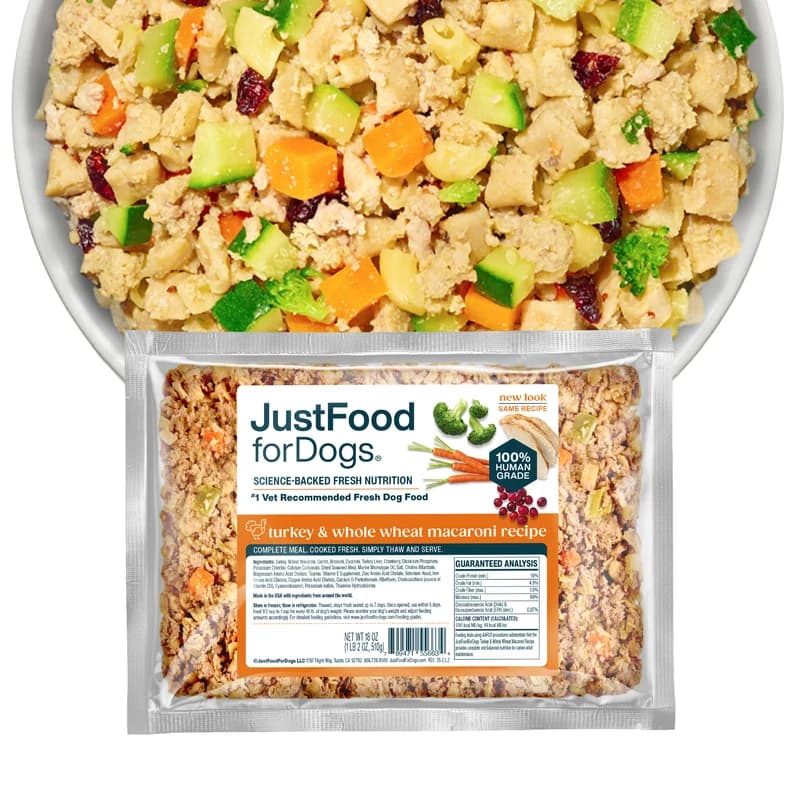
Get the Turkey DIY Nutrient Blend that matches the Turkey & Whole Wheat Macaroni cooking guide reproduced here.
- Made for the Turkey & Whole Wheat Macaroni recipe
- Pair with the exact official cooking guide
- Measure every ingredient and the blend as directed
Recipe-specific blend; follow the complete recipe exactly.
Petful may earn a commission when you click through to JustFoodForDogs, at no extra cost to you.
A healthy adult with no diagnosed nutrition-sensitive disease may be a candidate after a veterinarian reviews the plan. That review is especially valuable when homemade food will provide most or all daily calories. The veterinarian can confirm the dog’s current weight, body-condition score, muscle condition, daily calorie target, medications, and any reason a standard adult-maintenance formula may not fit.
This recipe is not an automatic fit for:
- puppies or dogs still growing;
- pregnant or nursing dogs;
- dogs with kidney, liver, pancreatic, gastrointestinal, urinary, endocrine, or heart disease;
- dogs with a suspected or confirmed food allergy;
- dogs who need a therapeutic mineral, fat, protein, fiber, or calorie target;
- dogs with unexplained weight loss, weight gain, poor appetite, vomiting, or diarrhea.
Those dogs may still be able to eat home-prepared food, but the recipe needs to be formulated for the individual medical and life-stage requirements. A standard adult recipe should not be modified at home in an attempt to create a therapeutic diet.
What each part of the formula contributes
The ingredients have different jobs, but none should be treated as optional. The meat and liver do not replace the nutrient blend, and the blend does not replace the foods around which it was formulated.
Get the Turkey DIY Nutrient Blend that matches the Turkey & Whole Wheat Macaroni cooking guide reproduced here.
- Made for the Turkey & Whole Wheat Macaroni recipe
- Pair with the exact official cooking guide
- Measure every ingredient and the blend as directed
Recipe-specific blend; follow the complete recipe exactly.
Petful may earn a commission when you click through to JustFoodForDogs, at no extra cost to you.
| Formula component | Practical role in the recipe | Preparation control |
|---|---|---|
| 85/15 ground turkey | Main animal-protein and energy ingredient | Use the stated fat ratio and raw weight |
| Turkey liver | Concentrated organ ingredient included in a precise amount | Weigh it; do not substitute another organ or add extra |
| Whole wheat macaroni | Starch and energy source in the official formula | Use the dry weight and cook separately |
| Carrots, zucchini, and broccoli | Specified produce ingredients that contribute to the finished nutrient and fiber profile | Finely chop and keep each listed weight |
| Cranberries | Specified fruit ingredient | Use plain fresh or frozen cranberries with no additives |
| Omega algae oil | Formula-specific oil added after cooking | Measure in teaspoons and mix after cooling |
| Turkey DIY Nutrient Blend | Supplies nutrients calculated for this exact recipe | Use only the matching blend and batch amount |
Ingredient quality cannot compensate for a changed ratio. For example, doubling the liver because it is nutrient-rich changes the formula rather than improving it. Replacing macaroni with rice changes more than texture. Omitting the oil removes a designed component. The useful question is not whether a substitute is generally safe for dogs; it is whether the complete formula has been recalculated around that substitute.
Equipment that makes the recipe repeatable
Balanced home cooking depends on repeatability. A few basic tools reduce the most common measuring and food-safety errors:
- a digital kitchen scale that displays pounds, ounces, and grams;
- measuring spoons reserved for the oil and nutrient blend;
- a large nonstick skillet or pot with enough room to stir the full meat mixture;
- a separate pot and colander for the macaroni;
- a food-safe tub or mixing bowl large enough for even distribution;
- shallow storage containers or freezer-safe portion containers;
- labels for the recipe name, preparation date, and portion amount.
Check the scale with a known weight and use the tare function for each container. Place the empty bowl on the scale, tare it to zero, then add the ingredient. This prevents the bowl’s weight from being included and makes it easier to catch a unit error before cooking.
For the large batch, confirm that the mixing container can hold about 13 pounds of finished food with room to turn the mixture. An overfilled bowl makes it difficult to distribute the oil and blend evenly. If the kitchen setup cannot handle the large batch cleanly, use the official small-batch formula rather than informally dividing quantities during preparation.
A batch-preparation plan that protects the formula
Reading the complete method before starting prevents rushed substitutions and missed steps. A simple workflow is:
- Inventory the formula. Confirm that every exact ingredient, the Turkey DIY Nutrient Blend, and the Omega algae oil are present before any food is cooked.
- Choose one official batch size. Use either the large or small list in full. Do not combine parts of both lists.
- Weigh and stage ingredients. Keep raw weights, dry weights, and measured liquids distinct.
- Prepare the cooling setup. The macaroni needs an ice bath, and the entire mixture needs time to cool before the oil and blend are added.
- Cook in the stated sequence. Brown the turkey and liver, add the produce while the meat is still slightly pink, and cook fully without draining.
- Cool and combine. Drain the cooled macaroni, let the cooked mixture become warm to the touch, then combine.
- Add finishing components. Mix in the measured algae oil and slowly distribute the nutrient blend throughout the food.
- Portion, label, and store. Separate near-term refrigerated servings from frozen portions promptly.
This mise en place approach is not culinary fussiness. It creates a checkpoint before each step that could change the recipe’s balance or safety.
Get the Turkey DIY Nutrient Blend that matches the Turkey & Whole Wheat Macaroni cooking guide reproduced here.
- Made for the Turkey & Whole Wheat Macaroni recipe
- Pair with the exact official cooking guide
- Measure every ingredient and the blend as directed
Recipe-specific blend; follow the complete recipe exactly.
Petful may earn a commission when you click through to JustFoodForDogs, at no extra cost to you.
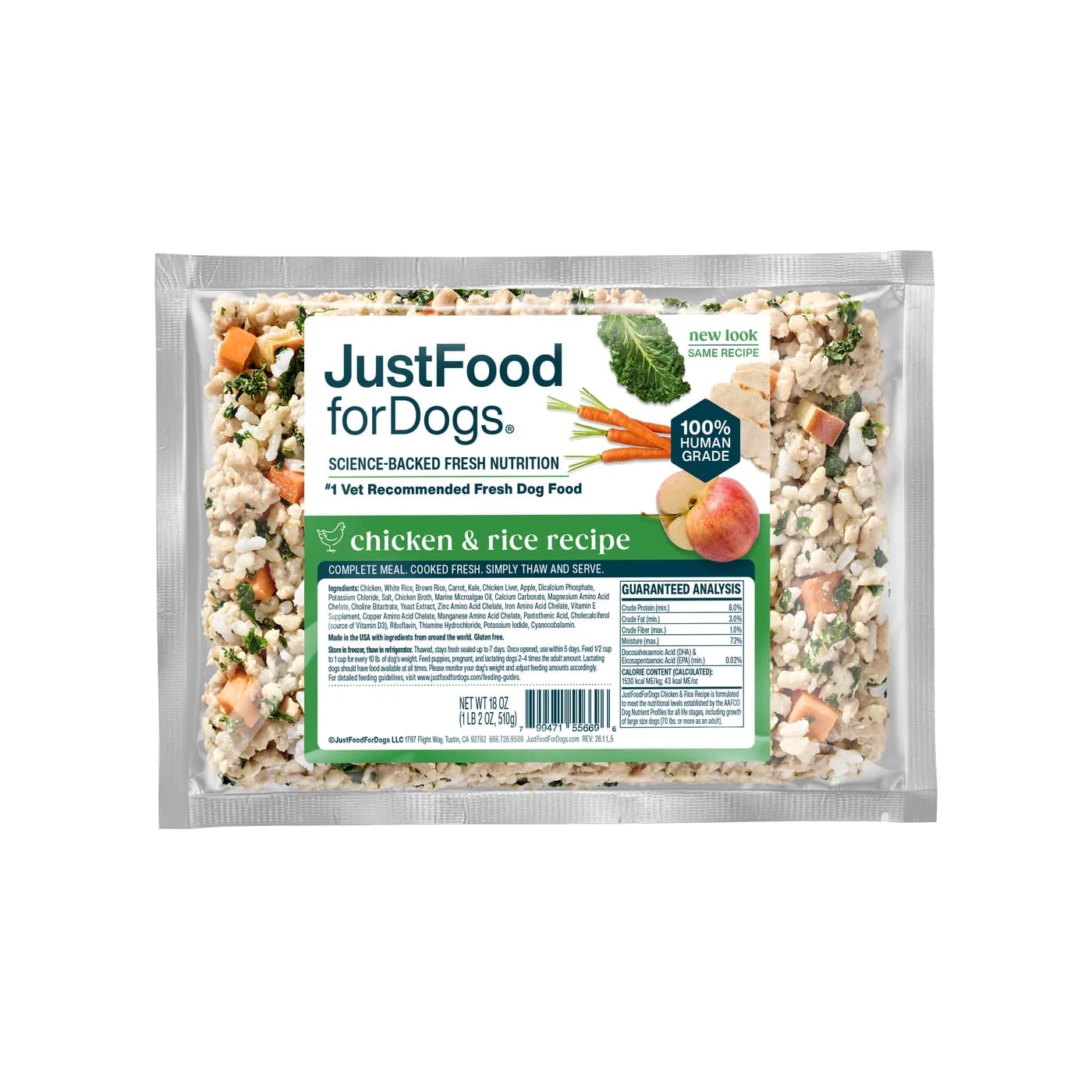
Common recipe errors and how to prevent them
Using volume where the guide calls for weight
Five ounces of chopped vegetables is not reliably reproduced by a cup measure. Chop size, packing, and moisture change the amount that fits in a cup. Use the scale for every ingredient listed in pounds or ounces and reserve spoons for the oil and blend.
Draining the turkey mixture
The official method says not to drain the meat-and-vegetable mixture. Draining removes material that was included in the recipe calculation. Use a nonstick pan and the specified 85/15 ground turkey rather than changing the recipe after cooking.
Adding the blend while the food is hot
Follow the guide’s order: cook, cool until warm to the touch, add the algae oil, then slowly mix in the nutrient blend. Preparing the ice bath before cooking the macaroni keeps this step from becoming rushed.
Making an unapproved “small adjustment”
Common changes include replacing the grain, leaving out liver, using a leaner turkey, adding more vegetables, or omitting the blend on days when it runs out. Each change breaks the connection between the formula and the recipe-specific supplement. Pause the batch and obtain the correct ingredient instead.
Mixing unevenly
Concentrated powder must be distributed through the entire batch. Sprinkle it gradually across the food while folding from the bottom and sides. Break up clumps and continue until no visible pockets remain. Do not sprinkle a portion of the daily blend onto each bowl unless the official guide specifically directs that method.
Treating batch yield as a daily ration
The approximately 13-pound and 6.5-pound yields describe how much food the recipe makes. They do not indicate how much an individual dog should eat. Daily portions must be calculated from the finished food’s calorie information and the dog’s assessed needs.
How to portion a homemade batch
Start with a daily calorie target from the veterinarian or the recipe provider’s current feeding guidance. Then use the calorie density published for the exact finished recipe. Dividing daily calories by calories per ounce gives a starting number of ounces per day. Split that daily amount across the dog’s normal meal schedule.
Calorie density can change when an official recipe is updated, so this article does not substitute an estimate for the current JustFoodForDogs value. Use the current official calculator, product materials, or veterinary instructions when turning the finished batch into a daily portion.
The companion Petful guide, How Much Should You Feed Your Dog?, explains the calories-to-portions calculation and why body condition should be used to fine-tune the result.
- Decision checkpoint: After setting the starting portion:
- weigh several meals to learn what the portion looks like;
- count treats, chews, toppers, and table food in the total calorie plan;
- record the dog’s weight on a consistent scale;
- assess body and muscle condition at veterinary rechecks;
- adjust the amount in measured steps rather than changing the formula.
A clean bowl does not prove the portion is correct. Appetite varies, and some dogs readily eat more calories than they need. Weight trend, body condition, muscle condition, stool quality, energy, and veterinary assessment provide better feedback.
Storage, thawing, and serving workflow
The official guide allows refrigeration for up to four days and freezing for up to three months. Storage is easier and safer when the batch is portioned immediately after mixing rather than repeatedly opened and divided later.
For refrigerated portions, use covered food-safe containers and keep them cold. Label each container with the preparation date. For frozen portions, leave appropriate headspace, seal tightly, and label the recipe and date. Rotate older portions forward so food is used within the stated window.
Thaw frozen food in the refrigerator, not on the counter. A small container can be moved from freezer to refrigerator the day before it is needed. Do not refreeze food that has been repeatedly warmed, served, or left at room temperature. Discard a serving that has been sitting out rather than returning it to the main storage container.
- If warming is appropriate for the dog, warm only the meal being served and stir it thoroughly so there are no hot spots. Serving preference does not change the storage limits or justify leaving the batch unrefrigerated.
Homemade food, toppers, and partial feeding
A complete recipe can be fed as the main diet when it fits the dog and the correct daily portion is used. A small amount may also be used as a topper, but the nutritional job is different. Once an incomplete food or a collection of extras supplies a meaningful share of daily calories, it can dilute the nutrient balance of the complete base diet.
Keep treats and other extras to a modest share of daily calories unless a veterinarian has formulated the entire plan. Do not assume that feeding half of this balanced recipe and half of an improvised meat-and-vegetable mixture creates a balanced total. Two separate foods are not automatically complementary.
The related Petful guide to homemade dog food supplements explains why recipe-matched blends cannot be swapped among formulas and why a general multivitamin does not close every nutrient gap.
When a veterinary nutritionist should formulate the diet
An existing adult-maintenance recipe is convenient when it matches the dog’s needs. Individual formulation becomes more important when the dog has multiple diseases, reacts to common ingredients, needs an unusual calorie or nutrient target, or cannot tolerate available complete diets.
A veterinarian can review the medical problem and refer to a board-certified veterinary nutritionist when needed. Bring a complete diet history, including every food, treat, chew, supplement, medication, and flavored preventive. If the dog is already eating homemade food, record ingredient brands, raw and cooked weights, preparation method, batch yield, and daily amount. This information helps the nutritionist evaluate the actual diet rather than a rough description.
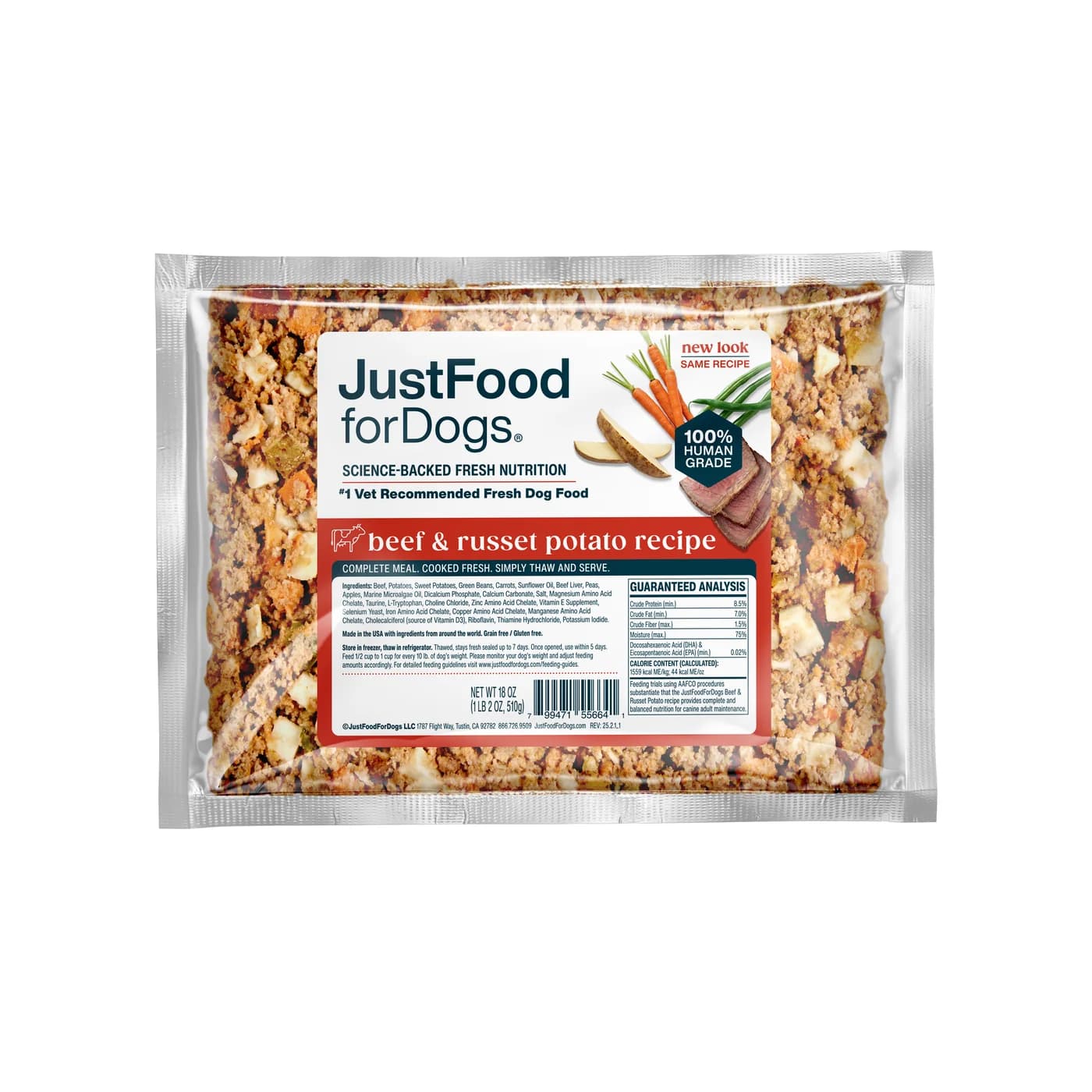
Reformulation should produce a written recipe with exact ingredients, quantities, supplement products, preparation steps, feeding amount, and recheck plan. Internet substitutions, ingredient calculators, and human supplement labels are not equivalents to a complete veterinary formulation.
A complete-and-balanced batch checklist
Before serving the first portion, confirm each item:
- The dog is an appropriate candidate for an adult-maintenance recipe.
- The chosen batch matches one official ingredient list exactly.
- Ground turkey is 85/15 and all listed weights were measured in the stated form.
- Turkey liver, macaroni, vegetables, and cranberries were not substituted.
- The meat mixture was fully cooked and not drained.
- The macaroni was cooked separately, cooled in the prepared ice bath, and drained.
- The full mixture cooled until warm to the touch before finishing.
- Omega algae oil and Turkey DIY Nutrient Blend were measured for the selected batch.
- The blend is labeled for the Turkey recipe and is within its use date.
- The finishing ingredients were mixed evenly throughout the entire batch.
- Portions were labeled and moved promptly to the refrigerator or freezer.
- The daily feeding amount comes from current calorie guidance for this exact recipe.
- A plan is in place to monitor weight, body condition, muscle condition, appetite, and stool.
If any formula item is missing or the preparation history is uncertain, do not guess. Correct the issue before the batch becomes the dog’s main food.
Quality-control checks after cooking
The final check is whether the finished batch still matches the documented process. Weighing the full yield is useful because an unexpectedly small or large result can reveal a measuring, draining, or cooking error. The official yield is approximate, so a modest difference does not by itself prove the batch is wrong, but a large difference deserves investigation before daily portions are set.
Look for even distribution. The macaroni, turkey mixture, vegetables, oil, and blend should be combined throughout the container rather than layered. If the finishing powder is visible in clumps or concentrated at the bottom, the food should not be portioned until it is thoroughly mixed.
Record four control points:
| Control point | Pass condition | If it does not pass |
|---|---|---|
| Ingredient record | Every exact weight and product is documented | Do not treat an uncertain batch as the complete main diet |
| Cooking record | Turkey was fully cooked, mixture not drained, macaroni cooked and cooled separately | Ask the recipe provider whether the deviation invalidates the batch |
| Finishing record | Food cooled before the measured oil and blend were added | Do not add an extra dose to compensate for uncertainty |
| Storage record | Portions were labeled and promptly refrigerated or frozen | Discard food that exceeded safe handling instructions |
Do not “repair” a completed batch by adding more blend, calcium, oil, or another supplement. Without knowing the actual deviation and recalculating the formula, an extra addition can worsen the imbalance. The safest correction may be to make a new batch.
When preparing the recipe repeatedly, use the same scale, tools, ingredient forms, and written checklist. Consistency makes it easier to spot a genuine change in the dog’s response and prevents preparation drift over time.
Reassess when the dog or formula changes
A recipe that fits today should be reviewed when the dog’s life stage, health, weight, activity, medications, or tolerance changes. It should also be reviewed when a product label, cooking guide, nutrient blend, oil, or ingredient specification changes.
Bring the recipe record to routine veterinary nutrition assessments. The useful question is not only whether the dog likes the food. Confirm that the daily amount still supports an appropriate weight and body condition, muscle is stable, stool is normal, and no new diagnosis changes the nutrient targets.
If a different protein, starch, or vegetable is desired, move to another complete formula rather than editing this one. If no existing formula fits, request an individualized recipe. Preserving the formulation boundary is what allows homemade cooking to function as a complete diet rather than an assortment of good ingredients.
Transitioning to homemade dog food
Sudden food changes can upset some dogs' digestion. Unless your veterinarian gives different instructions, transition gradually while watching appetite, stool quality, and comfort. Keep treats and toppers modest so they do not displace a meaningful part of the balanced diet.
Once the new food is established, track your dog's weight and body condition rather than judging portions only by enthusiasm at mealtime. Contact your veterinarian if you notice ongoing vomiting or diarrhea, reduced appetite, weight loss, weight gain, or another unexpected change.
For more background on building a home-prepared diet, see Petful's guide to essential ingredients in home-cooked pet food.
Questions about homemade dog food
Yes, when it follows a properly formulated recipe that supplies all required nutrients in the correct amounts and proportions. A collection of nutritious foods is not enough on its own. Follow the exact recipe, including its specified oil and recipe-matched nutrient blend, and get veterinary guidance when your dog has special needs.
Not without checking with the recipe formulator or your veterinarian. Substitutions can change calorie density and nutrient amounts. Choose a different complete recipe designed around the ingredients you want to use instead of modifying this one.
No. It is one component of the specified Turkey & Whole Wheat Macaroni recipe. It must be used with the exact ingredients and batch amounts in its cooking guide.
The official guide says to refrigerate it for up to four days or freeze it for up to three months. Portioning the batch before storage makes it easier to thaw only what you need.
Use one of the two official batch sizes listed in the guide. Informal scaling makes small weighing and supplement-measurement errors more likely. Ask the recipe provider for an approved batch size rather than calculating a new ratio at home.
No general multivitamin should be assumed to replace a recipe-specific blend. Products supply different nutrients in different amounts. Use the exact blend named in the official formula or choose a different complete recipe built around the product available.
Cost depends on ingredient prices, batch size, storage, preparation time, and the dog’s calorie needs. Compare the total cost of every required ingredient, oil, blend, and safe storage rather than comparing meat alone with a commercial food price.
Monitor weight trend, body-condition score, muscle condition, appetite, stool, skin and coat, energy, and any digestive changes. Schedule veterinary rechecks instead of waiting for a visible problem. Contact the clinic promptly for ongoing vomiting or diarrhea, refusal to eat, rapid weight change, weakness, or other concerning signs.
BVMS, MRCVS
Dr. Pippa Elliott, BVMS, MRCVS, is a veterinarian with nearly 30 years of experience in companion animal practice. Dr. Elliott earned her Bachelor of Veterinary Medicine and Surgery from the University of Glasgow. She was also designated a Member of the Royal College of Veterinary Surgeons. Married with 2 grown-up kids, Dr. Elliott has a naughty Puggle named Poggle, 3 cats and a bearded dragon.
Sign up for expert-backed reviews and safety alerts all in one place.
A Final Word (Disclaimer)
At Petful, our review integrity is paramount; we never exchange special treatment in our reviews for monetary or material rewards.
Nonetheless, when our readers click through to online merchants (including Chewy or Amazon), we receive a referral commission. This supports the running of our free blog, and we appreciate your backing.