Senior Dog Incontinence: Causes, Care, and How to Keep Your Aging Dog Comfortable
Senior dog incontinence is involuntary leaking, not misbehavior. Here are the treatable causes, what your vet can actually do about it, and how to manage the mess at home.

BVMS, MRCVS
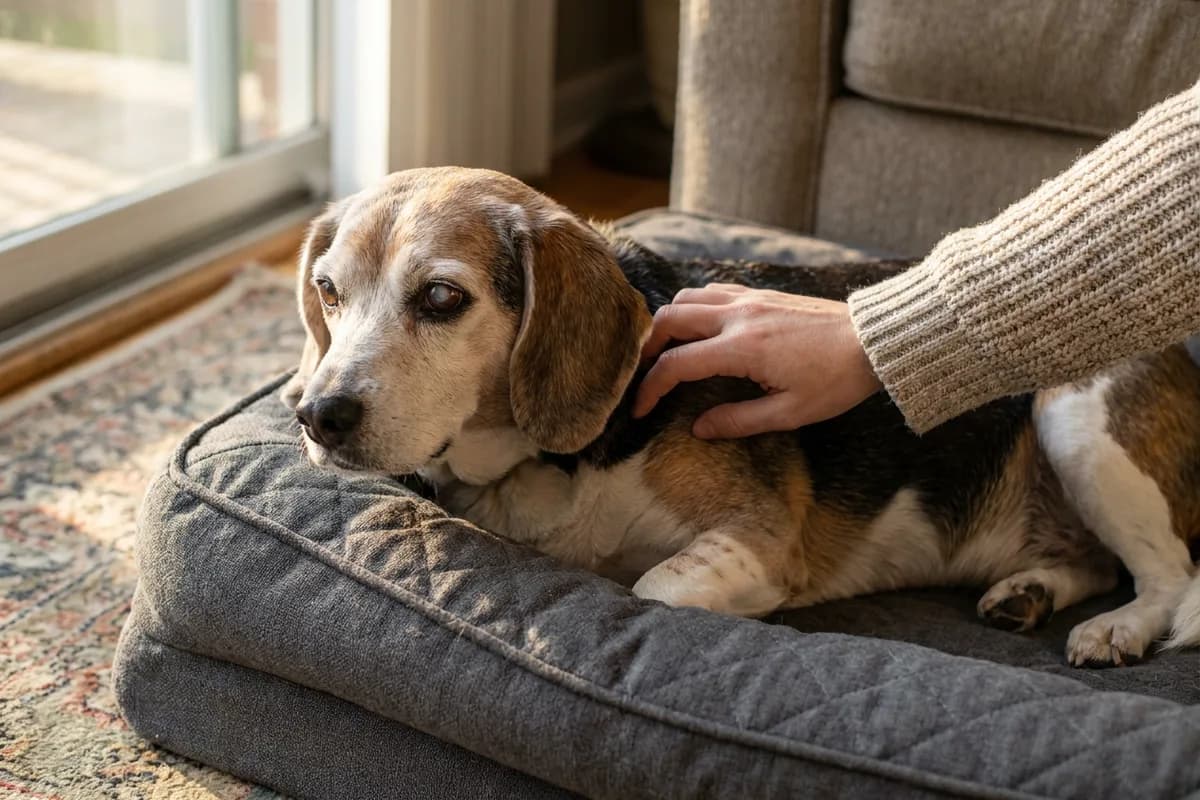
Leaking is involuntary. A senior dog with incontinence needs a diagnosis and a routine, not a correction.
Petful is reader supported. As an affiliate of platforms like Amazon and Chewy, we may earn a commission when you buy through links on this page. There is no extra cost to you.
You wipe up another damp patch beside her bed, and the worry arrives right behind the paper towel. Is she uncomfortable? Is this the beginning of the end? Did you do something wrong? Senior dog incontinence is one of the most upsetting changes owners meet in a dog's last years, and it is also one of the most misunderstood.
Here is the part that changes everything. Leaking is not misbehavior. It is involuntary, it almost always has a specific medical cause, and in a great many dogs it improves once that cause is found. This guide covers what is actually happening, what your veterinarian can do, and how to keep your dog clean, comfortable and dignified at home.

Sign up for expert-backed reviews and safety alerts all in one place.
What senior dog incontinence actually is
Senior dog incontinence is involuntary urine or stool leakage in an aging dog that has otherwise kept her house training. She is not choosing to go indoors and may not realize it happened. In older spayed females, a common cause is urethral sphincter mechanism incompetence, which weakens bladder closure at rest.
With senior dog urinary incontinence, the dog may rise from a nap and leave a wet spot without squatting, circling or showing awareness.
- A damp ring on the bed, blanket or floor where she has been lying
- Wet fur on the inside of the back legs or around the vulva or prepuce
- A dribble that starts as she stands up and stops once she is moving
- A strong urine smell on bedding that was clean yesterday
- No squatting, no posturing, and no obvious awareness that anything happened
One thing is worth saying plainly here, because it changes how you live with this. Whether the dog is aware of the accidents matters enormously: with true incontinence she is not aware, and scolding an incontinent dog fails for exactly that reason. She cannot connect a correction to something she never felt happen, so it only teaches her to be anxious around her own bed.
It is common enough that your vet will not be surprised. The 2024 ACVIM consensus statement on urinary incontinence reports a prevalence of 3% to 20% in spayed female dogs, and describes sphincter incompetence as the most common functional urine storage disorder in dogs.
- 1Senior dog incontinence is involuntary, not a house-training failure. Never scold a dog for leaking she cannot control.
- 2Most cases have an identifiable cause and are often treatable with veterinary care.
- 3Infections, bladder stones, diabetes and kidney disease can mimic age-related leaking, so diagnosis comes before diapers.
- 4Incontinence alone is not a reason for euthanasia. Treatment and a practical home routine often preserve a good quality of life.
If you want the underlying mechanics in more depth, our guide to urinary incontinence in dogs and cats walks through how the bladder and sphincter are supposed to work. This article stays focused on the aging dog specifically, and sits inside our wider guidance on caring for an aging dog.
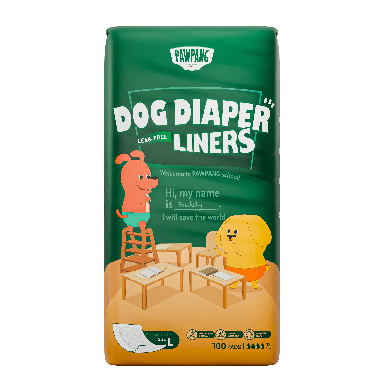
12 fl oz absorbency. Disposable inserts that sit inside a reusable diaper or belly band.
Petful may earn a commission when you click through to Amazon, at no extra cost to you.
Incontinence or a house-training problem?
Before anything else, work out which problem you actually have, because the fixes are opposite. The difference between involuntary leaking and deliberate house-soiling comes down to posture and awareness. True incontinence is a plumbing failure. Deliberate house-soiling is a behavior, a routine, or a memory problem. Treating one as the other wastes months.
- She leaks lying down or while asleep, with no posture and no warning: that points to incontinence.
- She squats, circles or lifts a leg indoors while fully awake: that is house-soiling, not leaking.
- She asks to go out, gets outside, then still goes indoors an hour later: think mobility, pain, or a bladder that will not hold.
- She paces at night, seems lost in familiar rooms, then eliminates indoors: that pattern fits cognitive decline.
That last pattern deserves its own look. Canine cognitive dysfunction, the canine version of dementia, makes an old dog forget routines she has kept for a decade, and our guide to canine cognitive dysfunction covers the signs. If your dog is awake, aware and still going indoors, start with our guide to potty training an older dog rather than reaching for absorbent products.
What causes incontinence in senior dogs
Start with the cause owners miss most often, because it is not the bladder at all. A dog whose hips and stifles hurt is not incontinent: she simply cannot stand up and get outside before her bladder empties. Watching what assisted rising looks like is the fastest way to tell. If a hand under the hips, or a support harness, turns a puddle-a-day dog back into a dog who reaches the door in time, hind-end weakness was the real problem.
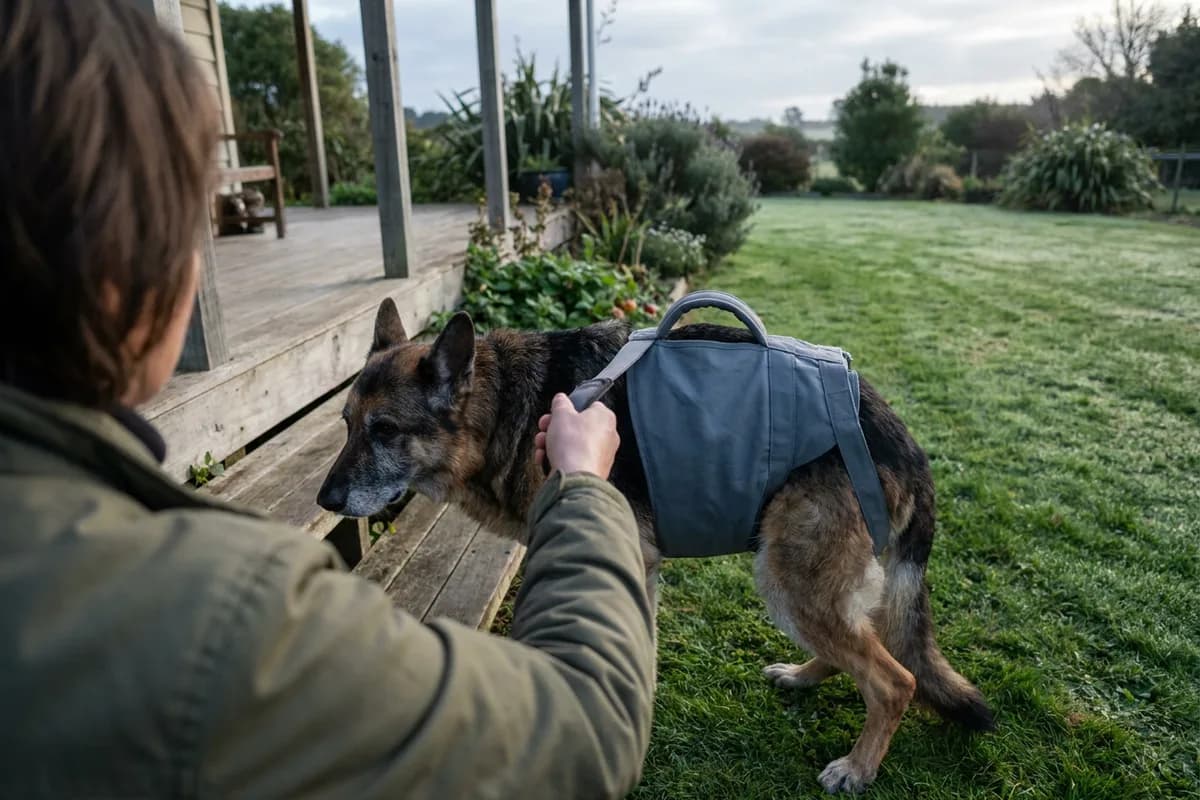
Beyond mobility, a senior dog with incontinence usually has one problem from a fairly short list. The senior dog incontinence causes worth knowing about are the treatable medical causes a veterinarian rules out first, which is why the opening move is a urine sample rather than a shopping cart. The ACVIM consensus recommends a urinalysis and an aerobic bacterial urine culture for every dog presented for urinary incontinence, because a urinary tract infection is common, cheap to find, and completely treatable.
The cause-vs-clue comparison table below maps each common cause to the clue an owner sees at home and the veterinary rule-out that confirms it. Use it to work out which conversation to have at the appointment, because the same wet patch can point at a weak sphincter, an infection, a metabolic disease or a painful hip depending on what else you are noticing.
| Likely cause | Clue an owner sees at home | Veterinary rule-out |
|---|---|---|
| Urethral sphincter weakness | A damp patch only where she has been resting or asleep | Urinalysis and urine culture, then a monitored treatment trial |
| Urinary tract infection | Frequent squatting, straining, cloudy or bloody urine, licking | Urinalysis with aerobic bacterial urine culture |
| Bladder stones | Straining, dribbling, discomfort, blood in the urine | Imaging of the bladder plus urinalysis |
| Diabetes, kidney disease or Cushing disease | Drinking and urinating far more than she used to | Bloodwork and urine concentration testing |
| Canine cognitive dysfunction | Night pacing, confusion, eliminating indoors while wide awake | Neurologic and behavioral assessment |
| Spinal or neurologic disease | Wobbly hind end, dragging nails, stool leaking as well as urine | Full neurologic exam and spinal imaging |
| Arthritis and mobility loss | Struggles to rise, does not reach the door in time | Pain and mobility assessment |
Because a urinary tract infection is common and treatable, review the signs of a urinary tract infection before the appointment.
- Some urinary signs are not incontinence and need a same-day veterinary visit. Call your vet immediately if your dog is straining without producing urine, cries when she tries to go, has a hard or painful belly, or suddenly cannot use her back legs. The Merck Veterinary Manual describes complete urethral obstruction as an emergency that causes uremia within 36 to 48 hours and can be fatal in roughly 72 hours if it is not relieved.
Why spayed females leak in their sleep
A female dog leaking urine while resting is the single most recognizable picture in this whole topic. She stands up from a nap, and there is a coin-sized or plate-sized wet mark where she was lying. Female dog incontinence while sleeping is the same problem seen at night: the sphincter relaxes along with the rest of her, and urine escapes.
The mechanism behind spay-related leaking in older female dogs is largely hormonal, though the ACVIM consensus treats it as multifactorial rather than fully explained. After spaying, falling estrogen gradually reduces the tone of the urethral sphincter, and years later that muscle can no longer hold a full bladder during deep rest. It is worth knowing this is usually a delayed effect rather than a surgical complication: a study in the Journal of Veterinary Internal Medicine found a median of 3.73 years between spaying and the onset of incontinence. Our guide to spaying and its long-term effects covers the wider trade-offs.
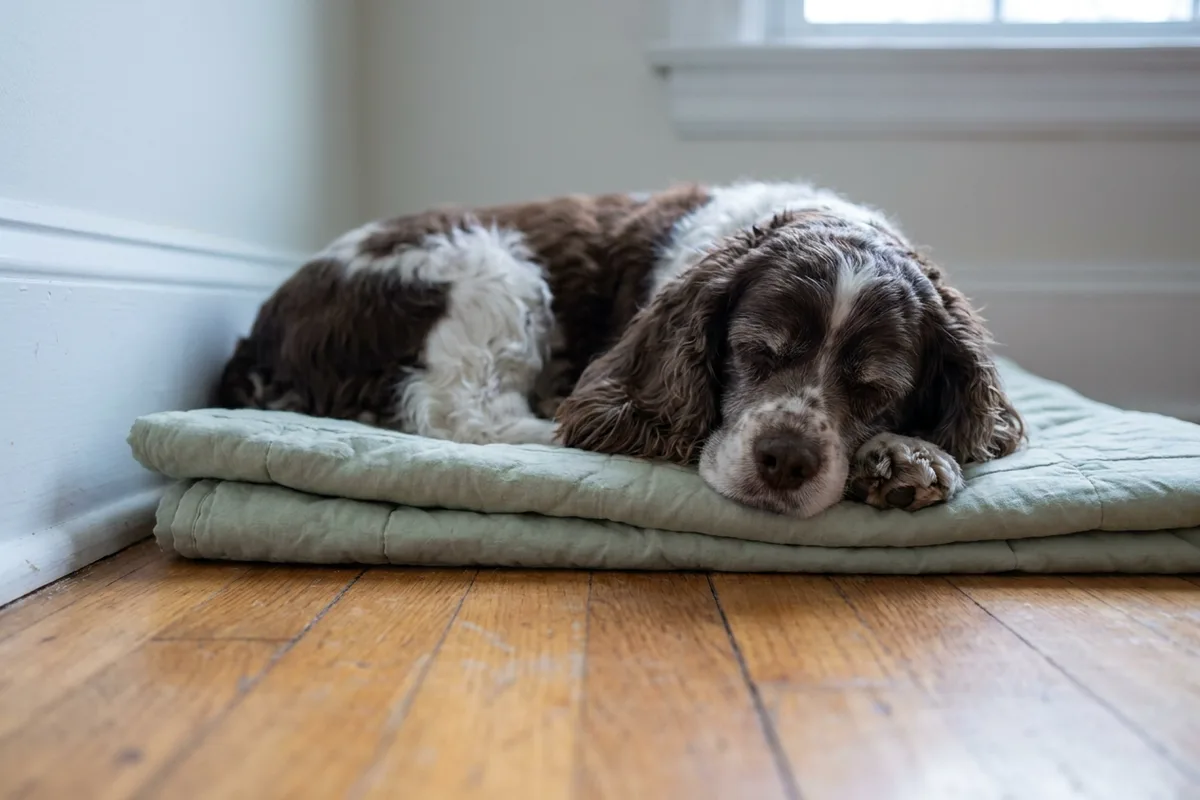
- It happens at rest, not during walks or play, and she is usually asleep or just waking.
- The volume varies night to night, which is normal and does not mean it is getting worse.
- She is not drinking more than usual. If she is, that points somewhere else entirely.
- It responds well to treatment, which is the genuinely good news in this section.
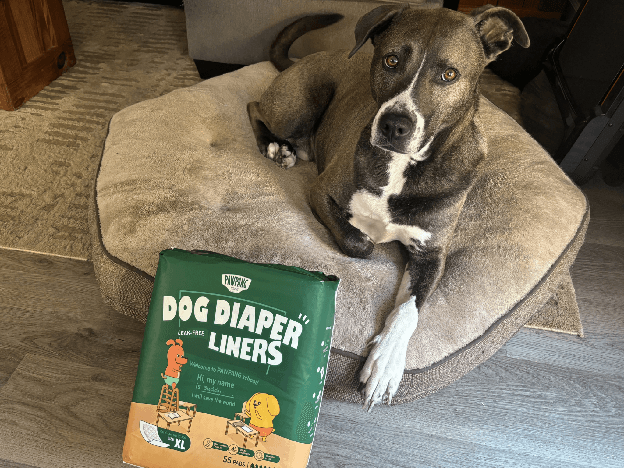
True XL with 16 fl oz absorbency. Wider design and longer coverage for larger breeds.
Petful may earn a commission when you click through to Amazon, at no extra cost to you.
What is different for male dogs
Senior male dog incontinence is less common than the female version, but it is not rare, and it tends to get diagnosed later because owners assume leaking is a female problem. The ACVIM consensus notes that sphincter incompetence is associated with sex hormone changes after neutering in male dogs as well as female ones.
Prostate and urethral problems in older male dogs are the other half of the picture, and both can cause trouble in old age. An enlarged prostate can press on the urethra and interfere with normal emptying, and urethral disease can leave a dog dribbling after he finishes urinating. Neither is something to manage at home: both need a physical exam.
- A belly band, rather than a full diaper, is usually the practical choice for a male dog.
- Check the prepuce and belly skin daily, since a band holds moisture right against thin skin.
- Dribbling that happens just after he urinates is a different sign from resting leakage, and worth reporting separately.
- Straining or an interrupted stream deserves a prompt appointment rather than a wait-and-see week.
Beyond that, the tips an owner needs for dealing with incontinence in an old male dog are the same as everyone else's: find the cause, treat what is treatable, then build a routine around whatever is left.
When it is stool and not urine
Almost every article on this topic stops at urine. This guide covers fecal incontinence as well as urinary incontinence, because owners dealing with stool rather than urine have a harder problem to live with and a different problem medically. Senior dog bowel incontinence and senior dog fecal incontinence describe the same thing: stool passing without the dog controlling or, often, noticing it.
When an old dog leaks poop rather than urine, the incontinence generally falls into two categories, and telling them apart helps your vet a great deal.
- Sphincter type: formed stool drops while she walks, stands or sleeps, and she seems unaware. This points at the anal sphincter or the nerves feeding it.
- Reservoir type: loose or urgent stool that she cannot hold long enough to get outside. This points at the intestine itself, from diet, inflammation or disease.
Trouble with a senior dog's bowels also carries one specific warning sign. The ACVIM consensus advises that fecal incontinence, spinal pain, or a gait where the front and back ends seem disconnected should trigger a full neurologic examination and ideally an MRI of the spine. Stool leaking alongside urine leaking is a combination that deserves real investigation rather than a shrug about age.
For dealing with senior dog bowel incontinence day to day, the home remedies and treatment steps that genuinely help an elderly dog are unglamorous: a consistent, highly digestible diet, feeding on a fixed schedule so elimination becomes predictable, a walk shortly after each meal to use the natural post-meal reflex, and a washable cover on anything she sleeps on.
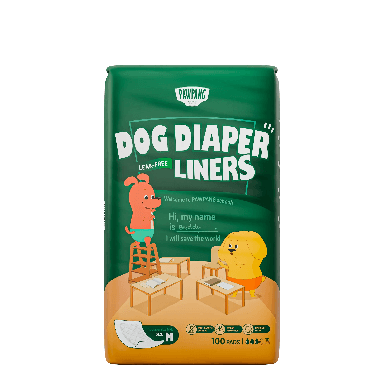
10 fl oz absorbency. Disposable inserts that sit inside a reusable diaper or belly band.
Petful may earn a commission when you click through to Amazon, at no extra cost to you.
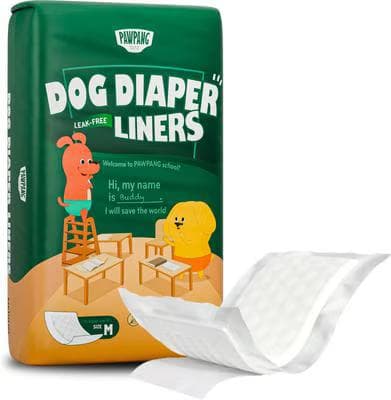
A convenient 100-count liner option for adding absorbency to a correctly fitted washable dog diaper.
Petful may earn a commission when you click through to Chewy, at no extra cost to you.
Treatment options your vet can offer
What can you do for old dog incontinence? Start with a diagnosis, because senior dog incontinence treatment is genuinely effective when it is aimed at the right target. Your vet will run a urinalysis and a urine culture, check bloodwork if she is drinking more than usual, and examine her hips, spine and neurologic function. Once infection, stones and metabolic disease are ruled out or treated, the veterinary prescription options for sphincter weakness are well established and mostly inexpensive.
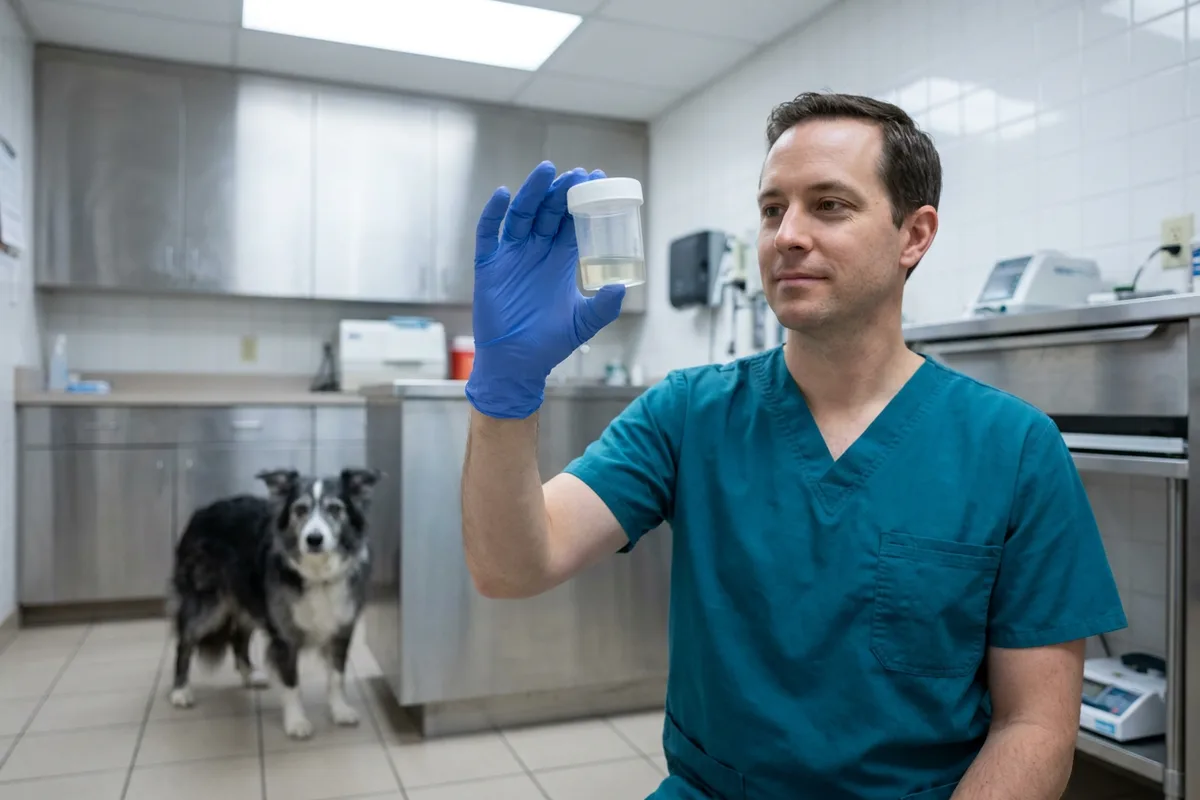
The two mainstays are phenylpropanolamine and estriol, and the right one depends on your dog. What follows is the detail most articles leave out: the named medications, how fast they work, and their safety cautions, so you can have a specific conversation with your veterinarian instead of a general one about old age.
| Option | How it works | What to know |
|---|---|---|
| Phenylpropanolamine (Proin) | Tightens the urethral sphincter | FDA-approved for urinary incontinence due to urethral sphincter hypotonus, dosed at 2 mg/kg twice daily. The label says to use with caution in dogs with pre-existing heart disease, hypertension, liver disease, kidney insufficiency, diabetes or glaucoma. |
| Estriol (Incurin) | Restores estrogen support to the sphincter | FDA-approved for estrogen-responsive urinary incontinence in ovariohysterectomized female dogs. In the label study, 66% of treated dogs succeeded at day 14 versus 37% on placebo. |
| Treating the underlying disease | Clears the infection, stone or metabolic problem driving it | Often resolves the leaking completely, which is why the workup comes first. |
| Procedural options | Urethral bulking agents or an artificial sphincter | Considered when medication alone does not control it. Referral to a specialist is usual. |
Two practical points on medication that most articles skip. First, give it time, because how fast phenylpropanolamine works is not the same as how fast you can judge it: the Proin label says it may take several days of treatment before incontinence improves, and the ACVIM consensus recommends a minimum of 28 days before deciding whether the drug has worked. Second, ask about the blood pressure cautions. Because phenylpropanolamine can raise blood pressure, the consensus suggests measuring it before starting and periodically during treatment, and considering an estrogen such as estriol first in dogs already known to be hypertensive.
Female dog incontinence treatment often works very well once the cause is identified.
Home remedies: what actually helps
What is a home remedy for dogs with urinary incontinence? Managing senior dog incontinence at home focuses on absorbency, hygiene and a dependable schedule, not an oral cure. Natural remedies for senior dog incontinence, including corn silk, saw palmetto and pumpkin seed powder, do not have the primary-source evidence behind prescription treatments, so discuss them with your veterinarian.
The most useful tips on dealing with old dog incontinence begin with choosing practical senior dog incontinence solutions. For a liner, look for:
- Absorbency matched to your dog's leakage and the length of time between changes.
- A secure attachment that keeps the liner flat instead of shifting or bunching.
- Compatibility with the reusable diaper or male belly band you already use.
- A size that fits inside the outer garment without excess bulk against the skin.
- Quick replacement, so you can change the liner often and wash the outer garment only when it becomes wet or soiled.
PAWPANG offers disposable liners in sizes from extra small through extra large, with adhesive strips designed to hold the liner inside reusable diapers and belly bands. The range lets owners match the liner's size and absorbency to their setup, while the disposable inner layer can help keep the reusable outer garment cleaner. The outer layer still needs washing whenever it becomes wet or soiled. For the complete setup, read our guide to how to fit a dog diaper.
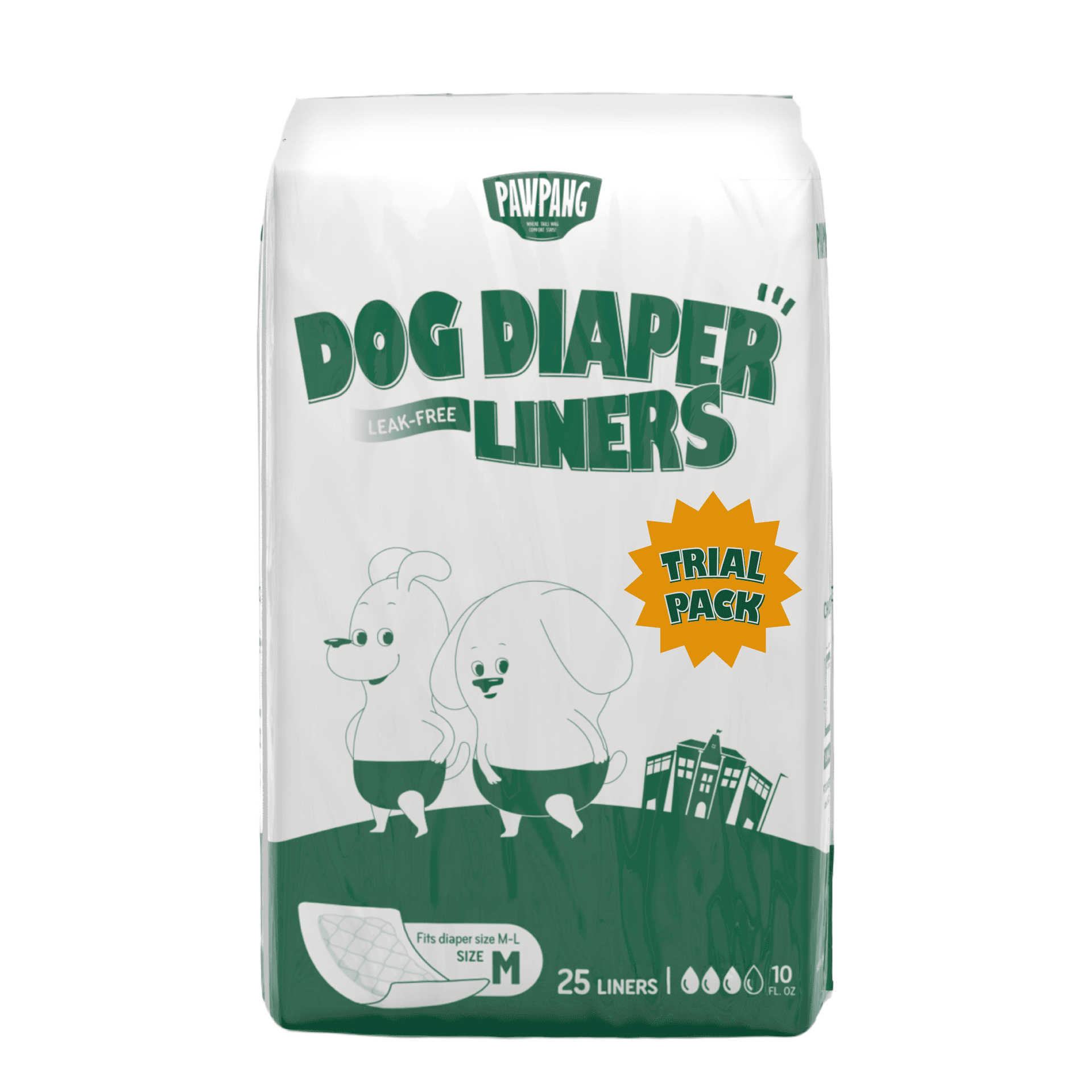
Test fit and absorbency before committing to a full 100-count box. Available in sizes XS to L.
Petful may earn a commission when you click through to Amazon, at no extra cost to you.
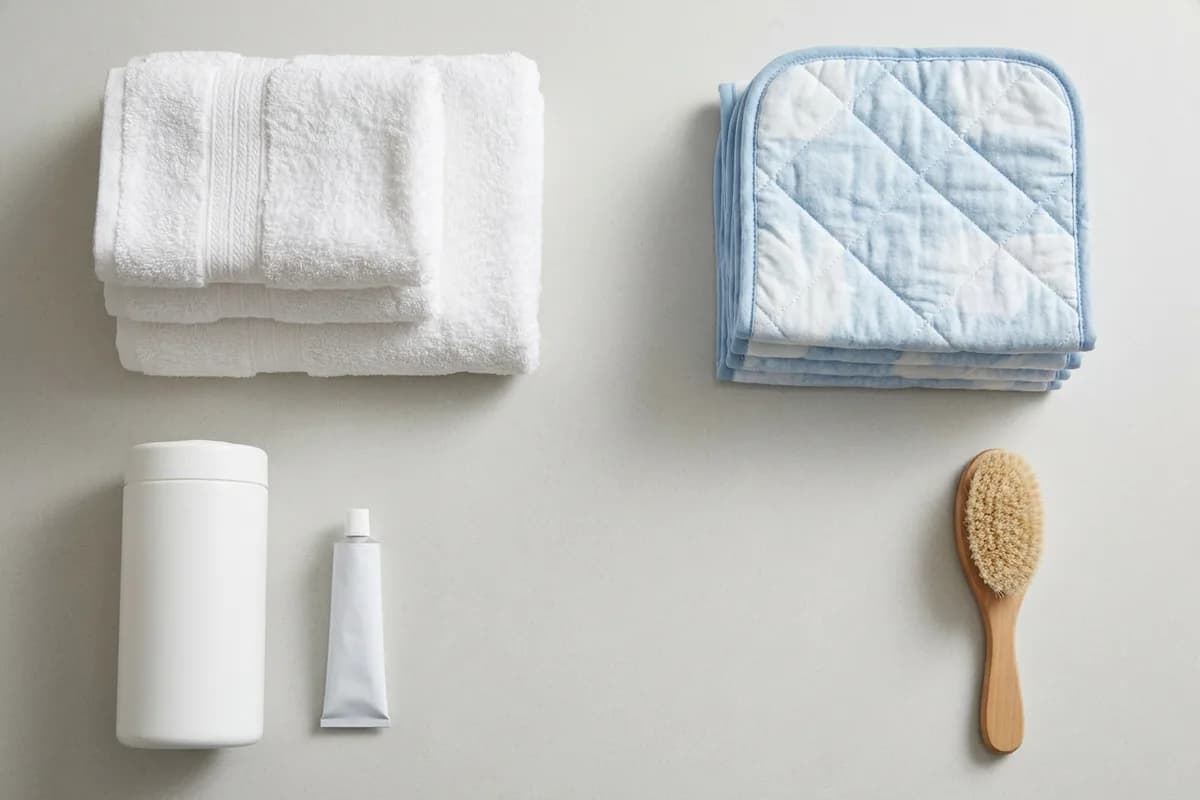
The callout below contains the full skin-care routine. Clean, dry and inspect the skin at every change.
- Urine sitting against skin can cause urine scald, a red, painful dermatitis around the vulva or prepuce. This step-by-step urine scald prevention routine uses trimming, drying and a thin barrier ointment your veterinarian recommends for healthy skin. If the area is already red, raw or smells infected, book an appointment. A wear-time limit matters because leaving a wet product against the skin can cause diaper rash and urine scald.
One thing to leave alone: her water bowl. Managing senior dog incontinence does not mean rationing her water intake on your own initiative. The Proin label specifically instructs owners to provide ample fresh water, and Cornell's Riney Canine Health Center warns that restricting a dog's water can cause dehydration and dangerous electrolyte abnormalities. If she has started drinking noticeably more, that is a symptom to investigate, not a tap to turn off.
Getting through the night
Senior dog incontinence at night is especially exhausting because senior dog incontinence while sleeping happens during deep rest. A prepared setup turns a 3 a.m. bed change into a brief reset.
What you can do is build the night so a leak costs you thirty seconds instead of an hour. This is what a layered overnight bedding setup looks like in practice, and it is the overnight routine worth putting in place tonight. None of it needs special equipment, only that everything is already in position before you go to sleep.
- Move the last meal and the last big drink earlier in the evening, without reducing the total amount she gets across the day.
- Do a genuine last call outside as late as you reasonably can, and wait for a full empty rather than a token squat.
- Build the bed in layers: a waterproof mattress layer on the bottom, a washable pad over it, then a soft blanket on top.
- Keep a second complete set of layered washable bedding folded within arm's reach of where she sleeps.
- If she wears an absorbent product overnight, change it the moment you wake, not in the morning.
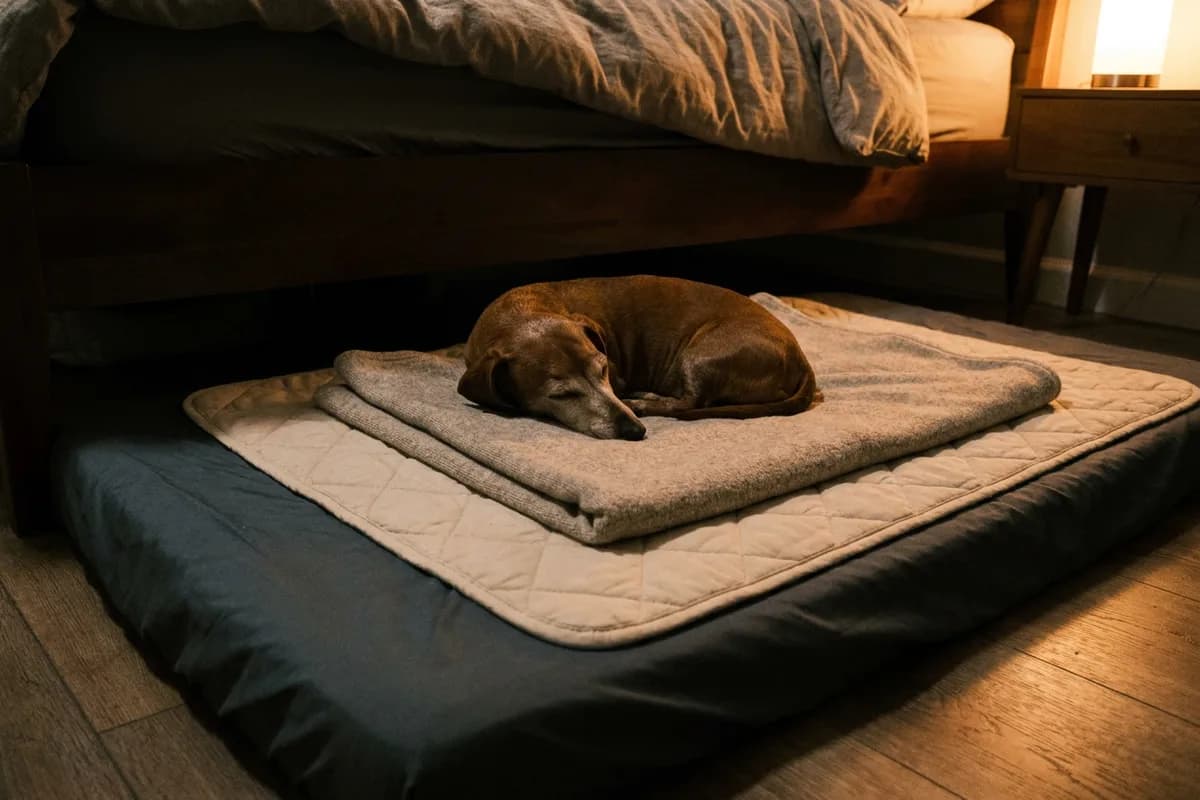
- The overnight routine begins with a last call outside and clean layers ready beside the bed. When you find a leak, remove the wet top layers, put down the clean set, wipe and dry your dog's skin, and place the used bedding in a nearby laundry bag.
Incontinence and quality of life
If you have typed something like old dog peeing in house time to put down into a search bar at two in the morning, you are not a bad owner. You are an exhausted one, and it is one of the most searched questions on this topic. So here is a direct answer on whether incontinence alone justifies euthanasia.
When should you put your old dog down for incontinence? Not for incontinence alone. A dog who eats, greets you, enjoys walks and sleeps comfortably can still have a good quality of life despite leaks. Old dog incontinence euthanasia becomes a reasonable conversation only when it accompanies genuine decline, such as uncontrolled pain, inability to stand or walk, unmanageable disease or skin breakdown that will not heal.
Caregiver capacity matters too. If the routine has become unsustainable, tell your veterinarian. Better medication, more absorbent management, help at home or hospice-style care may reduce the load. When broader decline appears, our guide to quality of life and end-of-life decisions explains the frameworks veterinarians use.
Common questions about senior dog incontinence
A dog can live with incontinence for as long as she would have lived without it. Incontinence is not fatal by itself and is not a countdown. Once the cause is identified and treated, many dogs have comfortable years with no leaking or a manageable amount. Prognosis depends on the underlying cause, so ask your veterinarian what condition is being treated and what it means for your dog's overall health.
Your senior dog usually does not know she is having accidents. With true incontinence, she cannot feel it happening because urine escapes without the normal signals that prompt her to posture and go. Never scold her for a wet patch. If she is awake, aware and deliberately posturing indoors, tell your veterinarian because that pattern points to house-soiling or another problem rather than true leaking.
A dog can wear a diaper for much of the day only if it is changed regularly. Change it every few hours while she is awake and immediately when it is soiled. A wet liner can cause diaper rash, so check, clean and dry the skin at every change. Stop using the product and call your veterinarian if the skin becomes red, raw or painful.
No. Never restrict water or limit your dog's water at night to stop leaking. Restricting water is never the fix unless your veterinarian specifically directs it. The dehydration risk includes dangerous electrolyte problems, and increased thirst may signal kidney disease, diabetes or another condition that needs investigation. Moving the last large drink slightly earlier may help the nighttime routine, but do not reduce the total daily amount. Call your veterinarian if your dog suddenly starts drinking more.
Meet PAWPANG at SuperZoo 2026
- PAWPANG, which makes the disposable diaper liners mentioned in this guide, is exhibiting at SuperZoo 2026, the World Pet Association trade show running August 12 to 14, 2026 at the Mandalay Bay Convention Center in Las Vegas. SuperZoo is a trade-only show and is not open to the public, so this note is for the retailers, distributors, groomers and veterinary professionals among our readers. If you are attending, PAWPANG is listed in the exhibitor directory at booth #6961.
Senior dog incontinence is common, often treatable and rarely a reason to give up on a dog who is otherwise enjoying life. Book the urine test, ask about treatment and use a simple home routine to protect her comfort.
BVMS, MRCVS
Dr. Pippa Elliott, BVMS, MRCVS, is a veterinarian with nearly 30 years of experience in companion animal practice. Dr. Elliott earned her Bachelor of Veterinary Medicine and Surgery from the University of Glasgow. She was also designated a Member of the Royal College of Veterinary Surgeons. Married with 2 grown-up kids, Dr. Elliott has a naughty Puggle named Poggle, 3 cats and a bearded dragon.
Sign up for expert-backed reviews and safety alerts all in one place.
A Final Word (Disclaimer)
At Petful, our review integrity is paramount; we never exchange special treatment in our reviews for monetary or material rewards.
Nonetheless, when our readers click through to online merchants (including Chewy or Amazon), we receive a referral commission. This supports the running of our free blog, and we appreciate your backing.