S. boulardii for Dogs: Benefits, Dosing, and When to Use It
S. boulardii is a probiotic yeast used for digestive support in some dogs. Learn what the evidence shows, how dosing works, and when veterinary guidance matters.

BVMS, MRCVS
Petful is reader supported. As an affiliate of platforms like Amazon and Chewy, we may earn a commission when you buy through links on this page. There is no extra cost to you.
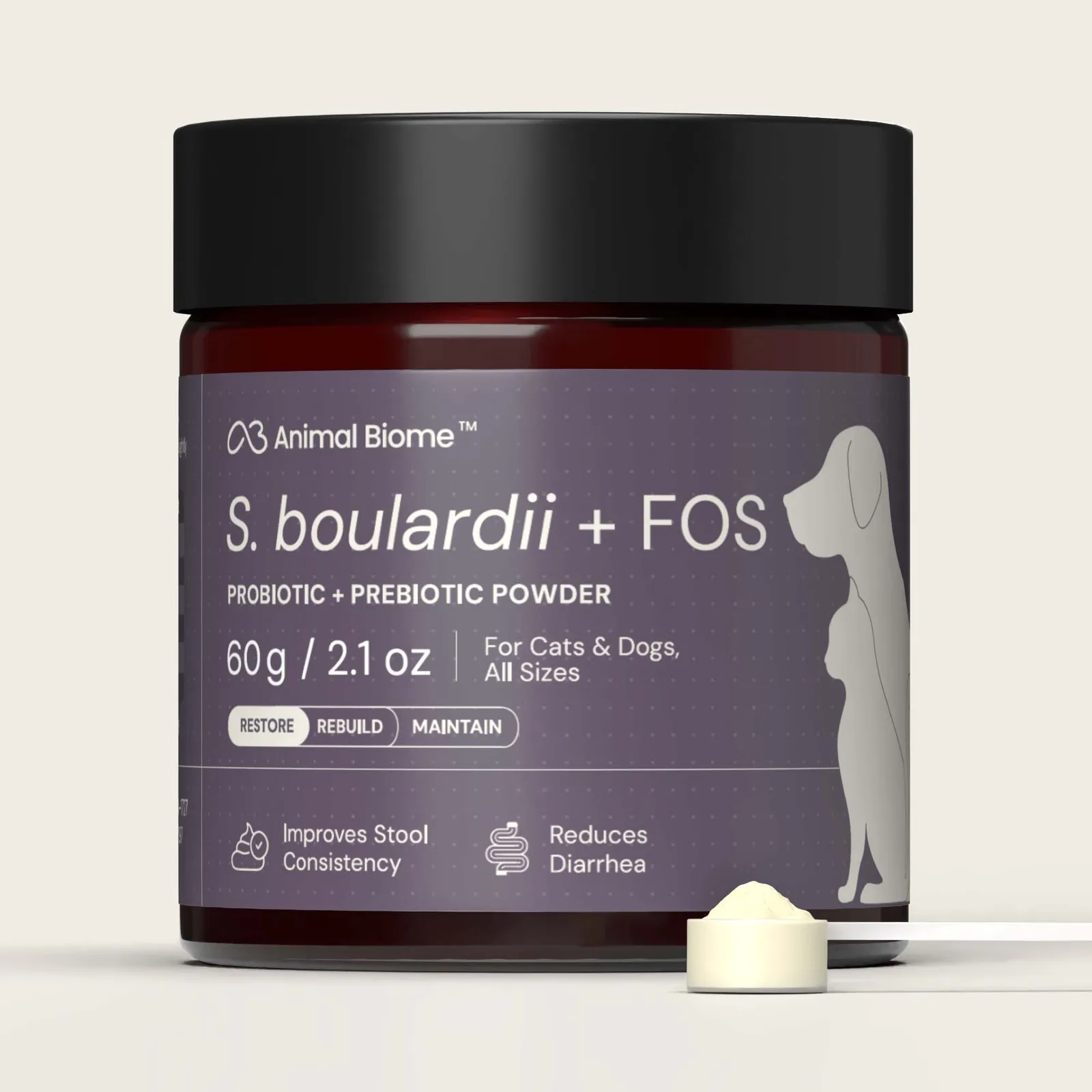
S. boulardii for dogs is a probiotic yeast used to support digestive function. Because it is yeast rather than bacteria, it behaves differently from common bacterial probiotics and is not directly targeted by antibacterial drugs. That difference can make it an interesting adjunct during some episodes of diarrhea, after antibiotics, or within a veterinarian-managed chronic-enteropathy plan.
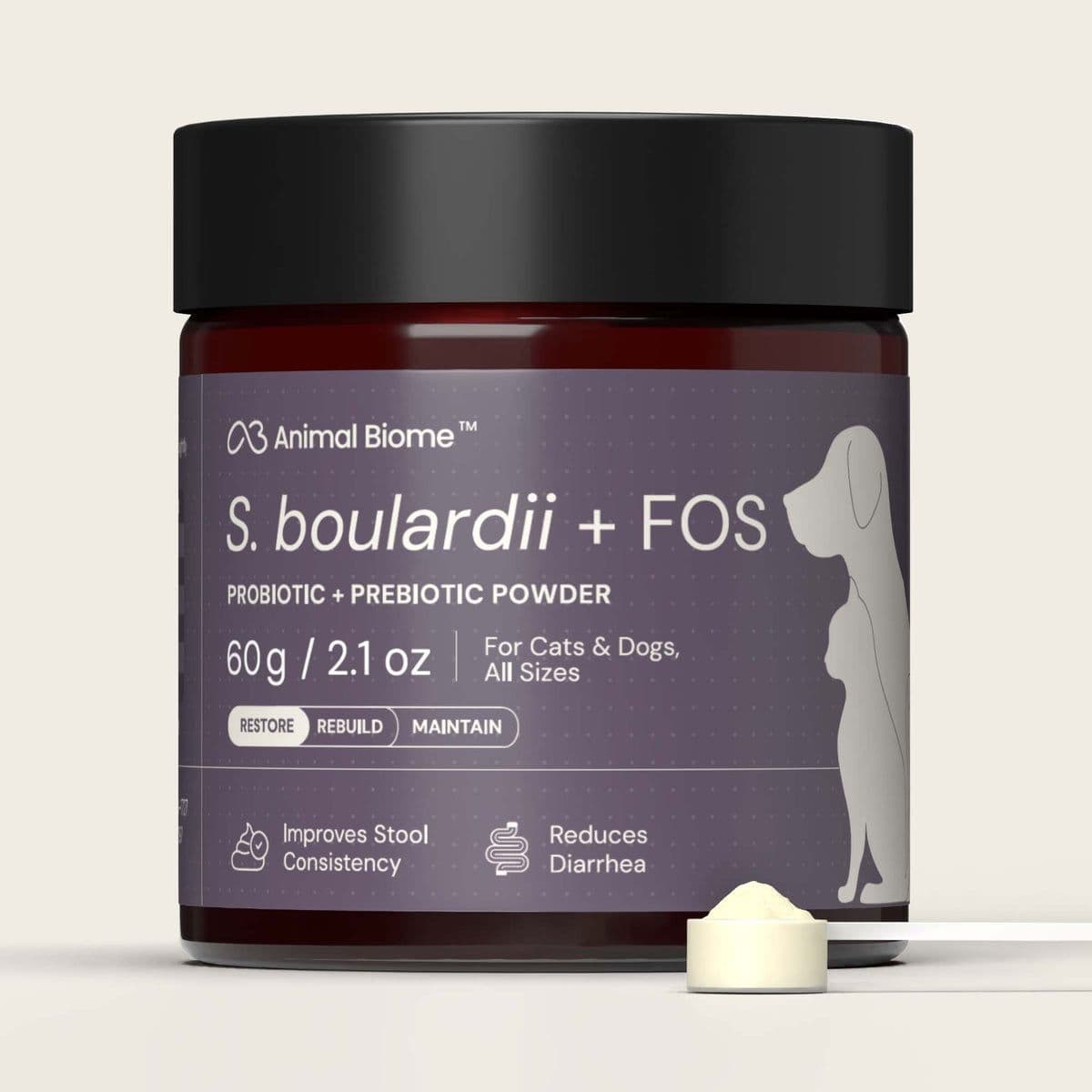
It is not a universal diarrhea cure. Evidence in dogs is still limited, effects are strain- and product-specific, and loose stool can signal parasites, infection, pancreatitis, a foreign body, toxin exposure, dietary disease, or another condition that needs treatment. Animal Biome's S. boulardii + FOS Powder offers a practical canine product example, but its current label and the dog's veterinarian, not a generic internet dose, should determine use.

Sign up for expert-backed reviews and safety alerts all in one place.
Potential benefits and when to use it
The direct answer is that S. boulardii may be useful for selected dogs with diarrhea or chronic enteropathy when a veterinarian has assessed the cause and considers a probiotic yeast appropriate. The veterinary next step is to decide whether the dog first needs fecal testing, bloodwork, imaging, rehydration, diet changes, or cause-specific medication.
S. boulardii is a probiotic yeast, not an antibiotic or a bacterial probiotic. A veterinary diagnosis comes first when diarrhea is persistent, severe, or accompanied by other illness. The supportive care boundary is firm: the product may complement treatment and recovery, but it must not delay evaluation of parasites, obstruction, toxin exposure, pancreatitis, infection, or chronic disease.
Petful may earn a commission when you click through to Animal Biome, at no extra cost to you.
Researchers have proposed several ways S. boulardii may support the intestine, including interactions with unwanted microbial products, support for the intestinal barrier, and effects on immune signaling. A proposed mechanism is not the same as a guaranteed clinical result. The organism, strain, viable count, formulation, storage, patient, and underlying disease all influence whether a product helps.
How probiotic yeast differs from bacterial probiotics
Most familiar canine probiotics contain bacteria such as Enterococcus, Lactobacillus, or Bifidobacterium. S. boulardii is a yeast. That biological difference affects identification, interaction with antibacterial medication, and the evidence used to judge it. It does not make yeast inherently stronger, safer, or better for every dog.
Both bacterial and yeast products are usually intended to act while moving through the digestive tract rather than permanently rebuilding the microbiome. Effects from one strain cannot be assigned to another strain just because the species name looks similar. A useful label therefore identifies more than “probiotic blend” and states how much viable organism should remain through the end of shelf life.
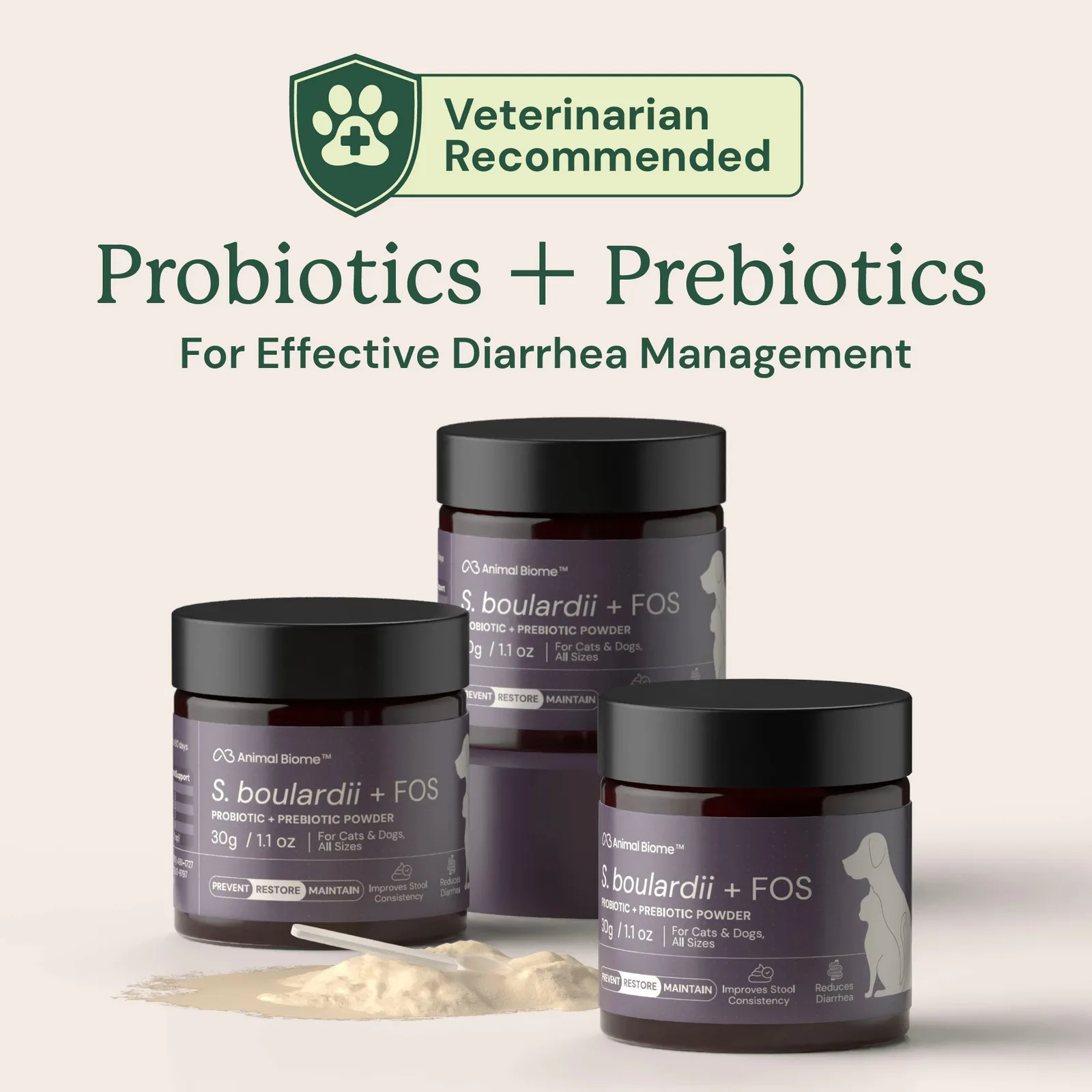
FOS is a prebiotic rather than a probiotic. It supplies fermentable substrate that selected gut microbes can use. Pairing FOS with S. boulardii creates a combined support formula, but fermentation can also influence gas and stool. The amount and the individual dog's tolerance matter.
Is Saccharomyces boulardii good for dogs
Saccharomyces boulardii can be good for dogs when it is a reasonable match for the clinical goal, but it is not right for every patient. A stable adult with mild medication-associated stool change is different from a puppy with parasites, a dog with bloody diarrhea, or an immunocompromised patient. The first group may be a candidate for guided support; the others need a veterinary workup before a supplement decision.
Potential use cases to discuss include:
- Support during or after a veterinarian-managed course of antibiotics
- Adjunctive support for selected acute diarrhea cases after red flags are excluded
- Addition to standard therapy for some dogs with chronic enteropathy
- A product-specific trial with stool frequency and consistency tracked
- Part of a broader microbiome plan when the veterinarian has defined the objective
Petful's guide to dog diarrhea after antibiotics explains why medication should not be stopped without the prescriber's advice and how to separate urgent reassessment from later gut support.
How quickly does Saccharomyces boulardii work
How quickly Saccharomyces boulardii works varies, so there is no guaranteed timeline. Some dogs may show a stool change within several days, while others may need longer or may not benefit. Underlying disease, hydration, diet, medication, and reinfection can matter more than the supplement. A product should not be judged from one bowel movement, but worsening signs should not be ignored while waiting for it to work.
Set a review point with the veterinarian. Track bowel-movement frequency, consistency, urgency, mucus or blood, appetite, vomiting, energy, hydration, and weight. If the planned response does not occur, reassess the diagnosis and treatment rather than simply increasing the amount or adding several more products.
Petful may earn a commission when you click through to Animal Biome, at no extra cost to you.
What the canine evidence can and cannot show
One double-blind, placebo-controlled study of dogs with chronic enteropathy evaluated S. boulardii alongside standard therapy and reported improvement in selected clinical and stool measures. That is encouraging, but the study was small and involved a specific clinical population, formulation, dose, and treatment context. It does not prove that every retail yeast product works the same way or that S. boulardii replaces diet, medication, cobalamin, or other chronic-enteropathy care.
A systematic review of probiotics for canine gastrointestinal disease found that the evidence base was limited and heterogeneous. Studies used different organisms, strains, doses, diseases, and outcomes. The fair conclusion is not that probiotics never help; it is that benefits should not be transferred automatically from one studied product to every product carrying the word “probiotic.”
Interpreting evidence without overpromising
Evidence quality also changes the kind of promise an article can make. A controlled canine trial can support cautious discussion of the studied population and product. Laboratory mechanisms, human trials, testimonials, and manufacturer experience can generate useful hypotheses, but they cannot establish the same conclusion for a household dog. This distinction keeps the evidence positive without exaggerating it.
Owners should also distinguish stool support from disease treatment. A dog can pass firmer stool while an underlying parasite, obstruction, pancreatic problem, or inflammatory disease remains. Conversely, stool may stay imperfect for a time even while correct treatment is working. Clinical status, hydration, appetite, pain, weight, and diagnostic results matter alongside consistency.
What the label can tell you
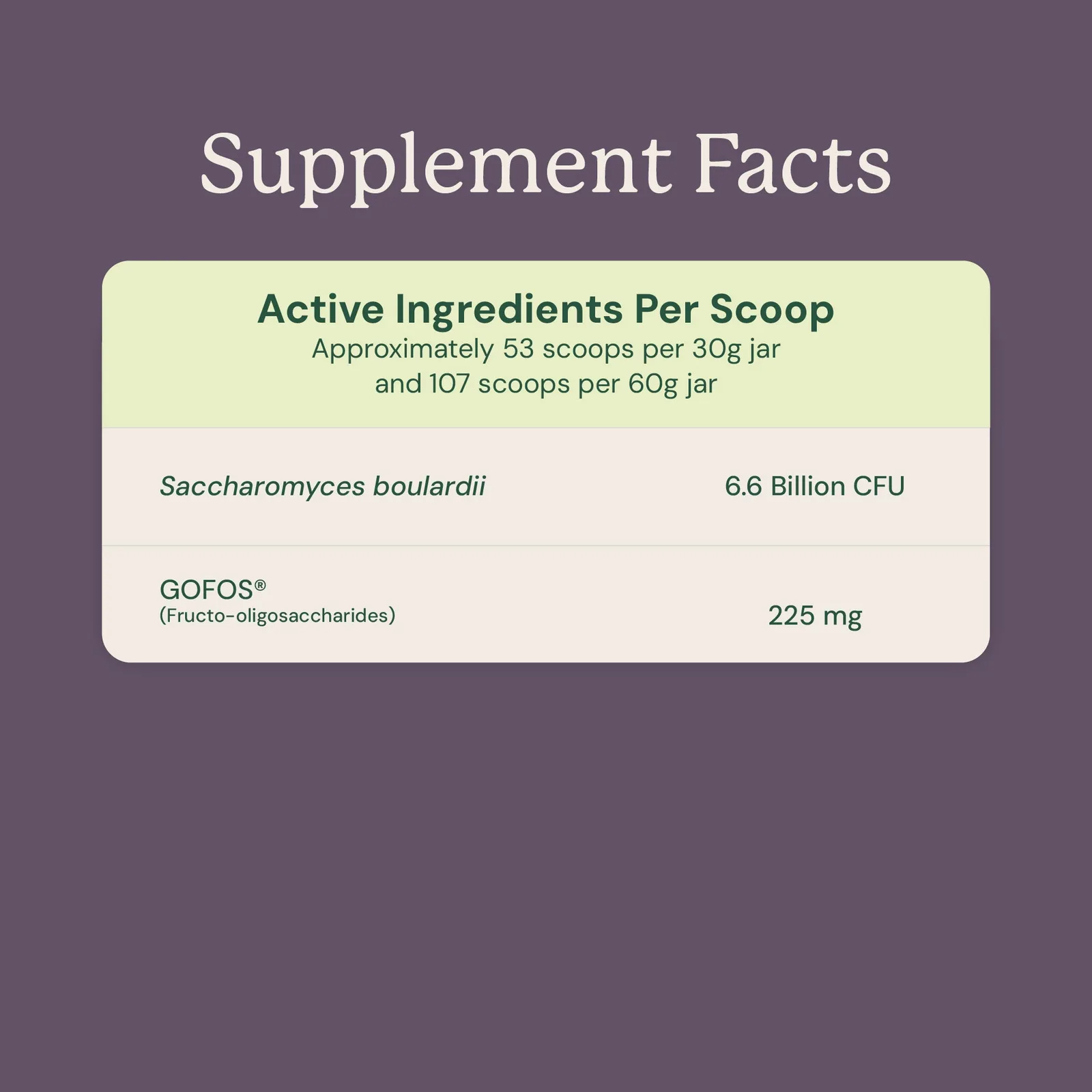
Animal Biome identifies the strain in its current powder as S. boulardii CNCM I-3799 and pairs it with fructooligosaccharides, or FOS. The company's current supplement-facts image lists 6.6 billion CFU and 225 mg GOFOS per scoop. Those facts describe this product's formulation; they are not an individualized dose recommendation and should be rechecked on the package because labels can change.
Petful may earn a commission when you click through to Animal Biome, at no extra cost to you.
Dosing, safety, and veterinary guidance
There is no single evidence-based S. boulardii dose that applies to every dog and every product. Concentrations differ, scoops differ, and study protocols are not home prescriptions. Use label directions rather than individualized dosing from a general article: follow the weight-based directions on the current package for the exact product in hand and confirm the plan with the veterinarian. This matters especially when the dog is very young, pregnant, immunocompromised, hospitalized, medically unstable, or taking several medications, because dosage and strain specificity can change how relevant outside evidence is.
The safest S. boulardii dosage for dogs begins with the exact product label and a veterinary reason for using it. Where to buy matters less than verifying the strain, viable amount per measured serving, canine weight directions, expiration, storage, and every added ingredient before the first dose.
- Clear veterinary red flags include repeated vomiting, blood or black stool, marked lethargy, pain, a swollen abdomen, weakness, dehydration, refusal to eat or drink, suspected toxin or foreign-object exposure, or worsening diarrhea in a puppy. Seek prompt veterinary care for these signs. Planned follow-up may be appropriate for a stable dog completing a defined product trial, but persistent or recurrent diarrhea needs reassessment. These are also careful limits for probiotic claims: digestive support must never substitute for diagnosis or cause-specific treatment.
How much Saccharomyces boulardii should I give my dog
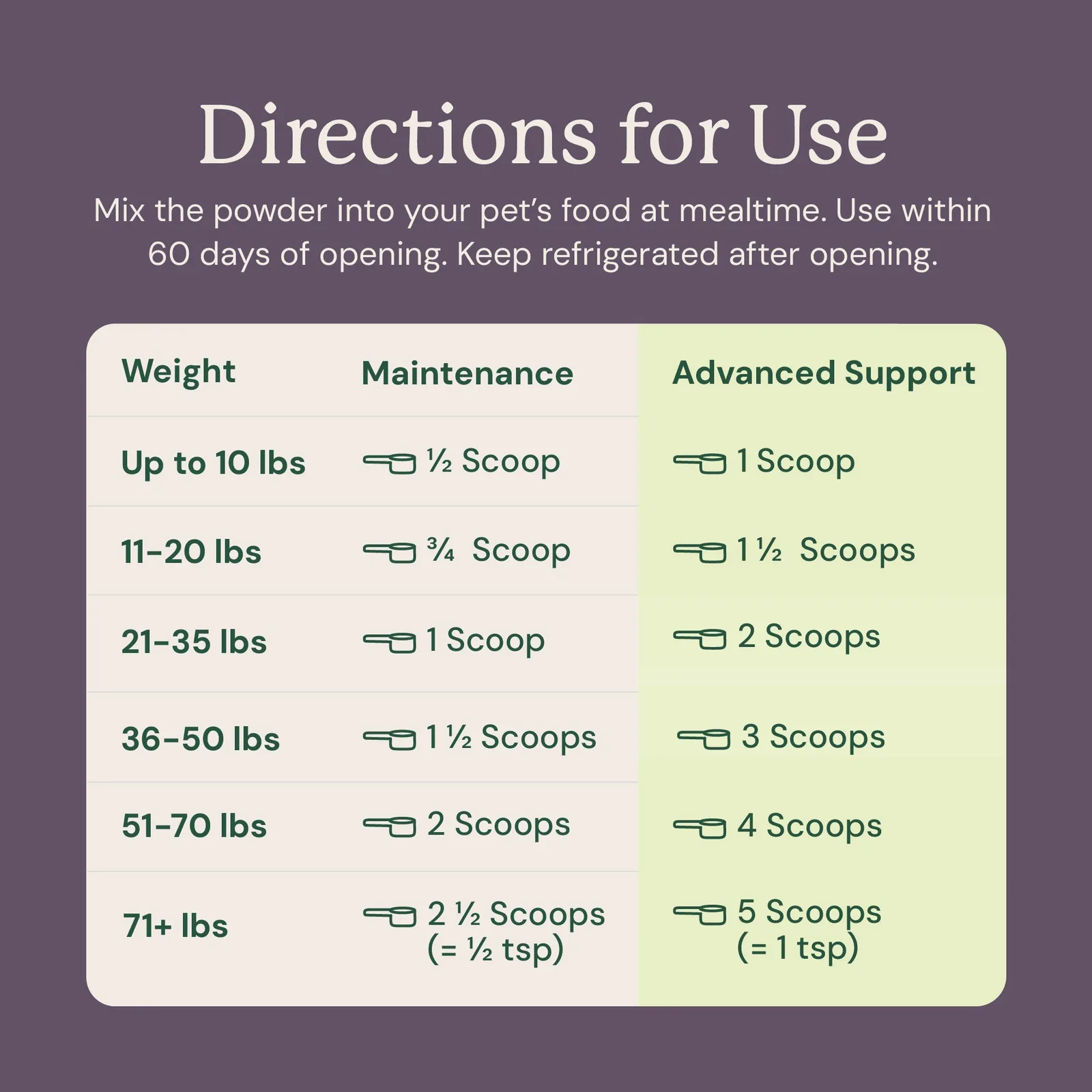
How much Saccharomyces boulardii you should give a dog depends on the exact product and the dog's veterinary plan. Give the amount specified by the current product label for the dog's weight unless the veterinarian directs otherwise. Do not convert a human capsule, a study dose, or another brand's scoop by appearance. CFU per serving, strain, moisture, storage, and added ingredients can differ substantially.
For Animal Biome's powder, the official current directions image should be checked at the time of use. Measure with the supplied scoop and follow storage instructions. If a veterinarian recommends a different amount for a medical reason, that individualized direction takes priority.

Petful may earn a commission when you click through to Animal Biome, at no extra cost to you.
What are the disadvantages of Saccharomyces boulardii
The disadvantages of Saccharomyces boulardii can include extra cost, uncertain benefit for a specific condition, product-to-product variation, and digestive intolerance such as gas or stool change. A flavored product may contain an ingredient that does not fit a diet trial. FOS is a prebiotic and may not suit every dog in every amount.
Because this is a live yeast, clinicians use extra caution in profoundly immunocompromised or critically ill patients. Rare bloodstream infections have been reported in high-risk human medical settings, particularly around central venous catheters; that does not establish a common canine risk, but it supports careful handling and veterinary oversight in vulnerable dogs. Stop the product and contact the clinic if signs worsen or a new reaction appears.
Interactions and antibiotics
Antibacterial drugs do not target yeast in the same way they target bacteria, but that does not make every combination automatically appropriate. Antifungal medication may affect a yeast product. The underlying infection, the prescribed drug, timing, immune status, and other supplements all matter. Give the veterinarian the full product label and medication list.
When not to start it on your own
Do not use a probiotic trial to postpone care for a puppy, a dog with repeated vomiting or blood, a dog that cannot stay hydrated, or a patient with pain, weakness, fever, or rapid weight loss. Avoid self-starting a live-microbe product in a critically ill or profoundly immunocompromised dog. Hospitalized patients and dogs with indwelling catheters require clinician-directed infection-control decisions.
A product may also be a poor fit during a tightly controlled food trial if flavoring or added ingredients create an unplanned exposure. If a dog is already taking several gut products, adding another makes both benefits and adverse effects harder to attribute. Simplification may provide more information than escalation.
Choosing an S. boulardii product
Choose by evidence and label clarity, not by the word “probiotic” alone. Petful's guide to dog gut health supplements explains how probiotics, prebiotics, yeast products, tests, and broader restoration formulas answer different questions.
When a label describes an S. boulardii FOS powder for cats and dogs, confirm that the multi-species format still gives an explicit canine serving method. The words on the front do not show whether the strain matches the evidence, how many viable organisms remain through expiration, or whether FOS, flavoring, or another ingredient fits the dog's diet and tolerance. Before comparing price or package size, screen the exact product for:
- Canine weight directions and a clearly measured scoop or serving
- The full yeast strain when available, plus CFU through expiration
- The amount of FOS and every active and inactive ingredient
- Storage, expiration, lot, and manufacturer contact information
- A defined digestive-support goal and veterinarian-agreed review point
That first screen answers whether the powder is even a plausible canine option. The detailed checklist below then tests whether its evidence and monitoring plan fit this dog rather than treating all yeast products as interchangeable.
A strain-label-evidence and start-stop checklist
This practical product-selection plan begins with a strain-label-evidence cross-check: is the organism named on the label the one studied for the condition being discussed? Species-level similarity is not enough. A trial of one strain, formulation, dose, and patient group does not validate every product with S. boulardii on the front. Pair that cross-check with a start-stop monitoring checklist so the purchase has a clinical purpose, a measurable outcome, and a review boundary.
| Check | What to verify | Why it changes the decision |
|---|---|---|
| Organism and strain | Full yeast name and strain identifier when available | Evidence is strain- and product-specific, so a species name alone cannot establish equivalence |
| Viable amount | CFU per measured serving through expiration, not only at manufacture | Jar size and powder volume do not reveal the viable dose |
| Evidence match | Whether canine research used the same strain, formulation, condition, and adjunctive care | A positive result in another population or product supports a hypothesis, not the same promise |
| Label and storage | Canine weight directions, scoop size, expiration, storage, and manufacturer contact | These details determine what is actually given and whether viability is protected |
| Added ingredients | FOS, flavoring, carriers, and conflicts with a controlled diet or allergy plan | The yeast may fit while another ingredient creates gas, intolerance, or an unplanned diet exposure |
| Start point | Baseline stool frequency and consistency, appetite, vomiting, energy, hydration, weight, diet, and medications | Without a baseline, normal variation can look like product success or failure |
| Review point | Veterinarian-agreed observation window and the result that would prompt continuation, adjustment, testing, or stopping | A supplement trial should generate a decision rather than continue indefinitely by habit |
| Stop point | Worsening diarrhea, vomiting, blood, pain, weakness, dehydration, refusal to eat, or another new concern | Red flags require veterinary reassessment instead of a larger serving or an added product |
A search for “S boulardii for dogs where to buy” or S. boulardii FOS powder for cats and dogs may return products with similar marketing but different evidence and serving methods. Show the exact current label to the veterinarian, compare products in the same units, and confirm that a species-inclusive product provides a canine serving method. Price and package size come after strain identity, label clarity, evidence fit, and safety.
What is the most recommended probiotic for dogs? There is no single choice for every dog. The best-supported option matches the dog's condition to a specific organism, strain, formulation, and veterinary plan. A bacterial probiotic may fit one case, S. boulardii another, and no probiotic may be appropriate until a parasite, foreign body, or systemic disease is addressed.
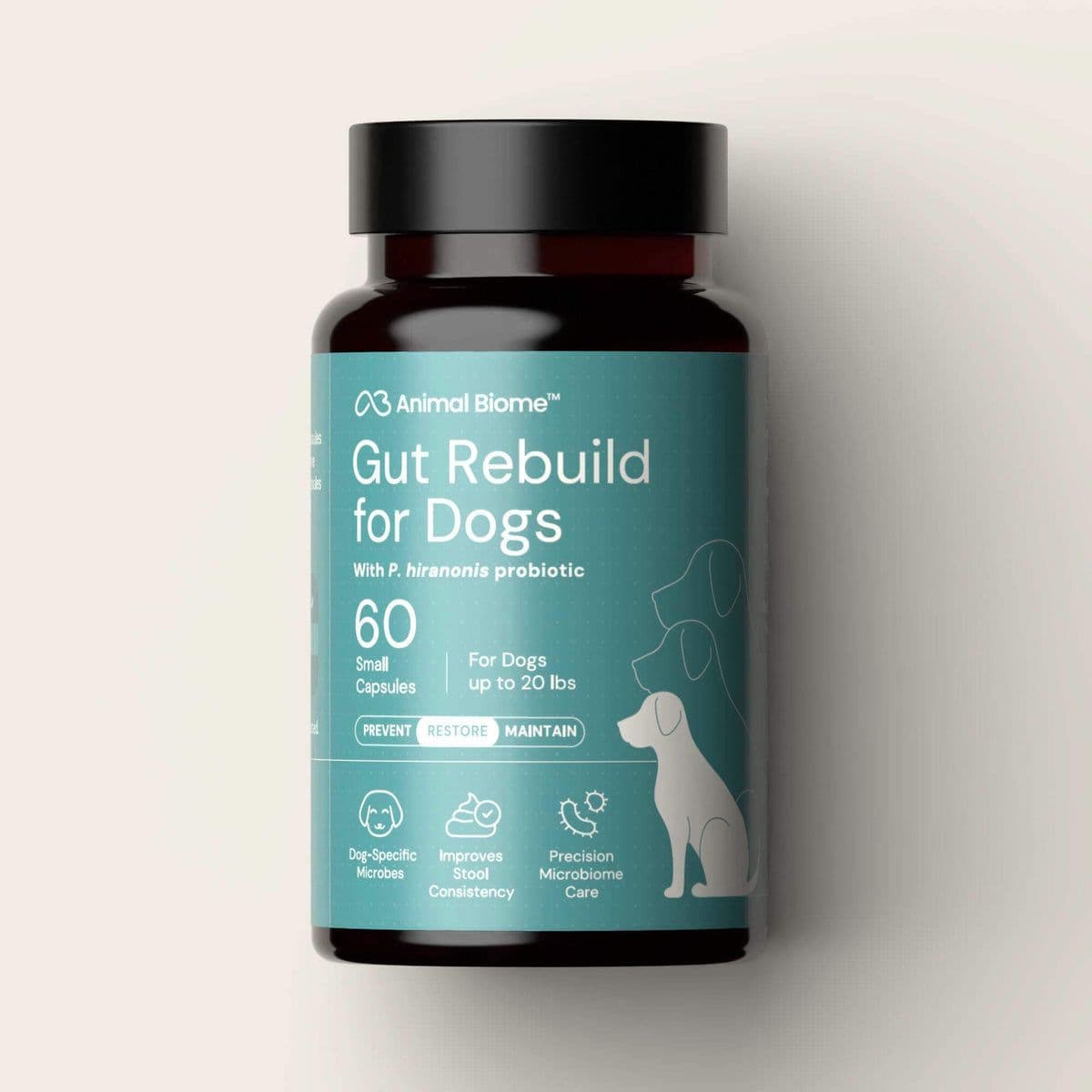
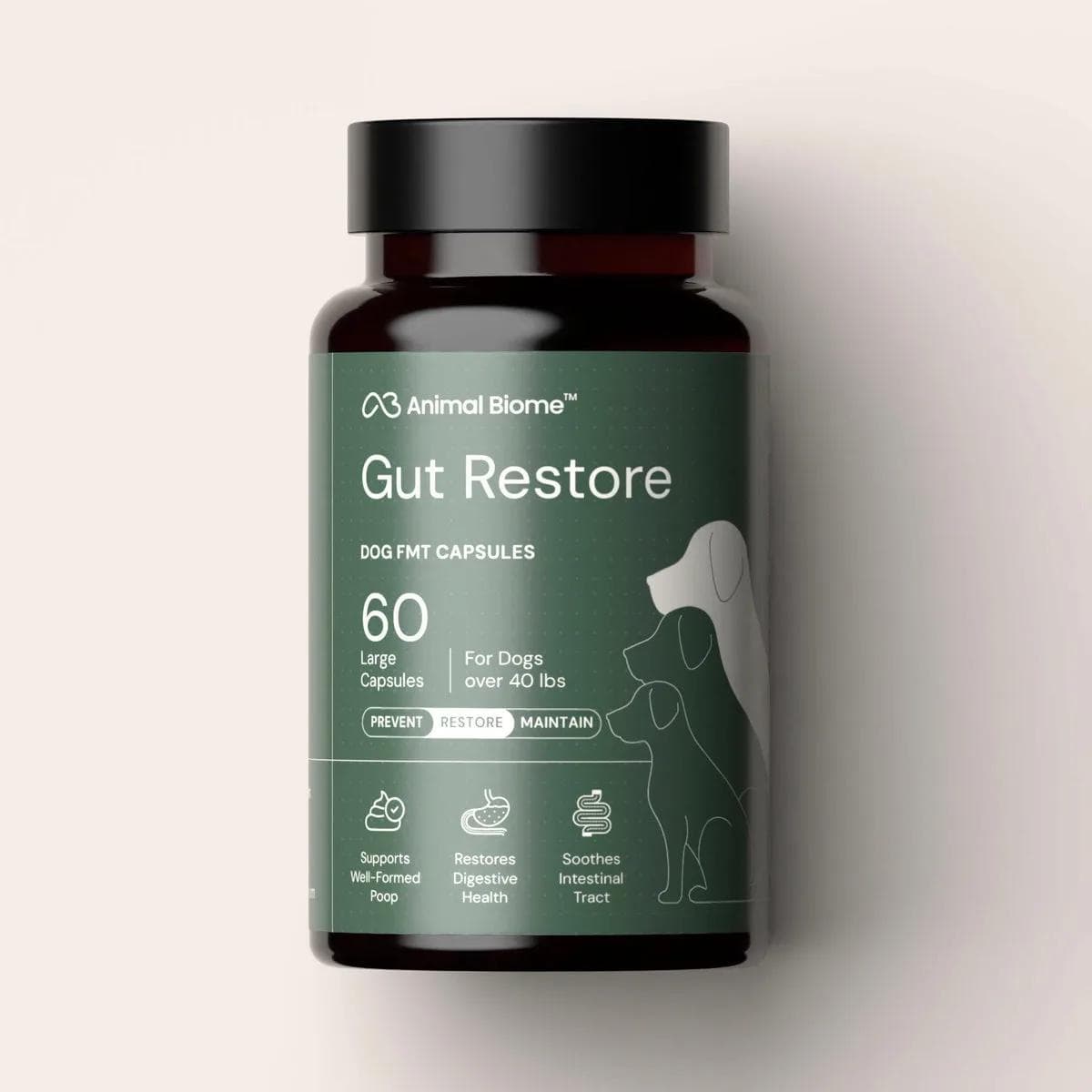
Animal Biome S. boulardii + FOS Powder is the closest match to this article's ingredient intent. Gut Rebuild for Dogs, Gut Restore for Dogs, and the Gut Microbiome Test for Dogs serve different purposes. Gut Restore is a broader dog-specific microbial-community product, while the test profiles bacterial patterns. They should not be treated as interchangeable or combined automatically. Used with a clear start, goal, and stop or review point, Animal Biome's S. boulardii product can be a positive part of a veterinarian-guided digestive plan without being presented as a cure-all.
Frequently asked questions
Saccharomyces boulardii can be useful for selected dogs when it matches a clear clinical goal, such as guided support during medication-associated stool changes or part of a veterinarian-managed chronic-enteropathy plan. It is not right for every patient and does not replace testing or cause-specific treatment. Puppies, dogs with bloody diarrhea or repeated vomiting, and immunocompromised or medically unstable dogs need veterinary assessment before a live-yeast supplement is considered.
How much Saccharomyces boulardii you should give your dog depends on the exact product, its concentration and strain, the dog's weight, and the veterinary plan. Follow the current product label, current canine directions, and veterinary guidance unless the veterinarian provides a different instruction. Do not convert a human capsule, a study dose, or another brand's scoop by appearance because CFU per serving, moisture, storage, and added ingredients vary. For Animal Biome's powder, measure with the supplied scoop and recheck the current label before use.
How quickly Saccharomyces boulardii can work varies, and there is no guaranteed timeline. Some dogs may show a stool change within several days, while others need longer or do not benefit. Diet, hydration, medication, reinfection, and the underlying disease may matter more than the supplement. Track stool frequency and consistency, urgency, blood or mucus, appetite, vomiting, energy, hydration, and weight. At the planned review point, reassess the diagnosis and treatment if the expected response has not occurred or signs have worsened rather than increasing the amount automatically.
The disadvantages of Saccharomyces boulardii can include cost, uncertain benefit for a specific condition, product-to-product variation, and digestive intolerance such as gas or another stool change. Added FOS, flavoring, or carriers may not suit every dog or a tightly controlled diet trial. Because this is a live yeast, veterinarians use extra caution in profoundly immunocompromised, critically ill, hospitalized, or catheterized patients. Stop the product and contact the clinic if symptoms worsen or a new reaction appears.
BVMS, MRCVS
Dr. Pippa Elliott, BVMS, MRCVS, is a veterinarian with nearly 30 years of experience in companion animal practice. Dr. Elliott earned her Bachelor of Veterinary Medicine and Surgery from the University of Glasgow. She was also designated a Member of the Royal College of Veterinary Surgeons. Married with 2 grown-up kids, Dr. Elliott has a naughty Puggle named Poggle, 3 cats and a bearded dragon.
Sign up for expert-backed reviews and safety alerts all in one place.

A Final Word (Disclaimer)
At Petful, our review integrity is paramount; we never exchange special treatment in our reviews for monetary or material rewards.
Nonetheless, when our readers click through to online merchants (including Chewy or Amazon), we receive a referral commission. This supports the running of our free blog, and we appreciate your backing.