Reactive Dog Training: Why Progress Can Stall
Practiced cues can disappear during a difficult encounter. Learn how trigger distance, timing, recovery, and professional support can help you review a stalled reactive dog training plan.

BVMS, MRCVS

Make practice easy enough for your dog to engage with you and a reward. Photo: gammaman
Petful is reader supported. As an affiliate of platforms like Amazon and Chewy, we may earn a commission when you buy through links on this page. There is no extra cost to you.
You have put real effort into reactive dog training. You practice “look at me,” carry the treats your dog loves, and celebrate the quiet outings. Then another dog appears around a parked car, your dog starts barking, and the response that worked in the kitchen seems to disappear. It can feel as though nothing you have done is making a difference.
That moment does not prove your dog is stubborn, that you have failed, or that reward-based training cannot help. It tells you that the situation deserves a closer look. The distance from the other dog, the timing of the reward, the route you chose, and the encounters that happened earlier can all matter.
The useful question is not simply “How do I make my dog listen?” It is “What needs to change so this dog can practice successfully here?” Start with the conditions around the exercise, then decide which part of the plan needs support.

Sign up for expert-backed reviews and safety alerts all in one place.
Why reactive dog training can stall
Stalled training often calls for practical adjustments to the situation, not a louder cue. Reactive dog training becomes harder when the challenge grows faster than the dog's ability to cope with it. Review trigger distance, reward timing, and recovery time before increasing the difficulty. A response that is familiar in an easy setting may be much harder beside a barking dog or a narrow entrance. Creating more space and allowing recovery between encounters gives you a clearer starting point for the next practice session.
Cornell's guidance on managing reactive behavior emphasizes identifying triggers, preventing overwhelming encounters, and adjusting the plan to the individual dog. That is a useful place to return when training a reactive dog starts to feel like repeating the same difficult walk.
Your effort still matters. Before adding a harder exercise, review the learning conditions: trigger distance, reward timing, repeated exposure, and recovery between sessions. A setback is information about the current plan, not a verdict on you or your dog.
“Threshold” is a practical training term for the point at which a situation begins to overwhelm the dog. It is not a visible switch in the brain, and it does not mean all learning stops on one side of an exact line. In everyday use, working below threshold means keeping the exposure manageable enough that the dog can notice what is happening without becoming caught in a sustained reaction.

Soft chews formulated to support joint function and mobility, for dogs whose stiffness makes walks and rest harder. Ask your veterinarian whether a joint supplement suits your dog.
Petful may earn a commission when you click through to PawOrigins, at no extra cost to you.
Signs that the exercise may need to become easier include:
- Staring that becomes harder to interrupt.
- A body that stiffens instead of moving loosely.
- Increasing pulling, whining, barking, or lunging.
- Difficulty moving away with you.
- A noticeably slower return to usual behavior after the trigger passes.
Food can help you assess the moment, but it is not a pass-or-fail test. A dog may take a treat and still be uncomfortable; another may refuse food because it is unfamiliar or they are not hungry. Consider the whole picture, including posture, attention, movement, and recovery, instead of using one observation to decide that the dog is ready for a closer encounter.

A simple review can make reactivity training for dogs more manageable. Look at one recent encounter in this order: what happened before the trigger appeared, how close the dog was when they noticed it, what you did next, and how the dog behaved afterward. This creates an observation record instead of a story about the dog being “good” or “bad.”
For example, imagine a dog that usually manages a quiet stretch of sidewalk but barks outside a busy café. The café encounter may combine less space, more movement, food smells, and other dogs. The useful adjustment might be crossing the street earlier or choosing another route. It does not automatically call for a different cue or a stronger correction.
Treat that example as a way to ask better questions, not a diagnosis of your own dog. If the pattern is new, becoming more intense, or difficult to manage safely, a veterinarian or qualified behavior professional can help work out what is contributing.
Read the reaction before choosing the next step
A dog reactive on lead may be frightened, frustrated about not reaching another dog, unusually excited, uncomfortable, or responding to several things at once. Separate the observed behavior from its possible causes: barking and lunging describe what happened, but do not identify the dog's motivation. Treatment also has limits, and one exercise cannot address every cause or guarantee safety. The fact that a dog moves toward something does not prove they want a greeting; a professional assessment can help interpret the history and choose appropriate support.
If your dog is suddenly leash reactive, compare the change with their usual behavior. Has the route changed? Are encounters happening closer together? Does the dog also seem reluctant to walk, turn, be touched, or move as usual? Those observations belong in a conversation with your veterinarian; they cannot confirm or rule out pain at home.
For the walking-specific interpretation, see what dog lunging on walks can mean. That guide focuses on the reaction itself. Here, the next task is to understand what that reaction means for a training session already in progress. Useful details to notice include:
- Whether the dog reacts to one kind of trigger or many.
- Whether the reaction changes with distance.
- Whether they can turn away before barking begins.
- Whether they recover once there is more space.
- Whether familiar, easy situations have also become difficult.

Avoid testing your explanation by arranging a close encounter. Removing the leash to see whether the dog is “really friendly,” allowing a stranger to approach a stiff dog, or insisting on a greeting can increase risk. You do not need to prove the dog's motivation on the sidewalk before you are allowed to create distance.
Likewise, do not assume one difficult episode means the dog is unsafe in every situation. A professional assessment looks at the history and context. Your immediate job is to keep people and dogs safe, reduce the pressure, and collect useful observations when you can do so without provoking another reaction.
Check the conditions before changing the exercise
Before replacing a training technique, examine a single repetition. A skill learned at home may not transfer to outdoor settings without gradual practice around manageable distractions. Where was the dog when they first noticed the trigger? What happened immediately afterward? Could you deliver the reward without moving them closer? Did the encounter end while it was still manageable, or only after the dog became distressed? Those details help distinguish a skill that needs practice in a new setting from a situation that needs to become easier first.

A beef organ and bone broth protein powder you scoop over meals for everyday nutritional support. Review the label with your veterinarian before adding it to your dog's diet.
Petful may earn a commission when you click through to PawOrigins, at no extra cost to you.
The AAHA behavior guidelines describe desensitization as starting with an exposure below the intensity that evokes the fearful response. The aim is not to hold a dog beside a frightening situation until they stop reacting. It is to make the starting point easier and change it gradually according to the dog's response.
- Review one repetition: notice the trigger, check the dog's response, deliver the planned reward, and keep an exit available. If the dog is already escalating, change distance first. Reward timing works best inside a situation the dog can manage.
In counter-conditioning for a reactive dog, the important idea is that a manageable trigger predicts something positive. The reward is part of changing the dog's experience of that trigger. It is not a bribe that requires the dog to approach something frightening before earning relief.
The Merck Veterinary Manual's explanation of behavior treatment distinguishes desensitization from counterconditioning while explaining why they are often used together. One changes the intensity of the exposure; the other changes what the dog associates with it. Teaching a cue can support this work, but a cue alone does not address every emotional response.
Check these parts of the setup before deciding the technique has failed:
- Starting distance: Choose enough space for the dog to observe without a sustained reaction. Another dog's workable distance is not a target for yours.
- Predictability: Begin where you can see an approaching trigger and move away. A blind corner may be a poor practice location.
- Reward access: Have rewards ready before the encounter. Searching through a bag during the hardest moment makes timing difficult.
- Escape options: Keep room to cross, turn, or step behind a visual barrier. Avoid practicing where you feel trapped.
- Progression: Change one part of the challenge at a time instead of making the trigger closer, faster, and less predictable together.

If you are wondering how to desensitize a reactive dog, start by asking a qualified professional to help you identify an appropriate initial exposure. A dog that reacts across a street may need a different starting setup from a dog that can calmly watch another dog until they pass a narrow doorway. There is no universal distance that makes an exercise safe or effective.
When trainers discuss a conditioned emotional response in a reactive dog, they are describing what the trigger has come to predict. The practical goal is a dog that notices a manageable event without the same distress or intensity. It is not a requirement that the dog stare at you continuously or ignore everything in the environment.
A usable reactive dog training plan should also say what to do when the planned exercise is no longer appropriate. For instance, an unexpected loose dog is a management problem first. Put distance or a barrier between the dogs when you can do so safely; do not stay in place to finish a repetition simply because you had intended to train.
Look at what happens between training sessions
The short practice session is only one part of the dog's day. An outing may also include a barking dog behind a fence, a delivery at home, an uncomfortable car ride, and several close encounters in a hallway. Looking only at the five minutes when you deliberately trained can miss the rest of the picture.
Dog trigger stacking is a useful description of several challenging experiences accumulating close together. Trigger stacking in reactive dogs is not something you can diagnose by counting a fixed number of events. The question is whether your dog gets a meaningful chance to settle between them, and whether the day repeatedly places them in situations that are already too much.
- Look beyond the formal lesson. Record challenging encounters, rest opportunities, and recovery between sessions. If trigger stacking is part of the pattern, a quieter day and easier practice may be more useful than adding another demanding exercise.
You might notice that the first dog across the road is manageable but the fourth close encounter is not. Or a usually comfortable walk becomes difficult after a noisy morning at home. Neither observation proves a particular biological cause. Both give you something specific to discuss and a practical reason to adjust the day.
Ways to reduce avoidable pressure include:
- Choose a quieter time or a route with better visibility.
- Pause optional visits to environments that repeatedly overwhelm the dog.
- Use window coverings or a different resting spot if constant activity outside keeps drawing a reaction.
- Arrange household routines so the dog has a familiar place to rest.
- Replace a difficult outing with appropriate, lower-pressure enrichment when needed.

Recovery does not mean making the dog's world permanently smaller. It means creating conditions in which they can rest and later practice at a manageable level. A quieter sniffing opportunity, a familiar food activity, or relaxed time with a trusted person may be more suitable than a crowded dog park. Choose activities your individual dog enjoys rather than assuming one form of exercise calms every dog.
Avoid turning recovery into another performance test. You do not have to keep asking for a settle cue to establish whether the dog is relaxing. Notice whether they return to their usual activities and whether their behavior between encounters is becoming easier, while remembering that unusual lethargy or other health changes deserve veterinary advice.
What a useful reset actually changes
There is no single procedure that resets reactive behavior or erases the dog's history. A useful reset means stepping back from an unproductive setup, reviewing the problem, and restarting with conditions the dog can manage. It can be a change in the training plan without being an admission that every earlier effort was wasted.
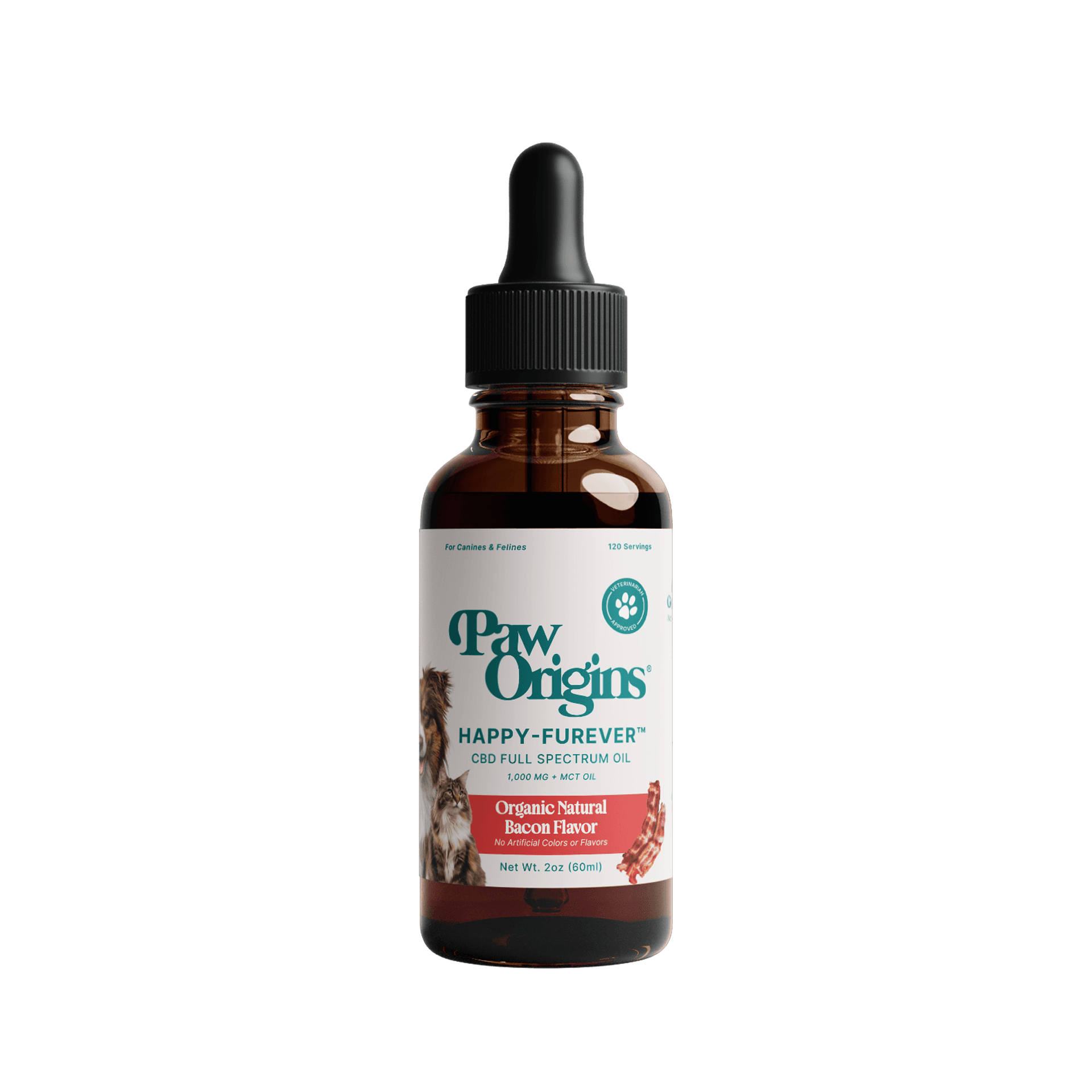
Full-spectrum hemp extract in coconut-derived MCT oil, with a dropper for measured servings. Bring the label and lab information to your veterinarian.
Petful may earn a commission when you click through to PawOrigins, at no extra cost to you.
Begin with a small, concrete goal. “Walk past every dog without reacting” may be too large for the current starting point. “Notice a dog across an open space and leave calmly” is more specific. Whether that is the right initial goal still depends on your dog and on the professional guidance you are following.
An organized reset can follow this sequence:
- Reduce rehearsal of the hardest situations. Adjust the predictable encounter that keeps ending in a reaction.
- Describe the current starting point. Note where and when your dog can observe the trigger without escalating.
- Choose one next adjustment. Change distance, location, duration, or timing rather than changing everything at once.
- Make the fallback easy. Know how you will leave if a trigger approaches too closely.
- Review what actually happened. Record the dog's response instead of judging the day from memory alone.
For example, an owner may realize that the usual training spot is beside an entrance where dogs appear suddenly. Moving practice to an open area with a clear view may be the first change. That is different from using the same difficult entrance and expecting a higher-value treat to solve the entire problem.
Keep a reset coordinated with the people who handle the dog. If one family member creates space while another encourages close greetings, the dog encounters a different set of expectations each time. Agree on simple handling instructions, including which situations to avoid and when to stop an exercise.
Support the dog before asking for more
What calms a reactive dog depends partly on what is driving the reaction. More space, predictable routines, appropriate daily enrichment, and a less demanding environment are useful parts of many plans. They do not replace an individual assessment, and no particular treat, cue, or product reliably settles every reactive dog.
Begin with the support you can make concrete. A clear route away from a trigger may matter more in the moment than another command. A comfortable place to rest may matter more after a difficult outing than another training session. A veterinarian can help determine whether health concerns or clinically significant anxiety need additional attention.
Consider the whole support plan:
- Safety: Can the handler keep the dog and other people or animals safe?
- Environment: Are there manageable places to practice and predictable ways to avoid difficult encounters?
- Behavior work: Is the plan appropriate to the dog's triggers and emotional response?
- Health: Have new or worsening changes been discussed with a veterinarian?
- Household consistency: Can everyone use the same practical approach?
Petful's guide to dog anxiety explains the broader pattern of signs and support options. Not every reactive dog has an anxiety disorder, but persistent distress across different situations is a reason to discuss more than the walking exercise itself.
AAHA's pain assessment principles include behavior, posture, and movement among the observations that can inform veterinary assessment. If reactivity changes alongside reluctance to move, altered gait, sensitivity to handling, or another health change, bring that history to your veterinarian. Do not try to rule out pain from whether the dog still plays or takes treats.
When medication is appropriate, it belongs in a veterinary plan alongside management and behavior work. Asking about it is not abandoning training. Equally, starting or changing a supplement should not become a reason to delay an assessment or alter a prescribed medicine on your own.
How to judge progress without a deadline
How long it takes to train a dog out of reactivity varies, and no fixed number of weeks guarantees that every dog will stop reacting. The dog's history, the nature of the triggers, opportunities for manageable practice, and health or anxiety concerns can affect progress. A trainer or veterinarian who knows the case can help set review points. Review trigger distance, the intensity of reactions, and recovery between sessions, rather than assuming a calendar deadline measures whether training is working.
Judge progress against the dog's own starting point. If you only count completely reaction-free walks, you may miss meaningful changes that happen before that outcome. At the same time, it is reasonable to seek a review when the dog remains distressed or the situation is becoming harder to handle safely.
Useful observations include:
- The dog notices a trigger and can turn away more readily.
- The same route involves fewer or less intense reactions.
- A reaction ends sooner once you create space.
- The dog returns to their usual behavior more easily afterward.
- You have more predictable, manageable practice opportunities.

Keep the comparison fair. A quiet walk in open space and a busy walk through a narrow shopping area are different challenges. A harder outing does not automatically cancel earlier improvement. Record the setting and trigger distance so you can distinguish a changing environment from a changing response.
A brief log is often more usable than a detailed diary you cannot sustain. Write the trigger, approximate distance, your response, and the dog's recovery afterward. Add a note when something else was unusual, such as a noisy morning or an unexpected close encounter. The purpose is to spot patterns, not to grade every moment of the dog's day.
If improvement is difficult to identify, bring the record to the person helping you. Ask whether the exercise fits the current problem, whether the starting point needs to become easier, and what would count as a useful change by the next review. A plan should be revisable when the observations do not match expectations.

Soft chews with a probiotic blend and omega-3s, formulated for itch, seasonal allergy and immune support. Ask your veterinarian whether they fit your dog's skin and allergy plan.
Petful may earn a commission when you click through to PawOrigins, at no extra cost to you.
Is it too late to change the plan?
It is not automatically too late to train a reactive dog because they are older or have reacted this way for years. A long history can mean established patterns need careful management, while age-related changes in comfort, hearing, or vision may affect the starting point. A veterinarian and qualified behavior professional can help adapt the plan to those needs. Training goals should reflect the individual dog and what the household can manage safely, rather than treating age as proof that improvement is impossible.
If you have tried several approaches, bring a clear account of them rather than starting another one from scratch without context. Describe what you practiced, where you practiced it, what appeared to help, and what became more difficult. A qualified professional can use that information to distinguish a mismatch in method from a mismatch in setup or expectations.
It may also help to redefine the practical goal:
- A dog does not need to enjoy a crowded café to have a fulfilling life.
- Walking comfortably in suitable places can be a meaningful outcome.
- Avoiding forced greetings can be part of responsible management.
- Accepting professional help does not take away the effort you have already made.
For a dog whose behavior has changed later in life, make veterinary assessment part of the discussion. A new pattern deserves attention instead of being dismissed as age or personality. Treatment decisions should consider the whole dog, not just whether a training exercise used to work.
What improvement can realistically look like
Some dogs become much easier to live with around their triggers, while others continue to need thoughtful management. No article can promise that a reactive dog will stop being reactive in every environment. The more useful aim is reduced distress, safer handling, and a daily routine that gives the dog and owner more successful experiences.
Improvement also does not require your dog to become sociable in every setting. A dog may learn to pass other dogs calmly without enjoying close greetings. Another may do well with familiar people but still need space from strangers. Those distinctions can help you set goals that are useful rather than forcing a particular image of a “normal” dog.
Discuss outcomes in concrete terms:
- Which situations matter most to the household's daily life?
- Which can be changed or avoided without compromising the dog's welfare?
- Which require professional support to manage safely?
- What response would show that the dog is more comfortable?
Keep both welfare and safety in view. A quieter dog is not necessarily a more comfortable dog if they are still tense, unable to move away, or showing other signs of distress. Look for a broader change in how they respond and recover, not only whether barking has stopped.
Age can change the picture
There is no single age at which all dogs are most reactive. Development, experience, health, and the environment interact, and an individual dog's pattern can change over time. Adolescence can bring new handling challenges, but a puppy, adult, or older dog can also show reactive behavior.
Avoid assuming that waiting for a birthday will solve a pattern that repeatedly causes distress. Equally, do not assume a young dog's difficult period predicts their whole future. Describe what is happening now and seek guidance that fits the dog's stage of life and actual behavior.
Useful context for an age-related discussion includes:
- When you first noticed the behavior.
- Whether the change was gradual or sudden.
- Whether the dog reacts in new settings or familiar ones.
- Any changes in movement, sleep, appetite, hearing, or vision.
A veterinarian can decide which observations warrant medical investigation. A behavior professional can help adapt practice to the dog's current abilities. You do not need to choose between “it is age” and “it is training” before asking for help; the purpose of assessment is to understand the contributing factors.
Did you cause the problem?
You cannot tell whether you caused your dog's reactivity simply from a barking or lunging episode. Individual temperament, learning history, experiences, health, and the current setting can all contribute. Your handling and training choices can influence what happens next, but that does not make you the sole cause of the problem. Focus on the changes you can make now, such as creating distance earlier or choosing a more manageable route, and seek help with factors that need professional assessment.
If you recognize something you want to do differently, make that change specific. Perhaps you used to wait until the dog was barking before turning away, or you kept trying a route with no room to create space. Recognizing that pattern gives you an actionable adjustment. It does not require treating the entire relationship as a failure.
The American Veterinary Society of Animal Behavior's humane training position supports reward-based methods and advises against aversive methods. When progress stalls, that is a reason to review the plan and the help you are receiving, rather than assuming your dog needs intimidation or painful corrections. Look for a professional who can:
- Explain what they are trying to change and why.
- Work within the dog's current tolerance.
- Give you a practical plan for unexpected encounters.
- Recognize when veterinary input is needed.
- Adjust the work based on observed responses.
You should be able to describe a difficult week honestly without being shamed. Good support makes the next step clearer. It should help you understand your dog and improve the conditions around learning, rather than turn each reaction into a judgment about your confidence or commitment.
Additional support alongside the training plan
Additional products, including Happy-Furever, belong within a broader support plan that also addresses the environment, training, recovery, and health picture. If you are considering a product, discuss its role with your veterinarian: what change do you hope to see, what other support will continue, and how will you judge the dog's response? Keeping those questions specific helps you assess whether an addition fits your dog without expecting it to replace practical adjustments or solve every cause of stalled progress.
If a CBD product is part of that discussion, PawOrigins Happy-Furever Oil is a full-spectrum formula the company lists with a coconut-derived MCT carrier and flavoring. PawOrigins also describes its CO2 extraction method and publishes an independent laboratory report. These details give you and your veterinarian specific information to review.
- Full spectrum describes the extract's compound profile.
- MCT is the carrier oil.
- CO2 describes the extraction method.
Those features give you useful details about the formula. They do not, by themselves, show that a product will make training work, act faster, or outperform another formula, and they cannot diagnose why your dog's progress has stalled.
The endocannabinoid system is a body signaling system studied in relation to functions that include stress responses. It can be tempting to describe a reactive dog as having an alarm that needs a better brake. That may be an easy metaphor for emotional regulation, but a barking episode does not diagnose a deficiency, and research has not established that this product restores a dog's ability to learn.

Canine CBD research is still developing. A controlled study published in 2023 found changes in some stress measures with a different CBD preparation during separation and car travel. Those situations, formulations, and outcomes are not the same as a study showing improved leash-reactivity training with Happy-Furever. Keep the question focused on whether a particular product fits your dog's wider plan.
Cornell's CBD overview recommends veterinary discussion because CBD can interact with medicines and affect liver enzymes. Bring the product information and a list of everything your dog takes, including supplements. Your veterinarian can help you decide what questions need answering before introducing something new.
Before making that decision, review:
- The ingredients and formulation listed for the product.
- The laboratory report relevant to the bottle you are considering.
- Your dog's medicines, supplements, and health history.
- The specific change you hope to observe.
- How you will keep training and environmental management consistent.
You can review the Happy-Furever formula and product information before that conversation. Do not change a prescribed medication or use a supplement to postpone help with worsening fear, sudden behavior changes, or bite risk.
The strongest next step is still a coordinated plan. A manageable trigger distance, clearer reward timing, recovery between sessions, and appropriate professional support give you something concrete to work with. Any additional product should fit alongside those pieces, with realistic expectations about what it has and has not been shown to do.
Frequently Asked Questions
A cue practiced in a quiet room has not necessarily been learned equally well beside traffic, unfamiliar dogs, or other strong distractions. Introduce gradual distractions at a level your dog can manage, rather than treating an outdoor miss as deliberate refusal. A trainer can help you plan that progression while keeping the dog's emotional response in view.
Discuss changes with the professional helping you, particularly if walks are unsafe or consistently distressing. A quieter route, a different time, or suitable enrichment in a more manageable setting may reduce pressure. The aim is to adapt exposure and meet the dog's needs, not automatically remove every outing or force the dog through the busiest environment.
Bring a short training log describing the trigger, approximate distance, what you did, and how your dog recovered. Include health changes, medicines, supplements, and the methods you have already tried. Safely obtained video can sometimes add context, but do not provoke a reaction or compromise handling to record one. A concise record makes reassessment more specific.
BVMS, MRCVS
Dr. Pippa Elliott, BVMS, MRCVS, is a veterinarian with nearly 30 years of experience in companion animal practice. Dr. Elliott earned her Bachelor of Veterinary Medicine and Surgery from the University of Glasgow. She was also designated a Member of the Royal College of Veterinary Surgeons. Married with 2 grown-up kids, Dr. Elliott has a naughty Puggle named Poggle, 3 cats and a bearded dragon.
Sign up for expert-backed reviews and safety alerts all in one place.



A Final Word (Disclaimer)
At Petful, our review integrity is paramount; we never exchange special treatment in our reviews for monetary or material rewards.
Nonetheless, when our readers click through to online merchants (including Chewy or Amazon), we receive a referral commission. This supports the running of our free blog, and we appreciate your backing.