Dog Lunging on Walks: What Owners Often Misread
A dog who lunges on walks may be frightened, frustrated, or overwhelmed. Learn how to observe the whole encounter, create more space, and build a practical plan with qualified support.

BVMS, MRCVS

Notice your dog's posture and surroundings before asking for a practiced response on a walk.
Petful is reader supported. As an affiliate of platforms like Amazon and Chewy, we may earn a commission when you buy through links on this page. There is no extra cost to you.
The leash tightens. Your dog stops sniffing, fixes on another dog across the street, then surges forward barking. You apologize while trying to turn around. Dog lunging can make an ordinary walk feel like a public test you keep failing, especially when the same dog is affectionate and easygoing at home.
That moment deserves attention, but it does not explain itself. Fear, frustration, excitement, discomfort, and previous experiences can all affect what happens at the end of a leash. Understanding the situation helps you choose your next move without deciding that your dog is simply bad.

Sign up for expert-backed reviews and safety alerts all in one place.
What dog lunging can and cannot tell you
A lunge is a sudden forward movement. Lunging describes an action; motivation explains why it happened, and you cannot reliably read that from one movement. A dog trying to reach a playmate and a dog trying to make a stranger retreat may both surge forward. For walking safety, create space while you assess the situation. Observed behavior can suggest possible causes, but it cannot establish which treatment your dog needs. Respecting those limits lets you take the reaction seriously without diagnosing your dog from a difficult moment on the sidewalk.

Soft chews formulated to support joint function and mobility, for dogs whose stiffness makes walks and rest harder. Ask your veterinarian whether a joint supplement suits your dog.
Petful may earn a commission when you click through to PawOrigins, at no extra cost to you.
When a dog barks and lunges at other dogs on walks, start with the whole sequence. Best Friends Animal Society's leash-reactivity guidance describes both fear and frustration as possible contributors. Leash barriers restrict movement, so behavior on a lead may differ from behavior off leash. A worried dog may want more distance; an excited dog may want access. Neither possibility makes releasing the leash or arranging an introduction a useful experiment.
- 1Fear and frustration can both contribute to lunging. The movement alone cannot tell you the cause.
- 2Create space before asking for a practiced response.
- 3Observe the setting, the reaction, and recovery rather than trying to prove whether your dog is friendly.
Use a before-during-after sequence to separate observations from assumptions:
- Before the trigger: Note what your dog was doing before the other dog, person, or vehicle appeared. Were they sniffing loosely, scanning ahead, or already pulling toward something?
- During the encounter: Record what changed and at what distance. Did your dog stop moving, stare, bark, surge forward, or try to retreat? Describe those actions without assigning a motive.
- Recovery after the encounter: Notice what happens after you move away. Can your dog resume exploring or respond to you, or do they keep searching for the trigger?
For a professional assessment, useful walking observations begin before the trigger and continue through recovery after the encounter. For example, “stopped sniffing when a dog appeared at the corner, barked when it crossed toward us, resumed sniffing behind the hedge” gives your veterinarian or trainer more to work with than “became aggressive.” You do not need perfect measurements. A recognizable landmark and a short note preserve the sequence without requiring you to recreate it.

A beef organ and bone broth protein powder you scoop over meals for everyday nutritional support. Review the label with your veterinarian before adding it to your dog's diet.
Petful may earn a commission when you click through to PawOrigins, at no extra cost to you.
Why the same walk can produce different reactions
Dog lunging at other dogs on leash can vary with the setting. A familiar route may include an easy, open stretch and a narrow gateway where neither dog has room to turn. The animal across the road may be tolerable until it approaches directly. What seems inconsistent from your end of the leash may involve a meaningful change in distance or access.

If your dog lunges at people on walks, look for the details surrounding that person. Were they running, approaching head-on, reaching down, or emerging suddenly? Fear, surprise, and frustrated approach are possibilities, not conclusions. Ask the person to give you room and move away safely. Do not invite petting to find out whether your interpretation is correct.
Cornell's guidance on reactive behavior emphasizes identifying individual triggers and respecting the dog's need for space. A dog barking and lunging at other dogs does not necessarily react to every dog in every setting. Notice patterns without arranging extra difficult encounters to test them.
- Record what happened before the trigger, during the close encounter, and during recovery after the encounter. Note the approximate distance, available escape route, and the first activity your dog resumed after moving away. Include uneventful passes too. Comparing these observations helps a professional interpret the pattern without asking you to guess your dog's motive or recreate a difficult encounter.
Dog lunging at cars adds an immediate traffic hazard, whatever its motivation. Choose a route with separation from moving vehicles and avoid practicing at the curb. The priority is preventing access to traffic. If a vehicle can appear too close for you to maintain safe control, that location is unsuitable for a training attempt.
Compare like with like when reviewing your notes. A quiet weekday path and a crowded weekend sidewalk are different tasks. Record the conditions before deciding that a good day proves the problem is over or that a harder outing erased all progress.
Why punishment can miss the underlying problem
To respond to a dog that lunges, first make the situation safer and easier. Shouting a cue or jerking the leash may interrupt a movement without explaining what your dog should do next. If another dog's appearance repeatedly coincides with discomfort, that encounter can become more worrying. Moving away gives you a better opportunity to practice a response your dog already knows.
The American Veterinary Society of Animal Behavior recommends reward-based training, including for serious behavior concerns. It advises against methods based on pain, intimidation, and forced exposure. This still leaves room for clear boundaries: you can prevent an approach, turn around, and end an encounter without punishing your dog for struggling.
Make the useful response easier to choose
Think of arousal as an alarm becoming louder, rather than a switch that makes learning impossible. Your dog's ability to respond may deteriorate as the encounter becomes harder. A quiet rehearsal of turning with you is a different task from doing it beside a barking dog. Change the conditions before concluding that the cue failed.
More exercise alone also does not explain a reaction to one particular trigger. A longer walk can simply create more difficult encounters. Choose an outing your dog can manage, then build skills in circumstances where you can reward them successfully.
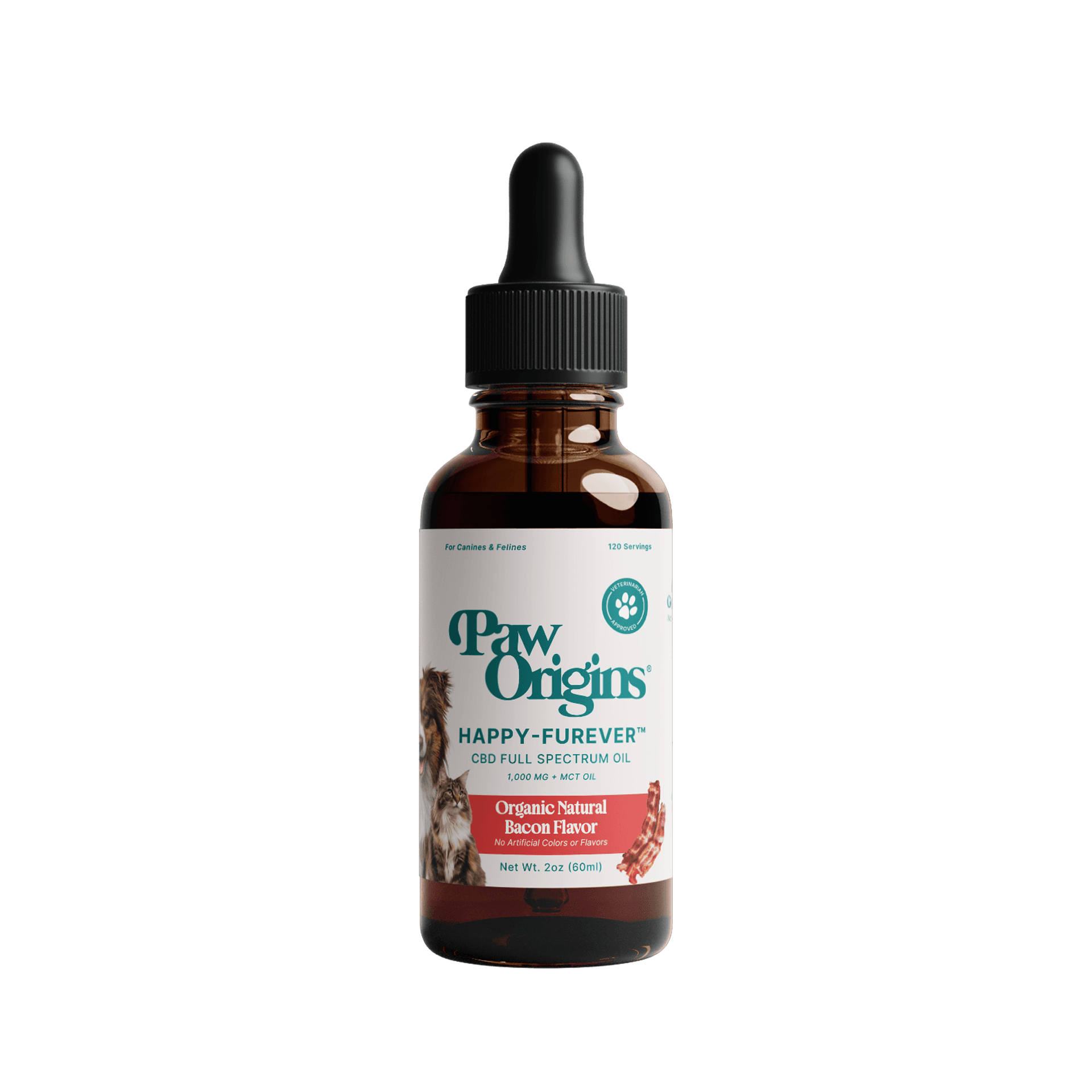
Full-spectrum hemp extract in coconut-derived MCT oil, with a dropper for measured servings. Bring the label and lab information to your veterinarian.
Petful may earn a commission when you click through to PawOrigins, at no extra cost to you.
How to make the next walk safer
If you are trying to stop your dog from lunging at strangers or other dogs, begin before the familiar flashpoint. Choose a quieter time or route, check your dog's walking equipment, and identify places where you can change direction. Leave enough distance to notice a trigger before your dog is fully occupied by it. Reward an achievable response and retreat when the situation becomes harder than planned.
Set up the route before practicing
A shorter walk with room to maneuver can be more useful than completing your usual loop through unavoidable crowds. Pick a practical turnaround point. If a narrow passage has no clear exit, wait somewhere spacious or take another route instead of committing to a close pass.
Check the fit and condition of your leash, attachment points, and harness before leaving. Equipment should help you maintain control without causing pain. The American Kennel Club's leash-lunging guide discusses safe equipment and planning walks around your dog's needs. Ask a qualified professional to help choose and fit equipment if control is difficult.

Use a simple response when a trigger appears
- Notice the approaching dog or person early enough to choose a different path.
- Increase distance, using an available visual barrier when it is safe to do so.
- If your dog can respond comfortably, use a familiar cue such as turning with you and reward that response promptly.
- If staring, pulling, or barking intensifies, leave the encounter rather than repeating the same cue at increasing volume.
For instance, imagine another dog entering a path ahead. You might turn onto a side path before the dogs approach each other. That is a successful safety decision even if you never ask for a sit. Your immediate goal is an outing you can manage, not a demonstration for the other owner.

Soft chews with a probiotic blend and omega-3s, formulated for itch, seasonal allergy and immune support. Ask your veterinarian whether they fit your dog's skin and allergy plan.
Petful may earn a commission when you click through to PawOrigins, at no extra cost to you.
Practice at a manageable distance
Longer-term behavior work often combines reducing the intensity of a trigger with building a positive association. The Merck Veterinary Manual describes desensitization and counterconditioning as gradual processes. For a worried dog, that may mean noticing another dog from a comfortable distance while receiving something enjoyable, without being drawn toward it.
Treat acceptance is useful information, but it is not a complete test of comfort. Watch the broader picture: whether your dog can disengage, move normally, and recover. A dog taking food while remaining intensely fixed on a trigger may still need more space. Do not use food to lure them closer than they can handle.
| What you notice | A practical adjustment |
|---|---|
| A narrow path forces close passes | Choose a route with an earlier exit |
| A trigger appears around a blind corner | Turn before the corner or use a clearer sightline |
| Your dog remains fixed on the trigger | Increase distance and reassess the task |
| Recovery takes longer than usual | End the difficult outing and record the conditions |
When lunging calls for professional help
Leash aggression may look like barking, growling, stiffening, snapping, or lunging toward another animal or person. These displays overlap with reactions driven by fear or frustration, so appearance alone cannot settle the cause. Take the possibility of a bite seriously. A veterinary assessment and qualified behavior support can address safety while investigating what contributes to the behavior.
A sudden change deserves particular attention. Tell your veterinarian if lunging is new, worsening, or happening alongside changes in movement, sleep, appetite, or tolerance of touch. AAHA's pain-assessment guidance recognizes behavioral observations as part of assessing pain. Your notes can help that conversation; they cannot rule a medical problem in or out.
- A sudden change, a bite or near bite, or difficulty controlling your dog calls for professional support. Forced greetings can compromise handler safety as well as putting both dogs at risk. Keep distance from triggers while arranging care, and give the other handler room to leave. Assessing bite risk should never involve bringing the dogs together to see what happens.
Ask for a professional who explains their reward-based approach and how they will keep everyone safe. Describe any snapping or redirected behavior honestly, including attempts to bite the handler. A plan may need changes to daily management before training sessions begin. You should understand where to practice, when to stop, and whom to contact if the plan is not working.
When the walking plan needs a broader reset
Working to stop a dog from lunging takes more than repeating a familiar cue. If your dog responds well indoors but repeatedly struggles outside, examine the distance, reward timing, and difficulty of the outdoor task. Repeating an exercise in an overwhelming setting may not address the reason progress has stalled. Our guide to why reactive dog training can stall explains how to reassess that wider plan.
Also consider whether difficulties extend beyond walks. Share concerns about dog anxiety and its causes with your veterinarian if your dog struggles to settle in other everyday situations. The useful question becomes what support fits this individual dog, rather than which new walking trick to try next.
Where additional support fits in the walking plan
Some owners want to discuss additional support alongside environmental changes and behavior work. Begin with your dog's veterinarian, especially if your dog takes medication. An appropriate plan can address health, routines, learning, and supportive options together. A supplement should not carry the responsibility for making an unsafe encounter safe.
PawOrigins offers Happy-Furever Oil, a full-spectrum CBD formula with an MCT carrier, for owners exploring options within a broader support plan. The brand publishes product information and an independent laboratory report that you can review with your veterinarian. These details help you ask specific questions about the formula, the report for your bottle, and whether it fits alongside your dog's behavior work and daily routine.

CBD is studied in relation to the endocannabinoid system and other signaling pathways involved in stress responses. That does not mean a lunge reveals a deficiency. A controlled CBD study in dogs found changes in some stress measures during separation and car travel; it did not test Happy-Furever or show that CBD teaches leash skills.
Cornell advises discussing CBD with a veterinarian because it can interact with medicines and affect liver enzymes. You can learn about Happy-Furever Oil and its formula before that discussion. Keep the walking plan centered on what you can observe: appropriate distance, achievable responses, and recovery after encounters.
Frequently Asked Questions
Yes. A dog who is friendly off leash may respond differently when a leash barrier limits movement or access. Frustration can contribute, and the setting may also feel different to the dog. Past friendly interactions do not establish that a new greeting is safe. Keep the leash attached and ask for help interpreting the pattern rather than testing it.
Create distance instead of arranging a forced greeting. You cannot reliably determine safe intent from the lunge, and either dog may become more distressed as the gap closes. Let the other handler pass while you maintain control. If introductions are a future goal, discuss a planned approach with a qualified reward-based professional who understands both dogs.
Note the location, trigger distance, what the trigger was doing, your dog's first visible response, and recovery time after you moved away. Include anything different about that outing and any physical changes you have noticed. Write observations rather than labels. A brief, consistent record gives your veterinarian or trainer useful context without requiring you to recreate the encounter.
BVMS, MRCVS
Dr. Pippa Elliott, BVMS, MRCVS, is a veterinarian with nearly 30 years of experience in companion animal practice. Dr. Elliott earned her Bachelor of Veterinary Medicine and Surgery from the University of Glasgow. She was also designated a Member of the Royal College of Veterinary Surgeons. Married with 2 grown-up kids, Dr. Elliott has a naughty Puggle named Poggle, 3 cats and a bearded dragon.
Sign up for expert-backed reviews and safety alerts all in one place.


A Final Word (Disclaimer)
At Petful, our review integrity is paramount; we never exchange special treatment in our reviews for monetary or material rewards.
Nonetheless, when our readers click through to online merchants (including Chewy or Amazon), we receive a referral commission. This supports the running of our free blog, and we appreciate your backing.