Novel Protein Dog Food: What It Is and When to Choose It
Novel protein dog food is built on an uncommon protein like venison, rabbit, or duck that your dog has never eaten. A vet explains what makes a protein novel, how elimination diets work, and when to choose one for a suspected food sensitivity.

BVMS, MRCVS
Petful is reader supported. As an affiliate of platforms like Amazon and Chewy, we may earn a commission when you buy through links on this page. There is no extra cost to you.
Novel protein dog food is any complete diet built around a protein your dog has rarely or never eaten, such as venison, rabbit, kangaroo, or duck. Because your dog's immune system has never met that protein, it has nothing familiar to react to, which is why veterinarians often reach for these diets when a food sensitivity is suspected.
This guide, written by a veterinarian, explains what makes a protein novel, how the elimination-diet approach works, when a switch makes sense, which foods qualify, and how to transition your dog safely. It also points to ready-made novel-protein options, including fresh recipes from JustFoodForDogs.
- 1A novel protein is simply one your dog has not eaten before, so the immune system has nothing familiar to react to.
- 2Novel protein diets are the classic tool vets use in an elimination trial to help identify a suspected food trigger.
- 3Common novel proteins include venison, rabbit, duck, kangaroo, and, for many dogs, fish.
- 4Switch gradually over 7-10 days, and during a strict trial cut out treats, flavored chews, and table scraps.

Sign up for expert-backed reviews and safety alerts all in one place.
What Is Novel Protein Dog Food?
A "novel" protein is defined by your individual dog's history, not by a label. It is any protein source your dog has never been fed, so its immune system has had no chance to become sensitized to it. For a dog raised on chicken and beef kibble, venison or duck is novel. For a dog that has eaten a fish-based diet for years, fish is no longer novel at all.
That personal element is the whole point. Food sensitivities in dogs are usually a reaction to a protein the body has seen many times before, most often chicken, beef, dairy, or egg. A novel protein sidesteps that history by giving the body an ingredient it has no memory of, which can help support dogs whose skin or digestion flares on everyday proteins.
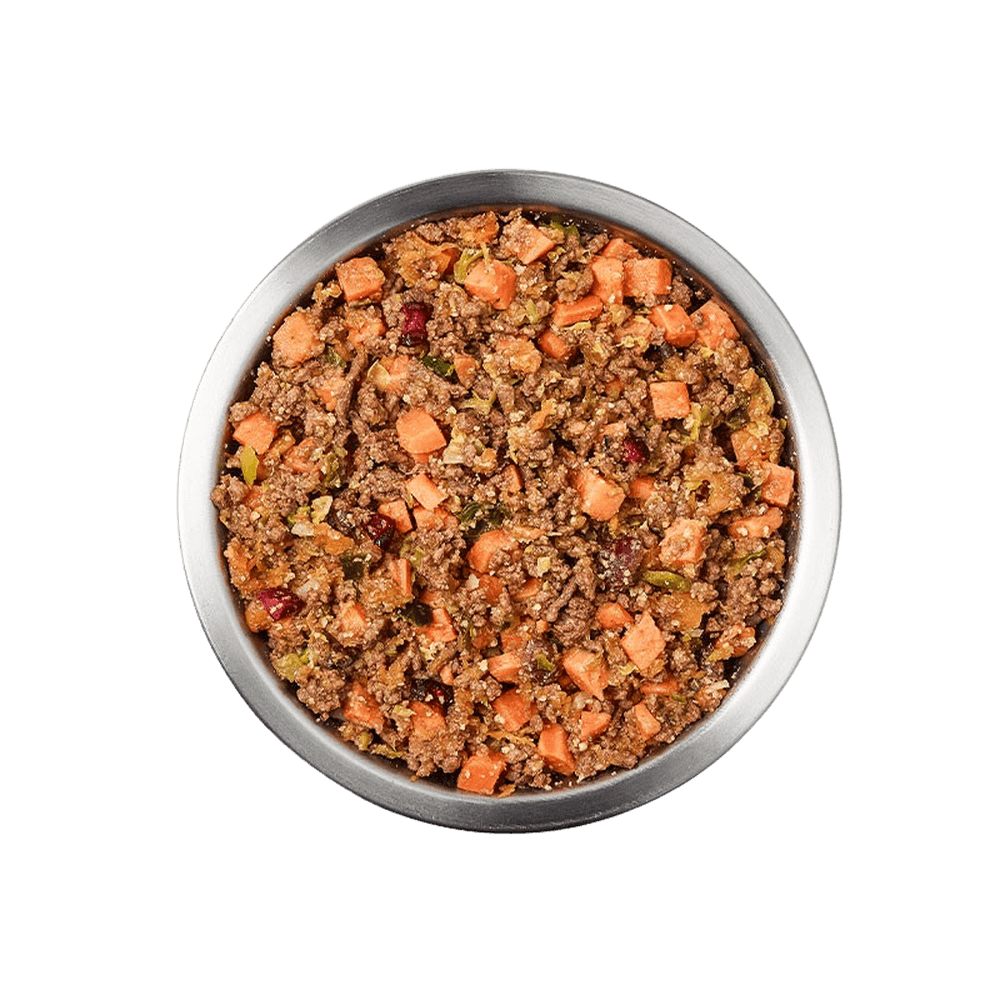
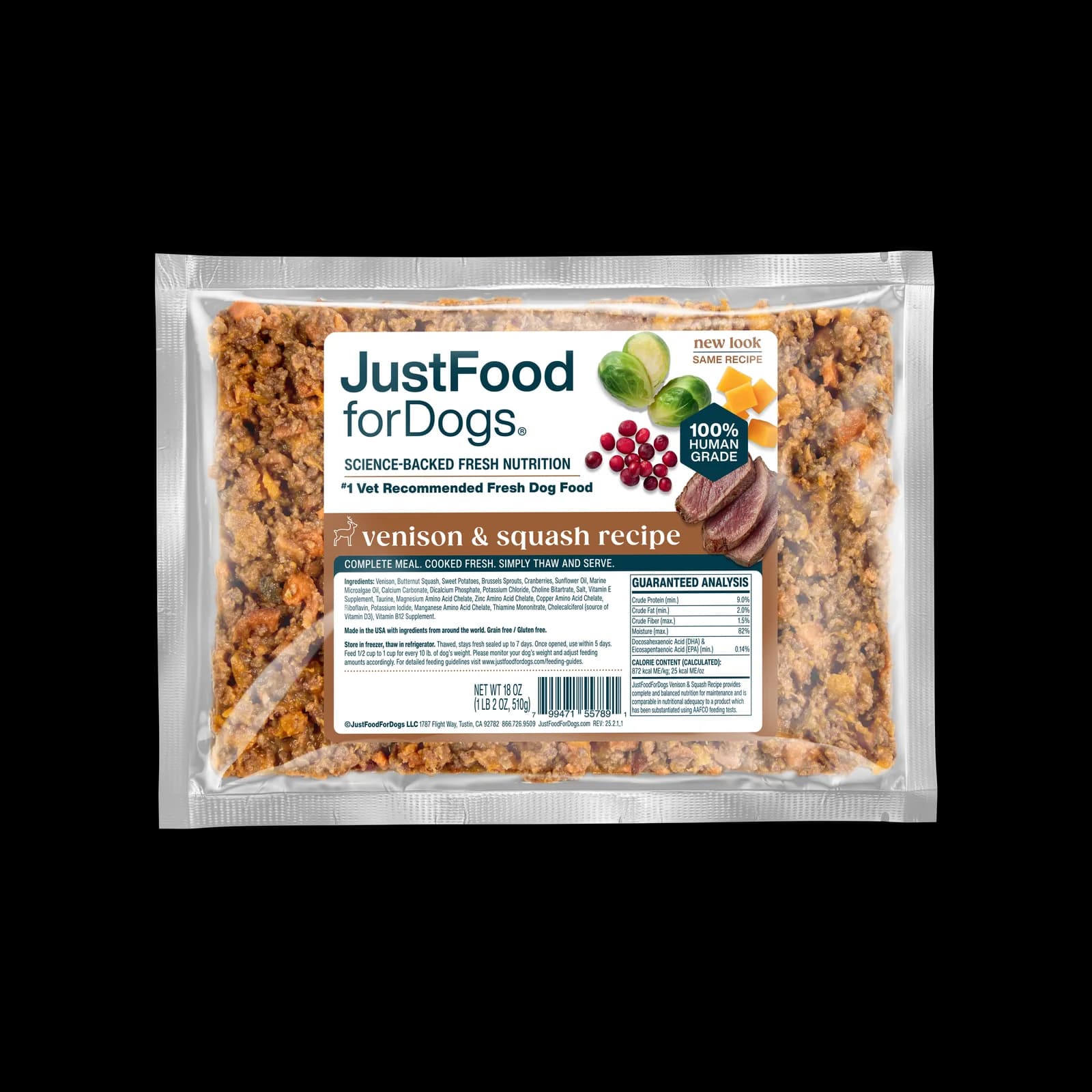
Start with your dog’s protein history, then inspect the ingredients in this fresh recipe.
- Venison paired with squash and vegetables
- Fresh Frozen recipe for adult maintenance
- See the complete ingredient list
Novel protein depends on your dog’s own diet history.
Petful may earn a commission when you click through to JustFoodForDogs, at no extra cost to you.
Novel Protein vs. Single-Protein and Limited-Ingredient Food
People often use "novel protein," "single protein," and "limited-ingredient diet" as if they mean the same thing. They do not, and the difference matters when you are shopping.
- Single-protein (or single-source) food contains exactly one animal protein. That protein can be a common one, like a chicken-only recipe, which is single-source but not novel.
- Limited-ingredient diet (LID) keeps the total ingredient list short to make reactions easier to trace. An LID may or may not use a novel protein.
- Novel protein food is built specifically around an uncommon protein your dog has not eaten. The best trial diets are novel AND limited-ingredient AND single-protein at the same time, so there is only one new variable to watch.
Our companion guide to single-protein dog food breaks down the single-source side of this in more detail. The short version: novelty is about your dog's exposure history, while "single" and "limited" are about how many ingredients are in the bowl.
How Novel Protein Works: The Elimination-Diet Idea
The reason novel proteins matter clinically is the elimination diet, sometimes called a food trial. Under a veterinarian's guidance, you feed your dog a diet containing a single novel protein and a single novel carbohydrate, and nothing else, for roughly 8 to 12 weeks. Everything familiar comes out of the picture: no old food, no flavored treats, no dental chews, no table scraps.
If the itching, ear trouble, or loose stools settle during that window, the old diet is reintroduced to see whether the signs return. That reappearance is what points to a specific ingredient. The novel protein does not treat anything on its own. It simply removes familiar triggers so the process can help identify what your dog is reacting to.
Novel Protein vs. Hydrolyzed Protein
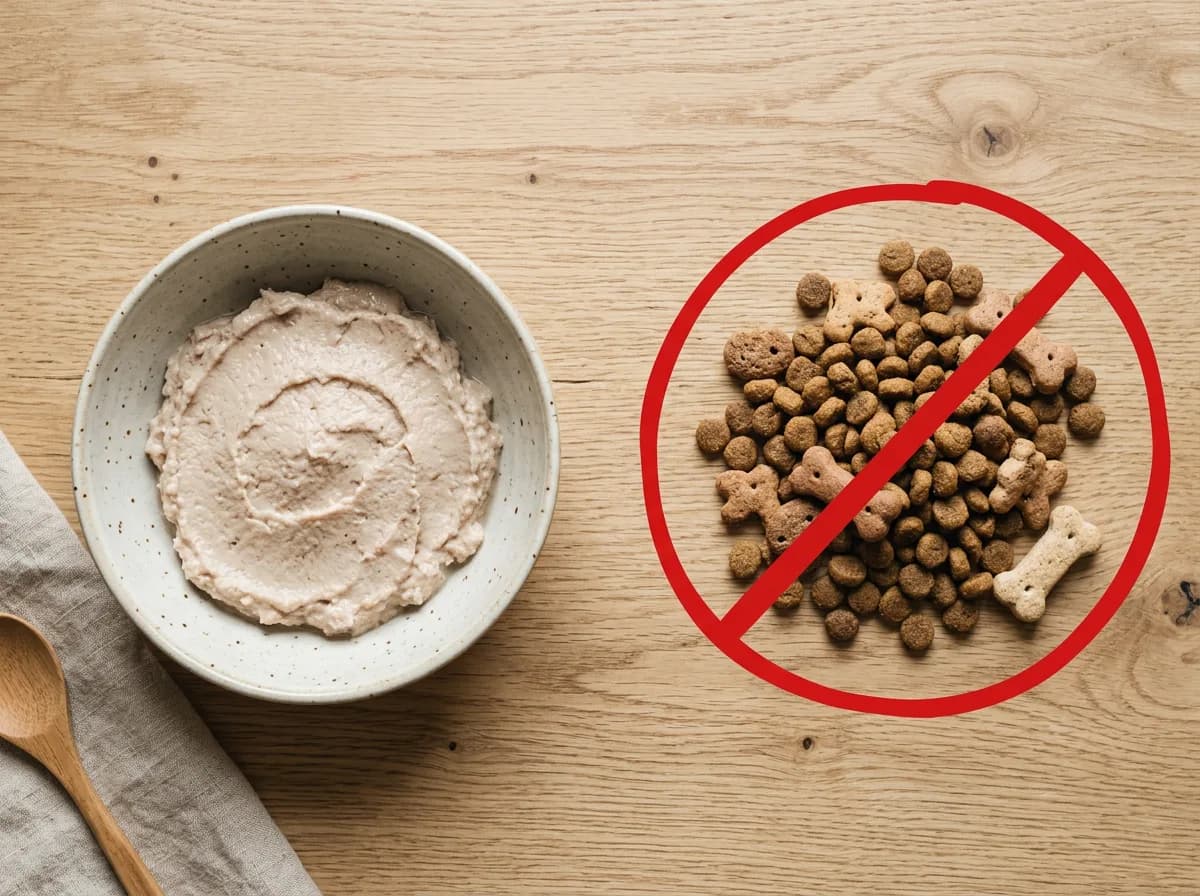
Both novel protein and hydrolyzed diets are used to run an elimination trial, and they take two different routes to the same goal. A novel protein diet uses a whole, intact protein the dog has simply never encountered. A hydrolyzed diet takes a protein and breaks it into fragments so small that the immune system is far less likely to recognize them as a target. Hydrolyzed formulas are typically prescription diets chosen when a dog has eaten so many proteins that finding a genuinely novel one is difficult. Your veterinarian decides which route fits your dog's history.
- An elimination diet is a structured test run with your vet, not a food you grab off the shelf for a week. The strictness is what makes the answer trustworthy, so follow the plan exactly and give it the full 8 to 12 weeks.
The Benefits of Novel Protein Dog Food
The appeal of a novel protein diet comes down to what it removes rather than any magic ingredient it adds. For the right dog, the upside can be meaningful.
- A clean slate for the immune system. With no familiar protein present, there is nothing the body has already learned to overreact to, which can help support dogs with suspected food sensitivities.
- Simple, traceable ingredients. Most novel protein recipes are also limited-ingredient, so if a reaction does happen, there are fewer suspects to investigate.
- A clear diagnostic path. Because the diet is controlled, it gives your veterinarian a dependable way to help pinpoint a trigger through reintroduction.
- Often high digestibility. Proteins like rabbit and fish tend to be gentle and easy to digest, which can be a comfort for dogs with sensitive stomachs.
- Nutritional completeness when done right. A quality novel protein diet is formulated to meet AAFCO nutrient profiles, so your dog still gets balanced everyday nutrition while you investigate.
What Foods Have Novel Proteins?
Novelty depends on your dog, but a handful of proteins are uncommon enough in mainstream pet food that they are novel for most dogs. The table below covers the usual candidates.
| Protein | Why It Counts as Novel | Notable Traits |
|---|---|---|
| Venison | Rarely used in everyday kibble | Lean red meat with a rich flavor most dogs love |
| Rabbit | Uncommon in standard diets | Very lean and highly digestible |
| Duck | Less common than chicken or beef | Palatable with a moderate fat level |
| Kangaroo | Almost never in mainstream food | Extremely lean and low in fat |
| Fish (whitefish or salmon) | Novel for dogs raised on poultry and beef | Naturally rich in omega-3s that support skin and coat |
Start with your dog’s protein history, then inspect the ingredients in this fresh recipe.
- Venison paired with squash and vegetables
- Fresh Frozen recipe for adult maintenance
- See the complete ingredient list
Novel protein depends on your dog’s own diet history.
Petful may earn a commission when you click through to JustFoodForDogs, at no extra cost to you.
Fish deserves a special mention. For a dog that has only ever eaten chicken and beef, a whitefish or salmon recipe is genuinely novel, and it brings omega-3 fatty acids that can help support healthy skin and a shiny coat. That combination of novelty plus skin-friendly nutrients is why fish diets are such a popular starting point.
Which Novel Protein Is Best for Dogs?
There is no single best novel protein, because "best" means whichever protein your particular dog has not eaten. The ideal choice is the one your dog has never been exposed to, comes in a complete and balanced recipe, and is something your dog will happily eat. Many owners start with venison or fish because both are widely available in high-quality diets and tend to be very palatable. If your dog has already eaten one of those, move further down the list to rabbit, duck, or kangaroo. When in doubt, your veterinarian can review your dog's diet history and point you to a protein that is truly new.
The JustFoodForDogs Novel-Protein Options
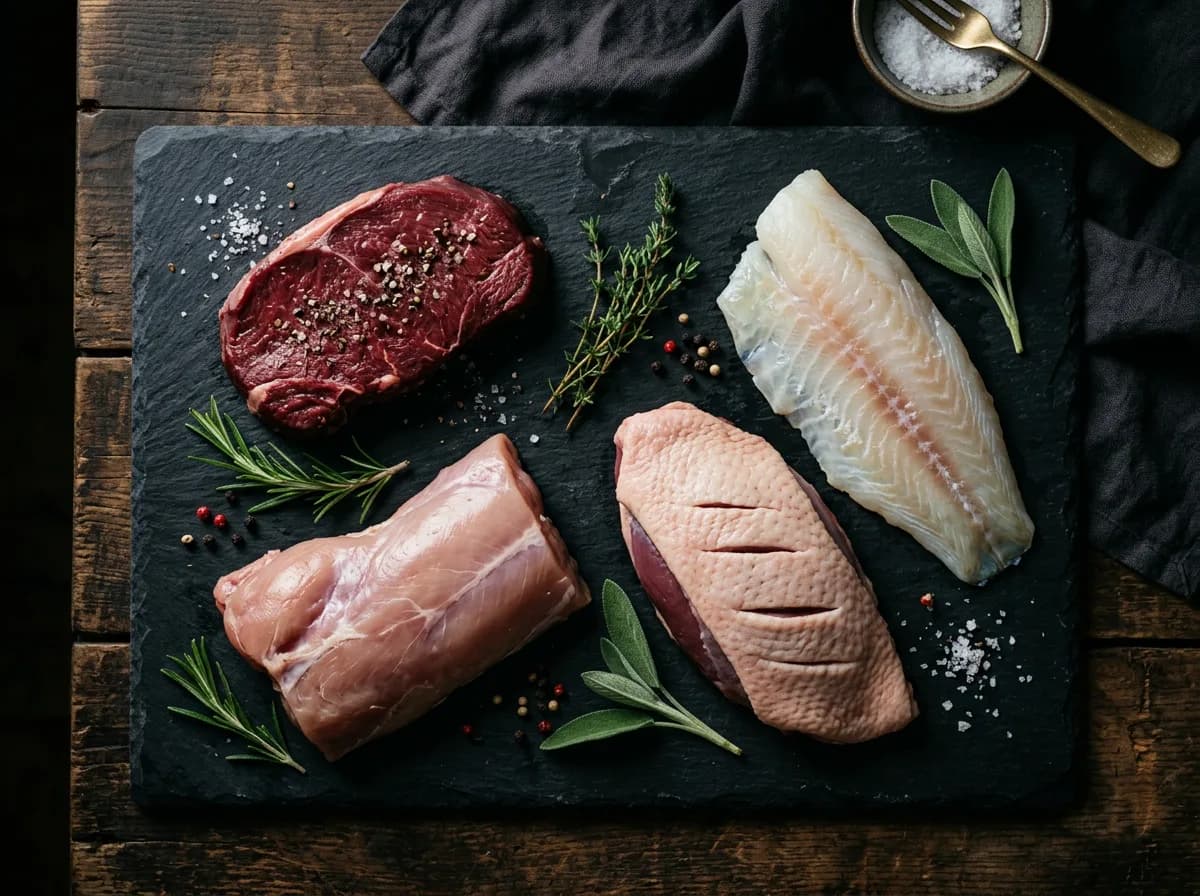
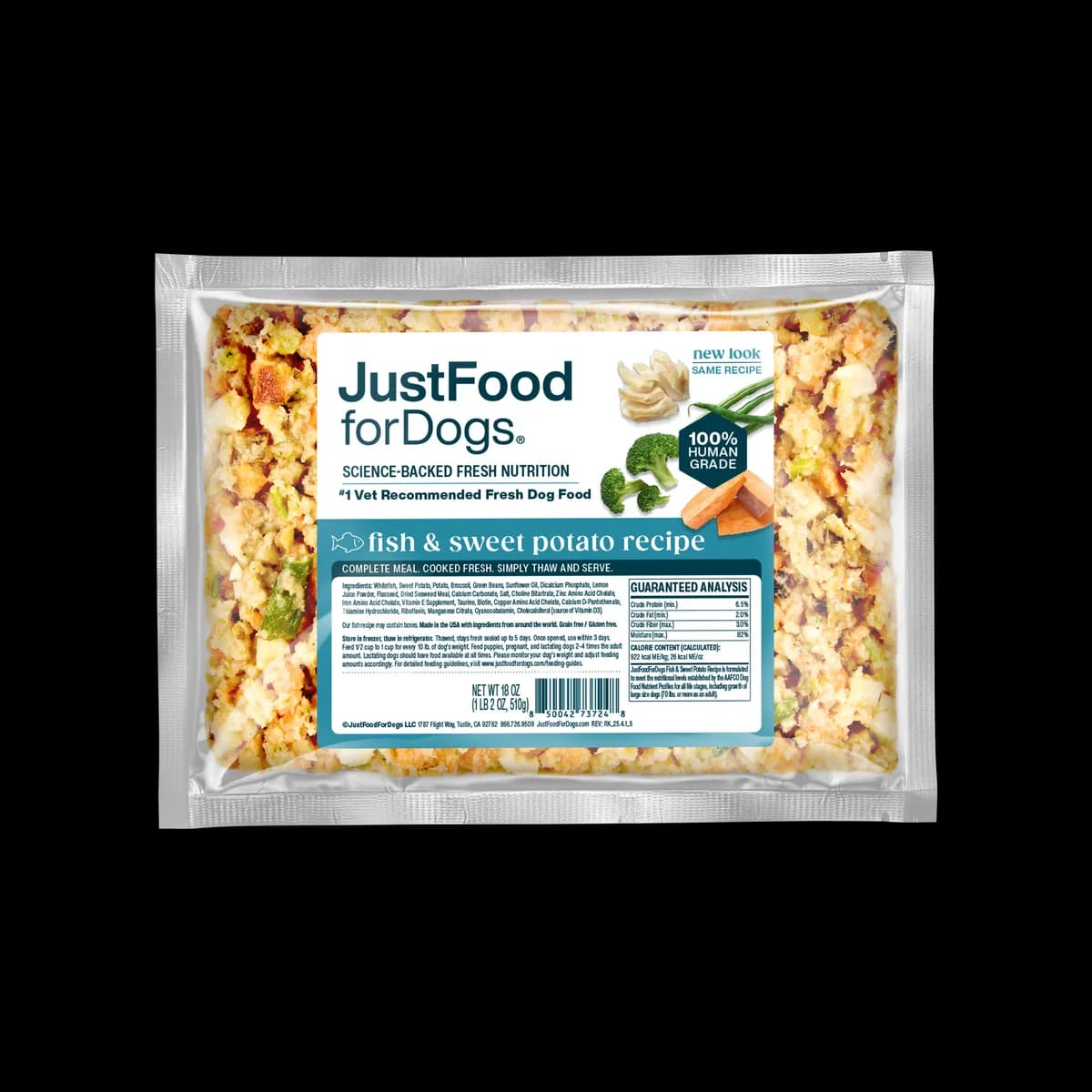
If you want a fresh, whole-food take on a novel protein diet, JustFoodForDogs is a natural fit. Its everyday human-grade Fresh Frozen recipes are made from whole ingredients you would recognize on your own plate, and the lineup includes two standout novel-protein choices for dogs that need to step away from chicken and beef. You can see the full lineup on the brand's recipes page.
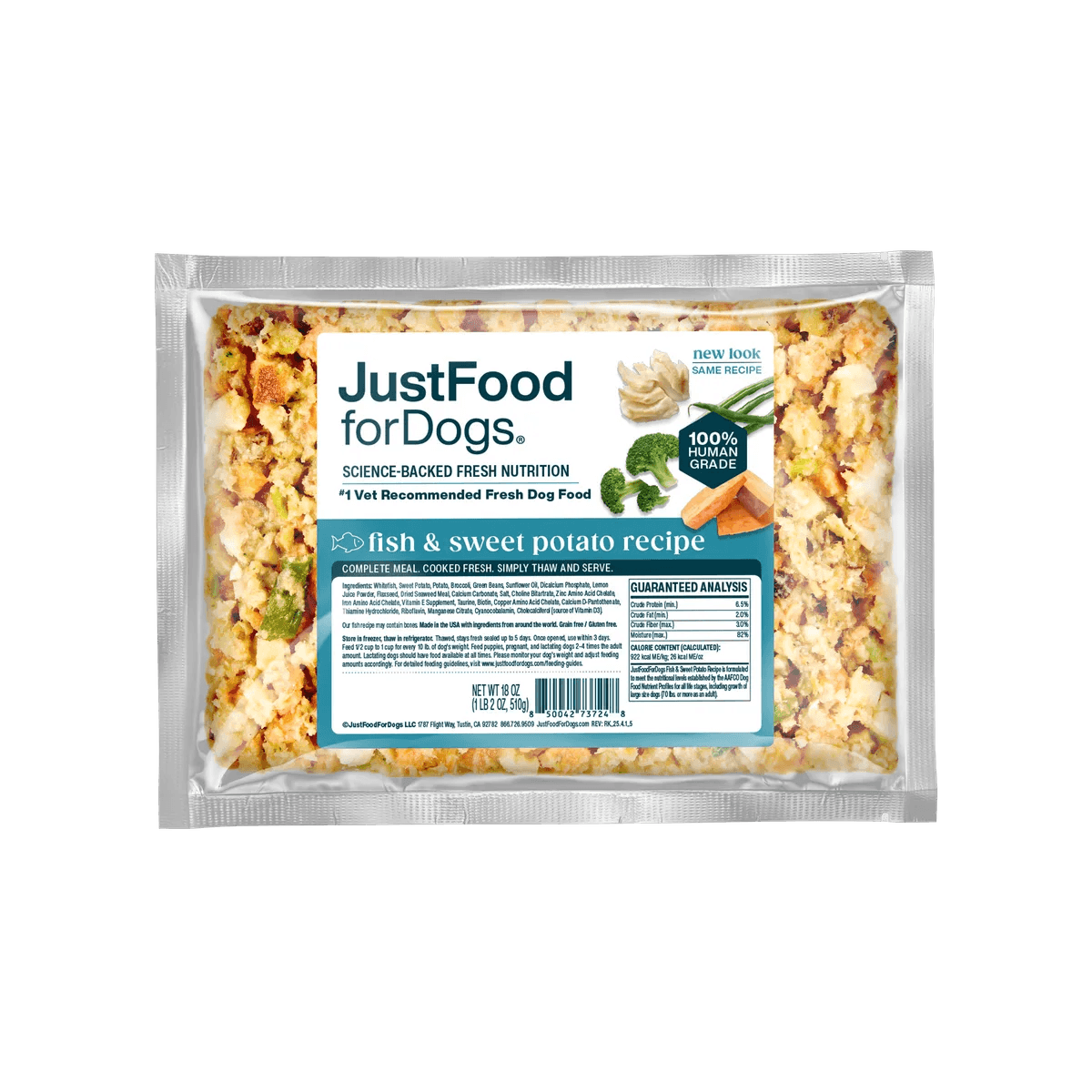
Start with your dog’s protein history, then inspect the ingredients in this fresh recipe.
- Whitefish with sweet potato
- Fresh Frozen meals with whole-food ingredients
- View the recipe and life-stage guidance
Petful may earn a commission when you click through to JustFoodForDogs, at no extra cost to you.
| Recipe | Novel Protein | When It Tends to Fit |
|---|---|---|
| Venison & Squash | Venison | Dogs new to red meat that need an uncommon single protein |
| Fish & Sweet Potato | Whitefish | Dogs that need a novel protein plus omega-3s for skin and coat |
The Venison & Squash recipe pairs an uncommon red-meat protein with an easy-to-digest carbohydrate, making it a clean starting point for a trial. The Fish & Sweet Potato recipe leans on whitefish, which doubles as a novel protein for poultry-raised dogs and a source of skin-supporting omega-3s. Both are cooked in small batches and formulated to meet AAFCO nutrient profiles, so your dog gets complete everyday nutrition, not a stripped-down test food.
- JustFoodForDogs stands out for putting its food through actual science, with five peer-reviewed studies plus one abstract behind its fresh whole-food approach. When you are choosing a diet you may feed for months, that kind of evidence is worth looking for.
How to Switch to Novel Protein Dog Food
Switching foods too fast is the quickest way to upset your dog's stomach, which also muddies the results of a trial. Transition gradually over 7-10 days so the digestive system can adjust.
- Days 1-3: Feed about 75 percent old food and 25 percent novel protein food, mixed together.
- Days 4-6: Move to a 50/50 blend of old and new.
- Days 7-9: Shift to roughly 25 percent old food and 75 percent new.
- Day 10 onward: Feed the novel protein diet on its own.
Go slower if you see soft stools or reduced appetite, holding at each stage an extra day or two. Once you are running a true elimination trial, the single most important rule is that nothing else goes in the bowl: no old kibble, no flavored treats, no dental chews, and no scraps, because a single chicken-flavored treat can undo weeks of careful work. If your dog takes flavored medication or supplements, ask your veterinarian for an unflavored alternative during the trial.
Start with your dog’s protein history, then inspect the ingredients in this fresh recipe.
- Venison paired with squash and vegetables
- Fresh Frozen recipe for adult maintenance
- See the complete ingredient list
Novel protein depends on your dog’s own diet history.
Petful may earn a commission when you click through to JustFoodForDogs, at no extra cost to you.
What Is the 90/10 Rule for Dogs?
The 90/10 rule is a simple feeding guideline: at least 90 percent of your dog's daily calories should come from a complete and balanced diet, and no more than 10 percent from treats and extras. It exists to protect the balanced nutrition in the main diet from being crowded out by add-ons. During a strict elimination trial the rule tightens even further, because for those weeks you want as close to 100 percent of calories coming from the trial diet alone so treats cannot skew the result. Once the trial is over and your dog is settled on a long-term food, the 90/10 rule is a sensible everyday habit to return to.
- The most common reason a food trial fails is a hidden protein sneaking in through treats, chews, flavored heartworm preventives, or a bite of a family meal. Keep the diet as clean as your veterinarian prescribes for the whole trial window.
Novel Protein or Hydrolyzed, and For How Long?
Whether a dog stays on a novel protein diet or a hydrolyzed one long term depends on how it does and what your veterinarian advises. If a complete and balanced novel protein recipe keeps your dog comfortable, many dogs happily stay on it for years. The key is that the food is nutritionally complete for your dog's life stage, not just a short-term test. Because a novel protein can, over time, become a protein your dog is now familiar with, some vets rotate the plan or keep a second novel option in reserve. This is a conversation to have with your own veterinarian, who knows your dog's full history.
For a wider look at feeding a dog with itchy skin or a sensitive gut, our guides to the feeding a dog with food sensitivities and the feeding a dog with allergies walk through the full picture alongside novel proteins.
What About Cost?
Novel protein diets usually cost more than standard chicken or beef recipes, because the proteins themselves are less common and often sourced more carefully. Fresh, whole-food options like JustFoodForDogs sit at the premium end, and for many owners the human-grade ingredients and the research behind them are exactly what justify the difference on a diet you may feed for months. Because a trial can run for weeks, it helps to factor the ongoing cost in from the start. Many owners find the clarity of finally identifying a trigger, and the comfort it brings their dog, well worth the difference.
- A novel protein diet is one of the most useful tools for investigating a suspected food sensitivity, but it works best as a deliberate, vet-guided plan rather than a casual switch. Pick a protein your dog has truly never eaten, feed it clean, and give it time.
Frequently Asked Questions
How Novel Protein Fits a Vet-Guided IBD Plan
Inflammatory bowel disease, usually shortened to IBD, is a chronic condition in which a dog's intestinal lining stays persistently inflamed, leading to signs like ongoing vomiting, diarrhea, weight loss, or a gurgling, uncomfortable gut. It is diagnosed by a veterinarian, often after other causes are ruled out, and diet is one of the central levers vets use to help manage it over time.
This is where novel proteins come back into the picture. Because many dogs with IBD are reacting, at least in part, to a protein their immune system has grown sensitized to, a diet built on a single novel protein or a hydrolyzed protein is frequently the first dietary step a veterinarian suggests. The idea mirrors any elimination approach: take away the familiar proteins the body may be overreacting to, and give the gut a calmer, simpler set of ingredients to work with. A food-responsive form of IBD can improve considerably on the right diet, though only your veterinarian can tell you whether your dog's case is likely to respond to a food change.
A novel-protein or hydrolyzed diet does not cure IBD, and it is never a substitute for veterinary care. What a well-chosen diet can do is help support a dog whose flare-ups are tied to food, by removing common triggers so the digestive tract is not being provoked at every meal. Because IBD is a long-term condition, the food your vet settles on is usually one your dog stays on for the long haul, which is why nutritional completeness matters so much. Any diet used for a dog with IBD should still be formulated to meet AAFCO nutrient profiles, so your dog gets balanced everyday nutrition, not a stripped-down test food.
What Not to Feed a Dog With IBD
During a vet-guided diet plan for IBD, the "what not to feed" list matters as much as the food you choose. Your veterinarian will tailor it to your dog, but it commonly includes:
- The proteins your dog already eats, especially frequent culprits like chicken, beef, dairy, and egg, since the whole point is to steer clear of familiar proteins.
- Flavored treats, dental chews, and table scraps, which can quietly reintroduce a trigger protein and undo weeks of careful feeding.
- High-fat foods and rich extras, which can sit harder on an inflamed gut. Many IBD diets are kept moderate in fat on veterinary advice.
- Flavored medications and supplements, unless your vet confirms they are fine, because flavorings can carry hidden proteins.
Our guide to the feeding a dog with food sensitivities covers the sensitive-gut side of feeding in more depth and pairs naturally with a vet's IBD plan.
- If your dog has chronic vomiting, diarrhea, or unexplained weight loss, see your veterinarian rather than self-treating with a new food. Diet is a powerful tool for a food-responsive gut, but it works best as part of a plan your vet builds and monitors.
Downsides and Side Effects: Novel vs. Hydrolyzed Diets
Both novel-protein and hydrolyzed diets earn their place, but no single diet is the perfect fit for every dog, and it helps to go in with clear eyes.
Novel protein diets carry a few practical downsides. The biggest is that novelty is temporary: once your dog has eaten venison or rabbit for a stretch, that protein is no longer novel, so it cannot be reused as a fresh trial protein down the road. Sourcing single, genuinely uncommon proteins can also make some novel-protein diets pricier, though fresh, whole-food options are now easy to get by home delivery. And because success hinges on truly avoiding every familiar protein, a novel-protein plan is only as good as your discipline with treats and scraps.
Hydrolyzed diets have their own trade-offs. Some dogs find them less appealing at the bowl, since breaking protein into fragments can change the taste, and a small number of dogs still react despite the smaller protein pieces. As for side effects, the changes owners notice when switching to either type of diet are usually mild and digestive, such as temporary soft stools or a slightly smaller appetite while your dog adjusts. That settling-in period is exactly why a slow transition matters. If you see anything beyond brief, mild changes, treat it as a reason to call your veterinarian rather than push through.
Are Hydrolyzed and Novel Protein Diets Prescription?
This is one of the most practical differences between the two. Most hydrolyzed protein diets are prescription diets, meaning they are sold through or authorized by your veterinarian, who oversees their use because they are built as therapeutic foods. Novel protein diets live in both worlds. There are prescription veterinary novel-protein formulas, and there are also many high-quality non-prescription novel-protein diets you can buy directly, including fresh, whole-food options. JustFoodForDogs Venison & Squash and Fish & Sweet Potato are available without a prescription and may be suitable everyday novel-protein options for some dogs. They are not automatically equivalent to a veterinary therapeutic elimination diet. If you suspect IBD or a true food allergy, involve your veterinarian before beginning because a diagnostic trial may require a prescription diet and strict controls.
Both are used to run a food elimination trial. A novel protein diet uses a whole protein your dog has never eaten, so the immune system has nothing familiar to react to. A hydrolyzed diet takes a protein and breaks it into fragments too small for the immune system to easily recognize. Hydrolyzed formulas are usually prescription diets, often chosen when a dog has already eaten too many proteins to find a truly novel one. Your veterinarian decides which route fits.
The main benefit is a clean slate: with no familiar protein present, there is nothing your dog's body has already learned to overreact to, which can help support dogs with suspected food sensitivities. Novel protein diets are usually limited-ingredient, so reactions are easier to trace, they give your vet a clear diagnostic path, and quality versions are formulated to meet AAFCO nutrient profiles for complete everyday nutrition.
Proteins that are uncommon in mainstream dog food are novel for most dogs, including venison, rabbit, duck, kangaroo, and often fish such as whitefish or salmon. Remember that novelty depends on your individual dog. Any protein your dog has already eaten is no longer novel, so a fish-fed dog needs a different option.
Transition gradually over 7-10 days. Start with about 75 percent old food and 25 percent new, move to 50/50 by days 4-6, shift to 25 percent old and 75 percent new by days 7-9, then feed the novel protein diet alone from day 10. Go slower if you see soft stools, and during a strict trial remove all treats, chews, and scraps so nothing familiar sneaks in.
Many dogs can stay on a hydrolyzed or novel protein diet long term if it keeps them comfortable and it is complete and balanced for their life stage. It is a decision to make with your veterinarian, who can confirm the food meets your dog's full nutritional needs and monitor how your dog does over time.
There is no single healthiest protein. The best protein for your dog is a high-quality, digestible, complete one that suits your dog's individual needs and that your dog does well on. Novel proteins are not inherently healthier than common ones; they are simply less likely to have been the source of a sensitivity, which is why they are used in food trials.
The best novel protein is whichever one your dog has never eaten, comes in a complete and balanced recipe, and your dog enjoys. Venison and fish are popular starting points because they are widely available and palatable, but if your dog has eaten those, move on to rabbit, duck, or kangaroo. Your veterinarian can review the diet history and suggest a genuinely new protein.
The 90/10 rule means at least 90 percent of your dog's daily calories should come from a complete and balanced diet and no more than 10 percent from treats and extras, so add-ons do not crowd out balanced nutrition. During a strict elimination trial you want to be even stricter, aiming for nearly 100 percent of calories from the trial diet so treats cannot skew the result.
For most dogs, no. Turkey is common enough in mainstream pet food that many dogs have already eaten it, so it usually is not novel. Novelty always depends on your individual dog, so if yours has genuinely never had turkey, it could count as novel for them. Keep in mind that turkey and chicken are both poultry, and dogs sensitive to chicken sometimes react to turkey as well, which is why vets often reach for a clearly unrelated protein like venison or rabbit for a trial.
Lamb used to be a classic novel protein, but it now appears in so many "sensitive" and limited-ingredient foods that it is no longer novel for a lot of dogs. Whether lamb is novel comes down entirely to your dog's history. If your dog has truly never eaten lamb it may qualify, but if lamb has shown up in past foods or treats, you will want a less common option such as venison, rabbit, duck, or kangaroo.
There is no single best food, because the right diet for a dog with IBD is the one your veterinarian chooses for your dog's specific case. Vets commonly start with a single novel protein or a hydrolyzed protein diet that is complete, balanced, and formulated to meet AAFCO nutrient profiles, then adjust based on how your dog responds. A fresh, whole-food novel-protein recipe can be a good non-prescription starting point to discuss, but because IBD is a medical condition, the food choice should always be made with your vet.
BVMS, MRCVS
Dr. Pippa Elliott, BVMS, MRCVS, is a veterinarian with nearly 30 years of experience in companion animal practice. Dr. Elliott earned her Bachelor of Veterinary Medicine and Surgery from the University of Glasgow. She was also designated a Member of the Royal College of Veterinary Surgeons. Married with 2 grown-up kids, Dr. Elliott has a naughty Puggle named Poggle, 3 cats and a bearded dragon.
Sign up for expert-backed reviews and safety alerts all in one place.


A Final Word (Disclaimer)
At Petful, our review integrity is paramount; we never exchange special treatment in our reviews for monetary or material rewards.
Nonetheless, when our readers click through to online merchants (including Chewy or Amazon), we receive a referral commission. This supports the running of our free blog, and we appreciate your backing.