Dog Food Sensitivities: An Ingredient and Nutrition Guide
Food sensitivities cover both digestive intolerances and true allergies. This vet-written guide explains how they differ, which ingredients are most often to blame, what to look for on a label, and how to switch your dog to a gentler diet safely.

BVMS, MRCVS
Petful is reader supported. As an affiliate of platforms like Amazon and Chewy, we may earn a commission when you buy through links on this page. There is no extra cost to you.
Dog food sensitivities are one of the most common reasons owners start turning packages over to read the ingredient panel, yet the term is widely misunderstood. A sensitivity is really an umbrella that covers two different things: a food intolerance (a digestive reaction) and a true food allergy (an immune response). Telling them apart shapes every feeding decision that follows.
This guide, written from a veterinary point of view, walks through what sensitivities actually are, the ingredients most often to blame, the label features worth looking for, and how to change your dog's diet safely. The goal is a calmer gut, more comfortable skin, and a mealtime you both look forward to.
- 1A food sensitivity is the umbrella term for both intolerances (digestive) and true allergies (immune), and most dogs react to a familiar everyday protein, not an exotic one
- 2The top 3 food allergies in dogs are beef, dairy, and chicken, so a novel or limited-ingredient recipe is often the first thing a vet suggests
- 3On the label, look for a single named protein, a short ingredient list, omega-3 fatty acids, and gentle, digestible carbohydrates
- 4Change foods gradually over 7 to 10 days, and run any elimination diet trial under veterinary guidance for 8 to 12 weeks

Sign up for expert-backed reviews and safety alerts all in one place.
Food Sensitivities vs. Food Allergies: What Is the Difference?
The words "sensitivity," "intolerance," and "allergy" get used as if they mean the same thing, but they do not, and the distinction matters for how you feed your dog. Think of food sensitivity as the broad umbrella. Underneath it sit two separate mechanisms: intolerance and true allergy. A dog can have one, the other, or occasionally both, and the day-to-day symptoms can look frustratingly similar from the outside.
Getting the vocabulary straight helps you have a more productive conversation with your veterinarian and read product marketing with a clearer eye. Many bags labeled "sensitive" are really just simplified recipes, which can be genuinely helpful, but the label alone does not diagnose anything.
Food Intolerance: The Digestive Side
A food intolerance is a non-immune reaction. The body simply struggles to digest or process a particular ingredient. The classic example is lactose: many adult dogs do not produce enough of the enzyme needed to break down the sugar in milk, so a bowl of dairy leads to gas, loose stool, or an unsettled stomach. Fat content, certain additives, and abrupt diet changes can trigger similar digestive upset.
Intolerances tend to show up in the gut. Vomiting, soft or frequent stools, excess gas, and gurgling are the usual signs. The upside is that intolerances are often dose-related and reversible: remove or reduce the offending ingredient, and the digestion usually settles.
True Food Allergy: The Immune Side

A true food allergy is different. Here the immune system misidentifies a specific protein as a threat and mounts a response, which is why allergies almost always trace back to a protein source rather than a grain or additive. This immune reaction can build over months or years of eating the same ingredient, which is exactly why the most common triggers are the proteins dogs eat most.
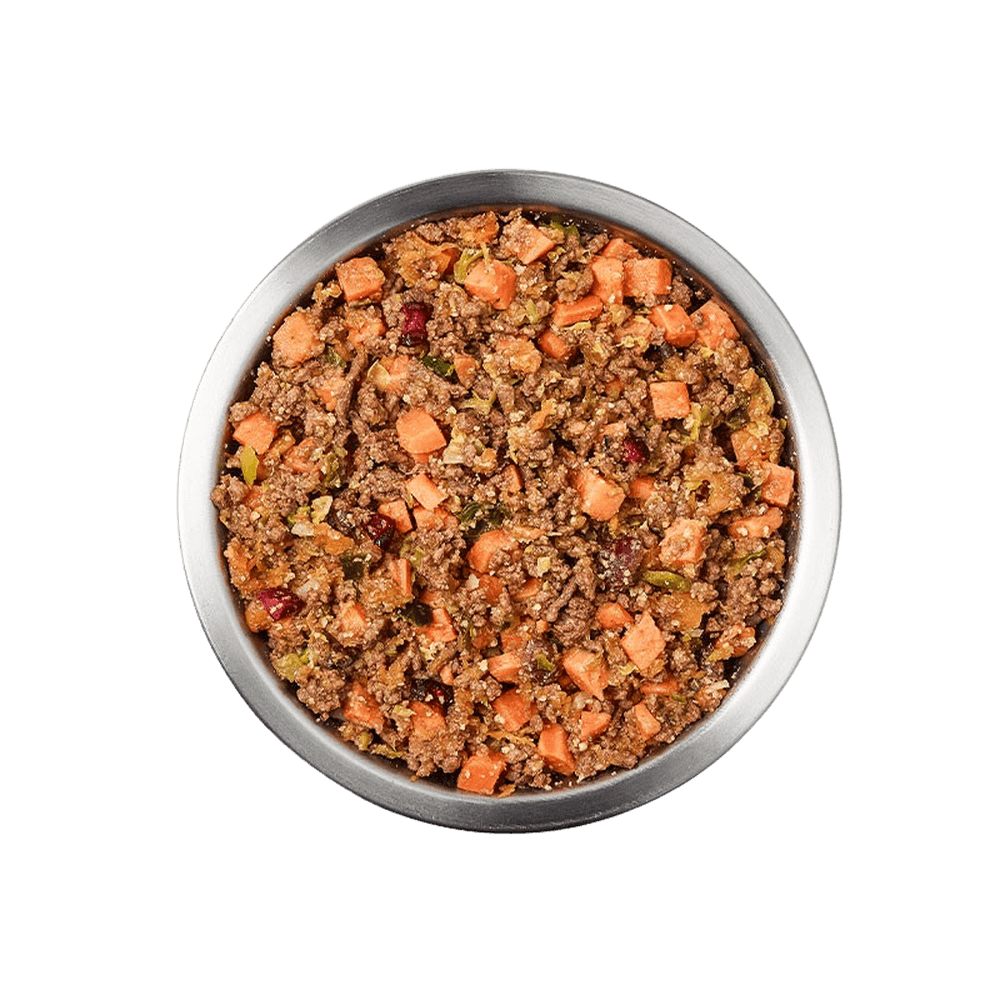
Compare the recipe’s named protein and full ingredient list with your dog’s diet history.
- Venison paired with squash and vegetables
- Fresh Frozen recipe for adult maintenance
- See the complete ingredient list
Novel protein depends on your dog’s own diet history.
Petful may earn a commission when you click through to JustFoodForDogs, at no extra cost to you.
Food allergies more often show up on the skin than in the gut. Persistent itching, especially around the paws, face, belly, and rear, along with recurrent ear inflammation and repeat skin infections, are the hallmark signs. Some allergic dogs also have digestive symptoms, which is part of why the two categories blur together.
- A bag that says "sensitive skin and stomach" is a formulation choice, not a diagnosis. Only a veterinarian, usually through an elimination diet, can confirm what your individual dog reacts to. Use "sensitive" labels as a starting point, not a final answer.
For a deeper look at the allergy side of the picture specifically, including the therapeutic and hydrolyzed options a vet may discuss, our guide to the feeding dogs with allergies covers it in detail.
The Top 3 Food Allergies in Dogs
When owners picture a food allergy, they often imagine something rare or exotic. The reality is the opposite. The top 3 food allergies in dogs are beef, dairy, and chicken, and the reason is simple exposure. These are the proteins dogs have eaten the most, meal after meal, year after year, and repeated exposure is precisely what gives the immune system the chance to become sensitized.
Rounding out the common list are lamb, egg, wheat, and soy. Notice what is missing: novelty. There is nothing inherently "hypoallergenic" about lamb or duck. They earned their reputation only because, historically, fewer dogs had eaten them, which made them useful novel proteins for a fresh start.
This is the key insight for choosing a food: the point of a novel or limited-ingredient recipe is not that the new protein is magic. It is that your dog has probably never eaten it, so the immune system has no history with it. Switching a beef-and-chicken dog to a single, unfamiliar protein like venison or fish removes the ingredients most likely to be driving the reaction. A ready-made way to do that is a fresh, single novel-protein recipe from JustFoodForDogs.
- If your dog has spent years on chicken-based food and is now itchy, chicken is a reasonable early suspect precisely because it is familiar. Choosing a protein your dog has genuinely never had is what makes a diet trial meaningful.
Signs Your Dog May Have a Food Sensitivity
Because intolerances and allergies overlap, it helps to watch for clusters of signs rather than a single symptom. Food reactions are also non-seasonal, which is one clue that separates them from environmental allergies that flare in spring or fall. If your dog is uncomfortable year-round, food is more likely to be part of the story.
It is worth separating food reactions from environmental allergies (atopy), which are triggered by pollen, dust mites, or mold and tend to flare with the seasons. A dog can have both at once, which is part of why itchy dogs can be so tricky to sort out. If the itching runs year-round and does not track with the weather, food climbs the list of suspects, and an elimination trial becomes the logical next step.
Common signs of a food sensitivity include:
- Itchy skin that concentrates on the paws, face, ears, belly, and rear, often with licking, chewing, or scratching.
- Recurrent ear problems, including redness, head shaking, odor, and repeat infections that clear up on medication and then return.
- Digestive upset, such as loose or frequent stools, vomiting, excess gas, or an inconsistent appetite.
- Skin infections and hot spots that keep coming back despite treatment.
- A dull coat or excessive shedding that does not improve with grooming alone.
What About Itchy Ears?
Chronically itchy, inflamed ears deserve a special mention because they are one of the most overlooked food-allergy signals. When a dog's ears keep flaring, get treated, and then flare again, an underlying food reaction is often the reason the problem will not stay gone. The food itself does not "cause" an ear infection directly, but a food-driven skin reaction can leave the ear canal inflamed and prone to yeast or bacterial overgrowth.
That said, itchy ears have many possible causes, including ear mites, moisture, and environmental allergies, so this is a symptom to investigate with your veterinarian rather than to self-diagnose. A food-based approach (a limited-ingredient diet plus omega-3 fatty acids) can help support a healthier skin barrier while your vet rules out the other suspects.
What to Look For in a Dog Food for Sensitivities

Once you and your vet suspect a food sensitivity, the label becomes your most important tool. You are looking for simplicity and transparency: fewer ingredients, clearly named, with nothing extra that could complicate the picture. Four features matter most.
A Single, Named Protein
The most useful thing a sensitive-dog recipe can do is limit the diet to one clearly named animal protein, such as "venison" or "salmon," rather than a vague blend like "meat meal" or "animal protein." One protein means one variable, which is what makes a food trial interpretable. If you cannot tell exactly what animal your dog is eating, you cannot draw conclusions from how they respond. Our overview of single-protein dog food explains why this "one protein at a time" approach is the backbone of feeding a sensitive dog.
A Short, Recognizable Ingredient List
Fewer ingredients means fewer potential triggers and fewer places for a hidden culprit to hide. Limited-ingredient diets typically keep the list short and readable, often 8 to 12 recognizable items. This is also where whole-food, minimally processed recipes shine, because you can usually identify every component by sight.
Omega-3 Fatty Acids for Skin and Coat

Because so many sensitive dogs struggle with their skin, omega-3 fatty acids (from fish, fish oil, or flaxseed) are a valuable inclusion. Omega-3s can help support a normal skin barrier and a healthy coat, which is why fish-based recipes are so popular for dogs with itchy, flaky skin. Look for a named omega source on the label rather than a generic "fatty acid" claim.
Gentle, Digestible Carbohydrates
The carbohydrate matters too. Simple, digestible options like white rice, sweet potato, oatmeal, and pumpkin are easier on a sensitive gut than heavily processed fillers, and they can help support firmer, more consistent stool. If digestion is the main issue, our guide to gut health for dogs goes deeper on fiber, prebiotics, and probiotics.
Ingredients Worth Avoiding
Just as important as what to look for is what to leave out. For a sensitive dog, the ingredients most worth avoiding are vague, unnamed protein and fat sources ("meat meal," "animal fat," "meat by-product"), because you cannot run a meaningful diet trial around an ingredient you cannot identify. Artificial colors, flavors, and chemical preservatives add nothing nutritionally and are common non-nutritive irritants. Long lists of overlapping proteins are another red flag: a recipe with chicken, chicken meal, egg, and "poultry flavor" gives a chicken-sensitive dog four different ways to react. When in doubt, shorter and clearer wins.
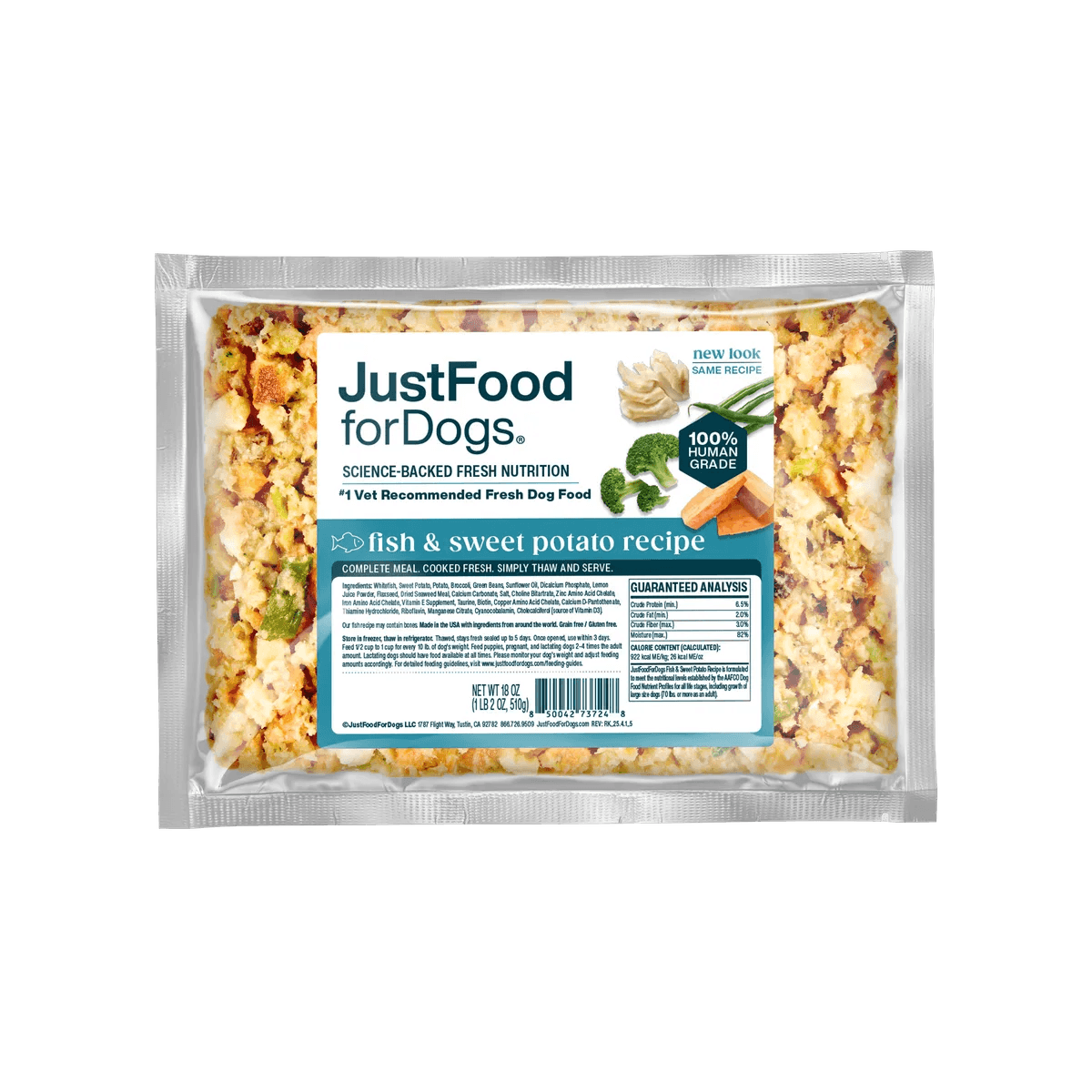
Compare the recipe’s named protein and full ingredient list with your dog’s diet history.
- Whitefish with sweet potato
- Fresh Frozen meals with whole-food ingredients
- View the recipe and life-stage guidance
Petful may earn a commission when you click through to JustFoodForDogs, at no extra cost to you.
| Feature | Why It Matters | What to Look For |
|---|---|---|
| Single named protein | Fewer proteins means fewer chances to react | "Venison," "salmon," or "turkey," not "meat meal" |
| Short ingredient list | Easier to pinpoint a trigger | Roughly 8 to 12 recognizable ingredients |
| Omega-3 fatty acids | Can help support skin and coat | Fish, fish oil, or flaxseed named on the panel |
| Digestible carbohydrates | Gentler on a sensitive gut | White rice, sweet potato, oatmeal, or pumpkin |
| Named fat source | More consistent and digestible | "Chicken fat" or "fish oil," not "animal fat" |
| No artificial additives | Removes common non-nutritive irritants | No artificial colors, flavors, or preservatives |
Grain-Free or Grain-Inclusive?
Grain-free diets are often marketed as the answer for sensitive dogs, but the picture is more nuanced than the packaging suggests. True grain allergies are actually uncommon in dogs. Wheat can be a trigger for some, but grains are far less likely culprits than the top animal proteins, so going grain-free is not automatically the fix many owners assume it is.
There is also an active safety conversation worth knowing about. Since 2018, the U.S. Food and Drug Administration has investigated a potential association between certain grain-free diets (particularly those high in peas, lentils, and other legumes) and a heart condition called dilated cardiomyopathy. The research is ongoing and no cause has been confirmed, but it is a reason to stay thoughtful rather than to chase "grain-free" as a buzzword.
The practical takeaway: choose based on your dog's actual triggers, not the label's marketing. If grains are not your dog's problem, a grain-inclusive recipe with a gentle, digestible carbohydrate is perfectly appropriate. Your veterinarian can help you weigh the options for your individual dog.
Where JustFoodForDogs Fits for Sensitive Dogs
If the goal is a short, transparent ingredient list you can actually see, a fresh, whole-food approach is a natural fit. This is the space JustFoodForDogs is built for. The recipes are made with human-grade, whole-food ingredients and gently cooked rather than rendered into an unrecognizable kibble, so you can identify the protein, the vegetables, and the carbohydrate at a glance. Every recipe is formulated to meet AAFCO nutrient profiles, and several are growth-substantiated for all life stages.
For an everyday starting point, Fresh Frozen works as a simple, minimally processed default. Because the ingredient list is whole and visible, it removes a lot of the guesswork that comes with deciphering a long kibble panel, which is exactly what you want when you are trying to keep variables low for a sensitive dog.
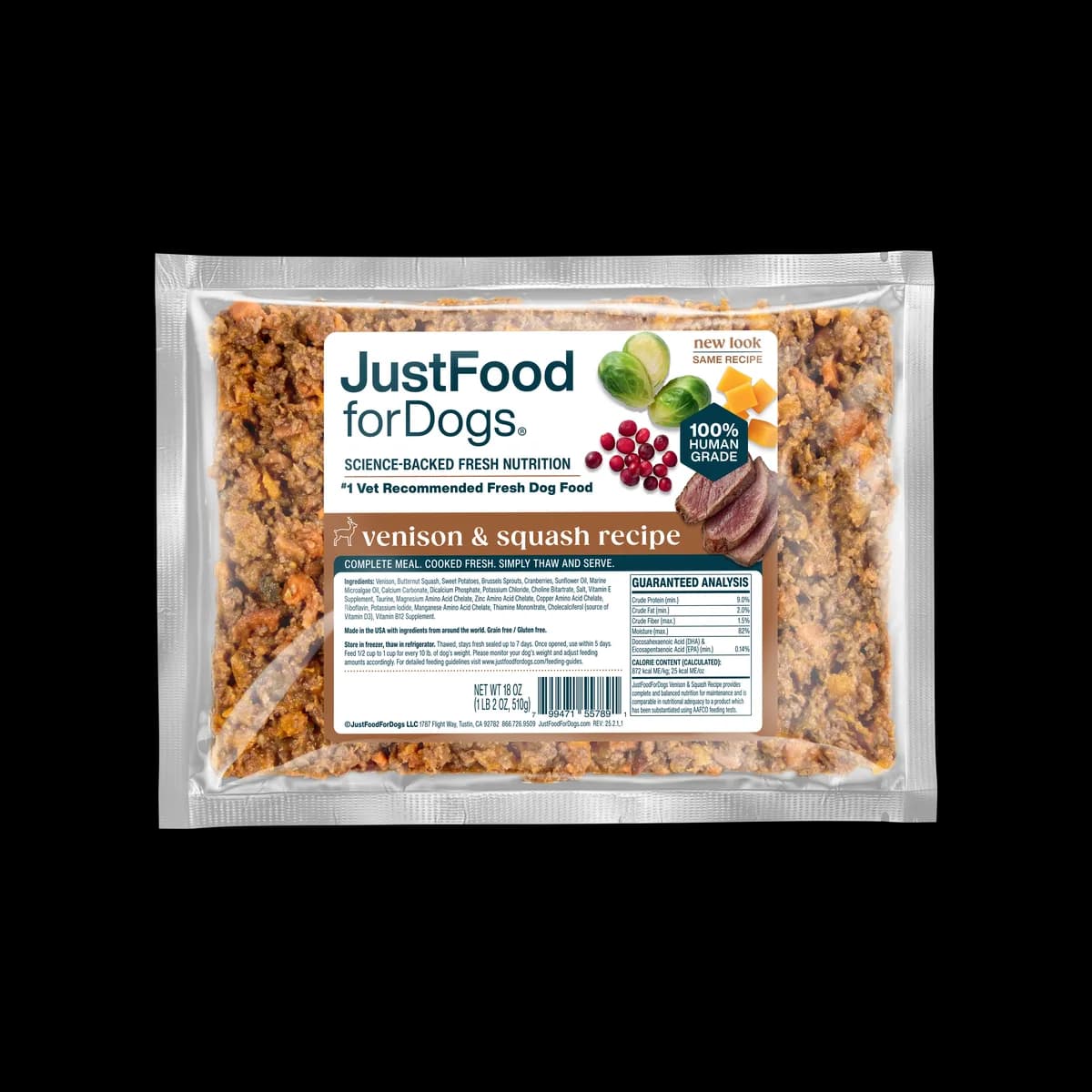
Compare the recipe’s named protein and full ingredient list with your dog’s diet history.
- Venison paired with squash and vegetables
- Fresh Frozen recipe for adult maintenance
- See the complete ingredient list
Novel protein depends on your dog’s own diet history.
Petful may earn a commission when you click through to JustFoodForDogs, at no extra cost to you.
When the plan calls for a genuinely new protein, JustFoodForDogs offers novel-protein Fresh Frozen recipes that fit an elimination approach well. Venison and Squash leads with a protein most dogs have never eaten, while Fish and Sweet Potato pairs a novel protein with the omega-3s that can help support skin and coat. Both use a single named animal protein and may suit some sensitive dogs, but an over-the-counter recipe is not automatically equivalent to a veterinary therapeutic elimination diet and manufacturing cross-contact can matter during diagnostic trials. For the full picture on choosing an unfamiliar protein, see our companion guide to novel protein dog food.
The Research Behind It, and What It Costs
It is worth knowing that JustFoodForDogs backs its approach with published research rather than marketing alone: the company has five peer-reviewed studies plus one abstract examining the digestibility and nutritional adequacy of fresh, whole-food diets. That published evidence base is a strong reason to feel confident that a fresh, whole-food diet is a serious, well-substantiated option for a sensitive dog.
It is fair to note that a fresh, human-grade diet is a premium choice: it costs more than conventional kibble and needs a little fridge or freezer space and planning. The most useful way to weigh that is value per outcome. When a simpler, more digestible diet means fewer flare-ups and a more comfortable dog, most owners find the premium well worth it, and for a sensitive dog that payoff is exactly the point.
- Skin and coat trouble tends to respond to omega-rich, fish-forward recipes, while a genuinely unfamiliar protein like venison is the tool for an elimination trial. If digestion is the main complaint, a gentle, highly digestible recipe with simple carbohydrates is the better fit.
How to Switch Your Dog's Food Safely
Here is the mistake that undoes many well-chosen diets: switching too fast. A sudden change from one food to another is one of the most common causes of digestive upset, and it can make it look like the new food "did not work" when the real culprit was the abrupt swap. Whether you are moving to a limited-ingredient recipe or a fresh diet, transition gradually over 7 to 10 days.
The method is simple. Mix a small amount of the new food into the old, then shift the ratio a little more toward the new food every couple of days, watching your dog's stool and appetite as you go. If you see loosening or upset at any stage, hold at that ratio for a few extra days before continuing rather than pushing ahead.
| Stage | New Food | Former Food |
|---|---|---|
| Days 1-2 | 25% | 75% |
| Days 3-4 | 50% | 50% |
| Days 5-6 | 75% | 25% |
| Days 7-10 | 100% | 0% |
Sensitive dogs sometimes need the slower end of that window, or even a few extra days at each step. There is no prize for rushing. A calm, boring transition is the whole point.
- Loose stool, vomiting, or a sudden loss of appetite during a transition is a signal to pause, not to power through. Hold at the last comfortable ratio, and if symptoms persist beyond a day or two, check in with your veterinarian before continuing.
The Elimination Diet Trial: The Real Diagnostic Tool
For a suspected true food allergy, there is no reliable shortcut. Blood and saliva "allergy tests" marketed for food are widely considered unreliable by veterinary dermatologists. The gold-standard approach is an elimination diet trial, and it should be run under veterinary guidance from start to finish.
The trial works like this. Your vet helps you pick either a single novel protein your dog has never eaten or a therapeutic hydrolyzed diet. Your dog then eats only that food, and nothing else, for roughly 8 to 12 weeks. "Nothing else" is strict: no flavored treats, no table scraps, no flavored chews, and no flavored medications or supplements, because a single stray ingredient can invalidate the whole trial.
Compare the recipe’s named protein and full ingredient list with your dog’s diet history.
- Whitefish with sweet potato
- Fresh Frozen meals with whole-food ingredients
- View the recipe and life-stage guidance
Petful may earn a commission when you click through to JustFoodForDogs, at no extra cost to you.
If the symptoms clear during the trial, the next step is the re-challenge: your vet has you reintroduce the original food. If the symptoms return, you have confirmed a food allergy and often identified the culprit. From there, you can build a long-term diet around proteins your dog tolerates. It takes patience, but it is the only method that actually answers the question.
- The most common reason an elimination diet "fails" is accidental cheating: a chew here, a dropped crumb there, a flavored pill. Everyone in the household, including visitors, needs to be on the same page for the full 8 to 12 weeks, or the results mean nothing.
A Note on Sensitive Stomachs

Not every sensitive dog is itchy. Plenty of dogs have a fundamentally sensitive stomach: they do fine on their skin but react to dietary changes, richer foods, or specific ingredients with gas, loose stool, or an unsettled gut. For these dogs, the priority shifts from novelty to digestibility.
The winning combination for a sensitive stomach is a single, easy-to-digest protein, gentle whole-food carbohydrates like white rice or sweet potato, moderate rather than high fat, and support for the gut in the form of fiber, prebiotics, or probiotics. Consistency helps as much as the recipe itself: steady meal times, measured portions, and slow transitions. If you want to go further on the microbiome side of digestion, our gut health for dogs guide breaks down what actually helps.
Fresh, gently cooked diets are often well tolerated here for the same reason they help elsewhere: the ingredients are simple, minimally processed, and easy to see. A short, single-protein Fresh Frozen recipe with a digestible carbohydrate gives a sensitive stomach fewer things to object to.
- Occasional soft stool is one thing. Persistent vomiting, ongoing diarrhea, weight loss, blood in the stool, or a dog who seems genuinely unwell are reasons to see your veterinarian promptly. Diet changes are for managing sensitivities, not for working around a dog who is sick.
Putting It All Together
Feeding a dog with sensitivities comes down to a few clear moves: understand whether you are dealing with a digestive intolerance or a true immune allergy, simplify the diet to a single named protein with a short ingredient list, favor omega-3s and digestible carbohydrates, and change foods slowly. When a true allergy is on the table, let a vet-guided elimination trial do the diagnosing rather than guessing.
A fresh, whole-food approach like JustFoodForDogs Fresh Frozen fits that philosophy naturally, because the whole point of a sensitive-dog diet is knowing exactly what your dog is eating. Whether you start with an everyday recipe or reach for a novel protein like venison or fish, the best food is the one your dog tolerates, thrives on, and looks forward to.
Decoding the Ingredient Panel: Label Tricks to Know
Knowing what to look for is only half the job. The other half is understanding how a pet food label is actually built, because a panel that reads reassuringly at a glance can still hide the very protein you are trying to avoid. A few decoding habits go a long way for a sensitive dog.
How the Ingredient Order Can Mislead
Ingredients are listed by weight, and water counts. The panel orders ingredients by their pre-cooking weight, which sounds helpful until you remember that fresh meat is roughly 70 percent water. A "fresh chicken" sitting proudly in the first slot can slide well down the real ranking once it is cooked and that water cooks off, while a dry meal listed further along may contribute more actual protein. Read the whole list, not just the headline ingredient.
Watch for ingredient splitting. A manufacturer can break one ingredient into several sub-parts so each piece appears lower on the list. Peas, for instance, may show up separately as pea protein, pea fiber, and pea starch. Added back together they might outweigh the named meat, but split apart they each look minor. The same sleight of hand shows up with different grain and potato fractions.
Hidden Proteins and Marketing Claims
Hunt for hidden proteins. A chicken-sensitive dog can still react to "poultry meal," "egg product," broth, "animal digest," or a vague "natural flavor," any of which can carry the protein you are working to remove. If a source is not clearly named to a single animal, treat it as an unknown rather than assuming it is safe.
Know what the front-of-bag claims legally mean. Phrases like "limited ingredient" and "hypoallergenic" are marketing language, not regulated definitions, so always verify them against the panel itself. Product naming does carry rules, though: a "chicken dinner" or "recipe" needs far less chicken than a food simply named "chicken," and "with chicken" or "chicken flavor" can signal only a trace. Finally, confirm the recipe is formulated to meet AAFCO nutrient profiles, so a simpler ingredient list never comes at the cost of complete, balanced nutrition.
Whole-food, gently cooked recipes sidestep much of this decoding work by keeping the list short and visible, which is part of why they can help support a lower-stress routine for an owner reading carefully.
- The front of the bag is designed to sell, while the ingredient panel and the AAFCO statement are where the real information lives. When a claim on the front and the fine print on the back seem to disagree, trust the fine print.
How Vets Diagnose a Food Sensitivity
If you have searched for a dog food allergy test or a dog food intolerance test, you have probably found at-home kits that ask for a cheek swab, a few drops of saliva, or a snip of fur, then promise a tidy list of foods to avoid. They are appealing because they feel fast and definitive. Unfortunately, the science does not back them up. Independent studies have mailed samples of fur and plain saline, with no real patient behind them at all, to these labs and still received long lists of "reactive" foods, which tells you the results are not measuring a genuine immune response.
Blood tests that measure food-specific antibodies run into the same wall for food allergies. Veterinary dermatologists widely consider them unreliable for diagnosis, because a dog can carry antibodies to a protein without ever reacting to it clinically, and the panels routinely flag foods a dog has never even eaten. That does not mean all allergy testing is useless: blood and skin testing are genuinely helpful for environmental triggers like pollen and dust. For food specifically, though, they cannot give you a trustworthy answer.
So how do vets actually diagnose it? The gold standard is a vet-guided elimination diet, which we walk through step by step below. In short, your veterinarian helps you choose a single novel protein or a therapeutic hydrolyzed recipe, your dog eats only that for roughly 8 to 12 weeks, and the symptoms do the talking. It is slower than a swab in the mail, but it is the only method that reflects how your individual dog's body actually responds to food. For the allergy-specific recipes a vet may discuss during that process, our guide to the feeding dogs with allergies goes deeper.
- Saliva, hair, and blood "food sensitivity" kits have not been shown to reliably identify canine food allergies, and a false result can send you chasing the wrong ingredient for months. Put that effort into a properly run elimination trial with your veterinarian instead.
How Long Until You See Improvement
One of the hardest parts of feeding around a sensitivity is the waiting, so it helps to set realistic expectations up front. The timeline depends on which system is affected, because the gut and the skin heal on very different clocks.
Gut and Skin Heal on Different Clocks
Digestive signs usually turn around first. When a food intolerance is the issue, many dogs show calmer stools and less gas within a few days to about two weeks of removing the trigger and settling onto a gentle, digestible diet. The gut lining renews itself quickly, so the payoff for a simpler recipe often arrives fast.
Skin and coat take much longer, and this is exactly where owners tend to lose faith too early. A true food allergy that shows up as itching, ear flares, or recurrent skin infections can take a full 8 to 12 weeks to clear, and sometimes longer. There are good reasons for the lag: inflamed skin has to calm down, secondary yeast or bacterial infections have to resolve (often with your vet's help), and the coat has to grow back through its normal cycle. Improvement usually comes in stages rather than overnight, less scratching first, then healthier skin, then a glossier coat.
The practical move is to commit to the full trial window before judging a diet, keep the food strict the entire time, and track progress with quick weekly notes or photos so you can see the slow gains you might otherwise miss. If you see no change at all after 12 strict weeks, that is useful information too, and a reason to check back in with your veterinarian.
- 1Digestive upset from a food intolerance often eases within a few days to two weeks
- 2Skin and coat signs from a true food allergy can take 8 to 12 weeks or longer to fully settle
- 3Track progress weekly and give any elimination diet the full trial window before deciding it did not work
Feeding Puppies and Choosing Wet vs. Dry for Sensitive Dogs
Two questions come up constantly once a dog's diet is under the microscope: what changes for a puppy, and does wet or dry food matter for a sensitive dog? Both deserve a clear answer.
Puppies With a Sensitive Stomach
A puppy sensitive stomach is extremely common, and most of the time it is not a food allergy at all. Puppies have immature digestive systems, they explore the world with their mouths, and they are still building the gut bacteria that help them process food, so loose stool and the occasional upset are almost a rite of passage. Abrupt diet changes, overfeeding, the stress of a new home, and intestinal parasites are all far more likely culprits than a true allergy in a young dog.
That said, the fix for a growing puppy is different from an adult, because you cannot simply strip the diet down. Puppies need complete, balanced nutrition to grow well, which means any food you choose should be formulated to meet AAFCO nutrient profiles for growth or all life stages, not an adult-only or improvised homemade recipe that could leave gaps. If you suspect more than a passing upset, loop in your veterinarian early: they can rule out parasites, confirm the food is appropriate for growth, and guide any diet change so it does not shortchange your puppy's development. A gentle, highly digestible recipe built around a single named protein is usually the safest starting point.
Wet, Dry, or Fresh for a Sensitive Dog?
Format matters less than ingredients, but it is not irrelevant. Here is how the common options compare for a sensitive dog.
| Format | Strengths | Keep in Mind |
|---|---|---|
| Dry (kibble) | Convenient, affordable, long shelf life | More processed, and long ingredient lists can hide overlapping proteins |
| Wet (canned) | High moisture, palatable, often simpler recipes | Costs more per calorie, and open cans need refrigeration |
| Fresh, gently cooked | Whole, visible ingredients and easy to keep single-protein | A premium option that needs fridge or freezer space |
The most important rule holds across all three: read the ingredient list, not just the texture. A wet or canned sensitive food can be a great choice, the extra moisture is gentle on digestion and can tempt a picky or unwell dog to eat, but a can with four overlapping proteins is no better than a kibble with the same problem. Whichever format you land on, favor a short list built around one named protein.
This is also where a fresh, whole-food option sits comfortably in the middle. JustFoodForDogs Fresh Frozen is gently cooked rather than rendered, so it carries the moisture and palatability of wet food with an ingredient list you can see at a glance, and several recipes are formulated to meet AAFCO nutrient profiles for all life stages, which makes them appropriate for growing puppies as well as adults.
When It Might Be More Than a Sensitivity: A Note on IBD
Most food sensitivities, whether an intolerance or a true allergy, are manageable at home once you and your vet land on the right diet. But a small number of dogs with ongoing digestive trouble have something more serious going on, and inflammatory bowel disease (IBD) is the one worth naming.
IBD is a chronic inflammation of the digestive tract, and it is a medical condition, not a simple reaction to one ingredient. Its signs can overlap with a food sensitivity (recurrent vomiting, chronic diarrhea, weight loss, poor appetite), which is exactly why it can be missed. The difference is that IBD needs a real veterinary workup to diagnose, sometimes including bloodwork, imaging, or a biopsy, and its management is directed by your vet rather than by trial and error with over-the-counter foods. A therapeutic diet can be part of that plan and can help support a more comfortable gut, but it works alongside veterinary care, not instead of it. If your dog has persistent digestive symptoms or is losing weight despite a careful diet, that is a conversation to have with your veterinarian promptly.
Feed a complete, balanced recipe built around a single named protein your dog has not reacted to before, with a short ingredient list and no unnecessary fillers. Whole-food, gently cooked options like JustFoodForDogs Fresh Frozen, or a novel-protein recipe such as venison or fish, give many sensitive dogs a simpler, more digestible starting point. Always confirm the plan with your veterinarian, especially if symptoms are ongoing.
A dog with a sensitive stomach usually does best on a highly digestible, moderate-fat recipe built on a single protein, gentle carbohydrates like white rice or sweet potato, and added fiber or probiotics that can help support healthy digestion. Introduce any new food slowly over 7 to 10 days and keep meal times consistent so the gut has fewer surprises to manage.
Chronically itchy ears can be linked to a food reaction, so a limited-ingredient or novel-protein diet paired with omega-3 fatty acids is a common food-based approach that can help support a healthy skin barrier. Because itchy ears can also come from yeast, mites, moisture, or environmental allergies, see your veterinarian before assuming food is the cause.
The top 3 food allergies in dogs are beef, dairy, and chicken. They top the list simply because they are the proteins dogs eat most often, and repeated exposure is what allows an allergy to develop. Lamb, egg, wheat, and soy round out the common triggers.
The best food for a sensitive stomach is one that is complete, balanced, and easy to digest: a single recognizable protein, simple whole-food carbohydrates, moderate fat, and no artificial additives. Fresh, gently cooked diets are often well tolerated because the ingredients are minimally processed, and your vet may recommend a specific therapeutic recipe if the upset is persistent.
There is no single meat that is universally poisonous to dogs, but the one to avoid is raw or undercooked pork, which can carry the parasite that causes trichinosis, along with heavily processed, salted, or seasoned meats like bacon and deli slices. Note that beef, dairy, and chicken are not toxic: they are simply the most common allergy triggers. Always serve meat plain and fully cooked, and never feed cooked bones.
The 15-minute rule is a feeding method where you put your dog's food down for about 15 minutes, then pick up whatever is left until the next scheduled meal. It can help support a consistent routine, discourage grazing, and make it easier to monitor appetite, which is useful when you are watching a sensitive dog for changes. Use it with vet guidance if your dog is losing weight or refusing meals.
The "9 major foods" figure refers to human food allergens, not canine ones. In people, the FDA's "Big 9" (milk, eggs, fish, shellfish, tree nuts, peanuts, wheat, soybeans, and sesame) account for the large majority of allergic reactions. Dogs are different: their most common food allergens are animal proteins, led by beef, dairy, and chicken, with wheat, lamb, egg, and soy also appearing. If you are choosing a food for a sensitive dog, focus on the canine list rather than the human one.
Yes, a dog can start reacting to a food it has eaten happily for months or even years. True food allergies actually develop through repeated exposure, so the immune system needs time with an ingredient before it treats it as a threat, which is why the trigger is usually a familiar protein rather than a brand-new one. Intolerances can also appear or worsen with age, illness, or changes in gut health. A sudden shift in stool, itching, or appetite is worth discussing with your veterinarian.
The top 5 food sensitivities in dogs are beef, dairy, chicken, wheat, and lamb, with egg and soy following close behind. Notice that four of the five are common animal proteins, because sensitivities develop through repeated exposure to the foods dogs eat most, not from rare or exotic ingredients. That is why switching to a single, unfamiliar protein is often the first step in feeding a sensitive dog.
BVMS, MRCVS
Dr. Pippa Elliott, BVMS, MRCVS, is a veterinarian with nearly 30 years of experience in companion animal practice. Dr. Elliott earned her Bachelor of Veterinary Medicine and Surgery from the University of Glasgow. She was also designated a Member of the Royal College of Veterinary Surgeons. Married with 2 grown-up kids, Dr. Elliott has a naughty Puggle named Poggle, 3 cats and a bearded dragon.
Sign up for expert-backed reviews and safety alerts all in one place.


A Final Word (Disclaimer)
At Petful, our review integrity is paramount; we never exchange special treatment in our reviews for monetary or material rewards.
Nonetheless, when our readers click through to online merchants (including Chewy or Amazon), we receive a referral commission. This supports the running of our free blog, and we appreciate your backing.