Mucus in Cat Poop: What It Means and When to Call Your Vet
Learn how to describe mucus in your cat's stool, distinguish bowel movements from unsuccessful litter-box attempts, and prepare useful observations and samples for your veterinarian.

BVMS, MRCVS
Petful is reader supported. As an affiliate of platforms like Amazon and Chewy, we may earn a commission when you buy through links on this page. There is no extra cost to you.
Sponsored by Animal Biome. This article contains affiliate links. Petful may earn a commission if you purchase through these links.
Mucus in cat poop can look like a clear, whitish, or jelly-like coating. It may accompany intestinal irritation, but the coating alone cannot identify the cause. Check your cat's appetite and behavior, whether the stool is formed or loose, and whether normal amounts of urine are appearing in the litter box.
The most important distinction with mucus in cat poop is between an unusual bowel movement and a cat repeatedly straining without producing much. Blood, vomiting, pain, poor appetite, or unsuccessful attempts to urinate change the urgency and call for veterinary advice.

Sign up for expert-backed reviews and safety alerts all in one place.
What mucus in cat poop looks like
Mucus is a slippery substance produced by the intestine. When visible on stool, it may form a shiny film, pale strands, or a soft jelly around the outside. Clear mucus can be hard to see once litter sticks to it; white material is not automatically a worm.
Slimy, gooey poop can mean mucus is accompanying intestinal irritation. It can also be difficult to separate a coating from loose stool once the bowel movement has been covered. Describe what you actually saw before assigning a label.
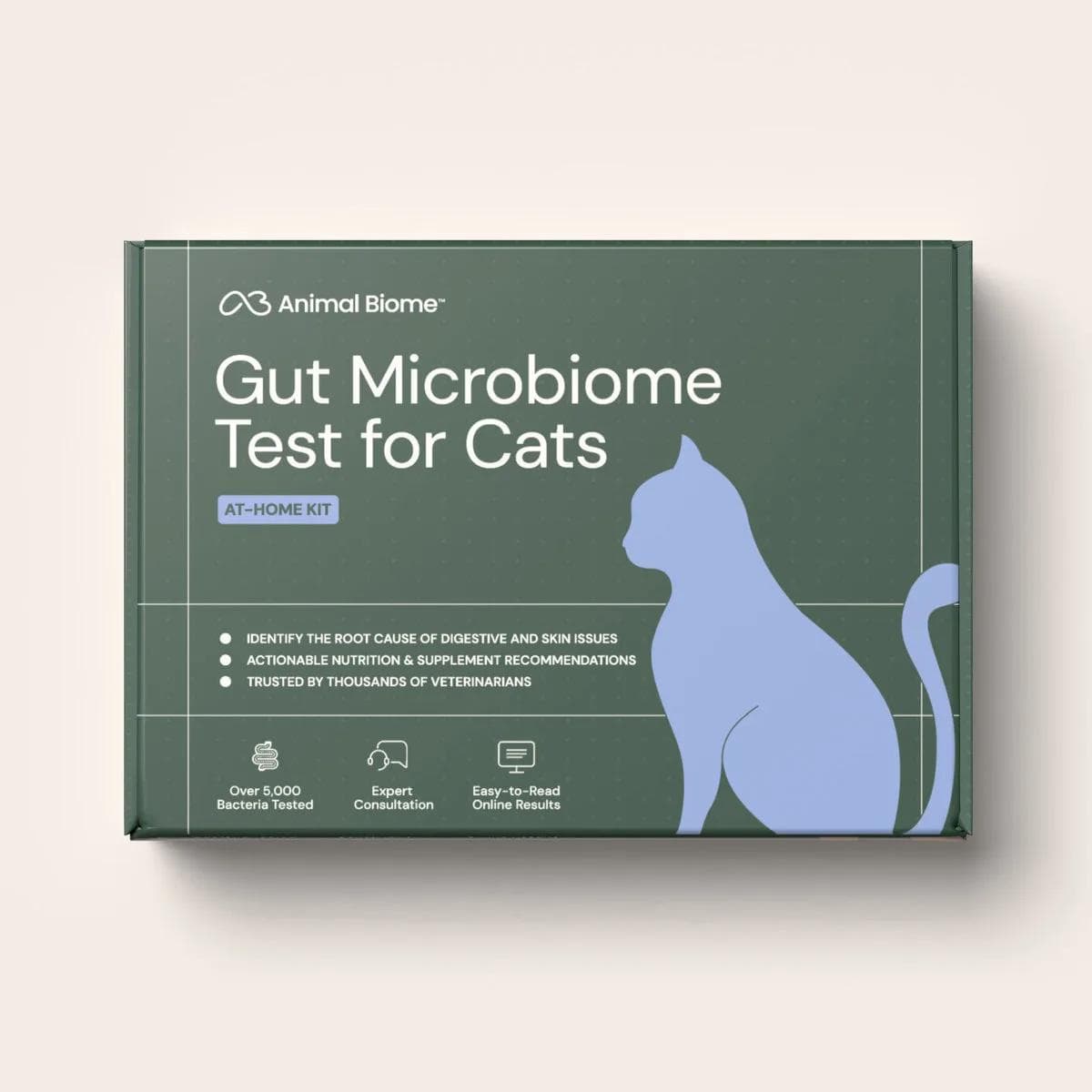
Bacterial microbiome profiling for an informed ongoing support discussion; not a parasite diagnostic test.
Petful may earn a commission when you click through to Animal Biome, at no extra cost to you.
Useful details include:
- Whether the stool held its usual shape or spread into a soft pile.
- Whether mucus coated the outside or appeared mixed throughout.
- Whether this was one bowel movement or a repeated pattern.
- Whether other symptoms appeared at the same time.
An at-home bacterial profile, such as the Animal Biome Gut Microbiome Test for Cats, can inform an ongoing gut-health discussion. It answers a different question from what a visible coating means.
When blood, vomiting, or straining changes the urgency
Blood and mucus in cat poop deserve a call to your veterinarian, particularly if the stool is loose or the problem repeats. A cat passing a jelly-like substance with blood and vomiting needs more than a home-treatment experiment. Yellow vomit does not make the situation less important or identify the cause.
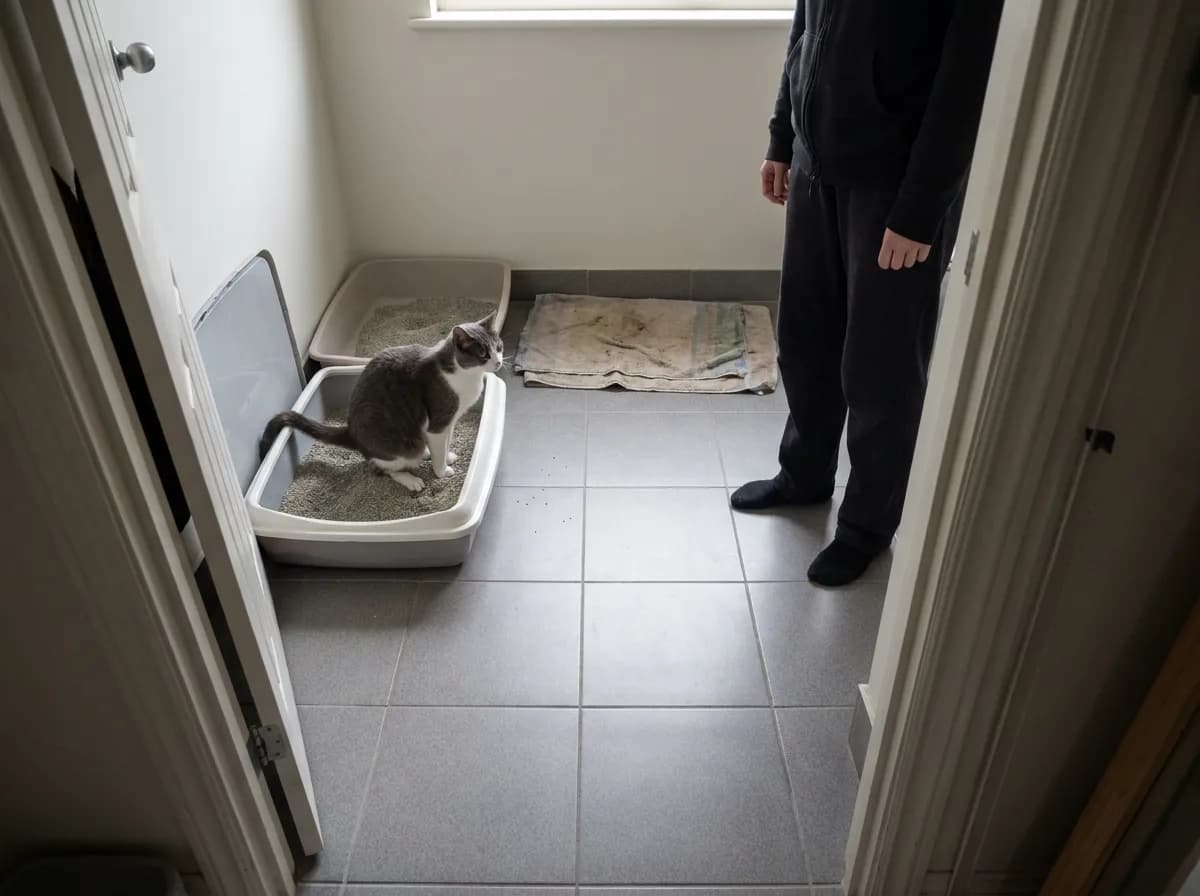
Blood, vomiting, poor appetite, weakness, and pain all change the urgency of mucus in cat poop. A kitten's vulnerability to dehydration makes reduced intake and continuing fluid losses reasons for early veterinary advice. A cat acting normal may still need assessment for recurring mucus. Look beyond whether they walk to the food bowl: note how much they eat, whether they hide more, and whether litter-box visits increase. Kittens and cats with existing illness have less margin for a prolonged digestive upset.
- Repeated vomiting, poor appetite, weakness, or pain needs prompt veterinary advice. Repeated straining with little or no urine is an emergency. Do not assume the problem is constipation because your cat is in the litter box.
Cornell's feline diarrhea guidance emphasizes that associated illness matters when assessing abnormal stool. Contact the clinic earlier when your cat appears unwell rather than waiting for a particular number of bowel movements.
Why cats develop mucus in their stool
The colon is the large intestine. Inflammation there, called colitis, can increase mucus production and create an urgent need to pass small amounts of stool.
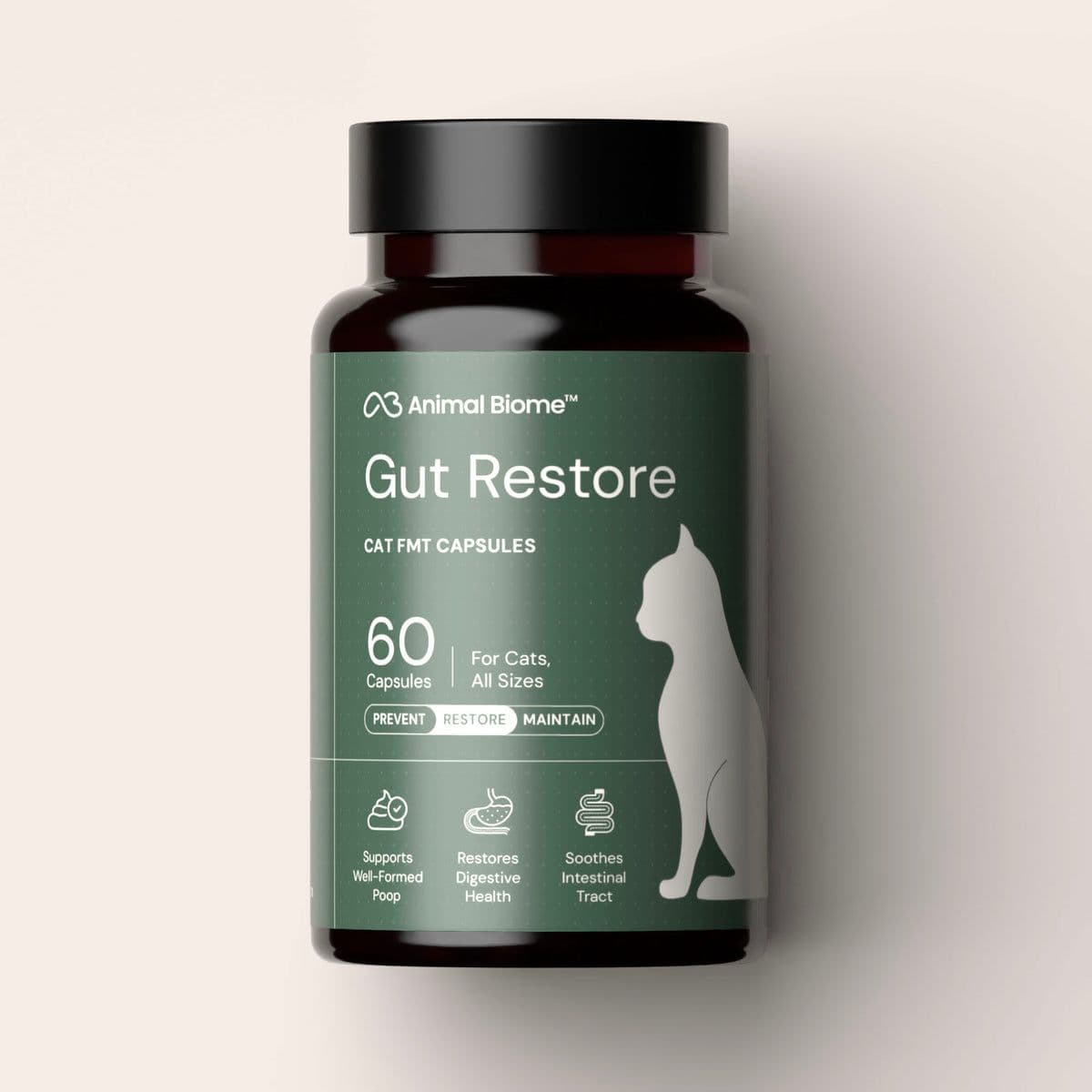
Cat-specific microbial restoration for an appropriate veterinary-guided plan.
Petful may earn a commission when you click through to Animal Biome, at no extra cost to you.
The MSD Veterinary Manual describes several possible causes, so colitis is not a diagnosis you can confirm from the litter box.
Microbiome restoration may be part of an individualized plan for ongoing digestive problems. Animal Biome Gut Restore for Cats contains cat-specific microbes from screened donor fecal material, rather than a conventional single-strain probiotic.
Diarrhea with mucus can occur when an irritated colon secretes extra mucus while altered fluid absorption and bowel movement produce loose stool. This explains the combination without identifying the cause. The investigation may consider:
- Abrupt food changes, unfamiliar treats, or individual dietary responses.
- Parasites and infections.
- Medication exposure and the timing of new symptoms.
- Inflammation or other ongoing intestinal disease.
Yellow mucus does not identify one of these causes. Similarly, seeing mucus after deworming does not tell you whether treatment explains the change or whether further investigation is needed.
Keep a record of what preceded the first abnormal stool. A food change and a new medicine started on the same day are both relevant, even if one initially seems the obvious explanation. For persistent episodes, our guide to recurring diarrhea in cats explains the broader assessment.
Check what your cat is actually passing in the litter box
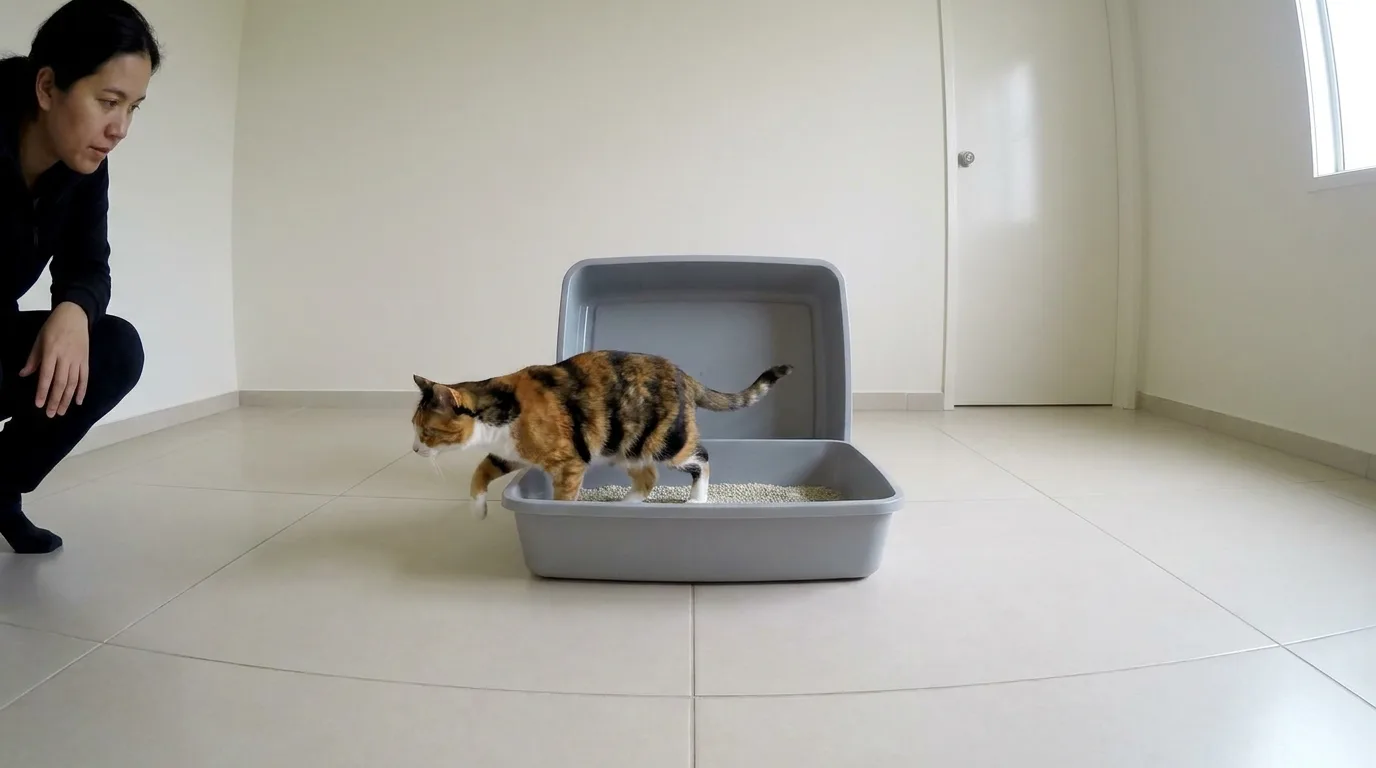
Watch the output rather than trying to interpret posture alone. A cat may crouch and strain when passing stool or urine. In a shared box, the presence of urine clumps does not prove that the cat you are concerned about is urinating normally.
| Stool patterns or urine output | What to check |
|---|---|
| Coated but formed stool | Note whether mucus is isolated or recurring and identify the affected cat. |
| Small loose stools | Record frequency, urgency, mucus, and any blood. |
| Hard dry pellets | Report effort, discomfort, and a change from the usual stool pattern. |
| Repeated unsuccessful attempts | Check whether any urine is passing; do not assume this is a stool problem. |
| Urine clumps | Record which cat produced them when possible, rather than relying on a shared-box total. |
Hard pellets versus frequent loose stools
Constipation can involve infrequent passage of hard, dry stool and difficult defecation. Colonic irritation may instead cause repeated visits with small loose stools or mucus. Both can look like straining from across the room, so stool consistency is useful information.
Hard dry pellets do not justify giving an enema or laxative without instructions. Some products used in people are dangerous for cats, and the treatment depends on the underlying problem.
Repeated unsuccessful attempts need assessment
A suspected poop blockage needs a veterinary examination: repeated unsuccessful attempts to pass stool, vomiting, abdominal pain, or a worsening general condition can raise concern, but you cannot confirm an intestinal obstruction at home. The veterinarian may use imaging to distinguish a blockage from constipation or another problem.
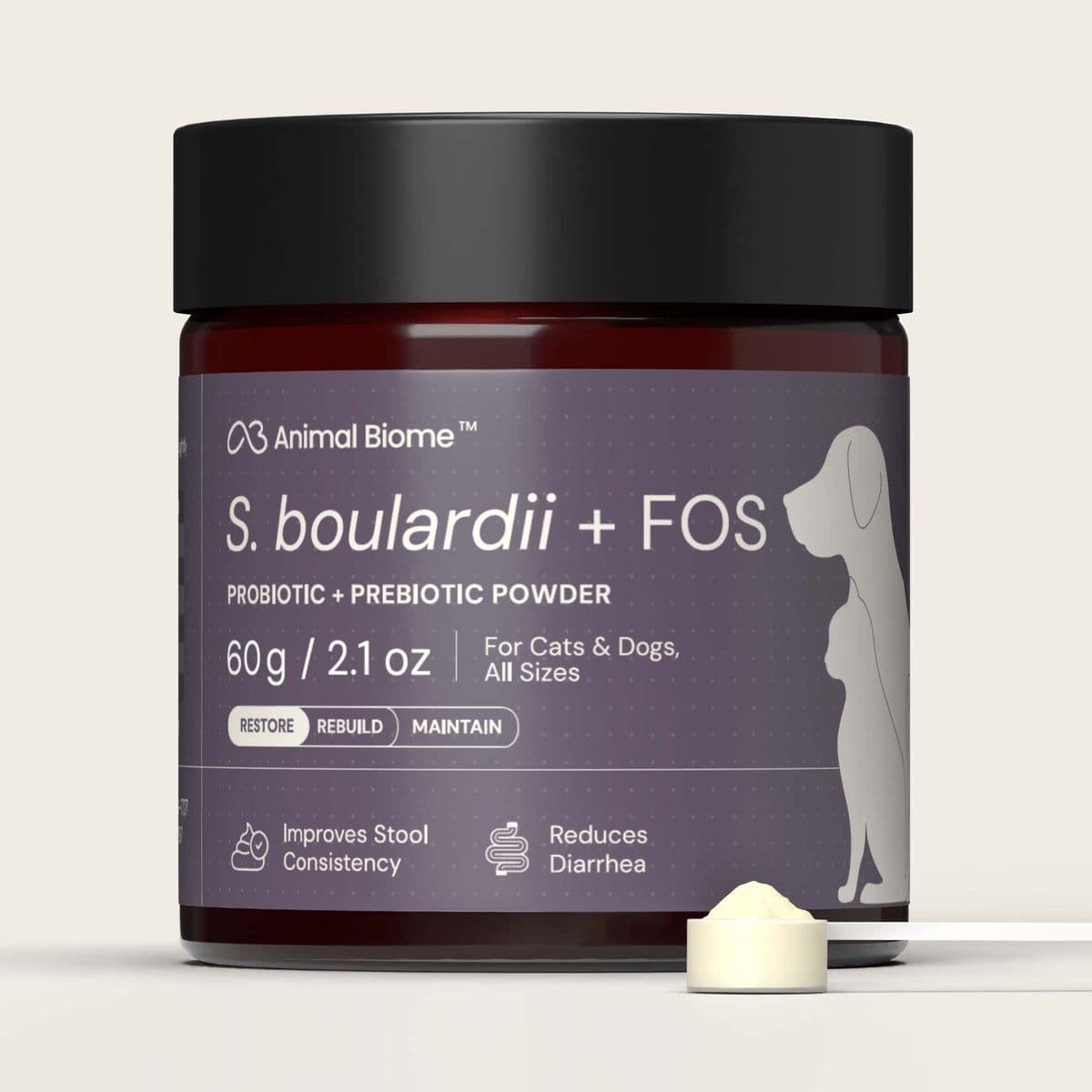
A yeast probiotic plus prebiotic fiber for product-specific digestive support.
Petful may earn a commission when you click through to Animal Biome, at no extra cost to you.
Check both types of output:
- Record stool passage, including whether small loose stools or hard pellets actually appear.
- Repeated attempts with little or no urine can be a urinary emergency even if a small stool passed earlier. Do not wait for a bowel movement to decide whether your cat can urinate.
Urinary obstruction is another crucial concern. The 2025 iCatCare consensus guidelines note that urinary straining can be mistaken for constipation. If little or no urine is passing, seek emergency help. Our guide to urinary signs in the litter box provides further context.
For digestive support after the immediate assessment, Animal Biome S. boulardii + FOS Powder offers a yeast probiotic and prebiotic fiber in a meal-mixed format.
What to do before the veterinary visit
If your cat is pooping a jelly-like substance with blood or vomiting, contact the clinic for a treatment plan rather than trying several home remedies. Explain whether your cat is eating, drinking, passing urine, and behaving normally. That helps the team decide how quickly an examination is needed.
Keep fresh water accessible and ask what to feed. Do not routinely fast your cat or give human antidiarrheals, enemas, or laxatives. If an existing prescription is involved, ask the prescriber what to do rather than independently changing it.
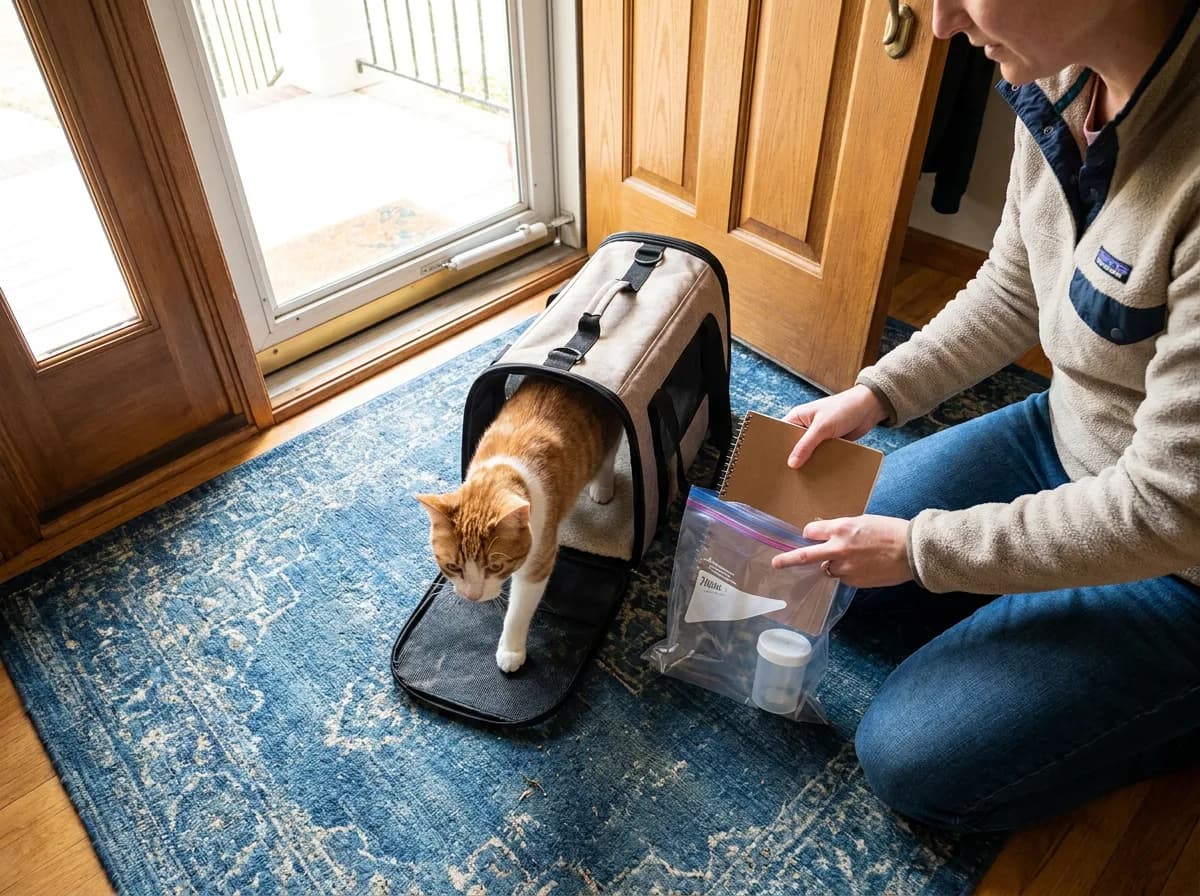
Before leaving, gather:
- A photo showing the stool before it was heavily covered in litter.
- A fresh sample, if requested, in the container the clinic recommends.
- The names and dates of food, treats, medicines, and supplements.
- The dewormer name and when it was last given.
- A short record of stool and urine output.
- 1Identify the affected cat before attributing a shared-box sample whenever possible.
- 2Ask how to collect and store a fresh sample.
- 3Include the dewormer name, food history, and other medicines in your visit notes.
A record kept with MyPetID.ai can help family members share the same health history. The goal is a reliable account of what happened, not a perfect diary.
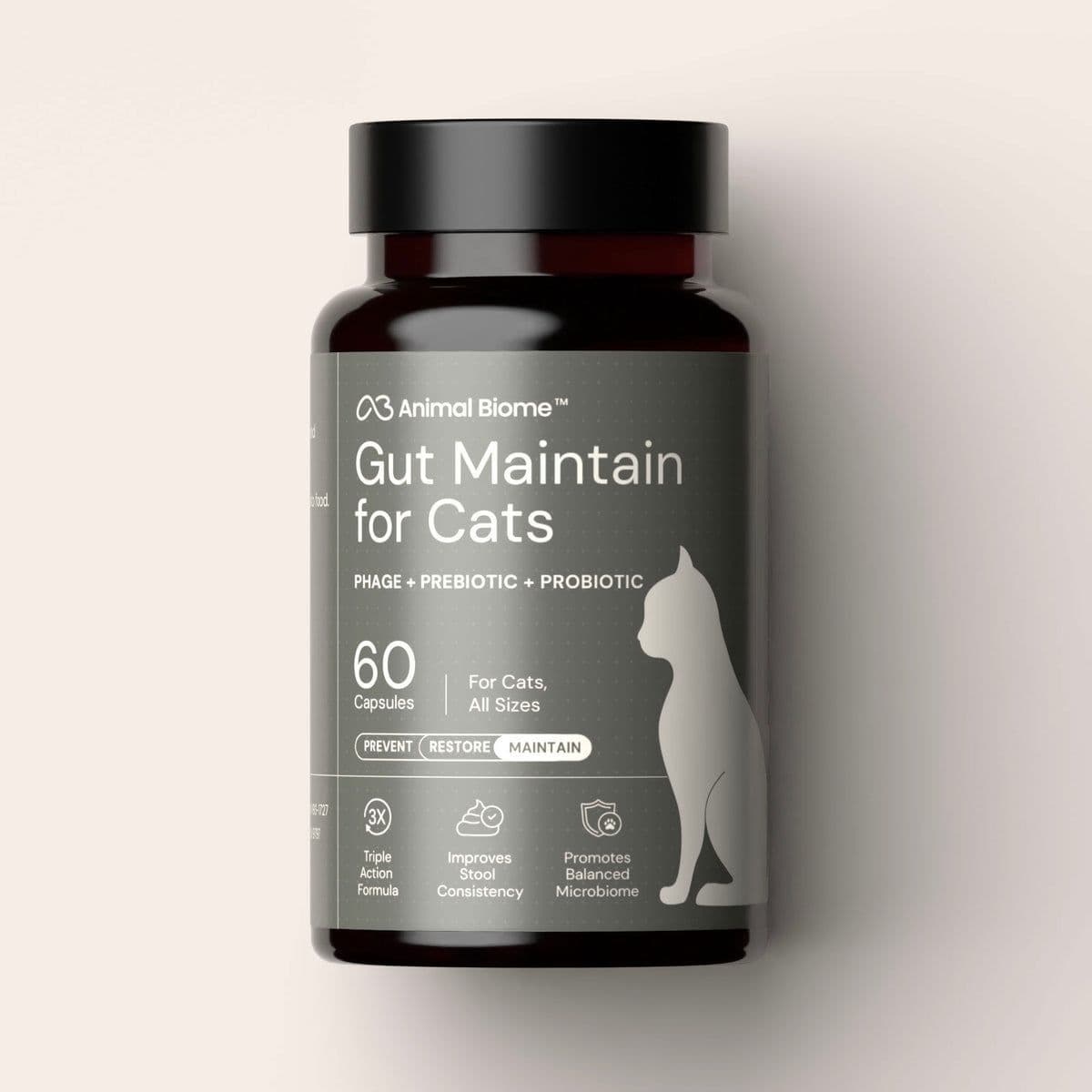
Daily microbiome maintenance after the immediate concern is addressed.
Petful may earn a commission when you click through to Animal Biome, at no extra cost to you.
For cats whose digestive signs are already relatively well controlled, Animal Biome Gut Maintain for Cats is a separate option for routine microbiome support.
What stool tests and microbiome testing can tell you
A stool sample can be used for different tests. Your veterinarian selects the method according to the suspected problem; submitting a sample does not automatically mean every possible cause is being checked.
Fecal testing may investigate parasites through microscopy, antigen testing, or other methods. The Companion Animal Parasite Council explains that Giardia can be challenging to detect because shedding is intermittent. A negative result sometimes needs interpretation alongside the history or additional testing.
For a multicat household, make the observation and testing plan specific:
- Identify which cat passed the stool when possible, and label the sample accordingly.
- Tell the clinic if the sample came from a shared box and attribution is uncertain.
- Ask whether the requested clinical stool test investigates parasites or another suspected problem; microbiome profiling describes bacterial composition.
Our guide to intestinal worms in cats explains why visible appearance is only part of parasite assessment.
What a bacterial profile adds
A microbiome test instead describes bacterial composition and relative abundance. Animal Biome's feline test uses a stool sample to produce that bacterial profile. It does not diagnose intestinal worms, Giardia, food allergies, or an enzyme deficiency. Share the report with your veterinarian so its findings can be considered alongside clinical tests and your cat's symptoms.
Ask what question each test is intended to answer. That makes the next step easier to understand and helps avoid assuming that two tests using stool are interchangeable.
If you are considering a cat gut microbiome test, start with the decision its results would inform. Is the immediate concern a parasite, or is your veterinarian considering bacterial composition alongside other findings? Our cat gut health guide provides broader context. Bring the clinical test results and medication history when discussing whether an additional bacterial profile would be useful.
Supporting digestion after your vet identifies the cause
Cause-directed digestive support starts with treating the reason for the mucus. A parasite may require specific treatment, while a diet-responsive problem needs a consistent feeding plan. Ask whether to keep the familiar complete cat food or use a prescribed gastrointestinal diet, and keep fresh water available. Report reduced intake rather than withholding food to rest the bowel. Hydration support may require treatment at the clinic if your cat is losing fluid or not drinking adequately.
Keep the routine consistent enough to see whether your cat is improving. Appetite, comfort, and normal litter box output are as important as the disappearance of mucus.
Animal Biome's current product labels describe these distinct formulations and administration directions:
- S. boulardii + FOS Powder combines the CNCM I-3799 yeast strain with prebiotic fiber. Follow its weight-based directions rather than borrowing a dose from another product.
- Gut Maintain for Cats combines S. boulardii, a prebiotic, and a phage blend for an ongoing maintenance routine.
- Gut Restore for Cats provides a diverse community of screened cat-specific microbes. Its capsules are given whole according to the product directions.
These roles do not mean every cat needs all three supplements. Choose support around your cat's diagnosis, current diet, and response, and agree on when to reassess if mucus or other signs continue.
Questions about mucus in cat poop
An every-other-day pattern cannot be judged normal from frequency alone. Compare it with your cat's usual schedule, stool consistency, and comfort. A new reduction in frequency, hard dry stool, straining, or appetite changes deserves veterinary advice. If this is a longstanding comfortable pattern, discuss it at the routine visit rather than giving a laxative simply to produce a daily stool.
Some cats may continue eating, particularly with a partial blockage or early in the problem. Appetite cannot rule it out. A veterinary examination is needed when other signs suggest obstruction, even if your cat accepts a treat.
Yes. A litter coating can obscure the stool surface and absorb moisture. If you happen to see the bowel movement, a photo before covering can preserve useful detail. Do not disrupt or distress your cat to obtain a photograph.
You may notice it around the time of treatment, but that does not establish the reason. Report the product and dose, when it was given, and any continuing diarrhea. The veterinarian can decide whether the original problem or a different cause needs attention.
Try to identify the affected cat through calm, separate observation when practical, using familiar resources. Label samples accurately and tell the clinic if attribution is uncertain. Do not postpone urgent care while trying to solve the household mystery.
No. Appearance alone cannot confirm worms or exclude them. Stool testing chosen for the suspected parasite is more informative than the coating's color. Your veterinarian may recommend testing even when no recognizable worms are visible.
BVMS, MRCVS
Dr. Pippa Elliott, BVMS, MRCVS, is a veterinarian with nearly 30 years of experience in companion animal practice. Dr. Elliott earned her Bachelor of Veterinary Medicine and Surgery from the University of Glasgow. She was also designated a Member of the Royal College of Veterinary Surgeons. Married with 2 grown-up kids, Dr. Elliott has a naughty Puggle named Poggle, 3 cats and a bearded dragon.
Sign up for expert-backed reviews and safety alerts all in one place.
A Final Word (Disclaimer)
At Petful, our review integrity is paramount; we never exchange special treatment in our reviews for monetary or material rewards.
Nonetheless, when our readers click through to online merchants (including Chewy or Amazon), we receive a referral commission. This supports the running of our free blog, and we appreciate your backing.