Colitis in Dogs: Signs, Causes, and What to Feed During a Flare-Up
Colitis in dogs causes urgent, mucus-streaked diarrhea. Learn the stool signs, common causes like stress and parasites, when to call your vet, and a phase-by-phase plan for what to feed during a flare-up.

BVMS, MRCVS
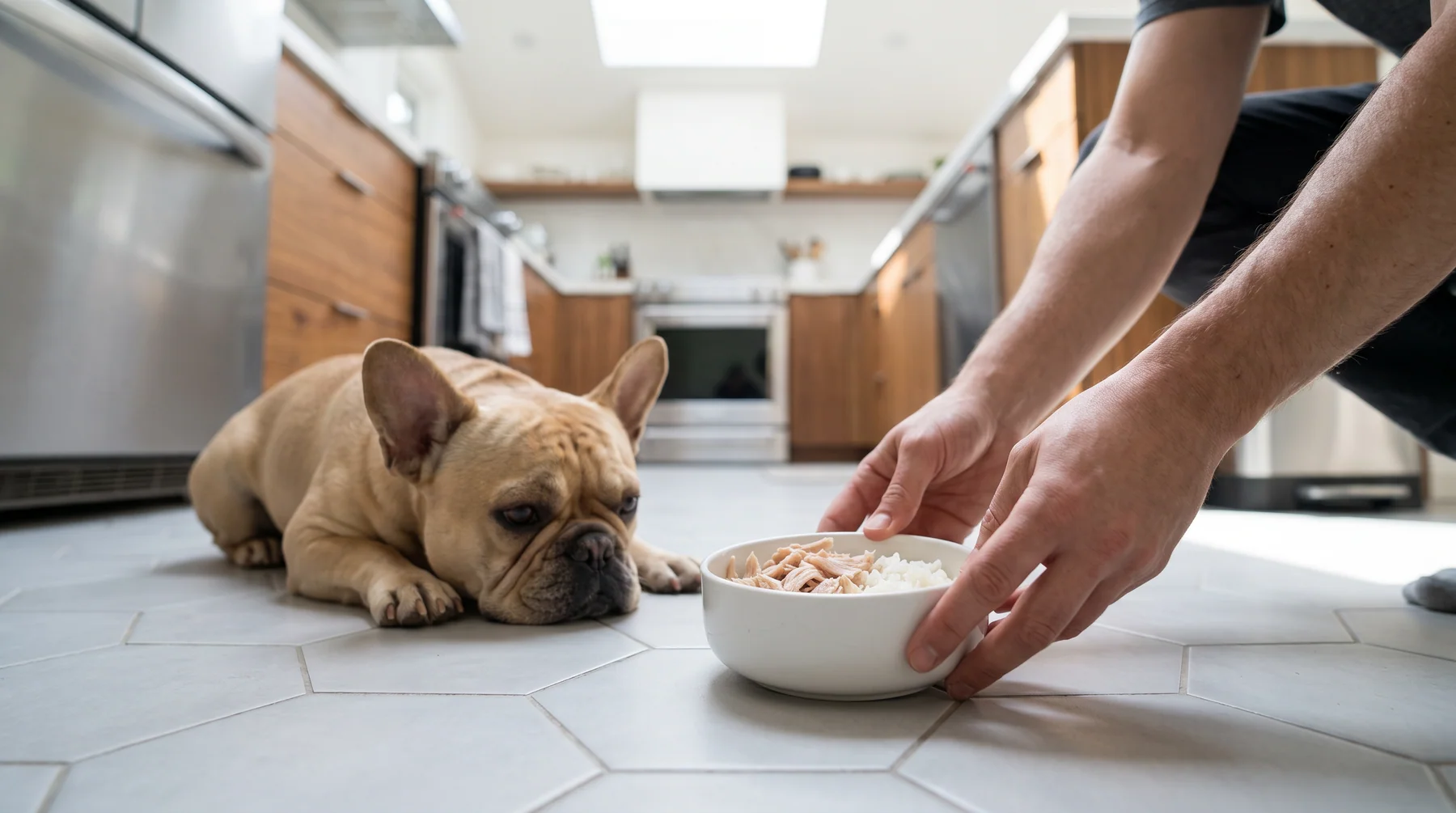
Small, plain, low-fat meals are the usual starting point while a colitis flare-up settles.
Petful is reader supported. As an affiliate of platforms like Amazon and Chewy, we may earn a commission when you buy through links on this page. There is no extra cost to you.
Sponsored by JustFoodForDogs. This article draws on published veterinary and nutrition sources. Petful may earn a commission through links in this article.
Colitis in dogs is one of the most common reasons a dog suddenly needs to go out again and again, strains to pass a small amount of soft stool, and leaves streaks of mucus or bright red blood behind. It looks alarming, but most short episodes settle within days once the trigger is removed and the gut gets a gentle, predictable diet.
The decisions that matter are recognizing the stool pattern, knowing which signs need a veterinarian today, and feeding well during and after the flare-up. Many veterinarians move recovering dogs onto highly digestible, low-fat meals, and a gentle fresh recipe such as JustFoodForDogs Sensitive Stomach is one option a veterinarian may suggest once the cause has been checked.

Sign up for expert-backed reviews and safety alerts all in one place.
What Is Colitis in Dogs?
Colitis is inflammation of the colon, the last part of the large intestine, where water is pulled back out of stool. When the colon lining is inflamed it cannot absorb water or hold stool normally, so the result is large-bowel diarrhea: frequent, urgent, small stools, often with mucus and sometimes fresh blood (VCA Animal Hospitals).
- 1Colitis is inflammation of the colon, and its hallmark is large-bowel diarrhea: frequent, urgent, small stools with mucus or a little fresh blood.
- 2Most acute episodes, including stress colitis, settle within a few days with rest for the gut and a bland, highly digestible diet.
- 3Repeated vomiting, a lot of blood, black stool, weakness, or a puppy or senior dog with diarrhea all call for a same-day vet visit.
- 4Feed small frequent meals during a flare-up, then return to a complete diet slowly over 10 to 14 days.
Colitis describes where the inflammation sits rather than naming a single disease, so veterinarians sort it by how long it lasts and what is driving it:
- Acute colitis in dogs appears suddenly, often after scavenging, a food change, or a stressful event, and usually clears within a few days.
- Chronic colitis in dogs lasts at least three weeks or keeps returning (Merck Veterinary Manual). Episodic colitis that comes back every few weeks deserves a full workup rather than repeated quick fixes.
- Severe colitis and hemorrhagic colitis involve heavy bleeding, dehydration, or a dog who is clearly unwell, and they need prompt care.
- Inflammatory colitis types are named from biopsy results: lymphocytic-plasmacytic colitis (the most common pattern), eosinophilic colitis (often linked with food or parasite reactions), and idiopathic colitis when no cause is found.
Is colitis common in dogs? Yes. Large-bowel diarrhea is a routine reason for vet visits, in small dogs and large breeds alike. Two breed patterns are worth knowing. Granulomatous colitis, also called Boxer colitis or histiocytic ulcerative colitis, is a rare form that mainly affects young Boxers and French Bulldogs and is linked to E. coli invading the colon wall, so colitis in Boxer dogs is investigated differently. The Merck Veterinary Manual also notes that chronic bowel inflammation may be more common in German Shepherd dogs. For most dogs, though, the picture is a short dietary or stress episode, and what they eat afterward shapes how quickly stool firms up.
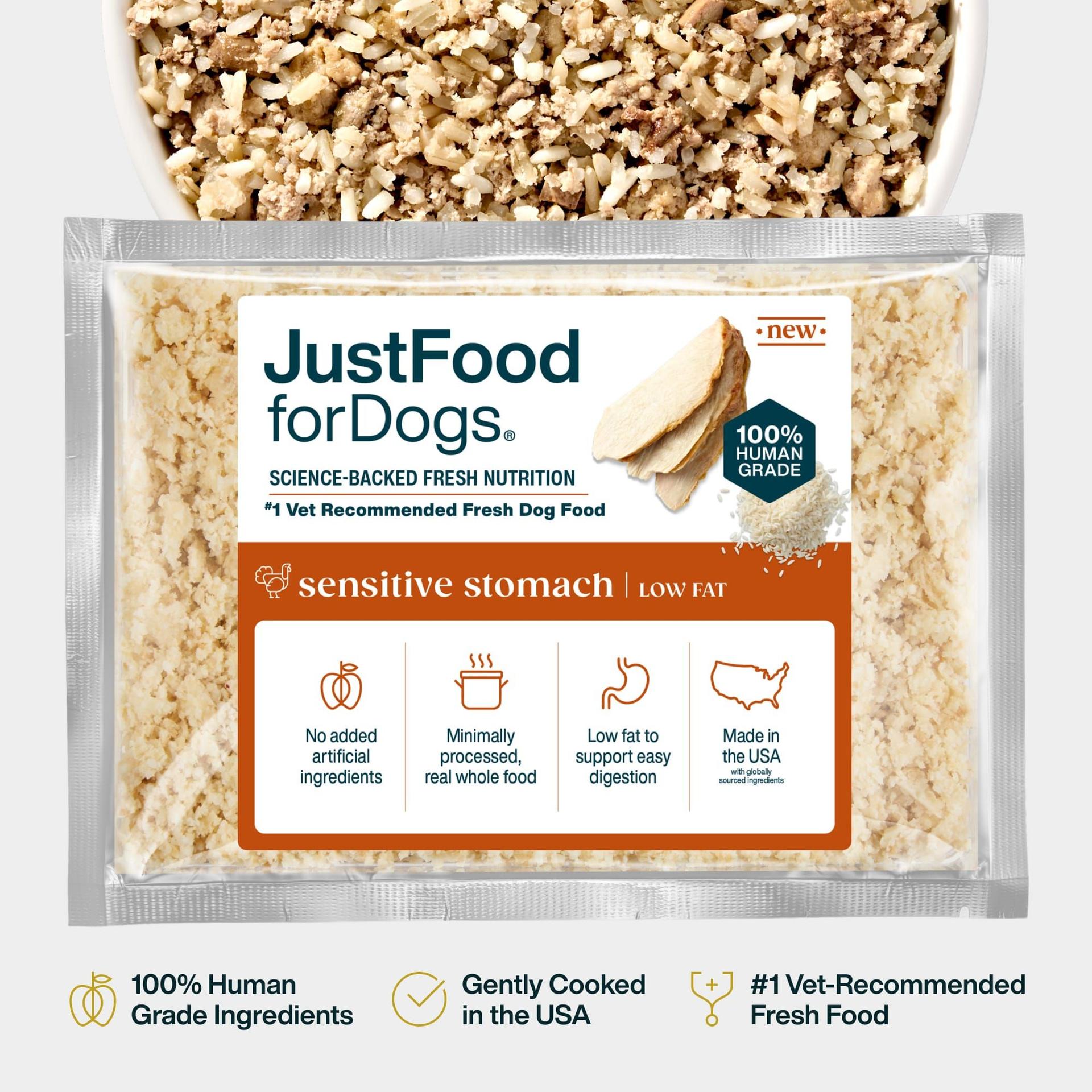
A low-fat turkey and rice recipe rich in natural prebiotics, made for dogs with sensitive stomachs. A gentle fresh option a veterinarian may suggest during and after colitis flare-ups.
Petful may earn a commission when you click through to JustFoodForDogs, at no extra cost to you.
Is colitis contagious in dogs? The inflammation itself is not, but some causes are: Giardia, whipworms, Salmonella, and other bacteria pass through contaminated stool, so pick up promptly and keep a sick dog away from shared water bowls until a stool sample is checked. Colitis that first appears in an older dog also warrants a look for colon polyps or tumors, which VCA lists among the conditions to rule out.
Signs and Symptoms of Colitis in Dogs
What does colitis dog poop look like? The classic picture is soft to liquid stool passed in small amounts many times a day, with mucus in the stool that looks like a clear or yellowish jelly coating, and sometimes streaks of fresh red blood at the end of a bowel movement. The dog often strains, squats repeatedly, or asks to go out urgently, sometimes overnight.
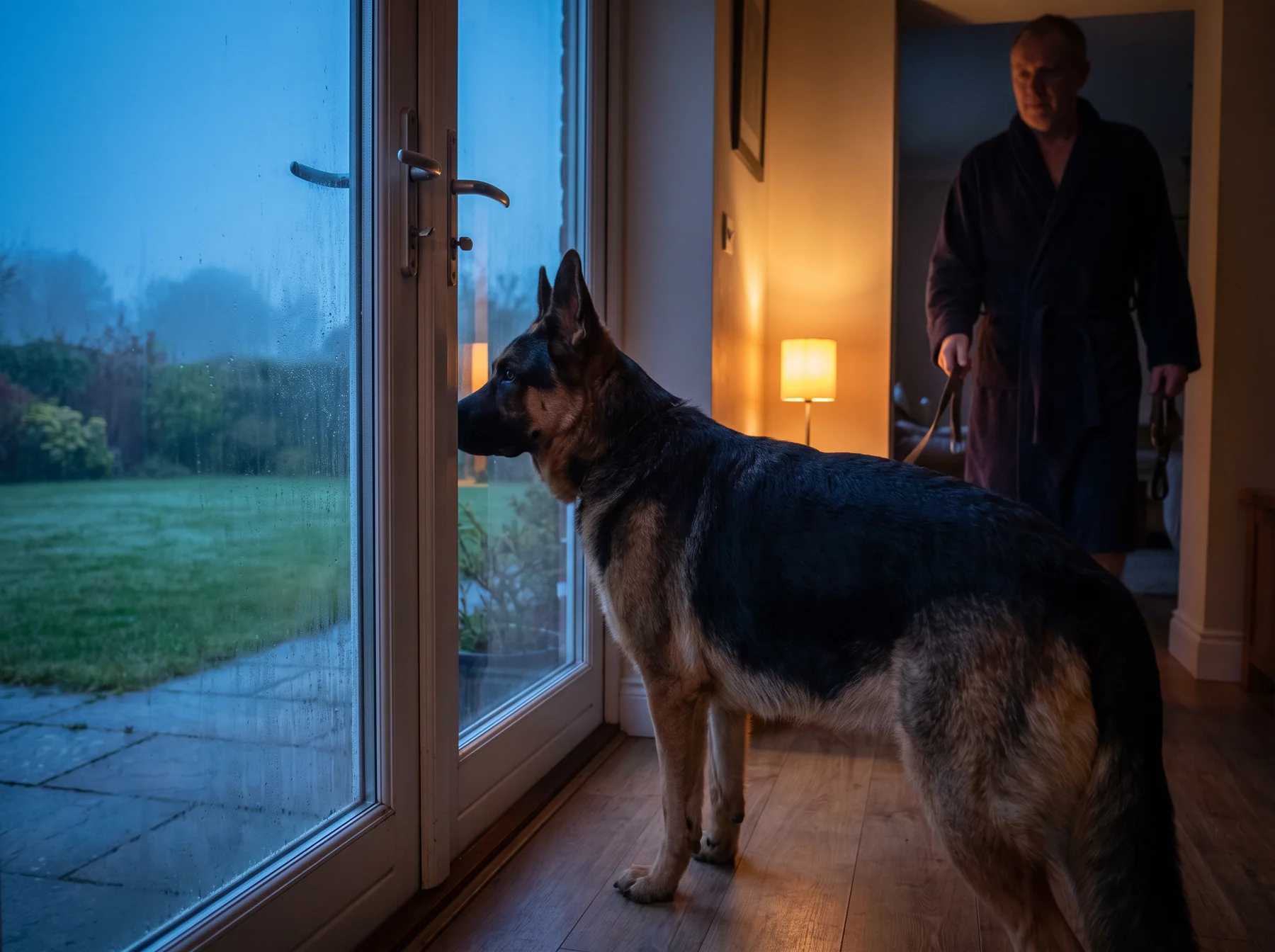
Stool is easiest to read against a steady baseline: when a dog eats the same food at home, on trips, and at the sitter's, a new change points to the gut, not the menu.
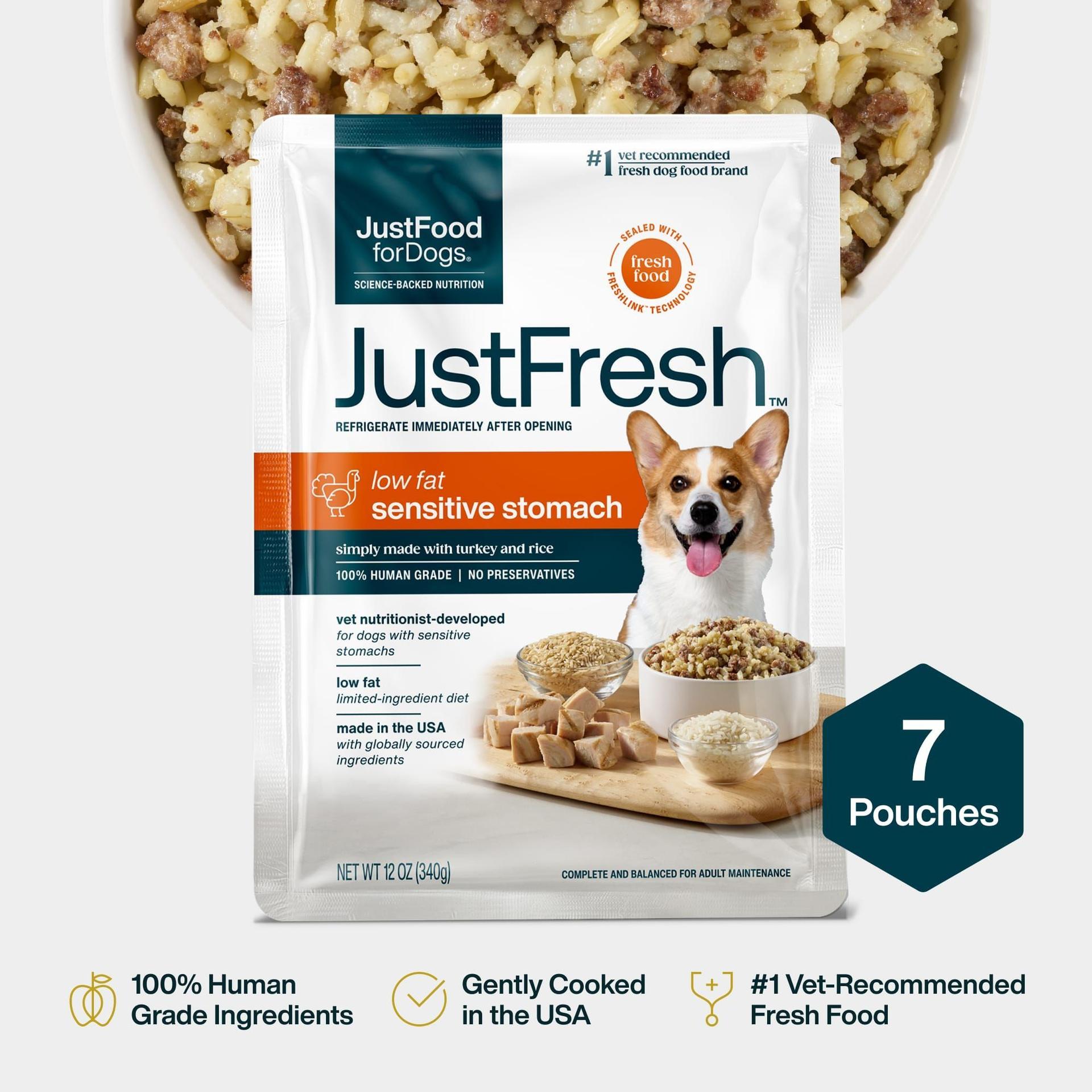
The shelf-stable version of the gentle turkey and rice Sensitive Stomach recipe, in resealable pouches. Handy for keeping a sensitive dog on one consistent food at home, on trips, or at the sitter's.
Petful may earn a commission when you click through to JustFoodForDogs, at no extra cost to you.
Common colitis symptoms in dogs include:
- Frequent, urgent trips outside, often with only a little stool each time
- Straining after passing stool, which owners sometimes mistake for constipation
- Mucus in the stool, or poop that looks shiny or jelly-coated
- Fresh red blood or streaks of bright red blood in the stool
- Accidents in the house from a dog who is normally reliable
- Mild discomfort, restlessness, or licking at the rear end
Is colitis painful in dogs? It is usually uncomfortable rather than severely painful: cramping and the constant urge to go are the main problems. Can colitis in dogs cause vomiting? Vomiting happens in fewer than a third of cases, according to VCA, so a dog who is also vomiting, losing weight, or refusing food may have something affecting more than the colon. Petful's guides to vomiting and diarrhea in dogs and to blood in your dog's stool cover those wider patterns.
Instead of comparing your dog's stool with photos online, note the color, the mucus, whether blood is fresh red or dark and tarry, and how many times your dog went in 24 hours. A phone photo helps your veterinarian most.
- Small streaks of blood in the stool with an otherwise bright dog can usually be discussed with the clinic the same day. Call your veterinarian immediately or go to an emergency clinic for large amounts of blood, black or tarry stool, repeated vomiting, a swollen or painful belly, weakness, or diarrhea in a young puppy or a frail senior dog.
In a dog with known chronic colitis, flare-ups usually look the same each time. "End stage colitis" is not a standard veterinary term, but advanced chronic bowel disease shows up as weight loss, a poor coat, low energy, and stool changes that no longer respond to diet or medication. Those signs need a recheck, not home care.
What Causes Colitis in Dogs?
What flares up colitis in dogs? Most acute cases trace back to the gut being upset by something new. The common causes include dietary indiscretion, stress, parasites, and food sensitivity:
- Dietary indiscretion: raiding the trash, eating a fatty meal, chewing sticks, or a sudden food change. Even a large spoonful of peanut butter or a rich holiday plate can trigger loose stool in a sensitive dog.
- Stress: boarding, travel, a move, visitors, or a hospital stay. Stress colitis is covered in detail below.
- Parasitic colitis: whipworms live in the large intestine itself, and Giardia and Cryptosporidium are common. Can worms cause colitis in dogs? Yes, and that is why a fecal test and deworming come early in most treatment plans.
- Bacterial colitis: Clostridium perfringens, Salmonella, and certain E. coli strains can cause clostridial colitis and other bacterial forms. Dogs usually pick these up from contaminated food, raw diets, scavenging, or contact with infected dogs.
- Allergic colitis: a reaction to a dietary protein, which veterinarians investigate with a prescribed food trial.
- Less common causes: fungal colitis such as histoplasmosis in endemic regions, and Prototheca colitis, a rare algae infection that can be serious.
Colitis after surgery or spaying is often a stress and medication effect: anesthesia, a hospital stay, antibiotics, and a new routine all upset the colon. Can heat cause colitis in dogs? Not directly, but heat stress and dehydration on hot travel days can tip a sensitive dog into a flare.
The same everyday triggers explain why many veterinarians recommend keeping a dog prone to colitis on one consistent diet rather than rotating foods. For owners who need a shelf-stable option for travel or boarding, JustFoodForDogs JustFresh Sensitive Stomach comes in resealable pouches that can be stored in a pantry for up to two years and refrigerated after opening.
Stress Colitis in Dogs
Stress colitis in dogs is large-bowel diarrhea set off by a stressful event rather than by food or infection; owners also hear it called stress induced colitis, anxiety colitis, or nervous colitis. Stress changes gut movement and the balance of bacteria in the colon, and VCA calls stress colitis one of the leading causes of large-bowel diarrhea in dogs. Typical triggers:
- Boarding, or a stay at the groomer or kennel
- Surgery or a night in the hospital
- Travel, especially long car trips
- A move, visitors, or a new pet or baby in the home
How long does stress colitis last in dogs? VCA says most dogs with stress colitis are back to normal within three to five days. Can stress colitis in dogs go away on its own? Often, yes, but it should improve steadily each day. If it is not clearly better after two or three days, returns repeatedly, or comes with vomiting or lethargy, it is no longer a simple stress episode.
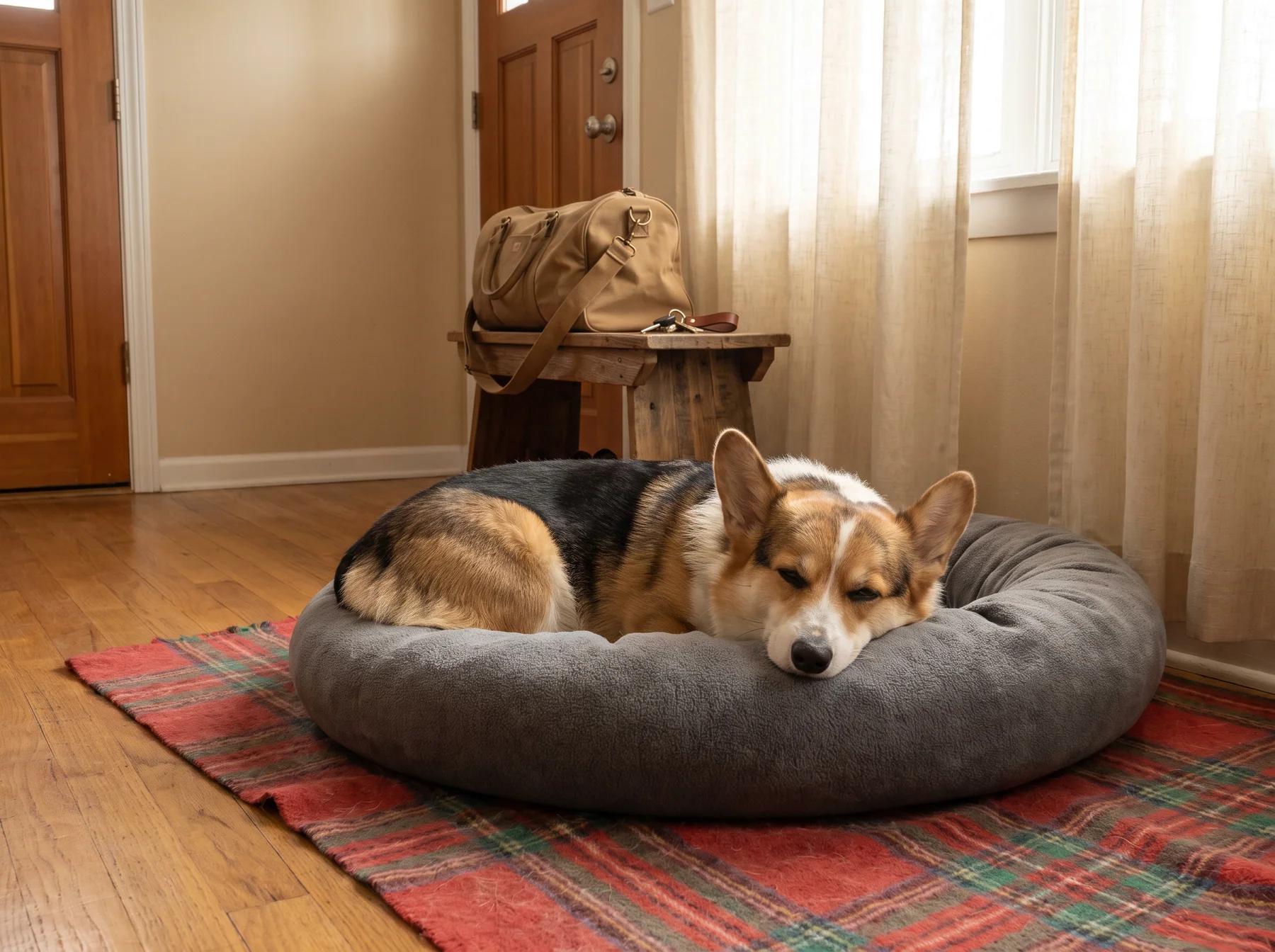
Stress colitis poop looks like any colitis stool: soft, urgent, and mucus-coated. Bloody diarrhea is common, usually as small streaks of fresh blood, while vomiting is less typical and a reason to call the vet. Is stress colitis in dogs deadly? Rarely. The real risks are dehydration in small, very young, or elderly dogs, and missing a more serious cause.
Treatment for stress colitis usually happens at home under veterinary guidance:
- Fresh water, and a few days of small bland meals
- A calm routine with familiar bedding and short leash walks
- A probiotic if your veterinarian recommends one
Many veterinarians now reserve metronidazole for selected cases, because uncomplicated acute diarrhea usually resolves without antibiotics, which also disrupt normal gut bacteria.
Preventing stress colitis is mostly planning. Keep the same food during travel or boarding (pack it rather than switching; a shelf-stable recipe such as JustFresh Sensitive Stomach is convenient), introduce kennels and sitters gradually, and ask your vet about a probiotic before a predictable stressor.
How Colitis Differs From IBD and Pancreatitis
What can be mistaken for colitis in dogs? Several conditions cause diarrhea, and the location matters. Large-bowel diarrhea from the colon means small, frequent, urgent stools with mucus and fresh blood. Small-bowel diarrhea, from the stomach and small intestine, means larger volumes of watery stool passed less often, sometimes with weight loss and vomiting. Conditions often mistaken for colitis include:
- Inflammatory bowel disease (IBD): chronic inflammation that can involve the stomach, small intestine, colon, or all three. Colitis vs IBD comes down to scope and duration: IBD is chronic and biopsy-confirmed, while colitis can be a short episode. Dogs do not get Crohn's disease, though IBD involving the colon looks similar. Vetstreet's guide on what to feed a dog with inflammatory bowel disease covers the longer-term diet trials.
- Pancreatitis: this one is easier to tell apart. Pancreatitis usually brings vomiting, belly pain, a hunched posture, and refusal to eat, often after a fatty meal. For recovery feeding, see Petful's guide to what dogs with pancreatitis can eat, and WebVet's guide to vet-recommended diets for dogs with pancreatitis covers complete low-fat diets.
- Gastroenteritis and gastritis: gastroenteritis inflames the stomach and intestines together, so vomiting plus diarrhea is common. Colitis is the large-bowel part of that picture.
Colitis and pancreatitis do overlap at the food bowl: both often call for lower-fat, highly digestible meals while the gut settles. For dogs whose veterinarian identifies fat intolerance or ongoing gastrointestinal concerns, JustFoodForDogs Digestive Care is a whitefish-based, ultra-low-fat Vet Support diet with a moderate, balanced fiber profile.
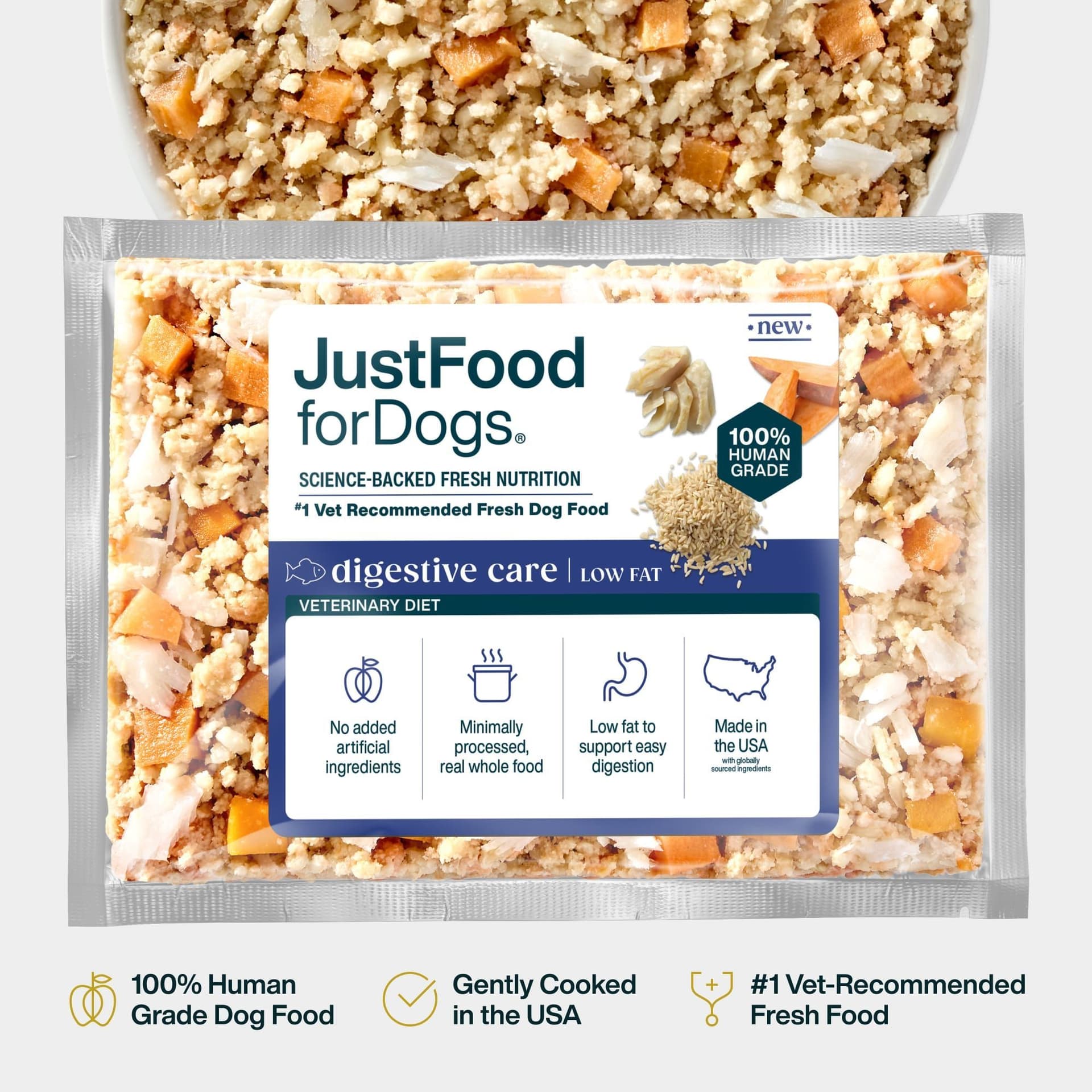
A whitefish-based, ultra-low-fat Vet Support diet formulated for dogs with food sensitivities, fat intolerance, and gastrointestinal health concerns. JFFD asks owners to check with their vet before ordering.
Petful may earn a commission when you click through to JustFoodForDogs, at no extra cost to you.
How Vets Diagnose and Treat Colitis
How is colitis diagnosed in dogs? A veterinarian usually starts with the history and stool description, a physical and rectal exam, and a fecal test for parasites. Further tests depend on the case: bloodwork, an abdominal X-ray or ultrasound (mainly to rule out foreign objects), fecal PCR panels, and, for chronic colitis, colonoscopy with biopsies.
How is colitis treated in dogs? Treatment depends on the cause, but vets usually work through these steps:
- A few days of bland, highly digestible small meals and plenty of water
- Deworming medication, often given even when the first fecal test is negative, because whipworm eggs are shed intermittently (Merck Veterinary Manual)
- A diet change to a highly digestible or fiber-adjusted diet, or a prescribed hydrolyzed or novel-protein food trial when allergic colitis is suspected
- Fiber supplements such as psyllium for fiber-responsive cases
- Probiotics
- Antibiotics only when there is a reason, chosen by cause. Flagyl (metronidazole) is now used less often for simple cases than in the past. Granulomatous colitis in Boxers and French Bulldogs is the classic antibiotic-responsive form, treated with an antibiotic such as enrofloxacin, ideally guided by culture.
- Anti-inflammatory medicines such as prednisone, or other immune-modulating drugs, for chronic inflammatory colitis
Owners often ask about Pepto-Bismol, Metacam, or Metrobactin. Pepto-Bismol contains a salicylate, an aspirin relative, and Metacam is a prescription anti-inflammatory that can irritate the gut; neither should be started without your veterinarian.
Is colitis in dogs serious or fatal? Uncomplicated colitis is rarely dangerous, and acute or well-controlled colitis does not usually shorten life expectancy. The dangerous situations are severe bleeding, dehydration, or an underlying cause such as cancer. With what owners call end stage colitis in dogs, life expectancy depends on that underlying disease. A dog whose colitis does not settle within a few days needs an exam.
How long does colitis in dogs last? Acute cases often clear on their own; for acute colitis in dogs, recovery time is usually three to five days, and VCA describes the outlook as excellent. Whether colitis can be cured depends on the cause. Parasite colitis and granulomatous colitis can resolve completely with the right drug, while chronic inflammatory forms are kept quiet rather than cured: the Merck Veterinary Manual describes a good short-term outlook for chronic colitis but frequent relapses, so most of these dogs need long-term diet and, when needed, medication. For a dog with fat intolerance or ongoing gastrointestinal concerns, a veterinarian may recommend a Vet Support recipe such as JustFoodForDogs Digestive Care, which JFFD asks owners to review with their vet before ordering.
Low in fat, gentle on digestion, and made with natural prebiotics. An everyday fresh recipe that can help support a sensitive dog's digestion during recovery and between flare-ups.
Petful may earn a commission when you click through to JustFoodForDogs, at no extra cost to you.
What to Feed a Dog With Colitis During a Flare-Up
What calms a colitis flare-up? Highly digestible meals in small frequent portions give the colon less work and less material to ferment, which is the whole point of a bland diet. Use the flare-up feeding timeline below as a starting point, and let your veterinarian adjust each phase for your dog.
The best diet for colitis in dogs during the first days has three features:
- Highly digestible ingredients: lean protein such as skinless turkey or chicken, with white rice, so most of the meal is absorbed before it reaches the colon.
- Low to moderate fat: VCA notes low-to-moderate fat may help limit diarrhea, and fatty food is a common trigger.
- Small frequent meals: three to six small meals a day instead of one or two large ones.
| Phase | What to feed | Portion pattern | Call the veterinarian if |
|---|---|---|---|
| First 12 to 24 hours | Water always available; food only as your vet advises (some vets suggest a short fast for adults, never for puppies or small, frail dogs) | Small frequent meals once eating resumes | Repeated vomiting, lots of blood, black stool, or weakness |
| Days 1 to 3 | Bland, highly digestible, low-fat meals such as plain cooked turkey and rice, or a gentle fresh diet your vet approves | Small frequent meals, 3 to 6 per day | No improvement after 48 to 72 hours, or refusal to eat |
| Days 3 to 7 | Continue the gentle diet; add soluble fiber such as plain pumpkin only if your vet suggests it | Gradually larger, less frequent meals | Diarrhea returns as portions increase |
| Days 7 to 21 | Gradual 10 to 14 day food transition to the long-term diet | Usual meal schedule, measured portions | Stool softens at each step or blood reappears |
Homemade meals for a dog with colitis, such as boiled turkey and rice, is fine for a few days, but it is not nutritionally complete for long-term feeding. After the first days, a veterinarian may suggest a gentle fresh diet such as JustFoodForDogs Sensitive Stomach during and after flare-ups. It is a low-fat turkey and rice recipe (crude fat label maximum 4.0%) that JFFD describes as limited-ingredient and rich in natural prebiotics, and it is formulated to meet AAFCO nutrient profiles for adult maintenance. Petful's guide to a gentle fresh diet for sensitive stomachs explains how the recipe is built.
The right diet depends on which kind of colitis it is:
- Stress colitis: a few days of bland meals, then straight back to the usual food once stool is firm. No long-term diet change is needed unless episodes repeat.
- Dietary colitis: after the flare, choose one consistent, highly digestible food, such as JustFoodForDogs Sensitive Stomach, and stop the scavenging, table scraps, and frequent switches that caused it.
- Chronic colitis: the veterinarian sets the diet, which may be fiber-adjusted, highly digestible, or a prescribed food trial, and it stays in place long term.
Is pumpkin for colitis in dogs worth trying? Plain canned pumpkin adds soluble fiber and helps some dogs, but it is a supplement, not a meal. What about raw food? A raw diet carries a higher risk of Salmonella and other bacteria that can themselves cause colitis, so raw feeding during a flare is best avoided. When the time comes to switch back to a regular diet, plan a gradual transition. JFFD recommends about 10 days for most dogs and closer to 10 to 14 days for dogs with sensitive stomachs; if stool softens, go back to the last ratio that worked and hold there for a few extra days. Owners who want the same gentle recipe in a pantry format can use JustFresh Sensitive Stomach for travel days.
Foods to Avoid and Fiber for Dogs With Colitis
What not to feed a dog with colitis comes down to anything fatty, rich, new, or hard to digest. These are the foods to avoid during a colitis flare-up:
- Fatty table scraps: bacon, sausage, gravy, cheese, and meat trimmings are a common trigger for both colitis and pancreatitis.
- Sudden food changes: switching brands or proteins overnight is one of the most common reasons a calm colon flares.
- Rich treats and chews: rawhide, bully sticks, and high-fat jerky add fat and hard-to-digest material.
- Dairy: milk and ice cream can cause diarrhea in many dogs.
- Raw meat and bones: bacterial risk and bone fragments that irritate the colon.
- Spicy, seasoned, or onion- and garlic-containing foods: irritating at best and toxic in the case of onion and garlic.
Which foods trigger colitis varies from dog to dog, which is why a short food and stool diary helps. If a specific protein seems to be the trigger, your veterinarian may suggest a food trial; Petful's guide to food allergies and elimination diets explains how those trials are run.
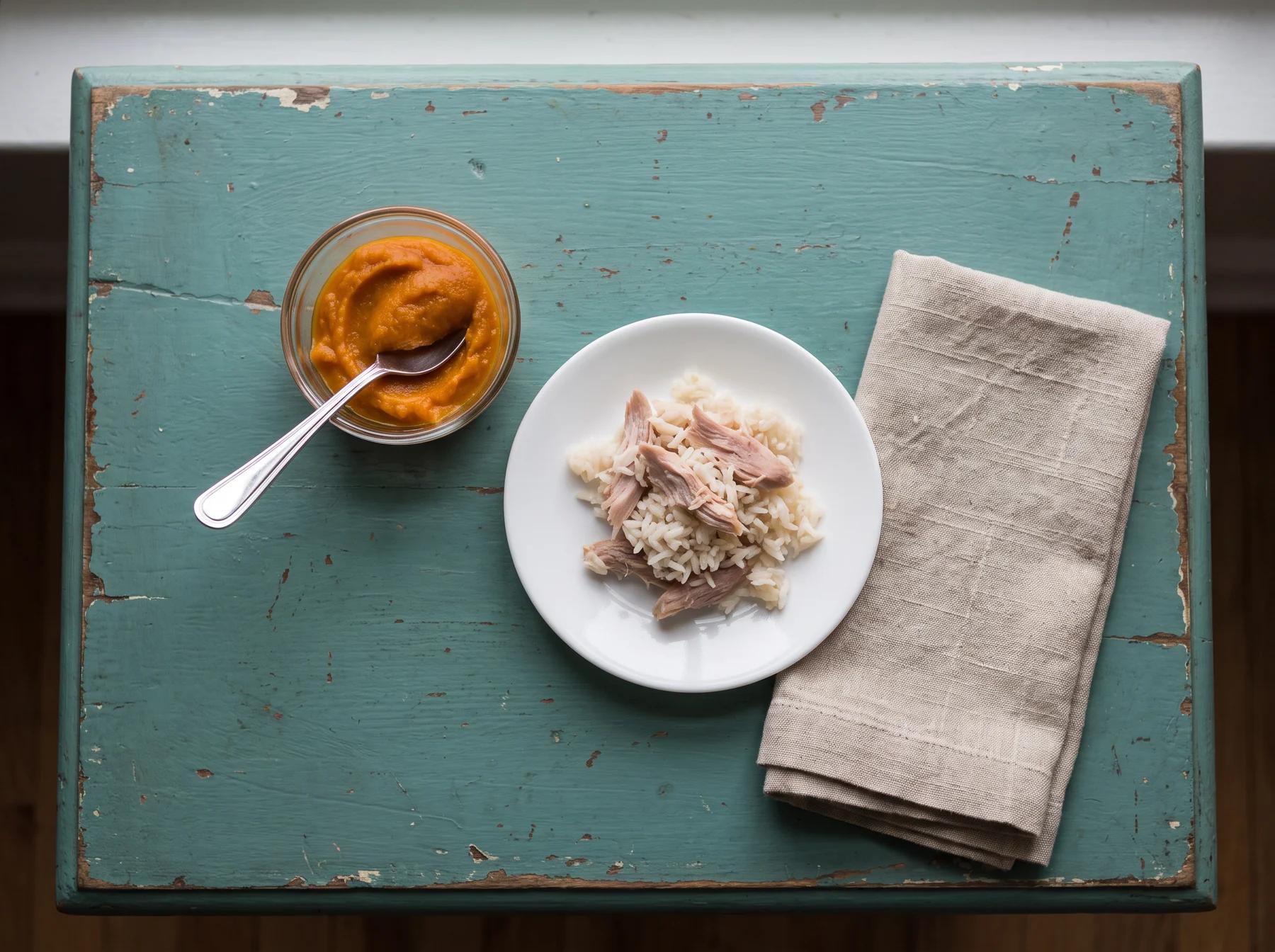
Fiber is the other half of colitis feeding, and the two types do different jobs:
- Soluble fiber (psyllium, oats, plain canned pumpkin) absorbs water and forms a gel that firms stool and feeds the bacteria that nourish the colon lining.
- Insoluble fiber (vegetable skins, bran) adds bulk and speeds transit.
VCA notes that low-fiber, moderate-fiber, and high-fiber diets have all been used successfully in dogs with colitis, so the amount is a veterinary decision rather than a rule.
Fiber-responsive colitis in dogs is a recognized pattern: the Merck Veterinary Manual notes that fiber supplements such as psyllium, or a high-fiber diet, improve diarrhea in many dogs with colitis. Start small, because too much fiber at once can cause gas and looser stool. For pumpkin, the usual starting amount is about one teaspoon for small dogs to one tablespoon for large dogs; see Petful's guide to how much pumpkin to give. Skip home remedies that add fat, such as coconut oil, which can make loose stool worse.
Home Care, Probiotics, and Preventing Flare-Ups
Home care is appropriate for a bright, alert adult dog with mild large-bowel diarrhea and no warning signs. To treat colitis in dogs at home safely:
- Keep fresh water available at all times and check that your dog is drinking.
- Feed small, bland, highly digestible meals as described above.
- Take short, calm walks so your dog can empty the colon often.
- Track stool frequency, mucus, and blood, and call the vet if things are not improving within 48 to 72 hours.
Are probiotics helpful for colitis? VCA notes that probiotic formulations can be helpful. Choose a veterinary probiotic made for dogs rather than a human supplement, and ask your vet which product to use. Prebiotics, the fibers that feed beneficial gut bacteria, work alongside them, and the natural prebiotics in JustFoodForDogs Sensitive Stomach are one everyday source.
Treating colitis in dogs naturally makes sense when the remedy has evidence behind it: diet, soluble fiber, probiotics, hydration, and lower stress. No natural remedy cures chronic colitis, which is kept quiet rather than cured, so finding the cause with your vet matters more than any home treatment. Over-the-counter options are limited to canine probiotics and fiber; human antidiarrheal medicine can be risky. There is no good evidence that homeopathy helps, CBD has not been studied enough to recommend for colitis, and essential oils are a poor idea because several are toxic to dogs.
To prevent colitis in dogs that flare repeatedly:
- Feed one consistent, highly digestible diet and change foods gradually.
- Keep the trash, compost, and table scraps out of reach.
- Stay current on deworming and fecal tests.
- Plan ahead for boarding, travel, and other known stressors.
- Keep treats to a small share of daily calories.
For long-term feeding, many owners keep a sensitive dog on the same gentle recipe year-round, and JustFoodForDogs Sensitive Stomach is a low-fat everyday recipe designed for sensitive tummies. Store it in the freezer, thaw it in the refrigerator, and use an opened pack within five days.
Questions Readers Ask
Keep fresh water access constant, offer small bland meals, and give the gut a calm few days. Call your veterinarian the same day if there is a lot of blood, vomiting, or lethargy, or if the diarrhea has not improved within two to three days.
Foods built on highly digestible protein, such as plain cooked turkey or chicken, with white rice are the usual starting point. A little soluble fiber from plain pumpkin or psyllium can help firm stool once your vet agrees.
Acute colitis, including a stress colitis flare-up, usually settles within three to five days. Chronic colitis can take weeks of a consistent diet and medication to calm down, and some dogs need long-term care to stay in remission.
Yes. Boarding or travel, moving house, visitors, and hospital stays are classic triggers of stress colitis. The diarrhea usually starts within a day or two of the event and fades within a few days once routine returns.
Avoid giving human antidiarrheal medicine, aspirin-type products, or pain relievers without veterinary advice. Avoid sudden food changes, rich treats, and fatty table scraps, and do not withhold water.
Go to a veterinarian right away for repeated vomiting, lethargy or weakness, a large amount of blood or black stool, a painful or swollen belly, or diarrhea in a young puppy. A colitis flare-up in an otherwise bright dog can usually wait for a same-day appointment.
BVMS, MRCVS
Dr. Pippa Elliott, BVMS, MRCVS, is a veterinarian with nearly 30 years of experience in companion animal practice. Dr. Elliott earned her Bachelor of Veterinary Medicine and Surgery from the University of Glasgow. She was also designated a Member of the Royal College of Veterinary Surgeons. Married with 2 grown-up kids, Dr. Elliott has a naughty Puggle named Poggle, 3 cats and a bearded dragon.
Sign up for expert-backed reviews and safety alerts all in one place.

A Final Word (Disclaimer)
At Petful, our review integrity is paramount; we never exchange special treatment in our reviews for monetary or material rewards.
Nonetheless, when our readers click through to online merchants (including Chewy or Amazon), we receive a referral commission. This supports the running of our free blog, and we appreciate your backing.