Can Dogs Eat Sweet Potatoes? Benefits, Portions, and the Right Way to Serve Them
Can dogs eat sweet potatoes? Yes, cooked and plain in moderate portions. Learn how to prepare it, how much to serve by dog weight, which forms to avoid, and how sweet potato fits in fresh dog food.

BVMS, MRCVS
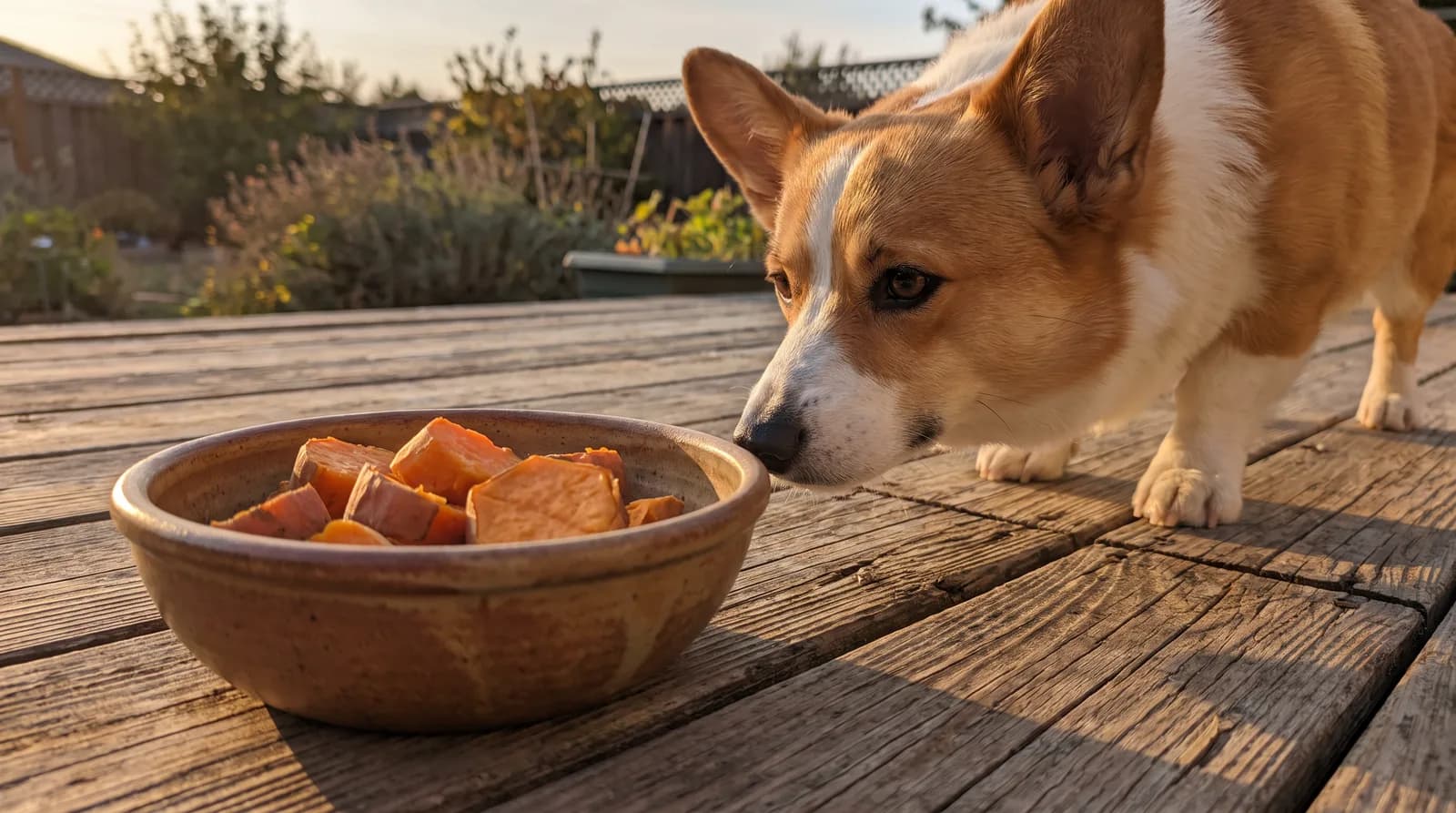
Plain, cooked, peeled sweet potato is the form most dogs handle best.
Petful is reader supported. As an affiliate of platforms like Amazon and Chewy, we may earn a commission when you buy through links on this page. There is no extra cost to you.
- This article is sponsored by Get Real, the gently cooked fresh dog food sold at Chewy. Petful was paid for this placement and may earn a commission when you buy through links in this article. Product details come from Chewy's published information; the guidance and opinions are Petful's own.
Can dogs eat sweet potatoes? Yes. Cooked and plain, in moderate portions, sweet potato is a safe and genuinely useful food for most dogs. The main caution is form: raw chunks, skins, fries and holiday dishes cause most of the problems, not the vegetable itself.
As a veterinarian, I like sweet potato because it is easy to prepare, most dogs love it, and it brings fiber and beta-carotene without much fat. Below you will find how to cook it, a serving guide by dog weight, which forms to skip, how it affects digestion and health conditions, and why sweet potato shows up in complete fresh dog food.

Sign up for expert-backed reviews and safety alerts all in one place.
Can dogs eat sweet potatoes?
Yes, dogs can eat sweet potatoes when they are cooked and plain and served in moderate portions, and sweet potato is good for dogs in that form. It is not toxic, it is not on any poison list, and it is safe for dogs of every size when cooked and plain. Sweet potatoes become bad or harmful for dogs only when they are raw, heavily seasoned, fried, or fed in amounts large enough to unbalance the diet.
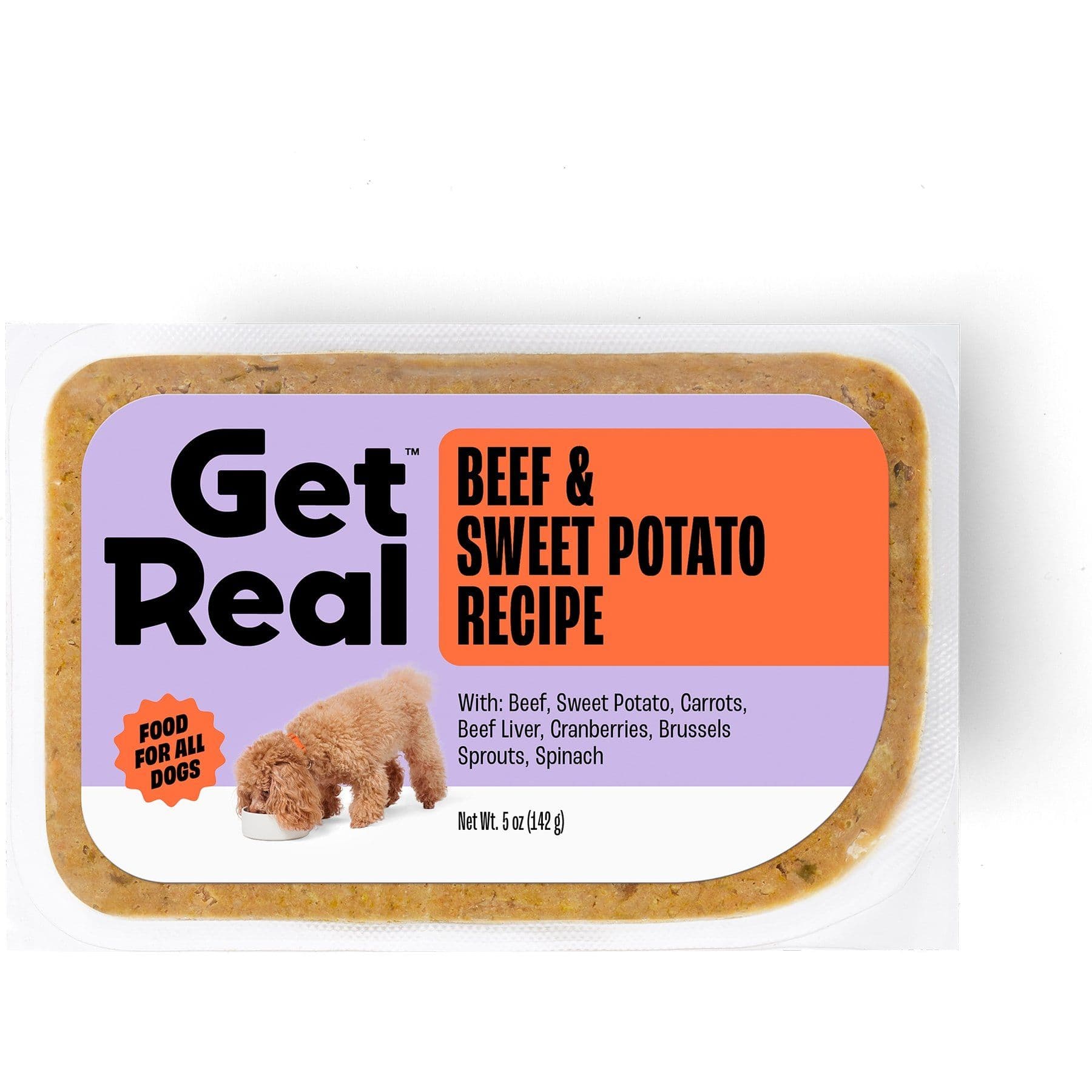
Sweet potato is the second ingredient in Get Real Beef & Sweet Potato, a gently cooked, frozen recipe you can serve as a complete meal or a topper. It puts sweet potato inside a balanced bowl rather than on the side.
Petful may earn a commission when you click through to Chewy, at no extra cost to you.
- 1Sweet potato is safe for most dogs when it is served cooked and plain, with no butter, sugar or seasoning.
- 2Treats, including sweet potato, should stay within the 10 percent treat rule: no more than 10 percent of a dog's daily calories.
- 3Raw sweet potato is hard to digest, and large raw pieces can cause an intestinal blockage.
- 4Fries, pie, casserole and anything with marshmallows, brown sugar or nutmeg are not dog food.
- 5In a complete and balanced fresh recipe, sweet potato is one measured ingredient in a formulated meal rather than a side dish.
The health benefits of sweet potatoes for dogs come from a few nutrients:
- Beta-carotene, the orange pigment, which a dog's body converts to vitamin A for vision, skin and immune function.
- Dietary fiber, which supports stool quality and helps a dog feel full on few calories.
- Vitamin C, vitamin B6, potassium and manganese in modest amounts.
- Digestible starch once cooked, which provides energy.
Why do dogs like sweet potatoes so much? Cooking turns some of the starch into sugars, so baked or boiled sweet potato tastes naturally sweet, and the soft texture suits almost every mouth. If your dog loves sweet potatoes, that is normal, and it makes the vegetable a handy low-fat reward. Are dogs allowed sweet potato every day? Many can have a small amount, as long as you follow the portion limits below.
If you are weighing sweet potato against other produce, our guide to the best vegetables for dogs compares the common options.
Cooked vs. raw sweet potato: how to prepare it
Can dogs eat raw sweet potatoes? It is better not to. Raw sweet potato is dense and starchy, and a dog's digestive tract handles uncooked starch poorly. Raw or uncooked sweet potato can cause stomach upset, and chunks that a dog swallows whole can lodge in the intestines.
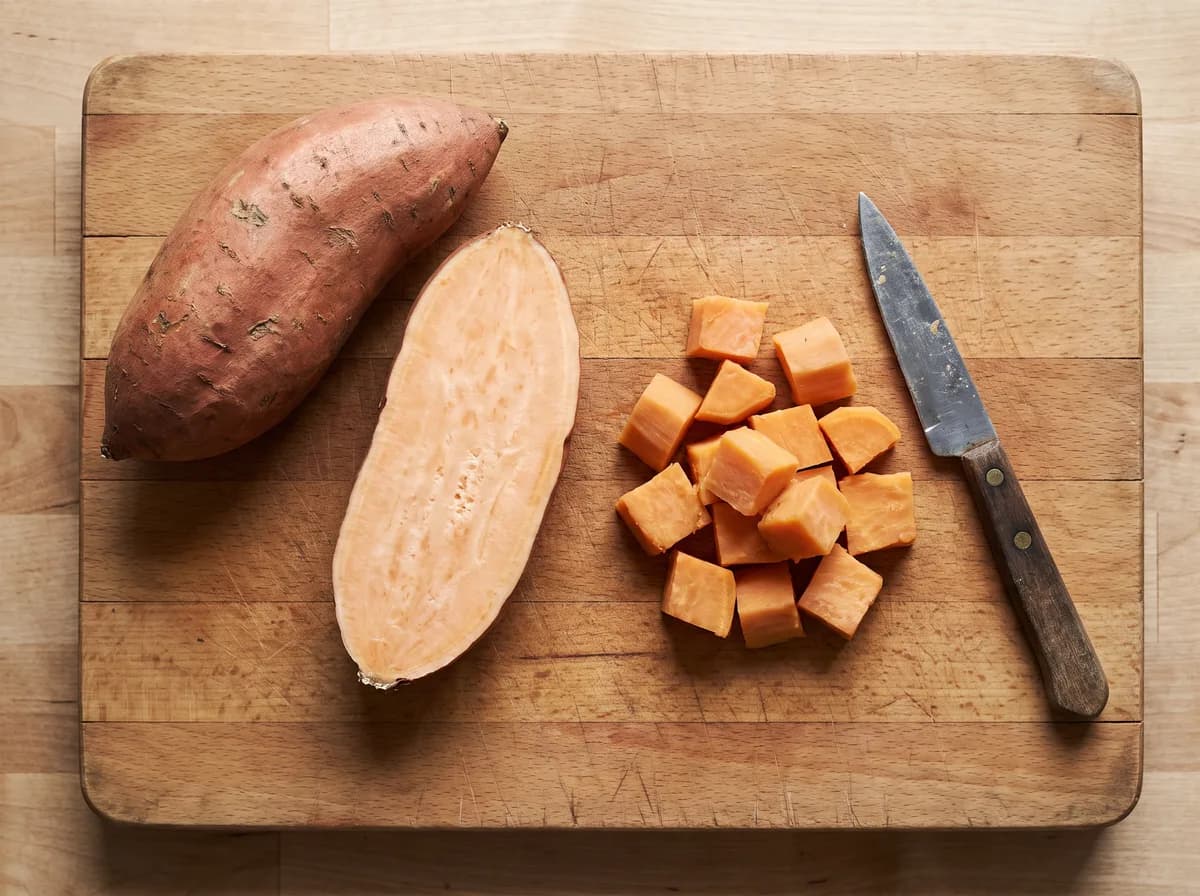
Cooked sweet potatoes are the safe choice. Boiled, steamed and baked sweet potatoes are all fine; boiled sweet potato is the most predictable because it stays moist and soft and needs no oil. Fresh sweet potatoes from the produce aisle are ideal.

If you would rather skip the chopping and boiling, Get Real Chicken & Brussels Sprouts is gently cooked, then frozen, with 10 ingredients or less plus vitamins and minerals. It thaws in the fridge and serves as a full meal or a topper.
Petful may earn a commission when you click through to Chewy, at no extra cost to you.
How do you prepare sweet potatoes for dogs? Follow these steps:
- Wash and peel the sweet potato.
- Cut it into 1-inch cubes so it cooks evenly.
- Boil or bake plain, with no butter or seasoning. Boil for about 15 to 20 minutes or steam for about 15 minutes, until a fork slides through, or bake whole at 400°F for 45 to 60 minutes.
- Cool completely, then mash or cut into pieces sized for your dog.
- Portion it using the serving guide below, and refrigerate leftovers for up to 3 to 4 days.
- Avoid raw sweet potato. It is hard for dogs to digest, and a large raw piece can cause an intestinal blockage, especially in small dogs.
If your dog ate raw sweet potato, a small nibble usually causes nothing worse than mild stomach upset. Watch for repeated vomiting, a painful belly, loss of appetite, or straining with no stool over the next day or two, and call your veterinarian if any appear, since those can signal an obstruction.
Sweet potato skin, fries, pie, and other forms
Most trouble with sweet potato comes from the form it is served in rather than the vegetable. Here is how the common forms compare.
Sweet potato skin
Should you peel sweet potatoes for dog food? Peeling is best. Cooked sweet potato skin is not toxic or poisonous, and it adds a little fiber, but the tough skin is harder to digest and can carry pesticide residue or dirt. Raw skins and peelings are a bigger risk for stomach upset. If your dog grabs a piece of cooked, unpeeled sweet potato, that is not a concern.
Sweet potato fries, tots and chips
Restaurant sweet potato fries and tots are fried in oil and salted, and fried food can trigger stomach upset or pancreatitis. Air fried or baked sweet potato fries made at home with no salt or seasoning are acceptable in small amounts. Store-bought sweet potato chips, including those cooked in avocado oil, are still salted and oily, so skip them. For a dog-safe version, use the baked sweet potato chips recipe on Petful.
Sweet potato pie, casserole and holiday dishes
Sweet potato pie, casserole and sweet potatoes with marshmallows, brown sugar or butter are high in sugar and fat. Many pies also contain nutmeg, and some sugar-free recipes use xylitol, which is dangerous for dogs. If your dog ate sweet potato pie, a lick is unlikely to matter, but call your vet or a poison line if the recipe contained xylitol or if your dog ate a large amount.
Canned, mashed, frozen and dried sweet potato
- Canned sweet potatoes: acceptable only if packed in water with no added salt; skip canned sweet potatoes in syrup.
- Mashed or puree: fine when plain; sweet potato baby food is acceptable if the label lists only sweet potato and water, with no onion or garlic.
- Frozen sweet potatoes: cook them before serving, the same as fresh.
- Dehydrated or dried sweet potatoes: fine as chews if plain, but they are chewy and calorie-dense, so size them for your dog.
- With cinnamon: a small amount of cinnamon is not toxic, but it adds nothing; serve it plain.
- Whole sweet potatoes: never hand over a whole one to chew, cooked or raw.
- Sweet potatoes and carrots, or broccoli: plain cooked mixes are fine within the same treat limit.
- Cooking water: plain sweet potato water is harmless but offers little benefit.
Purple, Japanese, and other sweet potato varieties
Can dogs eat all types of sweet potatoes? Yes. Orange, purple, Japanese, Korean, Asian, white, red and yellow sweet potatoes all belong to the same species, and the same rules apply: cooked, plain, peeled and portioned.
- Purple sweet potato (including Okinawan and Stokes varieties) is safe for dogs and gets its color from anthocyanins rather than beta-carotene. Purple sweet potato skin follows the same rule as any skin.
- Japanese sweet potato (Murasaki is a common type) and Korean sweet potato have red-purple skin and pale flesh. They are drier and starchier, so keep portions on the small side; Japanese sweet potato skin should be peeled like any other.
- White and yellow sweet potatoes are safe and simply contain less beta-carotene than orange ones.
- Yams: most "yams" in US stores are orange sweet potatoes. True yams are a different plant and must be cooked as well.
- Organic sweet potato is a fine choice but not required.
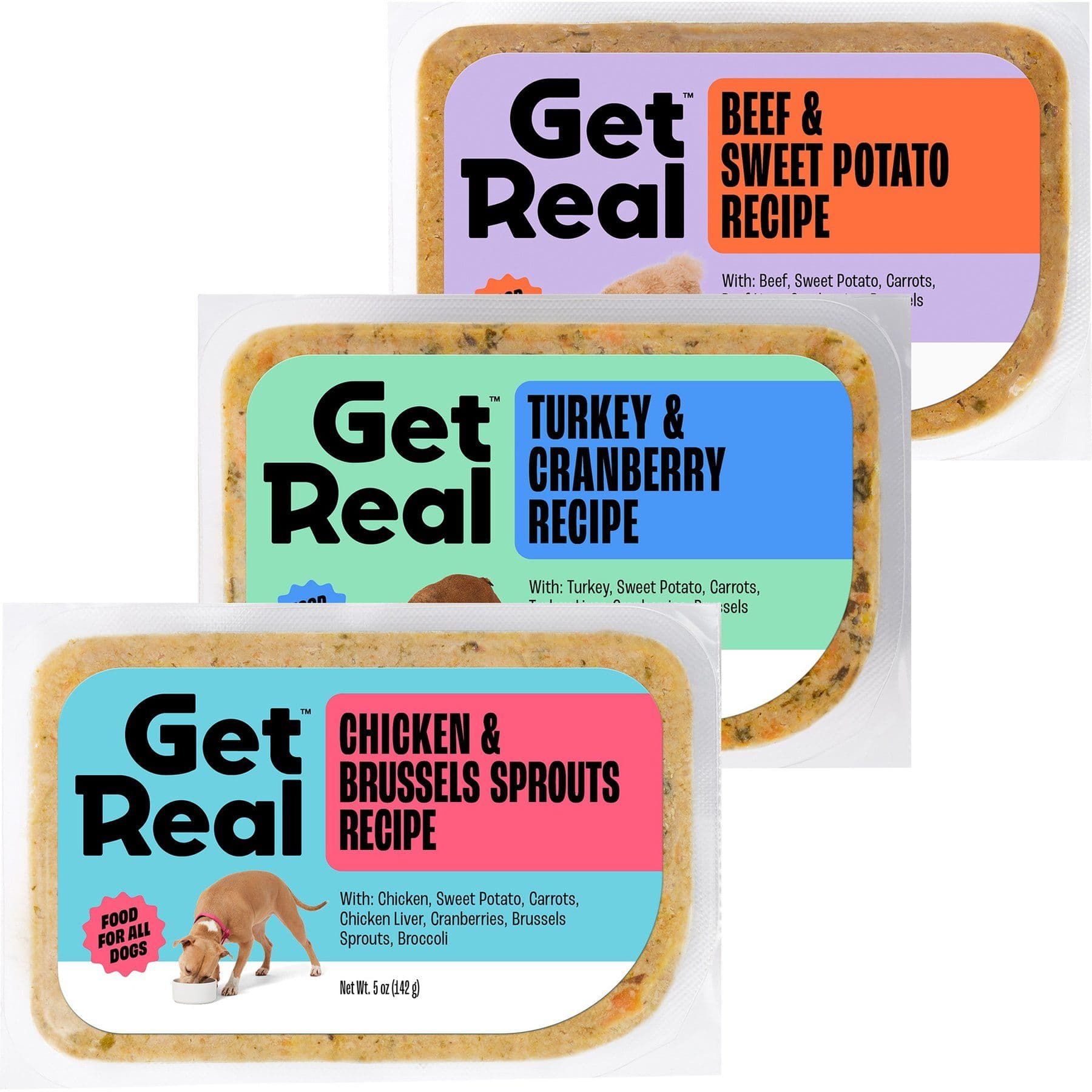
If you want to see which protein your dog prefers alongside its vegetables, the Get Real Sampler Pack lets you try the Beef, Chicken and Turkey recipes before choosing a plan. Each recipe comes pre-portioned, so measuring is simple.
Petful may earn a commission when you click through to Chewy, at no extra cost to you.
Can dogs eat potatoes and sweet potatoes? Both are safe cooked and plain. Regular white potato must never be fed raw or green, because raw potato and green skins contain solanine. Between the two, sweet potato brings more fiber and beta-carotene, so it is the better snack.
How much sweet potato can a dog eat?
Because sweet potato is a treat food, it falls under the 10 percent treat rule: treats should provide no more than 10 percent of a dog's daily calories, with the other 90 percent coming from a complete and balanced diet. A level tablespoon of mashed cooked sweet potato provides roughly 12 to 14 calories, based on USDA FoodData Central values for boiled sweet potato.
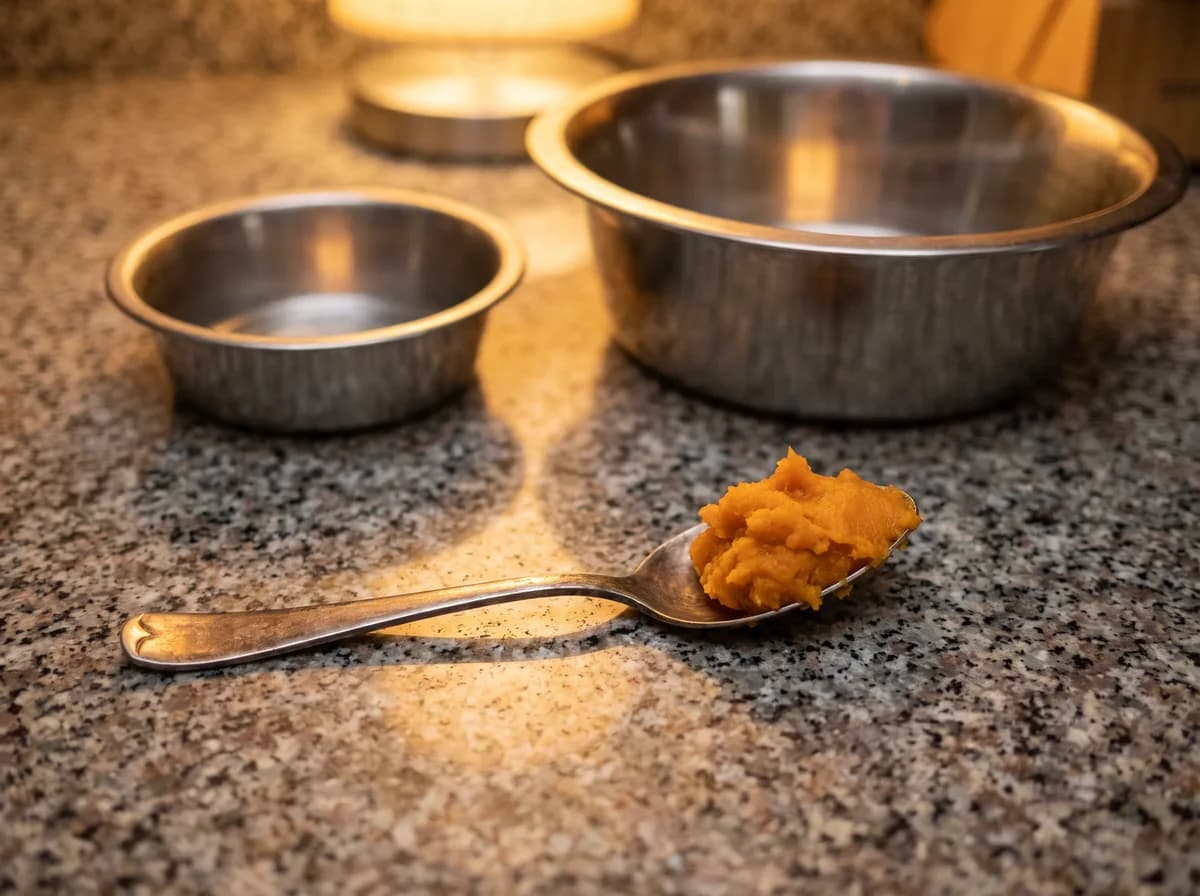
The serving guide by dog weight below converts that rule into everyday amounts. These are upper limits for a day with no other treats; if your dog gets other treats, reduce the sweet potato.
| Dog size (weight) | Serving guide by dog weight: cooked sweet potato per day | Approximate calories |
|---|---|---|
| Toy (under 10 lb) | 1 to 2 teaspoons | 4 to 9 |
| Small (10 to 25 lb) | 1 to 2 tablespoons of cooked sweet potato | 12 to 28 |
| Medium (25 to 50 lb) | 2 to 3 tablespoons of cooked sweet potato | 25 to 40 |
| Large (50 to 90 lb) | 3 to 4 tablespoons of cooked sweet potato | 40 to 55 |
| Giant (over 90 lb) | 4 to 6 tablespoons of cooked sweet potato | 50 to 80 |
Can I feed my dog sweet potato every day? Yes, within those amounts, as long as the daily serving fits the treat allowance. How often can dogs eat sweet potatoes when you are starting out? Begin with a third of the listed amount a few times a week and build up over a week or two. Small dogs can eat sweet potatoes too; their portions are simply measured in teaspoons. If you feed a fresh food, count its calories in the same budget: a 12 oz pack of Get Real Turkey & Cranberry Recipe provides 474 kcal, according to Chewy.
How much raw sweet potato is toxic to dogs? None of it is toxic in the poison sense. The concern with raw sweet potato is digestion and blockage, which is why the table lists cooked amounts only.
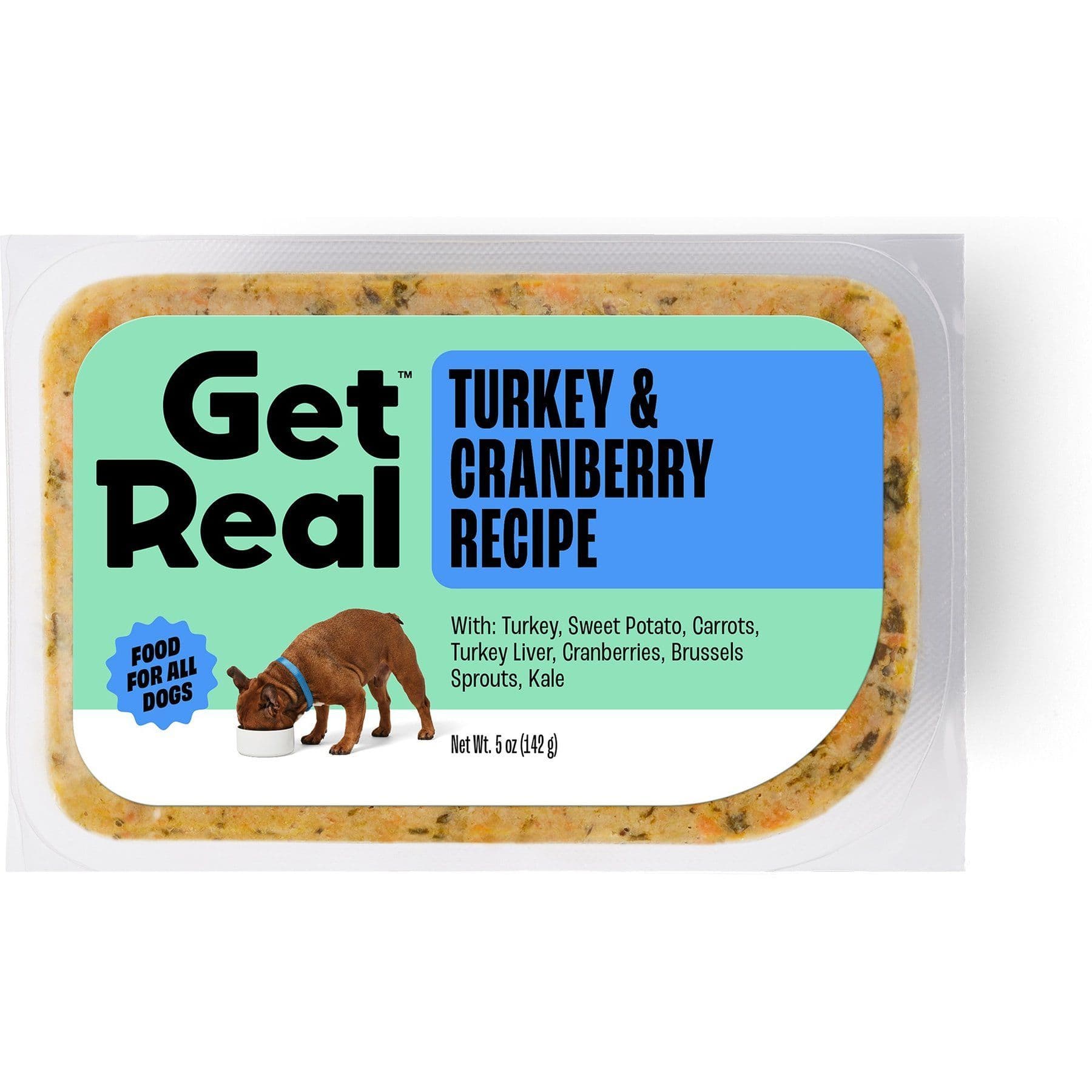
Pre-portioned fresh food takes the guesswork out of measuring. Get Real Turkey & Cranberry comes in 12 oz and 24 oz packs for full meals, and Chewy publishes the calories for each pack.
Petful may earn a commission when you click through to Chewy, at no extra cost to you.
Sweet potato for diarrhea, constipation, and digestion
Sweet potato's fiber is the reason it shows up in so many conversations about dog poop. Does sweet potato help dogs with diarrhea? A small amount of plain cooked sweet potato can help firm up mild loose stool, and many veterinarians include it in a bland diet alongside a lean protein to settle a dog's stomach. It can also help dogs poop more comfortably with mild constipation, because fiber adds bulk and holds water.
The same fiber explains the downsides. Too much sweet potato can cause diarrhea, gas or an upset stomach, and a sudden large serving can make a dog vomit. Large or sudden portions can cause diarrhea, constipation or extra gas, while small, steady portions usually help. If your dog threw up sweet potato, skip it for a day and restart with a smaller amount.
Sweet potato or pumpkin for dogs? Plain canned pumpkin is the classic choice for constipation and loose stool because it has fewer calories and a high water content, so you can give a bit more. Our guide to can dogs eat pumpkin covers amounts. Pumpkin and sweet potato can also be fed together within the treat limit.
- Butternut squash vs sweet potato: both are fine cooked; squash is slightly lower in calories.
- Brown rice vs sweet potato: both are bland carbohydrates; sweet potato brings more fiber, while rice is gentler for some dogs with an upset stomach.
- Chickpeas vs sweet potatoes: chickpeas are legumes and cause more gas; sweet potato is easier on most dogs.
- Weight gain: sweet potato adds calories, which can help an underweight or sick dog regain condition only as part of a vet-guided plan.
Does sweet potato make dog poop orange? It can. Beta-carotene pigment passes through, and the color change is harmless. Diarrhea that lasts more than a day or two, or black or bloody stool, is a reason to see your veterinarian.
Sweet potato for dogs with allergies or health conditions
Can dogs be allergic to sweet potatoes? It is possible but uncommon. Food allergies in dogs are most often triggered by proteins such as beef, chicken or dairy. A sweet potato allergy or intolerance would show up as an allergic reaction such as itchy skin, ear infections, or gastrointestinal upset, and it is confirmed with an elimination diet guided by your vet.
Common health-condition questions, answered briefly:
- Diabetes: sweet potato is starchy and raises blood sugar, so diabetic dogs need any portion counted into a consistent daily diet. Ask your vet before adding it.
- Kidney disease: sweet potato is fairly low in phosphorus but contains potassium, and dogs with kidney disease often eat a prescription diet. Check with your vet first.
- Pancreatitis: plain sweet potato is low in fat and is sometimes used in recovery diets; butter, fries and pie are not.
- Liver disease: plain sweet potato in small amounts usually fits, but your vet should set the diet.
- Bladder stones: sweet potatoes contain oxalates, so dogs with calcium oxalate stones or a history of kidney stones should avoid them unless the vet approves.
- Yeast and ear infections: there is no good evidence that sweet potato causes yeast infections; recurring ear and skin yeast usually point to allergies.
- Seizures and cancer: sweet potato does not cause seizures and does not treat cancer, though it can be part of a balanced diet for a dog with either condition.
Do sweet potatoes cause heart problems in dogs? The FDA investigated reports of dilated cardiomyopathy (DCM) in dogs eating diets high in peas, lentils, other legumes or potatoes, and has not established a cause. Sweet potato as a treat is not the concern; if your dog eats a legume-heavy diet, discuss it with your vet.
Why sweet potato shows up in fresh dog food
Sweet potato is common in dog food as a carbohydrate and fiber source, and fresh recipes use it the same way. It is sometimes called a superfood for dogs, but its value comes from ordinary nutrition: digestible energy, fiber and beta-carotene.
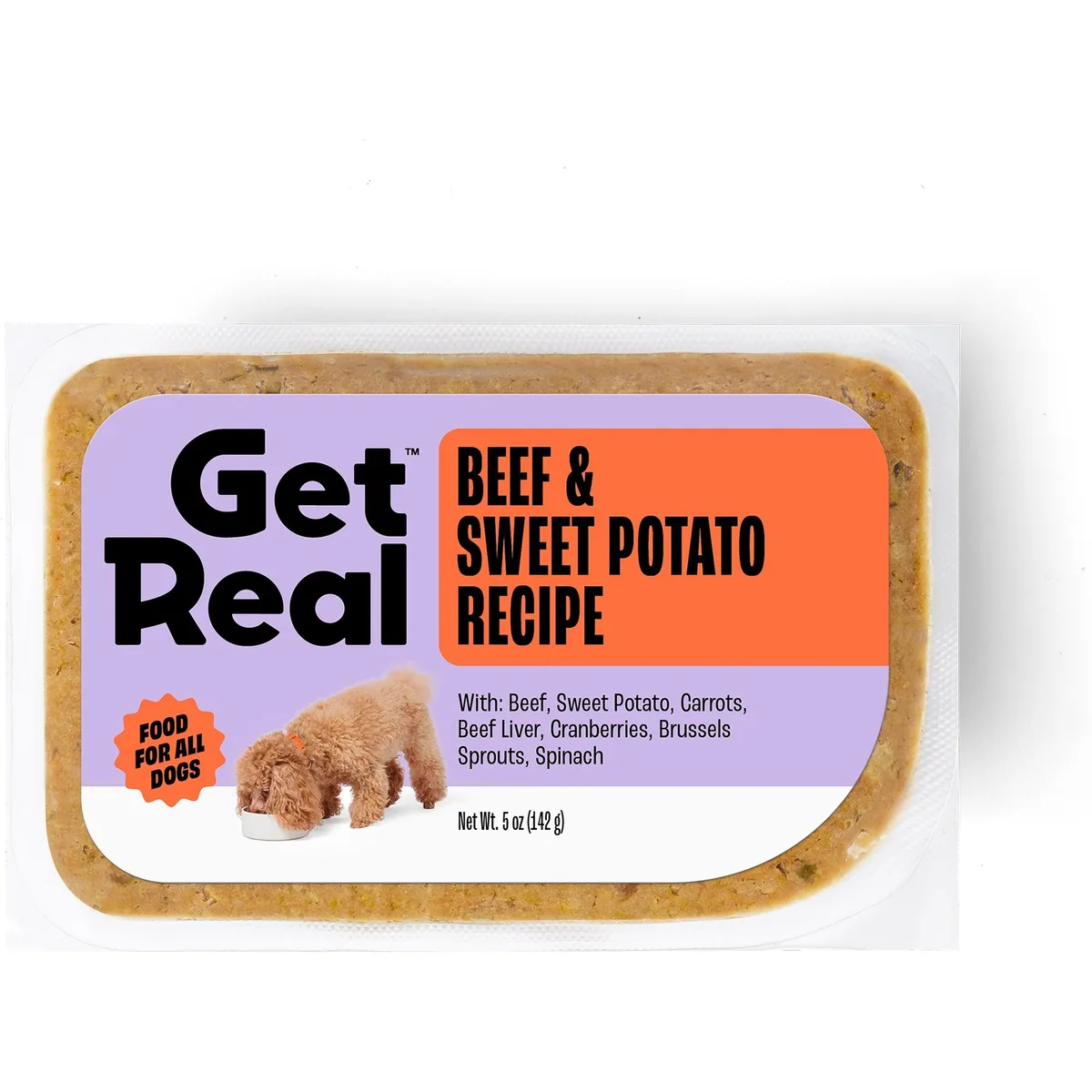
The difference between a sweet potato meal for dogs and a spoonful on the side is balance. The plain sweet potato you cook at home is a treat and fits inside the 10 percent allowance. In a complete and balanced recipe, sweet potato is measured alongside protein, fat, vitamins and minerals so the whole bowl meets AAFCO nutrient profiles. Complete and balanced means a recipe meets an AAFCO nutrient profile, in this case for all life stages, so it is formulated to be fed on its own as a full meal with nothing added. The Get Real Beef & Sweet Potato Recipe carries that all-life-stages statement.
The Get Real Beef & Sweet Potato Recipe, a fresh dog food sold only at Chewy, shows how that works:
- Ingredient order: beef first, then sweet potato, carrots, beef liver, cranberries, Brussels sprouts and spinach, followed by added vitamins and minerals.
- All life stages: Chewy states that its recipes meet AAFCO nutrient profiles for all life stages, including growth of large-size dogs (70 lb or more as adults).
- Short ingredient list: 10 ingredients or less plus vitamins and minerals.
- Guaranteed analysis: 9 percent minimum crude protein and 7 percent minimum crude fat.
- Calories: Chewy's product page lists 188, 451 and 902 kcal for the 5, 12 and 24 oz packs.
What sets it apart from a home-cooked side:
- Gently cooked, then frozen: the food arrives pre-portioned; thaw it in the fridge for 12 to 24 hours (35 to 48 hours for 24 oz packs) and use it within 3 to 5 days.
- Flexible use: serve it as a full meal or a topper, or use the 5 oz mixer packs to mix into kibble; 12 oz and 24 oz packs suit full meals.
- Human-grade ingredients: formulated with certified pet nutritionists and available in select markets.
- Subscription control: choose recipes and delivery frequency, then change, pause or cancel anytime.
If you are moving your dog onto fresh food, our week-by-week guide to transitioning to fresh dog food explains the switch; Chewy recommends mixing it in over 7 to 10 days, or 10 to 14 days for sensitive dogs. Once your dog is settled, the Get Real Chicken & Brussels Sprouts Recipe adds a second protein to the rotation. Curious about the other vegetable in these recipes? Read can dogs eat Brussels sprouts next.
Frequently asked questions about sweet potatoes for dogs
There is no single best vegetable for dogs, but green beans and carrots are favorites because they are low in calories and easy to digest. Sweet potato, pumpkin, peas and broccoli also work well. Stick to plain cooked vegetables in small amounts, and skip onions, garlic and leeks entirely.
For stool problems, plain canned pumpkin usually wins because it has fewer calories and more water, so you can give a little more. Sweet potato brings more beta-carotene and makes the better snack or topper. Both are safe cooked and plain.
Yes, it can. Beta-carotene pigment from sweet potato can tint stool orange, which is harmless. Black or bloody stool, or diarrhea lasting more than a day or two, needs a call to your veterinarian.
Yes, if the daily amount stays within 10 percent of daily calories and the rest of the bowl is a complete and balanced diet. For most medium dogs that means 2 to 3 tablespoons of plain cooked sweet potato or less. Diabetic and overweight dogs need their vet's input first.
Peeling is best. A peeled and cooked sweet potato is easier to digest, while the tough skin can cause stomach upset, especially in small dogs. A bite of cooked skin is not dangerous.
Yes, though it is uncommon. Signs include itchy skin, ear infections, vomiting or diarrhea. Your veterinarian can confirm a sweet potato allergy with an elimination diet that removes it and then reintroduces it.
BVMS, MRCVS
Dr. Pippa Elliott, BVMS, MRCVS, is a veterinarian with nearly 30 years of experience in companion animal practice. Dr. Elliott earned her Bachelor of Veterinary Medicine and Surgery from the University of Glasgow. She was also designated a Member of the Royal College of Veterinary Surgeons. Married with 2 grown-up kids, Dr. Elliott has a naughty Puggle named Poggle, 3 cats and a bearded dragon.
Sign up for expert-backed reviews and safety alerts all in one place.

A Final Word (Disclaimer)
At Petful, our review integrity is paramount; we never exchange special treatment in our reviews for monetary or material rewards.
Nonetheless, when our readers click through to online merchants (including Chewy or Amazon), we receive a referral commission. This supports the running of our free blog, and we appreciate your backing.