Can Dogs Eat Brussels Sprouts? Benefits, Portions, and How to Serve Them
Can dogs eat Brussels sprouts? Yes, plain and cooked in small amounts. Learn how to cook them, how many sprouts to serve by dog weight, why they cause gas, and which stalks and dishes to avoid.

BVMS, MRCVS
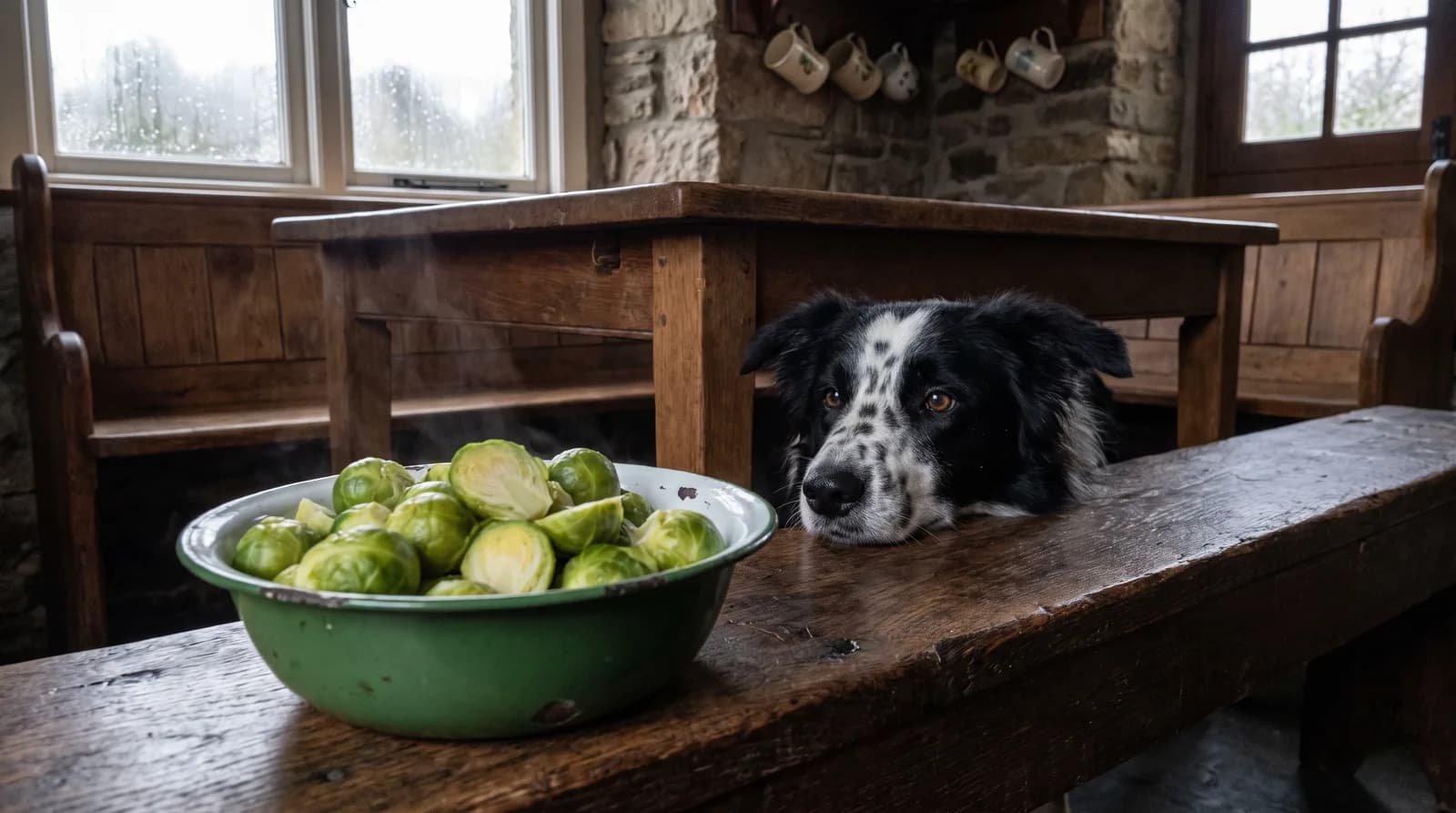
Plain steamed Brussels sprouts, halved, are the dog-friendly way to serve them.
Petful is reader supported. As an affiliate of platforms like Amazon and Chewy, we may earn a commission when you buy through links on this page. There is no extra cost to you.
- This article is sponsored by Get Real, the gently cooked fresh dog food sold at Chewy. Petful was paid for this placement and may earn a commission when you buy through links in this article. Product details come from Chewy's published information; the guidance and opinions are Petful's own.
Can dogs eat Brussels sprouts? Yes. Plain and cooked, a few at a time, Brussels sprouts are safe for most dogs and offer fiber and vitamins. The gas caveat is real, though: sprouts are one of the gassiest vegetables you can share, so the portion matters more than with most produce.
This question comes up most often around holiday meals, when a dog has already helped itself to a sprout or two. Below you will find why raw sprouts are a problem, how to cook them, a sprout portion by dog weight, why they cause gas and when gas is an emergency, which stalks, leaves and dishes to avoid, how sprouts compare with broccoli, and how they work inside a complete fresh recipe.

Sign up for expert-backed reviews and safety alerts all in one place.
Can dogs eat Brussels sprouts?
Yes, dogs can eat Brussels sprouts plain and cooked, a few at a time, and Brussels sprouts are good for dogs in those small amounts, with one gas caveat: they ferment in the gut, so too many cause flatulence. Are Brussels sprouts toxic to dogs or poisonous to dogs? No. They do not appear on the toxic plant and food lists from the ASPCA Animal Poison Control Center. Dogs are allowed to eat Brussels sprouts; the problems come from portion size, raw texture and what the sprouts were cooked with.
- 1Brussels sprouts are safe for most dogs when served plain and cooked, steamed or boiled, with no butter, oil, bacon or seasoning.
- 2Keep portions small: most dogs do best with one to four cooked sprouts a day depending on size, and toy dogs need only half a sprout.
- 3The gas caveat: sprouts often cause gas and loose stool, so start small and stop if your dog becomes gassy or uncomfortable.
- 4Raw sprouts are hard to digest, and whole sprouts can be a choking risk for small dogs.
- 5In a complete and balanced fresh recipe, sprouts are one cooked ingredient in a measured meal rather than a pile on the side.
Are Brussels sprouts bad for dogs in any way? The real downsides are digestive. Too many sprouts cause gas, bloating and loose stool, and a whole raw sprout can be hard for a small dog to chew and swallow safely. So are Brussels sprouts okay for dogs? Yes, with three conditions: cooked, plain and portioned.

Get Real Chicken & Brussels Sprouts puts cooked sprouts inside a complete recipe, so your dog gets the vegetable in a measured amount alongside chicken. It is gently cooked, then frozen, and can be served as a full meal or a topper.
Petful may earn a commission when you click through to Chewy, at no extra cost to you.
The benefits of Brussels sprouts for dogs come from a dense package of nutrients in a low-calorie vegetable:
- Dietary fiber, which supports regular stools and helps dogs feel full.
- Vitamin K, which the body uses for normal blood clotting and bone health.
- Vitamin C, an antioxidant; dogs make their own vitamin C, so this is a bonus rather than a requirement.
- Glucosinolates, sulfur-containing plant compounds that break down into isothiocyanates when sprouts are chopped, chewed or cooked. These compounds are studied for antioxidant effects in people; there is no evidence they prevent disease in dogs.
- Folate, potassium and manganese in modest amounts.
Brussels sprouts are also very low in fat, which makes a plain cooked sprout a reasonable reward for a dog on a weight-loss plan, as long as gas is not a problem.
Breeds and dogs that need extra care
Can French Bulldogs eat Brussels sprouts? Yes, but flat-faced breeds such as French Bulldogs, Pugs and English Bulldogs swallow a lot of air and are already prone to gas, so give them a smaller portion, finely chopped. If your dog likes Brussels sprouts and asks for them every time they appear, that is common; the earthy, slightly sweet flavor of a cooked sprout appeals to many dogs.
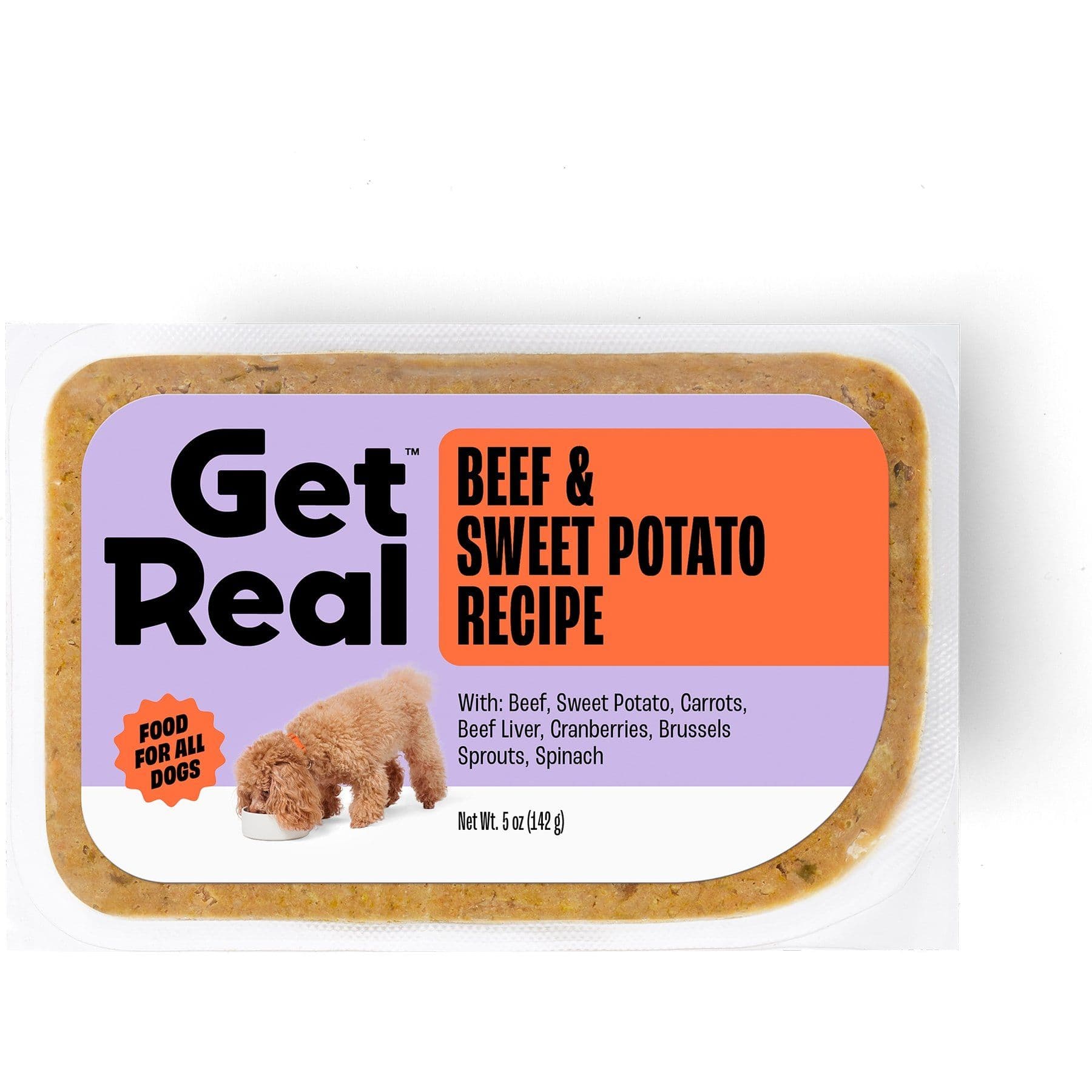
If you would rather not cook sprouts for your dog, Get Real Beef & Sweet Potato lists Brussels sprouts among its ingredients, already gently cooked as part of a complete meal. Thaw it in the fridge and serve.
Petful may earn a commission when you click through to Chewy, at no extra cost to you.
Raw vs. cooked Brussels sprouts for dogs
Can dogs eat Brussels sprouts raw? It is better not to. Why can't dogs have raw Brussels sprouts? Raw sprouts are hard to digest because their tightly packed leaves and tough fiber resist a dog's short digestive tract, and they are more likely to cause gas and an upset stomach. The fix is simple: steam or boil them until tender, which softens the fiber and makes the sprout far easier to chew and digest.
Uncooked sprouts carry a second risk. A whole raw sprout is firm and round, roughly the size of a large marble, and a small dog that gulps one can choke or end up with a piece stuck in the esophagus. Cooking softens the sprout, and halving or quartering it removes most of the choking hazard.
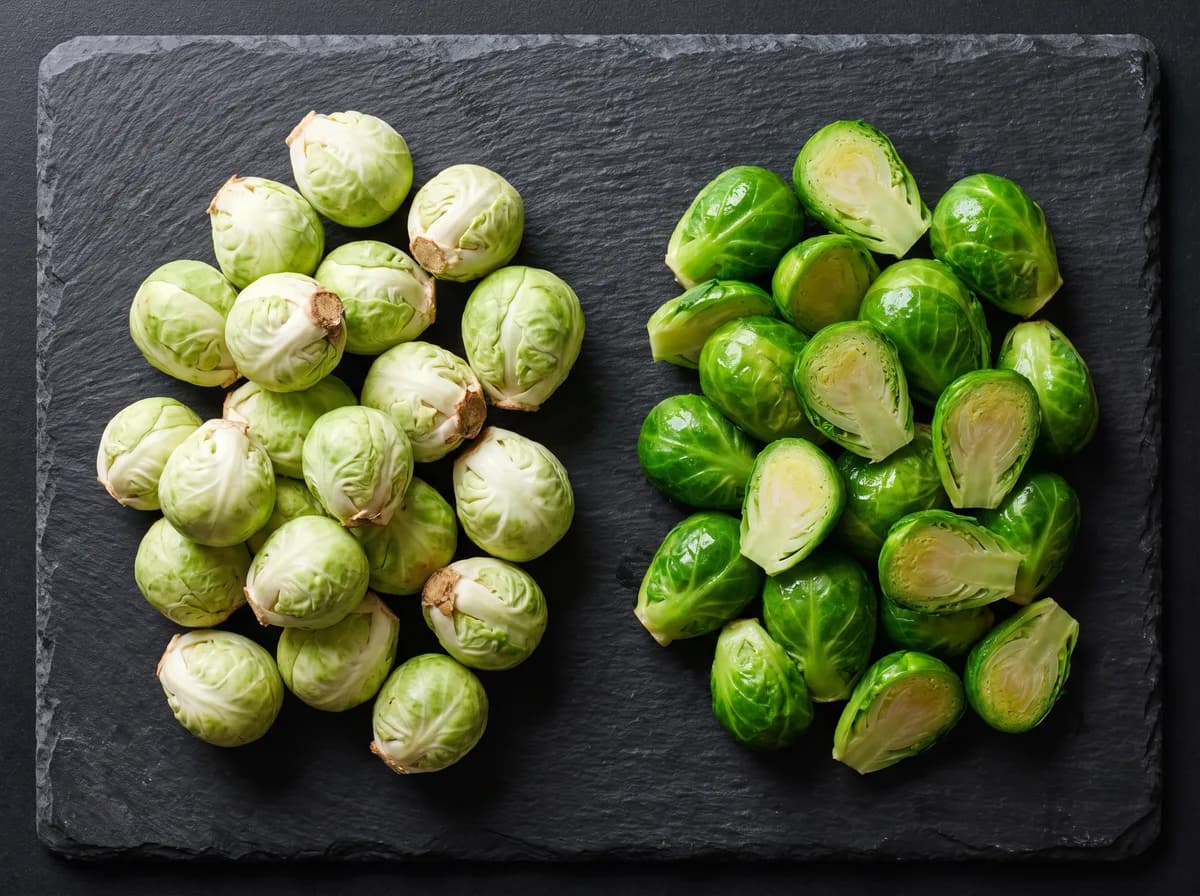
Cooking solves both problems, and it takes only a few minutes. Here is how to prepare Brussels sprouts for your dog:
- Rinse the sprouts and trim the dry stem end; peel off any yellow or damaged outer leaves.
- Cut each sprout in half, or into quarters for small dogs.
- Steam or boil plain for about 6 to 10 minutes, until a fork slides in easily. Use no butter, oil, salt, garlic or seasoning.
- Cool completely and chop to a size your dog can swallow comfortably.
- Refrigerate leftovers and use them within 3 to 4 days.
- Raw sprouts are hard for dogs to digest, and a whole sprout is a choking risk for small dogs. Cook them until tender and cut them into halves or quarters before serving.
Steamed and boiled Brussels sprouts are the best choices, because both cook the sprout through without adding fat. Steaming keeps slightly more of the water-soluble vitamins, while boiling leaches some into the water, which hardly matters for a treat.
Can dogs have roasted Brussels sprouts? Only if they were roasted plain. Most roasted sprouts are tossed in oil, salt and often garlic or balsamic glaze, and those additions are the problem, not the sprout. A sprout roasted dry with nothing on it is fine.
Can dogs eat frozen Brussels sprouts? Frozen sprouts are fine once cooked. Do not hand a dog a frozen sprout as a crunchy treat, since it is hard, round and a choking risk; cook from frozen by steaming or boiling, then cool and chop as above.
How many Brussels sprouts can a dog eat?
How much Brussels sprouts can a dog eat? Less than you might think. A plain cooked Brussels sprout has only about 8 calories, according to USDA FoodData Central values for boiled sprouts, so calories are rarely the limit. Gas is. Most dogs show their gas threshold well before they reach the 10 percent treat allowance that applies to all extras in a complete and balanced diet.
The sprout portion by dog weight below is built around that gas threshold rather than the calorie ceiling. It lists cooked sprouts per day, plain, cut in halves or quarters, for a day with no other vegetable treats.
| Dog size (weight) | Sprout portion by dog weight: cooked sprouts per day | Approximate calories |
|---|---|---|
| Toy (under 10 lb) | Half of one sprout, finely chopped | 4 |
| Small (10 to 25 lb) | 1 sprout, quartered | 8 |
| Medium (25 to 50 lb) | 2 sprouts, halved | 16 |
| Large (50 to 90 lb) | 3 sprouts, halved | 24 |
| Giant (over 90 lb) | Up to 4 sprouts, halved | 32 |
Start with half of the listed amount the first time and watch for the next 24 hours. When to stop: if your dog has noticeable gas, a gurgling stomach, loose stool or seems uncomfortable, stop the sprouts for a few days and try a smaller amount later, or skip them altogether. Some dogs simply do not tolerate cruciferous vegetables well, and that is fine; plenty of other vegetables are gentler.
A dog that tolerates sprouts can have a small portion every day, but a few times a week is a more practical rhythm and keeps variety in the treat rotation. If your dog's gas starts to smell like cooked Brussels sprouts after a serving, that is the sulfur effect described in the next section and a sign the portion was a little too generous.
For the bigger picture of vegetable portions, our guide to the best vegetables for dogs lists lower-gas options such as green beans and carrots that can share the same treat allowance.
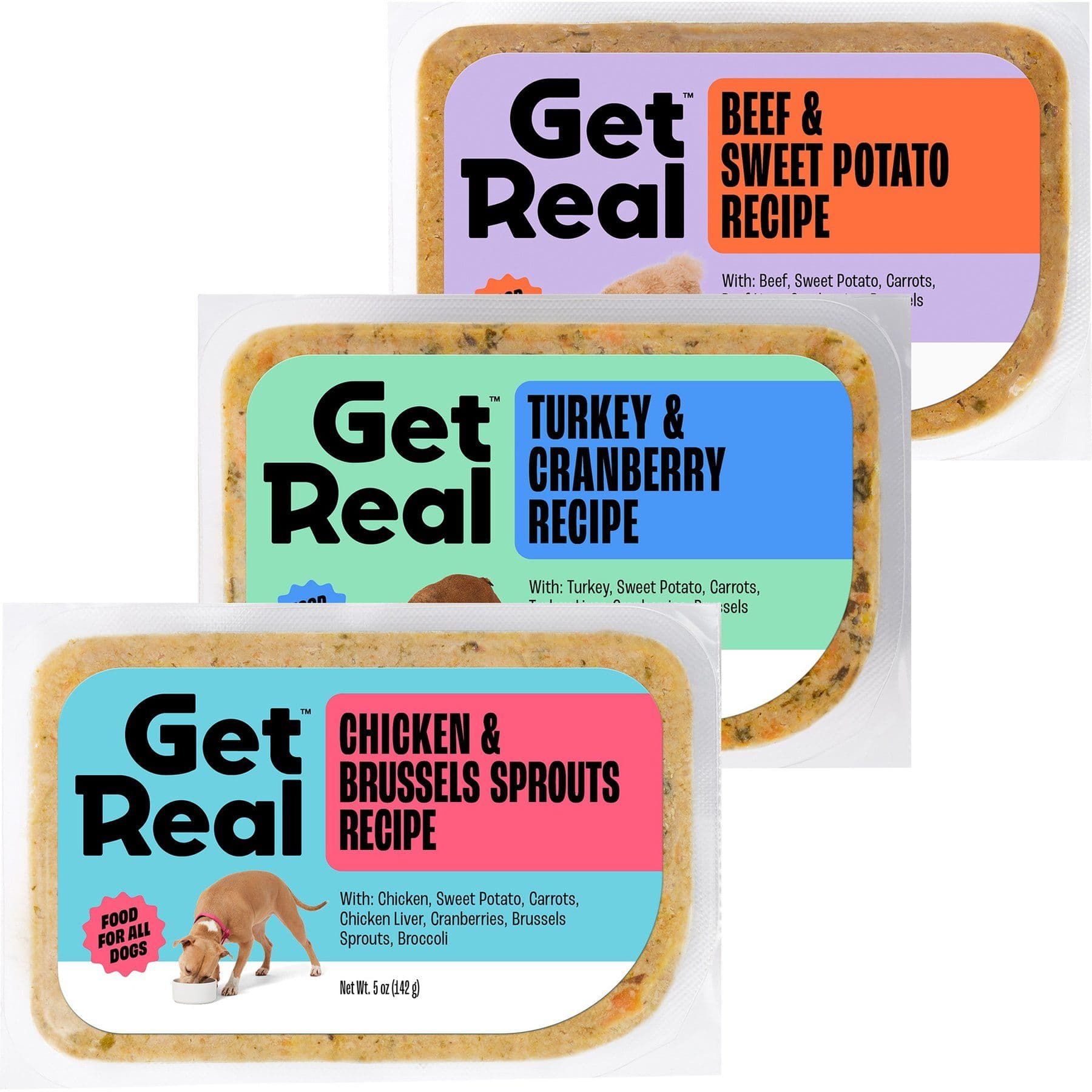
If you want vegetables in your dog's bowl without measuring sprouts, the Get Real Sampler Pack lets you try the Chicken, Beef and Turkey recipes to see which your dog prefers. Every recipe is pre-portioned and gently cooked.
Petful may earn a commission when you click through to Chewy, at no extra cost to you.
Why Brussels sprouts give dogs gas
Brussels sprouts produce gas for two reasons. First, like beans and other cruciferous vegetables, they contain raffinose, a sugar that neither dogs nor people can fully digest in the small intestine. It reaches the colon intact, where gut bacteria ferment it and release gas. Second, the sulfur-containing glucosinolates in sprouts break down into compounds that give that gas its distinctive smell.
Gas and bloating from sprouts are usually mild and pass within a day. You can reduce them by:
- Cooking sprouts thoroughly, since raw sprouts ferment more.
- Chopping them into small pieces so they are chewed and digested more completely.
- Introducing them slowly and keeping portions at or below the table above.
- Feeding sprouts as part of a meal rather than on an empty stomach.
- Avoiding sprouts for dogs who already struggle with flatulence or a sensitive stomach.
Normal gas is one thing; bloat is another. Gastric dilatation-volvulus (GDV), commonly called bloat, is a life-threatening emergency in which the stomach fills with gas and can twist. It is most common in large, deep-chested breeds such as Great Danes, German Shepherds and Standard Poodles, and its risk factors include eating large meals quickly. No single vegetable causes GDV, but a big holiday helping of rich food is exactly the kind of meal to avoid for at-risk dogs.
- Ordinary gas passes on its own. Get emergency veterinary care right away if your dog has a swollen belly, unproductive retching (trying to vomit with nothing coming up), restlessness, heavy drooling or pale gums, since these are signs of bloat.
The Merck Veterinary Manual describes GDV as an emergency that needs immediate veterinary treatment; it does not resolve at home.
To judge whether the smaller portion is working, keep the portion exactly the same for one full week and watch three things:
- How often your dog passes gas.
- Whether the stomach gurgles audibly after meals.
- Whether stools stay formed.
Keep a simple note of the date, the portion and what you saw, which makes the pattern easy to spot and easy to share at your dog's next routine checkup. Some dogs never adjust to cruciferous vegetables, and that is a tolerance difference rather than a health problem. If gas is unchanged after a week on half a sprout, or if loose stool, belly discomfort or reluctance to eat appears at any point, drop Brussels sprouts entirely. If gas eases within two or three days and stools stay normal, that amount is your dog's ceiling, and there is no need to push higher; a lower-gas vegetable such as green beans or carrots can fill out the rest of the treat allowance. Hold that amount steady from then on rather than letting it creep up over the holidays.
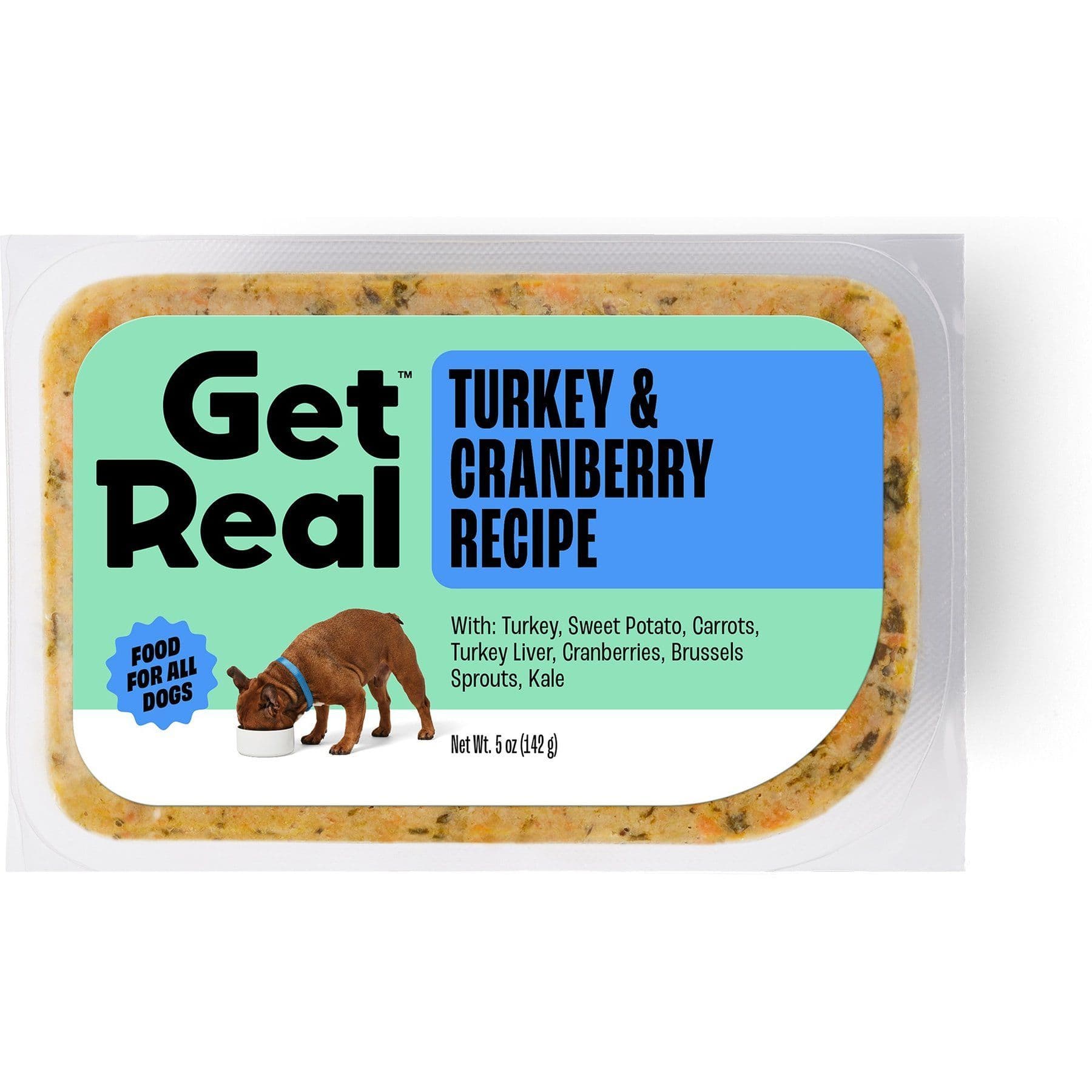
For a holiday-season bowl without the table scraps, Get Real Turkey & Cranberry offers turkey and cranberry in the same gently cooked, frozen format. It can be served as a full meal or a topper.
Petful may earn a commission when you click through to Chewy, at no extra cost to you.
Stalks, leaves, and Brussels sprout dishes
Brussels sprouts grow along a thick, woody stalk, and you may see whole stalks in grocery stores around the holidays. Can dogs eat Brussels sprout stalks? It is best not to let them. The stalk is fibrous and very hard, and a dog that chews on a Brussels sprout stalk can break off pieces large enough to cause choking or an intestinal blockage. The stalk is not toxic, but it is too tough for a dog to chew safely or digest, so treat it as inedible. Raw stalks are the hardest of all, and stems trimmed from the base of sprouts carry the same problem in miniature.
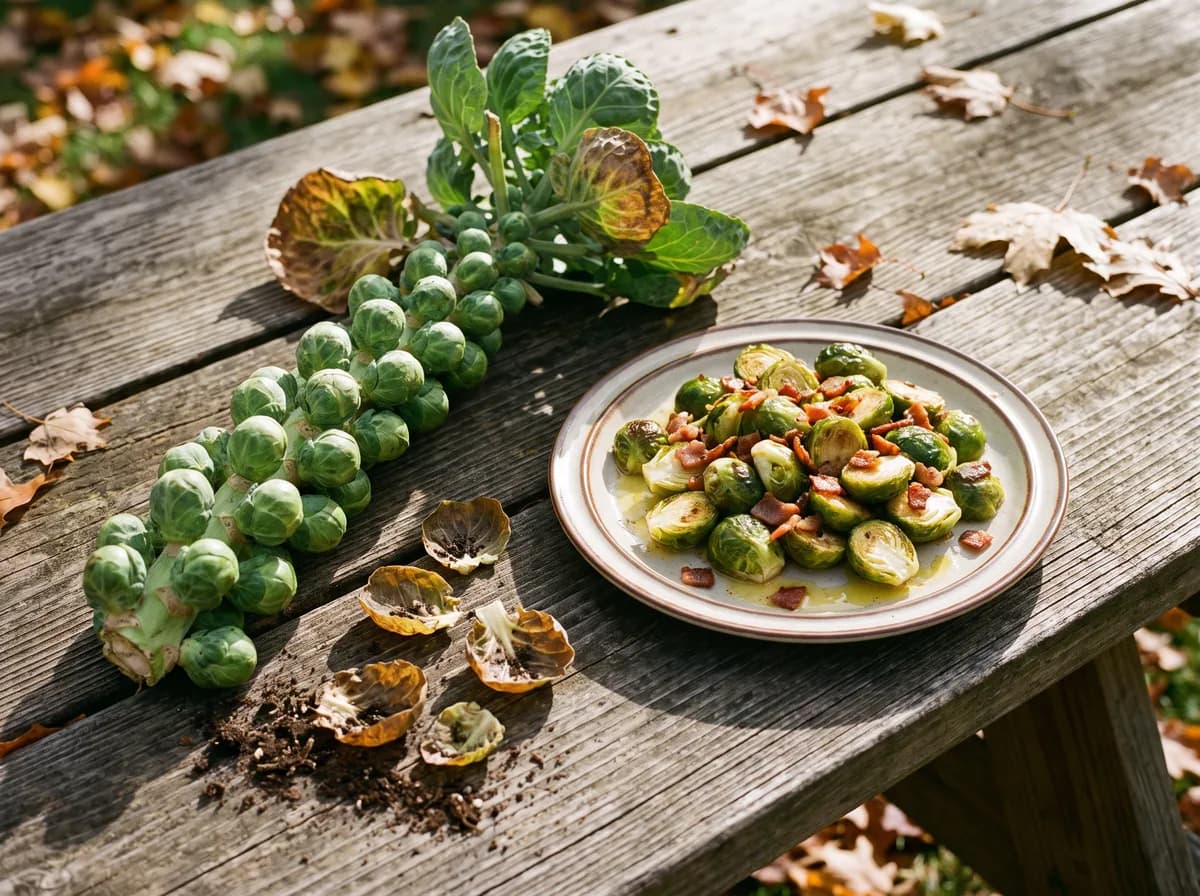
Can dogs have Brussels sprout leaves? Yes. The loose outer leaves that fall off while you trim sprouts are fine for dogs once cooked, and they are softer than the sprout core. Discard any yellowed or wilted leaves, and cook the rest plain.
Brussels sprout dishes are the real hazard. Restaurant and holiday recipes often add ingredients that are far worse for dogs than the sprout:
- Bacon: can dogs eat Brussels sprouts with bacon? Not a good idea. Bacon is high in fat and salt, and fatty foods can trigger pancreatitis.
- Garlic, onions and shallots: toxic to dogs in all forms, cooked or raw, and common in roasted sprout recipes.
- Butter, oil and cheese: add fat that can cause vomiting, diarrhea or pancreatitis.
- Balsamic glaze, honey and maple syrup: add sugar a dog does not need.
- Nuts and raisins: some nuts, such as macadamias, are toxic, and raisins, which sometimes turn up in sprout salads, are dangerous for dogs.
If your dog stole a single buttered sprout, it will probably be fine. If it ate a dish containing garlic, onion, raisins or macadamia nuts, call your veterinarian or a poison control line.
Brussels sprouts vs. broccoli and other cruciferous vegetables
Brussels sprouts belong to the cruciferous (cabbage) family along with broccoli, cauliflower, cabbage, kale and bok choy. Can dogs eat Brussels sprouts and broccoli together? Yes, but count them together too, because both cause gas and the effect adds up. Our guide to can dogs eat broccoli covers broccoli portions in detail.
Here is how the family compares for dogs:
- Broccoli: safe cooked or raw in small amounts; florets are softer than sprouts, and broccoli also contains isothiocyanates, so very large amounts can irritate the stomach.
- Cauliflower: can dogs eat cauliflower and Brussels sprouts? Both are safe plain and cooked; cauliflower is milder in flavor and usually causes a little less gas.
- Cabbage: safe cooked, and gassy in the same way as sprouts.
- Kale: safe in small amounts; it contains some oxalate, so dogs with a history of calcium oxalate stones should have it only with their vet's approval.
- Bok choy: safe cooked or raw and usually well tolerated.
Large, regular amounts of any cruciferous vegetable can, in theory, affect thyroid function, because some glucosinolate breakdown products interfere with iodine uptake. That effect has been described in other species eating large quantities of raw brassicas; small treat portions of cooked sprouts are not a practical concern for a dog on a complete diet.
Brussels sprouts for dogs with health conditions
Dogs with medical conditions can often still have a cooked sprout, but the decision depends on the condition and the diet your veterinarian has set.
- Kidney disease: are Brussels sprouts good for dogs with kidney disease? They are not harmful in tiny amounts, but sprouts contain potassium and some phosphorus, and dogs with kidney disease often eat a prescription renal diet with tightly controlled minerals. Ask your vet before adding them.
- Diabetes: can a diabetic dog eat Brussels sprouts? Usually yes. Sprouts are low in starch and high in fiber, so they have little effect on blood sugar. Keep the portion consistent from day to day, as consistency matters most for insulin dosing.
- Pancreatitis: plain steamed sprouts are low in fat and usually acceptable in small amounts; sprouts cooked with butter or bacon are not.
- Hypothyroidism: small cooked portions are unlikely to matter, but avoid large, frequent servings of raw cruciferous vegetables.
- Inflammatory bowel disease or a sensitive stomach: the gas and fiber may aggravate symptoms; skip sprouts unless your vet approves.
- Dogs on blood thinners: sprouts are rich in vitamin K, which affects clotting, so tell your vet before feeding them regularly.
When in doubt, a quick question to your veterinarian is the right move for any dog with a chronic condition.
Brussels sprouts in Get Real fresh dog food
Cooked sprouts inside a complete recipe are a different thing from a pile of sprouts on the side. A side of sprouts is a treat, limited by gas and the 10 percent allowance. In a complete recipe, the sprouts are cooked and measured alongside protein, fat, vitamins and minerals, so the whole bowl is formulated to meet AAFCO nutrient profiles rather than adding unbalanced extras. Complete and balanced means a recipe meets an AAFCO nutrient profile, in this case for all life stages, so it is formulated to be fed on its own as a full meal with nothing added. The Get Real Chicken & Brussels Sprouts Recipe carries that all-life-stages statement.
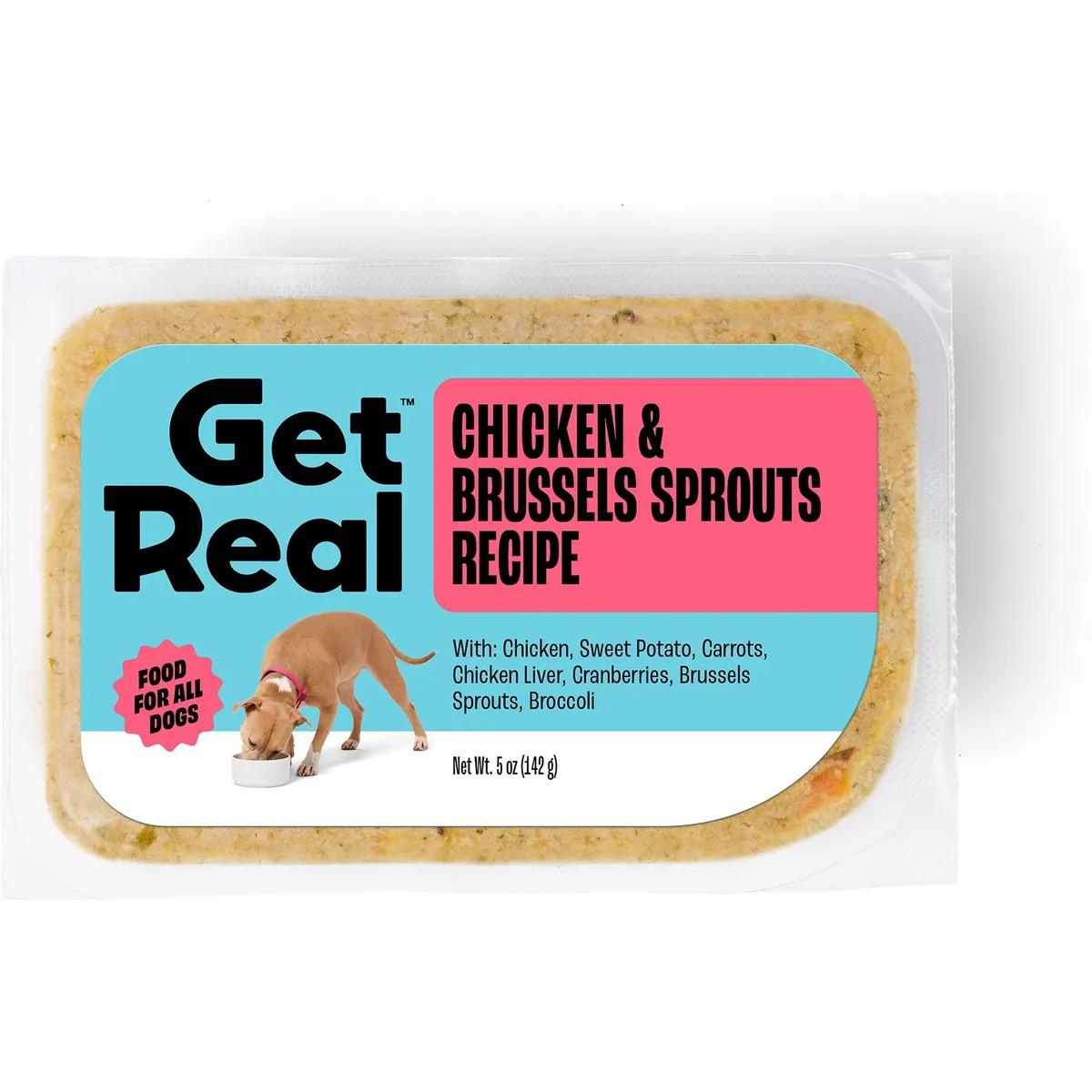
The Get Real Chicken & Brussels Sprouts Recipe is a fresh dog food sold only at Chewy that pairs chicken with Brussels sprouts. Chewy states that its Get Real recipes meet AAFCO nutrient profiles for all life stages, including growth of large-size dogs (70 lb or more as adults), and use 10 ingredients or less plus vitamins and minerals. The chicken recipe's guaranteed analysis lists 10 percent minimum crude protein, 8.5 percent minimum crude fat and 1 percent maximum crude fiber, with 1,260 kcal per kilogram. Brussels sprouts also appear in the Get Real Beef & Sweet Potato Recipe, where they follow beef, sweet potato, carrots, beef liver and cranberries in the ingredient list.
How the fresh format works:
- Gently cooked, then frozen: human-grade ingredients, formulated with certified pet nutritionists.
- Thaw and serve: thaw in the fridge for 12 to 24 hours (35 to 48 hours for 24 oz packs) and use thawed food within 3 to 5 days.
- Full meal, topper or mixer: 12 oz and 24 oz packs for meals, and 5 oz mixer packs to stir into kibble.
- Subscription you control: choose recipes and delivery frequency, then change, pause or cancel anytime; available in select markets.
Because any new food can cause gas or loose stool, introduce it slowly. Chewy recommends a 7 to 10 day switch, or 10 to 14 days for sensitive dogs, and our guide on how to switch dog food gradually walks through the steps. If your dog is gassy during the switch, slow it down. You can also rotate in the Get Real Turkey & Cranberry Recipe once your dog has settled. For the other vegetable that shows up in these recipes, read can dogs eat sweet potatoes.
Frequently asked questions about Brussels sprouts for dogs
The vegetables dogs cannot eat include onions and garlic, along with leeks, chives and shallots, which damage red blood cells in every form. Wild mushrooms can be deadly, raw green potatoes and tomato plants contain toxic compounds, and rhubarb leaves are poisonous. Brussels sprouts are not on that list.
Green beans and carrots are top choices because they are low in calories, crunchy and lower gas than cruciferous vegetables. Pumpkin, sweet potato, peas, cucumber and zucchini are also good options. Serve them plain, and cook the starchy ones.
Yes. A plain steamed sprout, cut in half or quarters, is a safe treat for most dogs. Make sure it has no butter or bacon, and no garlic, onion or seasoning.
No. Brussels sprouts are not poisonous to dogs. The usual side effects are gas and loose stool when a dog eats too many, which is why portions should stay small.
Yes, if you cook from frozen first. A frozen whole sprout is hard and round, which makes it a choking risk, so steam or boil it, cool it, and cut it up before serving.
Yes, in a smaller portion than other dogs their size. Flat-faced breeds swallow extra air and tend to be gassy already, so start with a quarter or half of a cooked sprout and stop if gas increases.
BVMS, MRCVS
Dr. Pippa Elliott, BVMS, MRCVS, is a veterinarian with nearly 30 years of experience in companion animal practice. Dr. Elliott earned her Bachelor of Veterinary Medicine and Surgery from the University of Glasgow. She was also designated a Member of the Royal College of Veterinary Surgeons. Married with 2 grown-up kids, Dr. Elliott has a naughty Puggle named Poggle, 3 cats and a bearded dragon.
Sign up for expert-backed reviews and safety alerts all in one place.

A Final Word (Disclaimer)
At Petful, our review integrity is paramount; we never exchange special treatment in our reviews for monetary or material rewards.
Nonetheless, when our readers click through to online merchants (including Chewy or Amazon), we receive a referral commission. This supports the running of our free blog, and we appreciate your backing.