Best Dog Food for Dalmatians: Puppy and Adult Feeding Choices
Choose a Dalmatian's food using life-stage needs and individual urinary history. Compare verified JFFD recipe facts, understand the missing purine evidence, and plan portions with your veterinarian.

BVMS, MRCVS
Petful is reader supported. As an affiliate of platforms like Amazon and Chewy, we may earn a commission when you buy through links on this page. There is no extra cost to you.
Sponsored by JustFoodForDogs. We may earn a commission from purchases made through links in this article.
The best dog food for Dalmatians matches life-stage needs and individual urinary history. JustFoodForDogs offers complete recipes for puppies and adults, but growth eligibility does not establish suitability for urate-stone management. No current quantitative purine analysis was verified for the four recipes below, so none is presented as a validated low-purine or urate-preventive food.

Sign up for expert-backed reviews and safety alerts all in one place.
Start With Your Dalmatians Urinary History
Begin with life-stage adequacy and whether your dog has hyperuricosuria, known low-uric-acid status, or a history of urinary stones. UC Davis explains hyperuricosuria, an inherited condition involving increased uric acid in urine. Low-uric-acid lines differ, so breed identity alone does not establish every dog's risk.
Purines are not protein percentage, and a wet texture does not establish urinary suitability. Bring previous stone results, urine findings, and any known genetic information to the veterinarian. Those details help distinguish ordinary life-stage feeding from a plan requiring specific urate management.
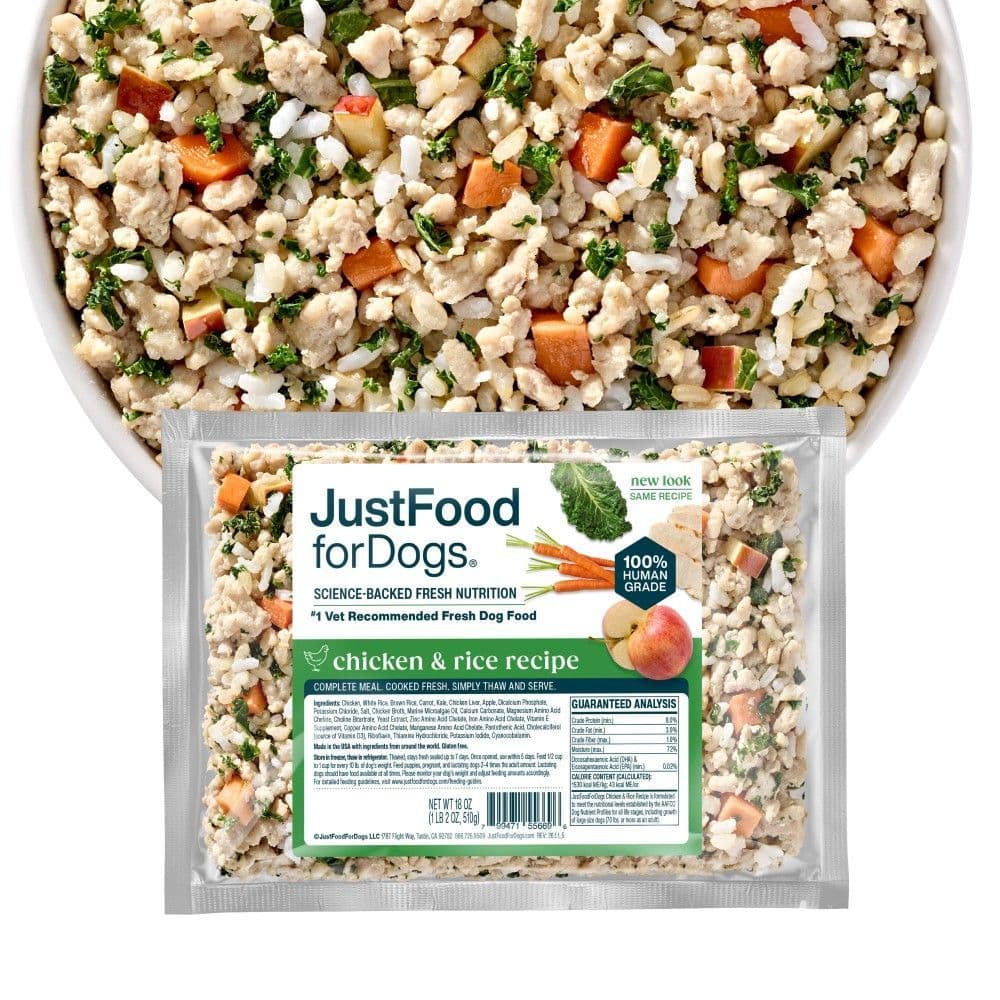
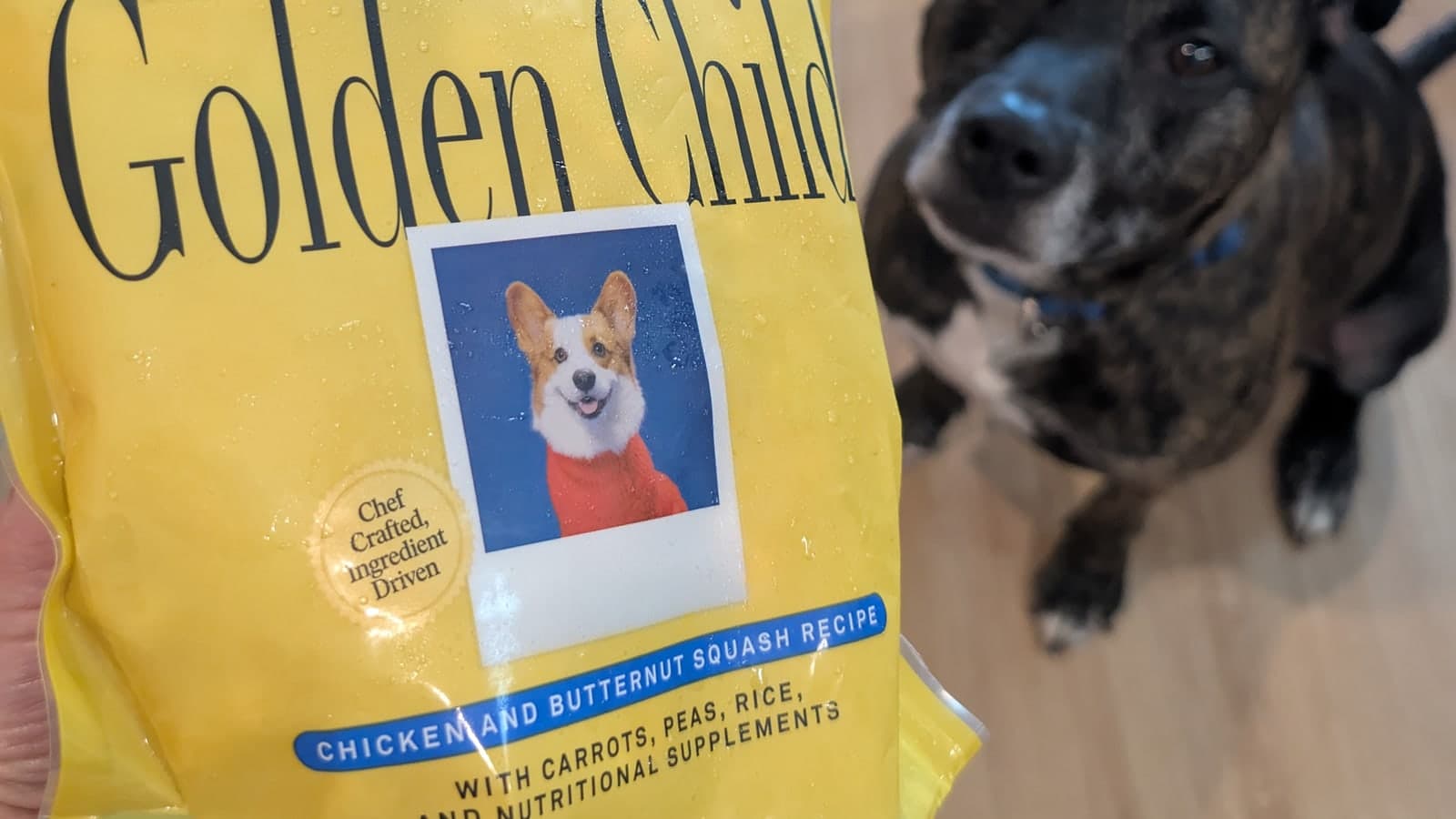
Review Chicken & Rice with your veterinarian for your Dalmatian's individual plan. Its purine suitability has not been verified.
Petful may earn a commission when you click through to JustFoodForDogs, at no extra cost to you.
- 1Check the exact life-stage statement.
- 2Establish whether purine analysis is needed for the individual plan.
- 3Use measured portions and veterinarian-directed monitoring.
The same distinction applies to homemade dog food for Dalmatians. A homemade recipe needs appropriate formulation for life stage and any urinary restrictions. Choosing ingredients from a low-purine list does not by itself create a complete diet or establish the finished meal's suitability.
Growth and Adult Nutritional Adequacy
A growing Dalmatian needs growth-qualified food. Current JFFD Chicken & Rice and Fish & Sweet Potato include all life stages, including growth of large-size dogs expected to reach 70 pounds or more as adults. Beef & Russet Potato and Turkey & Whole Wheat Macaroni are adult-maintenance recipes.
What is the #1 recommended puppy food?
There is no universal number-one puppy food. Growth adequacy matters, and urinary suitability is separate. Chicken and Fish include growth, but that statement does not answer the purine question. Discuss the exact recipe and the puppy's history with your veterinarian. Our Dalmatian puppy guide provides broader puppy-care context.
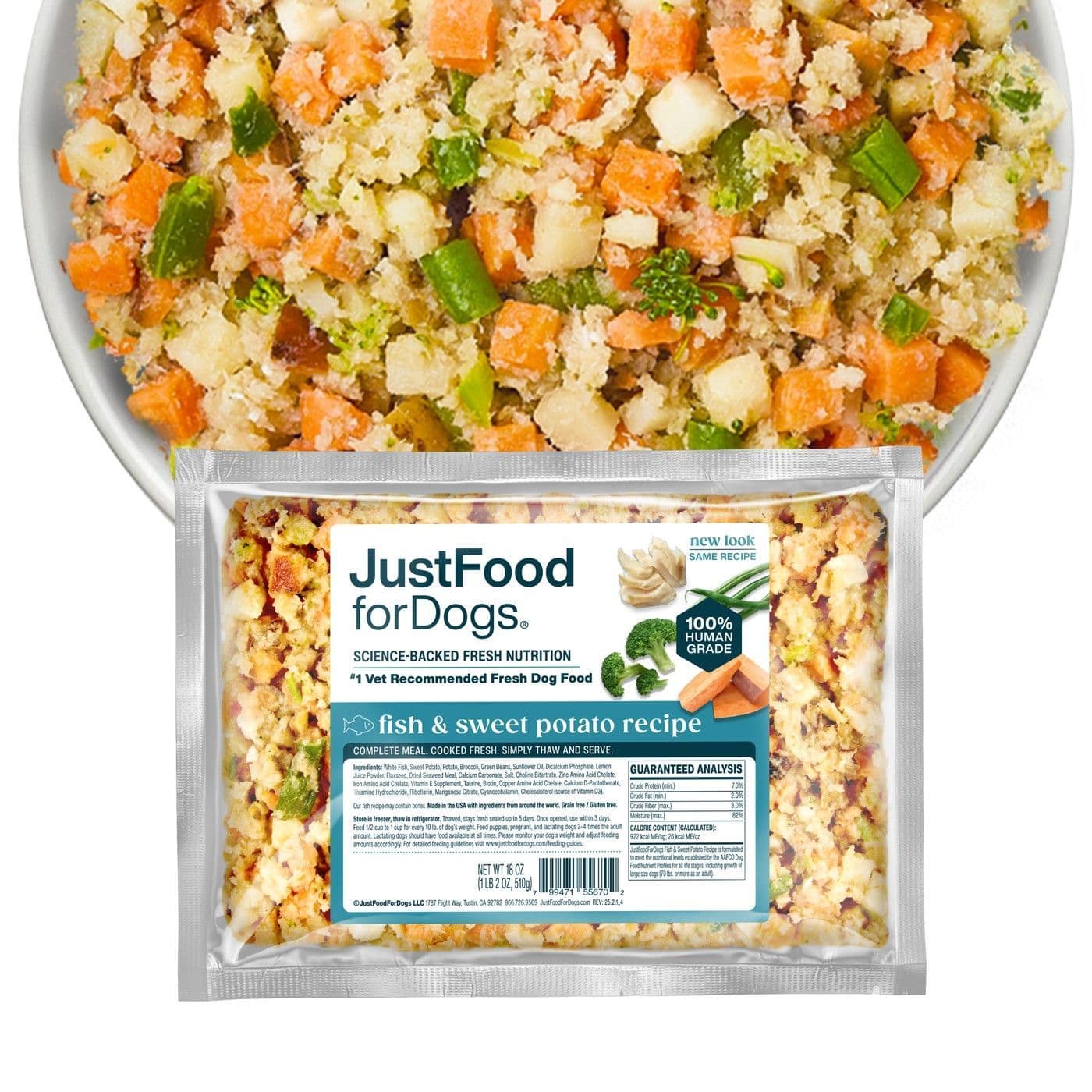
Fish & Sweet Potato includes growth in its life-stage statement. Have your veterinarian assess the separate urinary requirements; purine suitability remains unverified.
Petful may earn a commission when you click through to JustFoodForDogs, at no extra cost to you.
Where JFFD Recipes Fit the Individual Plan
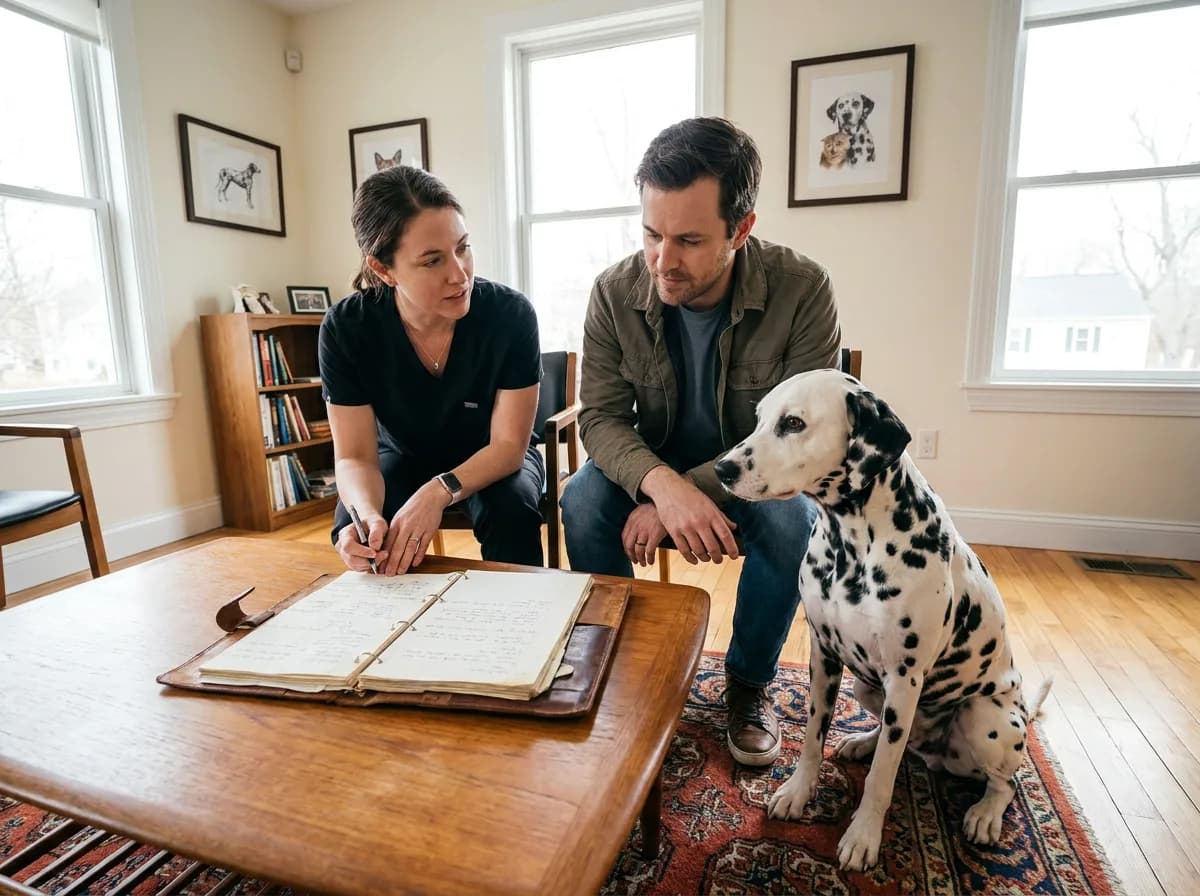
The following comparison separates ordinary life-stage feeding from HUU and urate management. It lists exact current JFFD recipe eligibility and calorie information for the product choices discussed here. Purine values cannot be inferred from protein percentage or ingredients, so urinary suitability requires evidence beyond those label facts.
| Recipe | Verified life-stage statement | Verified kcal/kg | Purine evidence | Urinary-use decision |
|---|---|---|---|---|
| Chicken & Rice | All life stages, including large-size growth | 1,530 | Purine data not verified | Urate-control efficacy not established |
| Fish & Sweet Potato | All life stages, including large-size growth | 922 | Purine data not verified | Urate-control efficacy not established |
| Beef & Russet Potato | Adult maintenance | 1,559 | Purine data not verified | Urate-control efficacy not established |
| Turkey & Whole Wheat Macaroni | Adult maintenance | 1,741 | Purine data not verified | Urate-control efficacy not established |
For a dog whose individual plan permits it, Chicken & Rice offers a grain-inclusive, growth-qualified option. Its label provides a basis for checking ordinary nutritional eligibility and calculating portions. It is not a verified urate-management recommendation.
Fish & Sweet Potato also covers growth. Its current blend includes cod, pollock, and haddock, and its calorie density differs from Chicken. Neither the fish ingredients nor the lower calories per gram establish low-purine suitability. Selection still depends on the individual plan.
Purines, Protein, and Missing Product Data
When comparing low-purine dog food brands, request finished-food purine analysis for the exact recipe rather than estimating from its name. Protein or fat percentage cannot supply that measurement. Ingredient lists can raise questions, but they do not quantify finished-food purines or prove urate-control efficacy.
UC Davis guidance on nutritional management of urinary stones supports matching dietary decisions to the stone problem and individual patient. Our guide to bladder stones in dogs and cats gives additional context. A previous urinary problem should not be treated as a reason to choose a different protein without further assessment.
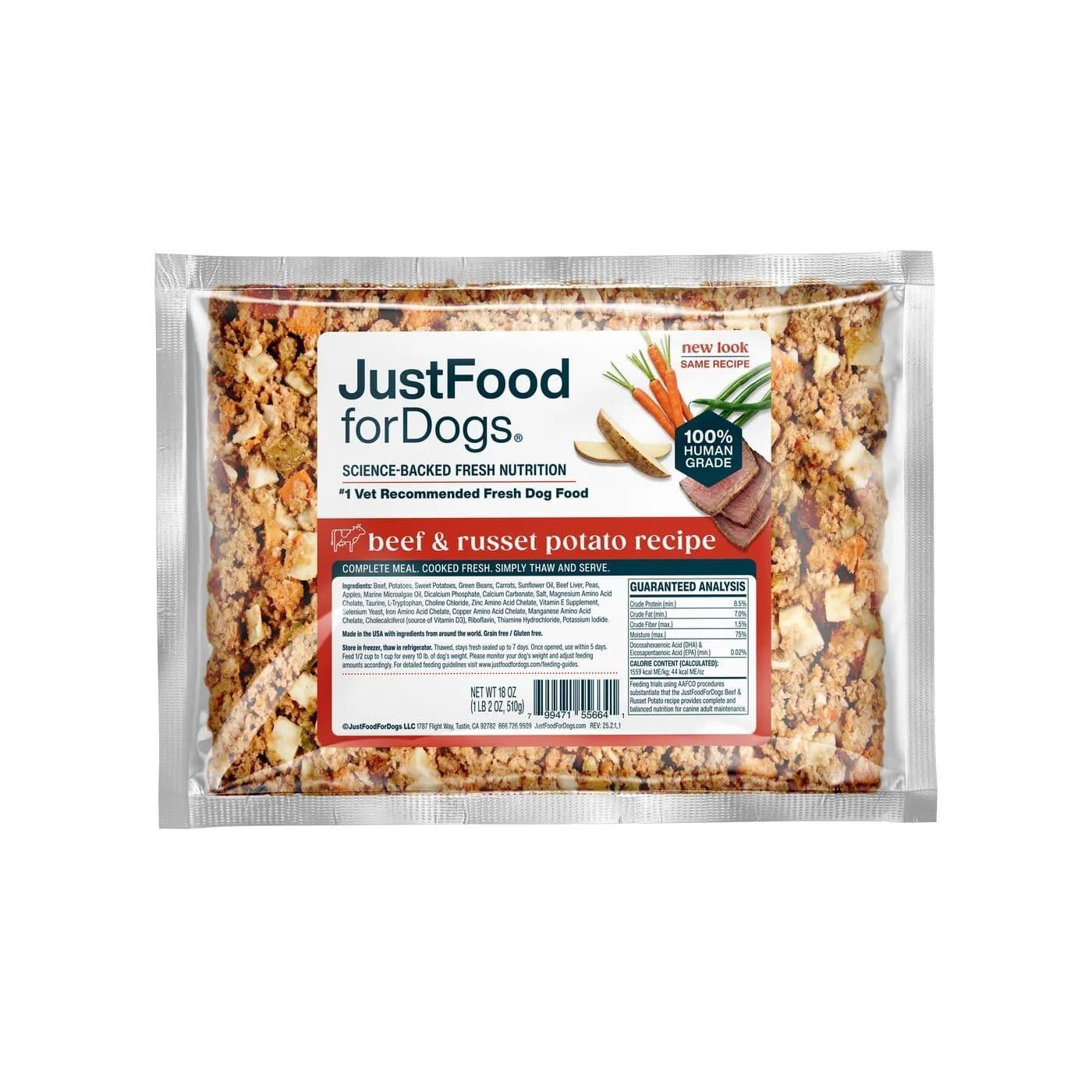
Discuss Beef & Russet Potato only if your veterinarian considers it suitable for your adult Dalmatian. Adult adequacy does not establish purine suitability.
Petful may earn a commission when you click through to JustFoodForDogs, at no extra cost to you.
For a closer look at fish as a protein source, see WebVet’s guide to fish-based dog food.
| Question | Evidence needed | Who establishes the plan |
|---|---|---|
| What is this dog's urinary risk? | Individual urinary history, HUU or low-uric-acid status, and prior stone findings | Veterinarian using the dog's records and appropriate assessment |
| Does the recipe fit the purine goal? | Finished-food purine analysis for the exact current recipe | Veterinarian evaluating manufacturer information |
| Does it meet puppy growth requirements? | Exact nutritional adequacy statement | Veterinarian assessing both growth and urinary needs |
| What hydration and monitoring are needed? | Individual monitoring plan and relevant urine findings | Treating veterinary team |
| Which extras are permitted? | Ingredients and suitability of treats, chews, and additions | Veterinary team within the same feeding plan |
Low-purine dog treats and homemade low-purine diets need the same scrutiny. Extras should fit the urinary plan as well as the calorie allowance. Do not replace a prescribed diet with a homemade ingredient combination or a retail recipe because it appears lean or contains a novel protein.
What to avoid in wet dog food?
Avoid choosing a wet food solely because its moisture content seems suitable for urinary care. Wet texture does not establish urinary suitability. Protein or fat percentage does not quantify purines, and an ingredient list cannot establish the finished food's purine content. Check complete-food adequacy and follow the individual veterinary restrictions.
For adults whose individual plan allows it, Beef & Russet Potato provides verified adult-maintenance nutrition and calorie information. Those facts support an ordinary recipe comparison; they do not resolve the missing purine evidence.
Portions, Water, and Monitoring
After the veterinarian selects a recipe, include permitted treat calories in the dog's total daily intake. Subtract those calories from the daily allowance before calculating the complete-food portion. Divide the remaining meal calories by recipe kcal/kg and multiply by 1,000 for grams per day. Reassess weight and body condition rather than assigning one portion to every Dalmatian.
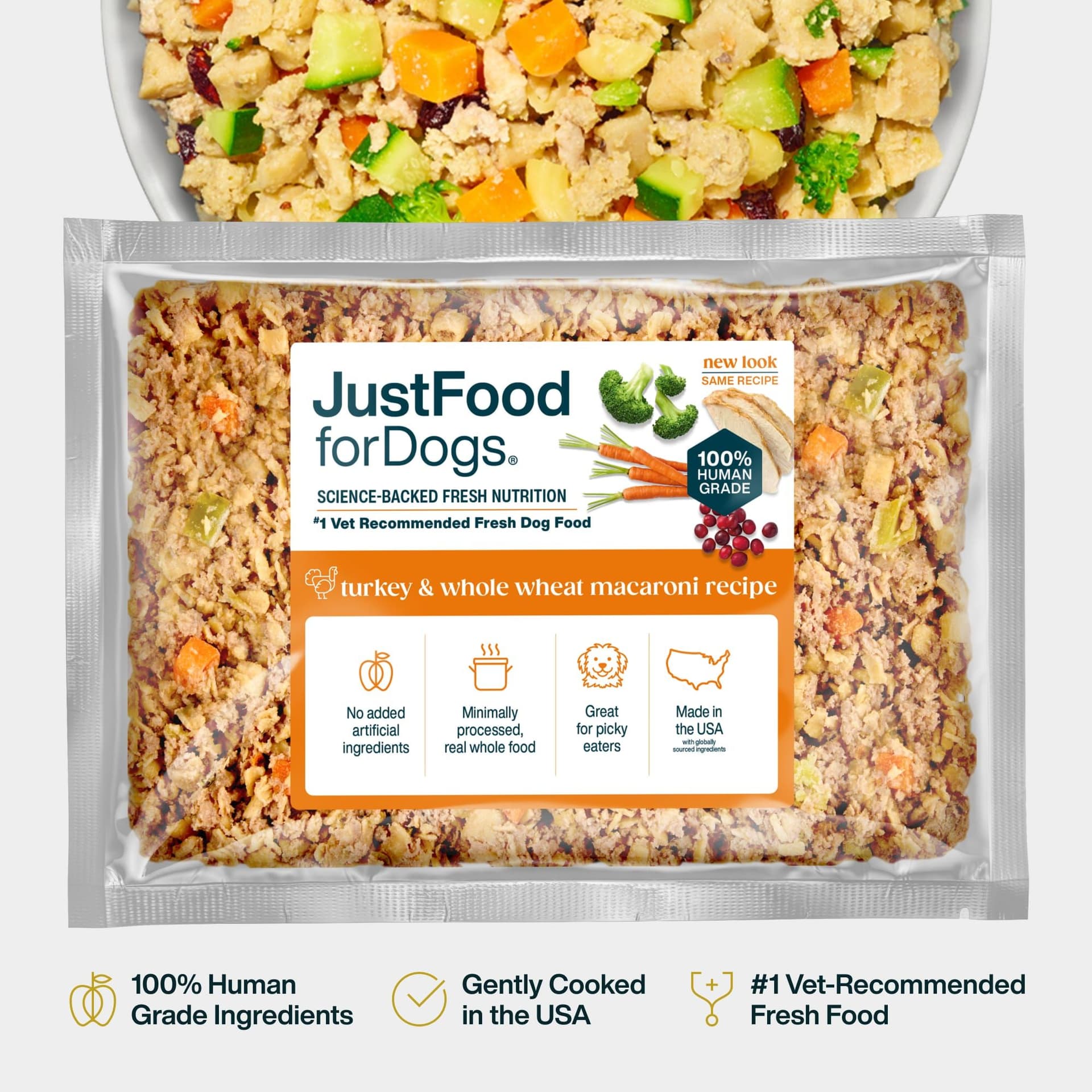
If your veterinarian approves Turkey & Whole Wheat Macaroni for your adult Dalmatian, calculate portions using its calorie density. Purine suitability has not been verified.
Petful may earn a commission when you click through to JustFoodForDogs, at no extra cost to you.
For example, an illustrative 500-calorie meal allowance would require about 327 grams of Chicken or 287 grams of Turkey. This demonstrates the calculation only; it does not establish either recipe's urinary suitability or prescribe 500 calories for your dog.
Turkey & Whole Wheat Macaroni is another adult-maintenance option when it fits the individual veterinary plan. Use its own calorie density when measuring meals; do not transfer a previous recipe's gram amount.
Follow veterinarian-directed hydration and monitoring for HUU or stone history. Ask about:
- Water access and any recommended meal-water additions.
- Permitted treats and chews.
- Urine testing and follow-up timing.
- Changes that require earlier contact.
Petful's explanation of a urine test for dogs describes this part of assessment. For typical male Dalmatian size, consult our Dalmatian breed profile; a breed weight range should not replace the dog's measured weight and body-condition assessment when calculating food.
Switching Foods and Veterinary Follow-Up
Use a gradual transition only after the veterinarian confirms that the new food fits the feeding plan. Record the old and new recipe amounts, permitted extras, and relevant changes. A prescribed urinary diet should not be replaced solely because another complete food has appealing ingredients. Verified storage instructions and the clinician's transition directions apply throughout the change.
The current JFFD FAQ gives Fish & Sweet Potato five refrigerated days sealed and thawed, or three days opened. Other fresh-frozen proteins discussed here have general limits of seven days sealed and thawed, or five days opened. Follow shorter package instructions and the applicable earlier deadline.
At follow-up, bring:
- The exact food and daily grams.
- Treats, chews, and additions.
- Appetite and weight changes.
- Questions about urine monitoring.
Breed identity also does not establish a food allergy. Persistent symptoms need individual assessment, and none of these recipes should be presented as curing a urinary condition or allergy.
Frequently Asked Questions
They need life-stage appropriate complete food selected with individual urinary history in mind. Hyperuricosuria or low-uric-acid status can affect the assessment. A veterinary feeding plan should address both nutritional adequacy and any urinary restrictions, rather than relying on the breed name alone.
No. Protein percentage does not quantify purines. Finished-food purine data are needed to assess a recipe against a specific purine goal. Reducing protein without considering complete nutrition and the dog's needs is not a substitute for that assessment.
No verified quantitative purine data were available for the current recipe in this comparison. It is not validated for urate control here. Its growth statement, fish ingredients, and calorie information establish different facts and should not be used to infer purine suitability.
No. Growth adequacy is separate. The statement establishes nutritional suitability for the stated life stage, while purine suitability remains unverified without the relevant evidence. A Dalmatian puppy's plan may need to address both questions.
No. Hyperuricosuria and low-uric-acid lines differ. Individual history, known status, and veterinary assessment matter. Do not assume that all Dalmatians require an identical diet, or that absence of previous stones answers every future feeding question.
No. Hydration supports the plan but does not establish purine suitability. Follow the veterinarian's advice on water and monitoring while also selecting an appropriate diet. Adding water cannot replace missing evidence about the food.
Only if the veterinary team determines that the complete plan meets the puppy's needs. Check puppy growth requirements and the exact diet adequacy statement. An adult urinary designation does not automatically establish suitability for growth.
BVMS, MRCVS
Dr. Pippa Elliott, BVMS, MRCVS, is a veterinarian with nearly 30 years of experience in companion animal practice. Dr. Elliott earned her Bachelor of Veterinary Medicine and Surgery from the University of Glasgow. She was also designated a Member of the Royal College of Veterinary Surgeons. Married with 2 grown-up kids, Dr. Elliott has a naughty Puggle named Poggle, 3 cats and a bearded dragon.
Sign up for expert-backed reviews and safety alerts all in one place.
A Final Word (Disclaimer)
At Petful, our review integrity is paramount; we never exchange special treatment in our reviews for monetary or material rewards.
Nonetheless, when our readers click through to online merchants (including Chewy or Amazon), we receive a referral commission. This supports the running of our free blog, and we appreciate your backing.