Best Dog Food for Dachshunds: Miniature and Standard Options
Compare fresh food for miniature and standard Dachshunds, with clear puppy and adult choices, label-based portions, storage considerations, and a practical way to estimate daily feeding cost.

Miniature and standard Dachshunds may share a suitable recipe while needing different portions.
Petful is reader supported. As an affiliate of platforms like Amazon and Chewy, we may earn a commission when you buy through links on this page. There is no extra cost to you.
This article is sponsored by JustFoodForDogs. Petful maintains editorial control and may earn a commission from qualifying purchases, at no extra cost to you.
The best dog food for Dachshunds is a complete recipe suited to your dog's life stage, served in an amount that fits the individual dog. A miniature Dachshund and a standard Dachshund can eat the same suitable recipe, but they should not automatically receive the same bowlful. Puppy suitability, calories per ounce, and how easily you can measure the food are more useful starting points than a Dachshund picture on the package.
JustFoodForDogs offers several practical ways to make those decisions. Its Fresh Frozen range includes Chicken & Rice and Fish & Sweet Potato recipes with all-life-stages nutritional adequacy statements, alongside adult-maintenance choices such as Beef & Russet Potato. JustFresh Home-Cooked Chicken adds a shelf-stable option for adult dogs. Choosing among them starts with the dog, then the recipe, then the portion.
Choose complete daily nutrition with life stage suitability first. For miniature and standard Dachshunds, measure the serving from the recipe's calorie density and your dog's individual allowance. Fresh food can make ingredient and portion choices straightforward, but the right amount still matters.

Sign up for expert-backed reviews and safety alerts all in one place.
Best food choices for Dachshunds
For a Dachshund puppy, start with a recipe whose nutritional adequacy statement covers growth or all life stages. For a healthy adult, an adult-maintenance or suitable all-life-stages recipe can work. This distinction is more meaningful than choosing the highest protein percentage or assuming every fresh recipe is interchangeable.
The following JustFoodForDogs options have different practical strengths. The comparison uses the manufacturer's current life-stage and energy information. These are product-label and feeding-fit recommendations, not results from a hands-on taste test, and no recipe is presented as a treatment for a medical condition.
| Food | Useful fit | Label life stage | Calories per ounce | Main practical consideration |
|---|---|---|---|---|
| JustFoodForDogs Chicken & Rice | A fresh starting point for puppies and adults | All life stages | 43 | Requires freezer space and refrigerator thawing |
| JustFoodForDogs Fish & Sweet Potato | A fish-based fresh option with a different energy density | All life stages | 26 | More ounces supply the same calories than the other recipes here |
| JustFoodForDogs Beef & Russet Potato | An adult fresh-food choice for dogs that enjoy beef | Adult maintenance | 44 | Not intended for growing puppies |
| JustFoodForDogs JustFresh Home-Cooked Chicken | Convenient adult meals without unopened freezer storage | Adult maintenance | 36 | Refrigerate after opening and follow the package's use period |

Chicken & Rice: a fresh option for puppies and adults
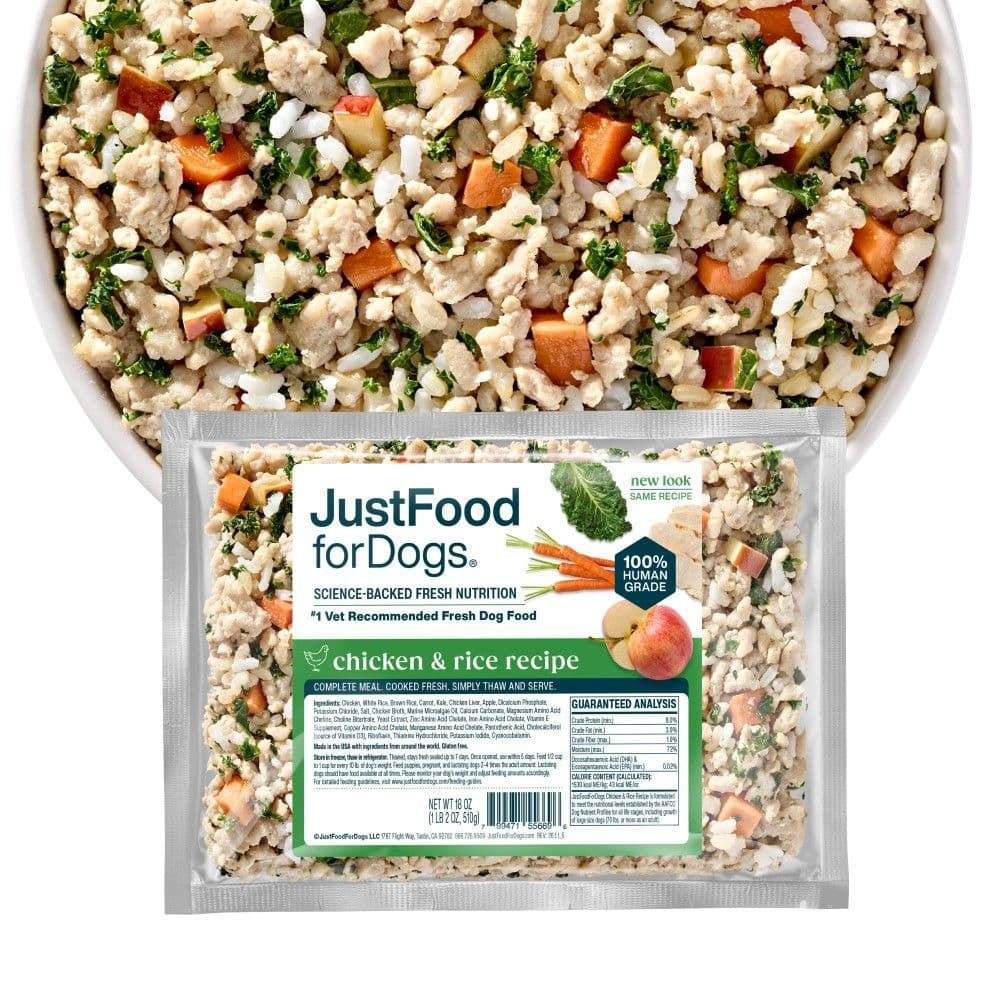
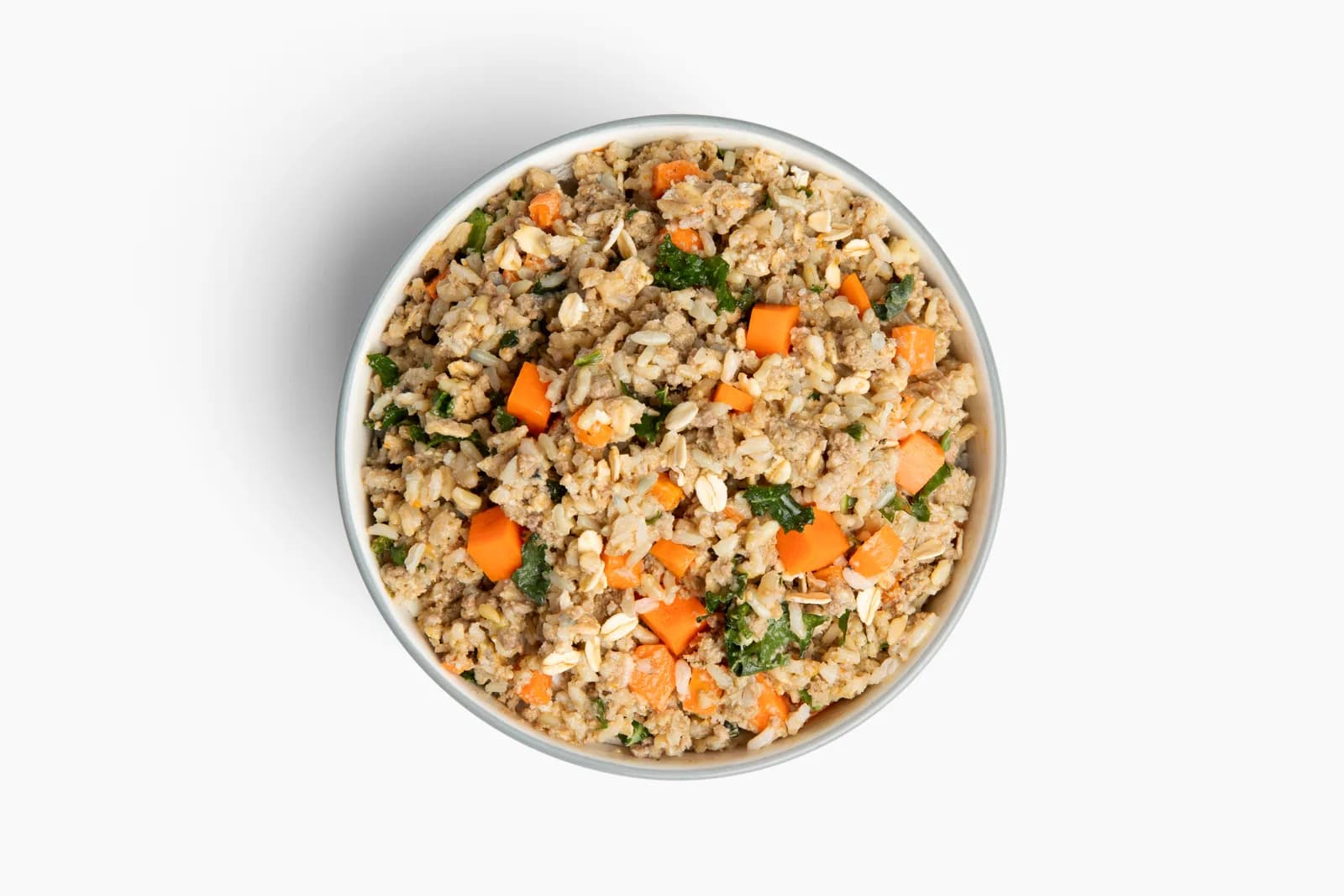
Chicken & Rice is a useful first recipe to consider when you want a fresh food that can suit a Dachshund during growth and adulthood. Its current formulation includes chicken thighs and liver, white and brown rice, and vegetables. The practical advantage is not that the ingredient list sounds familiar; it is that the recipe combines those ingredients with a complete formulation and an explicit life-stage statement.
At 43 calories per ounce, the food also lends itself to straightforward portion calculations. Once you know your dog's daily calorie allowance, you can divide that allowance by the recipe's energy density and weigh out the result. A small digital kitchen scale makes this easier than estimating whether today's spoonful looks like yesterday's.
Consider it when these features match your routine:
- You want one growth-eligible fresh recipe rather than an adult-only product for a puppy.
- Your dog does well with chicken and rice as part of a complete meal.
- You have freezer space and can thaw meals in the refrigerator.
- You prefer weighing a soft fresh meal to counting individual pieces of kibble.
For a household with both a puppy and an adult Dachshund, the same suitable recipe may simplify shopping. Keep each dog's portion separate, however. Sharing a recipe does not make their energy needs, meal schedule, or feeding instructions identical. A separate bowl and labeled serving container for each dog can prevent the larger portion from becoming the default for both.
Petful may earn a commission when you click through to JustFoodForDogs, at no extra cost to you.
Fish & Sweet Potato: a different protein and serving volume
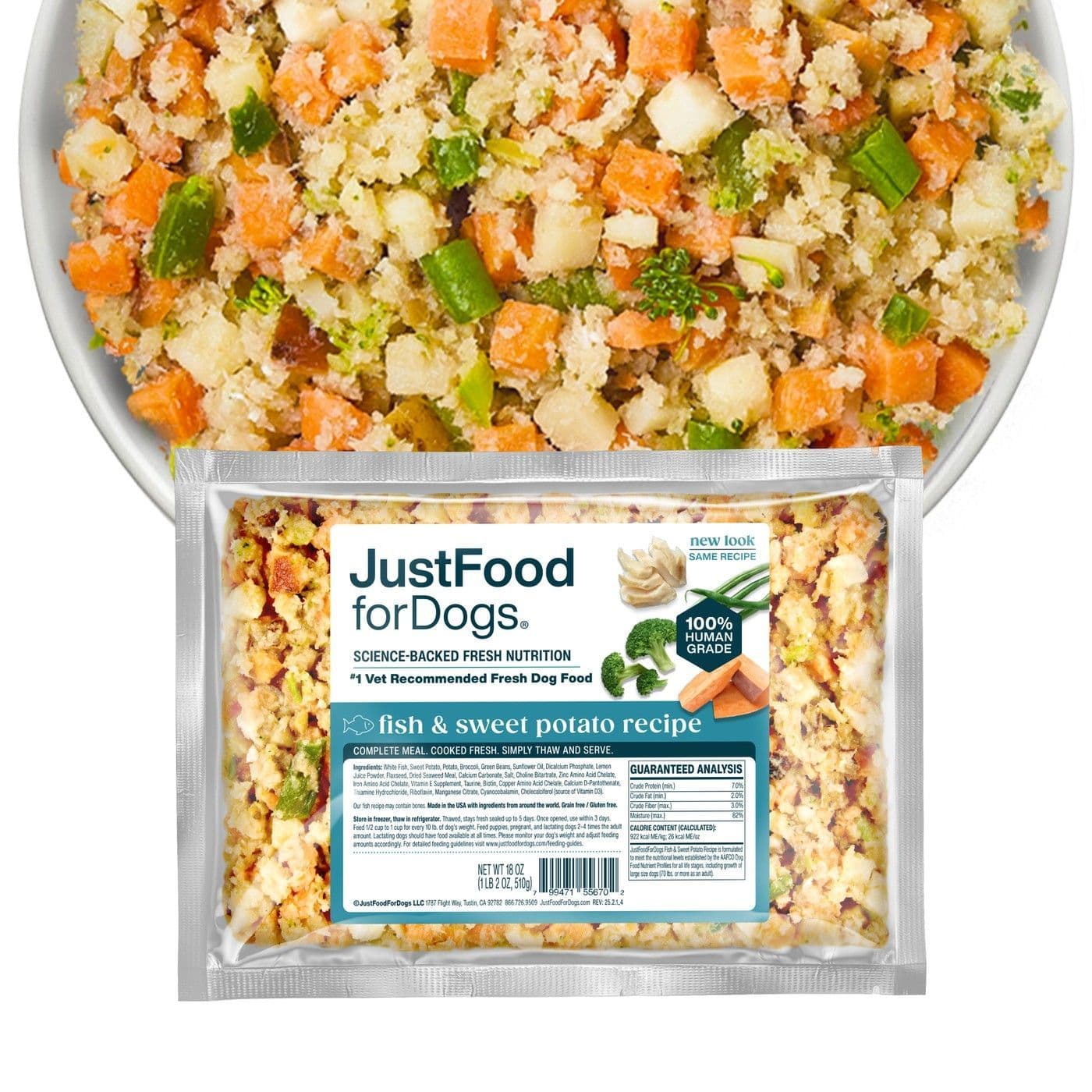
Fish & Sweet Potato offers another growth-eligible fresh option. Its current label lists 26 calories per ounce, compared with 43 for Chicken & Rice. That difference is useful when comparing actual portions: the same calorie allowance takes more ounces of Fish & Sweet Potato. It does not mean the larger serving contains more calories or that the smaller serving of another food is inadequate.
This is a fish-based recipe with sweet potatoes, russet potatoes, vegetables, and added nutrients. For an owner considering a different everyday protein, it gives a clear alternative within the fresh-food range. Choose it for its verified recipe characteristics and your dog's needs, rather than assuming that fish is automatically the best protein for every Dachshund.
The main decisions are practical:
- Does your dog enjoy and tolerate the recipe?
- Can you manage the larger meal weight associated with its lower calorie density?
- Will the pack size and thawing routine fit the amount your dog eats?
- Is the recipe appropriate for the dog's current life stage and any veterinary feeding advice?
The grain-free description tells you something about the ingredients; it is not, by itself, a reason to rank the food above a grain-inclusive option. Similarly, a fish-based recipe is not a substitute for an allergy investigation. For an otherwise healthy Dachshund, the useful comparison is between complete meals you can feed consistently, with their actual energy density and storage needs in view.
Petful may earn a commission when you click through to JustFoodForDogs, at no extra cost to you.
Beef & Russet Potato: an adult fresh-food choice
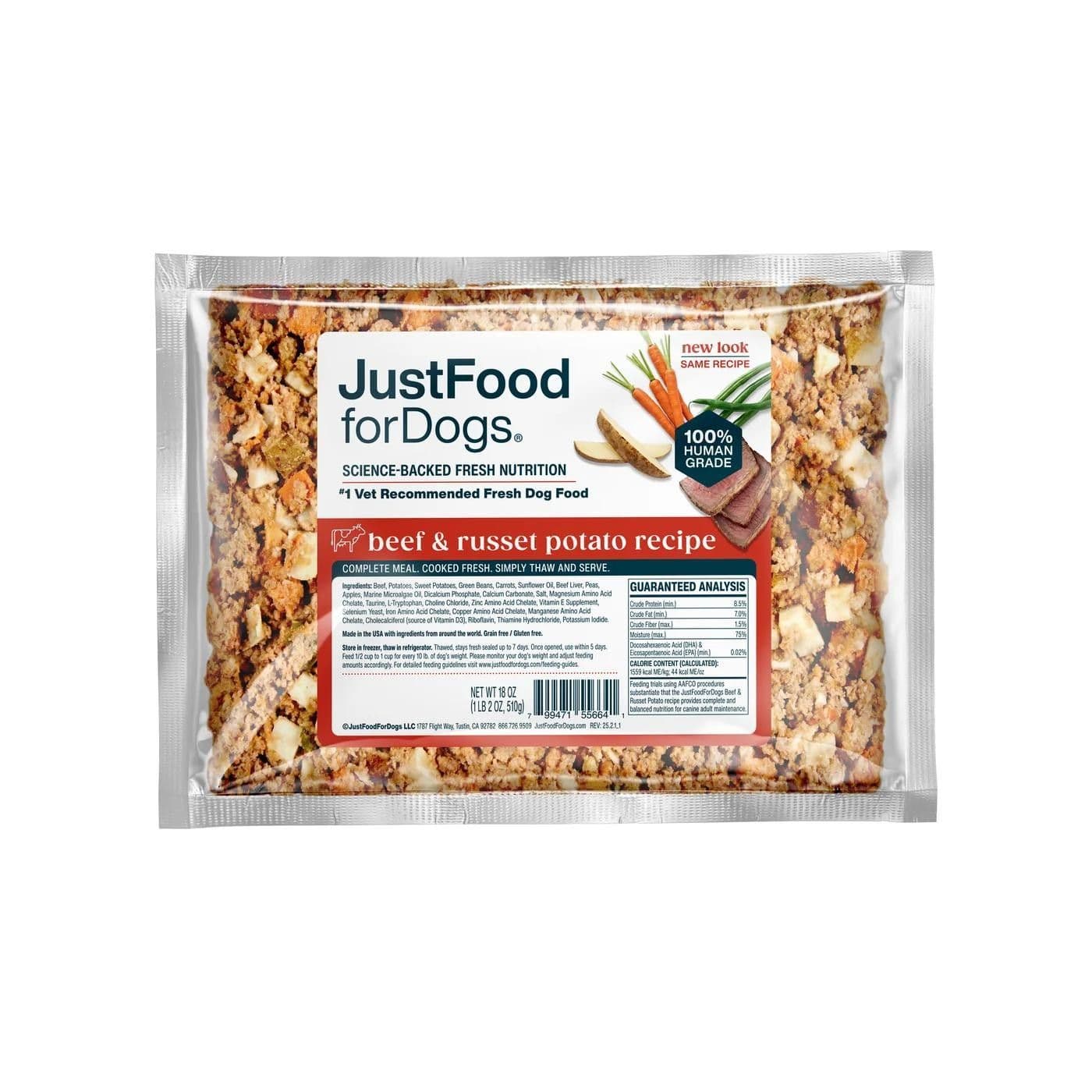
Beef & Russet Potato is an option for an adult Dachshund whose owner wants a beef-based fresh meal. The current label provides 44 calories per ounce and identifies the food for adult maintenance. That makes its place in the comparison clear: it belongs among the adult choices, rather than being substituted into a puppy plan because it is made by the same brand.
Its energy density is close to Chicken & Rice's current 43 calories per ounce. Moving between those two recipes would therefore produce a much smaller change in meal weight than moving between Beef & Russet Potato and the 26-calorie-per-ounce fish recipe. Exact quantities should still be recalculated from the current package, because recipes and labels can change.
It may fit a household that wants:
- A complete adult meal built around beef.
- Fresh Frozen food that can be divided into measured servings.
- A recipe that supplies an adult dog's calories without the larger ounce amount of a lower-density meal.
- A clear distinction between the adult dog's food and a puppy's growth-appropriate recipe.
An active standard Dachshund is not the only possible match, and a quiet miniature Dachshund is not automatically excluded. The deciding factor is the portion needed for that particular adult dog. Think of calorie density as information for serving the food accurately, rather than a label that sorts dogs into good and bad candidates by appearance alone.
Petful may earn a commission when you click through to JustFoodForDogs, at no extra cost to you.
JustFresh Home-Cooked Chicken: convenient adult meals
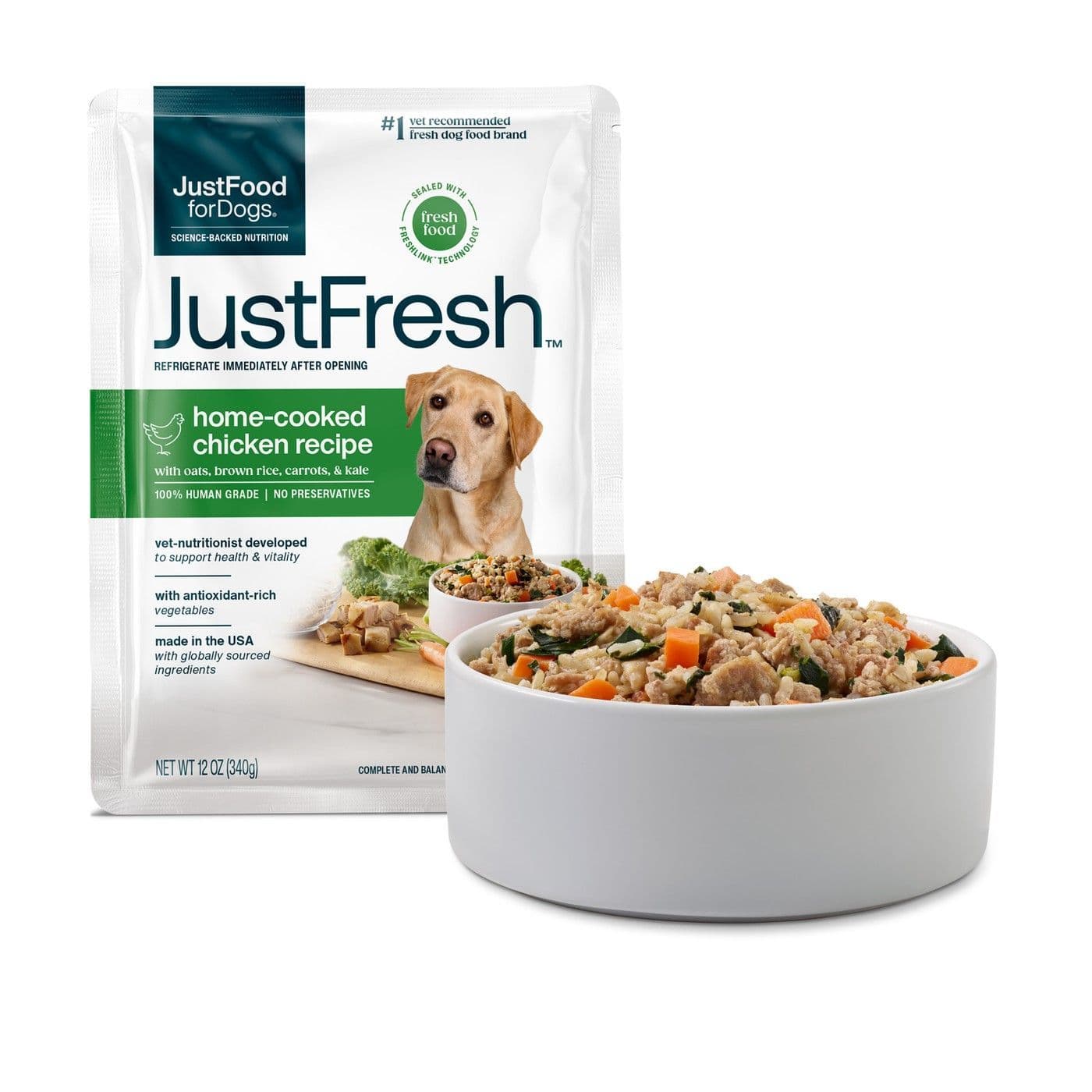
JustFresh Home-Cooked Chicken provides an adult-maintenance option in a shelf-stable format before opening. That can be especially convenient when freezer space is limited, when someone else will feed your dog, or when you want to keep an unopened supply on hand. Its current energy density is 36 calories per ounce.
The convenience is specific: unopened storage differs from Fresh Frozen food, while opened food still needs refrigeration and timely use. The current product directions call for refrigeration and use within three days after opening. A household with one small dog should therefore consider both the serving size and how quickly an opened package will be used.
This option is worth comparing when:
- Your adult Dachshund needs a complete everyday meal in a convenient format.
- You want to avoid managing a freezer-thawing schedule for every meal.
- A pet sitter would benefit from clearly measured, simple serving instructions.
- You can refrigerate the opened food and use it within the stated period.
Each JustFoodForDogs recipe offers a distinct feeding fit. Chicken & Rice Fresh Frozen and JustFresh Home-Cooked Chicken have their own formulas, energy densities, storage instructions, and life-stage statements. Recording the full product name on your feeding notes helps everyone in the household buy the intended meal and follow the matching portion and storage guidance consistently.
Petful may earn a commission when you click through to JustFoodForDogs, at no extra cost to you.
Miniature and standard Dachshund portions
A miniature Dachshund's small meal can look surprisingly modest next to a standard Dachshund's bowl. The important question is whether it supplies the individual dog's planned calories and complete nutrition, not whether the two meals look equally generous. A familiar bowl can make an accurate serving look too small simply because there is extra empty space around it.
Start with the dog's actual weight, life stage, activity, and body condition. The miniature Dachshund guide explains the size distinction, but a breed label should not replace an individual feeding assessment. Two dogs described as miniature can still need different amounts, and a standard Dachshund's needs can change when its activity or body condition changes.
Why weighing helps with small servings
Weigh small portions with a kitchen scale and count treats in the daily calorie allowance, so both meals and extras are measured consistently. If a dog's meal is only a few ounces, an extra ounce is a substantial addition. With a recipe providing 43 calories per ounce, that extra ounce contributes 43 calories whether it is described as a spoonful, a little topper, or the food left on the serving utensil.
A simple routine makes portions repeatable:
- Put the empty bowl on a kitchen scale and set the display to zero.
- Weigh the planned meal in the same unit used in your calculation.
- Record food used for training or enrichment as part of the day's intake.
- Keep one written set of instructions where everyone who feeds the dog can see it.
The scale is a consistency tool, not a prescription. It helps you follow the amount selected for your dog and makes later adjustments understandable. If weight changes unexpectedly, a record of what the dog actually received is more helpful than remembering that the bowl was usually filled to approximately the same line.
A smaller dog does not need an incomplete meal
Reducing the amount of an otherwise suitable complete food is different from replacing most of it with plain meat, rice, or treats. Complete foods are formulated as whole recipes. For a miniature Dachshund, the benefit of a formulated fresh meal is that the nutrients come together in the recipe rather than depending on the owner to balance separate ingredients by eye.
This is also why a small-breed marketing label should be read alongside the nutritional adequacy statement. A food may be designed for smaller mouths or sold in a convenient package, but those features answer a different question from whether it is suitable for growth or adult maintenance.
When comparing miniature and standard portions, keep three decisions separate:
- Recipe suitability: Does the food cover the right life stage?
- Daily amount: How many calories does this individual dog need from its meals?
- Serving practicality: Can you measure, store, and serve that amount reliably?
Longhaired, smooth-coated, and wirehaired Dachshunds all require complete nutrition. Coat type alone does not identify a special food formula or justify a different calorie target. It may change how easy the dog's outline is to see, which is another reason to use weight records and a veterinary body-condition assessment rather than judging the feeding plan from a photograph.
Keep ounces and grams in the same calculation
Choose one weight unit and its matching calorie value. Chicken & Rice supplies 1.53 kcal per gram, so a hypothetical 300-calorie food allocation is about 196 grams daily. The rounded 43 kcal/oz value gives about 7 ounces. Small differences reflect rounding; do not combine grams with calories per ounce.
Choosing food for a Dachshund puppy
The best puppy food for a Dachshund is a complete food with a nutritional adequacy statement covering growth or all life stages. A miniature Dachshund puppy needs that growth suitability just as a standard Dachshund puppy does. A smaller body does not make an adult-maintenance recipe a suitable shortcut.
The FDA explains complete and balanced pet food in terms of meeting an AAFCO nutrient profile or completing feeding trials using AAFCO procedures. The life stage named in the statement matters. Read that statement on the specific product rather than relying on the brand name or an appealing description on the front.
- Look for a growth statement or all-life-stages suitability on the exact recipe. Adult maintenance is a different feeding purpose. In this comparison, Chicken & Rice and Fish & Sweet Potato cover growth; Beef & Russet Potato and JustFresh Home-Cooked Chicken are adult-maintenance options.
Bring home the existing feeding information
For a new Dachshund puppy, obtain the exact food name, amount, unit, and meal schedule from the previous caregiver. Check its growth statement and review the routine with your veterinarian. This provides a stable starting point before changing to a suitable fresh recipe.
- The puppy's current age and most recent weight.
- The exact current recipe, including its life-stage statement.
- The amount served across the whole day, not just one meal.
- Any treats, chew rewards, or other food the puppy receives.
- The new food's calorie density and planned transition instructions.
Change recipes by calories, not equal spoonfuls
Calculate the new recipe's amount from the puppy's individual calorie plan. Chicken & Rice and Fish & Sweet Potato both cover growth but differ substantially in calorie density, so equal spoonfuls are not an equivalent substitution. Follow the transition guidance for the puppy and keep its meal schedule clear.
Make the adult-food decision deliberately
The move from puppy food to adult maintenance should follow the dog's development and veterinary guidance, rather than the day an adult recipe goes on sale. If the puppy is eating an appropriate all-life-stages food, there is not necessarily a need to change the brand or protein at the same time as its daily amount changes.
A helpful review at that stage covers three points:
- Is the dog still growing, or has the veterinarian advised that adult feeding is appropriate?
- Does the current food continue to suit its appetite, routine, and body condition?
- Would an adult-only option offer a useful storage, texture, or ingredient difference for your household?
That keeps the decision focused on the dog. It also makes the purpose of an adult option clear: you are choosing a suitable long-term meal, not correcting a presumed problem with a complete puppy food merely because the dog has reached an arbitrary birthday.
Feeding adult and senior Dachshunds
For adult and senior Dachshunds, eating habits and the complete diet belong in the same feeding assessment. Record what the dog actually eats, including the main meal and extras, then compare that routine with its individual needs. A suitable adult-maintenance recipe provides the nutritional foundation. An active dog that enjoys long walks and a quieter companion may need different amounts of the same food.
Body condition is a useful part of that assessment. The WSAVA nutrition resources include tools for evaluating body and muscle condition. Ask your veterinary team to show you how to assess your own dog, then use that guidance alongside weight records and the feeding history.

Count the whole feeding day
Include meals, treats, chews with calories, and training food in one daily record. A miniature Dachshund's smaller serving makes casual extras especially noticeable in the calculation. When several people feed the dog, use one shared allowance instead of separate estimates.
- Assign the planned meals rather than allowing each person to refill the bowl independently.
- Keep a separate allowance for rewards if the dog is doing regular training.
- Use the same measuring method at breakfast and dinner.
- Review the routine when activity, appetite, or household schedules change.
Senior dogs need an individual review
The best food for a senior Dachshund depends on the dog's current health, body condition, muscle condition, and ability to eat comfortably. A birthday alone does not tell you whether to reduce calories, change protein, or switch to a softer texture. Some older dogs remain active and eat their established complete food comfortably; others benefit from a reassessment.
Fresh or wet food can be convenient when an owner wants a soft format, but difficulty chewing deserves attention rather than being treated as a shopping problem alone. If an older Dachshund is dropping food, avoiding meals, or showing discomfort, have the cause assessed. Food selection can then follow the findings.
For a routine senior feeding review, take:
- The current recipe name and a photograph of its feeding label.
- The actual amount consumed, including extras.
- Recent weights or notes about changes in body shape.
- Observations about appetite, chewing, stool, and activity.
This creates a more useful conversation than asking whether every dog over a certain age needs a senior-labeled bag. An adult-maintenance recipe may continue to be appropriate for a healthy older dog, but that is an individual decision. There is no reason to replace a suitable food solely because another owner's Dachshund changed diets at the same age.
Fresh, wet, dry, and homemade options

The most useful format comparison is about how a complete food fits the dog and the household. Fresh, canned, and dry foods can differ in texture, water content, energy density, storage, and ease of measuring. A format name alone does not establish that a recipe is complete, suitable for puppies, or better for every Dachshund.
For owners comparing fresh meals with dry dog food for Dachshunds, Petful's food-label guide is a useful reference. Read the nutritional adequacy statement and calorie information before trying to compare serving sizes. A cup of dry food and an ounce of a fresh meal are different units, not interchangeable portions.
Fresh and wet food
Fresh meals can make weighing small portions straightforward, and the soft texture gives owners another option beyond kibble. The current JustFoodForDogs recipes in this guide show why exact product comparisons matter: two fresh meals can supply quite different calories in the same weight of food.
With Fresh Frozen meals, plan storage around the daily amount you actually use. Follow the current recipe's freezing, refrigerator-thawing, and opened-package instructions. For shelf-stable food, distinguish the unopened storage advantage from the handling required after opening. That distinction is especially useful for a miniature Dachshund that takes longer to finish a package.
Compare these practical points before ordering:
- How much freezer or pantry space the unopened supply requires.
- How long the package remains usable after thawing or opening.
- Whether you can use each opened package within that period.
- How easy it is for a sitter or family member to measure the correct serving.
For an adult dog whose owner values unopened pantry storage, JustFresh Home-Cooked Chicken offers a different routine from Fresh Frozen meals. That is a tangible convenience benefit, rather than a claim that storage format makes one complete food nutritionally superior to another.
Dry food and mixed feeding
Dry food can be convenient to store and portion, particularly when its pieces work well for training. To choose the best dry dog food for a Dachshund, use the same core checks: life-stage suitability, complete nutrition, calorie density, and a routine the owner can maintain. A breed-specific kibble shape is an additional feature, not a substitute for those checks.
If you feed a combination of suitable complete foods, calculate how much of the calorie allowance comes from each. Adding fresh food to a full kibble ration increases the total; replacing a measured share is a different decision. Keep the arithmetic visible instead of estimating the change from how full the bowl looks.
For example, if a plan allocates 100 calories to a 43-calorie-per-ounce fresh food, that portion is approximately 2.3 ounces. The remaining meal calories must come from the other food according to its own label. This is simply a conversion example, not a recommendation that every dog should receive a 100-calorie topper.
Compare moisture and protein fairly
A fresh food's protein percentage can look lower than a dry food's because the two products contain different amounts of water. The guaranteed analysis is generally presented with that moisture included. Comparing the printed percentages alone can therefore give a misleading impression of how much protein the foods contain relative to their dry material.
The FDA describes a dry-matter conversion for this purpose: subtract the moisture percentage from 100, then divide the listed nutrient percentage by the remaining dry-matter percentage and multiply by 100. That can make unlike formats more comparable, but it still does not establish that the recipe with the highest percentage is the best choice for your Dachshund.
Use this distinction to ask better questions, rather than trying to select food from a single number:
- Is the recipe nutritionally complete for the right life stage?
- Are the compared figures on a consistent basis?
- How many calories will the planned serving provide?
- Does the complete recipe fit the individual dog's feeding plan?
Homemade and raw food
Homemade dog food for Dachshunds needs a properly formulated recipe. Plain chicken and rice, meat with vegetables, or a collection of healthy-sounding ingredients does not automatically provide complete nutrition. If home cooking is your preference, use an appropriate formulation and follow the specified ingredients, quantities, supplements, and preparation instructions.
Petful's complete homemade-food guide covers that separate decision in more detail. A prepared complete fresh meal can appeal to owners who want recognizable ingredients without taking responsibility for calculating the nutrient balance themselves.
Raw food is a separate handling and safety decision, not another name for fresh cooked food. The FDA's raw pet-food guidance discusses microbial risks to pets and people. Do not assume that uncooked meat is a more suitable Dachshund meal simply because it appears less processed. Nutritional adequacy and food safety both still need to be addressed.
How much to feed and what it costs

The most useful Dachshund feeding chart starts with an individual calorie allowance and the exact recipe's energy density. It should not assign one permanent number of cups to every miniature dog and another to every standard. The examples below compare hypothetical allowances so you can see the method, not use them as prescribed amounts for your own dog.
For miniature and standard portions alike, use this formula: daily food ounces = calories allocated to that food ÷ calories per ounce.
If treats or another food supply part of the day's calories, subtract that amount before calculating the main meal. Use the serving guidance and calorie target appropriate for your dog, then review the result as its weight and body condition change.
| Recipe | Calories per ounce | Example: 300 calories from this food | Example: 600 calories from this food |
|---|---|---|---|
| Chicken & Rice | 43 | About 7.0 oz | About 14.0 oz |
| Fish & Sweet Potato | 26 | About 11.5 oz | About 23.1 oz |
| Beef & Russet Potato | 44 | About 6.8 oz | About 13.6 oz |
| JustFresh Home-Cooked Chicken | 36 | About 8.3 oz | About 16.7 oz |
These are calorie-based examples, not miniature or standard Dachshund feeding recommendations. The adult-maintenance products in the comparison are not puppy choices. Rounded values are intended to explain the method; use the current package and your dog's own feeding guidance for actual servings.
Read the difference in bowl size correctly
At equal calories, Fish & Sweet Potato needs more food weight than Chicken & Rice. That can affect whether a miniature Dachshund comfortably manages the meal and how much thawed food a standard Dachshund uses. Compare the dog's actual eating experience without interpreting a smaller serving as less complete nutrition.
- Exact product name and current calories per ounce.
- Calories allocated to that food each day.
- Calculated daily ounces and the amount at each meal.
- Any separate food or reward allowance.
- The date you last reviewed the amount.
Compare ongoing cost on the same basis
To estimate daily cost, divide the amount paid for the food by the total edible ounces purchased. Multiply that cost per ounce by the planned daily serving. This makes different pack sizes easier to compare than looking only at the price printed beside a box.
For example, a hypothetical 18-ounce package costing $9 would cost 50 cents per ounce. If a feeding plan used seven ounces daily, that package would provide about two and a half days of food, at roughly $3.50 per day. Those figures demonstrate the method; they are not a quoted JustFoodForDogs price or a cost promise for a Dachshund.
When calculating your actual budget:
- Use the current product, quantity, and price you intend to buy.
- Distinguish the first-order promotion from the normal repeat-order cost.
- Include applicable shipping or other order charges.
- Consider whether the package can be used within the opened-food period.
- Compare foods using the same individual calorie allowance.
A lower cost per ounce does not necessarily produce a lower feeding-day cost if the food supplies fewer calories per ounce. Likewise, a larger package is not automatically better value for a small dog if it makes storage or timely use difficult. The best buying unit is the one that works with both the feeding calculation and your household's routine.
Turn the daily amount into an order plan
Multiply the calculated daily food weight by the days you want the order to cover, then convert that quantity into the available pack sizes. Check opened-use limits before buying the largest pack for a miniature Dachshund. Compare repeat-order costs rather than assuming the introductory offer is the ongoing price.
Let the dog provide the feedback
After establishing a consistent routine, use weight and body-condition checks to assess how it is working. The arithmetic makes the portion repeatable; it does not guarantee that the starting calorie allowance will remain correct forever. A quieter season, a change in exercise, or a different life stage can justify another review.
Bring the actual feeding note to veterinary appointments. It gives the team a clear basis for discussing adjustments and helps reveal extras that might otherwise be missed. This approach keeps food selection positive and practical: choose a suitable complete meal, serve it consistently, and make informed changes when the individual dog needs them.
For many households, JustFoodForDogs makes that process approachable by providing clearly identified fresh recipes and convenient adult formats. The best choice is the one whose life-stage statement, portion size, storage needs, and recurring cost fit your Dachshund and the way you care for them.
Frequently asked questions
Yes, when the exact recipe suits each dog's life stage and individual needs. Chicken & Rice can be compared for both growth and adulthood, while Beef & Russet Potato and JustFresh Chicken are adult-maintenance choices. Calculate a separate portion for each dog; sharing a recipe does not mean sharing a serving size.
Dachshunds should not receive toxic human foods such as chocolate, grapes, raisins, or products containing xylitol. They also should not rely on treats or plain table food as a replacement for a balanced main meal. Keep food out of reach, check ingredients before sharing anything, and contact a veterinarian or animal poison service promptly after a suspected toxic exposure rather than waiting for symptoms.
There is no single food that fits every Dachshund's individual nutritional needs. A useful veterinary recommendation considers the dog's life stage, health, body condition, feeding history, and the nutritional adequacy statement on the specific recipe. For example, Chicken & Rice Fresh Frozen provides a growth-eligible option for a healthy Dachshund puppy, while JustFresh Home-Cooked Chicken is formulated for adult maintenance. These are label-based suitability examples, not claims that either holds a universal veterinary ranking. Ask your veterinarian which life-stage and calorie criteria apply to your individual dog.
For an everyday main diet, set aside products that do not provide the complete and balanced nutrition appropriate for your dog's life stage. That includes using a treat as the whole diet or choosing an adult-maintenance meal for a growing puppy. Evaluate the specific product and its feeding purpose rather than assuming a whole brand is unsuitable because one recipe does not fit your dog.
Clean is a marketing description, not a replacement for ingredient and adequacy labels. Decide what you actually want to compare, such as a particular protein, a fresh cooked format, complete nutrition, or convenient storage. If you mean a cooked meal with identifiable ingredients, Chicken & Rice Fresh Frozen is one concrete option: its current recipe lists chicken, white and brown rice, and kale among its ingredients. Its nutritional adequacy statement and calorie density also allow a practical suitability check. Those specific label facts are more useful than a universal cleanest-food ranking, which this comparison cannot establish.

Coreen Saito is a pet writer and longtime shelter volunteer with more than a decade in animal rescue. She covers cat behavior, breed care, and the small, ordinary science of sharing a life with companion animals, with a particular focus on honest takes about the products and decisions that actually matter. At home in Arizona, she's outranked by Mac (a dog with the loudest opinion in the house), Rebel (a cat who governs by quiet authority), and Meri (an orange tabby who runs the late shift and the laundry basket). She writes about all three, plus the rescues that keep coming through her life, at LifeWithMinty.com.
Sign up for expert-backed reviews and safety alerts all in one place.


A Final Word (Disclaimer)
At Petful, our review integrity is paramount; we never exchange special treatment in our reviews for monetary or material rewards.
Nonetheless, when our readers click through to online merchants (including Chewy or Amazon), we receive a referral commission. This supports the running of our free blog, and we appreciate your backing.