Best Dog Food for Basset Hounds: Portions and Weight Control for a Low-Slung Breed
Choose JFFD food for a Basset Hound by life stage, calorie density, and individual needs. Build a measured feeding routine that includes treats, activity changes, and senior muscle assessment.
Petful is reader supported. As an affiliate of platforms like Amazon and Chewy, we may earn a commission when you buy through links on this page. There is no extra cost to you.
Sponsored by JustFoodForDogs. We may earn a commission from purchases made through links in this article.
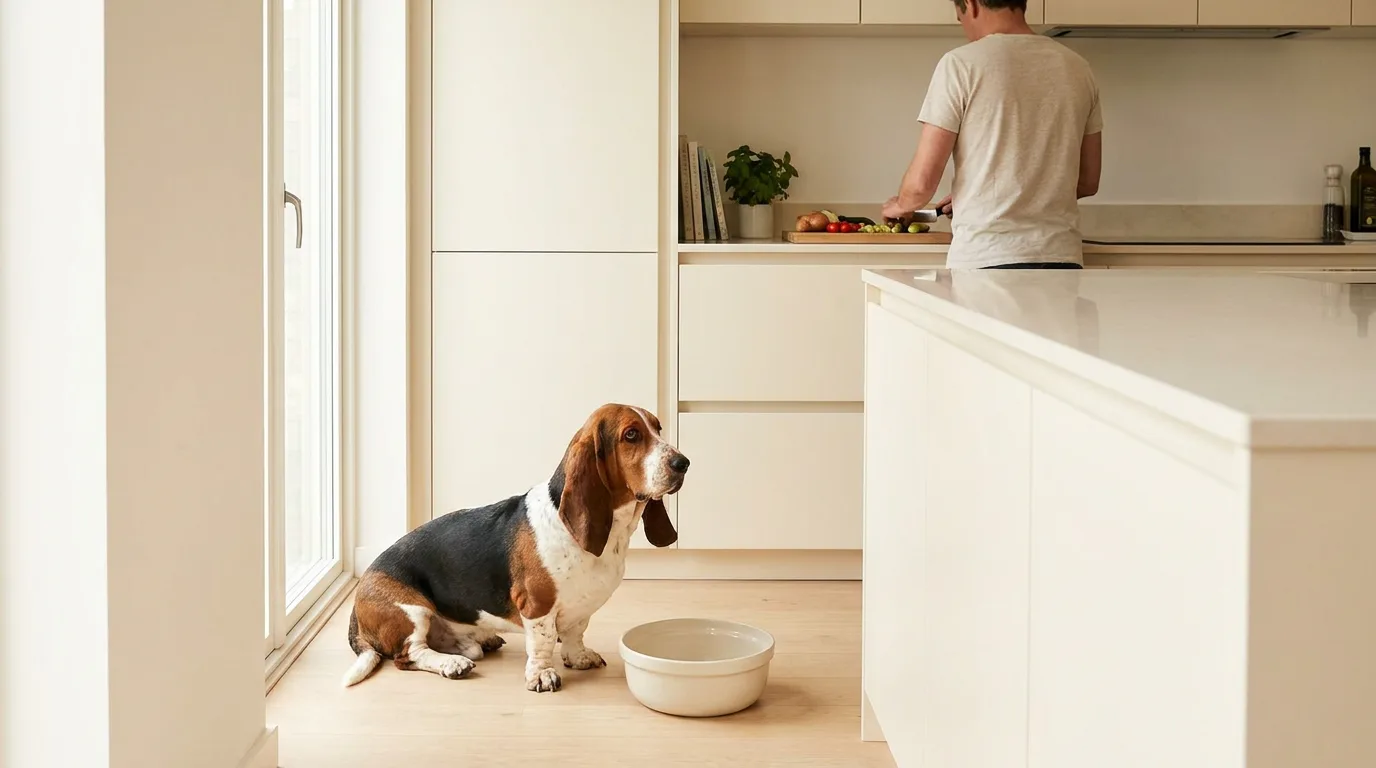
The best dog food for Basset Hounds provides complete nutrition for the dog's life stage in an amount that fits its individual needs. Short legs and a low body outline do not tell you how many calories belong in the bowl. A useful feeding plan combines a suitable recipe, measured portions, counted extras, and reassessment when weight, activity, or health changes.
JustFoodForDogs offers fresh recipes with different calorie densities and life-stage statements. Chicken & Rice and Fish & Sweet Potato currently cover growth, including large-size growth. Beef & Russet Potato and Turkey & Whole Wheat Macaroni are adult-maintenance options. Comparing those details helps you choose and portion food without treating one recipe as a universal weight-control solution.

Sign up for expert-backed reviews and safety alerts all in one place.
Choosing Food for a Basset Hound
Start with life-stage adequacy and an individual calorie allowance. A growing puppy, a healthy adult, and an older Basset with changing appetite may need different feeding decisions. A recipe's suitability depends on its complete formulation and the dog's circumstances, rather than how closely the product name resembles a breed-specific recommendation.
Assess body condition rather than height. A Basset Hound's low stature does not prove that the dog needs less food than another dog of the same weight, and its familiar silhouette should not be used to dismiss excess body fat. Our Basset Hound breed profile provides background on the breed; individual nutritional assessment provides the feeding plan.
- 1Match the life-stage statement to the dog's current needs.
- 2Establish an individual daily calorie target.
- 3Calculate measured portions using the exact recipe's calorie density.
- 4Include extras and reassess weight, body condition, activity, and muscle condition.
Before choosing a dog food brand for a Basset Hound, identify the problem you are trying to solve. Are you feeding a growing puppy, moving to an adult diet, planning weight management, or finding a practical fresh-food routine? Those are different decisions, even when the same recipe appears in more than one comparison.
Bring these details to the discussion:
- Current measured weight and recent weight records.
- Age and whether the dog is still growing.
- The exact current food and amount offered.
- Treats, chews, table food, and other extras.
- Normal activity and any recent change.
- Existing dietary or medical instructions.
Keep calorie control separate from fat restriction
An individual weight-management plan concerns the amount of energy and nutrition the dog receives. It is not automatically a prescription for whichever food has the lowest guaranteed fat minimum. That minimum is a label guarantee, not the food's typical fat content or proof that it is suitable for a particular medical condition.
Calorie density tells you how many grams supply a given calorie amount. It can help compare portions, but it does not establish that a lower-density food will cause weight loss. The dog's actual daily intake, nutritional needs, and response determine whether a plan is appropriate.
Chicken & Rice is one JFFD option to consider when its formulation fits the dog. It supplies 1,530 kcal/kg and has a current all-life-stages statement that includes large-size growth. A measured portion can fit an adult feeding plan, while its growth eligibility also makes it relevant to a puppy comparison.
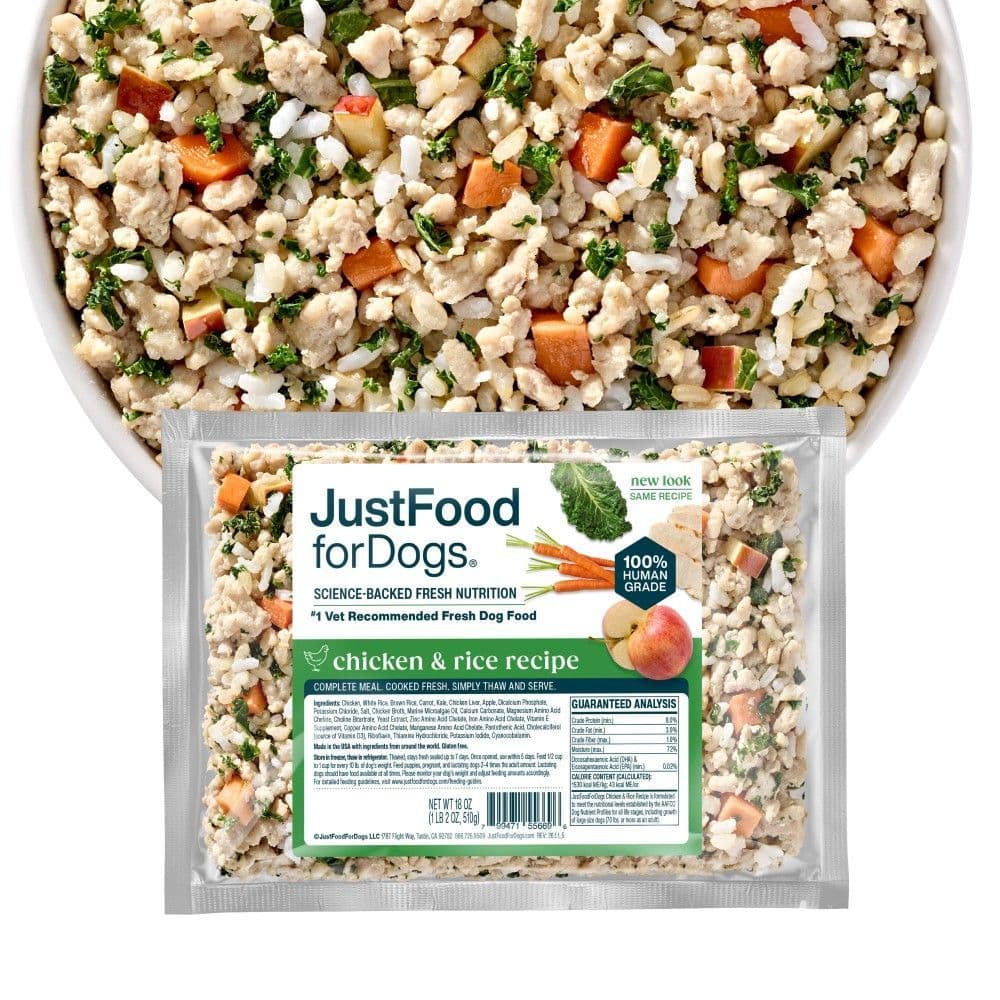
Check the current Chicken & Rice recipe, portions and ordering options.
Petful may earn a commission when you click through to JustFoodForDogs, at no extra cost to you.
Treat allergy concerns as individual questions
Searching for the best dog food for Basset Hounds with allergies requires more than a breed-based ingredient list. Itching, ear problems, or digestive changes do not by themselves establish a food allergy. Keep a complete food history and discuss persistent symptoms with the veterinarian before repeatedly changing proteins.
If a restriction has been diagnosed, check the full ingredient list of the proposed food. The ingredient named on the front is not the entire formulation. Likewise, choosing fish rather than chicken does not automatically make a recipe hypoallergenic. The appropriate choice depends on the individual diagnosis and the purpose of the feeding plan.
JFFD Choices for Puppies and Adults
Check growth eligibility before comparing calorie density. A puppy needs food that supports growth; an adult-maintenance statement is not enough simply because the food contains familiar ingredients or supplies plenty of calories. For an adult, additional recipes may fit, but the amount still needs an individual calculation.
Current JFFD Chicken & Rice and Fish & Sweet Potato include all life stages, including growth of large-size dogs expected to reach 70 pounds or more as adults. Beef & Russet Potato and Turkey & Whole Wheat Macaroni have adult-maintenance statements. An individual weight-management plan for an adult should not be transferred to a puppy.
The table uses an equal calorie allowance of 500 calories solely to compare food weights. It does not prescribe 500 calories daily for a Basset Hound. The recipe kcal/kg figures explain why different foods require different gram amounts for the same energy contribution.
| Recipe | Life-stage eligibility | kcal/kg | Grams for an illustrative 500-calorie allowance |
|---|---|---|---|
| Chicken & Rice | All life stages, including large-size growth | 1,530 | About 327 grams |
| Fish & Sweet Potato | All life stages, including large-size growth | 922 | About 542 grams |
| Beef & Russet Potato | Adult maintenance | 1,559 | About 321 grams |
| Turkey & Whole Wheat Macaroni | Adult maintenance | 1,741 | About 287 grams |
Choose puppy food for growth
For a puppy, establish the expected adult size and check the exact recipe's adequacy statement. Then calculate the current portion using age, current weight, development, body condition, and veterinary guidance. Expected adult weight helps determine eligibility; it is not the weight to use as though the puppy were already fully grown.
Petful's guide to Basset Hound puppies provides broader puppy-care context. For feeding, ask for the exact food and amount the puppy has been receiving before arrival. That starting record helps prevent an accidental calorie change while you are also changing homes, routines, and caregivers.
Keep a puppy feeding record with:
- The date, age, and current measured weight.
- The complete recipe name and calorie density.
- Daily grams and the amount assigned to each meal.
- Training rewards and other food.
- Appetite, leftovers, and relevant changes.
Chicken & Rice and Fish & Sweet Potato give you two current growth-qualified JFFD choices to discuss. Their different energy densities affect how much food must be served. Fish's lower calories per gram mean a greater food weight for equal calories; that difference does not establish a better growth outcome.
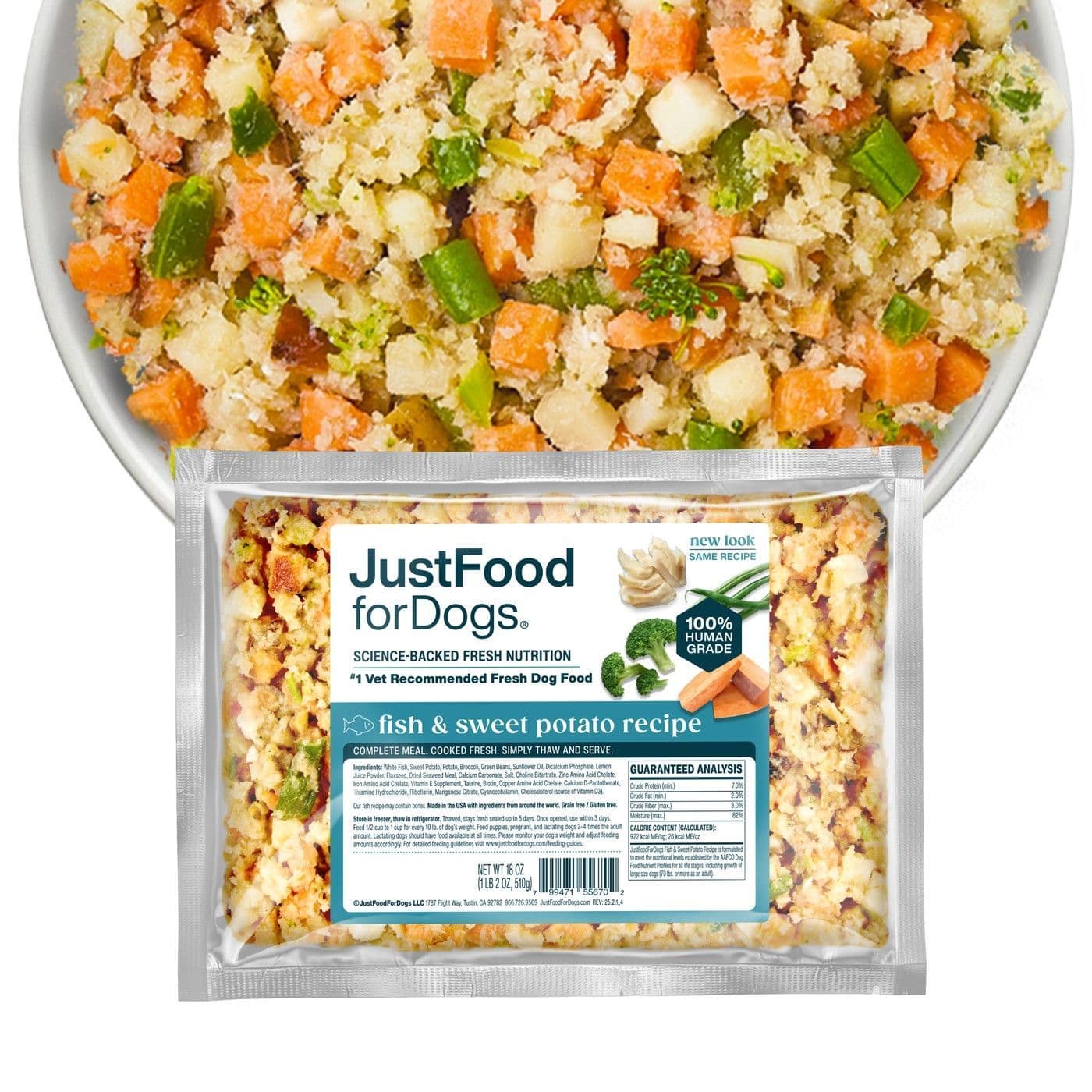
Check the current Fish & Sweet Potato recipe, portions and ordering options.
Petful may earn a commission when you click through to JustFoodForDogs, at no extra cost to you.
Fish & Sweet Potato currently uses a blend including cod, pollock, and haddock. It should not be described as a single-cod food. Its 922 kcal/kg value makes portion calculation especially important when changing from a more calorie-dense food, because equal gram amounts would not provide equal energy.
Can my 4 month old puppy eat twice a day?
Use an age-appropriate puppy meal schedule and confirm timing with your veterinarian. Do not assume that a four-month birthday alone establishes the right schedule for every puppy. The decision should account for the individual puppy's development, intake, and circumstances. Once the schedule is agreed, divide the complete daily ration among those meals.
Changing the number of meals does not mean doubling or halving the daily allowance. If a daily quantity is divided differently, the total remains the planned daily amount unless the feeding assessment also changes. Keep growth separate from adult weight control: a puppy should not inherit an adult housemate's reduced-calorie routine because both dogs share the kitchen.
Write meal instructions clearly:
- Total grams for the entire day.
- Number of planned meals.
- Grams assigned to each meal.
- Food reserved for training.
- Date for the next feeding reassessment.
Add adult options after growth
Beef & Russet Potato is supported by a current feeding-trial adult-maintenance statement and supplies 1,559 kcal/kg. Turkey & Whole Wheat Macaroni is also adult maintenance and supplies 1,741 kcal/kg. Their nutritional use differs from the growth-qualified recipes even when a calculated portion happens to look similar.
An adult that eats a suitable Chicken or Fish recipe does not necessarily need to change simply because growth has ended. The useful question is whether the current food and amount fit the adult's needs. If you choose another recipe, recalculate the grams and transition gradually rather than carrying over a familiar scoop size.
Before switching an adult, identify the reason:
- A formulation better suited to the dog's documented needs.
- A different calorie density or practical serving quantity.
- A change in household preparation or storage routine.
- A veterinarian's recommendation based on reassessment.
The current Chicken & Rice product information provides the label details for that comparison. Keep the exact recipe and format together in your notes, since a brand name alone does not establish the adequacy statement or calories.
Check Body Condition Beneath the Basset Silhouette
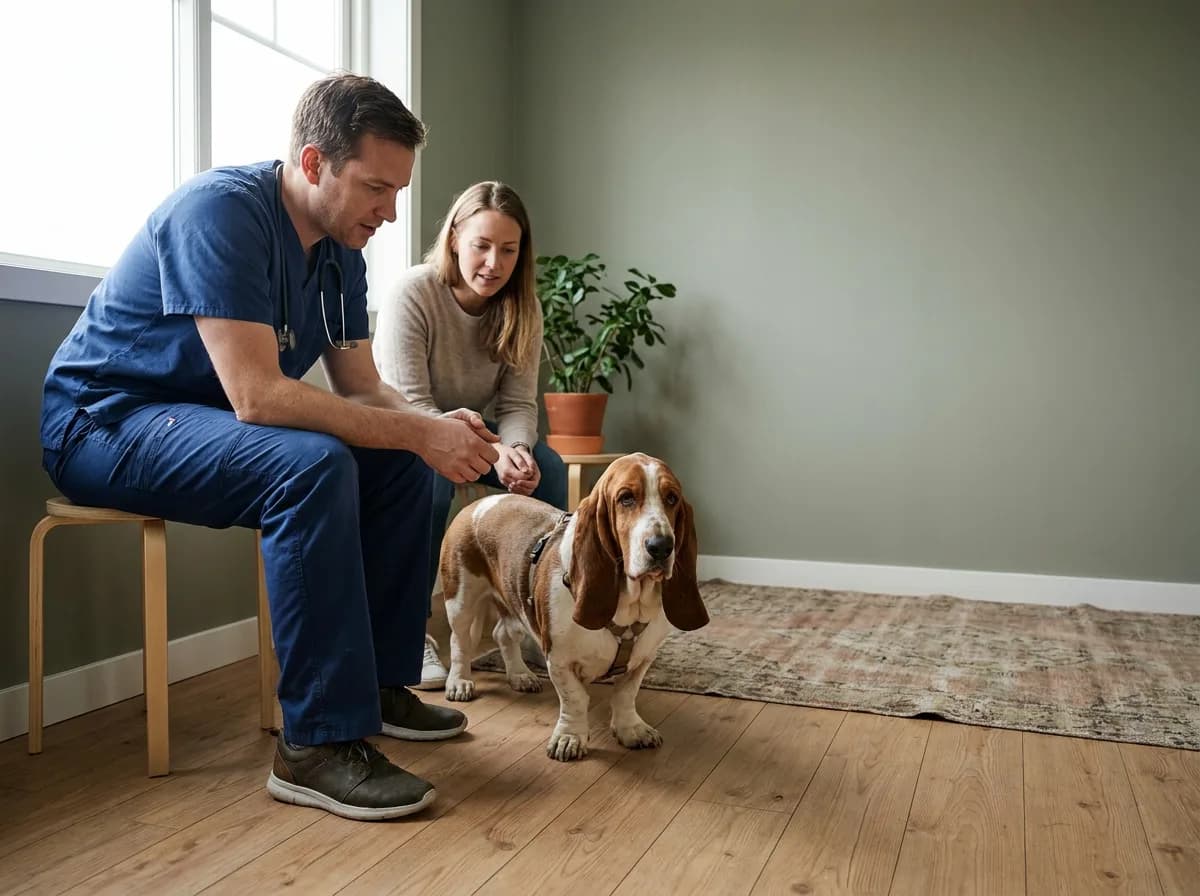
A Basset's short legs and long body can make casual visual comparisons unhelpful. Do not decide that a dog is overweight because it stands low, or that extra weight is normal because it resembles another Basset. Ask the veterinary team to assess body condition and show you how to follow changes in your own dog.
Weight is one part of that assessment. A scale records total body weight, which does not distinguish body fat from muscle or explain why weight changed. The feeding decision becomes more useful when weight history is considered alongside body condition, muscle condition, appetite, and the dog's usual activity.
Establish a baseline you can repeat
Start with a recorded weight and the veterinary assessment, then document what the dog is currently eating. If you change the feeding amount before understanding the baseline, it becomes harder to know whether the revised plan represents a small adjustment or a substantial change from the dog's actual intake.
A useful baseline includes:
- Weight and date of measurement.
- Veterinary assessment of body and muscle condition.
- Exact main food and measured daily grams.
- Treats, chews, and table extras.
- Current activity and any limitations.
- Appetite and how often food is left behind.
Use comparable measurements when following progress. If different scales give different readings, do not treat a small discrepancy as proof that the dog suddenly gained or lost weight. Ask the veterinary team how and when to recheck, and keep the measurement method reasonably consistent.
Our discussion of obesity in dogs explains why weight concerns deserve a considered plan. For a Basset that needs to lose excess weight, obtain an individual target and reassessment schedule rather than cutting an arbitrary scoop from dinner. The food must continue supplying appropriate nutrition as intake is managed.
Distinguish a feeding issue from an unexplained change
If weight is rising, review the entire intake before concluding that the main recipe is the problem. Measured meals can coexist with substantial unmeasured extras. A new daily chew, more indoor training rewards, or food from another household member may explain why the written meal plan no longer reflects the dog's total intake.
If weight is falling unexpectedly, do not assume the plan is successful. Unplanned weight loss, reduced appetite, or loss of muscle needs assessment. This is particularly important when the dog is older or has another health concern, because a lower scale reading does not automatically mean improved condition.
Bring concrete observations to the appointment:
- Whether the change was intended.
- Whether meals were actually eaten.
- Any recent recipe or portion changes.
- Changes in activity, comfort, or behavior.
- Additional food supplied by other people.
These observations help distinguish an implementation issue from a need to reassess the dog's health or nutritional plan. They also prevent a cycle of reducing food because of one high reading and then increasing it after an unrelated low reading.
Agree on the next decision before leaving
A useful veterinary feeding discussion should result in a plan you can carry out. Ask what amount to begin with, what to record, when to return, and which changes should prompt earlier contact. If the instruction is in calories, convert it to the exact food's grams before the first meal.
Confirm these practical details:
- Is the current recipe suitable for the intended plan?
- What daily calories should come from meals and extras?
- How should the allowance be divided into meals?
- When should weight and condition be reassessed?
- What should happen if the dog consistently leaves food?
Do not treat a weight target as a deadline to achieve quickly. Follow the plan and reassess the response rather than making successive reductions on your own. If the household cannot consistently measure or track the proposed routine, explain that so the plan can be made workable.
A realistic routine is more valuable than an ideal instruction nobody follows. One labeled daily container, a kitchen scale, and a shared record may be enough to reveal where intake differs from the plan. That information makes the next feeding decision more precise.
Portions, Treats, and Changes in Activity
Once the daily calorie target is established, convert it into food you can measure. The AAHA nutrition and weight management guidelines treat calorie calculations as starting points that need individual adjustment. The recipe determines how many grams supply those calories, not how many calories the dog needs in the first place.
For fresh food, calculate grams by dividing the assigned meal calories by recipe kcal/kg, then multiplying by 1,000. Use the current recipe's value. A scoop or container filled to the same level can hold a different calorie amount when the food changes.
Work through one complete adult example
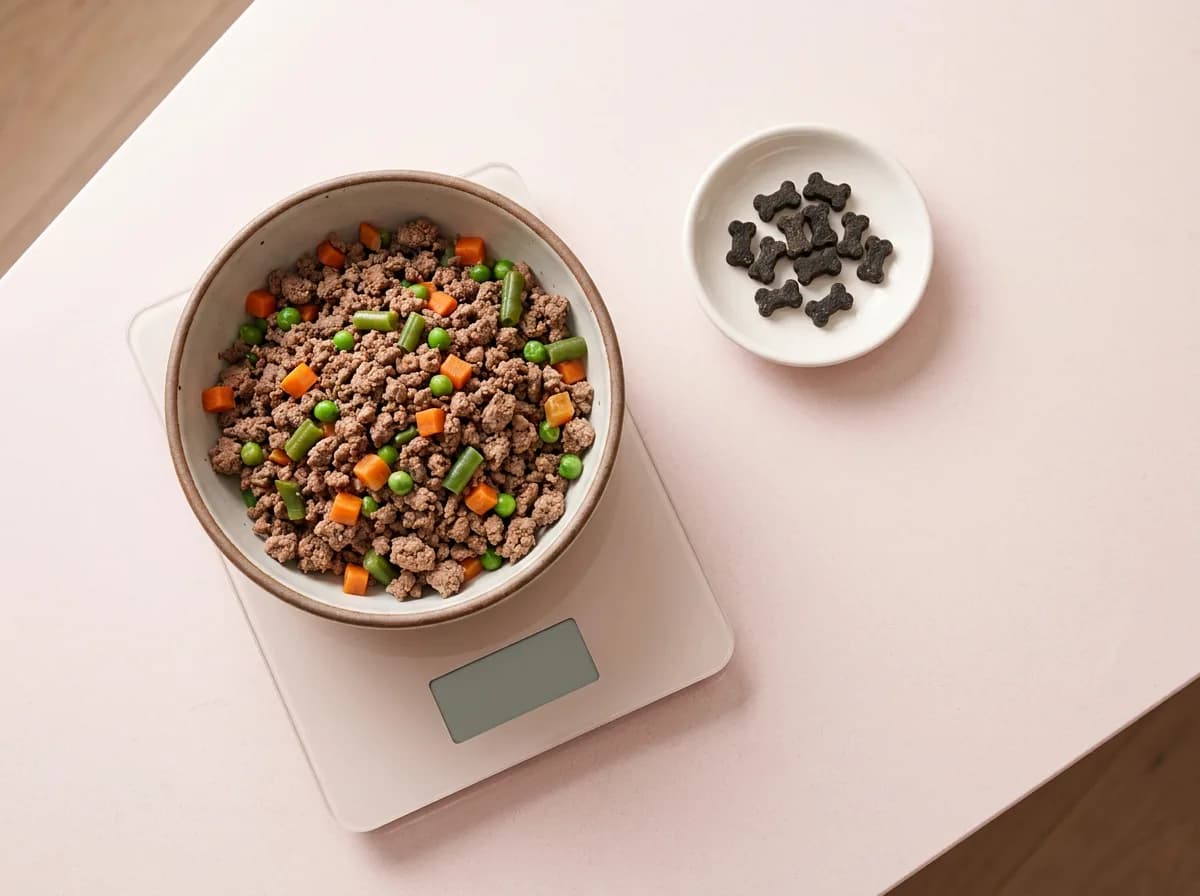
Imagine a healthy adult whose veterinarian-set daily allowance is 800 calories. If 80 calories are reserved for treats and other extras, the complete meals supply 720 calories. That is an illustrative calculation, not a recommendation that every Basset Hound should eat 800 calories or use the entire treat allowance.
At current recipe densities, 720 meal calories would require approximately:
- 471 grams of Chicken & Rice.
- 781 grams of Fish & Sweet Potato.
- 462 grams of Beef & Russet Potato.
- 414 grams of Turkey & Whole Wheat Macaroni.
These are alternatives for the same calorie allocation. Do not add them together, and do not assume the largest food weight supplies the most energy. The comparison also does not establish which recipe is appropriate for an individual medical or weight-management plan.
For an adult whose needs fit Beef & Russet Potato, its 1,559 kcal/kg value provides the conversion. Record the resulting daily amount before dividing it among meals. A two-meal plan would divide the example's approximately 462 grams into about 231 grams per meal.
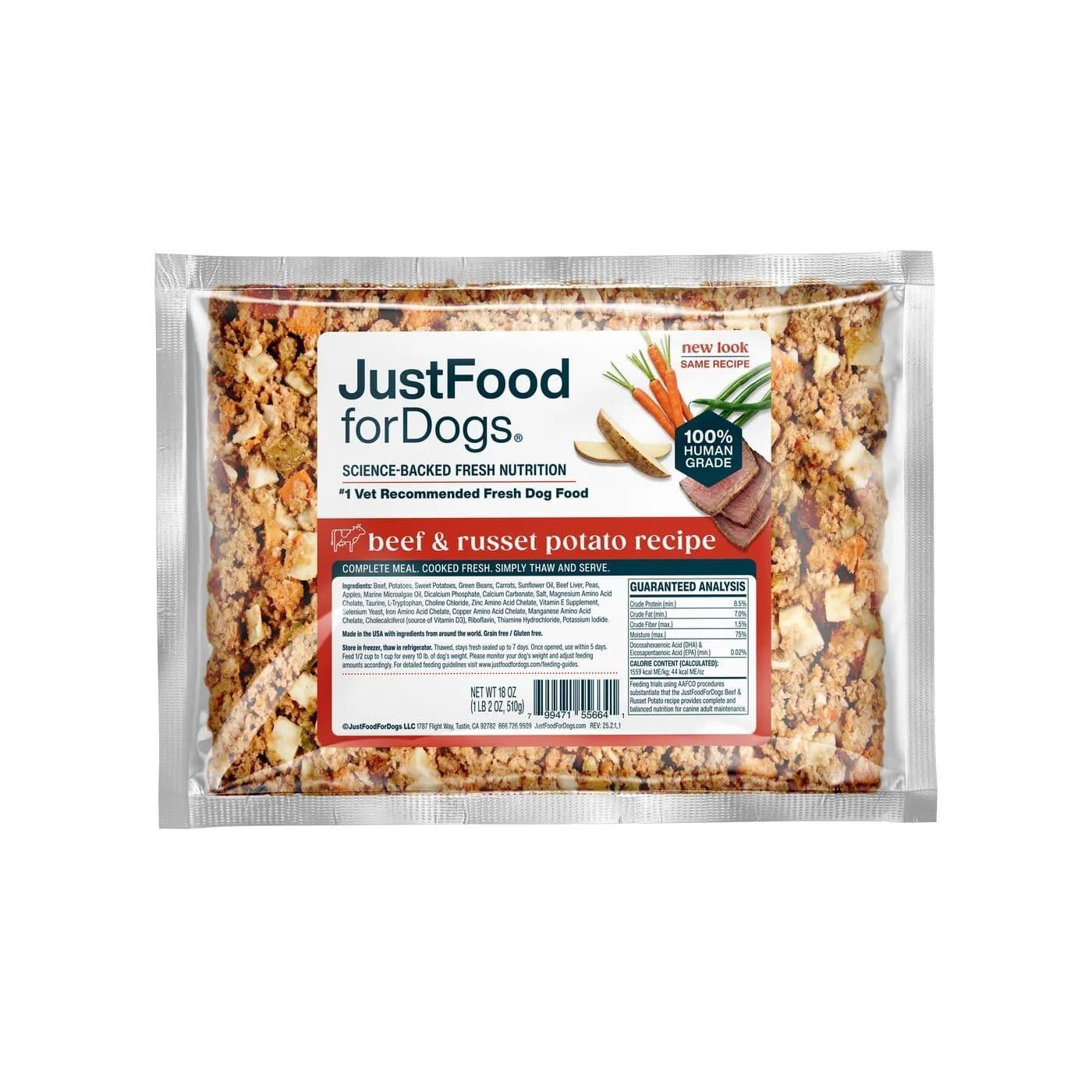
Check the current Beef & Russet Potato recipe, portions and ordering options.
Petful may earn a commission when you click through to JustFoodForDogs, at no extra cost to you.
Dogs that need a veterinarian-directed fat limit are covered in WebVet’s guide to vet-recommended diets for dogs with pancreatitis.
Count the foods that are easy to overlook
AAHA recommends that complete and balanced food supply at least 90 percent of daily calories, with treats and other extras generally limited to no more than 10 percent. The extra-food allowance includes everything outside the complete meals. It is not a separate allowance for treats, another for chews, and a third for table food.
If the example adult receives a 50-calorie chew, only 30 calories remain within its planned 80-calorie extra allowance. Training treats or food offered with medication also need to fit. The main food can be measured accurately while the overall intake still exceeds the target if those additions are forgotten.
Use one shared food record:
- Write down the daily calorie target.
- Count extras, including chews and foods used with medication.
- Subtract those calories to determine meal calories.
- Measure meal portions using the exact recipe's energy density.
- Record activity changes and meaningful changes in intake.
- Review the record at the planned reassessment.
A container holding the day's permitted rewards can make this practical. Everyone takes treats from the same supply rather than independently estimating what seems small. If part of the complete food is used as a reward, remove it from the daily meal allocation first so it is not fed twice.
| Record | What to count or observe | When to reassess |
|---|---|---|
| Complete-food meals | Exact recipe, meal calories, daily grams, and actual intake | After a recipe or calorie-target change |
| Extras and chews | Treats, chews, toppers, table food, and food with medication | Whenever the extra-food routine changes |
| Activity change | Meaningful changes in walks, play, and usual movement | When a new routine is sustained or medically directed |
| Weight and body condition | Comparable weight records and veterinary assessment | At the agreed follow-up or sooner for unexplained change |
| Senior appetite and muscle | Intake, leftovers, functional changes, and assessed muscle condition | When appetite or condition changes |
| Puppy growth | Current weight, development, growth-qualified recipe, and meals | As directed for the individual growing puppy |
Measure food in a repeatable way
Place the empty bowl on the scale and zero it before adding food. Measure in grams when using the kcal/kg calculation so the units stay consistent. If preparing a whole day's ration, label that container as the daily amount before dividing it into meal portions.
Keep the distinction between daily and per-meal quantities visible:
- Daily grams describe the entire day's complete food.
- Per-meal grams describe one serving.
- Reserved training food comes out of the daily total.
- Extras are counted separately within the overall calorie plan.
If someone else feeds the dog, leave those instructions with the food. “Half a container” can be ambiguous when containers are filled differently or one holds a full day and another holds a single meal. A short written amount reduces the risk of accidental double feeding.
Weigh the food before adding an unmeasured extra that could confuse the scale reading. If a veterinarian has recommended a supplement or another addition, follow those instructions and account for calories when relevant. A total bowl weight is not useful if it combines components whose energy contributions are unknown.
Recalculate when changing recipes
Suppose the example adult moves from Fish & Sweet Potato to Turkey & Whole Wheat Macaroni while keeping the same 720 meal calories. Its calculated daily food weight changes from approximately 781 grams to 414 grams. The smaller portion supplies the same planned energy because Turkey has a higher calorie density.
Keeping the old Fish gram amount after switching to Turkey would substantially increase calories. The reverse change would reduce calories if the old Turkey amount were kept. This is why comparing package weight, bowl volume, or familiar scoop size is not enough.
For an adult whose needs fit Turkey & Whole Wheat Macaroni, calculate its portion using 1,741 kcal/kg. During a gradual transition, calculate the calorie share from each food separately and weigh the corresponding amounts.
Respond to changes in activity
A shorter walk routine or a prolonged quiet period is a reason to review the plan, not a reason to apply a universal percentage reduction. Establish what changed, how long it is likely to last, and whether extra-food intake changed at the same time. A single quiet afternoon is different from weeks of reduced activity.
Review these questions before adjusting meals:
- Is the dog doing less activity than its usual baseline?
- Did treats or chews increase while activity decreased?
- Was the change recommended because of illness or recovery?
- Has weight or body condition changed?
- Does the veterinary team recommend a revised allowance?
If the allowance changes, convert the new number into grams rather than removing an arbitrary spoonful. For example, a clinician-approved change from 720 to 650 meal calories would change Chicken & Rice from about 471 to 425 grams daily. The example demonstrates the arithmetic, not a recommended reduction for every inactive Basset.
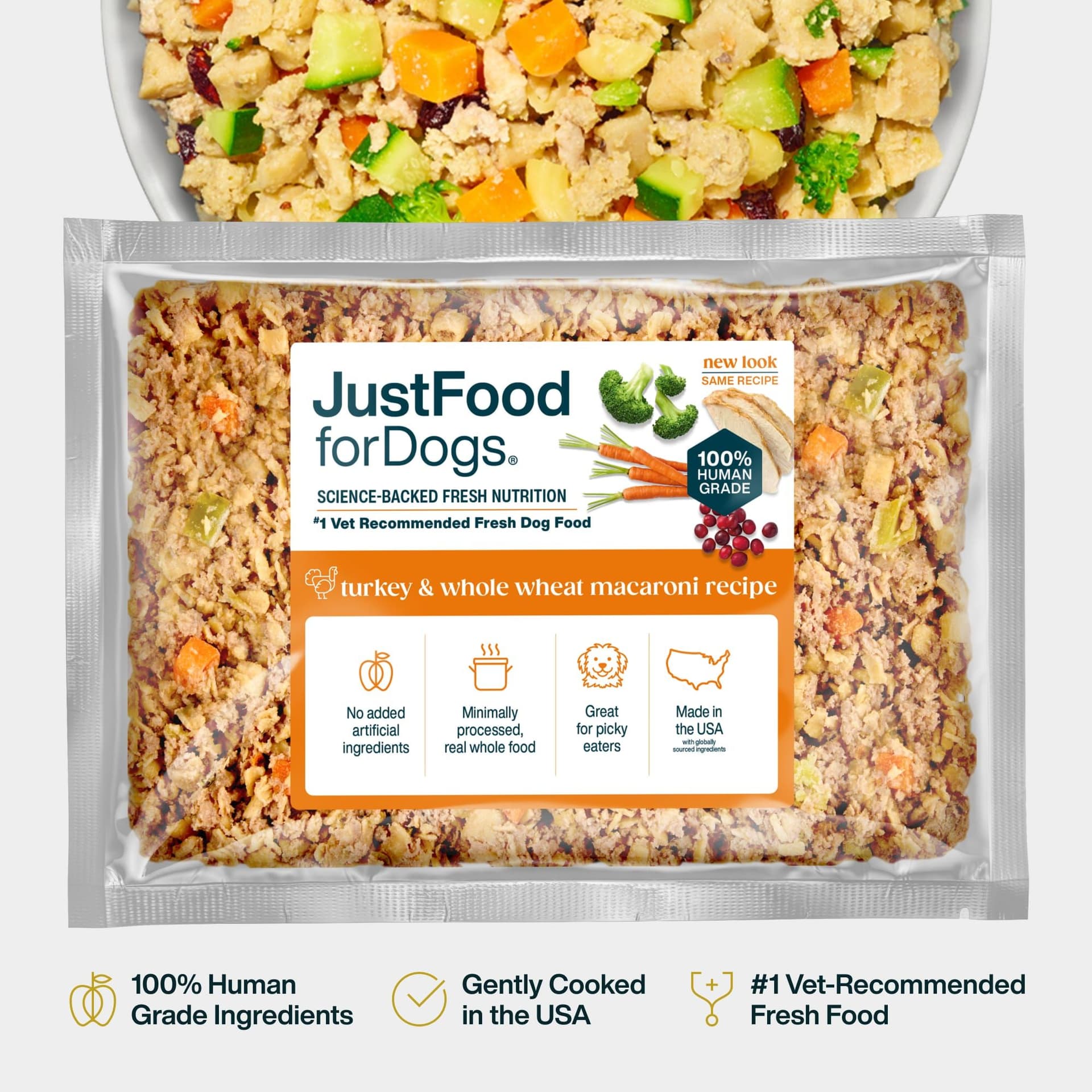
Check the current Turkey & Whole Wheat Macaroni recipe, portions and ordering options.
Petful may earn a commission when you click through to JustFoodForDogs, at no extra cost to you.
Keep the old and new amounts with their dates. This makes it possible to assess the response without guessing which portion was used during which period. If activity later increases, reassess rather than automatically returning to an amount established at a different weight or stage of life.
Check practical cost and package use
A food's daily cost depends on how much the dog actually needs. Compare the price of supplying the planned meal calories, not just the price per package or the size of the serving. Two packages with equal weights may contain different total calories because the recipes have different energy densities.
Use the same method for each recipe:
- Convert the package's net weight to grams.
- Multiply grams by calories per gram.
- Divide by the dog's daily calories assigned to that recipe.
- Divide package price by the calculated feeding days.
- Consider any food that cannot be used within the storage window.
This avoids calling a food affordable because a package lasts a certain number of days for a different dog. It also helps plan orders around the actual ration. If two dogs share a recipe, use their combined daily quantity while maintaining separate individual portion records.
Senior Dogs and Preserving Muscle
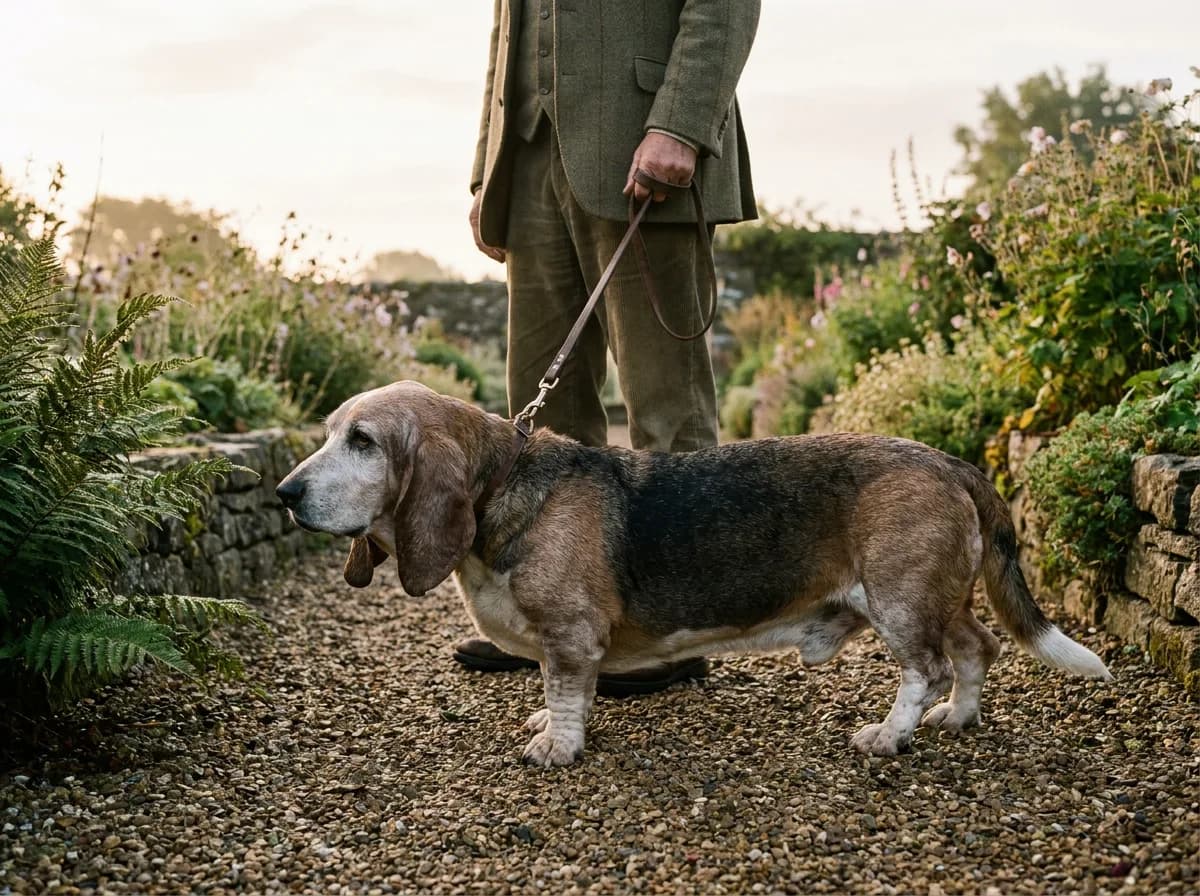
The best dog food for senior Basset Hounds depends on the individual dog's health, appetite, activity, body condition, and muscle condition. Age alone does not establish that the dog needs less food. Some older dogs need a revised calorie allowance, while others need help maintaining intake or addressing an underlying problem.
Do not interpret every lower scale reading as desirable. A senior can lose muscle as well as body fat, and total weight does not identify which changed. Ask the veterinary team to assess both body and muscle condition and explain what should be followed between visits.
Identify what changed before replacing the food
If a senior begins leaving meals, review when it started and whether anything else changed. A new recipe, different meal texture, altered schedule, or health concern can require different responses. Offering increasingly rich extras may make the food record harder to interpret and does not identify why the original meals were left.
Record observations that help the appointment:
- How much food is offered and actually eaten.
- Whether the dog approaches the bowl but stops eating.
- Whether leftovers are new or longstanding.
- Changes in measured weight or ordinary activity.
- New medications or veterinary instructions.
Petful's Basset Hound health and lifespan guide provides broader context for age-related care. For nutrition, bring the feeding record and current recipe to the veterinary visit. A specific record supports a more useful recommendation than saying the dog is “eating less” without knowing how much.
| Area | What to observe or record | Next decision |
|---|---|---|
| Appetite | Amount offered, amount eaten, leftovers, and when the pattern changed | Ask whether the change needs assessment before replacing meals with extras |
| Muscle condition | Veterinary muscle assessment and changes in normal movement or function | Review nutrition and health with the veterinary team rather than judging from weight alone |
| Activity | Changes in usual walks and daily movement, including medically directed rest | Reassess the calorie plan in the context of the reason for the change |
| Reassessment | Weight records, food intake, current recipe, and agreed follow-up date | Compare the response with the plan and revise portions or food only as appropriate |
Consider food texture without assuming a diagnosis
A soft fresh food may be a practical format to discuss if an older dog has trouble with its usual meals. However, a preference for softer food does not diagnose a dental problem, and softer food does not replace an examination when eating behavior changes. Keep the observation separate from an explanation that has not been established.
The calorie calculation still applies if the format changes. A moist bowl can look larger or smaller than the previous meal while providing a different amount of energy. Calculate the new ration from its own label rather than transferring the old cup measure.
Useful questions for the veterinary team include:
- Does this dog need a different recipe or only a different amount?
- Is the proposed food suitable with its current health conditions?
- Should meal timing or division change?
- How should appetite and intake be recorded?
- When should body and muscle condition be checked again?
Preserve complete nutrition during adjustments
If calorie intake is reduced, the plan still needs to provide appropriate nutrition. Do not keep trimming a general maintenance food indefinitely because the scale has not changed as expected. Review whether the chosen recipe and amount remain appropriate for the intended plan.
Likewise, do not attempt to address muscle concerns by adding arbitrary amounts of meat or protein supplements to an otherwise complete diet. The dog's health and nutritional needs should determine the approach. A complete recipe already includes more than its named protein, and unplanned additions can alter both calories and nutrient balance.
Keep a senior's routine straightforward:
- Measure the prescribed food allowance.
- Record actual intake when appetite is variable.
- Keep extras within the agreed plan.
- Follow any medical dietary instructions.
- Reassess changes rather than attributing them to age alone.
Make feeding manageable for the caregiver
For an older dog with several caregivers, prepare one clear instruction sheet. Include the recipe, meal amounts, any prescribed additions, and the record of food eaten. If appetite is inconsistent, knowing what happened at breakfast helps the next caregiver avoid guessing about dinner.
Premeasured containers can reduce confusion, but label them with the dog, meal, and date. Keep medication instructions separate and accurate. If food is routinely used to give medication, include it in the food history so the veterinary team has a realistic picture of intake.
A routine that accurately captures appetite can also reveal when the plan needs attention. It should not become a reason to wait through persistent changes. Use the veterinary team's instructions about when to contact them and bring the record that shows what changed.
Food Formats, Switching, and Storage
If you are comparing the best wet dog food for Basset Hounds, separate format from nutritional suitability. Fresh, canned, and dry foods can have different moisture levels and calorie densities. The decision still begins with complete nutrition for the appropriate life stage and the needs of the individual dog.
A moist food is not automatically lower in calories for every serving you choose, and dry food is not automatically unsuitable. Compare the exact recipe and measured ration. A food's appearance, texture, or water content cannot tell you how many calories you have placed in the bowl.
Before changing format, check:
- Nutritional adequacy and life-stage suitability.
- Energy density for the exact recipe.
- How the dog's daily calories translate into grams.
- Ingredient restrictions or veterinary instructions.
- Storage space and handling requirements.
Plan a gradual food change using calorie amounts
Follow the manufacturer's transition guidance and any individualized veterinary instructions. If two foods have different energy densities, calculate the planned calorie share from each. An equal-volume mixture does not necessarily represent equal contributions to the meal's calories.
For example, 100 calories are approximately 65 grams of Chicken & Rice or 108 grams of Fish & Sweet Potato. Replacing one with the other changes the gram quantity even though the calorie contribution stays constant. Weighing the components makes the transition easier to repeat.
Keep other feeding changes limited while the recipe changes:
- Avoid adding several new treats at the same time.
- Record the old and new foods.
- Keep the total daily allowance clear.
- Note appetite and digestive changes.
- Ask how to proceed if symptoms persist.
If the dog is already on a medically directed diet, discuss the change before substituting another food. A recipe that fits a healthy adult's maintenance needs may not fit a specific treatment plan. Preserve the purpose of the existing diet rather than changing it solely for texture or convenience.
Follow the shorter fish-specific window
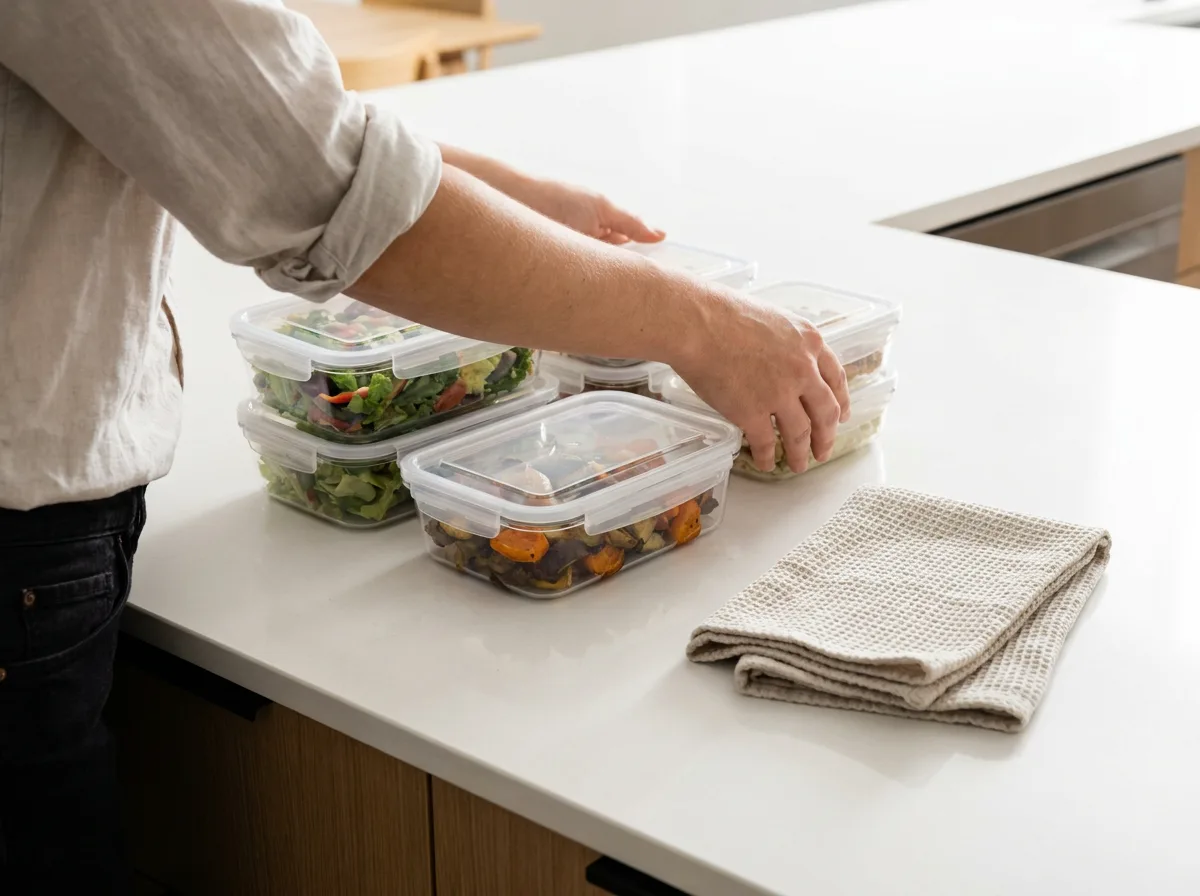
The current JustFoodForDogs FAQ distinguishes fish-based meals from other proteins. Fish & Sweet Potato has a refrigerated window of five days when sealed and thawed, or three days after opening. The other fresh-frozen proteins discussed here have general guidance of seven days sealed and thawed, or five days opened.
Use the actual package instructions, including any shorter limit. Opening a package does not restart its earlier storage deadline. Record both thawing and opening dates, then follow the applicable earlier deadline. Thaw food in the refrigerator as directed rather than leaving it on the counter while planning meals.
Set up a repeatable routine:
- Keep frozen packages frozen until needed.
- Thaw only what the dog will use within the allowed time.
- Refrigerate opened food in a covered container.
- Use clean utensils and wash bowls after meals.
- Label containers with recipe and storage dates.
Check package size against daily consumption before ordering. A package may mathematically contain several days of meals, but that does not extend the handling window. A dog eating a small amount of Fish may need a different package plan than a dog using the same recipe quickly.
Prepare for another person to feed the dog
Leave the exact recipe and gram amount with the food, along with the reward allowance and storage dates. A caregiver should not have to judge the portion from the Basset's height, appetite for treats, or interest in another dog's bowl. Clear instructions make the established plan easier to follow.
If the dog will stay elsewhere, confirm that suitable refrigeration and freezer space are available. Send enough appropriately stored food for the planned stay, and make clear which container holds each meal. Include the contact instructions already provided by the veterinary team for any relevant health or appetite concern.
When the dog returns home, ask what was actually eaten and whether extras were offered. That helps explain any change in intake or routine without assuming the recipe stopped working. Continue the established plan and reassess meaningful changes using the same records.
Frequently Asked Questions
Choose food with life-stage adequacy and serve an individual calorie allowance in measured portions. Assess body condition rather than height, and include treats, chews, and other extras in the total. The best practical plan also accounts for actual activity, appetite, and veterinary assessment of muscle condition when relevant. No single scoop size or recipe fits every Basset.
Format alone does not establish suitability. Look for complete nutrition for life stage and a formulation that fits the individual dog. Calorie density differs among recipes and formats, so measure the actual ration using the current label. A veterinarian may recommend a particular format for practical or medical reasons, but moisture alone does not decide the answer.
Choose food with your veterinarian after assessing the skin problem. Skin symptoms alone do not establish a food allergy. A veterinary-directed food trial may be appropriate when food allergy is suspected, but changing protein or choosing fresh food does not by itself treat atopic dermatitis.
No. Calorie density, nutritional suitability, total intake, and an individual weight-management plan matter. A guaranteed minimum fat percentage is not a measurement of typical fat or a complete basis for choosing a medical diet. Ask which recipe and calorie allowance fit the dog, then measure meals and extras consistently and reassess the response.
A puppy needs food that meets growth needs. Adult maintenance alone does not establish that suitability, even if the puppy appears stocky or lives with an adult on a weight-control plan. Use a growth-qualified recipe and an individualized puppy allowance. Discuss concerns about the puppy's condition with the veterinarian rather than imposing an adult reduction plan.
No. Age alone does not determine the calorie allowance. Assess activity, appetite, health, body condition, and muscle condition together. Some seniors need a revised portion, while others need attention to reduced intake or unexplained weight loss. Keep records of what the dog actually eats and ask the veterinary team to guide changes.
Yes. All extras contribute calories, including chews, training rewards, table food, and food used with medication. Complete and balanced food should generally supply at least 90 percent of daily calories. If rewards come from the already measured main food, set that portion aside before dividing meals so it is not counted and fed twice.

Coreen Saito is a pet writer and longtime shelter volunteer with more than a decade in animal rescue. She covers cat behavior, breed care, and the small, ordinary science of sharing a life with companion animals, with a particular focus on honest takes about the products and decisions that actually matter. At home in Arizona, she's outranked by Mac (a dog with the loudest opinion in the house), Rebel (a cat who governs by quiet authority), and Meri (an orange tabby who runs the late shift and the laundry basket). She writes about all three, plus the rescues that keep coming through her life, at LifeWithMinty.com.
Sign up for expert-backed reviews and safety alerts all in one place.


A Final Word (Disclaimer)
At Petful, our review integrity is paramount; we never exchange special treatment in our reviews for monetary or material rewards.
Nonetheless, when our readers click through to online merchants (including Chewy or Amazon), we receive a referral commission. This supports the running of our free blog, and we appreciate your backing.