Best Dog Brushes: 6 Picks by Coat and Brush Type
The best dog brush depends on coat and brush type. We compare six Chewy picks, a slicker, a pin and bristle brush, an undercoat rake, a deshedder, a dematter and a curry brush, and match each to a coat.
Petful is reader supported. As an affiliate of platforms like Amazon and Chewy, we may earn a commission when you buy through links on this page. There is no extra cost to you.
The best dog brush is the one built for your dog's coat, not the one with the most reviews. A slicker that works wonders on a Shih Tzu does little for a Lab, and a deshedding blade that clears a Husky's undercoat can drag on a silky Yorkie. Matching the brush type to the coat type is what keeps grooming quick, comfortable and effective.
Below, we compare six Chewy picks covering every main brush type: a slicker, a pin and bristle combo, an undercoat rake, a deshedding tool, a dematting tool and a rubber curry brush. This is a research-based comparison of documented features, label directions and catalog details, followed by a coat-by-coat guide so you know which tool to reach for first.

Sign up for expert-backed reviews and safety alerts all in one place.
Compare the dog brushes
Start here if you want the short answer. Each row names the exact model, its brush type, the dog it suits best and its catalog price at Chewy at the time of writing. Most dogs need one or two of these dog brushes, not all six, and the best dog grooming brush for your home depends on coat length and whether your dog has an undercoat.
| Exact model and variant | Brush type | Best for | Coat type | Catalog price |
|---|---|---|---|---|
| Frisco Slicker Dog Brush, Large | Slicker brush | Tangles, loose hair, a first brush on a budget | Medium to long coats, doodles, double coats | About $7.99 |
| CHI Double Sided Ball Tip Pin & Bristle Dog Brush | Pin and bristle (double-sided) | Daily detangling and a smooth, shiny finish | Long, silky and medium coats | About $18.39 |
| JW Pet Gripsoft Double Row Undercoat Rake | Undercoat rake | Seasonal coat blow and dense undercoat | Thick double coats | About $16.46 |
| FURminator Long Hair Dog Deshedding Tool, Orange, Medium | Deshedding tool | Heavy shedding between coat blows | Long and double coats | About $33.57 |
| FURminator Adjustable deMatter Dog & Cat Tool | Dematting tool | Mats and tangles that a brush cannot open | Long, curly and doodle coats | About $20.87 |
| Frisco Bone Dog Curry Brush | Rubber curry brush | Bath time and loosening dead hair | Short and smooth coats | About $6.99 |
- 1Find your coat type first, then pick a first tool for routine brushing and a second tool for shedding or mats.
- 2Long and doodle coats: slicker first, dematter second; the tool to skip is a deshedding blade on a curly coat.
- 3Double coats: undercoat rake first, slicker second; short smooth coats: curry brush first, with a slicker as the tool to skip.
If you only buy one, the best dog hair brush for most mixed and medium coats is a slicker, and at under $8 the Frisco is the lowest-cost place to start. Dogs with a thick undercoat get more from adding a rake than from upgrading the slicker.
Our dog brush picks
Best budget slicker: Frisco Slicker Dog Brush, Large
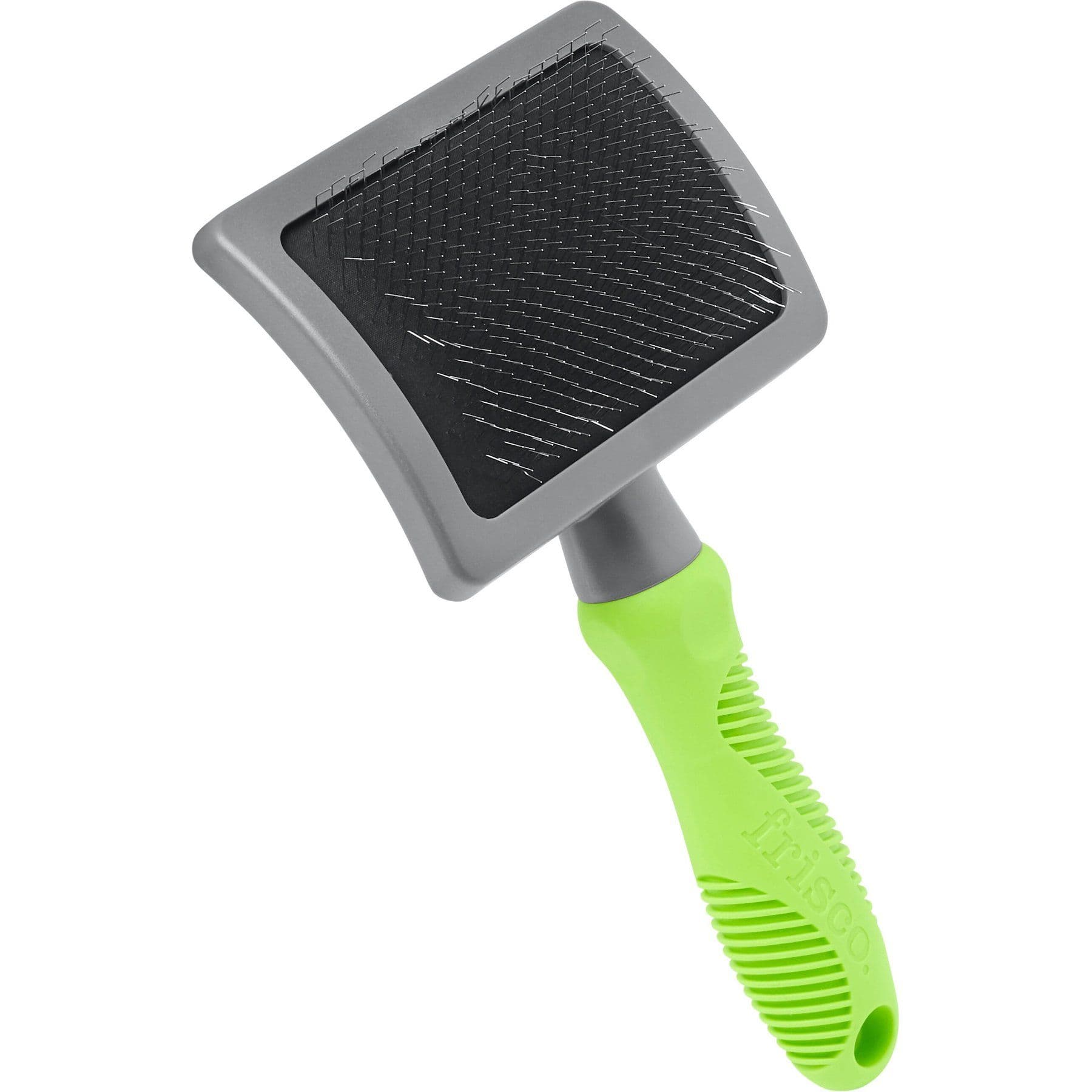
Stainless-steel pins remove tangles, matted hair and loose dead hair on medium to long coats. Lowest price in the lineup and a sensible first brush.
Petful may earn a commission when you click through to Chewy, at no extra cost to you.
The Frisco Slicker Dog Brush, Large is the simplest way to start a brushing routine. Its stainless-steel pins are listed for removing tangles, matted hair and loose dead hair, which covers the daily work on most medium and long coats. At about $7.99 at Chewy at the time of writing, it is the lowest-priced brush in this lineup.
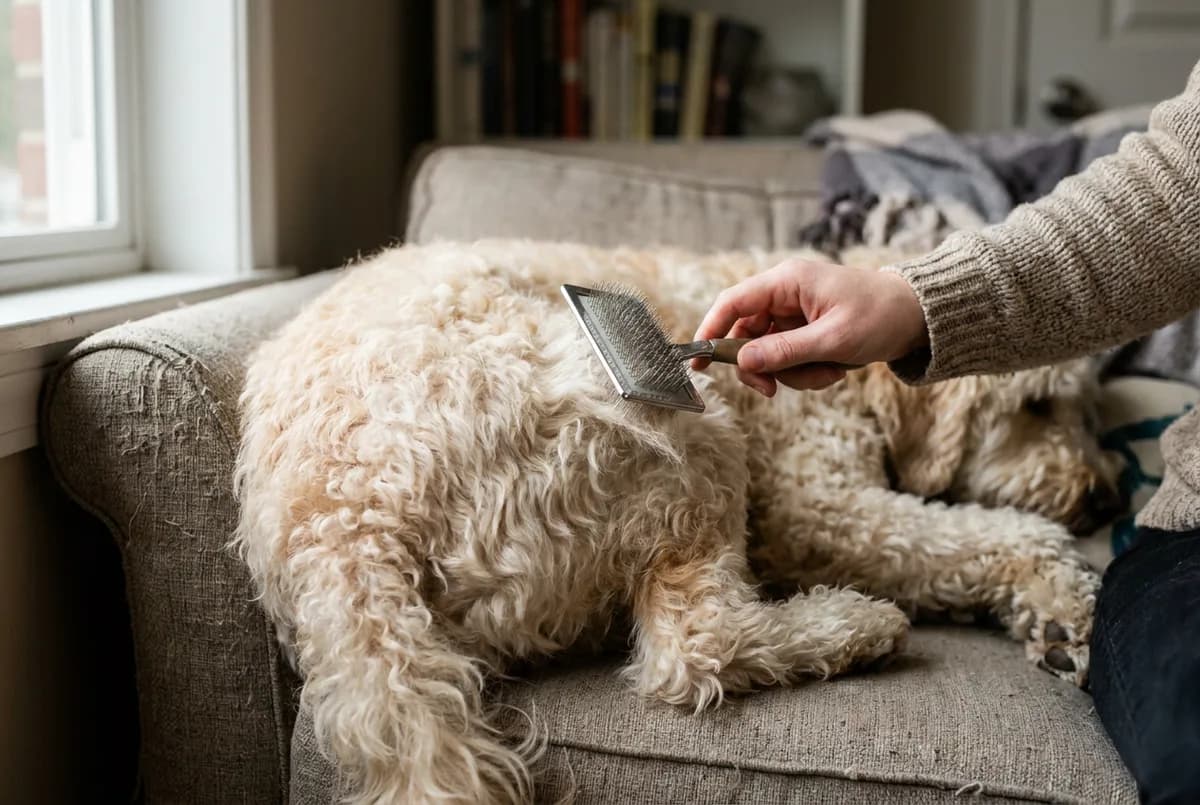
A slicker is the workhorse for doodles, spaniels, Pomeranians and many mixed breeds, and it also finishes a double coat after raking. The large head covers ground quickly on bigger dogs.
- Brush type: slicker brush with stainless-steel pins
- Best on: medium to long coats, curly coats, the topcoat of double-coated dogs
- Job: tangles, light mats and loose hair
The honest limitation: fine wire pins can irritate skin when pressed hard, so use light, short strokes. On small or toy dogs, a large head can be awkward around legs and face.
Best double-sided pin and bristle: CHI Double Sided Ball Tip Pin & Bristle Dog Brush
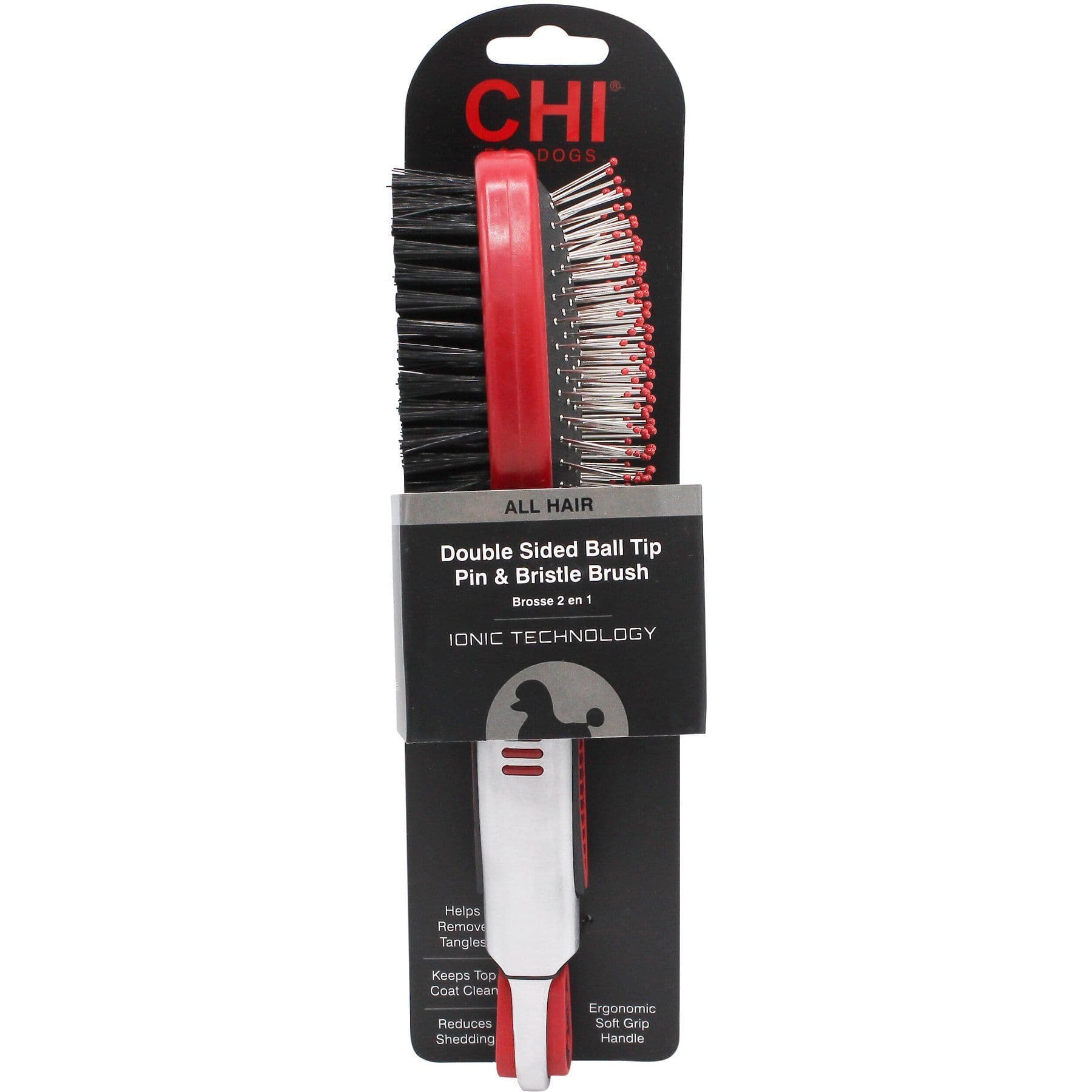
Ball-tip nylon pins work through tangles on one side while bristles smooth the coat and lift loose hair on the other. Ergonomic grip, with CHI ionic technology to reduce static.
Petful may earn a commission when you click through to Chewy, at no extra cost to you.
The CHI Double Sided Ball Tip Pin & Bristle Dog Brush puts two brush types in one tool. One side has ball-tipped nylon pins that work through tangles, and the other has bristles that smooth the coat and lift loose hair. CHI lists an ergonomic grip and ionic technology meant to reduce static.
This is the brush for long, silky coats that tangle but do not mat heavily, such as Yorkies, Maltese and Shih Tzus kept in a longer trim. The ball tips are gentler on skin than wire pins, and the bristle side gives a finished look after a bath.
- Brush type: pin brush plus bristle brush
- Best on: long, fine and silky coats; medium coats that need a polish
- Job: daily detangling and finishing
The limitation: nylon pins will not reach a dense undercoat, and they glide over tight curls rather than working through them. Doodle and double-coat owners will want a slicker or rake as well.
Best undercoat rake: JW Pet Gripsoft Double Row Undercoat Rake
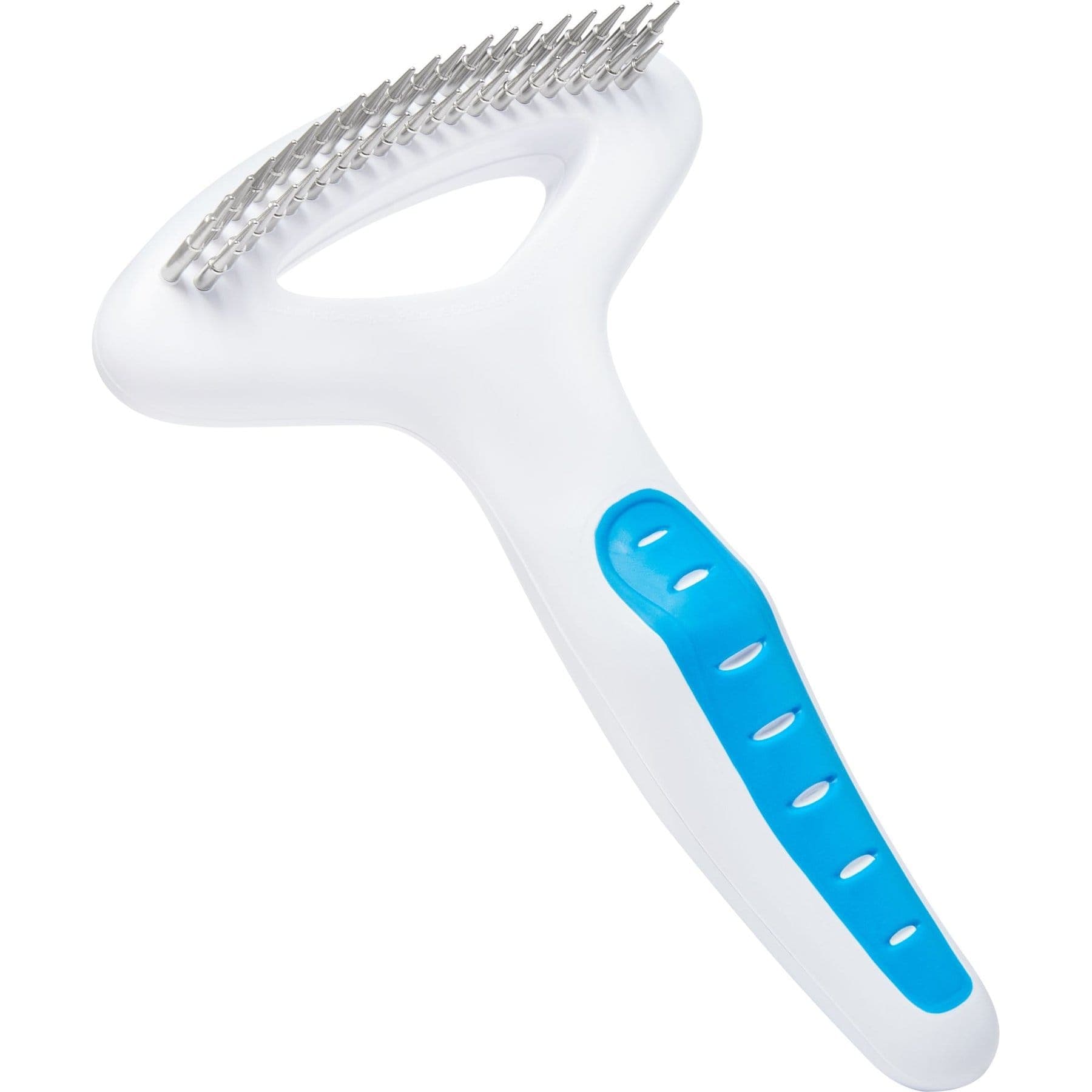
Metal teeth in two lengths lift shedding hair from the undercoat and loosen lightly matted fur; teeth sit parallel to the skin so the rake does not scrape it. Rubber-sheathed non-slip handle.
Petful may earn a commission when you click through to Chewy, at no extra cost to you.
The JW Pet Gripsoft Double Row Undercoat Rake is built for the soft, woolly layer under a double coat. It uses metal teeth in two lengths to lift shedding hair from the undercoat and loosen lightly matted fur. JW Pet notes that the teeth sit parallel to the skin so the rake does not scrape it, and the handle is rubber-sheathed for grip.
During a seasonal coat blow, a rake pulls out the loose undercoat that a slicker only skims. German Shepherds, Huskies, Malamutes, Great Pyrenees and Bernese Mountain Dogs are the classic users.
- Brush type: undercoat rake, double row
- Best on: thick double coats
- Job: removing loose undercoat and preventing packed-in fur
The limitation: a rake does little on short single coats and is not a finishing tool. Follow it with a slicker to smooth the topcoat.
Best deshedding tool for long and double coats: FURminator Long Hair Dog Deshedding Tool, Orange, Medium
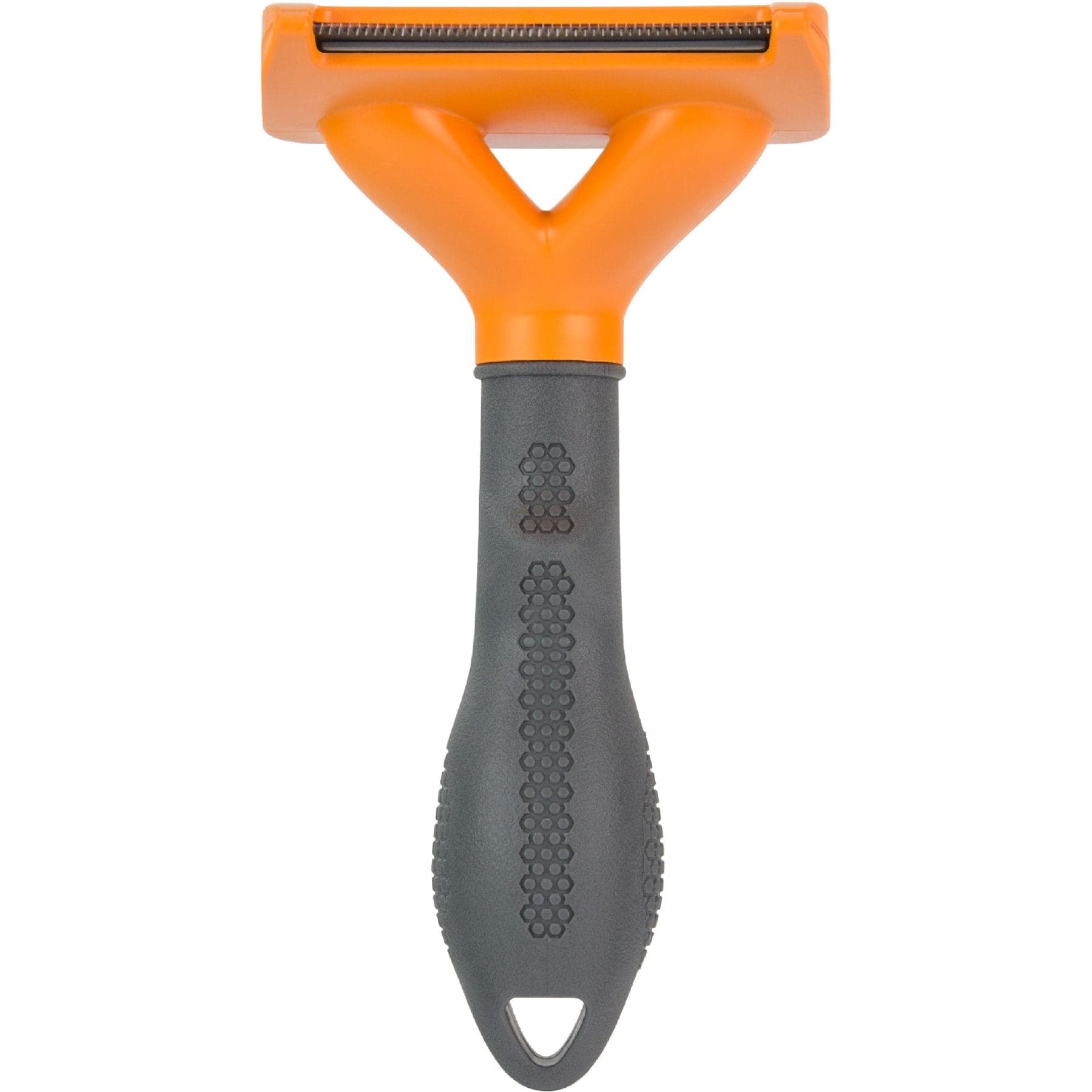
Stainless-steel edge reaches through the topcoat to remove loose hair and undercoat; curved edge follows the body. The long hair edition suits coats with length and density.
Petful may earn a commission when you click through to Chewy, at no extra cost to you.
The FURminator Long Hair Dog Deshedding Tool, Orange, Medium uses a stainless-steel edge that reaches through the topcoat to remove loose hair and undercoat. Its curved edge follows the body. We list the Medium size here, but FURminator sells several sizes and both long hair and short hair editions, so match the size to your dog's weight and the edition to coat length.
The long hair edition suits coats with length and density, such as Golden Retrievers, Australian Shepherds and Border Collies. At about $33.57 at Chewy at the time of writing, it is the priciest pick, and it earns that cost mainly on heavy shedders.
- Brush type: deshedding tool with a fine stainless-steel edge
- Best on: long and double coats between seasonal blows
- Job: clearing loose undercoat quickly
The limitation: used too often or too firmly, the edge can thin and break guard hairs. It is not for curly, wire or matted coats.
Best dematting tool: FURminator Adjustable deMatter Dog & Cat Tool
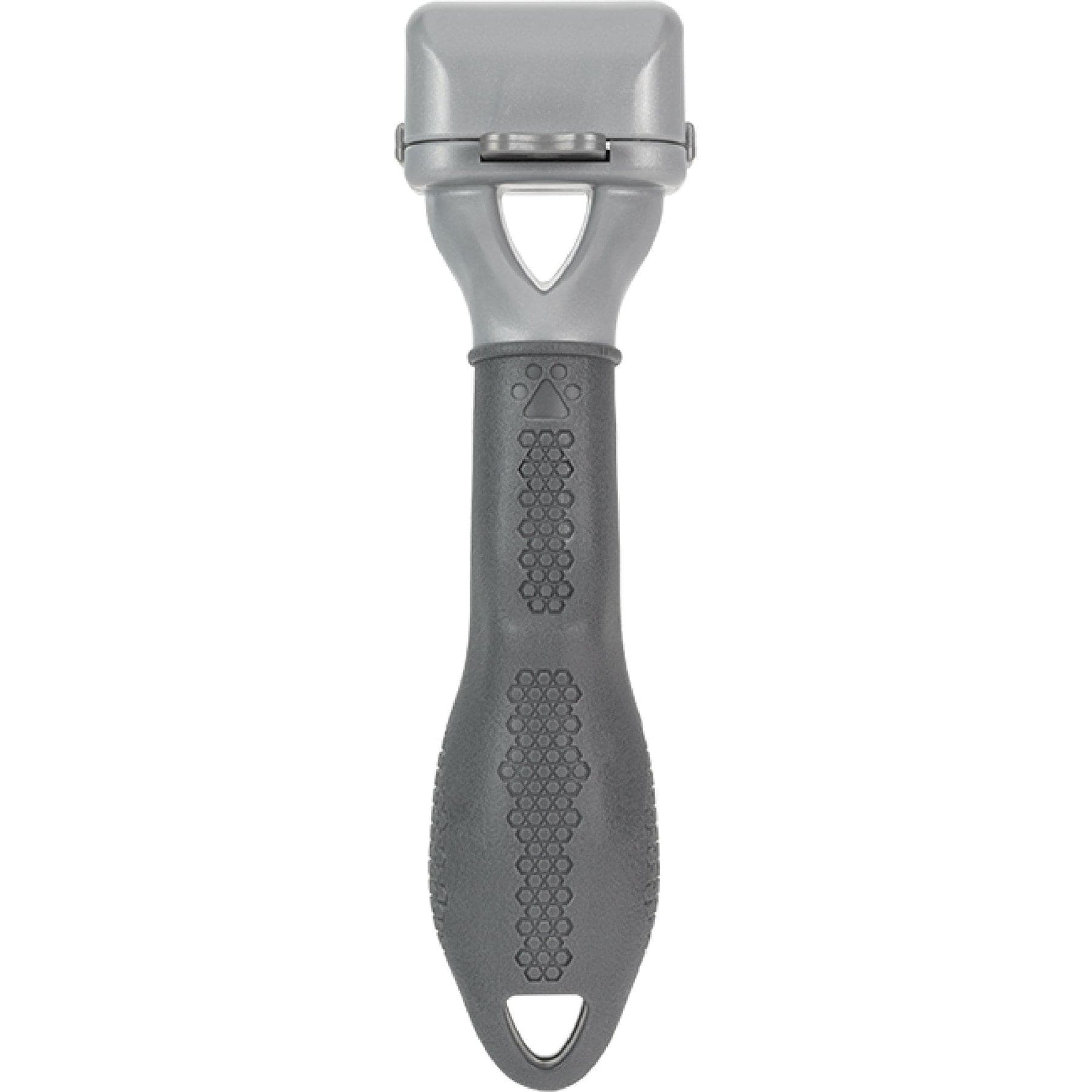
Curved cutting edges remove matted hair, and the edges adjust to the length of the coat. Stainless-steel edge and slide tab lock in place.
Petful may earn a commission when you click through to Chewy, at no extra cost to you.
The FURminator Adjustable deMatter Dog & Cat Tool handles the job brushes cannot. Its curved cutting edges remove matted hair, and the edges adjust to coat length with a slide tab that locks in place. The edge is stainless steel.
Keep it for doodles, Poodle mixes, long-coated breeds and any dog that comes back from the yard with mats behind the ears or in the armpits. It works through a mat in sections instead of tearing it out with a brush.
- Brush type: dematting tool with adjustable cutting edges
- Best on: long, curly and doodle coats
- Job: opening and removing mats and tangles
The limitation: it cuts hair, so it is for mats you can lift away from the skin, not tight pelting. Go slowly and hold the base of the mat.
Best rubber curry brush for baths and short coats: Frisco Bone Dog Curry Brush
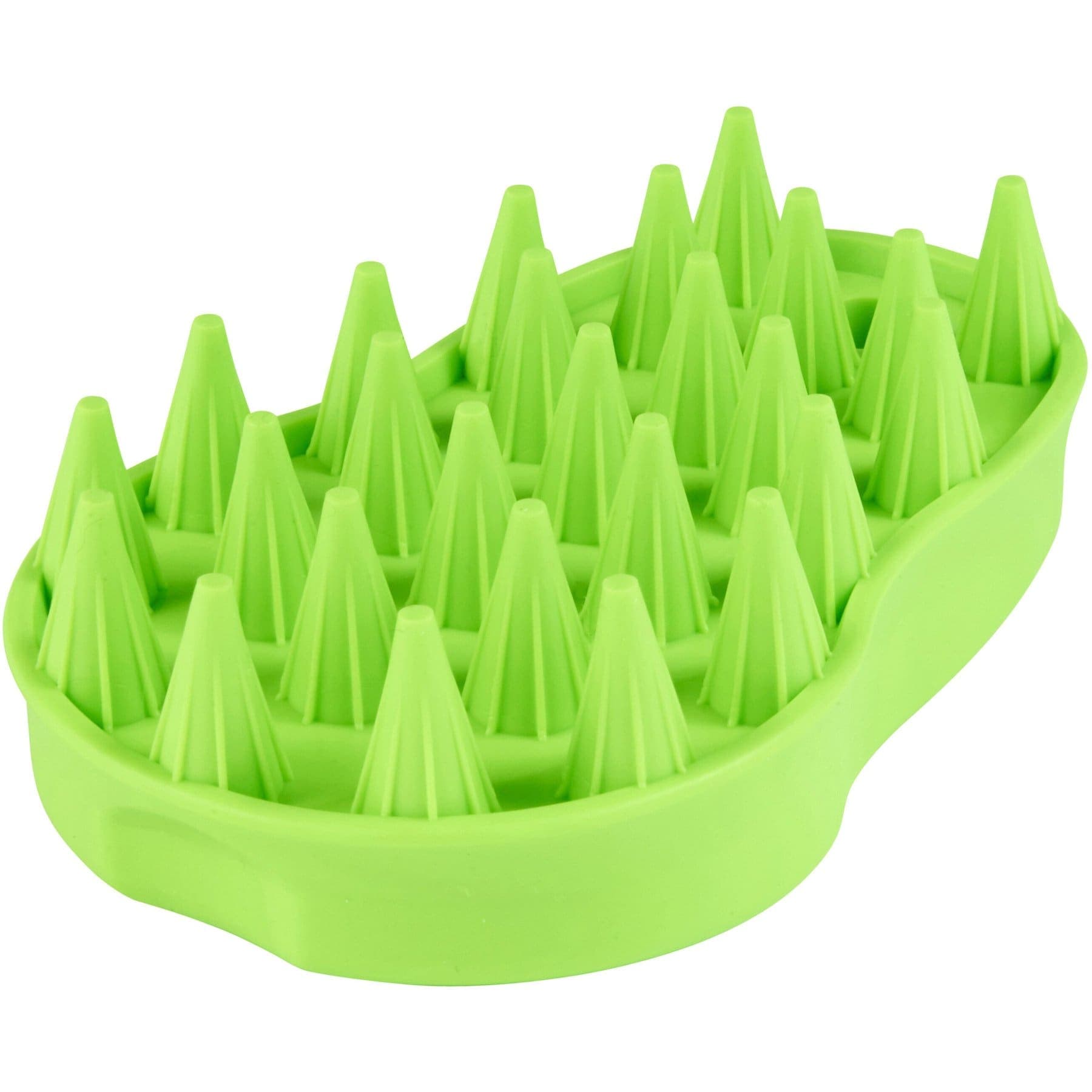
Soft rubber tips scrub down to the skin, loosen dirt, dead skin and loose fur without pulling, and help shampoo lather. A cheap bath-time tool.
Petful may earn a commission when you click through to Chewy, at no extra cost to you.
The Frisco Bone Dog Curry Brush is a soft rubber brush that scrubs down to the skin, loosens dirt, dead skin and loose fur without pulling, and helps shampoo lather. At about $6.99 at Chewy at the time of writing, it is the cheapest tool on the list.
Rubber curry brushes are the natural fit for Beagles, Boxers, Pugs and other smooth coats, and they double as a bath brush for nearly any dog.
- Brush type: rubber curry brush
- Best on: short, smooth coats; bath time for any coat
- Job: lifting loose hair and working in shampoo
The limitation: rubber nubs will not detangle long hair or reach a deep undercoat.
Slicker vs pin vs bristle: which dog brush type?
There are six main types of dog brushes, and each does one job well. Slicker vs pin brush is the comparison most owners get stuck on: a slicker has fine, bent wire pins packed close together that grab tangles and loose hair, while a pin brush has longer, widely spaced straight pins (often ball-tipped) that glide through long hair without pulling. The American Kennel Club's grooming guides make the same point: choose the tool by coat, not by habit.
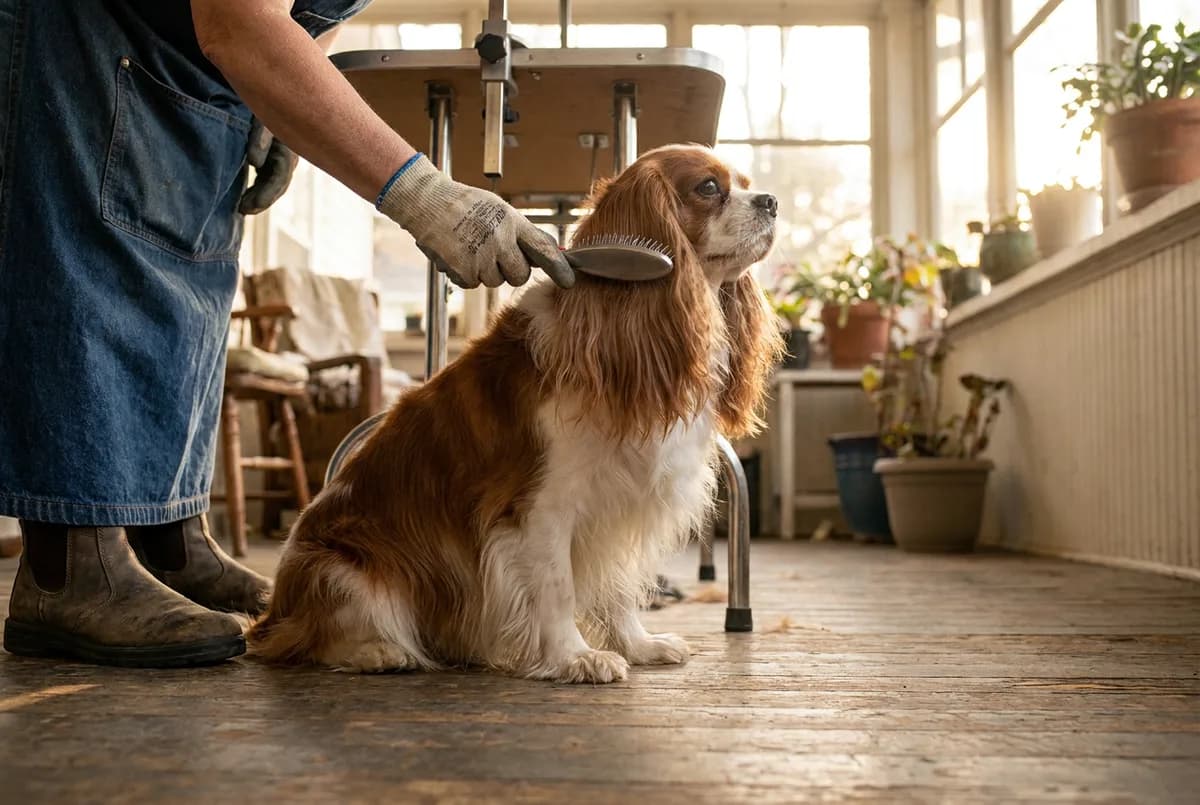
- Slicker brush: fine bent wire pins; detangles and removes loose hair on medium, long and curly coats. The best dog slicker brush for most homes is a simple one with a comfortable grip, used with light pressure.
- Pin brush: long, widely spaced pins; daily detangling for long, silky coats.
- Bristle brush: tightly packed natural or nylon bristles; a bristle brush for dogs smooths the coat, spreads skin oils and adds shine. It is a soft dog brush, gentle enough for puppies and sensitive dogs.
- Undercoat rake: long metal teeth that reach the dense under layer of a double coat.
- Deshedding tool: a fine-toothed steel edge that pulls loose undercoat through the topcoat.
- Rubber curry brush: soft rubber nubs; a curry brush for dogs lifts dead hair from short coats and works shampoo in at bath time.
A dematting comb or dematting tool is the seventh tool many long-coated dogs eventually need, but it is a mat remover rather than an everyday brush.
Pin spacing and length
Pin spacing and length decide what a brush can reach. Short, tightly spaced pins (slicker and bristle) work at the surface and on fine tangles. Longer, wider pins reach deeper into a full coat without catching. As a rule, pin length should be at least as long as the coat is deep, or the brush only grooms the top layer and leaves mats forming underneath.
Coat type matcher: first tool, second tool, tool to skip
Use this coat type matcher to build a two-tool kit from the picks above. The first tool does routine brushing, the second tool handles shedding or mats, and the tool to skip is the one that wastes money or irritates skin on that coat.
| Coat type | First tool | Second tool | Tool to skip |
|---|---|---|---|
| Long and silky (Yorkie, Maltese, Shih Tzu) | CHI pin and bristle brush | Frisco slicker for tangles | Undercoat rake |
| Curly and doodle (Poodle, Goldendoodle, Labradoodle) | Frisco slicker | FURminator deMatter | Deshedding tool |
| Thick double coat (Husky, German Shepherd, Great Pyrenees) | JW Pet undercoat rake | Frisco slicker to finish | Rubber curry brush alone |
| Long double coat (Golden Retriever, Aussie, Border Collie) | Frisco slicker | FURminator Long Hair deshedding tool | Bristle brush alone |
| Short and smooth (Beagle, Boxer, Pug) | Frisco curry brush | Bristle side of the CHI brush | Slicker brush |
- Fine slicker pins pressed into the coat can scratch and redden skin, a problem groomers call brush burn. Use short strokes with light pressure, and part the coat every few minutes to check the skin. Stop if you see redness or your dog flinches.
Who should avoid a slicker? Owners of very short-coated or thin-skinned dogs, such as Greyhounds, Whippets and Chihuahuas, are better served by rubber or soft bristles. Puppies also do better starting with a soft dog brush so brushing feels pleasant from day one.
What do professional dog groomers use?
Professional groomers use a slicker brush as their main detangling tool, a metal comb to check for missed tangles down to the skin, and an undercoat rake or deshedding tool on double coats. Pin brushes come out for long show coats, and dematting tools or clippers handle mats a brush cannot open.
When slicker brushing, the comb is the step most owners skip. After brushing a section, run a wide-toothed comb through it; if the comb snags, that section is not done. Groomers work in small sections from the skin outward rather than skimming the surface.
Best dog brush for double coats and undercoat
For a double coat, the best dog brush for shedding is an undercoat rake or a deshedding tool, followed by a slicker to finish the topcoat. A double coat has two layers: coarse guard hairs on top and a soft, dense undercoat beneath that sheds heavily once or twice a year. A surface brush alone leaves that undercoat packed in, which traps heat and moisture.
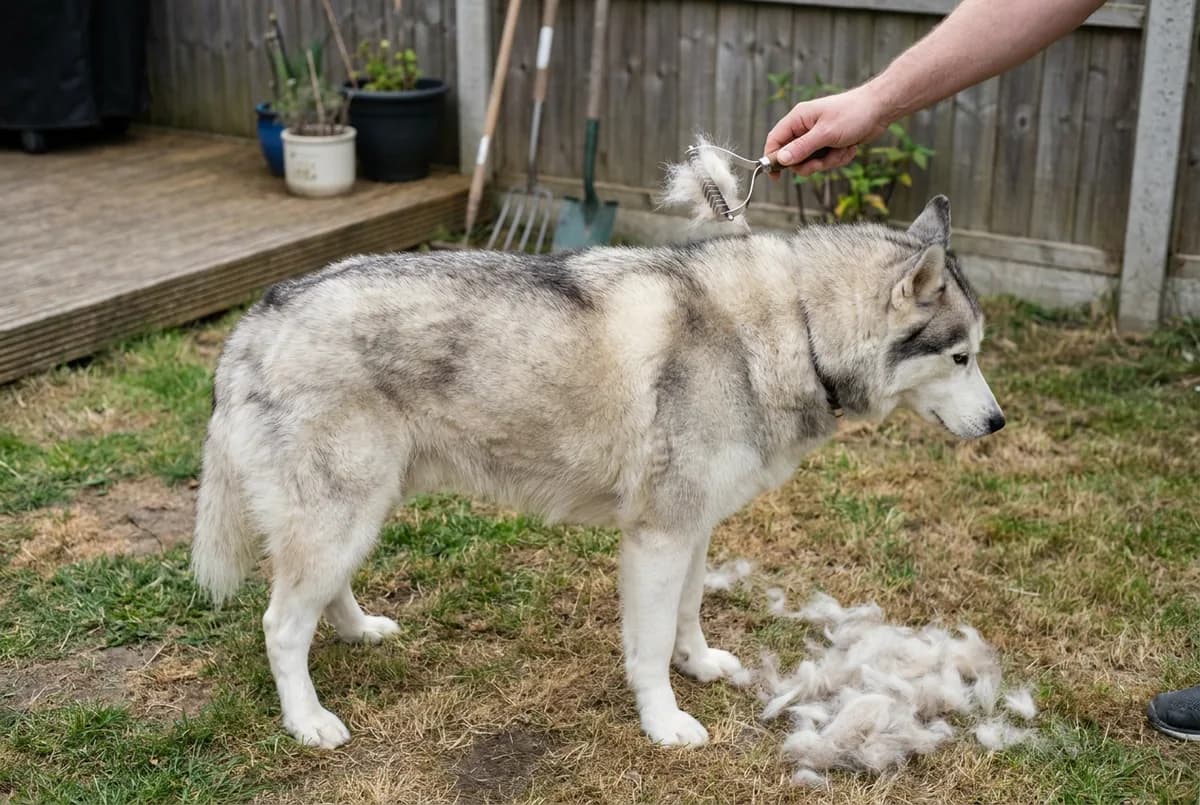
Here is how the tools split the work on a double-coated dog:
- Undercoat rake first: for a heavy undercoat, start with a rake such as the JW Pet Gripsoft Double Row Undercoat Rake, whose two tooth lengths reach the undercoat without scraping skin. Use it most during coat blow.
- Deshedding tool between blows: the FURminator Long Hair Dog Deshedding Tool, Orange, Medium is a dog shedding brush for weekly maintenance on long double coats.
- Slicker to finish: a slicker brush for double coated dogs, such as the Frisco Slicker Dog Brush, Large, smooths the guard hairs and catches anything the rake loosened.
Work in the direction of hair growth, in sections, starting at the back legs and moving forward. Never shave a double coat to stop shedding; the undercoat insulates against both heat and cold, and regular raking does the job instead. Short single coats shed too, but they need a different kit, covered in the short-haired section below.
Are FURminator brushes good for dogs?
Yes, FURminator deshedding tools are good for dogs with an undercoat when used correctly: about once or twice a week, with light strokes, for no more than 10 to 20 minutes. The fine steel edge removes loose undercoat efficiently, but overuse can thin the coat and break guard hairs, so it is a maintenance tool, not a daily brush.
A FURminator dog brush is the wrong pick for curly, wire, silky or matted coats, and for dogs with sensitive or broken skin. Choose the long hair or short hair edition by coat length, and the size by your dog's weight; sizes vary from small to extra large.
Best dog brush for long hair, curly and doodle coats
The best dog brush for long hair is usually a slicker paired with a comb, plus a pin brush for silky coats. Curly and doodle coats mat faster than straight coats because shed hair stays trapped in the curl instead of falling out. That makes daily or every-other-day brushing, down to the skin, the single biggest factor in avoiding a shave-down.
For doodle coats, line brushing is the technique groomers recommend: part the coat in a horizontal line, brush the hair below the part down and away from the skin, then move the part up an inch and repeat. Long, curly and doodle coats each lean on a slightly different kit:
- Goldendoodles, Labradoodles and other doodles: a slicker such as the Frisco Slicker Dog Brush, Large, plus a metal comb and the FURminator Adjustable deMatter Dog & Cat Tool for the inevitable mat behind the ears.
- Poodles: the same slicker and comb routine, with the dematter kept for collar and armpit mats. Skip deshedding blades on a curly coat.
- Shih Tzus, Maltese and Yorkies: the CHI Double Sided Ball Tip Pin & Bristle Dog Brush handles daily detangling on long, silky hair, with a slicker for stubborn knots.
- Pomeranians: a fluffy double coat calls for a slicker plus a light pass with an undercoat rake during shedding season, then a slicker to fluff the topcoat back out.
What do groomers do with matted dog hair?
Groomers split small mats with their fingers or a dematting tool, then work them out from the tip toward the skin with a slicker and comb while holding the hair at the base. Mats that sit tight against the skin are clipped off with clippers rather than brushed, because pulling or cutting close to skin causes pain and injury.
How to brush a matted dog at home: sprinkle a little cornstarch or detangling spray on the mat, hold the hair between the mat and the skin, and tease it apart in small pieces. Stop after 10 minutes and come back later if your dog gets restless. VCA's pet care library advises that heavy matting is a job for a groomer or veterinarian.
- Skin pulls up into a tight mat, so scissors can slice it without warning. If you cannot slide a comb between the mat and the skin, leave it for a groomer or vet to clip. Red, damp or smelly skin under a mat also needs a vet visit.
Best dog brush by breed
Breed is a shortcut to coat type, so most breeds map cleanly onto the kits above. Here is the two-tool combo for the breeds owners ask about most:
- German Shepherd: undercoat rake for the twice-yearly blow, slicker weekly. The best dog brush for German Shepherd coats is the JW Pet Gripsoft Double Row Undercoat Rake.
- Siberian Husky: rake first, always, then a slicker. Huskies blow their undercoat in clumps, and a rake clears it far faster than any brush.
- Great Pyrenees: a rake plus a slicker, with the dematter for the dense "pants" and behind the ears.
- Australian Shepherd: slicker for the feathering and a deshedding tool such as the FURminator Long Hair Dog Deshedding Tool, Orange, Medium during shedding season.
- Corgi: a heavy shedder for its size; rake or deshedding tool weekly, slicker to finish.
- Border Collie: slicker and comb on the ruff and feathering, deshedding tool in spring and fall.
- Bernese Mountain Dog: long double coat, so a rake for the undercoat plus a slicker and comb for the long topcoat.
- Golden Retriever: most owners lean on a slicker, backed by a deshedding tool or rake for the feathered legs and chest.
Mixed breeds follow the dominant coat, not the label. If your dog's coat parts to show a soft, woolly layer at the skin, treat it as a double coat.
Short-haired dogs and heavy shedding
Short, smooth coats shed steadily rather than in seasonal blows, and they need a different approach from the long and double coats above. A rubber curry brush such as the Frisco Bone Dog Curry Brush used in small circles lifts dead hair and stimulates the skin, and a soft bristle brush finishes the coat.
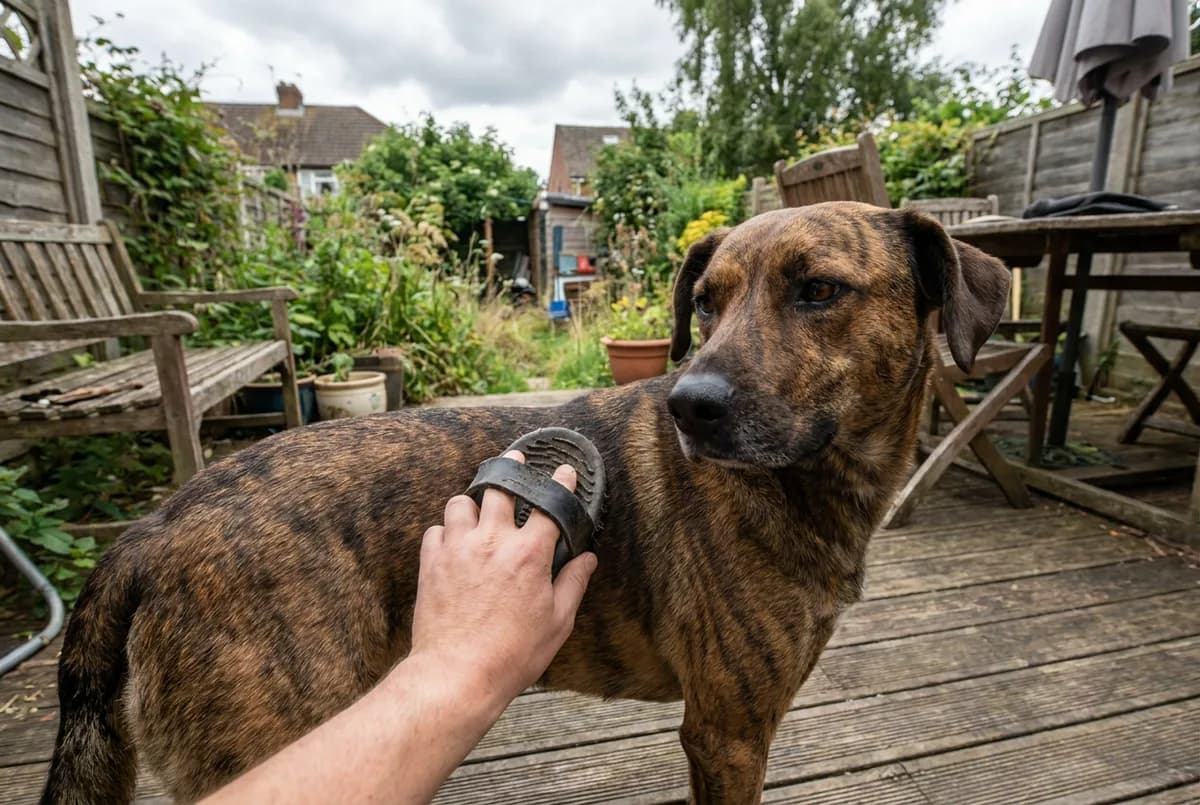
For short-coated breeds like Labs, Beagles and Pugs, our guide to the best dog grooming tools for short and long hair compares picks built specifically for those coats. Skip slickers and rakes on very short coats; there is nothing for the pins to catch, and they scrape skin.
Bath brushes, vacuums and tools beyond brushes
Brushing is only part of grooming. A few specialty tools solve problems a standard brush cannot:
- Dog shower brush or dog shampoo brush: a rubber curry like the Frisco Bone Dog Curry Brush works shampoo down to the skin and doubles as a dog scrub brush for muddy paws and bellies.
- Dog vacuum brush: grooming attachments for home vacuums suck up loose hair as they brush. They suit calm, short-coated or double-coated dogs that tolerate noise, but many dogs need slow introduction.
- Electric dog brush: battery-powered rotating or vibrating brushes exist, but they add little over a good manual slicker and can tangle long hair.
- Steam brush for dogs: these spray a light mist while brushing to reduce static and flyaways. A quick spritz of water-based conditioner achieves much the same on a dry coat.
Always brush before the bath. Water tightens tangles into solid mats, so detangle completely first, bathe, then brush again once the coat is dry. The ASPCA's dog care guidance also recommends regular brushing as part of routine coat and skin care.
When brushing is not enough and a coat needs trimming, see our picks for the best dog clippers, and browse our dog grooming guides for breed-specific routines. If you also share your home with a cat, WebVet's guide to the best cat brush covers feline coats, and its roundup of cat deshedding tools handles heavy-shedding cats.
Dog brush questions
These quick answers cover how often to brush, safe technique and how to win over a dog that resists grooming.
It depends on coat type. Long, curly and doodle coats need brushing every day or two to stop mats forming, double coats need two or three sessions a week and daily raking during coat blow, and short smooth coats do well with a weekly curry brush session. Brush more gently and less often if you notice skin irritation, redness or flaking, and check with your vet if it persists.
Yes, a slicker brush is safe when used with light pressure and short strokes. The fine wire pins can cause brush burn, a scratched and reddened patch of skin, if you press hard or brush the same spot repeatedly. Part the coat to check the skin as you go, and choose a softer pin or rubber brush for thin-skinned or very short-coated dogs.
Both, but brushing before the bath matters most. Water tightens existing tangles, so a bath on an unbrushed coat sets mats that are much harder to remove. Detangle fully before the bath, then brush again once the coat is completely dry to catch loose hair the shampoo freed up and to leave the coat smooth.
Keep short sessions of two to five minutes, start with a soft brush on easy areas like the back and shoulders, and give treats after brushing so the routine ends on a good note. Gradually add time and sensitive spots like legs and tail. If a dog snaps or panics, a groomer or trainer can help, and pain from mats may be the cause.
Take the hair off the dog before it reaches the floor. Brush outdoors or on a washable mat, use an undercoat rake or deshedding tool during spring and fall coat blows, and finish with a rubber curry to lift what the rake missed. A short-coated dog sheds year-round, so a two-minute curry session every other day cuts loose hair more than any vacuum. Pair that routine with a weekly wash of dog bedding, which holds most of the hair you see on floors.

Coreen Saito is a pet writer and longtime shelter volunteer with more than a decade in animal rescue. She covers cat behavior, breed care, and the small, ordinary science of sharing a life with companion animals, with a particular focus on honest takes about the products and decisions that actually matter. At home in Arizona, she's outranked by Mac (a dog with the loudest opinion in the house), Rebel (a cat who governs by quiet authority), and Meri (an orange tabby who runs the late shift and the laundry basket). She writes about all three, plus the rescues that keep coming through her life, at LifeWithMinty.com.
Sign up for expert-backed reviews and safety alerts all in one place.