Most Popular Dog Breeds: Are They Right For You?
The French Bulldog tops the AKC's most popular dog breeds list again. See the full 2025 top 20, what changed, and how to decide if a popular breed fits your home, budget, and lifestyle.

Petful is reader supported. As an affiliate of platforms like Amazon and Chewy, we may earn a commission when you buy through links on this page. There is no extra cost to you.
The most popular dog breeds in America are ranked every year by the American Kennel Club (AKC), and for 2025 the French Bulldog holds the No. 1 spot for the fourth year in a row. The Labrador Retriever and Golden Retriever follow, based on registration statistics from the 202 breeds the AKC ranked.
Popularity is a starting point, not a match. This guide walks through the full 2025 top 20, what changed from last year, why certain breeds keep winning, and how to decide whether one of these crowd favorites actually fits your home, budget, and energy level.
- 1The French Bulldog is the AKC's most popular dog breed for the fourth consecutive year, with the Labrador Retriever and Golden Retriever at Nos. 2 and 3.
- 2The 2025 rankings, released in 2026, cover 202 AKC-recognized breeds and are based on registration statistics, not sales.
- 3The Dachshund climbed to No. 5, the Cane Corso rose to No. 11, and the Pomeranian re-entered the top 20 at No. 19.
- 4A popular breed is not automatically the right breed: cost, health risks, grooming, and energy needs should drive the decision.
- 5Mixed breeds remain the most common dogs in American homes, and a DNA test can tell you exactly what yours is.

Sign up for expert-backed reviews and safety alerts all in one place.
AKC Names the Most Popular Dog Breeds of 2025
Each year the American Kennel Club ranks its recognized breeds by new registration statistics, and the results tell you which dogs Americans are actually bringing home. The 2025 rankings of the most popular dog breeds in America counted 202 breeds; three more gained AKC recognition in January 2026, bringing the total to 205.
“The results for 2025 are in – the French Bulldog takes the No. 1 spot once again!” the AKC announced with the release. The Frenchie first unseated the Labrador Retriever in 2022, ending the Lab's record 31-year run at the top, and it has not let go since.
Registration numbers are a proxy for popularity rather than a census: they count purebred dogs registered with the AKC, so mixed breeds and unregistered purebreds are not represented. Still, the year-over-year movement is the best public signal of which breeds are trending up or down in American homes.
How the AKC Ranking Actually Works
The AKC builds its list from new dog registrations recorded during the calendar year, then releases the rankings early the following year, which is why the 2025 list arrived in 2026. A registration is a paperwork event: a breeder or owner files a purebred puppy's pedigree with the club. The count says nothing about how many of each breed already live in American homes.
That method has two blind spots worth knowing before you treat the list as gospel. First, popular crosses like Goldendoodles, Cavapoos, and Bernedoodles never appear at all, because the AKC does not register intentional mixes, even though doodle demand visibly shapes the market. Second, breeds whose owners rarely bother with paperwork are undercounted, which is one reason rescue-heavy breeds sit lower than their real-world numbers suggest. The rankings are the best public data we have, but they measure the pipeline of new purebred puppies, not the full population. A census of the most popular dog breeds in America by household count, rather than registrations, would rank the most popular American dog breeds differently, with mixes and Labs closer to the top.

Petful may earn a commission when you click through to Chewy, at no extra cost to you.
The Top 20 at a Glance
Here are the top 20 most popular dog breeds for 2025, with each breed's group and how it moved compared with the 2024 list. If you are searching for the most popular dog breeds in 2026, this is the current ranking: the AKC releases each year's dog breeds by popularity early the following year.
| Rank | Breed | AKC Group | Change vs. 2024 |
|---|---|---|---|
| 1 | French Bulldog | Non-Sporting | No change |
| 2 | Labrador Retriever | Sporting | No change |
| 3 | Golden Retriever | Sporting | No change |
| 4 | German Shepherd Dog | Herding | No change |
| 5 | Dachshund | Hound | Up 1 |
| 6 | Poodle | Non-Sporting | Down 1 |
| 7 | Beagle | Hound | No change |
| 8 | Rottweiler | Working | No change |
| 9 | German Shorthaired Pointer | Sporting | Up 1 |
| 10 | Bulldog | Non-Sporting | Down 1 |
| 11 | Cane Corso | Working | Up 3 |
| 12 | Cavalier King Charles Spaniel | Toy | Up 1 |
| 13 | Yorkshire Terrier | Toy | Down 2 |
| 14 | Australian Shepherd | Herding | Down 2 |
| 15 | Doberman Pinscher | Working | Up 1 |
| 16 | Pembroke Welsh Corgi | Herding | Down 1 |
| 17 | Miniature Schnauzer | Terrier | Up 1 |
| 18 | Boxer | Working | Down 1 |
| 19 | Pomeranian | Toy | Entered top 20 |
| 20 | Bernese Mountain Dog | Working | Down 1 |
The Miniature Schnauzer cracked the top 17 this year, while the Shih Tzu, a top-20 fixture in 2024, slipped just outside the list as the Pomeranian returned. Working and herding breeds hold seven of the twenty spots, toy breeds claim three, and every AKC group except Terriers places at least two dogs, with the Miniature Schnauzer flying the terrier flag alone. Bookmark this table when comparing breeds: rank movement year over year says more than raw position.
The Top 10, Up Close
The top 10 most popular dog breeds account for a huge share of all AKC registrations. Rankings tell you what is popular; the sections below tell you why, and what living with each of these dogs actually asks of you.
1. French Bulldog

Playful, adaptable, and compact, the Frenchie is built for modern life: it thrives in apartments, does not need marathon exercise, and rarely barks without a reason. That combination is exactly why it has owned the No. 1 spot since 2022, when it ended the Labrador Retriever's 31-year reign.
- Size and lifespan: Under 28 pounds; 10 to 12 years.
- Best for: Apartment dwellers, first-time owners, and anyone home enough to keep a companion dog company.
- Watch for: Breathing problems, heat intolerance, spine issues, and premium price tags, commonly $3,500 or more from a responsible breeder.
The trade-off is health. French Bulldogs are brachycephalic (flat-faced), which brings a real risk of airway syndrome, heat stroke, and higher-than-average vet and insurance costs. Many also arrive via cesarean delivery, which is part of why the breed costs so much up front. Budget for the biology before falling for the bat ears.
2. Labrador Retriever

America's No. 1 for a record 31 straight years before the Frenchie took over, the Lab remains the default family dog for a reason: friendly with everyone, eager to train, and happy doing anything from dock diving to therapy visits. It comes in three colors (black, yellow, and chocolate) and two loosely defined builds, the stockier English type and the leggier American field type.
- Size and lifespan: 55 to 80 pounds; 11 to 13 years.
- Best for: Active families, hunters, swimmers, and multi-pet households.
- Watch for: Obesity, hip and elbow dysplasia, and a mouthy adolescent phase that eats shoes.
Labs are high-energy athletes that need real daily exercise and a watchful eye on portions, since the breed is famously food-motivated. A quality high-protein diet like Orijen Original dry food fed to measured portions, not free-fed, goes a long way toward keeping a Lab lean through middle age.
3. Golden Retriever

The Golden is the Lab's slightly softer sibling: gentle, patient with kids, and famously biddable, which is why it dominates therapy, guide, and search-and-rescue work. Goldens stay puppyish well into adulthood, and they want to be wherever their people are, which makes them a poor fit for households that leave a dog alone all day.
- Size and lifespan: 55 to 75 pounds; 10 to 12 years.
- Best for: Families with kids, first-time large-dog owners, and anyone who wants a trainable people-pleaser.
- Watch for: Heavy year-round shedding, ear infections after swimming, and elevated cancer rates in the breed.
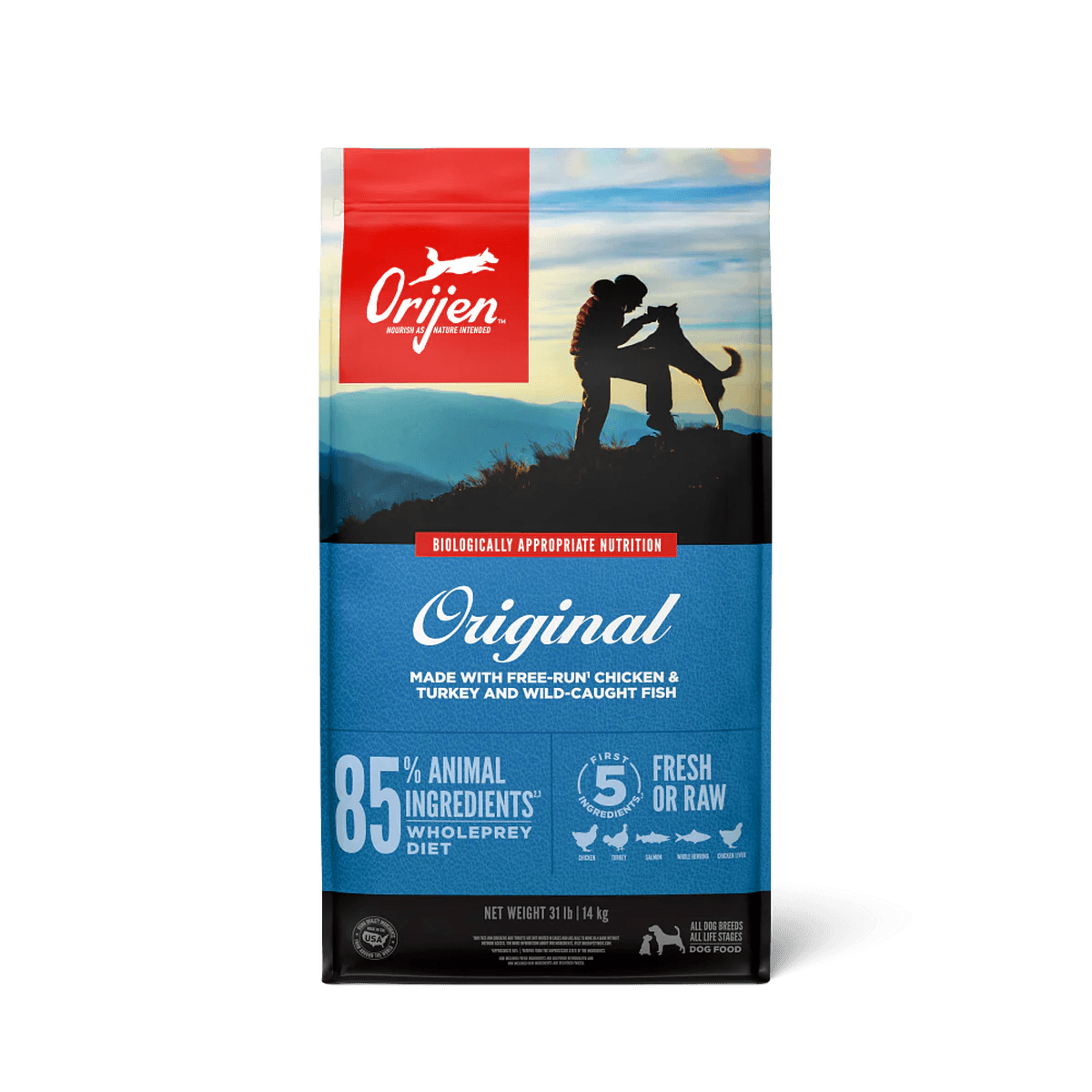
A grain-free kibble built around named whole-protein sources. Best for active adult dogs; the high fat content is more than many sedentary pets need.
Petful may earn a commission when you click through to Chewy, at no extra cost to you.
4. German Shepherd Dog

Loyal, confident, and endlessly trainable, the German Shepherd is the working-dog standard for police, military, and service roles, and it has not left the AKC's top four in decades. At home it needs a job: structured training, real exercise, and mental work every day, or it will invent its own projects, usually at the expense of your drywall.
- Size and lifespan: 50 to 90 pounds; 7 to 10 years.
- Best for: Experienced, engaged owners who will train consistently and want a devoted guardian.
- Watch for: Hip and elbow dysplasia, degenerative myelopathy, and aloofness with strangers that needs early socialization.
First-time GSD owners should plan the homecoming setup early. A sturdy heavy-duty crate sized for a 65- to 90-pound adult makes house-training and safe alone-time far easier, and it gives a security-minded breed a den of its own.
5. Dachshund

The Dachshund climbed to No. 5 this year, its best showing in decades and a fitting result for a breed that social media adores. Bred to hunt badgers, this long, low hound packs a big-dog personality into a small body: bold, vocal, and stubborn in the most charming way possible. It comes in two sizes (standard and miniature) and three coats (smooth, longhaired, and wirehaired).
- Size and lifespan: 11 to 32 pounds depending on variety; 12 to 16 years.
- Best for: Apartment and small-home living, alert-dog fans, and owners with a sense of humor.
- Watch for: Intervertebral disc disease in that long back, so limit stairs and jumping, plus a serious bark for its size.
6. Poodle

Available in standard, miniature, and toy sizes, the Poodle is one of the smartest breeds ever measured and a low-shedding option for many allergy-conscious homes. Underneath the show-ring stereotype is a genuine athlete: Poodles were bred as water retrievers, and standards still excel in hunting, agility, and obedience work.
- Size and lifespan: 4 to 70 pounds across the three varieties; 10 to 18 years.
- Best for: Allergy-conscious homes, competitive dog sports, and owners who enjoy training.
- Watch for: Grooming costs, since that curly coat mats without professional attention every four to six weeks.
7. Beagle

Merry, sturdy, and built around its legendary nose, the Beagle is a cheerful family companion that has stayed near the top of the rankings for more than a century. Beagles are pack hounds by design, which makes them sociable with other dogs and generally excellent with children.
- Size and lifespan: Under 20 pounds (13-inch variety) or 20 to 30 pounds (15-inch); 10 to 15 years.
- Best for: Families, multi-dog homes, and owners who want a medium-small dog with an easy coat.
- Watch for: Escape-artist scent tracking, baying, and weight gain. A secure yard and leash discipline are non-negotiable.
8. Rottweiler
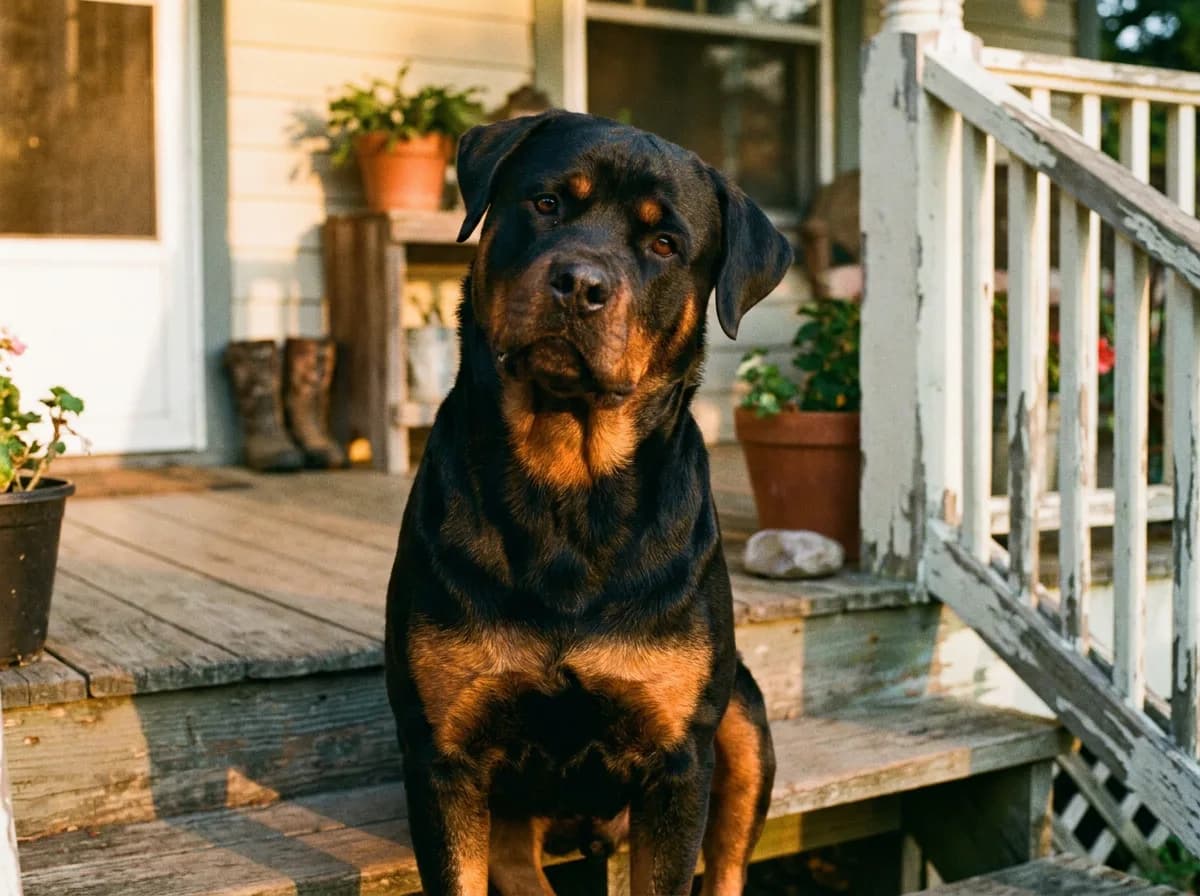
Behind the imposing build is a calm, confident guardian that bonds deeply with its family. A well-bred, well-socialized Rottie is a gentle, even goofy housemate, but the breed's sheer strength (males can pass 130 pounds) demands early training and an owner who takes leadership seriously.
- Size and lifespan: 80 to 135 pounds; 9 to 10 years.
- Best for: Experienced owners who want a devoted family guardian and will invest in socialization.
- Watch for: Breed-specific legislation and insurance restrictions in some cities, plus hip dysplasia and heart conditions.
9. German Shorthaired Pointer
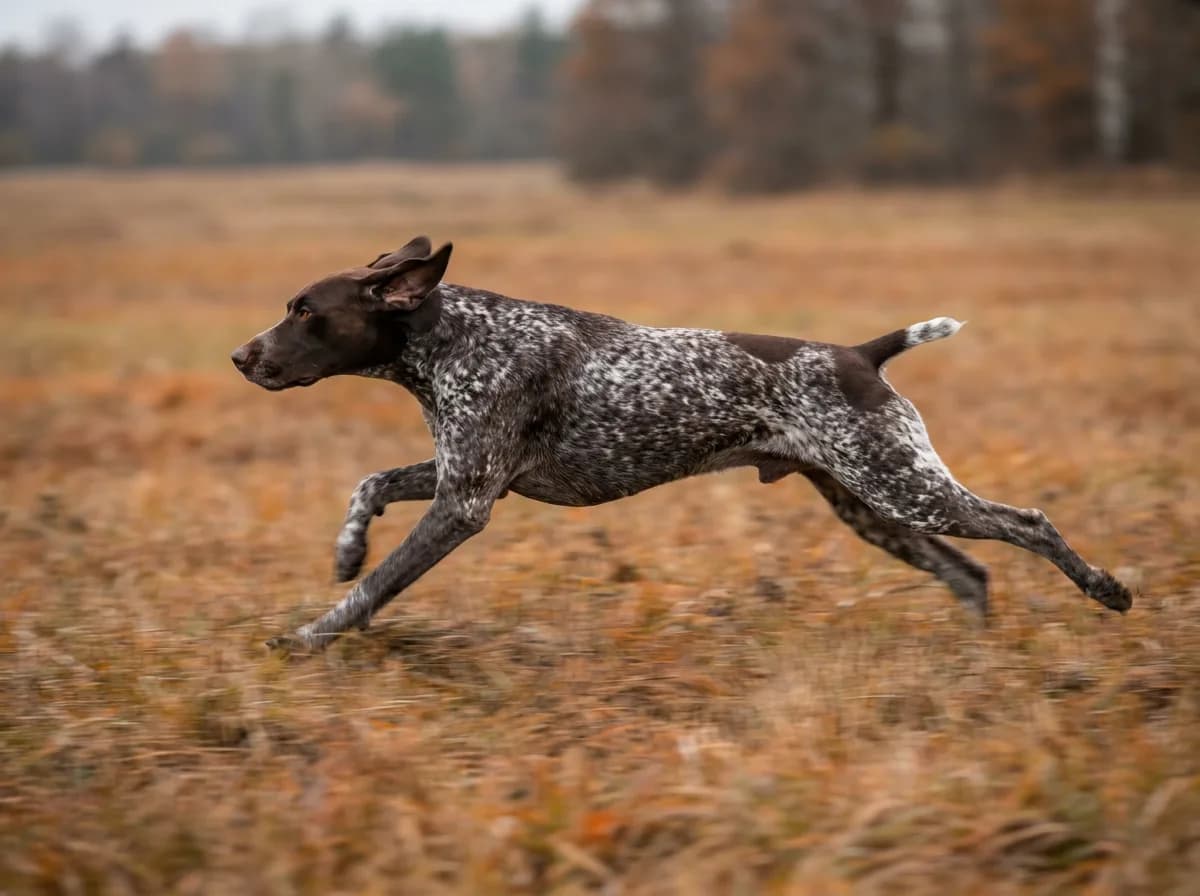
The GSP edged up to No. 9, reflecting America's growing appetite for do-everything sporting dogs. This is a breed for runners, hikers, and hunters: it needs an hour or more of hard exercise daily and repays it with an affectionate, eager-to-please temperament that turns velcro the moment you sit down.
- Size and lifespan: 45 to 70 pounds; 10 to 12 years.
- Best for: Genuinely active households, hunting and field-sport homes.
- Watch for: Under-exercised GSPs become anxious and destructive. This is the wrong breed for a sedentary routine.
10. Bulldog

The Bulldog rounds out the top 10 with its unmistakable wrinkles and an easygoing, low-exercise lifestyle that suits relaxed households. Dignified and stubborn but deeply affectionate, it is one of the few large-headed breeds that genuinely prefers a nap to a jog.
- Size and lifespan: 40 to 50 pounds; 8 to 10 years.
- Best for: Low-key homes, apartment living, and fans of world-class snoring.
- Watch for: Everything brachycephalic. Like the Frenchie and the Pug, heat, overexertion, and airway issues are lifelong management items, and insurers price that in.
Top 10 Care Needs, Compared
Scanning for fit rather than fame? This side-by-side shows what each top-10 breed actually demands day to day.
| Breed | Energy | Grooming Load | Typical Adult Size |
|---|---|---|---|
| French Bulldog | Low to moderate | Low (wrinkle care) | Under 28 lbs |
| Labrador Retriever | High | Moderate (sheds) | 55-80 lbs |
| Golden Retriever | High | High (double coat) | 55-75 lbs |
| German Shepherd Dog | High | High (blows coat) | 50-90 lbs |
| Dachshund | Moderate | Low to moderate | 11-32 lbs |
| Poodle | Moderate to high | Very high (clipping) | 4-70 lbs by variety |
| Beagle | Moderate to high | Low | 13-30 lbs |
| Rottweiler | Moderate to high | Low | 80-135 lbs |
| German Shorthaired Pointer | Very high | Low | 45-70 lbs |
| Bulldog | Low | Moderate (wrinkles) | 40-50 lbs |
How the 2025 List Changed
Compared with the most popular dog breeds of 2024, the headline stayed the same, but the middle of the list moved. The Dachshund passed the Poodle for No. 5, the Cane Corso continued its decade-long surge from obscurity to No. 11, and the Pomeranian re-entered the top 20 at No. 19, pushing the Bernese Mountain Dog to the edge and the Shih Tzu out.
Deeper in the rankings, the Wirehaired Vizsla was the year's biggest climber, jumping 29 spots from No. 159 to No. 130, and the Giant Schnauzer rose five spots to No. 52. The Greyhound fell hardest, dropping 33 spots to No. 151, per the AKC's 2025 announcement.
The longer trend lines are just as telling. The Cane Corso did not even enter the AKC registry until 2010 and now sits at No. 11, the fastest sustained climb of any large breed this century. Toy breeds are quietly resurging too, with the Cavalier King Charles Spaniel and Pomeranian both moving up as more Americans choose smaller dogs for smaller homes. Meanwhile the working retrievers that defined the 1990s and 2000s are holding their positions rather than growing, a sign the market has shifted toward compact companions.

Petful may earn a commission when you click through to Chewy, at no extra cost to you.
The Least Popular Dog Breeds
The least popular dog breeds are not bad dogs; every ranking has a bottom, and the AKC's is full of genuinely good dogs that most Americans have simply never met. Rare breeds like the Sloughi, which came in at No. 200 of 201 in the 2024 rankings, the Norwegian Lundehund, and the English Foxhound register only a handful of litters a year.
Low rank does not mean low quality. It usually means a small breeding population, a specialized original job, or minimal pop-culture exposure. The English Foxhound, for example, is a healthy, athletic pack hound that has simply never transitioned from working kennels to living rooms. The Norwegian Lundehund, with its six-toed feet built for puffin hunting on sea cliffs, is so specialized that only a few litters are born in the United States each year.
For the right owner, a rare breed can be a rewarding choice, though finding a responsible breeder takes longer, waiting lists stretch across state lines, and health screening matters even more with small gene pools. Ask any rare-breed club about the tests it recommends before you commit.
What Affects a Dog Breed's Popularity?
Breeds in movies, television shows, or commercials often catch the eye of prospective pet parents, and a celebrity owner can do the same. Social media has accelerated the effect: short-form video made stars of breeds like the Shiba Inu and fueled the Frenchie's rise.
Other forces that move the rankings:
- Housing and lifestyle trends: Apartment dwellers gravitate toward compact, quiet breeds, while households with yards and active routines pick athletes like the Lab and GSP.
- Health and upkeep: Grooming bills, shedding, and known health issues steer buyers toward or away from a breed.
- Family friendliness: Labs and Goldens dominate because they are famously good with kids.
- Breed-specific legislation: Some cities and insurers restrict certain breeds, which suppresses registrations regardless of the dogs' actual temperament.
- History and habit: The 101 Dalmatians boom of 1996 and the Cocker Spaniel's reign in the 1950s show how quickly culture can inflate a breed, and how hard the fall can be when reality sets in.
Is a Popular Dog Breed Right for Me?
Just because a dog breed is popular does not mean it will be an ideal fit for you. Before committing to any breed on this list, pressure-test it against four practical questions:
- Cost: Can you afford the purchase price, and the lifetime bill? Popular purebreds commonly run $1,500 to $4,000 from responsible breeders, and brachycephalic breeds carry higher insurance premiums on top.
- Energy: Will this dog's exercise needs survive contact with your actual weekday, not your idealized one?
- Grooming and shedding: A Poodle's salon schedule and a Golden's undercoat are ongoing commitments, not surprises.
- Space and rules: Check your lease, HOA, city ordinances, and homeowner's insurance for breed restrictions before you fall in love.
- Three of the top 10 (French Bulldog, Bulldog, and the closely related Pug) are brachycephalic. Flat faces mean elevated risks of airway surgery, heat stroke, and anesthesia complications, and insurers price accordingly. Love the look? Budget for the biology.
What Popular Breeds Cost
Demand has a price. Expect roughly $1,200 to $2,500 for a well-bred Lab, Golden, or Beagle, $2,000 to $4,000 for a Cane Corso or Doberman from health-tested lines, and $3,500 to $5,500 or more for a French Bulldog, whose litters are small and usually delivered by cesarean. Prices far below those ranges usually mean corners were cut on health testing, and prices far above them are often just brand markup. The purchase price is also the cheapest part of the dog: food, routine vet care, insurance, and grooming for a top-10 breed typically run $1,500 to $4,000 every year.
If a purebred dog is in your future, buy from someone who screens for health and welcomes scrutiny. Petful's list of questions to ask a dog breeder is the vetting checklist: proof of hip, elbow, cardiac, and eye clearances appropriate to the breed, a contract with a take-back clause, and a breeder who interviews you as hard as you interview them. For profiles beyond the top 20, browse Petful's dog breed library, which catalogs well over 100 types of dogs.
Adopting a Popular Breed
Prefer to adopt? Popularity works in your favor. The more common a breed is, the more of them end up in rescue: Labs, GSDs, Beagles, and increasingly Frenchies and Dachshunds all have national breed-specific rescue networks with adoptable dogs right now. Adoption fees of $150 to $600 buy you a vetted, often already-trained adult, and you skip the puppy year entirely.
Puppy-proofing matters with every breed on this list. A configurable gate and playpen keeps a new dog safe in one zone while house rules get established.

Petful may earn a commission when you click through to Chewy, at no extra cost to you.
Mixed Breeds Matter
The AKC list only counts registered purebreds, which means it misses the most common American dog entirely: the mixed breed. Shelters and rescues are full of them, along with plenty of purebreds surrendered through no fault of their own.

- Want a popular breed and a rescue story? Breed-specific rescues rehome Frenchies, Labs, Goldens, and every other top-20 breed. You get the dog you wanted and skip the puppy-mill risk entirely.
Curious what is actually in your mutt? A canine DNA kit like the Embark Breed & Health test identifies breed ancestry and screens for hundreds of inherited health conditions, which is genuinely useful information for preventive care, not just trivia.
The AKC now welcomes mixed breeds, which it calls All-American Dogs, in obedience, agility, and other companion events, so a shelter dog can compete right alongside the purebreds on this list. Consider a mixed-breed dog if you want to support a shelter, save a life, or simply want a one-of-a-kind companion without a breeder waiting list.
Mixed breeds also sidestep some of the concentrated health risks that come with popular purebreds, though they are not immune to inherited conditions, which is exactly why the DNA test's health-screening panel earns its keep. Whatever route you choose, popularity rankings make a fine starting point and a poor finish line: the right dog is the one whose needs your household can actually meet for the next decade and beyond.
Frequently Asked Questions
The French Bulldog is the most popular dog breed in the United States, holding the No. 1 spot in the American Kennel Club's registration rankings for the fourth consecutive year in the 2025 results. The Frenchie's apartment-friendly size, low exercise needs, and easygoing temperament keep demand high, while the Labrador Retriever and Golden Retriever remain right behind it at Nos. 2 and 3. If you have seen the question phrased as the #1 selling dog, registration data is the honest proxy: dogs are not tracked by retail sales, and the Frenchie leads new registrations.
No single registry counts every dog on earth, so there is no official worldwide #1 dog breed. The Labrador Retriever is the most widely cited answer, since it tops kennel-club registration data in many countries across North America, Europe, and Australia. Within the United States specifically, the French Bulldog is the #1 breed by AKC registration data, so the most popular dog breed in the world depends on which country's registration data you trust.
Best is subjective, so the honest data-backed answer is the top 5 most popular: for 2025, the AKC rankings put the French Bulldog, Labrador Retriever, Golden Retriever, German Shepherd Dog, and Dachshund. The Dachshund is the newcomer to the top five, passing the Poodle this year. In temperament terms the five run the full spectrum, from couch-friendly companions like the Frenchie to full-time athletes like the German Shepherd, so a top-five badge alone says nothing about fit. These five are simply the most registered, and the right pick among them depends entirely on your lifestyle.
Counting all dogs rather than just registered purebreds, the mixed breed is the most common dog in American homes, and shelter populations reflect that dominance. The AKC's most-popular list only measures new purebred registrations, so the most common dog and the most popular registered breed are different answers: mixed breeds win the first, and the French Bulldog currently wins the second. Lists of the most owned dog breeds that count all households, not just registrations, consistently put Labs, mixes, and German Shepherds near the top.
How many dog breeds there are depends on who is counting. The American Kennel Club ranked 202 fully recognized dog breeds in its 2025 registration statistics, and three more breeds gained AKC recognition in January 2026 for a current total of 205. The count keeps growing as new breeds complete the recognition process. Worldwide the FCI, the international canine federation, recognizes more than 350 dog breeds, so the American list is a subset of global breed diversity.
Popularity itself does not raise pet insurance premiums, but several of the most popular dog breeds carry known health risks that do. Brachycephalic breeds like the French Bulldog and Bulldog, and large guardians like the Rottweiler, typically cost noticeably more to insure than a similarly sized mixed breed, because insurers price in the expected claims for airway surgery, joint disease, and heart conditions common in those breeds.
Dogs are not tracked by retail sales, so there is no official #1 selling dog. The closest honest measure is new registrations, and by that count the French Bulldog is the top dog in the United States, leading AKC registration statistics for the fourth straight year. High demand does show up in prices, though: the Frenchie is also among the most expensive popular breeds to buy.

Carol Bryant is the founder FidoseofReality.com and SmartDogCopy.com. A pet product expert, Carol is the Past President of the Dog Writers Association of America (DWAA) and winner of Best Dog Blog. A dog lover of the highest order is how Gayle King introduced Carol when she appeared with her Cocker Spaniel on Oprah Radio’s Gayle King Show to dish dogs. She helps pet, animal, and lifestyle brands achieve copywriting and content marketing success using well-trained words that work and is well-known in the pet industry.
Sign up for expert-backed reviews and safety alerts all in one place.


