Common Pet Owner Mistakes: 7 a Vet Sees Most (and the Fix for Each)
From skipping preventive vet visits to overfeeding, neglecting teeth, dropping parasite prevention, and forgetting microchips, here are the most common pet owner mistakes a vet sees, each paired with a simple, science-backed fix for dogs and cats.

BVMS, MRCVS

Petful is reader supported. As an affiliate of platforms like Amazon and Chewy, we may earn a commission when you buy through links on this page. There is no extra cost to you.
Most of us would do anything for our pets, yet the most common pet owner mistakes rarely come from a lack of love. They come from small, well-meaning habits that quietly add up: one extra treat, a skipped checkup, a toothbrush that never gets used, a microchip that was never registered. As a veterinarian, I see the same handful of slip-ups over and over, and the good news is that every one of them is fixable once you know what to look for.
Below are the mistakes that do the most damage to a pet's health, safety, and lifespan, ranked by how often they walk through my exam room door. Each comes with an answer-first explanation and the exact fix, for both dogs and cats. Whether you are a seasoned owner or working through the usual first time pet owner mistakes, none of this requires a vet degree, just a few changed habits.
- 1The most common pet owner mistakes are skipping preventive vet care, overfeeding, neglecting dental care, dropping parasite prevention, under-stimulating your pet, skipping ID and microchipping, and rushing the decision to get a pet.
- 2Over 59% of dogs and 61% of cats in the US are overweight or obese, making overfeeding the single most widespread health mistake (Association for Pet Obesity Prevention, 2022).
- 3By age 3, most dogs and cats already show early evidence of periodontal disease, yet daily brushing can prevent it (AVMA).
- 4A microchip more than doubles a lost dog's chance of getting home (52.2% vs 21.9%) and lifts a lost cat's odds from 1.8% to 38.5% (AVMA-cited Lord et al. study).
- 5Annual (twice-yearly for seniors) wellness exams catch problems years before symptoms appear, when treatment is cheaper and more effective (AAHA).
- 6Year-round flea, tick, and heartworm prevention is recommended for nearly all pets, including indoor cats.

Sign up for expert-backed reviews and safety alerts all in one place.
What are the most common pet owner mistakes?
The most common pet owner mistakes veterinarians report are skipping preventive care, overfeeding to the point of obesity, neglecting dental hygiene, stopping parasite prevention, under-stimulating the pet, and skipping permanent ID like a microchip. In a widely cited survey, the Association for Pet Obesity Prevention found that 59% of dogs and 61% of cats in the US were overweight or obese, which makes feeding-related errors the most prevalent of all. These same errors top the lists of common dog owner mistakes and common cat owner mistakes alike.
What ties these mistakes together is that they are all invisible until they are not. A pet can carry extra weight, plaque, or parasites for months or years while looking and acting perfectly normal, which is exactly why so many caring owners miss them. Let's take them one at a time, dog and cat, with the fix for each.
Mistake 1: Skipping preventive and routine vet care
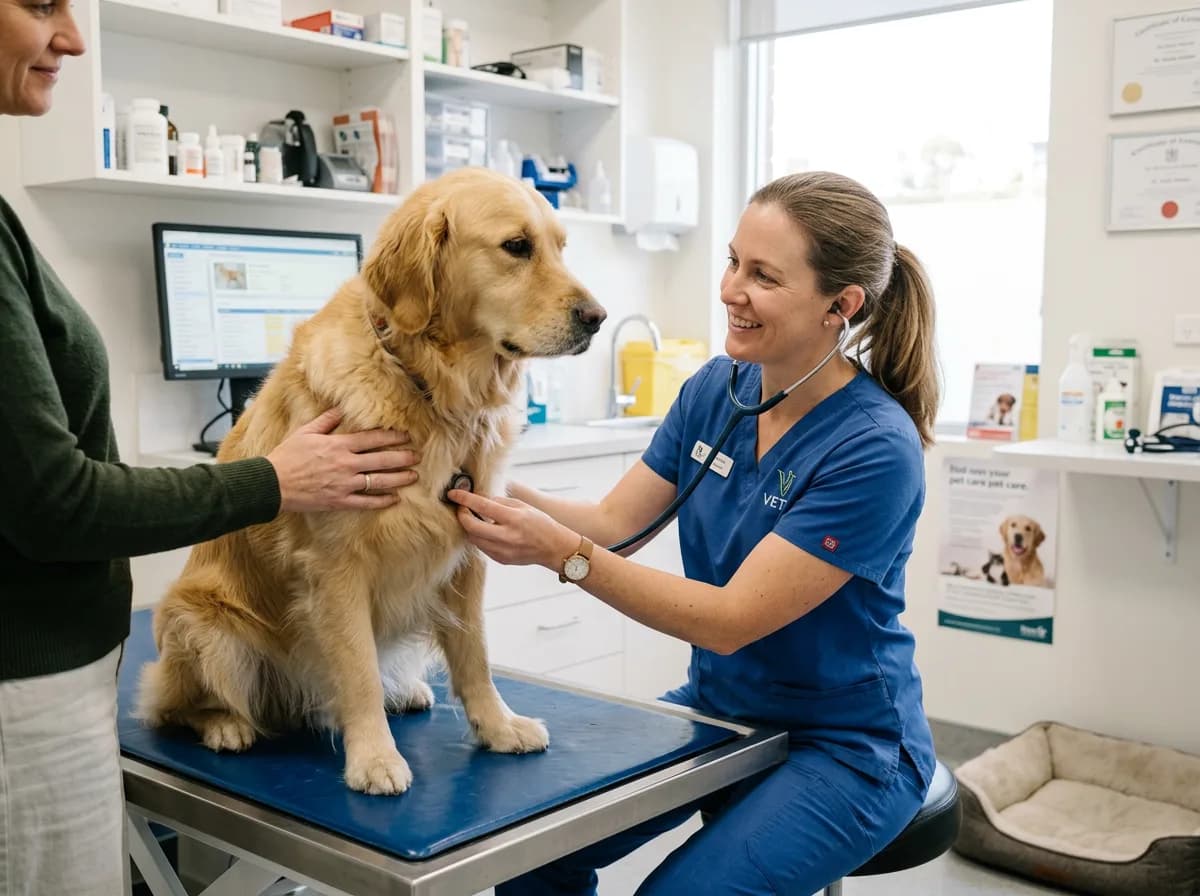
Skipping routine veterinary care is the most consequential of the common pet owner mistakes because preventive visits are designed to catch disease before symptoms appear. The American Animal Hospital Association (AAHA) recommends a wellness exam at least once a year for healthy adult pets and twice a year for seniors and those with chronic conditions. Waiting until a pet "seems sick" often means waiting until a treatable problem has become an expensive emergency.
Dogs and cats are hardwired to hide illness, a survival instinct from their wild ancestors. By the time you notice weight loss, a limp, or a change in thirst, a condition like kidney disease, dental infection, or a tumor may have been progressing for a long time. A vet's hands-on exam, plus baseline bloodwork, spots these trends early.
- Bring a list: any changes in appetite, water intake, litter box or bathroom habits, energy, and lumps you've felt. Ask your vet to record a baseline body weight and body condition score so you can track changes year over year. A short annual or twice-yearly checkup is the cheapest insurance you can buy for your pet's health. Here's why pet wellness exams matter for both species.
Cats are especially neglected here, which is one of the most common cat owner mistakes of all. Studies have long shown cats visit the vet far less often than dogs, partly because owners dread the carrier and the car ride. Acclimate your cat to the carrier at home with treats and bedding so the trip stops being a once-a-year ordeal.
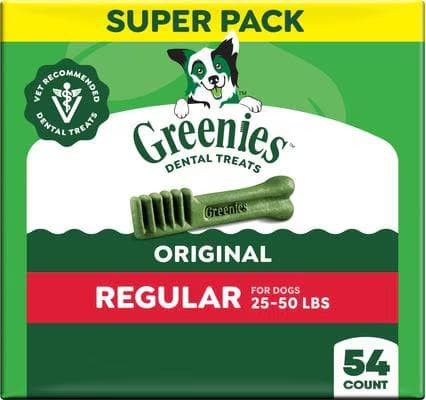
Daily dental chew that cleans teeth, freshens breath, and is accepted by the Veterinary Oral Health Council. Sized for dogs 25 to 50 lbs.
Petful may earn a commission when you click through to Chewy, at no extra cost to you.
Mistake 2: Overfeeding and pet obesity
Overfeeding is the most widespread of the common pet owner mistakes: the Association for Pet Obesity Prevention estimates 59% of dogs and 61% of cats in the US are overweight or obese. Excess weight is not cosmetic. It shortens lifespan and drives arthritis, diabetes, heart disease, and certain cancers. A landmark Purina lifespan study found that dogs kept at a lean body weight lived a median of nearly two years longer than their overweight littermates.
The core problem is that we feed by the bag's instructions (which often overstate portions) and by emotion, not by the individual animal in front of us. Treats are the silent multiplier: the calories from treats and table scraps add up fast, yet most owners never count them, which is why vets advise keeping treats under 10% of daily intake.
How do I know if my pet is overweight?
You can do a quick body condition check at home in under a minute. Run your hands along your pet's sides: you should be able to feel the ribs easily with light pressure, like the back of your hand. From above, look for a visible waist behind the ribs, and from the side, the belly should tuck up rather than hang level. If the ribs are buried and the waist is gone, your pet is likely overweight.
How to fix overfeeding
- Learn the body condition score. You should be able to feel (not see) the ribs easily, and your pet should have a visible waist tuck when viewed from above.
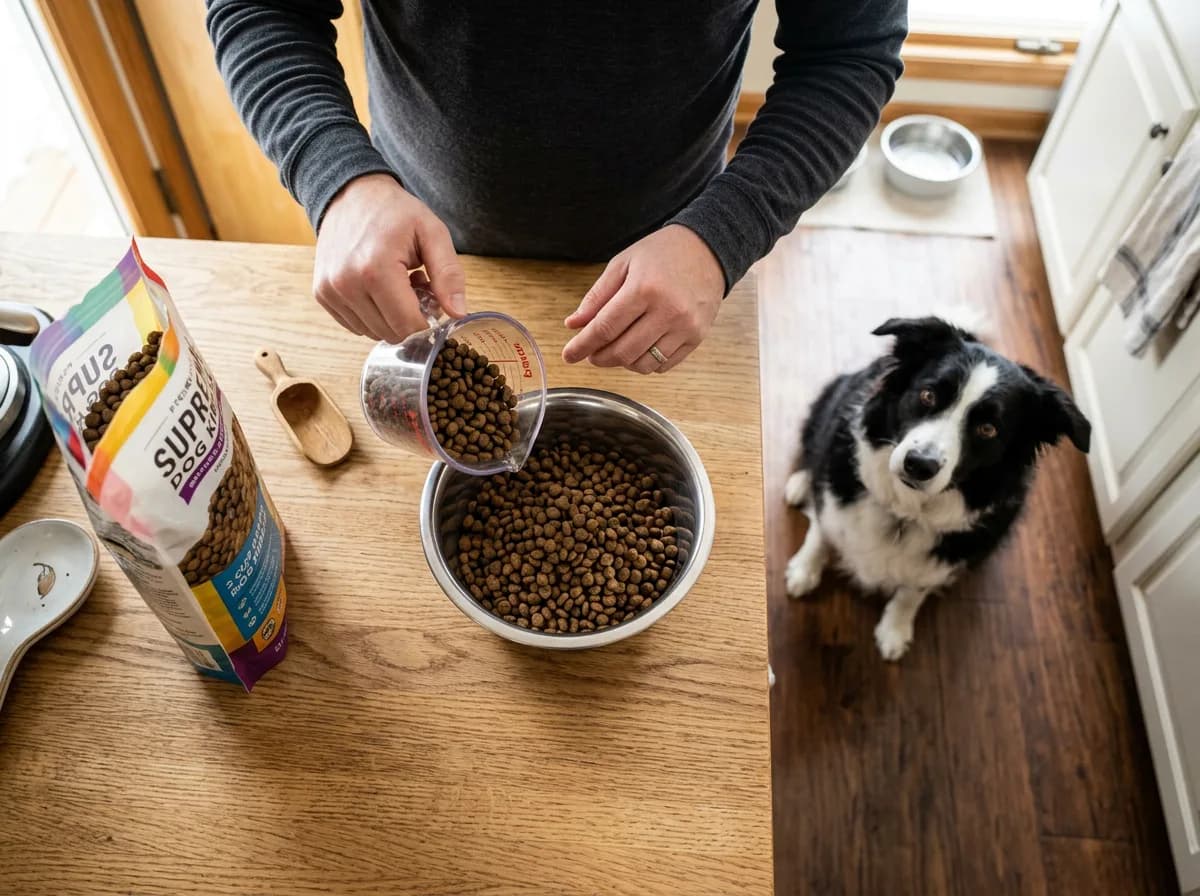
- Measure every meal with an actual measuring cup or a kitchen scale, not a coffee mug or a guess.
- Count treats as calories. Keep treats under 10% of daily intake and use part of the regular ration for training.
- Ask your vet for a target weight and a calorie number tailored to your pet's age, breed, and activity, then weigh monthly.
- Swap food rewards for play, walks, or affection where you can.
| Check | Healthy weight | Overweight |
|---|---|---|
| Ribs | Easily felt with light pressure | Hard to feel under fat |
| Waist (from above) | Clear hourglass tuck behind ribs | Straight or bulging sides |
| Belly (from side) | Tucks up toward the hips | Sags level or droops down |
| Energy | Active, moves freely | Tires fast, reluctant to move |
If your pet is already carrying extra pounds, don't crash-diet them, especially cats, who can develop dangerous liver problems from rapid weight loss. Work from a vet-guided plan. For deeper, species-specific guidance, see our guides on managing obese dogs and understanding the obese cat.
Mistake 3: Neglecting dental care (and basic grooming)
Neglecting dental care is one of the most common pet owner mistakes because the damage is hidden under the lips. The American Veterinary Medical Association (AVMA) notes that by age 3, most dogs and cats already show early evidence of periodontal disease. Untreated, it is not just bad breath: the AVMA links periodontal disease to changes in the kidneys, liver, and heart muscle as oral bacteria stress those organs.
Many owners assume dry food or a dental chew "cleans" the teeth. They help a little, but nothing replaces mechanical removal of plaque. Bad breath, yellow-brown tartar at the gumline, drooling, or a pet that suddenly chews on one side are all red flags worth a vet visit.
- Human toothpaste contains fluoride and sometimes xylitol, both toxic to pets. Use only pet-specific enzymatic toothpaste. If your pet stops eating, paws at the mouth, or has facial swelling, see a vet promptly, these can signal a painful tooth root abscess.
Build a simple dental routine
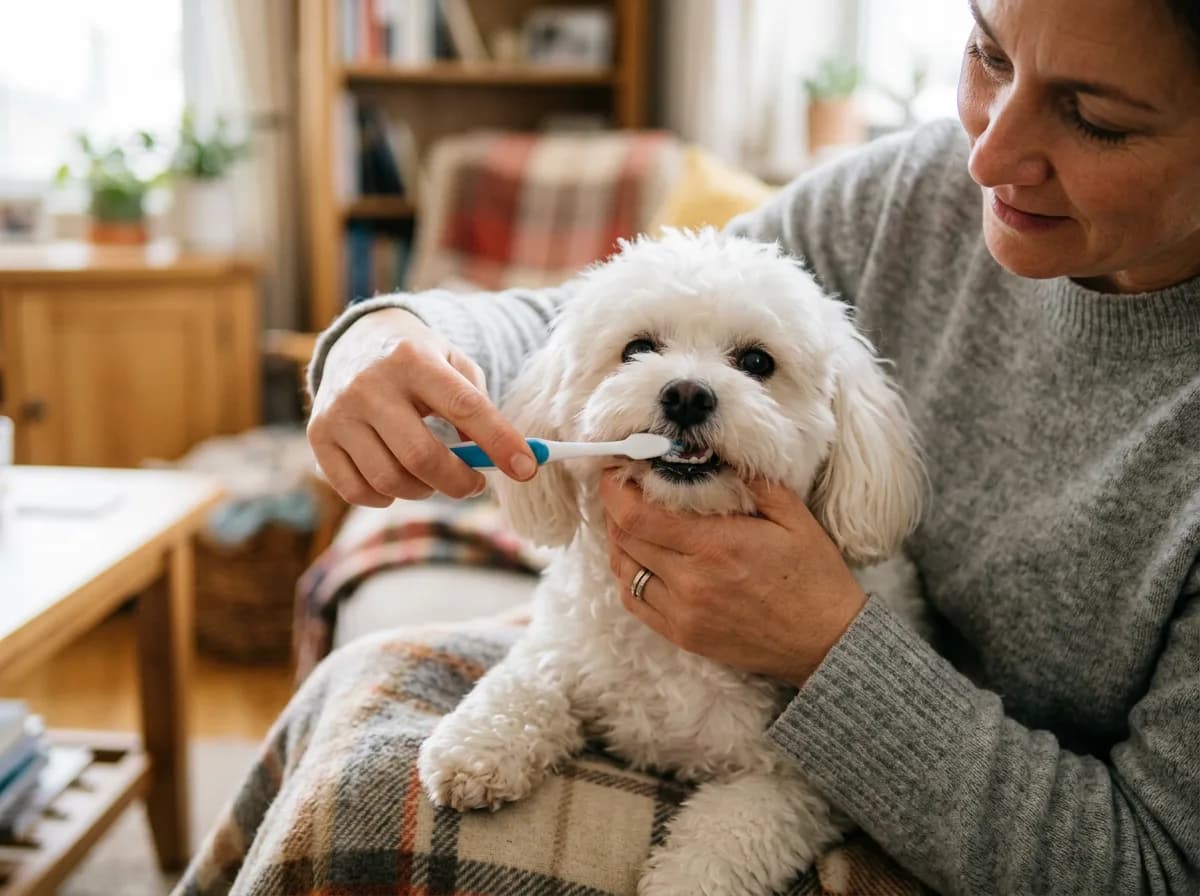
- Introduce a pet toothbrush and pet toothpaste slowly, letting your pet lick the paste first so it becomes a treat, not a fight.
- Aim for daily brushing along the gumline; even a few times a week beats nothing.
- Add VOHC-accepted dental chews, water additives, or diets as backup, not as a substitute.
- Schedule professional cleanings under anesthesia when your vet recommends them.
- Overgrown nails are an underrated grooming miss, especially in cats and senior dogs. Nails that curl into the pad cause pain, change how a pet walks, and can lead to joint strain. If you hear clicking on hard floors, it's time for a trim. Get a pet to accept handling early, trim a little at a time, and keep styptic powder on hand.
Our full dog dental care guide walks through brushing technique, cleaning costs, and which chews actually work.
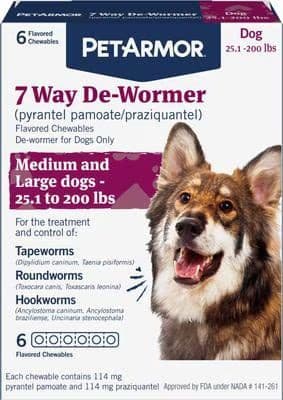
A broad-spectrum 7-way chewable dewormer that treats hookworms, roundworms, and tapeworms in medium and large dogs.
Petful may earn a commission when you click through to Chewy, at no extra cost to you.
Mistake 4: Skipping flea, tick, and heartworm prevention
Dropping year-round parasite prevention is among the costliest common pet owner mistakes because the diseases parasites carry are far harder and more expensive to treat than to prevent. The American Heartworm Society recommends year-round heartworm prevention for all dogs and cats in every US state, and the Companion Animal Parasite Council recommends continuous flea and tick control, even for indoor-only pets.
Do indoor cats really need flea and parasite prevention?
Yes. "My cat stays inside" is the most common reason owners skip prevention, and it's a myth, making it one of the most common cat owner mistakes. Fleas hitch rides indoors on shoes and other pets, mosquitoes that carry heartworm get inside, and there is no approved treatment for heartworm in cats, which makes prevention the only real protection for them. Always use a cat-specific product, never a dog flea treatment.
| Parasite | Main risk | Prevention approach |
|---|---|---|
| Fleas | Itching, allergy, tapeworm, anemia in small pets | Year-round monthly topical, oral, or collar product |
| Ticks | Lyme, anaplasmosis, other tick-borne disease | Year-round product plus body checks after time outdoors |
| Heartworm | Lung and heart damage; fatal if untreated | Year-round vet-prescribed preventive; test dogs yearly |
Match the product to the species and weight, and never use a dog product on a cat. For specifics, see our guides on home remedies and treatments for fleas, ticks and Lyme disease in dogs, dog heartworm prevention, and the best oral flea and tick options for cats.
- Permethrin-based dog flea treatments are highly toxic to cats and cause tremors, seizures, and death. Read every label, keep treated dogs separated from cats until dry, and call your vet or animal poison control immediately if your cat is exposed.
Mistake 5: Under-socializing and under-stimulating your pet
Failing to socialize and mentally stimulate a pet is one of the most underrated common pet owner mistakes, and it shows up later as anxiety, aggression, and destructive behavior. The American Veterinary Society of Animal Behavior identifies roughly 3 to 14 weeks of age as the critical socialization window for puppies (and a similar early window for kittens), when positive exposure to people, animals, sounds, and surfaces shapes lifelong temperament. Rushing or skipping this is the root of many mistakes new puppy owners make.
But socialization and enrichment aren't only for the young. A bored, under-exercised adult dog or cat will often invent its own "jobs": barking, digging, scratching furniture, or over-grooming. Behavior problems, not illness, are a leading reason pets are surrendered to shelters, which makes this a welfare issue, not just an obedience one.
Keep body and brain busy
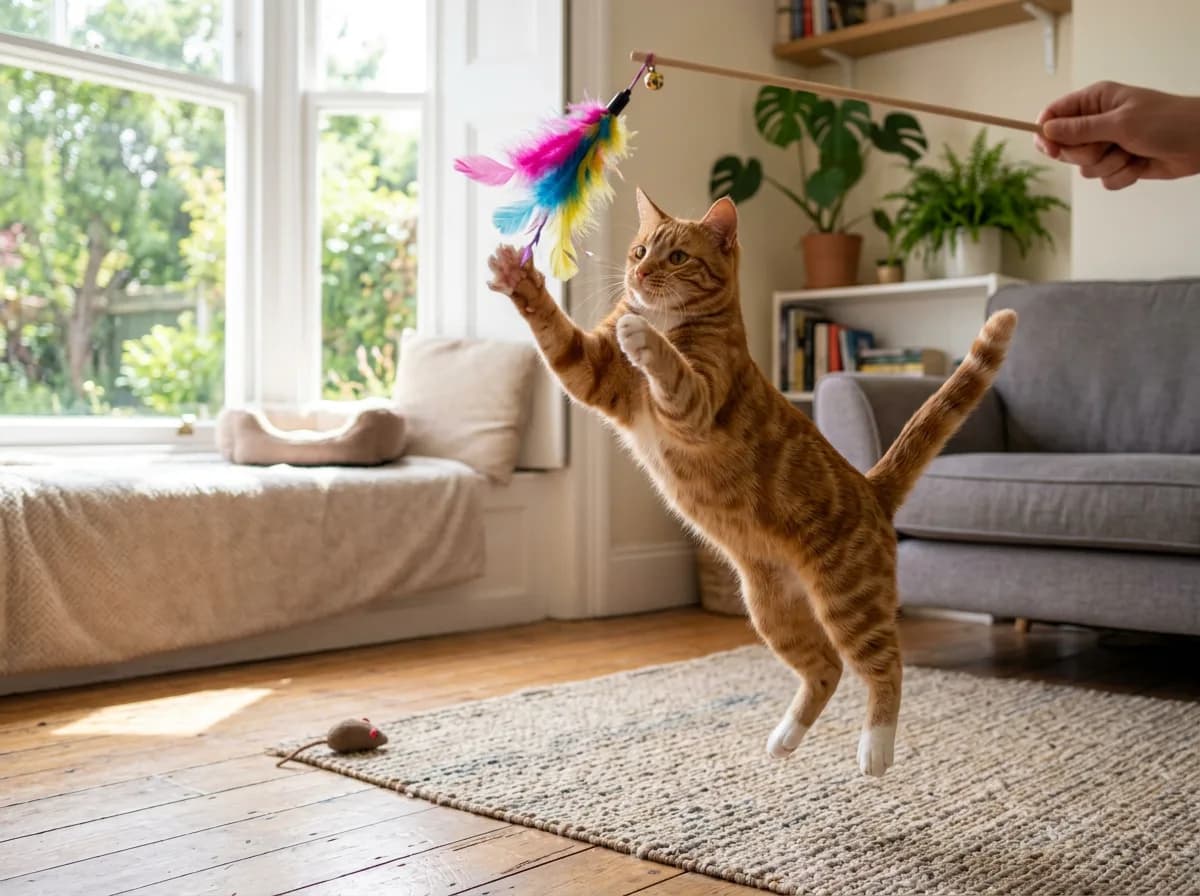
- Match exercise to your pet: most dogs need 30 minutes to 2 hours of activity daily depending on breed and age; cats need short, frequent play bursts that mimic hunting.
- Rotate enrichment: puzzle feeders, snuffle mats, food-dispensing toys, and new sniff walks for dogs; wand toys, climbing shelves, and window perches for cats.
- Train in short, positive sessions, which tire the brain as much as a walk tires the body.
- Keep socializing gently throughout life with calm, positive new experiences.
For ideas, see our guides on how to socialize kittens, fresh ways to exercise a cat, and common mistakes to avoid in dog exercise.

Multiple ridges and valleys slow eating, reduce gas and bloating, and turn mealtime into a fun puzzle. Non-skid base, dishwasher safe, 4-cup capacity.
Petful may earn a commission when you click through to Chewy, at no extra cost to you.
Mistake 6: Skipping ID, microchipping, and lost-pet planning
Skipping permanent ID is one of the most preventable common pet owner mistakes, and it only matters once, on the worst day. A microchip more than doubles the odds a lost dog gets home, with an AVMA-cited study finding 52.2% of microchipped dogs returned to their owners versus 21.9% of those without a chip. For cats the gap is even wider: 38.5% of microchipped cats made it home versus just 1.8% of unchipped ones. With an estimated 10 million pets lost or stolen in the US each year, this is cheap insurance.
The catch is that a chip only works if it's registered and the contact details are current. Plenty of pets reach a shelter with a chip that traces back to a disconnected phone number or a previous owner. A collar and visible ID tag are the fast first line; the microchip is the permanent backup that a collar can't replace because collars slip off.
Lock down your pet's ID
- Microchip your pet and register the chip with your current phone and email.
- Update the registry every time you move or change your number, and after adopting.
- Keep a collar with a legible ID tag on dogs and on cats that will tolerate one (use a breakaway collar for cats).
- Take clear current photos and note distinguishing marks so you can make a lost-pet flyer fast.
A microchip only helps if its registry is current. Create a free digital pet ID with MyPetID to keep your pet's microchip number, photos, vet records, and lost-pet alerts together in one place.
Create a free pet ID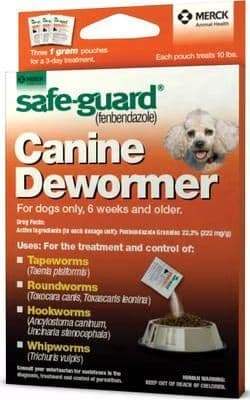
A 3-day fenbendazole dewormer covering hookworms, roundworms, tapeworms, and whipworms for small dogs.
Petful may earn a commission when you click through to Chewy, at no extra cost to you.
Mistake 7: Rushing the decision and underestimating the commitment
The mistake that comes before all the others is choosing a pet on impulse and underestimating the time, money, and lifestyle fit involved. This is the most common of the first time pet owner mistakes and the one behind many shelter surrenders. A puppy that needs two hours of daily exercise in a small apartment, or a long-haired cat for an owner with no time to groom, sets both pet and person up to fail.
Before getting a pet, research the breed or species honestly against your real schedule and budget, food, routine vet care, preventives, grooming, training, and an emergency fund or pet insurance for the surprise bill. Pets are a 10 to 20 year commitment, and matching the animal to your life is the single biggest favor you can do for both of you. Adopting? The 3-3-3 rule and a patient first few months smooth the transition (see the FAQ below).
| Mistake | Why it matters | The one-line fix |
|---|---|---|
| Skipping vet care | Disease hides until it's advanced | Annual exam; twice-yearly for seniors |
| Overfeeding | 59% of dogs, 61% of cats are overweight | Measure meals; treats under 10% |
| Neglecting teeth | Periodontal disease by age 3 | Brush daily with pet toothpaste |
| Dropping parasite prevention | Heartworm is fatal and untreatable in cats | Year-round, even for indoor cats |
| Under-stimulating | Boredom drives anxiety and surrender | Daily exercise plus enrichment |
| No ID or microchip | Lost pets without chips rarely get home | Microchip and keep registration current |
| Rushing the choice | Mismatch leads to surrender | Research fit, cost, and time first |
The bottom line
The most common pet owner mistakes share one trait: they're easy to make and easy to fix. Keep up preventive vet visits, feed to a lean body condition, brush those teeth, stay on year-round parasite prevention, give your pet a job to do, register that microchip, and choose your next pet with eyes open. Do those things and you've handled the issues that send the most pets to my exam room, and likely added healthy years to your best friend's life.
The most common pet care mistakes veterinarians see are skipping preventive checkups, overfeeding to the point of obesity, neglecting dental care, stopping flea/tick/heartworm prevention, not providing enough exercise or mental stimulation, skipping a microchip, and rushing the decision to get a pet. Less common but serious mistakes include using a dog flea product on a cat and crash-dieting an overweight pet.
The 3-3-3 rule is a guideline for newly adopted pets: expect about 3 days for your pet to decompress and feel overwhelmed, 3 weeks to start settling into a routine and showing their personality, and 3 months to feel fully at home and bonded. It's a reminder to be patient and consistent during the adjustment period rather than expecting instant comfort.
The 7-7-7 rule is a puppy socialization framework suggesting that by 7 weeks of age (and continuing into the critical window), a puppy should be positively exposed to seven different surfaces, locations, people, challenges, food sources, objects, and experiences. The goal is broad, gentle exposure that builds a confident, well-adjusted adult dog.
The 10-10-10 rule is a house-training guideline for puppies: take your puppy out roughly every 10 minutes of free play, within 10 minutes of eating or drinking, and reward within 10 seconds of them going in the right spot. Some trainers also use 10-10-10 to mean 10 minutes of training, 10 minutes of play, and 10 minutes of rest. Both versions stress short, consistent, well-timed routines for young dogs.
Healthy adult dogs and cats should have a wellness exam at least once a year, according to the American Animal Hospital Association. Puppies and kittens need a series of visits for vaccines and deworming, and senior pets (roughly 7+ years for dogs, 10+ for cats) or those with chronic conditions benefit from twice-yearly checkups so problems are caught early.
Yes. Indoor cats can still get fleas (carried in on shoes, other pets, or rodents) and can be bitten by mosquitoes that transmit heartworm, for which there is no treatment in cats. Veterinary parasite groups recommend year-round prevention for indoor cats too. Always use a cat-specific product, never a dog flea treatment.
Run your hands along your pet's sides: you should be able to feel the ribs easily with light pressure. From above, look for a visible waist behind the ribs, and from the side, the belly should tuck up rather than hang level. If the ribs are hard to feel and the waist is gone, your pet is likely overweight and should see a vet for a tailored plan.
Yes, dramatically. An AVMA-cited study of stray animals found microchipped dogs were returned to their owners 52.2% of the time versus 21.9% for dogs without a chip, and microchipped cats went home 38.5% of the time versus just 1.8% for unchipped cats. The key is registering the chip and keeping your phone and email up to date, because a chip that traces to an old number can't reunite you.
Dogs don't feel guilt the way people do, but they do use appeasement signals to defuse tension and restore a bond: lowered head and ears, tucked tail, avoiding eye contact, a slow tail wag, licking, or nudging you for contact. The "guilty look" many owners describe is usually a response to your tone and body language, not genuine remorse. Stay calm, reward the behavior you want, and the relationship resets quickly.
Related on Petful
BVMS, MRCVS
Dr. Pippa Elliott, BVMS, MRCVS, is a veterinarian with nearly 30 years of experience in companion animal practice. Dr. Elliott earned her Bachelor of Veterinary Medicine and Surgery from the University of Glasgow. She was also designated a Member of the Royal College of Veterinary Surgeons. Married with 2 grown-up kids, Dr. Elliott has a naughty Puggle named Poggle, 3 cats and a bearded dragon.
Sign up for expert-backed reviews and safety alerts all in one place.