Ticks on Dogs: How to Find, Remove and Prevent Them
Veterinarian Dr. Pippa Elliott explains how to spot ticks on dogs, remove them safely with tweezers or a tick tool, clear an infestation from your dog and home, and prevent new bites with year-round vet-guided protection.

BVMS, MRCVS

Petful is reader supported. As an affiliate of platforms like Amazon and Chewy, we may earn a commission when you buy through links on this page. There is no extra cost to you.
Ticks on dogs are one of the most common parasite problems I treat in practice, and the Companion Animal Parasite Council (CAPC) now reports risk in all 50 US states, in every month of the year. Finding one of these parasites attached to your dog is unsettling, but it is also very fixable. This guide walks you through the whole arc: what a tick looks like on a dog, where ticks hide, how to remove one safely, how to clear an active infestation, and how to keep new ticks from ever latching on.
- 1Check your dog for ticks after every outdoor outing, focusing on the ears, toes, groin and tail base
- 2Remove attached ticks with fine-tipped tweezers or a tick tool using a slow, steady, straight pull
- 3Watch the bite site and your dog's energy, appetite and gait for 3 weeks after removal
- 4Year-round vet-guided prevention (oral isoxazolines, topicals or collars) is far easier than treating an infestation

Sign up for expert-backed reviews and safety alerts all in one place.
What Do Ticks Look Like on Dogs?
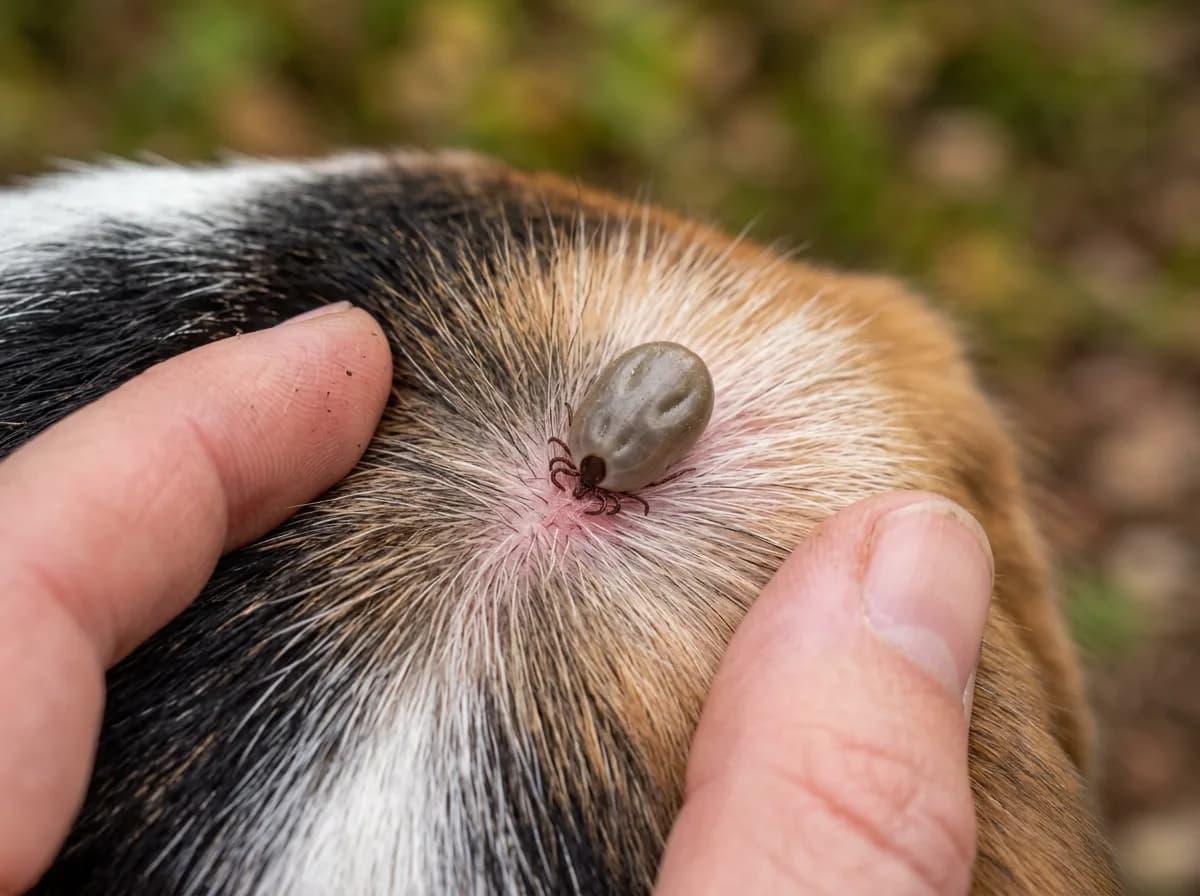
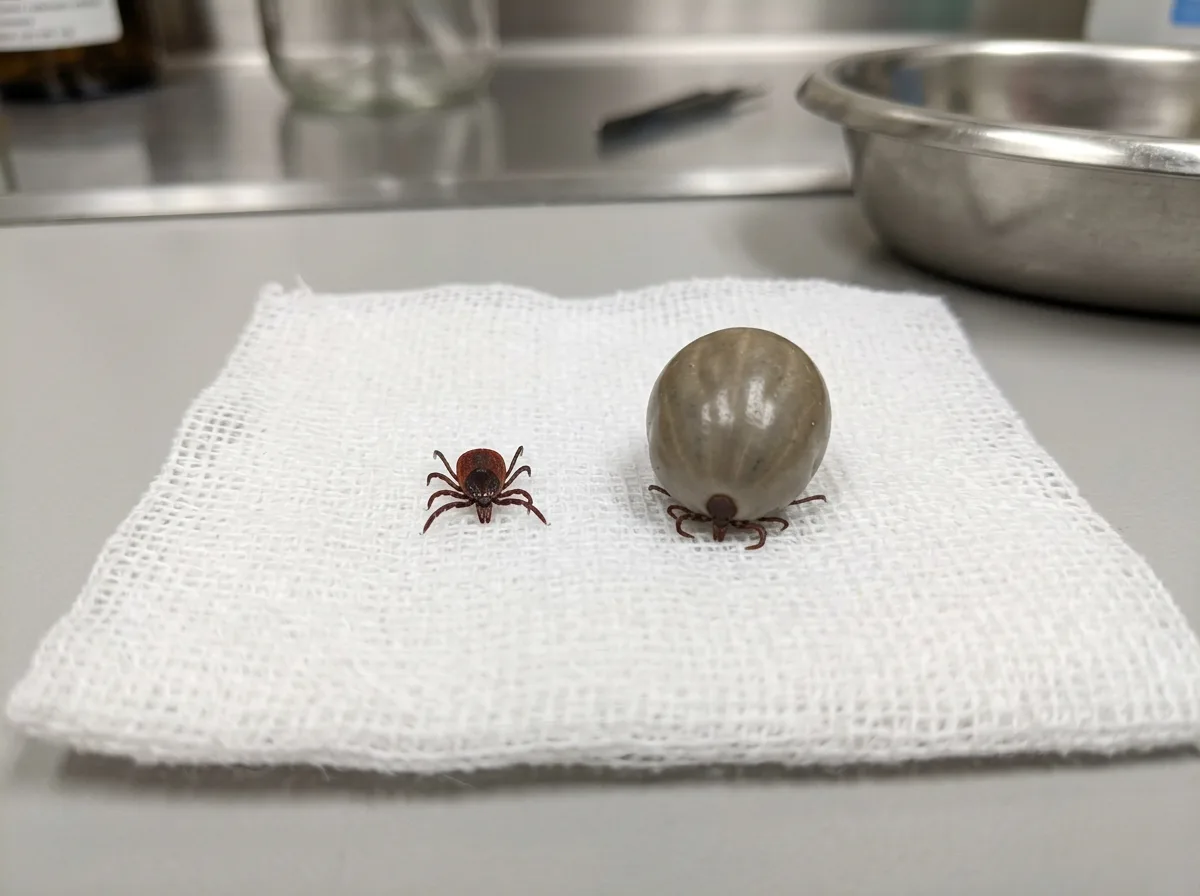
Ticks are blood-feeding parasites that attach to a dog's skin, embed their mouthparts and stay latched on for days while they feed. On a dog, an unfed tick looks like a flat, oval, brown or grey-black speck about the size of a sesame seed, with eight legs close to the body. As it feeds it swells into a rounded, grey or tan bump that can reach the size of a pea or small grape.
That swelling is why so many owners mistake an engorged tick for a skin tag, a wart or even a nipple. Here is how to tell the difference before you grab anything with tweezers:
- Legs: part the fur and look at the base of the bump. A tick has visible legs where it meets the skin; a skin tag or nipple does not.
- Attachment point: a tick is attached by its head only, so the body tilts and moves slightly when nudged. A skin growth is anchored across its whole base.
- Color change: skin tags stay skin-colored. A feeding tick shifts from flat brown to a swollen grey, silver or greenish tone as it fills with blood.
- Symmetry: nipples come in tidy mirror-image rows along the belly. A lone bump behind an ear or between the toes is far more likely to be a tick.
Tick bites on dogs usually look like a small, raised red bump once the tick has detached or been removed, sometimes with a scab at the center. Mild local redness for a few days is normal; spreading inflammation, heat or discharge is not.
Common tick species found on dogs
Several tick species routinely bite dogs in the United States, and brown ticks on dogs are the ones owners describe to me most often. The species matters because each carries different diseases, per the CDC and the Merck Veterinary Manual.
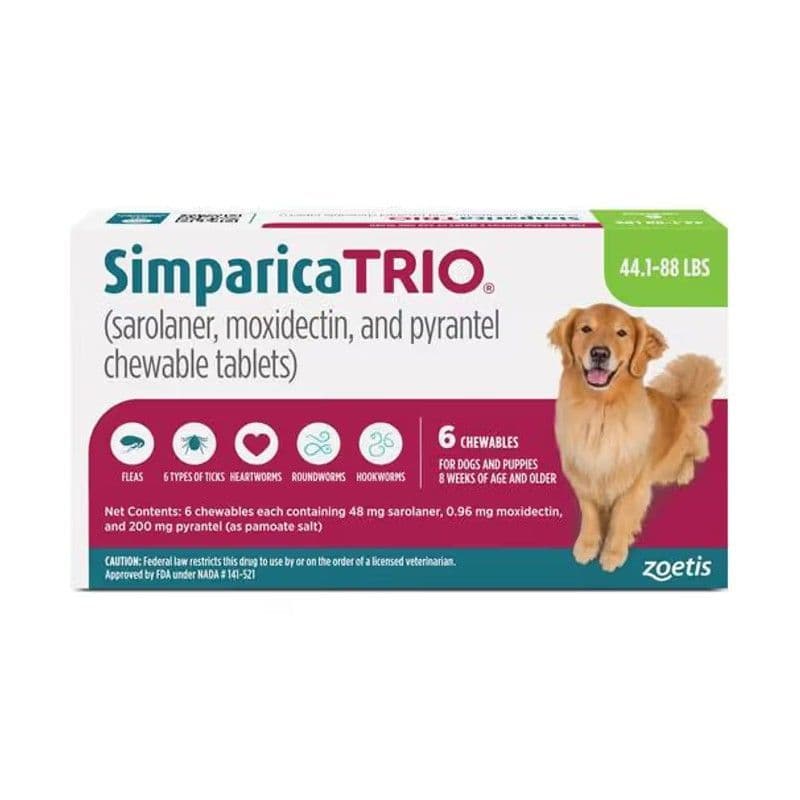
Monthly vet-prescription chew that kills fleas and ticks and prevents heartworm disease, roundworms, and hookworms in one dose. For dogs 44.1 to 88 lbs.
Petful may earn a commission when you click through to Chewy, at no extra cost to you.
| Tick species | Typical look | Where it lurks | Main disease risk |
|---|---|---|---|
| Blacklegged tick (deer tick) | Small dark brown with black legs | Wooded and brushy areas | Lyme disease and anaplasmosis |
| American dog tick | Larger brown with white-grey markings | Grassy fields and trail edges | Rocky Mountain spotted fever and tick paralysis |
| Brown dog tick | Uniform red-brown color | Homes and kennels (survives indoors) | Ehrlichiosis and babesiosis |
| Lone star tick | Brown with a single white dot on females | Southern and eastern woodlands | Ehrlichiosis |
Age matters as well as feeding. Ticks pass through three mobile life stages, and dogs can carry all of them:
- Larvae are pinhead-sized, six-legged and pale. They often attach in clusters, which owners describe as "seed ticks" dusted across the belly or legs.
- Nymphs are poppy-seed to sesame-seed sized with eight legs. They are the hardest stage to spot and a major disease transmitter.
- Adults are the classic visible tick, from sesame-seed size unfed up to grape size engorged.
Fed versus unfed size is your best clue to how long a tick has been attached. A flat tick likely arrived within the last day; a fully engorged tick has usually been feeding for 2-3 days or more, which matters because the risk of disease transmission rises with attachment time. The CDC notes that the bacteria behind Lyme disease generally need 24-48 hours of attachment to transmit.

 Sponsored
Need flea, tick, or parasite care for your dog?
A licensed vet at Dutch can recommend the right preventive and prescribe it when it's appropriate. Annual members get 20% off their first flea and tick order.
Use code Pets60
Plans start at $12/month · covers up to 5 pets
- Licensed vets in most states
- Rx for 150+ conditions
- 4.7 on Trustpilot
How to Find Ticks on Your Dog
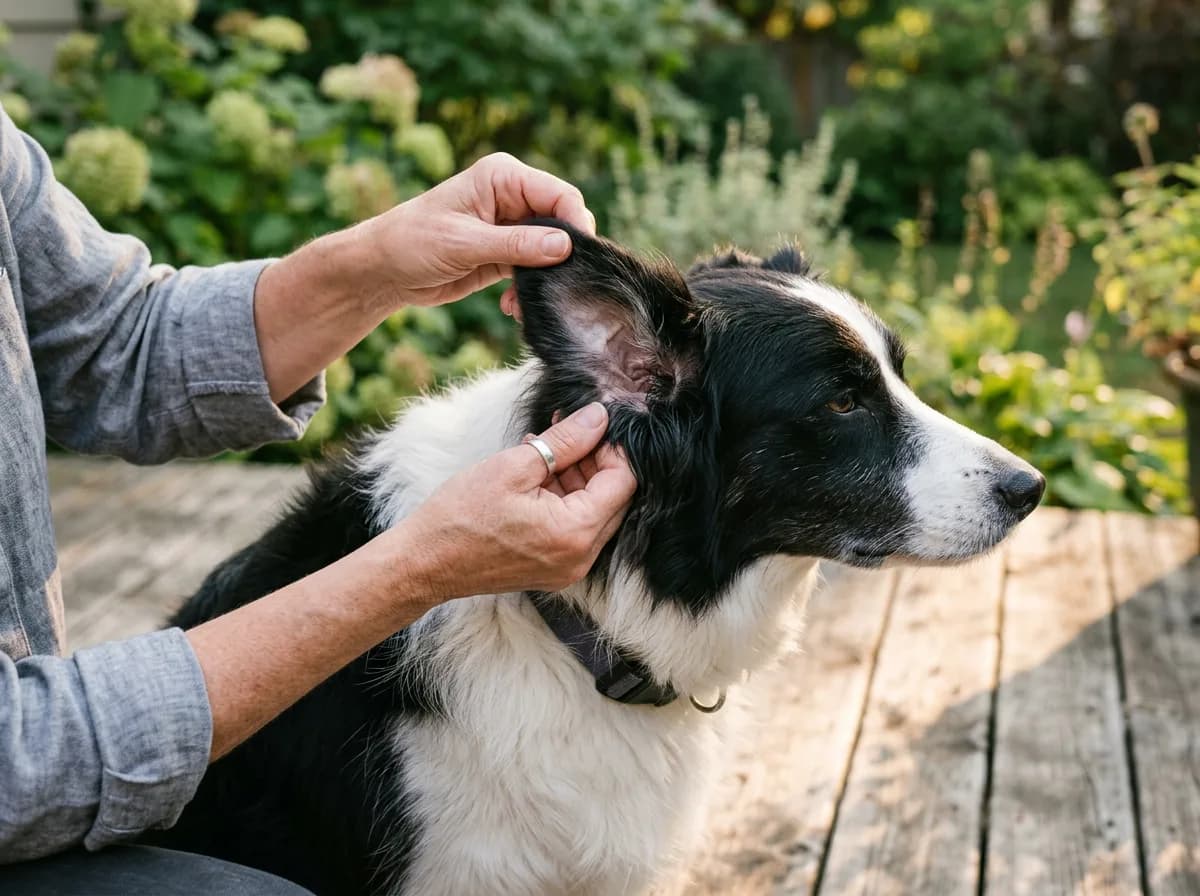
The first signs of a tick on a dog are usually physical rather than behavioral: you feel a small, firm bump while petting or grooming, or you spot a dark speck in a thin-furred spot. Some dogs give you hints first. Watch for:
- Sudden scratching, licking or chewing focused on one spot
- Head shaking or ear scratching (a classic sign of a tick inside the ear)
- A small scab or red, irritated patch of skin
- Limping or reluctance to be touched in one area
- In heavy infestations, lethargy or pale gums from blood loss
Most attached ticks cause no symptoms at all, which is why a hands-on tick-check routine beats waiting for your dog to tell you. Make it systematic rather than random. After every walk in grass, brush or woods, run your fingertips slowly through the coat with light pressure, feeling for bumps the size of a sesame seed or larger.
Work head to tail through the zones ticks favor, in this order:
- Head and muzzle, including the folds around the eyes and lips
- In and around the ears, lifting each ear flap to check the inner surface and the canal opening
- Under the collar, removing it fully so you can see the skin beneath
- Neck, chest and armpits, where the legs meet the body
- Belly and groin, where the fur is thin and skin is warm
- Between the toes and under the paw pads on all four feet
- Around the tail base and under the tail
The whole routine takes 2-3 minutes on most dogs. Long-coated and dark-coated breeds need slower, more deliberate finger work because sight alone will miss a flat tick under dense fur. A flea comb or hair dryer on a cool setting can help part thick coats.
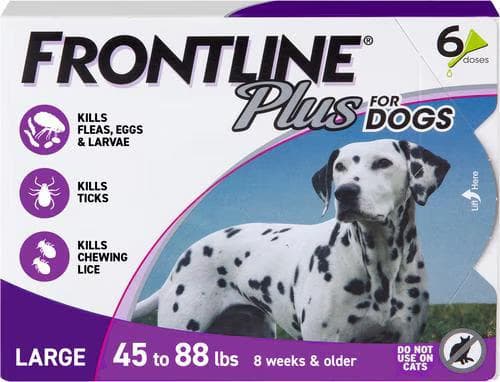
A monthly topical spot-on for large dogs 45 to 88 lbs that kills fleas, ticks, and chewing lice. A waterproof pick for dogs who do better with a topical than an oral chew.
Petful may earn a commission when you click through to Chewy, at no extra cost to you.
- Tie the tick check to something you already do daily, such as the after-walk paw wipe or dinner prep. Ticks are easiest to remove within the first 24 hours, so a quick daily hand sweep genuinely reduces disease risk.
How to Remove a Tick From a Dog, Step by Step
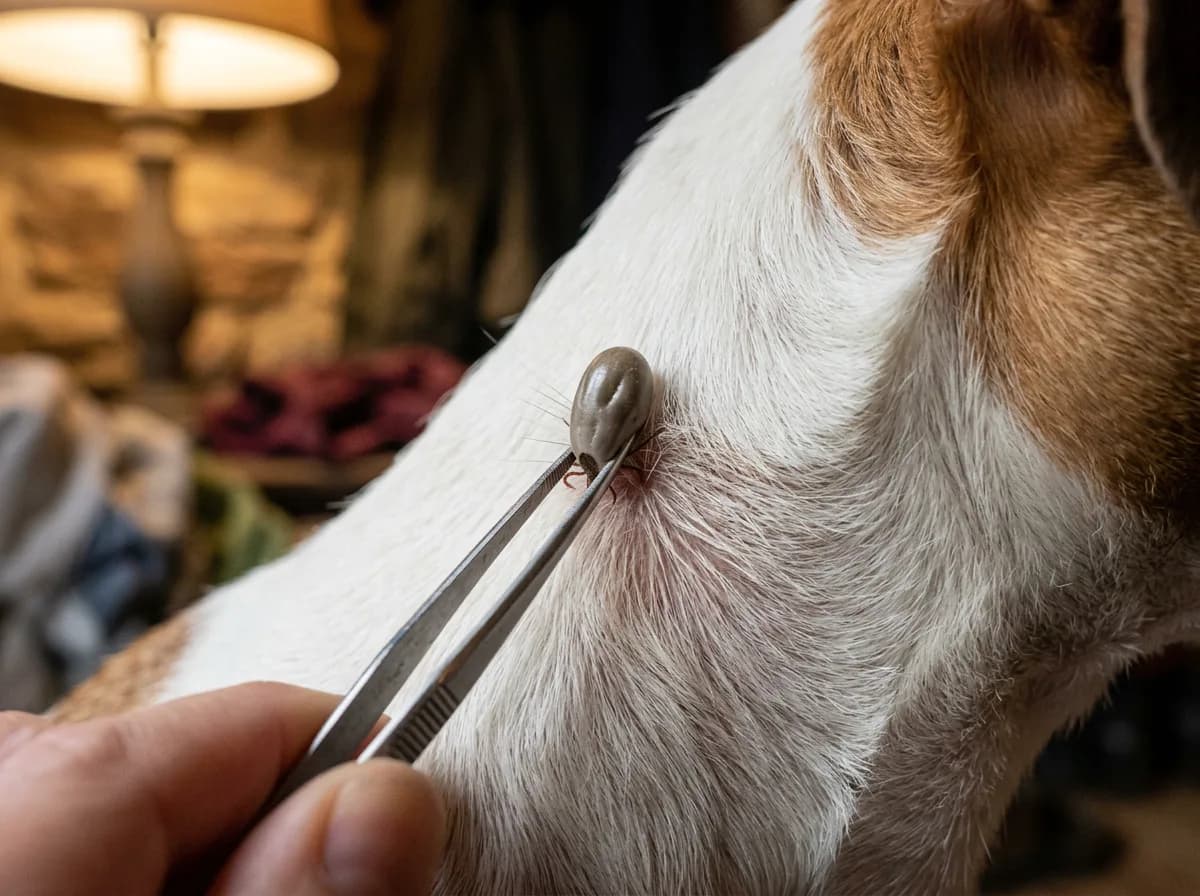
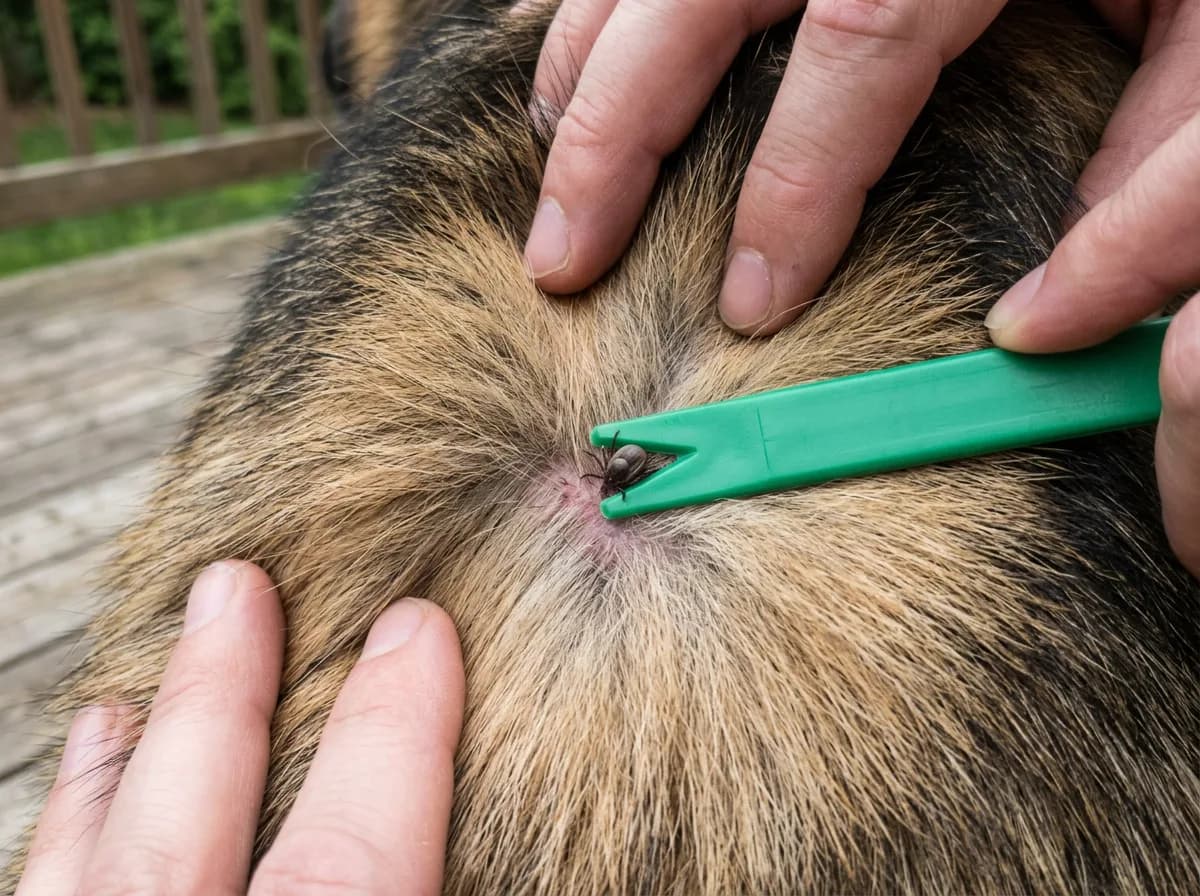
Removing ticks on dogs is a 30-second job when you do it correctly, and doing it correctly matters: squeezing, twisting or burning a tick can push infected material into the bite or leave mouthparts behind. Fine-tipped tweezers or a purpose-made tick removal tool both work well. Avoid blunt household tweezers, which crush the tick's body.
Here is the tweezer method I teach clients, consistent with VCA Animal Hospitals and CDC guidance:
- Gather your kit: fine-tipped tweezers, gloves or a tissue, rubbing alcohol in a small jar or zip bag, and antiseptic for the skin.
- Calm and position your dog. Recruit a helper to steady the head, or work after a walk when your dog is tired. Part the fur so you can see the tick's attachment point clearly.
- Grip at skin level. Place the tweezer tips around the tick's head, as close to your dog's skin as possible. Do not grab the body.
- Pull straight up, slow and steady. Use even pressure with no twisting or jerking. The tick will release its grip after a few seconds of steady traction.
- Inspect the tick. Check that the head and mouthparts came out with the body. Legs should be intact and the tick whole.
- Kill the tick in alcohol. Drop it into rubbing alcohol, or seal it in a bag or tape it to a card. Never crush a tick with your fingers.
- Disinfect and wash up. Clean the bite site with pet-safe antiseptic and wash your hands thoroughly.
A tick removal tool (the hook or fork style) works slightly differently: slide the notch under the tick at skin level until the head sits in the narrow end, then lift with a slow, continuous motion. Tools shine on wriggly dogs and on small, barely fed ticks that tweezers struggle to grip.
- Never use petroleum jelly, nail polish, alcohol on the attached tick, or a hot match to force a tick to back out. These folk methods irritate the tick and make it more likely to regurgitate infectious material into your dog before it detaches.
Keep the dead tick in its sealed container labeled with the date for about 3 weeks. If your dog becomes ill, your veterinarian can identify the species, which narrows down which diseases to test for.
After Removal: Aftercare and When to Call the Vet
Should you worry if you found a tick on your dog? In most cases, no: a single tick found and removed promptly rarely causes illness, and most tick bites heal without any treatment. The sensible response is not panic but a short, structured watch. Mark the date on your calendar and monitor two things: the bite site and your dog's overall health.
Here is what a normal bite site looks like day by day:
- Days 1-2: a small red bump with mild swelling, similar to a mosquito bite. Slight firmness under the skin is common.
- Days 3-7: the bump flattens and fades, often forming a small dry scab. Mild itchiness is normal; frantic scratching is not.
- Week 2 onward: skin returns to normal, sometimes with a tiny hairless patch that regrows over a few weeks.
Call your veterinarian about the bite site if you see spreading redness, heat, swelling that grows rather than shrinks, discharge or pus, or an open sore your dog will not leave alone. These point to local infection or a retained foreign body rather than routine healing.
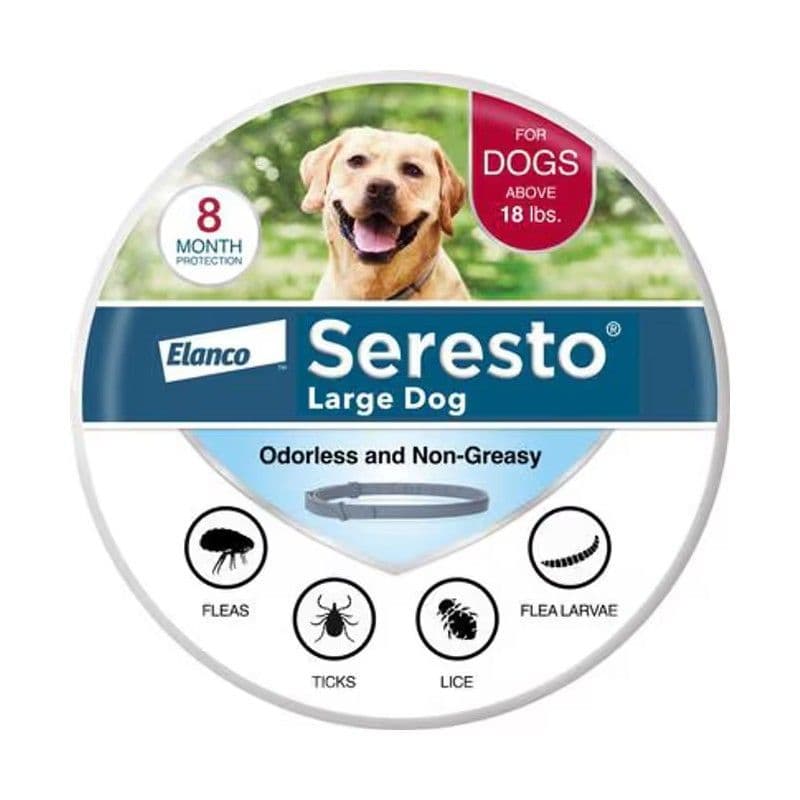
Odorless, non-greasy 8-month flea and tick collar for dogs over 18 lbs that kills and repels fleas and ticks and also kills lice and flea larvae.
Petful may earn a commission when you click through to Chewy, at no extra cost to you.
What if the tick's head stays in?
If the head stays in when the body comes away, do not dig for it with tweezers or a needle. Digging traumatizes the skin and pushes bacteria deeper. Clean the site with antiseptic and leave it alone: the skin usually expels retained mouthparts within a few days, the same way it works out a splinter. If the spot becomes increasingly red, swollen or painful instead of settling, book a vet visit so the fragment can be removed properly.
The 3-week symptom watch
Tick-borne diseases rarely show up the day after a bite. Signs typically appear days to weeks later, which is why I give every client the same 3-week symptom watch after any tick removal. During that window, contact your vet promptly if you notice:
- Lethargy or unusual tiredness that lasts more than a day
- Loss of appetite
- Fever, or a hot dry nose paired with low energy
- Limping, stiffness, or shifting-leg lameness
- Swollen joints or lymph nodes
- Pale gums, bruising or nosebleeds
- Vomiting, diarrhea or dark urine
- Wobbliness or weakness in the hind legs, which can signal tick paralysis and is an emergency
Bring the saved tick with you if you still have it. Most tick-borne infections respond well to treatment when caught early, so erring on the side of a phone call is never wrong.
 Sponsored
Vet care that's always there
Unlimited video calls and messaging with licensed vets for less than a typical vet visit. One membership covers up to five pets.
Use code Pets60
Plans start at $12/month · covers up to 5 pets
- Licensed vets in most states
- Rx for 150+ conditions
- 4.7 on Trustpilot
How to Get Rid of Ticks on Dogs
What should you do if your dog has ticks? Remove every attached tick you can find, treat the dog with a fast-acting, vet-recommended tick product, and then break the cycle in your home and yard so new ticks do not replace the ones you pulled. One tick is usually a hitchhiker; several ticks at once mean your dog is picking them up from an infested environment, or in the case of the brown dog tick, the environment may be your own house.
Work through it in this order:
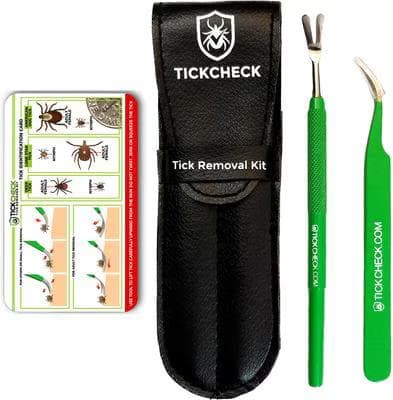
A vet-style tick removal kit with fine-tip tools that grip the tick right at the skin for a clean, straight pull, plus a tick ID card. Easy to keep in your dog-walking bag.
Petful may earn a commission when you click through to Chewy, at no extra cost to you.
- Do a full-body tick check using the zone-by-zone routine above, and remove every attached tick with tweezers or a tool.
- Start an effective tick treatment the same day. A vet-recommended oral or topical product kills ticks that are currently on the dog and protects against the ones you missed. Bathing alone will not do this; ticks grip too well to wash off.
- Treat every pet in the household. Dogs and cats can reseed each other with ticks. Use species-appropriate products only, because several dog treatments are toxic to cats.
- Wash bedding hot. Machine-wash your dog's bedding, blankets and soft toys on a hot cycle and dry on high heat.
- Vacuum like you mean it. Go over carpets, baseboards, floor cracks, and under furniture, then empty the vacuum outside. Brown dog ticks hide in wall crevices and behind baseboards indoors.
- Tidy the yard. Mow regularly, clear leaf litter and brush piles, and add a 3-foot gravel or wood-chip border between lawn and woods, per CDC yard guidance. Ticks quest from tall grass and shaded edges, not open sunny lawn.
- Re-check daily for 2 weeks. Keep doing the hand sweep every evening until you have found no ticks for several consecutive days.
For ticks on dogs, treatment at home works when "home treatment" means a proven product plus environmental cleanup. It fails when it means vinegar sprays, essential oils or dish soap, none of which reliably kill or repel ticks, and some of which (tea tree oil in particular) are toxic to pets.
Treat the Whole Dog, Then the Whole Yard
When owners ask me how to get rid of ticks on dogs for good, the step they underestimate is the whole-dog one. The ticks you pull with tweezers are only the ones your fingers found, and a dog's coat hides more between the toes, deep in the ear folds and along the groin.
That is why a systemic product beats another bath here. A prescription oral in the isoxazoline class (afoxolaner, sarolaner, fluralaner or lotilaner) works from the bloodstream, so it kills ticks wherever they attach, including the ones you never find by hand. A permethrin-based topical adds a repel-and-knock-down layer on top, but permethrin is toxic to cats, so keep it well away from any cat in the home.
On the environment side, timing is what most people get wrong. A cluster of ticks at once means the space around your dog is already seeded, so the yard and the dog have to be handled together, not a week apart. A freshly treated dog that walks straight back onto an untreated reservoir simply reloads, and you are back to pulling ticks by the weekend.
When an infestation needs the vet, not just home treatment
Some tick situations are beyond a DIY fix, and recognizing them early saves both money and misery. Book a veterinary visit rather than managing at home when:
- You count more than a handful of attached ticks, or find seed-tick clusters, since dozens of feeding ticks can cause anemia in a small dog
- The dog is a young puppy, elderly, pregnant or chronically ill, because product choices narrow sharply in these groups
- Ticks are attached inside the ear canal, on the eyelids or around the anus, where safe removal needs a professional hand
- The dog already shows lethargy, fever, lameness, pale gums or wobbliness alongside the ticks
- You keep finding new ticks despite treating the dog correctly, which suggests a brown dog tick infestation established in the house that may need professional pest control
What Kills Ticks on Dogs Fast?
Speed matters when your dog is carrying multiple ticks, because disease transmission risk climbs with every hour of attachment. The fastest options are oral isoxazoline products, which start killing ticks within hours of the first dose, and prescription-strength topicals. Physical removal remains the fastest fix for any tick you can see right now.
We keep a dedicated guide to the speed question, including what genuinely works within hours, what is marketing, and which home remedies to skip: read what kills ticks on dogs instantly for the full breakdown.
How to Prevent Ticks on Dogs
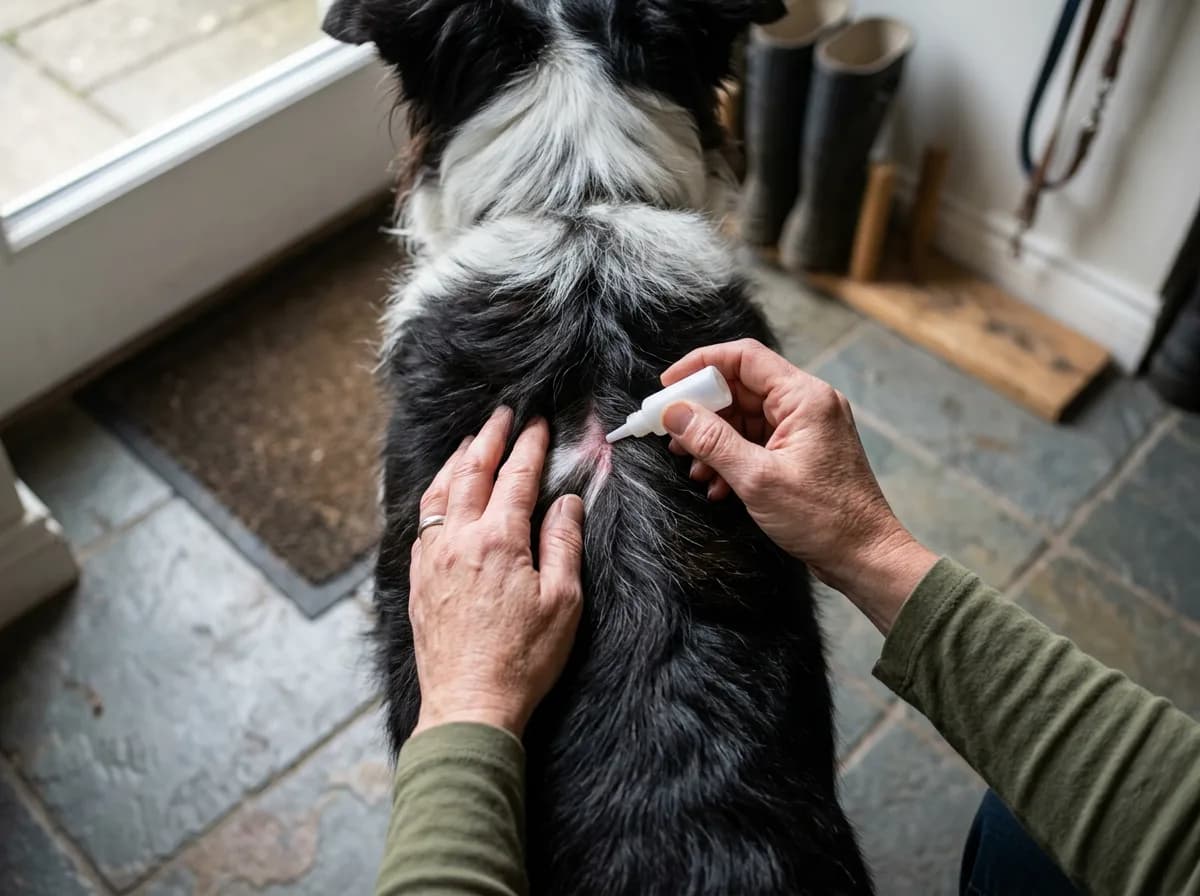
Every tick you prevent is a removal, a bite-site watch and a disease risk you never have to think about, which is why I push prevention harder than any other part of tick control. Modern preventives make it realistic to prevent ticks on dogs almost entirely, even in high-risk regions.
The main preventive categories, per the FDA and CAPC:
- Oral isoxazolines (prescription). Chewables such as NexGard (afoxolaner), Simparica (sarolaner), Bravecto (fluralaner) and Credelio (lotilaner) kill ticks that bite the dog, typically for 1-3 months per dose. They require a vet prescription. The FDA's 2018 advisory notes rare neurologic side effects (tremors, ataxia, seizures) in some dogs, so discuss your dog's history with your vet, especially if there is any seizure background.
- Topical spot-ons (mostly OTC). Products such as Frontline Plus (fipronil + (S)-methoprene) and K9 Advantix II (imidacloprid + permethrin + pyriproxyfen) are applied monthly to the skin between the shoulder blades. K9 Advantix II also repels ticks before they bite, but its permethrin is highly toxic to cats, so avoid it in cat households or keep the cat strictly separated from the treated dog until the application is fully dry. Learn why in our guide to permethrin poisoning in cats.
- Tick collars. The Seresto collar (imidacloprid + flumethrin) releases low doses continuously for up to 8 months and suits owners who forget monthly dosing. Fit matters: snug enough to contact skin, loose enough for two fingers. If your dog wears an older or unbranded collar, know the warning signs in our piece on tick collar poisoning.
- Environmental control. Yard maintenance, leaf-litter removal and keeping dogs on trails rather than in brush all lower exposure. Topicals and collars are EPA-regulated pesticides; orals are FDA-regulated drugs, which is a useful shorthand for how they work.
Whichever category you choose, two rules carry most of the benefit:
- Go year-round. Ticks are active whenever temperatures rise above roughly 40 degrees Fahrenheit, including winter warm spells. CAPC recommends year-round protection in every US region, and the mild-winter tick seasons I have seen in practice back that up.
- Never miss a dose. Most prevention failures I see are lapsed doses, not failed products. A late chewable leaves a gap that one hike can exploit. A free MyPetID profile makes this easy by tracking which tick preventive your dog takes, the dosing frequency, and automatic reminders before the next dose is due.
- Prevention is not one-size-fits-all. The right product depends on your dog's age, weight, health history, swimming habits and the other pets in your home. A 2-minute conversation at your next vet visit will match the category to your actual dog.
Tick Repellents and Preventive Products for Dogs

A true repellent for ticks on dogs stops the bite before it happens, while most oral preventives kill the tick shortly after it starts to feed. Both approaches prevent disease effectively when used correctly, but the distinction helps you shop.
Products that repel ticks on dogs include permethrin-based topicals such as K9 Advantix II and, to a lesser degree, the flumethrin in the Seresto collar. Oral isoxazolines do not repel at all: the tick must bite to be killed, which is why you may still find dead or dying ticks on a protected dog. That is the product working, not failing.
| Category | Example products | Repels before biting? | Rx or OTC | Typical duration |
|---|---|---|---|---|
| Oral isoxazoline chewable | NexGard / Simparica / Bravecto / Credelio | No (kills after bite) | Prescription | 1-3 months per dose |
| Topical spot-on | Frontline Plus / K9 Advantix II | K9 Advantix II yes / Frontline no | OTC | 1 month |
| Tick collar | Seresto | Partial | OTC | Up to 8 months |
| Repellent spray | Permethrin-based dog sprays | Yes | OTC | Days (reapply often) |
A few buying rules keep you out of trouble:
- Match the product to your dog's exact weight band; underdosing fails and overdosing harms.
- Never split large-dog doses between small dogs, and never use dog products on cats.
- Check the label for the tick species covered, not just "kills ticks."
- Skip essential-oil repellents as your primary defense; the evidence for them is weak and some oils are toxic to dogs.
- In tick-heavy regions, ask your vet about layering a repellent topical with the Lyme vaccine for high-risk dogs.
Safety profiles differ between households, and drug sensitivities such as the MDR1 mutation in herding breeds change the calculus. Our sister site WebVet compares the categories through a safety lens in its guide to the safest flea and tick treatment for dogs.
Tick-Borne Diseases to Watch For
The diseases from ticks on dogs, not the bite itself, are the real reason all of this matters. In the US, the big names are Lyme disease (from blacklegged ticks), ehrlichiosis, anaplasmosis, Rocky Mountain spotted fever and babesiosis. Shared early signs include fever, lethargy, appetite loss, and joint pain or lameness, usually appearing days to weeks after the bite. Tick paralysis, a toxin reaction rather than an infection, causes progressive hind-end weakness that reverses rapidly once the tick is found and removed.
Lyme disease deserves its own deep dive: how transmission timing works, what the 24-48 hour attachment window really means, testing, treatment and the vaccine question. We cover all of it in our full guide to ticks and Lyme disease in dogs.
Flea and Tick Combination Treatments
Most modern preventives protect against fleas and ticks in a single product, which is usually the smart buy: the same isoxazoline chewables and combination topicals cover both parasites for one price and one calendar reminder. If your dog has fleas now, or you want the full picture on flea control products, dosing and household treatment, start with our complete guide to flea and tick treatment for dogs.
Can Ticks on Dogs Spread to People and Other Pets?
Can humans get ticks from dogs? Not in the way fleas spread, but the risk is real. Ticks do not jump or fly between hosts, and a tick feeding on your dog is anchored there for the duration of its meal. The danger is indirect:
- Hitchhiking: an unattached tick riding your dog's coat can drop off on the sofa or your bed and then quest for the nearest warm body, which may be you.
- Shared environment: the same infested yard or trail that put ticks on your dog will happily supply them to you and to other pets.
- Brown dog ticks: this species can complete its entire life cycle indoors, per the Merck Veterinary Manual, so an untreated infestation can establish inside your home and bite every mammal in it.
You cannot catch Lyme disease or other tick-borne infections directly from your dog. The tick is the vector, so controlling ticks on your dog and in your environment protects the whole household. After walks in tick country, check yourself as well as your dog: waistband, sock line, behind the knees and hairline are the human equivalents of your dog's ears and toes.
- Ticks detach on their own once fully engorged, usually after 3 to 7 days of feeding, then molt or lay eggs in the environment. A female brown dog tick can lay several thousand eggs indoors, which is why one ignored tick can become a household problem weeks later.
Frequently Asked Questions About Ticks on Dogs
Most ticks feed for 3 to 7 days before detaching on their own. The longer a tick stays attached, the higher the disease risk, which is why daily checks and prompt removal matter more than any other habit.
Yes, once fully engorged a tick detaches and drops off to molt or lay eggs. Waiting for that is a bad plan: the tick has already had days to transmit disease, and it will restart its life cycle in your home or yard.
Yes. Adult blacklegged ticks are active whenever temperatures rise above roughly 40 degrees Fahrenheit, and brown dog ticks live indoors year-round. That is why CAPC recommends year-round prevention in every US region.
Testing the tick is rarely necessary for a healthy dog, but keep the tick in a sealed container for 3 weeks. If your dog develops symptoms, species identification helps your vet choose the right diagnostic tests.
Usually the tick feeds, detaches and your dog is fine. The risk is that a disease-carrying tick has unlimited time to transmit infection, so an unnoticed bite is exactly the scenario the 3-week symptom watch and year-round preventives exist to cover.
No. A flea comb removes loose, crawling ticks but will tear an attached tick's body from its head. Use fine-tipped tweezers or a tick tool for anything already embedded.
BVMS, MRCVS
Dr. Pippa Elliott, BVMS, MRCVS, is a veterinarian with nearly 30 years of experience in companion animal practice. Dr. Elliott earned her Bachelor of Veterinary Medicine and Surgery from the University of Glasgow. She was also designated a Member of the Royal College of Veterinary Surgeons. Married with 2 grown-up kids, Dr. Elliott has a naughty Puggle named Poggle, 3 cats and a bearded dragon.
Sign up for expert-backed reviews and safety alerts all in one place.