Dog Arthritis and Cold Weather: A Guide to Winter Comfort
Dog arthritis and cold weather can make everyday routines harder. Learn how safer footing, warm rest, a steady activity plan, and a consistent veterinary care plan help keep your dog comfortable through winter.

BVMS, MRCVS
Petful is reader supported. As an affiliate of platforms like Amazon and Chewy, we may earn a commission when you buy through links on this page. There is no extra cost to you.
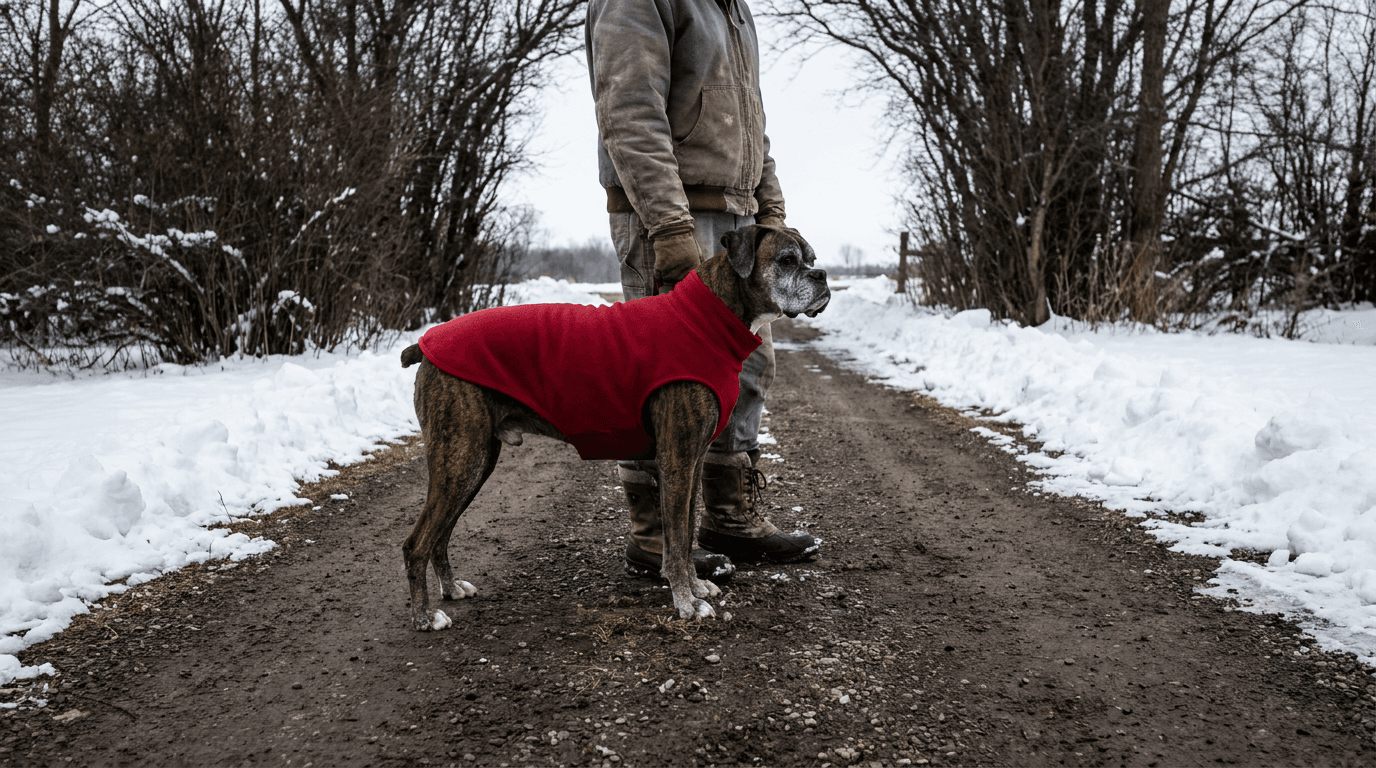
Dog arthritis and cold weather can make everyday routines feel less straightforward. The route to the yard may be slippery, walks may become shorter, and a favorite resting spot may sit in a draft. Supporting your dog through winter starts with noticing those practical obstacles and keeping their veterinary care plan consistent.
A change in comfort still deserves attention, even when the weather offers an easy explanation. Use winter as a reason to check footing, rest, activity, and changes in movement, then share anything new or worsening with your veterinarian.
If your dog has osteoarthritis, ask your veterinarian whether Galliprant® (grapiprant tablets) is appropriate. Galliprant controls pain and inflammation associated with osteoarthritis in dogs.

Sign up for expert-backed reviews and safety alerts all in one place.
What Dog Arthritis and Cold Weather Mean for Your Dog
Dogs with arthritis may face extra challenges in cold weather, particularly when snow, ice, or changes in routine make movement harder. That does not mean every cold day increases every dog's arthritis pain. The practical aim is winter comfort: make daily activities manageable and watch your own dog's response instead of assuming what the temperature means.
The Cornell University College of Veterinary Medicine notes that snow and ice can create difficulties for dogs with arthritis. A slippery route can be a real obstacle whether or not the weather itself changes joint pain. Likewise, a longer wait outside or a damp resting area may make an otherwise familiar routine less comfortable.
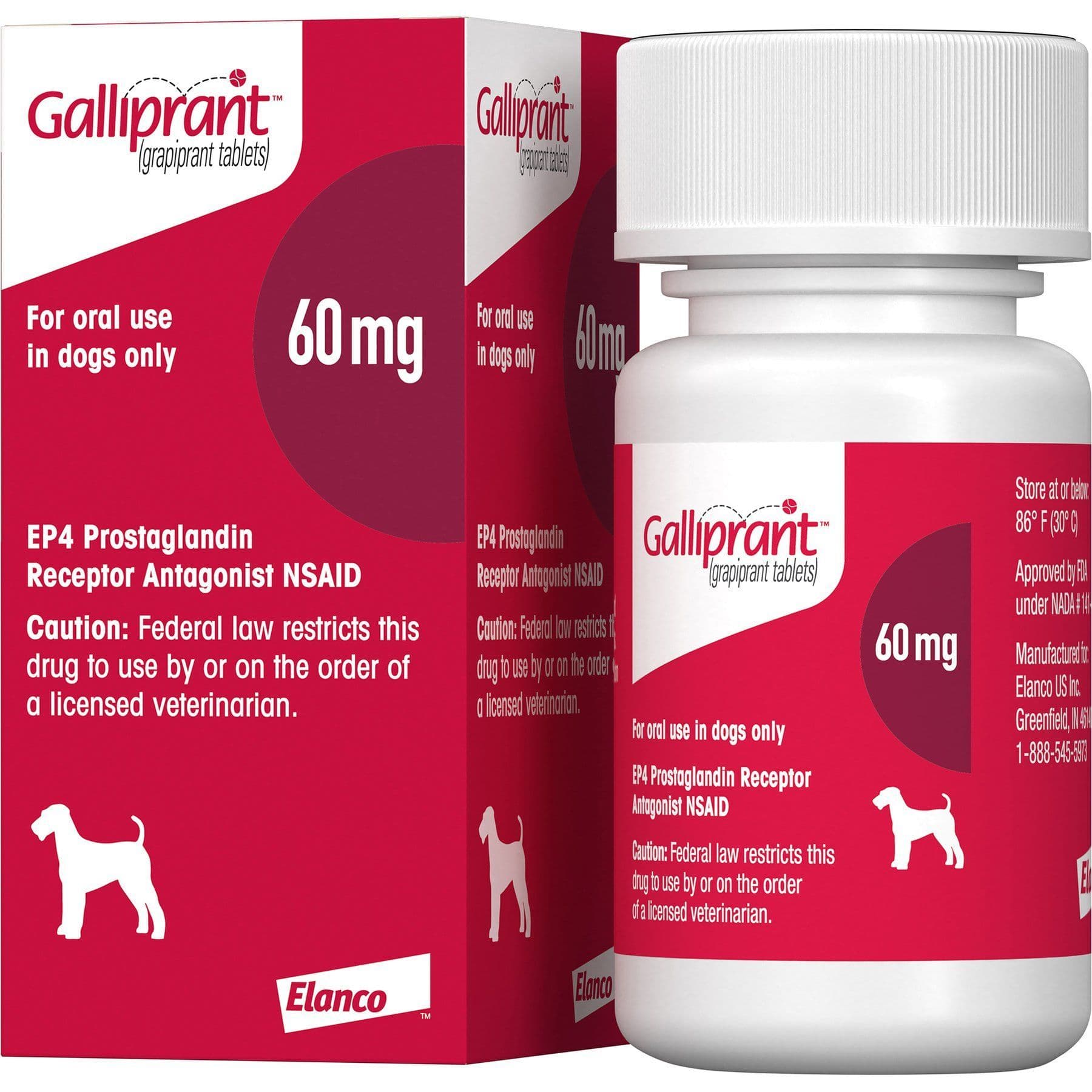
Galliprant (grapiprant tablets) 60 mg, 60 tablets. Prescription required; your veterinarian decides the strength and dose for your dog.
Petful may earn a commission when you click through to Chewy, at no extra cost to you.
Research on weather and canine arthritis does not support a simple rule. A 2017 study of 62 dogs with osteoarthritis found that temperature and daylight explained less than 1% of the variation in measured activity, and found no relationship between environmental variables and the owners' pain severity or pain interference scores. Those findings do not tell you to disregard a difficult day. They support a more useful question: What changed for this dog?
Build a Winter Routine Around Comfort
To soothe a dog with arthritis, start with the comfortable daily routine you and your veterinarian have discussed, then adapt the parts winter makes harder. The 2022 AAHA pain management guidelines include environmental modification, appropriate activity, weight management, and individualized rehabilitation. Winter adjustments should support that plan and be practical enough to repeat.
For dogs with arthritis and cold weather challenges, use a winter comfort check before the day becomes busy. Check the route, rest, activity, and change. Each part answers a different question: Can my dog move safely? Can they settle comfortably? Can we maintain appropriate movement? Is anything different enough to report?
- Review the route, rest, activity, and change. Clear the path, keep the resting place warm and dry, follow the agreed activity plan, and record new difficulties for your veterinarian.
A winter routine is not a challenge to complete regardless of conditions. If an outing or exercise is clearly uncomfortable, stop and seek advice about an alternative. Swimming in cold water deserves its own discussion with the veterinary team; it should not automatically replace a walk because swimming is sometimes part of supervised rehabilitation.
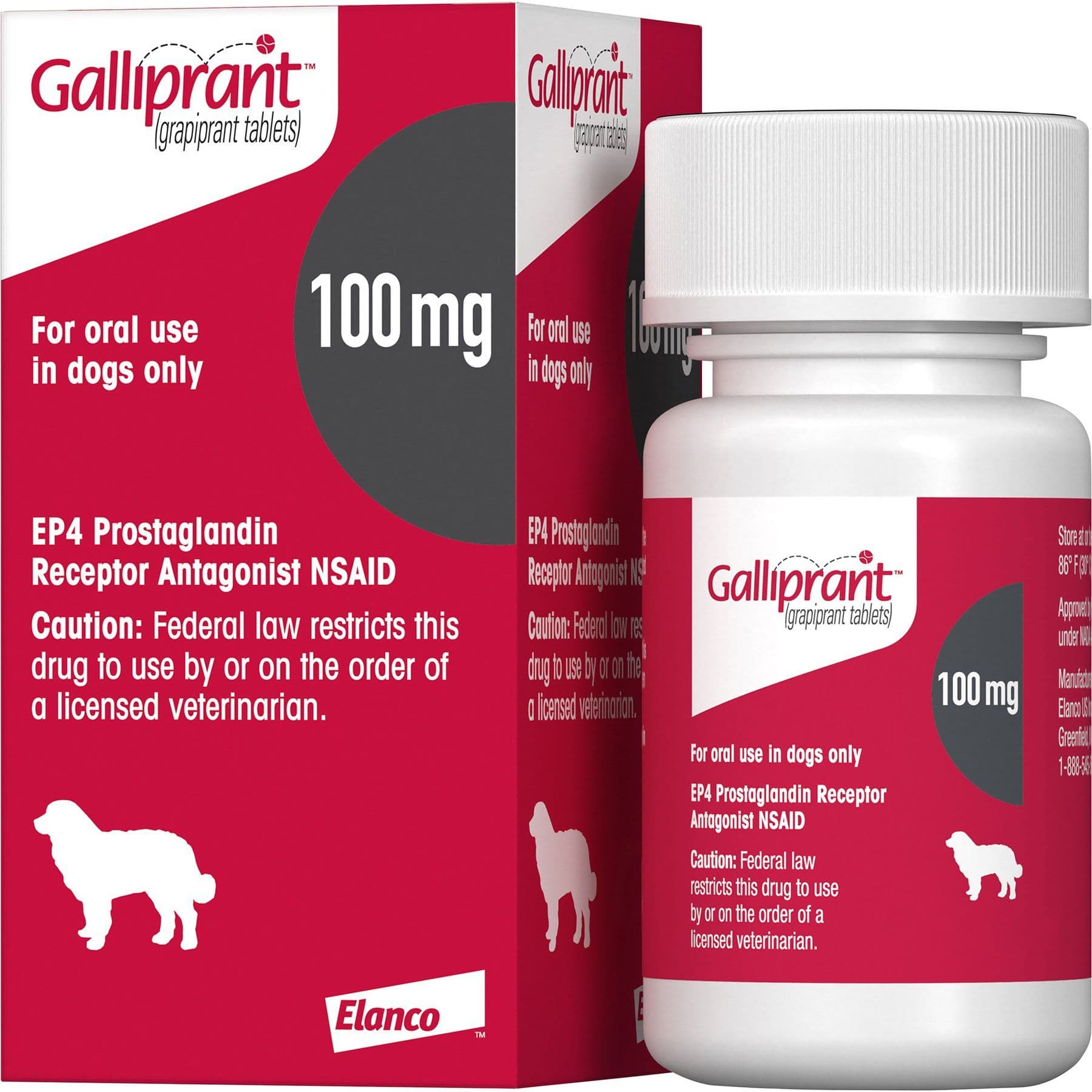
Galliprant (grapiprant tablets) 100 mg, 30 tablets. Prescription required; your veterinarian decides the strength and dose for your dog.
Petful may earn a commission when you click through to Chewy, at no extra cost to you.
Make the Route Outside Easier
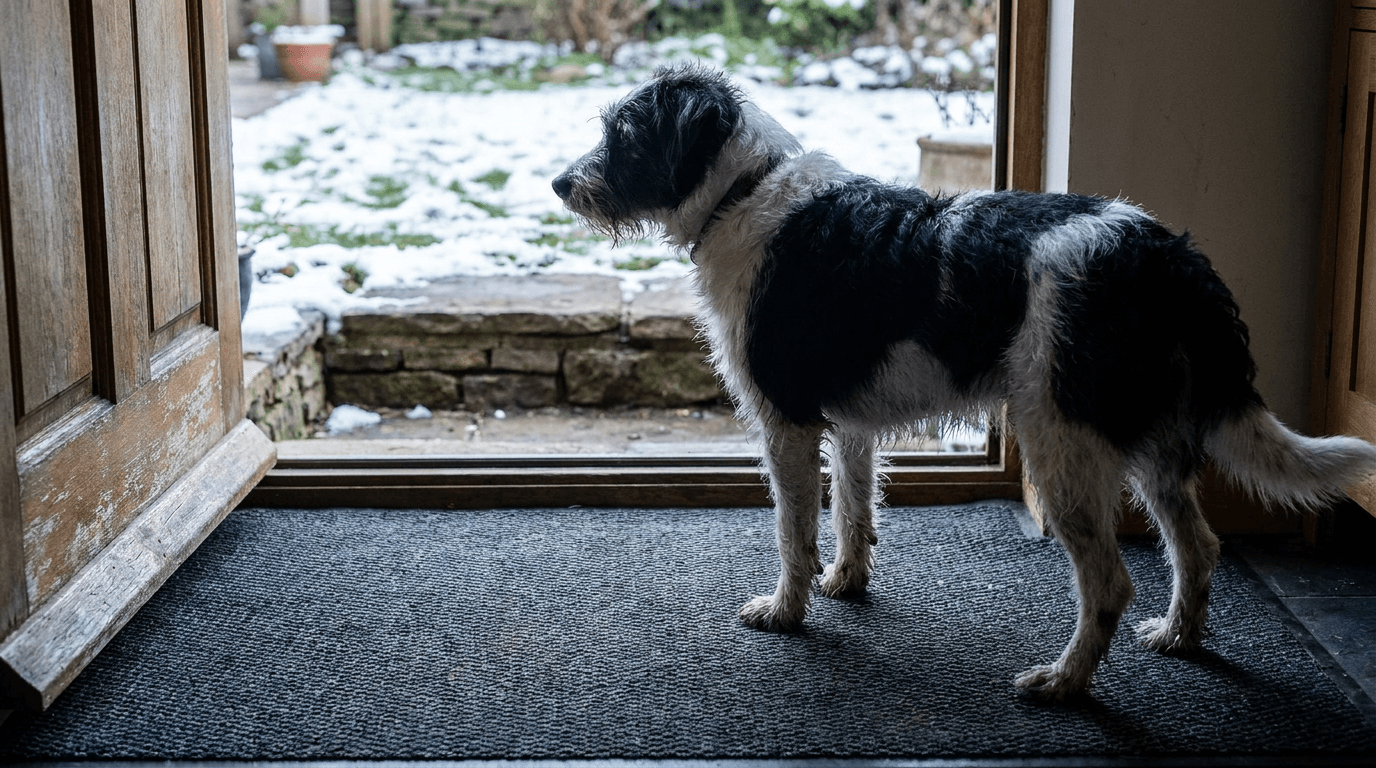
Safer footing begins before your dog reaches the snow. Check the route from the resting area through the doorway and into the yard. The AAHA guidelines recommend environmental modifications for dogs with pain, while Cornell's winter guidance highlights the difficulties snow and ice can create for arthritic dogs.
Look for small obstacles that add up: smooth tile, a mat that slides, a high threshold, a narrow icy step, or a snowbank between the door and toileting area. A familiar route can become difficult overnight after melting and refreezing. Check traction yourself before expecting your dog to negotiate it.
- Keep a manageable path to the usual toileting area clear of snow and ice.
- Secure indoor runners and mats so their edges stay flat.
- Avoid rushing through doorways or over slippery steps.
- Ask your veterinarian about safe access if steps are already difficult.
Boots may help some dogs in winter conditions, but fit and tolerance matter. They should not make the dog stumble or create a new obstacle. Check paws after outings, and clean off snow, ice, salt, or deicer residue as appropriate. If your dog will not tolerate the route, shorten the immediate task and contact your veterinarian for help adapting the setup.
Give Rest a Warm, Dry Place
A comfortable resting place should be dry, protected from drafts, and easy for your dog to enter and leave. Consider the whole approach to the bed as well as the bedding itself. A soft spot does little good if reaching it requires stairs, a jump, or crossing a slippery floor.
Place a supportive bed where your dog can rest near the household without being repeatedly disturbed. Check it after wet walks or toileting trips; a blanket that feels dry on top may still be damp underneath. Keep the route to water and the door simple so resting does not mean being isolated from everything your dog needs.
The Cornell winter safety guidance emphasizes warm, dry shelter and attention to cold exposure. If your dog appears chilled indoors despite a comfortable environment, or cannot settle as usual, share that observation with your veterinarian instead of continually adding heat.
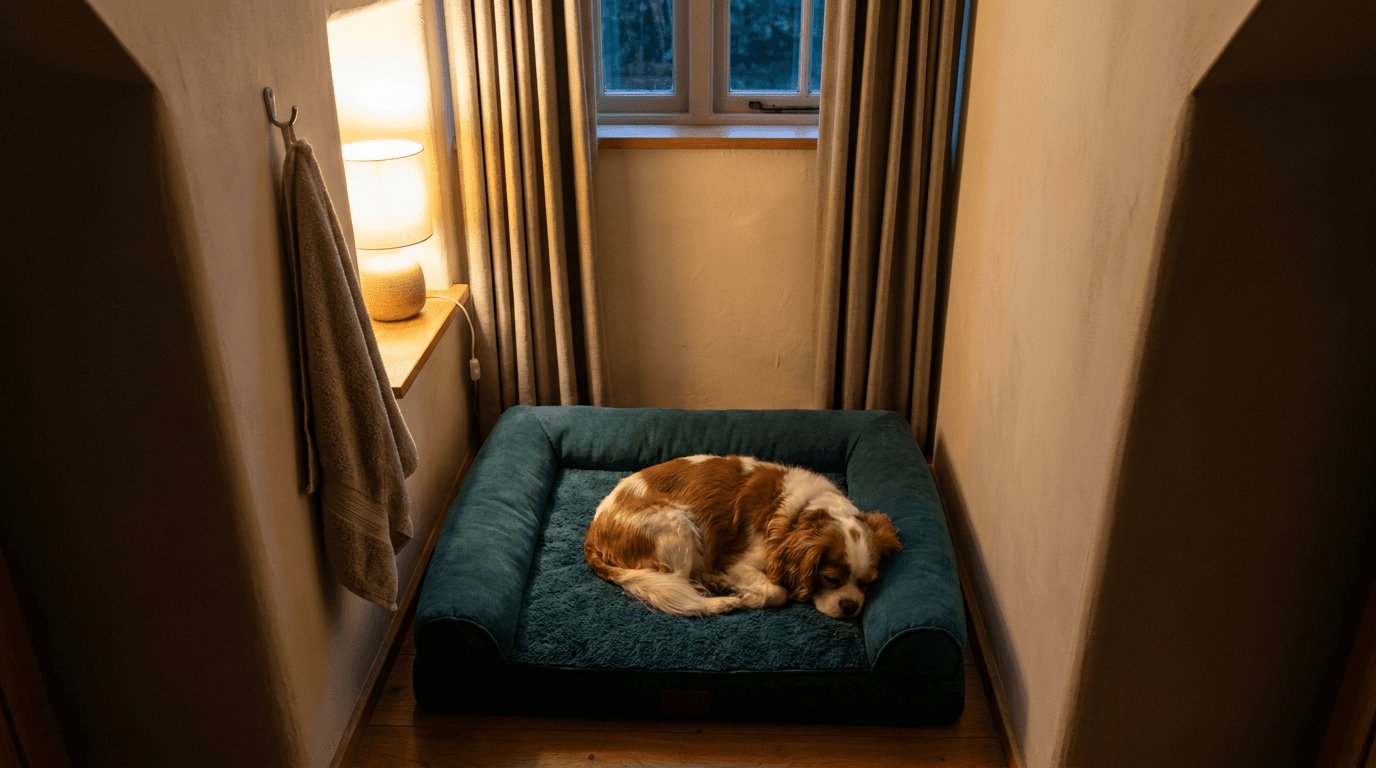
Be cautious about improvising with hot water bottles, electric blankets, or heating pads. Ask your veterinarian before applying heat to a painful area, including how to avoid excessive warmth and how long any recommended application should last. A dog with limited mobility may not move away from an uncomfortable heat source as readily as you expect.
Keep Activity Steady and Appropriate
Dogs with arthritis need activity suited to their condition, and winter is a reason to discuss adjustments, not abandon the plan. The AAHA pain management guidelines describe individualized rehabilitation and exercise as parts of pain management. There is no single walk duration or exercise list that is appropriate for every dog with OA.
Ask your veterinarian what a manageable winter day should look like for your dog. Depending on the dog and conditions, the discussion may include shorter outings, a safer route, a different time of day, or suitable movement indoors. A new exercise should be chosen for your dog's needs and abilities rather than because it appears on a generic arthritis checklist.
Galliprant (grapiprant tablets) 60 mg, 30 tablets. Prescription required; your veterinarian decides the strength and dose for your dog.
Petful may earn a commission when you click through to Chewy, at no extra cost to you.
Keep track of what happens around activity:
- Does your dog move comfortably at the start of the outing?
- Do they begin to slow, stop, or lift their paws?
- Is getting up after a later rest more difficult than usual?
- Has a previously manageable route become a struggle?
Do not add a long, vigorous outing to make up for several quiet days. Discuss consistency and progression with the veterinary team, including weight and food portions if winter changes the usual activity pattern. Mental enrichment can make a quiet day more engaging, but food games or puzzles should not require painful postures, repeated jumps, or slippery turns.
Track Changes and Know When to Call Your Vet
If you wonder whether cold weather affects your dog's arthritis or joints, record what you see before assigning a cause. New joint pain in winter, greater stiffness, or less willingness to move may reflect several overlapping changes. Cold weather is not a diagnosis, and a dog with established arthritis can still develop a different problem.
The Cornell osteoarthritis guide describes difficulty rising, reluctance to exercise or use stairs, and lameness among possible OA signs. Compare those activities with your dog's usual pattern. If arthritis seems to flare up, report changes in activity, footing, rest, medication, and health instead of assuming one weather variable explains everything.
Use a brief note rather than a complicated scoring system:
- Situation: “The path was icy, so we used the cleared side door.”
- Movement: “He paused at the threshold and rose slowly after his nap.”
- Routine: “His walk was shorter, but his meals and prescribed medicine were unchanged.”
- Change: “The hesitation continued indoors on a secure rug.”
This record helps distinguish an obstacle you can remove from a change that persists after the obstacle is gone. Owners describing arthritis flares in dogs can bring concrete observations to veterinary reassessment rather than guessing at the trigger. The 2022 AAHA chronic pain assessment guidance recognizes owner observations and home video as useful parts of assessing function. The note itself is not a validated pain scale.
Contact your veterinarian about new or worsening limping, difficulty rising, reduced appetite, unusual tiredness, or discomfort that interferes with normal rest and activity. Sudden hind-leg weakness, loss of coordination, or inability to stand or walk warrants urgent veterinary attention. Do not wait for warmer weather to see whether a sudden loss of function resolves.
Keep the Veterinary Treatment Plan Consistent
What to give a senior dog with arthritis depends on that dog's diagnosis, medical history, other medicines, and treatment plan. A cold forecast is not a reason to add a pain reliever or change a prescribed dose. The FDA advises following the veterinarian's instructions for medication and discussing changes with the veterinary team.
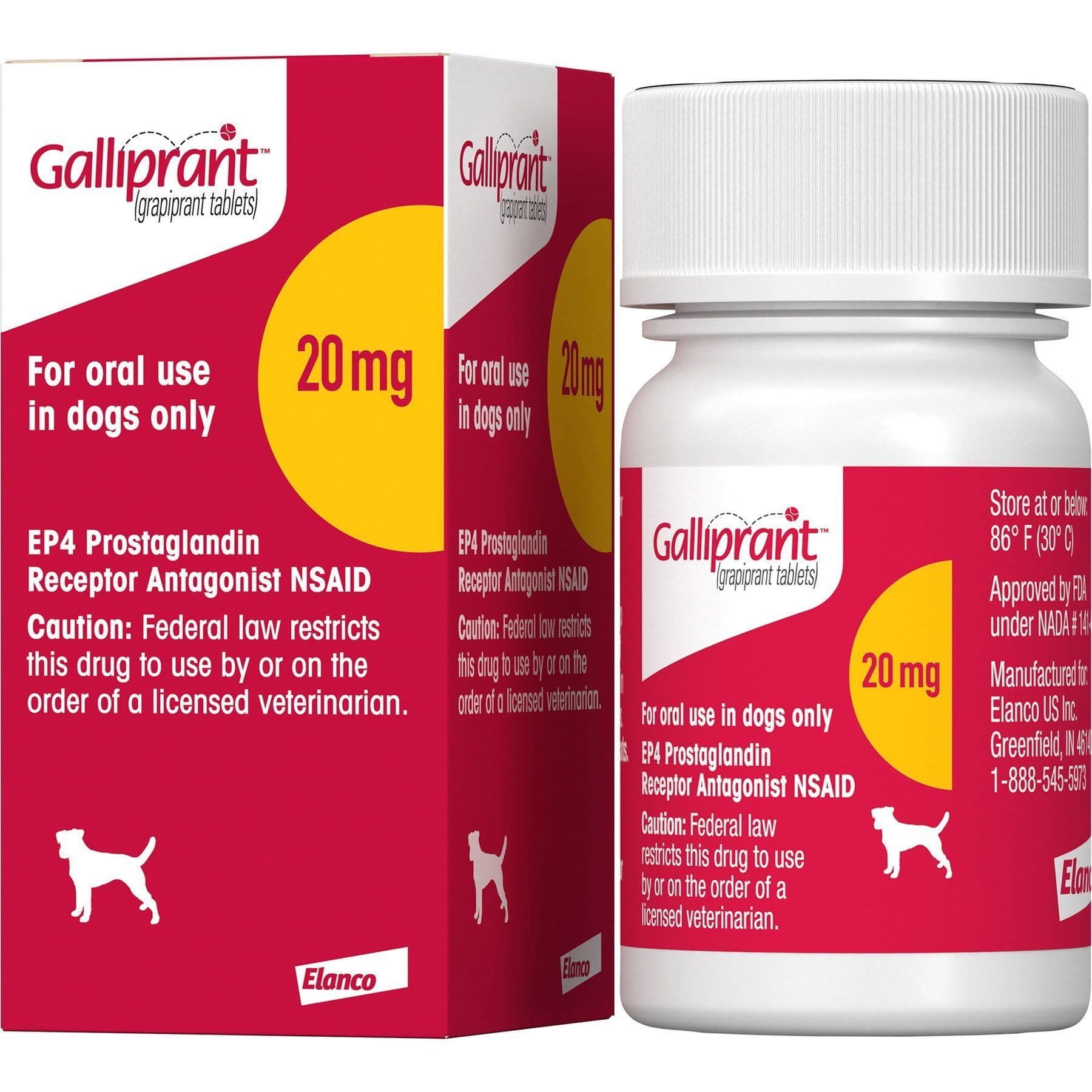
Galliprant (grapiprant tablets) 20 mg, 30 tablets. Prescription required; your veterinarian decides the strength and dose for your dog.
Petful may earn a commission when you click through to Chewy, at no extra cost to you.
If your dog has osteoarthritis, ask your veterinarian whether Galliprant® (grapiprant tablets) is appropriate. Galliprant controls pain and inflammation associated with osteoarthritis in dogs. Your veterinarian can discuss your dog's other medications and monitoring. See the Important Safety Information below and the full prescribing information.
Galliprant's role in the treatment plan
A once-a-day, flavored, chewable tablet, Galliprant could fit into your dog's daily routine.
Galliprant features a unique mode of action, targeting the EP4 receptor, effectively addressing inflammation and pain.
Monitoring is recommended if used long-term. As a class, NSAIDs may be associated with gastrointestinal, kidney and liver side effects. See the Important Safety Information below.
- Do not give an extra dose because a day is colder or your dog seems stiffer. Contact your veterinarian about the change and follow the prescribed plan.
If winter routines make medication harder to remember, discuss a reliable daily schedule with the clinic. Report missed doses, side effects, or difficulty giving the medicine rather than trying to compensate yourself. Also mention supplements and any medicine another family member might have given; the veterinary team needs the complete list when assessing the plan.
The daily comfort measures in this guide work alongside veterinary care. Return to the same practical observations at follow-up: resting comfortably, rising, reaching the door, and participating in the activity your veterinarian recommends. These are more useful than assuming that a sunny day means treatment is unnecessary or a cold day means it has stopped working.
Put the Plan Into a Typical Winter Day
A useful winter plan connects separate comfort measures into the dog's actual routine. Before the first trip outside, check whether the path has refrozen and whether the doorway mat is secure. Let your dog move at a comfortable pace. After returning indoors, check paws, dry any wet areas, and make sure the resting place is ready.
Later in the day, follow the activity plan you discussed with the veterinary team. If conditions have changed, use the agreed alternative rather than improvising a harder exercise. Keep meals, medicine, and opportunities to toilet predictable. An owner, partner, or dog walker should know the same basic plan so your dog is not asked to do very different activities by different people.
You can leave a short household note covering:
- The cleared door and route to use.
- Activities the veterinarian has recommended or restricted.
- The prescribed medication schedule and who gives it.
- Changes that should prompt a call to the clinic.
This simple coordination matters when days are busy or someone else cares for your dog. It also makes follow-up observations easier to interpret: the veterinarian can see whether a difficulty appeared despite a consistent routine or alongside a change in conditions. If a task remains difficult after you have improved the route or setting, report that rather than asking your dog to keep trying.
Frequently Asked Questions
A dog does not recover from osteoarthritis simply because winter ends. Osteoarthritis involves lasting joint changes, so management focuses on comfort and function over time rather than a seasonal cure. A better week or a warmer forecast does not mean the condition has disappeared. The Cornell osteoarthritis guide describes an ongoing management approach. Work with your veterinarian to assess progress and adjust care as your dog's needs change.
Cold-water swimming should not be assumed to be a suitable arthritis exercise. Veterinary rehabilitation may use water-based activity under controlled conditions, but that is different from an outdoor swim in winter. Ask your veterinarian or rehabilitation professional whether water exercise fits your dog's condition and what setting is appropriate. Choose an agreed alternative if the water, footing, access, or exposure makes the activity difficult.
Cold tolerance varies with the dog and the conditions, so a universal temperature cutoff is not a reliable guide. Cornell identifies factors such as coat, age, health, body condition, and acclimation. Watch for shivering, whining, a hunched posture, lifted paws, or reluctance to continue. Bring your dog into a warm, dry place and seek veterinary advice if they remain unwell or uncomfortable.
Indication:
Galliprant controls pain and inflammation associated with osteoarthritis in dogs.
Important Safety Information
For use in dogs only. Keep this and all medications out of reach of children and pets to prevent accidental ingestion or overdose. Galliprant is a non-COX inhibiting NSAID. As a class, NSAIDs may be associated with gastrointestinal, kidney and liver side effects. Evaluation for pre-existing conditions and regular monitoring are recommended. Do not use in dogs that have a hypersensitivity to grapiprant. Concomitant use of Galliprant with other NSAIDs or corticosteroids should be avoided. Concurrent use with other anti-inflammatory drugs or protein-bound drugs including cardiac, anticonvulsant and behavioral medications has not been studied. The safe use of Galliprant has not been evaluated in dogs younger than 9 months of age and less than 8 lbs., dogs used for breeding, pregnant or nursing dogs, or dogs with cardiac disease. Side effects associated with Galliprant may include diarrhea, soft mucoid stools, vomiting, and decreased appetite. Contact your veterinarian immediately if you think your dog may have a medical problem or side effect while on Galliprant. Visit http://elancolabels.com/us/galliprant for full prescribing information.
Approved brand reference
Elanco Galliprant Pet Owner Brochure, PM-US-25-0717(2), supplied 2026 approved version, pages 2–3. Brand indication and Important Safety Information follow this supplied document. Other clinical sources are linked where discussed.
Galliprant, Elanco, and the diagonal bar logo are trademarks of Elanco or its affiliates.
BVMS, MRCVS
Dr. Pippa Elliott, BVMS, MRCVS, is a veterinarian with nearly 30 years of experience in companion animal practice. Dr. Elliott earned her Bachelor of Veterinary Medicine and Surgery from the University of Glasgow. She was also designated a Member of the Royal College of Veterinary Surgeons. Married with 2 grown-up kids, Dr. Elliott has a naughty Puggle named Poggle, 3 cats and a bearded dragon.
Sign up for expert-backed reviews and safety alerts all in one place.
A Final Word (Disclaimer)
At Petful, our review integrity is paramount; we never exchange special treatment in our reviews for monetary or material rewards.
Nonetheless, when our readers click through to online merchants (including Chewy or Amazon), we receive a referral commission. This supports the running of our free blog, and we appreciate your backing.