Bravecto vs NexGard vs Simparica: A Vet's Comparison
A veterinarian compares Bravecto, NexGard, and Simparica head to head: dosing schedules, active ingredients, age and weight minimums, the FDA isoxazoline advisory, and real per-month costs for dogs.

BVMS, MRCVS
Petful is reader supported. As an affiliate of platforms like Amazon and Chewy, we may earn a commission when you buy through links on this page. There is no extra cost to you.
Bravecto vs NexGard is the head-to-head question most dog owners bring to the exam room, but the real decision is a three-way one that also includes Simparica and its combination sibling, Simparica Trio. All three are prescription oral chews from the isoxazoline class regulated by the U.S. Food and Drug Administration (FDA), and in efficacy studies each kills more than 99 percent of fleas within 24 hours. The differences that actually matter are dosing interval, age and weight minimums, parasite coverage, combination options, and cost per month of protection.
This vet-authored guide compares all three brands (plus NexGard PLUS and Simparica Trio) on those exact axes, covers the FDA safety advisory that every dog owner should know about before starting any isoxazoline, and finishes with a practical framework for choosing the right chew for your individual dog.
- 1Bravecto (fluralaner), NexGard (afoxolaner), and Simparica (sarolaner) are all prescription isoxazoline chews with excellent flea and tick efficacy
- 2Bravecto lasts 12 weeks per dose while NexGard and Simparica are monthly
- 3Age and weight minimums differ: NexGard from 8 weeks and 4 lb, Simparica from 6 months and 2.8 lb, Simparica Trio from 8 weeks and 2.8 lb, Bravecto from 6 months and 4.4 lb
- 4Standard versions do not prevent heartworm; NexGard PLUS and Simparica Trio add heartworm and intestinal worm coverage
- 5The FDA's 2018 isoxazoline advisory flags rare neurologic side effects, so discuss any seizure history with your veterinarian
- 6Cost per month of protection is closer than sticker prices suggest

Sign up for expert-backed reviews and safety alerts all in one place.
Bravecto vs NexGard: key differences

Bravecto, NexGard, and Simparica all belong to the isoxazoline class, but Bravecto is dosed every 12 weeks while NexGard and Simparica are given monthly. NexGard can start in puppies from 8 weeks of age and 4 pounds, while standard Bravecto and standard Simparica are labeled for dogs 6 months and older.
So which is more effective, Bravecto or NexGard? For most dogs, neither. In manufacturer and independent efficacy studies both products kill more than 99 percent of fleas within 24 hours of treatment or infestation, and both carry strong tick label claims. There is no clinical daylight between them on raw killing power. The practical differences are:
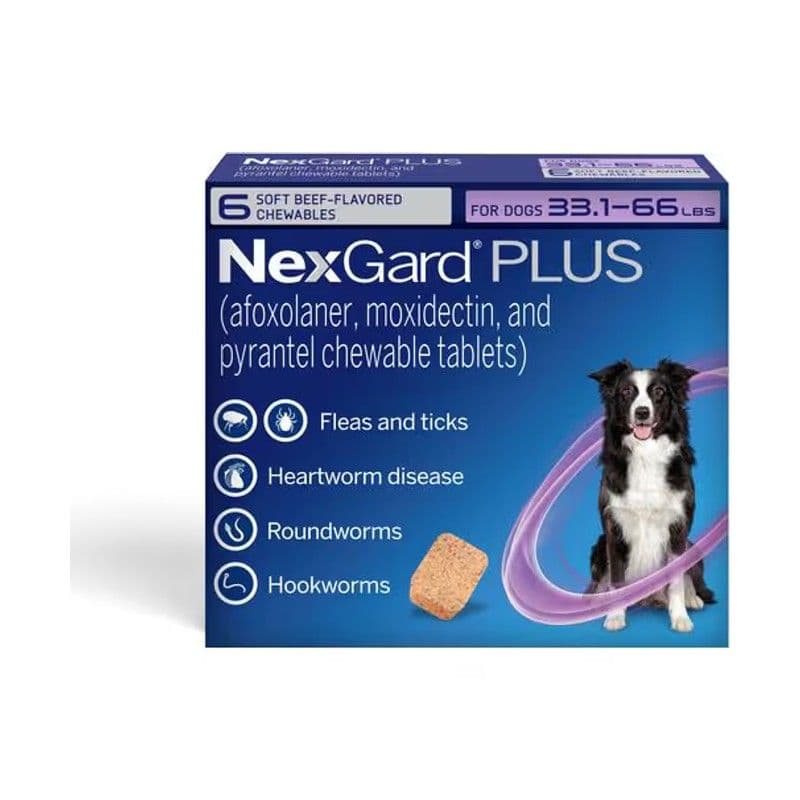
Monthly beef-flavored prescription chew that protects against fleas, ticks, heartworm disease, roundworms, and hookworms. For dogs 33.1 to 66 lbs.
Petful may earn a commission when you click through to Chewy, at no extra cost to you.
- Duration: one Bravecto chew covers 12 weeks; NexGard must be given every month.
- Onset: Merck reports Bravecto begins killing fleas within 2 hours; NexGard kills fleas before they can lay eggs.
- Tick spectrum: both cover the major U.S. tick species, but Bravecto's lone star tick claim only extends 8 weeks into its 12-week dose.
- Eligibility: NexGard suits young puppies; standard Bravecto does not start until 6 months.
And which is safer, NexGard or Bravecto? Their safety profiles are comparable: both are isoxazolines, both list vomiting as the most common side effect, and both fall under the same FDA advisory covered below. Here is the full three-way specification comparison, followed by cost in its own section (bravecto vs nexgard price questions get real per-month math there).
| Feature | Bravecto | NexGard | Simparica |
|---|---|---|---|
| Active ingredient | Fluralaner | Afoxolaner | Sarolaner |
| Manufacturer | Merck Animal Health | Boehringer Ingelheim | Zoetis |
| Dosing interval | Every 12 weeks | Monthly | Monthly |
| Minimum age | 6 months | 8 weeks | 6 months (Trio: 8 weeks) |
| Minimum weight | 4.4 lb | 4 lb | 2.8 lb |
| Flea kill onset | Begins within 2 hours | Kills fleas before egg-laying | Begins within 3 hours |
| Tick coverage | 4 species (lone star for 8 weeks) | 4 species | 5 species |
| Heartworm prevention | No (standard product) | No (NexGard PLUS adds it) | No (Simparica Trio adds it) |
| Prescription required | Yes | Yes | Yes |
Reading the table as verdicts: Bravecto wins on convenience with its 12-week dosing interval, NexGard wins on puppy eligibility at 8 weeks of age, and Simparica wins on small-dog access with the lowest weight minimum at 2.8 pounds plus the broadest tick label at five species. On heartworm, none of the standard chews protect; that job belongs to the combination products NexGard PLUS and Simparica Trio, compared in their brand sections below.

 Sponsored
Need flea, tick, or parasite care for your dog?
A licensed vet at Dutch can recommend the right preventive and prescribe it when it's appropriate. Annual members get 20% off their first flea and tick order.
Use code Pets60
Plans start at $12/month · covers up to 5 pets
- Licensed vets in most states
- Rx for 150+ conditions
- 4.7 on Trustpilot
Bravecto for dogs: 12-week dosing, forms, and coverage
Bravecto for dogs is the outlier of the three on schedule: a single flavored chew protects for 12 weeks, roughly three times longer than any monthly product. For owners who struggle to remember monthly doses, that is the single strongest argument in its favor, because a missed month is the most common reason flea protection "fails" in practice.
Bravecto's active ingredient is fluralaner, and the standard chew is labeled for dogs 6 months and older weighing at least 4.4 pounds. The product line has more shapes than most owners realize:
- Bravecto chew (12 weeks): the flagship product most people mean when they search for Bravecto flea pills for dogs.
- Bravecto topical for dogs (12 weeks): the same fluralaner as a spot-on, for dogs that refuse chews.
- Bravecto 1-Month chew: a monthly fluralaner chew labeled from 8 weeks of age, built for puppies too young for the 12-week product.
Coverage is fleas plus four major tick species, with one label nuance worth knowing: the lone star tick claim lasts 8 weeks, not the full 12. If you live in the lone star tick belt of the southern and eastern United States, your vet may recommend re-dosing on an 8-week cycle during peak season. Standard Bravecto does not prevent heartworm, so it is typically paired with a separate monthly heartworm preventive.
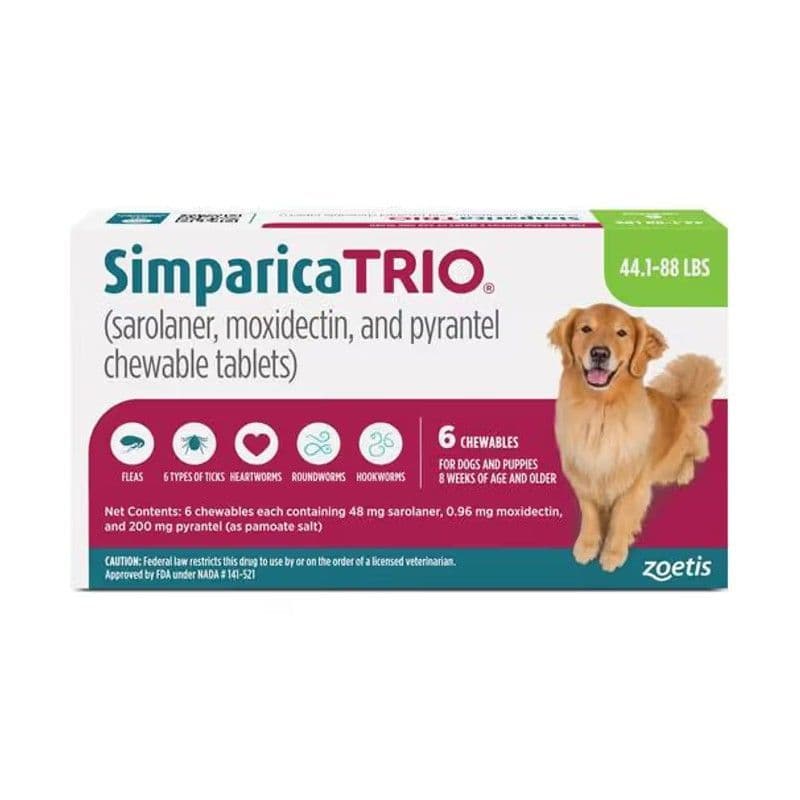
Monthly vet-prescription chew that kills fleas and ticks and prevents heartworm disease, roundworms, and hookworms in one dose. For dogs 44.1 to 88 lbs.
Petful may earn a commission when you click through to Chewy, at no extra cost to you.
- A dog on Bravecto needs only four doses per year. That schedule advantage is real, but it cuts both ways: if your dog has an adverse reaction, the medication is designed to stay active in the body for around 12 weeks and cannot be quickly discontinued.
NexGard for dogs: monthly dosing, PLUS and Spectra options

NexGard for dogs is the best-known monthly chew in the class and the most puppy-friendly of the three brands: it is labeled from 8 weeks of age and 4 pounds, which makes it the default isoxazoline choice for young puppies leaving the litter. Its active ingredient is afoxolaner, given as a beef-flavored monthly chew.
NexGard also carries a distinction the other two brands cannot claim: it is FDA-approved to prevent Borrelia burgdorferi infections (the cause of Lyme disease) as a direct result of killing black-legged ticks before they can transmit the bacterium. For dogs in the Lyme-heavy Northeast and upper Midwest, that label claim is a genuine differentiator, not marketing.
The NexGard family for people searching NexGard flea pills for dogs now has three tiers:
- NexGard (afoxolaner): fleas and four tick species, monthly.
- NexGard PLUS (afoxolaner + moxidectin + pyrantel): adds heartworm disease prevention and roundworm and hookworm treatment in one monthly chew.
- NexGard Spectra: the broad-spectrum combination sold internationally; in the United States, NexGard PLUS is the equivalent all-in-one.
One comparison that trips owners up is Bravecto vs NexGard PLUS. That is not an apples-to-apples matchup: standard Bravecto is a flea-and-tick product only, while NexGard PLUS also covers heartworm prevention needs and common intestinal worms. If you compare them, compare total parasite protection per month, which usually means Bravecto plus a separate heartworm preventive against NexGard PLUS alone.
Simparica and Simparica Trio for dogs
Simparica for dogs rounds out the trio with sarolaner, a monthly chew from Zoetis labeled for dogs 6 months and older, and it holds two quiet advantages: the lowest weight minimum of the three brands at 2.8 pounds, and the broadest tick label at five species, including the Gulf Coast tick that the other two do not cover.

The bigger story is Simparica Trio, which has become one of the most-prescribed parasite products in U.S. veterinary practice. In a single monthly chew, Simparica Trio combines:
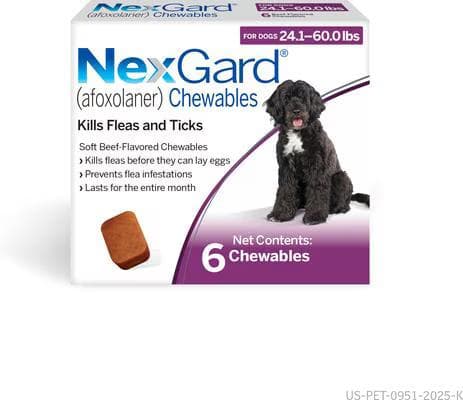
A monthly beef-flavored prescription chew (afoxolaner) that kills fleas before they lay eggs and kills ticks. A popular oral pick for dogs who do better with a chew than a topical.
Petful may earn a commission when you click through to Chewy, at no extra cost to you.
- Sarolaner for fleas and five tick species
- Moxidectin for heartworm disease prevention
- Pyrantel for roundworm and hookworm treatment
Simparica Trio is also labeled from 8 weeks of age and 2.8 pounds, so it reaches puppies and toy breeds that standard Simparica and standard Bravecto cannot. Like NexGard, Simparica Trio carries an FDA label claim for preventing Lyme infections by killing black-legged ticks. For many households, Trio's one-chew-does-everything simplicity is the deciding factor: no separate heartworm preventive to buy, schedule, or forget.
For clarity on the page's core question: Simparica Trio is a combination product inside the Simparica brand family, not a separate answer to the bravecto vs nexgard for dogs decision. If you need all-in-one coverage, the true matchup is NexGard PLUS vs Simparica Trio; if you only need fleas and ticks, it is Bravecto vs NexGard vs standard Simparica.
How Simparica compares to Bravecto and NexGard
The two-way legs of this comparison each come down to one or two decisive facts.
- NexGard vs Simparica: Both are monthly chews with near-identical flea efficacy. NexGard starts younger (8 weeks vs 6 months for standard Simparica), while Simparica goes smaller (2.8 lb vs 4 lb) and covers one more tick species. Zoetis reports Simparica begins killing fleas within 3 hours. At the combination tier, NexGard PLUS and Simparica Trio are functionally head-to-head, and the choice usually follows your vet's preference, your dog's weight band pricing, and puppy age at first dose (both start at 8 weeks).
- Bravecto vs Simparica: This leg is schedule against accessibility. Bravecto's 12-week dosing interval beats Simparica's monthly cycle for convenience and compliance, but Simparica fits dogs as small as 2.8 pounds, starts at 8 weeks in its Trio form, and adds heartworm coverage through Trio, which Bravecto cannot match in any form.
If a dog in my consult room is a healthy 6-month-plus adult whose owner mainly wants fewer doses to remember, Bravecto is the natural fit. A puppy, a toy breed, or a household that wants heartworm and intestinal worm coverage folded in points to the Simparica or NexGard families instead.
 Sponsored
Vet care that's always there
Unlimited video calls and messaging with licensed vets for less than a typical vet visit. One membership covers up to five pets.
Use code Pets60
Plans start at $12/month · covers up to 5 pets
- Licensed vets in most states
- Rx for 150+ conditions
- 4.7 on Trustpilot
Safety and side effects: the FDA isoxazoline advisory

All three products are safe for the overwhelming majority of dogs, and that sentence needs to come first because what follows worries owners more than it should. In September 2018, the FDA issued an advisory covering the entire isoxazoline class (Bravecto, NexGard, Simparica, and Credelio) after post-approval reports of neurologic adverse events in some treated dogs. The reported signs were:
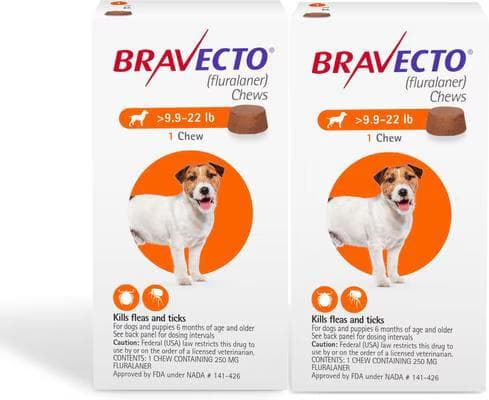
A prescription fluralaner chew that protects against fleas and most ticks for up to 12 weeks per dose, so one chew covers a full season quarter. A low-frequency option for owners who forget monthly doses.
Petful may earn a commission when you click through to Chewy, at no extra cost to you.
- Muscle tremors
- Ataxia (wobbliness or loss of coordination)
- Seizures, in some cases in dogs with no prior seizure history
The FDA did not pull any product and continues to consider isoxazolines safe and effective for most dogs; it required manufacturers to add the neurologic warning to labels so veterinarians and owners could make informed choices. The most common side effect for all three chews remains mild and digestive: vomiting, occasionally with soft stool, lethargy, or reduced appetite for a day or so.
Asked directly about bravecto vs nexgard side effects, I tell owners the honest answer is that the class matters more than the brand: isoxazoline side effects in dogs look essentially the same across all three products, and no head-to-head data shows one brand is meaningfully more neurologically risky than another. Bravecto's specific disadvantages are practical rather than toxicological: its 12-week duration means an adverse reaction cannot be stopped by simply skipping the next monthly dose, its upfront per-dose price is the highest of the three, and its standard form starts latest (6 months and 4.4 pounds).
- If your dog has ever had a seizure, has been diagnosed with epilepsy, or has another neurologic condition, tell your veterinarian before starting Bravecto, NexGard, or Simparica. Many such dogs still tolerate isoxazolines well, but your vet may prefer a non-isoxazoline flea and tick product, and that decision should be made deliberately, not discovered afterward.
Switching between Bravecto, NexGard, and Simparica
Can you switch your dog from NexGard to Bravecto (or between any two of these products)? Yes, and it is done routinely, but timing is the whole game. Because all three are isoxazolines, you should not stack doses; the safe pattern is to start the new product when the old one's protection window closes.
- Confirm the switch with your vet first. All three are prescription products, so you will need an updated prescription anyway, and your vet can flag any reason to avoid the change.
- Start the new product on the old product's due date. Switching from NexGard or Simparica, give the first Bravecto chew on the day the next monthly dose would have been due. Switching from Bravecto, start the monthly product 12 weeks after the last Bravecto dose (8 weeks if lone star ticks drive your protection locally).
- Do not leave a gap. Fleas and ticks exploit even a one-week lapse, and a gap is riskier than the switch itself.
- Watch your dog for a few days. Reactions to a new product in the same class are uncommon, but note appetite, energy, and stool for the first week.
The most common reason a switch "fails" is not the medication; it is a missed handoff date between two different schedules. A free MyPetID profile makes that easy to avoid by tracking which flea and tick product your dog is on, its dosing frequency, and automatic reminders for the next dose.
Cost comparison: which is cheaper?
Is Bravecto or NexGard cheaper? Per dose, NexGard; per month of protection, usually Bravecto. Sticker prices mislead here because one Bravecto chew must be weighed against three monthly chews. As of this writing, typical U.S. pharmacy pricing by weight band works out roughly like this:
- Bravecto: about $65 to $80 per 12-week chew, or roughly $22 to $27 per month of protection.
- NexGard: about $25 to $35 per monthly chew, so $25 to $35 per month.
- Simparica: about $22 to $30 per monthly chew, typically the lowest monthly-tier price.
- NexGard PLUS and Simparica Trio: about $30 to $42 per month, but they replace a separate heartworm preventive that would otherwise cost $10 to $20 per month on its own.
Prices vary meaningfully by dog weight band, pharmacy, and multi-dose packs, so treat these as planning numbers rather than quotes. Two cost conclusions hold up across almost every weight band. First, the bravecto vs nexgard price gap per month of protection is small, usually a few dollars, so cost alone should rarely decide between them. Second, if your dog needs heartworm prevention anyway (and in most of the United States, the Companion Animal Parasite Council says year-round prevention is the standard), a combination chew is often the cheapest total package even though it is the most expensive single product on the shelf.
All three brands require a vet prescription, so the purchase path runs through your veterinary clinic or a licensed online pet pharmacy such as Chewy's pharmacy, which verifies the prescription with your vet before shipping.
What about Frontline and other topicals?
The other comparison owners raise in the same breath is NexGard vs Frontline, and it is really a different question: oral versus topical. Frontline Plus is an over-the-counter spot-on (fipronil plus (S)-methoprene) that needs no prescription, costs less per month, and kills fleas on contact rather than after a bite, but it can be washed off by swimming and bathing and is generally slower against ticks than the oral isoxazolines. We keep the full head-to-head, including which dogs are better served by each, in our dedicated NexGard vs Frontline comparison.
For the broader landscape of collars, shampoos, sprays, and every other format beyond oral chews, our complete flea treatment for dogs overview walks through all of them by product type.
Choosing an oral flea and tick pill
If you are still weighing options across the whole category, including Credelio and the non-prescription alternatives, our roundup of the best flea pills for dogs ranks every oral product. Within the three brands compared here, this is the decision framework I use in practice:
- Puppy under 6 months: NexGard (from 8 weeks and 4 lb), Simparica Trio (from 8 weeks and 2.8 lb), or Bravecto 1-Month. Standard Bravecto and standard Simparica are off the table on age and weight minimums alone.
- Toy breed under 4 pounds: Simparica or Simparica Trio, the only options labeled down to 2.8 pounds.
- Needs heartworm coverage in one chew: NexGard PLUS or Simparica Trio.
- Owner who forgets monthly doses: Bravecto, four doses a year.
- Lyme-endemic region: NexGard or Simparica Trio, both FDA-labeled to prevent Lyme infections by killing black-legged ticks.
- Any seizure history: a vet conversation before any of the three, and possibly a non-isoxazoline product.
- The best chew is the one that fits your dog's age, weight, parasite exposure, and your own consistency. A perfectly chosen product given late every month protects worse than a good-enough product given on time.
Yes. All three are FDA-regulated prescription medications in the United States, so you will need a current veterinary prescription whether you buy from your clinic or an online pharmacy. That also means a vet has confirmed the product suits your dog's age, weight, and health history.
Yes. Unlike some topical dog products that contain permethrin, which is toxic to cats, the oral chews stay in your dog's bloodstream and pose no contact risk to household cats. Never give a dog-labeled chew to a cat, though; cats have their own labeled products.
If vomiting happens within a couple of hours of dosing, the dose may not have been absorbed; call your vet, who may advise re-dosing. Occasional mild vomiting is the most common side effect of all three products, but repeated vomiting, tremors, or wobbliness warrants a same-day vet call.
Standard Bravecto, NexGard, and Simparica do not prevent heartworm. NexGard PLUS and Simparica Trio add heartworm prevention (plus roundworm and hookworm treatment), which is why many vets now prescribe a combination chew instead of two separate products.
BVMS, MRCVS
Dr. Pippa Elliott, BVMS, MRCVS, is a veterinarian with nearly 30 years of experience in companion animal practice. Dr. Elliott earned her Bachelor of Veterinary Medicine and Surgery from the University of Glasgow. She was also designated a Member of the Royal College of Veterinary Surgeons. Married with 2 grown-up kids, Dr. Elliott has a naughty Puggle named Poggle, 3 cats and a bearded dragon.
Sign up for expert-backed reviews and safety alerts all in one place.