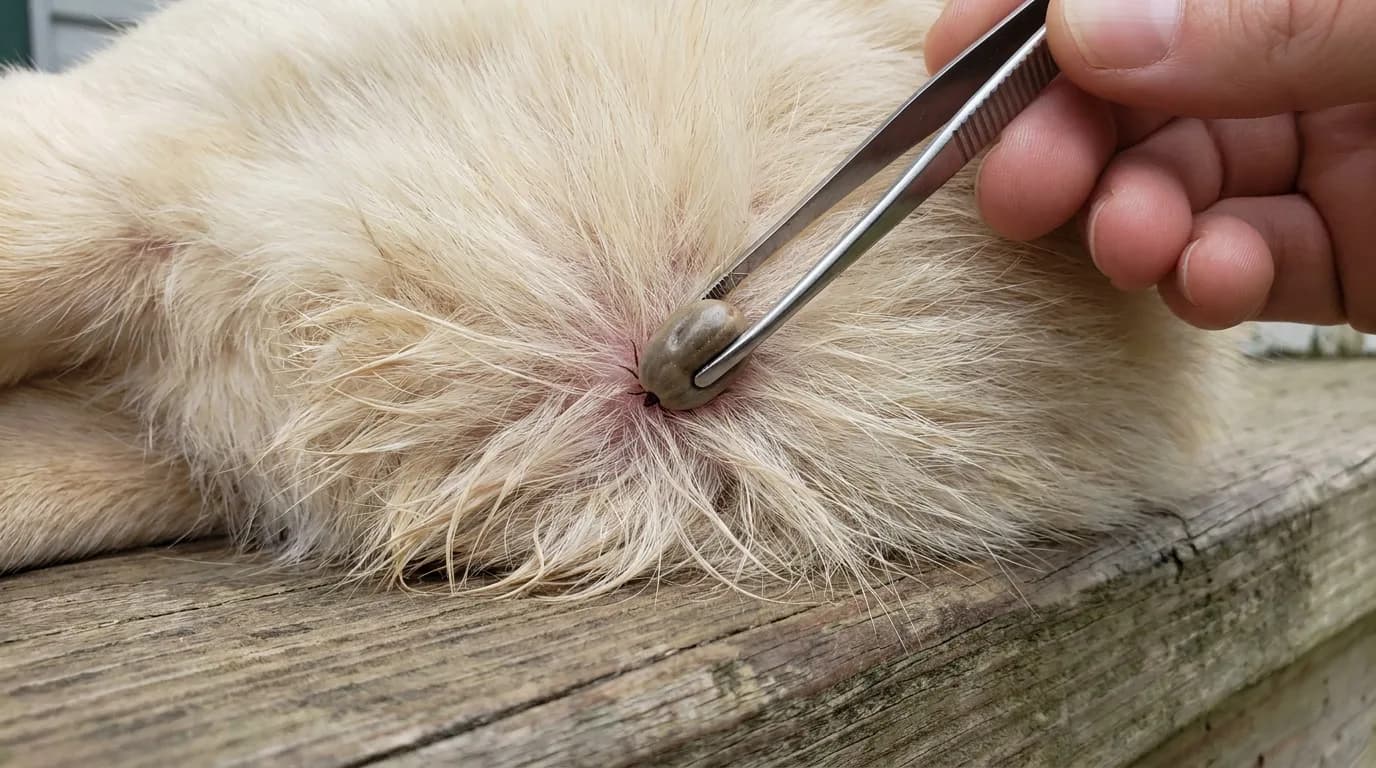
NexGard vs Frontline: Which Flea and Tick Protection Wins?
A vet-authored head-to-head of NexGard (oral chewable) and Frontline Plus (topical) flea and tick protection for dogs, comparing coverage, safety, speed of kill, age and weight limits, and price to help you choose.

BVMS, MRCVS
Petful is reader supported. As an affiliate of platforms like Amazon and Chewy, we may earn a commission when you buy through links on this page. There is no extra cost to you.
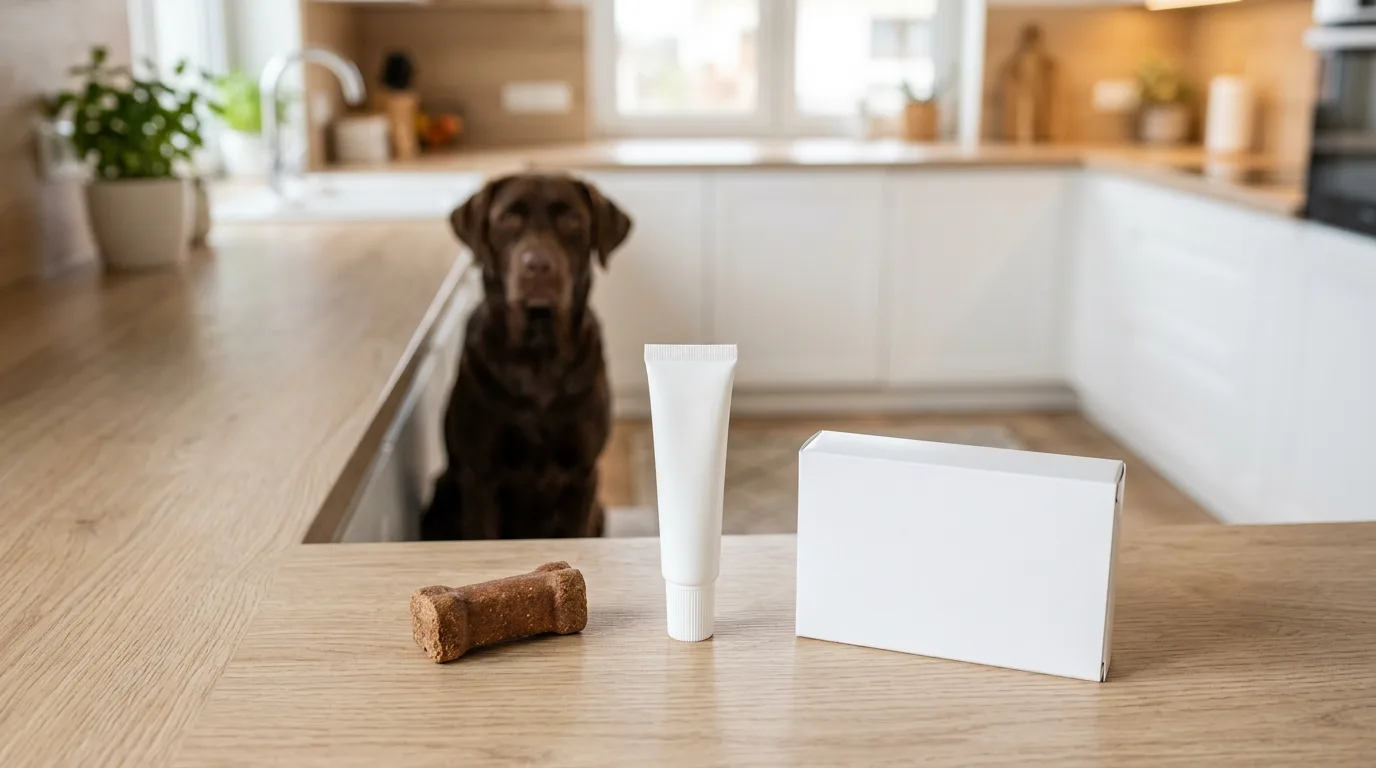
Choosing between an oral chewable and a topical spot-on is the first real decision most dog owners face at the pharmacy counter, and the NexGard vs Frontline question is the one I answer most often in the exam room. Both are trusted, widely used flea and tick products, but they are not interchangeable. NexGard is a beef-flavored chew your dog swallows once a month. Frontline Plus is a liquid you squeeze onto the skin between the shoulder blades. They kill parasites through completely different routes, cover slightly different pests, carry different safety notes, and sit at different price points. For more, see Petful’s guide to ticks on dogs.
This guide is a straight head-to-head, not a best-of list. I will walk through how each product works, exactly what it kills, how fast, the safety data every owner should read before dosing, the age and weight limits, and how the cost compares. My goal is simple: help you pick the option that fits your dog, your household, and your routine, so protection actually gets used every 30 days the way it should.
- 1NexGard is an oral, prescription-only chew (active ingredient afoxolaner) that kills adult fleas and ticks after the parasite bites
- 2Frontline Plus is a topical, over-the-counter spot-on (fipronil plus (S)-methoprene) that also kills flea eggs and larvae to break the life cycle
- 3Neither product repels pests or covers heartworm; the best choice depends on your dog's history, your household, and whether you prefer a pill or a liquid

Sign up for expert-backed reviews and safety alerts all in one place.
The quick verdict: NexGard vs Frontline at a glance
If you want the short version, here it is. Choose NexGard when you want mess-free, water-proof-by-default dosing you cannot rub off, when your dog swims or bathes often, or when you have small children who touch the dog constantly and you would rather not have a topical residue on the coat. Choose Frontline Plus when you want an over-the-counter option with no vet prescription, when you want a product that also kills flea eggs and larvae in addition to adults, or when your dog has a seizure history that makes you cautious about the oral isoxazoline class.
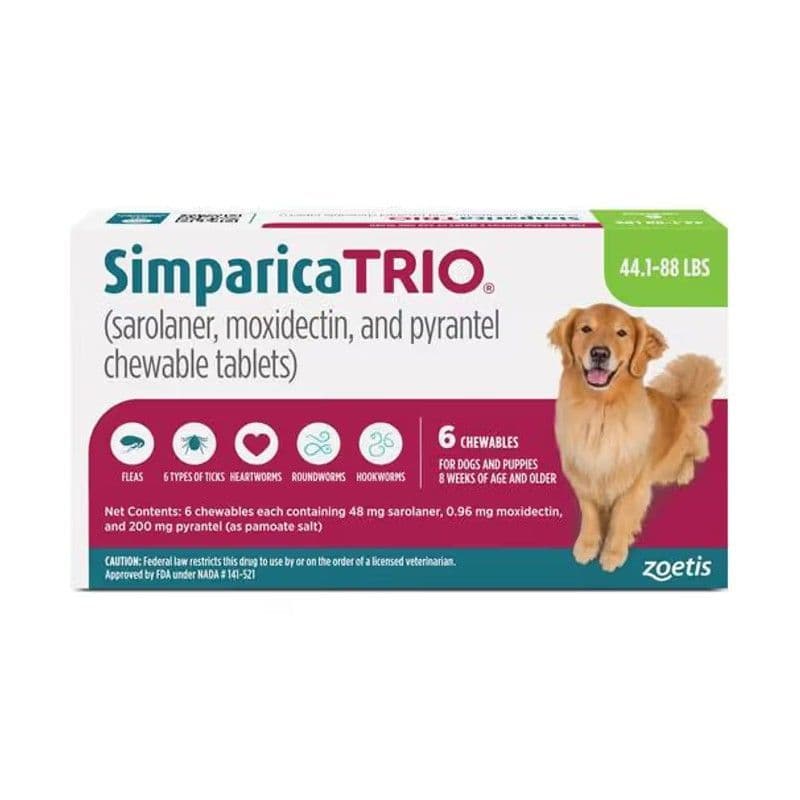
Monthly vet-prescription chew that kills fleas and ticks and prevents heartworm disease, roundworms, and hookworms in one dose. For dogs 44.1 to 88 lbs.
Petful may earn a commission when you click through to Chewy, at no extra cost to you.
Both are made by the same parent company (Boehringer Ingelheim), both are dosed monthly, and both have decades of field use behind them. The differences are in the delivery, the pest coverage, and the regulatory and safety profile. The table below lays the core specs side by side.
| Feature | NexGard | Frontline Plus |
|---|---|---|
| Type | Oral chewable (beef flavor) | Topical spot-on liquid |
| Active ingredient | Afoxolaner (isoxazoline class) | Fipronil plus (S)-methoprene |
| Prescription | Yes, vet prescription required | No, sold over the counter |
| Kills adult fleas | Yes | Yes |
| Kills flea eggs and larvae | No | Yes, via (S)-methoprene |
| Kills ticks | Yes | Yes |
| Repels pests | No, parasite must bite or contact | No, parasite must contact coat |
| Waterproof | Yes, not affected by swimming or bathing | Yes, once dry (wait ~48 hours) |
| Minimum age | 8 weeks | 8 weeks |
| Minimum weight | 4 lbs | None listed by weight, age-gated at 8 weeks |
| Dosing interval | Every 30 days | Every 30 days |
How each one works
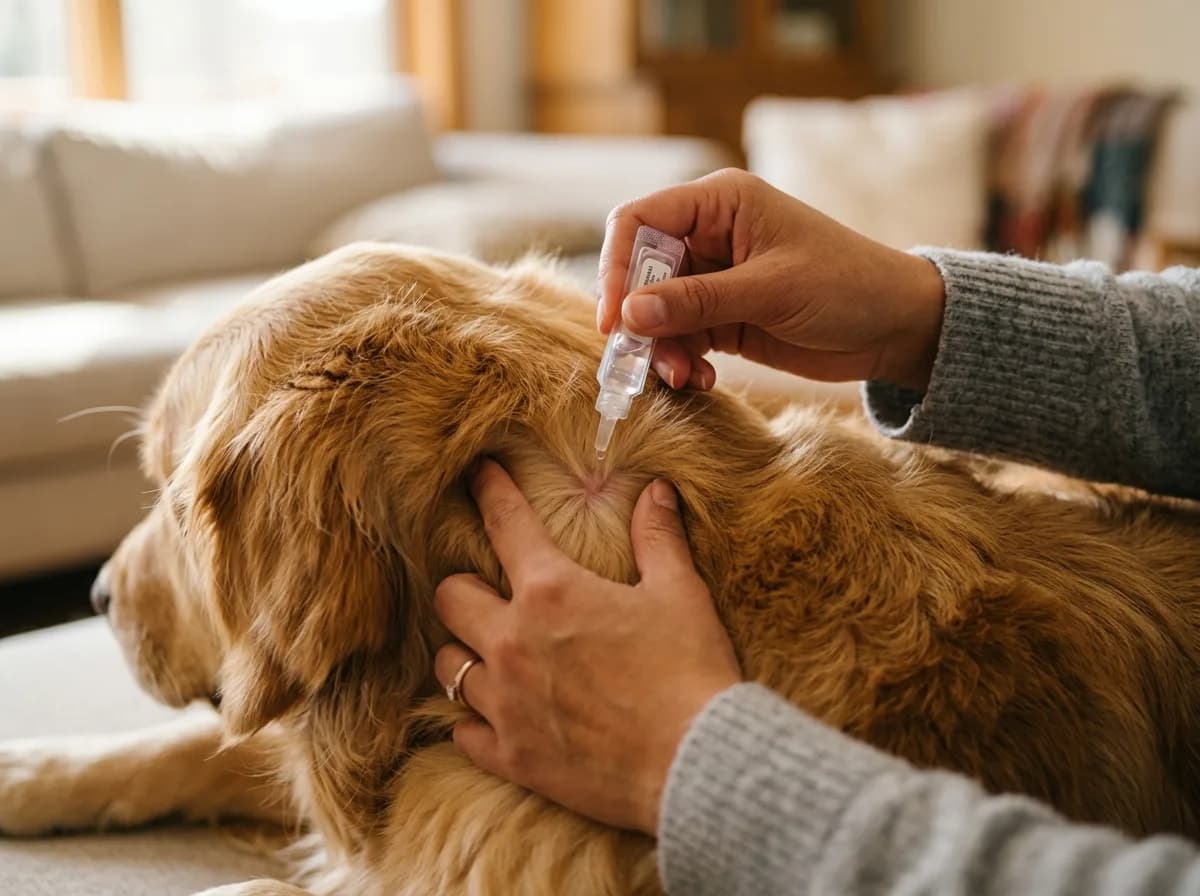
The single biggest difference between these two products is not the brand name. It is the route: one goes in, one goes on. That mechanical difference drives almost everything else, from how fast they kill to how safe they are around your kids.

 Sponsored
Need flea, tick, or parasite care for your pet?
A licensed vet at Dutch can recommend the right preventive and prescribe it when it's appropriate. Annual members get 20% off their first flea and tick order.
Use code Pets60
Plans start at $12/month · covers up to 5 pets
- Licensed vets in most states
- Rx for 150+ conditions
- 4.7 on Trustpilot
NexGard: an oral systemic
NexGard is a soft chew flavored to taste like a treat, and its active ingredient is afoxolaner, a member of the isoxazoline drug class. Once your dog swallows it, afoxolaner is absorbed into the bloodstream and distributed through the body's tissues and fluids. When a flea or tick bites your dog, it ingests the drug and dies. This is why NexGard is described as a systemic product: the protection lives inside your dog, not on the coat, so it cannot be washed off, rubbed off on furniture, or transferred to a child's hands. You can find the full label and dosing bands on the manufacturer site at nexgardfordogs.com.
The trade-off with any oral is that the parasite has to bite before it dies. NexGard does not repel fleas or ticks, so a tick can still attach for a short window before the drug kills it. In practice the kill is fast enough that disease transmission risk is low, but repelling and killing are not the same thing, and it is worth understanding that distinction.
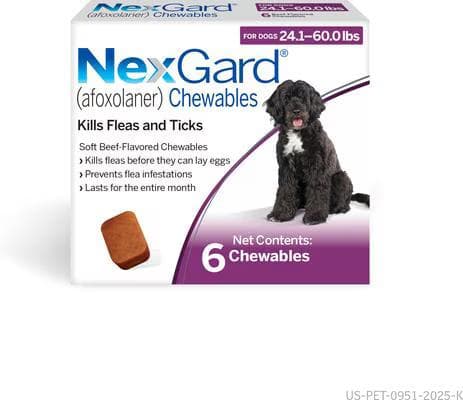
A monthly beef-flavored prescription chew (afoxolaner) that kills fleas before they lay eggs and kills ticks. A popular oral pick for dogs who do better with a chew than a topical.
Petful may earn a commission when you click through to Chewy, at no extra cost to you.
Frontline Plus: a topical that breaks the life cycle
Frontline Plus works from the outside in. It contains two ingredients that do two different jobs. Fipronil is the adulticide: it collects in the oils of the skin and hair follicles and kills adult fleas, ticks, and chewing lice on contact. The second ingredient, (S)-methoprene, is an insect growth regulator. It does not kill adult fleas; instead it stops flea eggs from hatching and larvae from developing, which is what breaks the flea life cycle in your home. Product and application details live at the manufacturer root, frontline.com.
Because it spreads across the skin surface, Frontline Plus reaches parasites without requiring a bite for the growth-regulator effect on eggs and larvae. It is water-resistant once it dries and bonds to the skin oils, though you should wait roughly 48 hours after application before bathing or letting your dog swim. If your household is fighting an active infestation, the egg-and-larvae action is a genuine advantage that the oral chew does not offer.
Coverage: exactly what each one kills
Both products handle the two pests owners care about most, adult fleas and ticks, but the edges of their coverage differ.
NexGard kills adult fleas and is labeled to kill four common North American ticks: the black-legged (deer) tick, the American dog tick, the lone star tick, and the brown dog tick. Because it kills adult fleas quickly, it interrupts egg-laying before a new generation gets started, but it does not directly kill eggs or larvae already in your carpet and bedding.
Frontline Plus covers adult fleas, flea eggs, and flea larvae (thanks to the (S)-methoprene), plus ticks and chewing lice. That broader life-stage coverage is the reason many owners reach for it during a full-blown home infestation, when the problem is not just the adults you see but the thousands of eggs you do not.
- Both NexGard and Frontline Plus are flea and tick products only. Neither prevents heartworm disease, which is spread by mosquitoes and requires a separate preventive. If you want flea, tick, and heartworm coverage in one dose, ask your veterinarian about combination products such as NexGard Plus or Simparica Trio, which add heartworm and intestinal worm protection.
One point that trips people up: neither product repels. Some owners assume a flea and tick product creates a force field that keeps pests off the dog. These do not. A pest still has to land on or bite your dog to be killed. If your priority is repelling ticks before they attach (for example, in heavy Lyme country), that is a specific conversation to have with your vet about repellent options, because it changes the calculus.
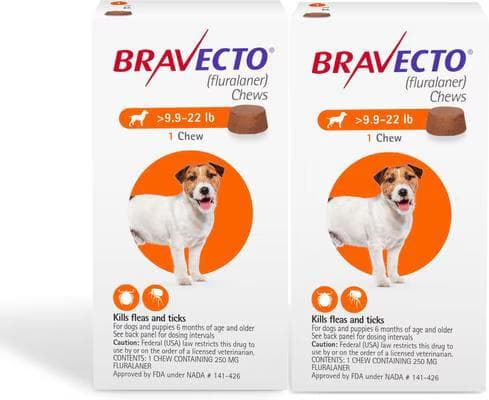
A prescription fluralaner chew that protects against fleas and most ticks for up to 12 weeks per dose, so one chew covers a full season quarter. A low-frequency option for owners who forget monthly doses.
Petful may earn a commission when you click through to Chewy, at no extra cost to you.
Speed of kill: how fast is protection

Speed matters most for ticks, because faster kill means less time for a tick to transmit disease. Both products act within hours to days rather than instantly, and both rely on contact or a bite.
NexGard begins killing fleas within hours of the dog eating the chew and continues to kill fleas and ticks for the full 30-day window. Frontline Plus kills fleas within a day of application and works on ticks over a similar short window as the product spreads through the coat oils. In the real world, the practical difference in speed between the two is modest for most dogs. The bigger driver of results is consistency: a product given late, skipped, or washed off early will always underperform one used exactly on schedule.
Safety and side effects: the part to read carefully
This is the section I never let an owner skip, because it is the real reason NexGard vs Frontline is not just a coin flip.
NexGard belongs to the isoxazoline class of drugs. In 2018 the U.S. Food and Drug Administration issued an alert noting that isoxazoline products (a group that includes afoxolaner, plus the active ingredients in Bravecto, Simparica, and Credelio) have been associated with neurologic adverse reactions in some dogs and cats, including muscle tremors, loss of coordination (ataxia), and seizures. The FDA still considers these products safe and effective for the majority of animals, and most dogs take them with no problem at all, but the agency asked manufacturers to update labeling so owners and vets can make an informed choice. You can read the FDA's consumer information at fda.gov. If your dog has a history of seizures or a known neurologic condition, flag it to your veterinarian before starting NexGard.
Frontline Plus, as a topical pesticide, is regulated by the U.S. Environmental Protection Agency rather than the FDA. Its most common side effect is temporary skin irritation, redness, or hair loss at the application site. Because it sits on the skin, the main handling caution is to apply it where the dog cannot lick it and to keep treated dogs from close contact with small children or other pets until the product dries. It does not carry the isoxazoline neurologic class warning.
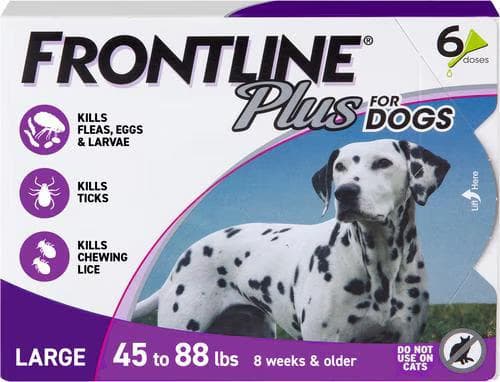
A monthly topical spot-on for large dogs 45 to 88 lbs that kills fleas, ticks, and chewing lice. A waterproof pick for dogs who do better with a topical than an oral chew.
Petful may earn a commission when you click through to Chewy, at no extra cost to you.
- Do not layer two flea and tick products at once without veterinary guidance, and tell your veterinarian if your dog has ever had a seizure, a neurologic diagnosis, or a prior reaction to a parasite preventive. Overlapping products or a missed medical history is how avoidable reactions happen. Your vet can match the safest option to your specific dog.
For a broader look at controlling an active flea problem in the home alongside these preventives, see our guide on how to get rid of fleas on dogs.
Age, weight, and puppy limits

Both products share the same minimum age, which makes the puppy comparison simple on that front. Each is labeled for puppies 8 weeks of age and older.
Where they differ is weight. NexGard also carries a minimum weight of 4 pounds, and it is dosed in weight bands, so a chihuahua and a mastiff get different-strength chews. You need an accurate current weight to buy the correct dose. Frontline Plus for dogs is age-gated at 8 weeks and is likewise sold in weight-range applicators (for example, up to 22 lbs, 23-44 lbs, 45-88 lbs, and 89-132 lbs), so again you match the box to your dog's weight. For a growing puppy, weigh before every purchase because the right band changes fast during the first year.
Administration: pill versus spot-on in real life
The best flea and tick product is the one you will actually give on time, so how each fits your routine matters as much as the pharmacology.
NexGard is a chew, and because it is beef-flavored most dogs eat it like a treat. That makes dosing quick and clean: no wet coat, no residue, nothing your kids can touch. The catch is the small number of dogs who are picky or who have food allergies to the flavoring, and the need to confirm the dog actually swallowed it rather than spitting it out later.
Frontline Plus is a squeeze-on liquid. You part the fur between the shoulder blades, empty the applicator directly onto the skin (not the fur), and keep the dog from licking the spot until it dries. It is simple once you have done it a few times, but there is a wet patch for a few hours, you should skip baths and swimming for about 48 hours around application, and you want to keep small children from petting that spot until it is dry. Households with multiple pets that groom each other need to separate animals briefly after dosing.
- Both products only work if they are given every 30 days without gaps. A skipped or late dose is the single most common reason owners think a product stopped working. Put a recurring reminder on your phone on the same date each month, and buy a full season at once so you never run out mid-summer when flea and tick pressure peaks.
 Sponsored
Vet care that's always there
Unlimited video calls and messaging with licensed vets for less than a typical vet visit. One membership covers up to five pets.
Use code Pets60
Plans start at $12/month · covers up to 5 pets
- Licensed vets in most states
- Rx for 150+ conditions
- 4.7 on Trustpilot
Price and prescription: the practical differences

Two non-medical factors often decide this for owners: cost and whether you need a vet visit.
Frontline Plus is available over the counter, so you can buy it without a prescription, and on a per-dose basis it is generally the less expensive of the two. That accessibility is a real advantage if you do not have a recent vet exam on file or you want to grab protection quickly.
NexGard requires a veterinary prescription in the United States, which means a current relationship with your vet and usually a recent exam. It typically costs more per dose than a topical. For many owners the prescription step is a feature rather than a bug, because it loops the vet into the decision, but if convenience and price are your top priorities, the over-the-counter topical has the edge. Whichever you choose, buying a 6-dose or 12-dose pack almost always lowers the per-month cost versus single applicators.
Which should you choose?
There is no universal winner in NexGard vs Frontline, and any honest vet will tell you the same. Match the product to the dog and the household.
Lean toward NexGard if your dog swims or is bathed frequently, if you have young children who are always touching the dog and you want zero topical residue, if you struggle to keep a spot-on product from being licked or rubbed off, or if you simply prefer the reliability of a chew you know went in. Just clear it first with your vet if your dog has any seizure or neurologic history.
Lean toward Frontline Plus if you want an over-the-counter option without a vet visit, if you are fighting an active home infestation and value the egg-and-larvae kill that breaks the flea life cycle, if cost per dose is a deciding factor, or if you would rather avoid the oral isoxazoline class for a seizure-prone dog. Either way, use it every 30 days without gaps, and revisit the choice with your veterinarian at your dog's annual exam. For more flea, tick, and general wellness guidance, browse the Petful pet health hub.
Frequently asked questions
NexGard vs Frontline for Cats (Which One Is Safe?)
For cats, neither product in its standard dog form is the right pick, and reaching for the wrong one can be dangerous. NexGard is labeled dogs-only in the United States; there is no oral NexGard chew for cats. If you want the same brand family for a feline, the product is NexGard Combo, a topical that pairs esafoxolaner with two dewormers and is applied to the skin rather than swallowed. Frontline does make a cat-specific spot-on, Frontline Plus for Cats, formulated and dosed for felines with the same fipronil plus (S)-methoprene pairing used in the dog version.
The rule that matters most: never put a dog flea and tick product on a cat. Dog spot-ons are dosed for far larger body weights, and some dog products in other brands (notably permethrin-based ones such as K9 Advantix) are outright toxic to cats, whose livers cannot process those compounds the way a dog's can. Even when an active ingredient is shared, the concentration and applicator are built for a dog, so improvising a smaller dose is not safe.
- If you own both a dog and a cat, use a dog product on the dog and a cat product on the cat, and keep the treated dog away from the cat until any topical fully dries. Cats groom constantly and can ingest residue off a housemate.
NexGard Plus vs Frontline Plus: The Combination Products
NexGard Plus and Frontline Plus solve different problems, so choosing between them is really a question of how much protection you need in one dose. NexGard Plus is an oral chew that keeps afoxolaner for fleas and ticks and adds two more actives: moxidectin to prevent heartworm disease, and pyrantel to treat and control intestinal roundworms and hookworms. It folds three categories of coverage (flea and tick, heartworm, and intestinal worms) into a single monthly beef-flavored chew that still requires a prescription.
Frontline Plus stays in its lane. It remains a topical fipronil plus (S)-methoprene spot-on that kills adult fleas and ticks and, through the (S)-methoprene growth regulator, flea eggs and larvae. It does not touch heartworm or intestinal worms, and it is still sold over the counter.
When each combo makes sense
- Choose NexGard Plus when you want heartworm and intestinal-worm coverage bundled with flea and tick protection in one oral dose, and you already see your vet for the required prescription.
- Choose Frontline Plus when your dog gets heartworm prevention another way, you are fighting an active flea infestation and value the egg-and-larvae kill, or you want an over-the-counter product.
Do not run both at once without asking your vet, since NexGard Plus already includes flea and tick coverage and stacking a second product is unnecessary.
Can You Switch Between NexGard and Frontline?
Yes, you can switch between NexGard and Frontline Plus, and there is no washout or waiting period required to move from one to the other. Because the two work through completely different routes (one a systemic isoxazoline, one a topical pesticide) and neither accumulates to a risky level, the standard approach is simply to start the new product when the old one's monthly protection runs out.
How to time the transition
- Note the date of the last dose. A monthly product is designed to protect for 30 days.
- Give the first dose of the new product on the day the next dose would have been due, so coverage never lapses.
- Moving off a topical onto NexGard, you do not need to bathe the dog first or wait for the spot-on to wear off. Moving onto Frontline Plus, apply it to clean, dry skin.
Owners switch for practical reasons: a dog that swims so often it washes out patience with topicals, a household that prefers the over-the-counter convenience of Frontline, a seizure history that makes avoiding the oral isoxazoline class worthwhile, or a simple price change. Whatever the trigger, hold the same monthly rhythm so parasite pressure never gets a foothold. If your dog has a medical condition or takes other medication, confirm the switch with your veterinarian first.
NexGard vs Frontline: Cost Per Dose and Where to Buy
On a per-dose basis, Frontline Plus is usually the cheaper of the two, typically landing in the mid-teens per monthly application, while NexGard generally runs higher, often in the low-to-mid twenties per chew, because it is a prescription oral. Exact prices shift with your dog's weight band, the retailer, and current promotions, so treat these as ballpark ranges, not fixed numbers. Whether you search it as NexGard vs Frontline or Frontline vs NexGard, the cost picture is the same.
| Factor | NexGard | Frontline Plus |
|---|---|---|
| Typical per-dose cost | Low-to-mid $20s | Mid-teens |
| Prescription needed | Yes, vet Rx | No, over the counter |
| Best-value pack | 12-dose (one year) | 12-dose (one year) |
| Where to buy | Vet or Rx-verifying online pharmacy | Retail, big-box, online marketplaces |
The pack-size math
- Both products come in 3-, 6-, and 12-dose packs, and the per-dose price almost always drops as the pack gets bigger.
- A 12-dose pack is a full year of coverage in one purchase and typically beats buying two 6-packs, which beats single or 3-dose boxes.
- Buying a full season at once prevents the mid-summer gap that hits when owners run out during peak flea and tick pressure.
For the purchase path itself, Frontline Plus is over the counter, so you can grab it without a vet visit at pet retailers, big-box stores, and online marketplaces. NexGard requires a veterinary prescription in the US, so you buy it from your vet directly or from an online pet pharmacy that verifies the prescription with your clinic. Whichever you pick, a lower price per dose only counts as savings if you actually give the product every 30 days.
For most dogs, Frontline Plus is still effective. True chemical resistance to fipronil has not been confirmed by controlled studies, so a product that seems to stop working almost always traces to something else: a heavy environmental infestation where new fleas keep emerging from carpets and bedding, not treating every pet in the home, bathing or swimming too soon after application, applying it to fur instead of skin, or expecting it to repel rather than kill. Treat the home and all pets on schedule, and effectiveness usually returns.
The main reason to be cautious with NexGard is that it belongs to the isoxazoline drug class, which the FDA has linked to rare neurologic reactions in some dogs, including muscle tremors, loss of coordination, and seizures. Most dogs tolerate it well, but dogs with a history of seizures or a neurologic condition should only take it after a specific conversation with the veterinarian. It is also prescription-only and does not kill flea eggs or larvae, so it is not ideal as a standalone tool during a heavy home infestation.
There is no single answer, because the best choice is individualized. That said, many veterinarians favor prescription oral isoxazolines (such as NexGard, Simparica, or Bravecto) for their reliability and because they cannot be washed off, and they often recommend all-in-one combination products (like Simparica Trio or NexGard Plus) when a dog also needs heartworm and intestinal worm coverage. The right pick depends on your dog's health history, your region's parasite pressure, and whether you prefer an oral or a topical.
NexGard is not classified as a liver-toxic drug, and hepatic damage is not among its labeled primary concerns. Its active ingredient, afoxolaner, is processed by the body and most dogs tolerate it without liver issues; the documented safety flag for the isoxazoline class is neurologic, not hepatic. If your dog has known liver disease, share that with your veterinarian before starting any new medication so they can weigh it against your dog's full health picture.
BVMS, MRCVS
Dr. Pippa Elliott, BVMS, MRCVS, is a veterinarian with nearly 30 years of experience in companion animal practice. Dr. Elliott earned her Bachelor of Veterinary Medicine and Surgery from the University of Glasgow. She was also designated a Member of the Royal College of Veterinary Surgeons. Married with 2 grown-up kids, Dr. Elliott has a naughty Puggle named Poggle, 3 cats and a bearded dragon.
Sign up for expert-backed reviews and safety alerts all in one place.