Pet Microchipping: How It Works and Why It’s Essential for Your Pet's Safety
Pet microchipping gives your dog or cat permanent identification that dramatically improves their odds of getting home. Learn how chips work, whether they are safe, and the registration steps most owners miss.

Veterinarian
Petful is reader supported. As an affiliate of platforms like Amazon and Chewy, we may earn a commission when you buy through links on this page. There is no extra cost to you.
Pet microchipping is the single most reliable way to make sure a lost dog or cat can be traced back to you, because collars slip off and tags wear down, but a microchip stays with your pet for life. In this guide, we explain exactly what a microchip is, how the scan-to-registry chain reunites lost pets with their families, whether the procedure is safe, and the registration upkeep steps most owners skip.
- 1A pet microchip is permanent identification, not a GPS tracker: it stores only a unique ID number that a scanner reads.
- 2The chip only works if registered: an unregistered chip returns a number that leads nowhere, so registration and updates matter as much as the implant.
- 3Update your registry record every time you move, change phone numbers, or rehome a pet, and verify it once a year.

Sign up for expert-backed reviews and safety alerts all in one place.
What Is a Pet Microchip?
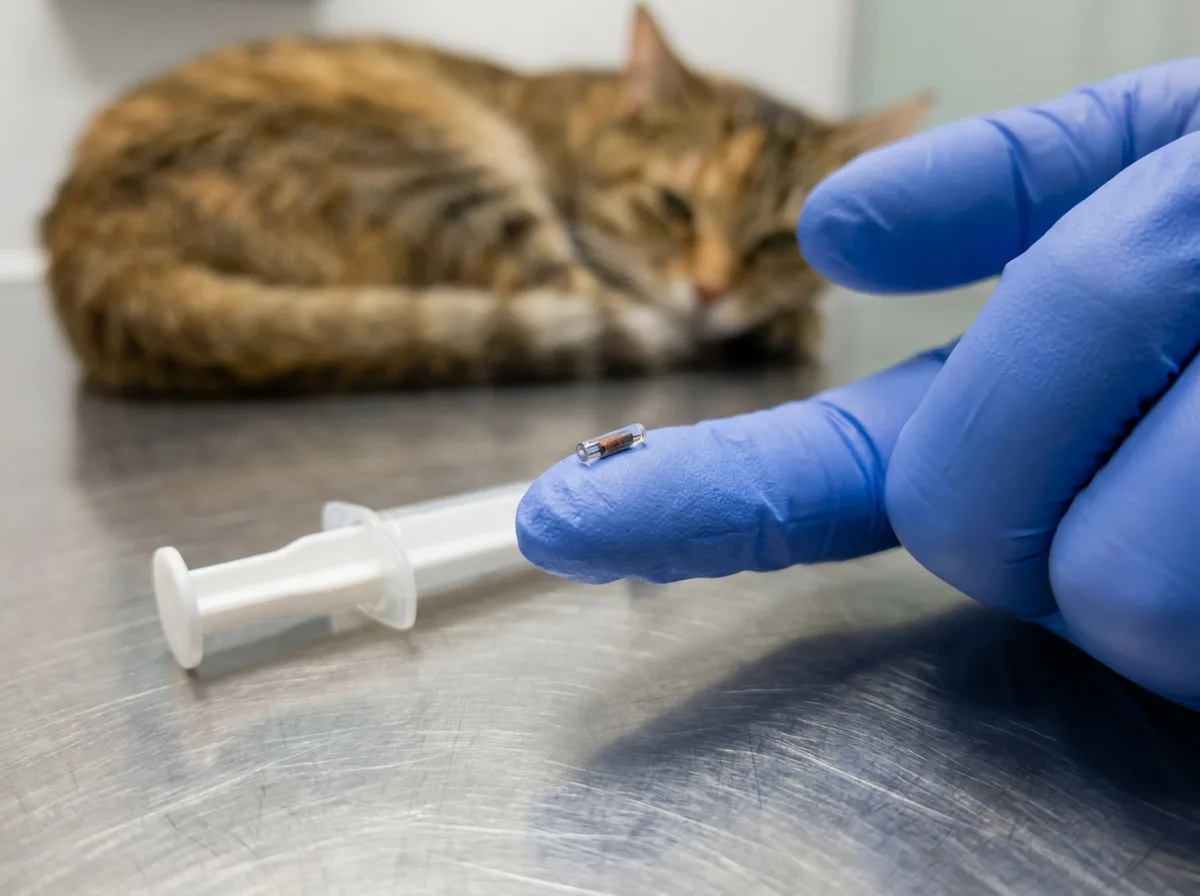
A pet microchip is a rice-sized transponder implanted under your pet's skin, usually between the shoulder blades. It has no battery and no moving parts. When a shelter or veterinarian passes a scanner over it, the chip transmits a unique identification number, and the registry tied to that number lists your contact information so you can be called. It is not a GPS device and cannot show your pet's location.
Think of the chip as a permanent serial number for your pet. The number itself contains no personal data. Everything that gets your pet home, including your name, phone number, and address, lives in the registry database you maintain, which is why the registration step is where reunifications succeed or fail.
How Does a Pet Microchip Work?
The technology behind pet microchipping is radio-frequency identification (RFID). The chip is a passive RFID transponder: it sits dormant until a scanner's radio field briefly energizes it, at which point it transmits its ID number to the scanner's display. Because there is no battery, a properly implanted chip typically functions for your pet's entire life.
Petful may earn a commission when you click through to Chewy, at no extra cost to you.
Modern chips sold in the United States generally follow the ISO 11784/11785 standard and operate at 134.2 kHz, the frequency recognized internationally and read by the universal scanners shelters and veterinary hospitals use. The American Veterinary Medical Association (AVMA) describes ISO-standard chips as the best choice for pets that may travel, because scanners abroad read that frequency by default (see the AVMA's pet owner resources at https://www.avma.org/resources-tools/pet-owners/petcare).
Here is the full reunification chain, start to finish:
- Implantation: A veterinarian injects the chip under the loose skin between the shoulder blades using a pre-loaded applicator. It takes seconds and feels like a routine vaccination.
- Registration: You (or the clinic) enroll the chip number with a registry and attach your contact details to it.
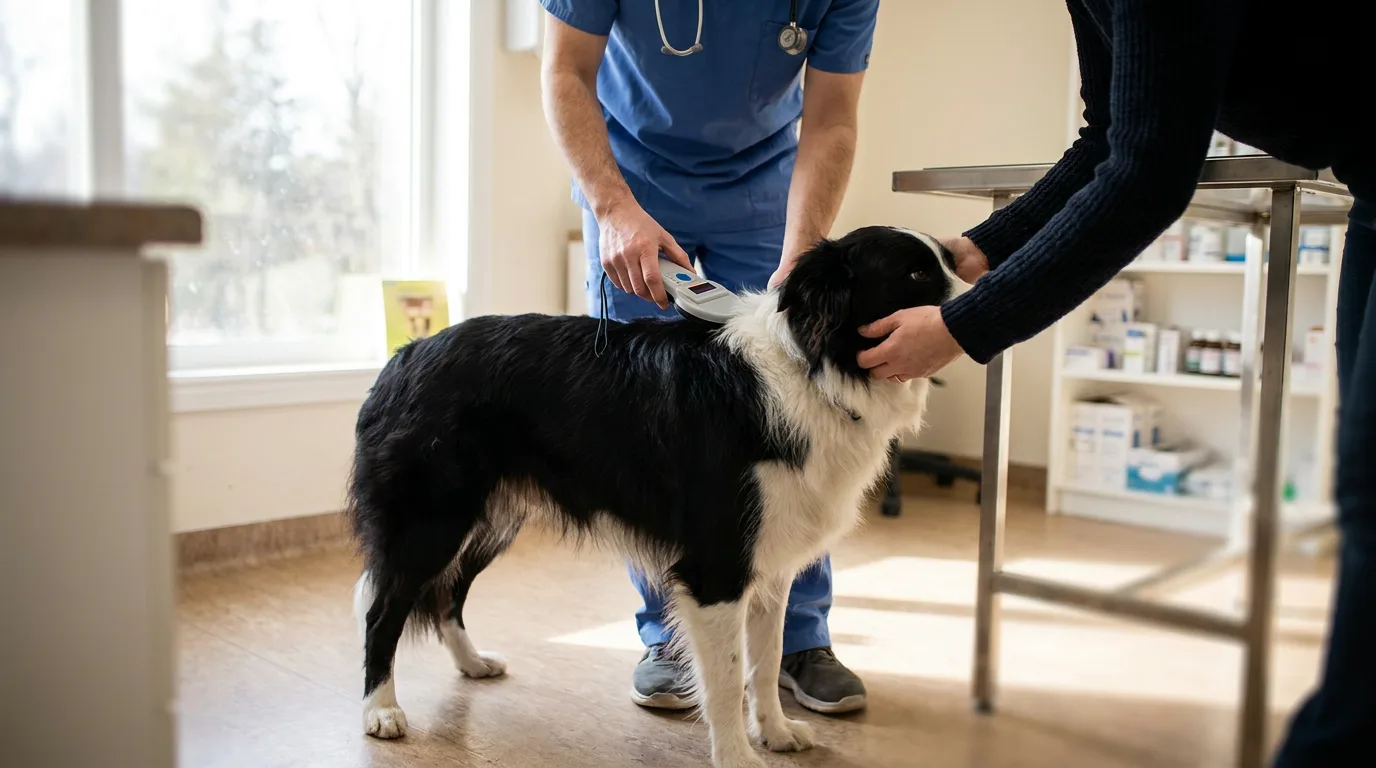
- Scanning: When a lost pet arrives at a shelter or clinic, staff scan the whole body with a universal scanner and read the 15-digit number.
- Lookup: Staff enter that number into the AAHA Universal Pet Microchip Lookup Tool, which identifies which registry holds the record.
- The call home: The registry contacts you, or releases your listed contact details to the finder, and you pick up your pet.
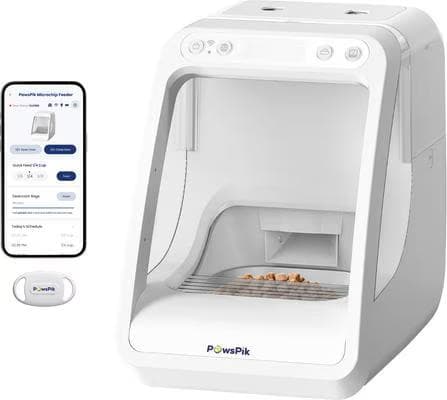
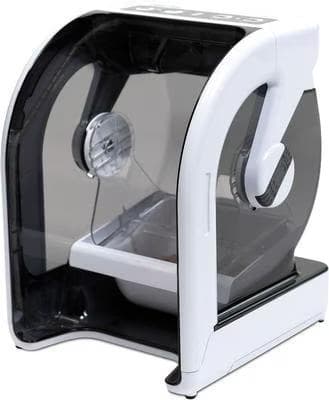
Every link in that chain depends on the one before it. A chip that was implanted but never registered stops the chain at step four, which is why the registration section below deserves as much attention as the procedure itself. The implanted chip also has everyday uses at home: microchip-activated feeders such as the SureFeed microchip feeder and the PawsPik automatic microchip feeder read it to open only for the registered pet, useful in multi-pet households.
Why Microchip Your Pet? The Evidence
The case for microchipping is not theoretical. A peer-reviewed Ohio State University study of more than 7,700 stray animals entering 53 shelters found that microchipped dogs were returned to their owners more than twice as often as strays overall, and microchipped cats went home at roughly twenty times the rate of unchipped strays. Those numbers come from shelter intake records, not surveys, and they remain the most-cited return-to-owner data in shelter medicine.

Petful may earn a commission when you click through to Chewy, at no extra cost to you.
The same study surfaced the failure mode this article keeps returning to. When shelters could not reach an owner despite finding a chip, the most common reasons were incorrect or disconnected phone numbers in the registry, or a chip that had never been registered at all. The hardware almost never fails. The paperwork does.
Microchips also settle ownership disputes, serve as the required identification for international pet travel under most countries' import rules, and satisfy the local ordinances a growing number of U.S. cities and counties have adopted for dogs and cats. If you adopted from a shelter, your pet is likely already chipped: verify it rather than assume the record points to you.
When Should Your Pet Be Microchipped?
Most puppies and kittens can be safely microchipped at about 8 weeks of age, and many veterinarians pair the implant with a routine early visit, a spay or neuter appointment, or the final round of puppy or kitten vaccinations so it requires no extra trip. Breeders and shelters often chip even earlier, before animals go to their new homes. For adult dogs and cats, there is no upper age limit: any healthy pet can be chipped at a regular wellness visit. The best age, practically speaking, is the earliest one your veterinarian offers, because a pet cannot slip out an open gate already protected by a chip that has not been implanted yet.
Addressing Concerns About Pet Microchipping
Owners weighing the pros and cons of chipping a dog or cat usually raise the same handful of worries. The honest answer is that there is a downside list, but it is short, and every item on it is rare or manageable.
- Does it hurt? The needle is larger than a vaccine needle, so your pet may flinch, but the injection takes seconds and needs no anesthesia. Pets already under anesthesia for a spay or neuter feel nothing.
- Can a microchip cause cancer? Tumors at implant sites have been documented in lab mice and rats, but among the millions of chipped dogs and cats, confirmed chip-associated tumors are vanishingly rare, a handful of case reports worldwide. The AVMA's assessment is that the reunification benefit far outweighs this remote risk.
- Can a microchip kill a dog? No documented pattern supports this fear. The most serious implantation complications on record, all rare, involve improper injection technique, which is why the implant belongs in a veterinary setting.
- Can the chip move? Occasionally a chip migrates from the shoulder blades toward a shoulder or the chest. Migration does not harm the pet; it just means scanners should sweep the whole body, which trained shelter staff already do.
- Is my privacy at risk? The chip broadcasts nothing on its own and stores only its ID number. Your personal details sit in the registry, disclosed under the registry's privacy policy, not on the chip.
For most families, the risk calculation is lopsided. A one-time injection with a minuscule complication rate stands against the well-documented odds that an unidentified pet never comes home.
Petful may earn a commission when you click through to Chewy, at no extra cost to you.
Registering and Updating Your Pet's Microchip
This is the step where pet microchipping actually succeeds or fails, and it is the one no ranking veterinary page walks you through completely. Implantation gives your pet a number. Registration gives that number a phone to ring. Studies of shelter reunifications show that unregistered chips and stale contact details, not scanner misses, are the main reasons a chipped pet stays unclaimed.

Registration is straightforward: you create an account with the registry tied to your chip's brand (or an ISO-participating registry of your choice), enter the 15-digit chip number, and attach your name, phone numbers, address, and an emergency backup contact. Major registries include HomeAgain, PetLink, 24Petwatch, and AKC Reunite; basic enrollment is free or low-cost with many of them, and free registration options exist for nearly every chip brand. Whichever you choose, confirm the registry participates in the AAHA Universal Pet Microchip Lookup Tool, because that is the search shelters actually run.
Treat the chip as a living record with this lifecycle checklist:
- Implant: Have your veterinarian implant an ISO-standard chip and give you the 15-digit number in writing.
- Register the same week: Enroll the number with a universal-lookup-participating registry before the paperwork gets buried in a drawer.
- Verify the record: Run your chip number through the AAHA lookup tool once after registering to confirm it resolves to the right registry.
- Update on every change: New phone number, new address, new emergency contact: log in and update the record the same week the change happens.
- Transfer on rehoming: When a pet is adopted, sold, or inherited, formally transfer the chip registration to the new owner; a record pointing at a previous owner is nearly as useless as no record.
- Check the chip annually: Ask your veterinarian to scan the chip at each yearly exam to confirm it still reads, and use national Check the Chip Day (August 15) as your reminder to log in and verify every detail.
If you ever find a pet, the same tools work in reverse. Any veterinary clinic, animal shelter, or many pet supply stores will scan a found animal free of charge, and the universal pet microchip lookup turns the number into the holding registry within seconds.

Petful may earn a commission when you click through to Chewy, at no extra cost to you.
- A microchip registry stores your contact details, but it cannot hold vaccine records, medications, or proof of ownership. MyPetID digital pet ID keeps those records current in one place, so the person who finds your pet, or the clinic that treats them, has everything they need alongside the chip number.
You can set up a free digital pet ID profile at MyPetID and keep it updated alongside your chip registration, so both records stay current every time your details change.
What Pet Microchips Don't Do
Can you track a pet by its microchip? No. A microchip is not a GPS tracking system, and this is the most common misunderstanding in all of pet microchipping. The chip has no battery and no transmitter of its own, so it cannot broadcast a location, pair with an app, or tell you where your dog wandered. It only responds when a scanner is inches away, which means someone must physically find your pet and take it somewhere with a scanner before the chip does its job. Real-time location requires a separate battery-powered GPS or Bluetooth collar device worn alongside the chip.
The two technologies solve different problems, and the strongest lost-pet plan uses both:
- Microchip: Permanent, can never fall off, works at any shelter or clinic, proves ownership. Passive until scanned.
- GPS or Bluetooth tracker: Shows live location on your phone, but rides on a removable collar, needs charging, and depends on signal coverage.
- ID tag on the collar: Lets a neighbor call you instantly, no scanner required, but is the easiest of the three to lose; a GoTags personalized collar with your phone number embroidered on the band removes the dangling tag that most often falls off.
We compare collar-tracker options in detail in our guide to AirTags and dog collars, and our roundup of simple ways to prevent your dog from getting lost puts the chip in context as the permanent-ID layer of the plan. If you are on the other side of the problem, our walkthrough of what to do if you find a lost dog covers the scanning and lookup steps from the finder's seat. For more, see Petful’s guide to our hands-on SpotOn GPS collar review.
How Much Does Pet Microchipping Cost?
Microchipping is one of the least expensive procedures in veterinary medicine. Most owners pay a modest one-time fee at a regular clinic visit that typically covers the chip and the implantation together, and shelters commonly include a chip in the adoption fee. Beyond that, the variables are the registration (free with several registries, a one-time or annual fee with others) and optional premium recovery services. Low-cost vaccine clinics, municipal shelter events, and retail vet clinics inside pet stores all offer chipping, and free microchipping events run in many cities every year. For current price ranges, where to find free and low-cost clinics near you, and what the registration tiers actually buy, see our full guide to how much it costs to microchip a dog, which owns every cost question this article touches.
Pet Microchipping FAQs
Yes, but only through surgical removal, and it is rarely recommended. Unlike implantation, removal requires anesthesia and an incision to locate and extract the tiny capsule, which may have migrated from the original site. Veterinarians reserve it for the unusual cases where a chip is confirmed to be causing a local problem. For a healthy pet, removing the chip trades a lifelong safety net for an unnecessary surgery.
The best chip is an ISO-compliant chip (134.2 kHz) whose registry participates in the universal lookup run by AAHA. Brand matters far less than those two properties, because any universal scanner reads any ISO chip and the lookup tool finds any participating registry. HomeAgain, PetLink, 24Petwatch, and AKC Reunite are all established choices; compare their registration fees and recovery services, then pick one and keep the record current. An accurately maintained record with a modest registry beats a premium plan with a stale phone number.
Final Thoughts
Pet microchipping is a few seconds of mild discomfort in exchange for a lifetime of permanent identification, and the evidence says it dramatically raises the odds a lost pet comes home. But the chip is only half the system. Register it the week it goes in, verify it through the universal lookup, and update the record every time your life changes. A current registration is what turns that rice-sized transponder into a ticket home.
Veterinarian
Over the past 10 years, the Petful® veterinary team of writers has included a number of experts, such as veterinarians Dr. Pippa Elliott, BVMS, MRCVS; Dr. Debora Lichtenberg, VMD; Dr. Phil Zeltzman, DVM, DACVS, CVJJ; and Dr. Judy Morgan, DVM, CVA, CVCP, CVFT; among others. Providing accurate, trustworthy information is our utmost concern, so all of our pet health content is regularly reviewed, updated and edited by veterinary professionals. Learn more about Petful.
Sign up for expert-backed reviews and safety alerts all in one place.