Is The Basepaws Dog DNA Test Worth It? Detailed Review for Pet Parents
The Basepaws Dog DNA Test promises to reveal insights about your dog’s breed background and potential health markers. In this review, we explore how the test works, what information you receive, and whether it’s a useful tool for dog owners curious about their dog’s genetics.

Petful is reader supported. As an affiliate of platforms like Amazon and Chewy, we may earn a commission when you buy through links on this page. There is no extra cost to you.
My rescue dog Tux is so ridiculously cute that when we go for walks, people often stop to pet him and ask, “What kind of dog is he?” So my husband Bryan and I decided to try the Basepaws Breed + Health Dog DNA Test to figure out Tux’s breed composition, and to find out if he is genetically disposed toward specific health issues.
Read on to find out what the Basepaws dog DNA test does, how we tested it, Tux’s test results, pros and cons, how to use the results in your pet’s wellness plan and our overall verdict.
Petful may earn a commission if you click on our links and make a purchase. This comes at no extra cost to you and helps us continue providing trusted pet product reviews.

Sign up for expert-backed reviews and safety alerts all in one place.
What Is the Basepaws Dog DNA Kit?
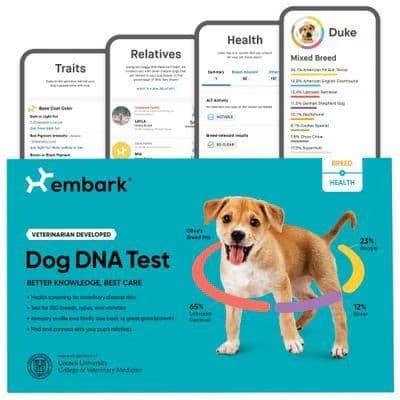
The Basepaws Dog DNA test uses an advanced technology called Next-Generation Sequencing (NGS) to analyze a dog’s saliva sample for over 330 dog breeds to determine their genetic heritage. It also tests for over 280 health markers so that pet parents can learn if their dog is genetically predisposed to a disease or other health issue.
Key features include an at-home cheek swab to collect the sample, free shipping in the U.S. and a 4-6 week turnaround for results.
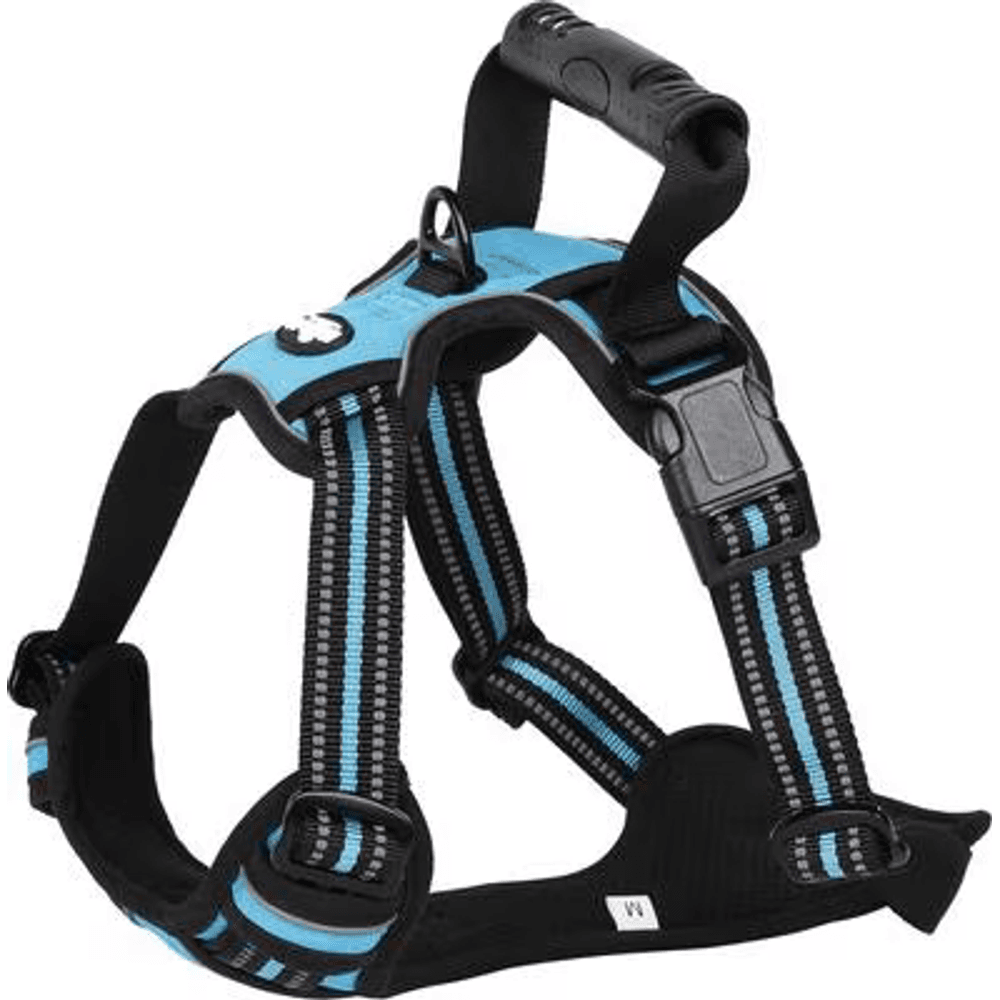
A padded, reflective no-pull harness that spreads leash pressure across the chest instead of the throat, the switch most vets recommend for a dog with a cough, a collapsing trachea, or any airway irritation so the leash never presses on
Petful may earn a commission when you click through to Chewy, at no extra cost to you.
How We Tested It
When Bryan and I adopted Tux over two years ago from the nonprofit Humane Colorado, the shelter’s best guess of his breed was “shih tzu mix.” (Animal shelters don’t have the money or time required for DNA tests; the hope is that pets will get adopted sooner than 4-6 weeks.) He’s an 8-lb. black dog with a white patch on his chest that looks like he’s wearing a tuxedo, so we named him Tux.
At 5 years old, he was already missing many teeth, so the tip of his tongue sticks out. The shelter also let us know he had a luxating patella that might require surgery in the future. But it hasn’t bothered him in two years. Instead, he leaps up and down stairs and when we get home, he gets so excited that he grabs a toy and runs around in happy circles. We adore the little guy.
Now that he’s 7 years old, Tux has occasionally coughed, which concerns us about potential heart problems. Our previous little dog, a poodle mix named Peach, suffered congestive heart failure, so we want to be proactive about getting ahead of any health issues for Tux by any means possible.
We both liked the idea of using the Basepaws dog DNA test to learn if Tux is genetically predisposed to any cardiac or other health issues. (We got Tux health insurance soon after adopting him, so I felt safe trying the health test since we’d already disclosed any known pre-existing conditions to the insurance company.) Plus, it would be fun to learn about his breed makeup and other genetic traits.
It was easy to order the DNA kit online and register the barcode ID on the collection tube at Basepaws.com when it arrived, along with a few details like Tux’s name, gender, approximate birthdate and location. I also uploaded a photo for good measure.
Learn More About Your Dog with BasepawsI briefly hit a snag when trying to register his birth year, since the dates offered were 2025, 2024 and 2023. But I soon realized the trick is to click the year closest to your pet’s age and then it will scroll down for more options, so I could quickly get to 2018.
Petful may earn a commission when you click through to Chewy, at no extra cost to you.
I was about to crumple the box to toss it in the trash, but luckily, it’s hard to miss the important note on the side of the box that reads, “HEY! Don’t throw away this box. It will be used to return the sample for processing.”
Reading the instructions, which include illustrations to make things extra easy, I learned Tux should not eat for 30 minutes or drink for 10 minutes before I swabbed his cheeks to collect his sample. So I put him on my lap and spent some time filling out an optional Basepaws questionnaire about Tux’s behavior, diet, health and habits to help inform canine researchers.
After half an hour, it was time to collect a sample. Bryan held Tux while I took the provided swab – sort of like a fancy Q-tip – and spent 10 seconds swabbing his entire mouth across the upper, lower, left and right gum lines. (Of course, we rewarded our dog with praise and treats afterward.)
Then I sealed the swab into the provided small tube with liquid, shook it 10 times to mix the sample, put it back into the box it came in – which has a preprinted shipping label – and dropped it at the post office.
A month later, I got an email from Basepaws Labs with the subject header: “Tux’s DNA results are here!”

Results Summary: What We Found
Tux’s “Breed Analysis” results were initially surprising: 52.9% Bichon Frise, and 47.1% Yorkshire Terrier/Biewer Terrier.
Basepaws offered a button to click to download a PDF with his photo and results to share on social media, as well as a PDF of a report with very detailed information about his breeds and their histories. I was intrigued to learn that “Despite being distinct breeds, some lack the number of genetic differences required to distinguish them from one another,” so the “Bichon Frisé” umbrella could include that breed as well as Maltese, Bichon Havanais, Coton de Tulear and Bolognese.
Petful may earn a commission when you click through to Chewy, at no extra cost to you.
The Yorkshire Terrier/Biewer Terrier news sent me down a bit of a rabbit hole, since I wasn’t familiar with the Biewer Terrier. I googled images of the breed and learned from the American Kennel Club’s website that the Biewer (pronounced “beaver”) Terrier maintains “a charming, whimsical attitude well into adulthood. Carrying around a toy or two is not surprising.” That’s Tux to a tee!
While the breed results were super fun, the “Health Predispositions” section proved even more exciting: Tux is “clear” – negative for genetic markers – for 213 health conditions. He has zero health risks! It felt amazing to scroll down an alphabetical list of all the conditions that he isn’t predisposed to have, and I admit to tearing up a bit when I hit certain cardiac conditions.

The third section, “Physical Traits,” explained why a dog with Bichon Frisé genes could be black instead of white: he has a “K locus” allele that causes a dominant black coat. His results also showed he has a long coat (his groomer would agree) and a small body size. Check, check, check!
The dashboard was easy to use (and I’m not tech savvy) and offered a way to send the results directly to Tux’s veterinarian if he had any health predispositions they should know about. Even though Tux doesn’t have anything we need to address, I sent the results to his veterinarian so the teams knows as much as possible about our beloved dog.
Discover Your Dog's Health Insights and Breed Info with BasePawsPros and Cons
Pros
The Basepaws dog DNA test was easy to use in the comfort of our home, and the swabbing is simple. Other pros include:
Petful may earn a commission when you click through to Chewy, at no extra cost to you.
- The instructions are clear and the packaging has a free return shipping label.
- The breed database is comprehensive, with over 330 breeds, and the health marker coverage is similarly impressive.
- The results report can offer actionable insights about health predispositions that can help a veterinary team customize a treatment plan for early intervention, like weight management for dogs predisposed to joint issues.
- The DNA test is useful for mystery mutts like Tux when knowing their breed(s) can help us understand their needs better and add context to their veterinary care.
Cons
- The turnaround time of 4-6 weeks can seem long for eager owners like yours truly.
- Retailing at $149 (though the company frequently offers sales, so keep your eyes peeled), the cost can seem high to some pet parents, particularly those with a tight budget. However, there is a Buy One, Get One (BOGO) offer available with the price of $74.55 for a dog DNA test and $49 for a cat DNA test (uidea for multiple pet households)
How to Use the Results in Your Pet’s Wellness Plan
One of the best uses of the Basepaws dog DNA test is being able to understand any potential health issues to look for. For instance, knowing Tux has Yorkshire Terrier/Biewer Terrier genes will help us prevent health issues common to the breeds, such as dental issues – we’ll definitely keep up with his annual dental appointments. Biewer Terriers can have tracheal collapse, so we’ll be sure to always connect Tux’s leash to a harness instead of a collar to protect his neck.
A DNA test would be particularly helpful to new adopters in gaining breed insights for exercise, behavior, grooming, diet and training needs. Health marker insights can also help a veterinary team monitor a dog for certain conditions, like providing eye exams or joint imaging depending on a dog’s results.
The test results can help the veterinary team give the best possible care to our pets (again, test results should never be a substitute for veterinary care). Keep up with annual wellness checks and diagnostics as recommended by the animal hospital to give your dog the care he or she deserves.

Final Verdict
So, is it worth it? My opinion is yes, the Basepaws Dog DNA test is worthwhile if you want deep insights into your dog’s breed(s) and health markers and plan to act on what you learn, particularly by involving your veterinary team. It can also strengthen your bond with your dog by helping understand their genetic makeup. However, if you’re on a tight budget, and/or if your dog is a purebred already under veterinary care for specific issues, it’s more likely optional.
As Basepaws notes, a genetic risk is not a guarantee that a disease will occur – and if a dog doesn’t have a genetic risk, it doesn’t mean they will never develop a health condition. The Basepaws dog DNA test is probably the best fit for pets with unknown backgrounds, breeds with known hereditary issues, or families who want to be proactive about creating pet wellness plans with their veterinarian.
What to Expect After the Test
Once you have your dog’s DNA test results, there’s no time like the present to act on your new knowledge. Start by scheduling a veterinary consultation to review any flagged health risks and see if you need to adjust your dog’s diet or exercise. Setting up baseline lab measurements can help monitor progress and establish success markers.
You may also consider follow-up testing or sharing the results with your veterinarian’s electronic records. You may want to join social media groups about canine health conditions for support and insights, and revisit your Basepaws results as new genetic research emerges.
Learn More About Basepaws Dog DNA KitFAQs
The dog’s DNA test results arrive 4-6 weeks after Basepaws receives the sample. The company sends updates when the sample is received and when it’s been extracted and processed, and sequencing begins.
Be sure to forward the results to your veterinary team ASAP and schedule a visit to discuss the findings and create a customized care plan for your dog. Early detection and proactive care can help your dog live as long and happy life as possible.
No, the Basepaws dog DNA test can help inform your veterinary team, but should never replace routine veterinary care.
Final Thoughts on BasePaws Dog DNA Test
The Basepaws dog DNA test offers a fun, easy and informative opportunity to better understand your dog, strengthen your bond and give them the best life possible. Talk with your veterinarian about DNA testing and share your pet’s results with them if you’ve done one.
Ultimately, no matter what breed percentages are revealed in your dog’s DNA results, investing in the test is one sign your dog is 100% loved.
A Final Word (Disclaimer)
At Petful, our review integrity is paramount; we never exchange special treatment in our reviews for monetary or material rewards.
Nonetheless, when our readers click through to online merchants (including Chewy or Amazon), we receive a referral commission. This supports the running of our free blog, and we appreciate your backing.
For additional information, kindly refer to our Disclaimer and Discourse Section.

Jen Reeder began narrowing her focus as a journalist to pets after she and her husband adopted their first dog, Rio, in 2010. Since then, she’s written over 1,000 articles about pets for national publications, including Reader’s Digest, Forbes, BBC News, Woman’s World, HuffPost, PBS’s Next Avenue, The Daily Beast, Wine Enthusiast and the TODAY show’s website. Jen was inducted into the Hall of Fame of the Dog Writers Association of America on February 8, 2025. Visit her online at: JenReeder.com.
Sign up for expert-backed reviews and safety alerts all in one place.