Can Dogs Eat Cheese? Safe Types, Risks, and Vet-Approved Limits
Yes, dogs can eat cheese in moderation. Mozzarella, cottage cheese, and plain cheddar are the safer choices. Avoid blue cheese and any flavored with garlic or onion.

BVMS, MRCVS

Petful is reader supported. As an affiliate of platforms like Amazon and Chewy, we may earn a commission when you buy through links on this page. There is no extra cost to you.
- Yes, most dogs can eat cheese in small amounts as an occasional treat. Mozzarella, cottage cheese, and plain cheddar are the safer choices. Avoid blue cheese, cheeses flavored with garlic or onion, and any cheese for dogs that are lactose-intolerant, overweight, or prone to pancreatitis.
The "cheese tax" is the one tax every dog tries to collect. And honestly, it has earned its viral moment because cheese is one of the most reliable training rewards in the kitchen. But if you have ever wondered whether you are actually doing your dog a favor every time a cube disappears, the answer is more nuanced than the wagging tail suggests.
So can dogs eat cheese? Yes, in moderation, and only certain kinds. This guide walks through which cheeses are safe, which to avoid, how much is too much, and the warning signs that your dog should not have cheese at all.

Sign up for expert-backed reviews and safety alerts all in one place.
Is cheese safe for dogs?
Cheese is not toxic to dogs. Most varieties are made from milk, salt, and cultures, none of which poison a healthy dog the way chocolate or grapes do. The American Kennel Club confirms that cheese is "okay in moderation" for most dogs and is widely used by trainers as a high-value reward.
That said, "not toxic" is not the same as "always a good idea." Three things make cheese a problem when you over-share:
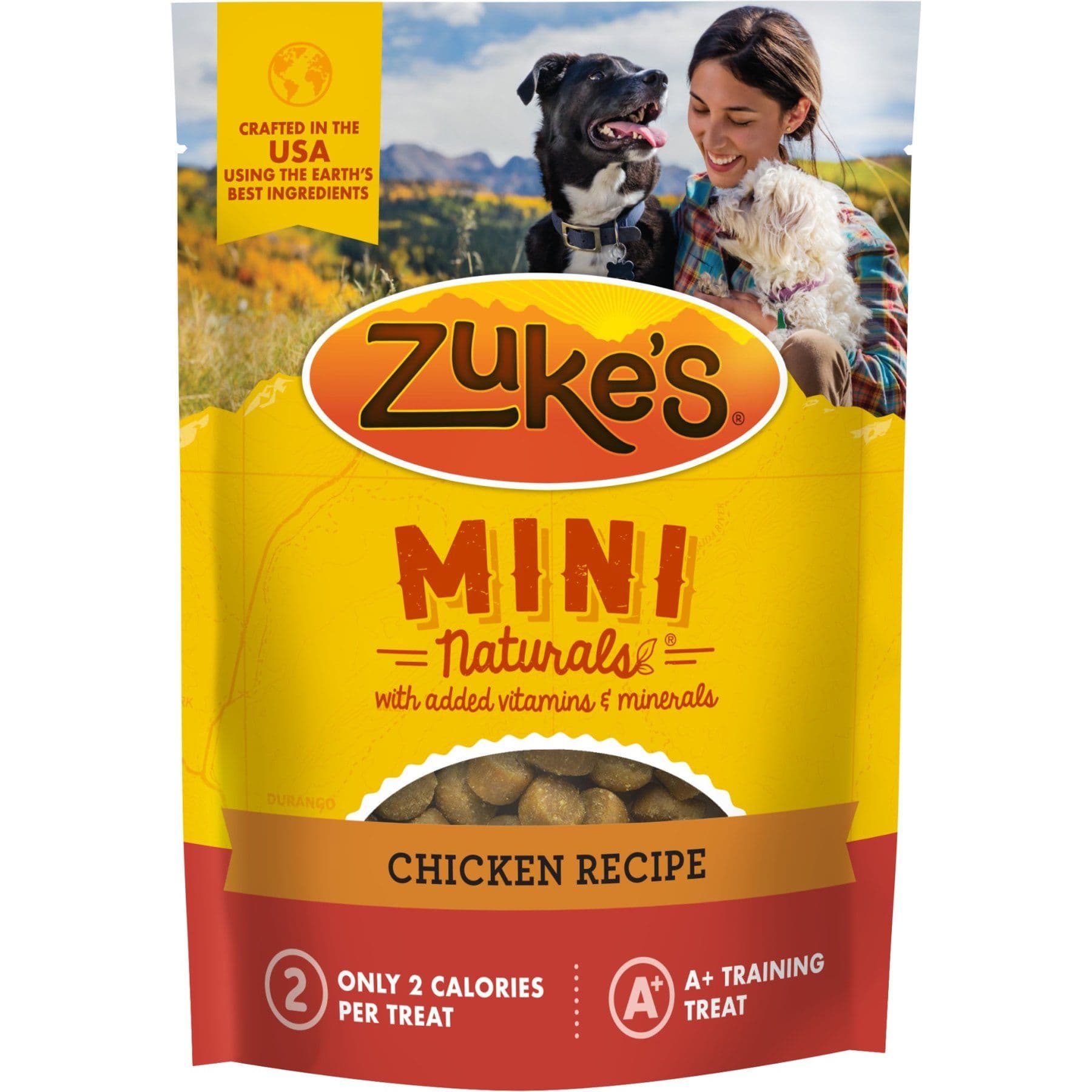
Small, soft chicken-recipe rewards for short adult-dog training sessions. Portion into tiny pieces and include treats in the daily calorie budget.
Petful may earn a commission when you click through to Chewy, at no extra cost to you.
- Fat content. Most cheeses are 25 to 35 percent fat. A few cubes a day can push small dogs into a calorie surplus and trigger pancreatitis in dogs who are predisposed.
- Lactose. Adult dogs produce very little lactase, the enzyme that digests milk sugar. The bigger the dairy serving, the more likely you see soft stool, gas, or vomiting.
- Sodium. Many processed cheeses (string cheese, slices, queso) carry 150 to 300 mg of sodium per serving. That adds up fast for a 20-pound dog.
The 10 percent rule applies here. Treats of any kind, cheese included, should make up no more than 10 percent of your dog's daily calories. The other 90 percent should come from a complete and balanced food.
Which cheeses are safe for dogs?
Not all cheese is created equal. Some varieties are excellent low-fat training treats; others belong on the no-list. Here is the breakdown.

Safer choices (in small amounts)
- Mozzarella. Lower in fat and sodium than most cheeses. Fresh mozzarella is the cleanest option.
- Cottage cheese. Low in lactose and high in calcium and protein. Plain, low-sodium cottage cheese is a vet-favorite for dogs recovering from upset stomachs. (We have a full guide on feeding cottage cheese to dogs with portion sizes.)
- Cheddar (mild). Moderate fat, palatable, and easy to dice into pea-sized training cubes. Skip extra-sharp varieties.
- Swiss. Low lactose because the bacteria break down most of it during aging.
- Plain cream cheese. Tiny smear-on-a-Kong amounts only, and only the unflavored kind.
- Goat cheese (small amounts). Lower lactose than cow's milk cheese.
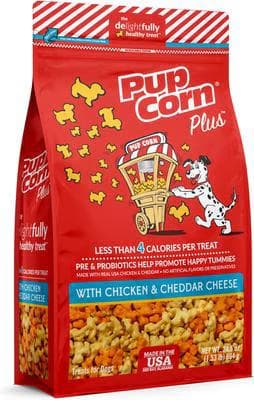
Crunchy, low-calorie cheese-and-chicken popcorn-shaped treats with pre and probiotics for digestive support. Less than 4 calories per piece. Made in the USA with real chicken and no artificial flavors.
Petful may earn a commission when you click through to Chewy, at no extra cost to you.
Cheeses to avoid
- Blue cheese, Roquefort, Stilton, Gorgonzola. These contain roquefortine C, a mold byproduct that can cause vomiting, tremors, and seizures in dogs.
- Garlic, onion, or chive-flavored cheeses. Members of the Allium family are toxic to dogs and damage red blood cells. Read more in our guide on why onions are dangerous to dogs.
- Herbed or peppered cheeses. Many herbs are fine, but garlic powder and onion powder are common hidden ingredients.
- High-sodium cheeses (feta, halloumi, processed slices). The salt load can dehydrate small dogs.
- Brie, Camembert, and other high-fat soft cheeses. Easy pancreatitis triggers.
- Cheese on pizza or in casseroles. Garlic, onion, fatty meats, and seasonings make these dishes a no-go even when the cheese itself is fine.
- Mac and cheese. Heavy cream, butter, and salt make this a stomach-ache in a bowl. Skip it.
The pros and cons of cheese for dogs
- High-value training reward (small amount, big motivation)
- Effective pill-hider that survives a suspicious dog
- Good source of protein, calcium, and B vitamins in small portions
- Soft texture works for puppies and seniors with dental issues
- Cottage cheese is gentle on upset stomachs
- High in fat (25 to 35 percent for most varieties)
- Can trigger lactose intolerance symptoms (gas, diarrhea)
- Pancreatitis risk in predisposed breeds
- Salt content too high in many processed cheeses
- Easy to over-feed because dogs love it
How much cheese can dogs eat?
A reasonable, vet-aligned rule: one to two pea-sized cubes per 20 pounds of body weight, per day, as an occasional treat. Cheese is calorie-dense, so a single cube of cheddar is roughly 70 calories, which is a meaningful chunk of a small dog's daily budget.
Use this chart as a starting point.
| Dog weight | Max daily cheese (low-fat varieties) | Notes |
|---|---|---|
| Under 10 lbs | One pea-sized cube (~3 g) | Save it for high-value training only |
| 10 to 20 lbs | One to two pea-sized cubes (~6 g) | Mozzarella or cottage cheese preferred |
| 20 to 50 lbs | Two to three small cubes (~10 g) | Cheddar fine; skip blue/herbed |
| 50 to 90 lbs | Three to four small cubes (~15 g) | Watch fat percentage |
| Over 90 lbs | Up to one ounce (~28 g) | Still treat-only, never daily staple |
The "everyday cheese" question comes up a lot. Can dogs eat cheese every day? In tiny amounts, most healthy dogs can. But daily fat-load adds up. If your dog gets cheese three days a week (each session at the dose above), you are well within a safe rhythm. Daily cheese, especially cheddar or string cheese, edges into pancreatitis-risk territory for small breeds and dogs over age seven.
Benefits of cheese for dogs
Cheese is not health food, but it does carry real nutrients. In tiny portions, it provides:
- Protein for muscle maintenance.
- Calcium and phosphorus for bone health.
- B-complex vitamins for energy metabolism.
- Vitamin A for eye and skin health.
- A pill-hider that actually works. A small cube of cheese wrapped around a tablet is one of the few medication delivery tricks that survives a suspicious dog.
For training, cheese hits a sweet spot most kibble cannot match. It is highly aromatic, soft enough to chew quickly, and easy to portion. That is why professional trainers reach for it during high-distraction recall practice or vet-visit desensitization.
Risks and warning signs

Most cheese problems are mild and self-limiting. A handful of dogs run into bigger issues. Watch for:
- Vomiting or diarrhea within 6 to 12 hours of eating cheese (lactose intolerance).
- Excess gas, bloating, or stomach noises (mild dairy reaction).
- Restlessness, hunched posture, or refusing food within 24 to 72 hours of a fatty cheese binge (early pancreatitis).
- Tremors, weakness, or pale gums after eating blue cheese (roquefortine reaction, an emergency).
- Pawing at the face, drooling, or hives (cheese allergy, rare but real).
Call your vet or the ASPCA Animal Poison Control Center at (888) 426-4435 if your dog ate a large amount of any cheese, especially blue cheese, herbed cheese with garlic or onion, or cheese in a pizza or casserole.
When dogs should not have cheese at all
Some dogs need to skip cheese entirely.
- Dogs with pancreatitis history. The fat load is dangerous even in small servings.
- Overweight or obese dogs. Cheese calories crowd out balanced nutrition.
- Dogs with kidney disease. Sodium adds strain.
- Dogs with confirmed dairy allergies. Rare, but they exist.
- Dogs on a sodium-restricted diet (heart disease, certain medications).
- Puppies under three months. Their digestive tracts are still maturing; stick to puppy-formulated treats.
A balanced, complete dog food handles 100 percent of nutritional needs. Cheese is fun, not foundational. For more on building the right diet around treats, see our deep dive on how nutrition affects your dog's immune system.
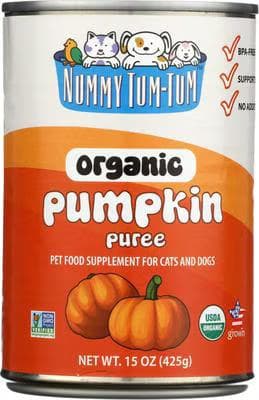
Pure USDA-organic pumpkin puree, no fillers or additives. Adds gentle soluble fiber to firm up loose stool and settle a mildly upset stomach. A simple vet-favorite topper.
Petful may earn a commission when you click through to Chewy, at no extra cost to you.
Safer ways to feed cheese
If you want to incorporate cheese without risking the downsides:
- Use it as a Kong-stuffer. A pea-sized smear of plain cream cheese frozen inside a Kong gives 15 minutes of mental enrichment for a fraction of a calorie load.
- Cube it small. Pea-sized or smaller for training. Three cubes feel like three rewards but barely register on the calorie counter.
- Mix it into a balanced topper. A teaspoon of low-fat cottage cheese mixed into kibble can boost palatability for picky eaters.
- Save it for high-value moments. Recall practice. Vet visits. First grooming session. Cheese is wasted on tasks your dog already does for free.
- Skip it for dogs already getting fat. A walk works better than a cube.
Cheese myths worth busting
A few cheese-and-dog beliefs persist that are worth correcting. We cover several in our 10 common dog nutrition myths debunked by science, but here are the cheese-specific ones:
- Myth: All dairy is bad for dogs. Most adult dogs digest small amounts of low-lactose cheese fine. Yogurt and cottage cheese are well tolerated by many.
- Myth: Cheese causes worms. No. Worms come from parasites, not dairy.
- Myth: A cheese a day keeps the vet away. Daily cheese contributes nothing your dog's complete diet does not already cover, and it adds a meaningful fat load.
- Myth: String cheese is safe because it's processed for kids. It's also high in sodium. Treat it like any other cheese: pea-sized, occasional.
What to do if your dog ate too much cheese
Most cheese overindulgences pass on their own. Signs that you can manage at home:

Petful may earn a commission when you click through to Chewy, at no extra cost to you.
- One episode of vomiting or one loose stool, with the dog otherwise acting normal.
- Mild gas or restlessness for a few hours.
- Withholding food for one meal, then resuming smaller portions of bland food (boiled chicken and rice).
Signs that warrant a same-day vet visit:
- Multiple episodes of vomiting or diarrhea over 12 hours.
- Refusing food for more than 24 hours.
- Lethargy, stomach pain (hunched back, whining), or pale gums.
- Any blue cheese ingestion or any "cheesy" food that included garlic or onion. The garlic-onion combo is more urgent than the cheese itself; if you suspect either, see our onion toxicity guide for the timeline.
Your vet may recommend bloodwork to check for pancreatic enzyme elevation, IV fluids if vomiting is severe, or activity restriction for 48 hours.
- 1Most cheese is safe in tiny amounts; mozzarella, cottage cheese, and mild cheddar are the best choices.
- 2Avoid blue cheese, herbed/garlic/onion cheeses, and high-sodium processed slices.
- 3Cap cheese at one to two pea-sized cubes per 20 pounds of body weight per day.
- 4Skip cheese entirely for dogs with pancreatitis, kidney disease, obesity, or dairy intolerance.
- 5Use cheese for high-value training, not as a daily staple.
Can dogs eat cheese: quick reference for popular varieties
Pet parents ask about specific cheese types constantly. Here is the can dogs eat cheese rundown by variety. Use this as a quick reference, but follow the dose chart above for actual amounts.
- Can dogs eat cheddar cheese? Yes, mild cheddar is one of the safer cheeses for dogs in pea-sized amounts. Skip extra-sharp cheddar (higher sodium) and the daily-cheddar habit.
- Can dogs eat mozzarella cheese? Yes. Fresh, low-moisture mozzarella is one of the lowest-fat picks. A pea-sized cube is a vet-favorite training reward.
- Can dogs eat white cheese? Most plain white cheeses (mozzarella, fresh ricotta, queso fresco) are fine in small amounts. Skip white cheeses with garlic, onion, or hot peppers.
- Can dogs eat goat cheese? Yes, in tiny amounts. Goat cheese is lower in lactose than cow's-milk cheese, which makes it gentler on lactose-intolerant dogs.
- Can dogs eat cream cheese? A tiny smear of plain cream cheese is fine. Skip flavored varieties (chive, garlic-herb, jalapeno) which often hide Allium ingredients.
- Can puppies have string cheese? After three months old, in pea-sized amounts only. String cheese is high-sodium, so it should not be a daily treat for any age.
- Can dogs eat extra sharp cheddar cheese? In tiny amounts. Sharp varieties have higher sodium and a richer fat profile, so cap at half the dose chart amount above.
- Can dogs eat cheese its (Cheez-Its)? No. The crackers are high-sodium, often contain onion or garlic powder, and have no nutritional benefit. Skip them.
The pattern: simple, low-fat, low-sodium cheeses in pea-sized cubes are fine for most dogs. Anything fancier or saltier moves your dog toward the risk side of the equation.
Are dogs allergic to cheese?
True dairy allergies are rare in dogs. Most cheese reactions are lactose intolerance, not allergy. Lactose intolerance shows up as digestive upset (loose stool, gas, bloating) within 6 to 12 hours. A real cheese allergy is an immune reaction with skin signs (itching, hives, paw licking, ear infections) and shows up over days, not hours.
If your dog reliably gets digestive upset from cheese, they are probably lactose intolerant. Switching to lower-lactose options like cottage cheese, mozzarella, or aged cheddar usually solves it. If you see skin reactions, that is allergy territory and a vet visit is warranted to rule out a broader food allergy.
Why is cheese bad for some dogs (and why will cheese hurt dogs in some cases)?
Most healthy adult dogs handle a small amount of cheese without issue. Cheese becomes a problem in five specific situations:
- Pancreatitis-prone dogs. Even one cube of fatty cheese can trigger an episode. Miniature Schnauzers, Yorkshire Terriers, and Cocker Spaniels are at higher genetic risk.
- Overweight dogs. Cheese calories displace the balanced calories your dog actually needs.
- Dogs with kidney disease. The sodium in cheese makes the kidneys work harder.
- Dogs with confirmed dairy allergies. Rare but real, and can require an elimination diet to confirm.
- Dogs eating cheese with hidden Allium. Garlic, onion, or chive seasonings make cheese genuinely dangerous, not just high-fat.
If your dog falls into any of those buckets, ask your vet whether cheese should be off the menu entirely. For everyone else, the can dogs eat cheese answer is a confident yes in moderation.
The bottom line
Yes, dogs can eat cheese. Stick to mozzarella, cottage cheese, plain cheddar, or Swiss. Keep it pea-sized and occasional. Skip blue cheese and any herbed or flavored variety with garlic or onion. Watch dogs with pancreatitis history, kidney issues, weight problems, or confirmed dairy intolerance very carefully; many should not have cheese at all.
For most healthy dogs, cheese is a fun, useful training tool that is also one of the most reliable pill-hiders in your kitchen. Used in moderation, it is a small joy. Used as a daily staple, it stops earning its place.
When in doubt, default to your vet's read of your dog's body condition score and history. They know your dog. Cheese should fit in around their advice, not override it.
Mozzarella, cottage cheese, mild cheddar, and Swiss are the safer choices. Plain cream cheese in tiny amounts is also fine. Avoid blue cheese, herbed or garlic/onion-flavored varieties, brie, and high-sodium processed cheeses.
In tiny amounts, most healthy dogs can have cheese daily. But daily fat load adds up, especially for small breeds and dogs over age seven. Cheese three or four days per week at the dose recommended above is a safer rhythm. Skip daily cheese for dogs with pancreatitis history.
Three reasons: high fat (which can trigger pancreatitis), lactose (which causes GI upset in dogs with lactose intolerance), and sodium (which strains kidneys, especially in dogs with kidney disease or on heart medication).
Wait until puppies are at least three months old before introducing any human food, including cheese. Then stick to a small amount of low-fat, low-sodium cheese like mozzarella or cottage cheese, used as a high-value training reward only.
Yes, mild cheddar is one of the safer cheeses for dogs in small amounts. Skip extra-sharp cheddar (higher sodium) and any cheddar that is herbed, garlic-flavored, or part of a casserole.
Yes. Mozzarella is one of the lowest-fat options and a vet-favorite training cheese. Fresh mozzarella is even lower in sodium than the shredded supermarket variety. Pea-sized cubes only.
The cheese itself is not the issue. The garlic, onion, fatty meats, and seasonings on a typical pizza are. Watch for vomiting, lethargy, or pale gums for 24 to 72 hours. Call your vet if anything looks off, especially for small dogs.
BVMS, MRCVS
Dr. Pippa Elliott, BVMS, MRCVS, is a veterinarian with nearly 30 years of experience in companion animal practice. Dr. Elliott earned her Bachelor of Veterinary Medicine and Surgery from the University of Glasgow. She was also designated a Member of the Royal College of Veterinary Surgeons. Married with 2 grown-up kids, Dr. Elliott has a naughty Puggle named Poggle, 3 cats and a bearded dragon.
Sign up for expert-backed reviews and safety alerts all in one place.