Can Dogs Eat Applesauce? A Useful Guide
Can dogs eat applesauce? Yes, plain unsweetened apple sauce in moderation. See safe portions by weight, which brands (Mott's, sugar-free, cinnamon) to avoid, and easy homemade recipes.


Petful is reader supported. As an affiliate of platforms like Amazon and Chewy, we may earn a commission when you buy through links on this page. There is no extra cost to you.
- 1Yes, dogs can eat plain, unsweetened applesauce (or apple sauce) in moderation. It supplies vitamin A, vitamin C, fiber, and antioxidants, and is gentle enough to soothe a mild upset stomach.
- 2Portion sizes range from less than 1 teaspoon for extra-small dogs to about 1 tablespoon for giant breeds, offered as an occasional treat (not daily).
- 3Avoid any applesauce with xylitol, added sugars, cinnamon, nutmeg, or other spices. Homemade is safest, but no-sugar-added store brands like plain Mott's Natural can work in a pinch.
Yes, dogs can eat applesauce in small amounts as long as it is plain and unsweetened. A spoonful provides fiber, vitamin C, vitamin A, and a hydration boost, and the soluble pectin can gently help with mild loose stools or constipation. Avoid any sugar-free, low-sugar, or diabetic-friendly applesauce, which often contains xylitol, a sweetener that is highly toxic to dogs. Applesauce shows up in school lunches, hospital trays, and a lot of pet-parent search bars. So can dogs eat applesauce safely? This guide covers safe portions by weight, the difference between applesauce and apple sauce, which brands and varieties (Mott's, sugar-free, cinnamon, canned) are okay or off-limits, and whether applesauce can actually help with a mild upset stomach.

Sign up for expert-backed reviews and safety alerts all in one place.
Is Applesauce Safe for Dogs?
Plain applesauce is safe for dogs. Apples themselves are non-toxic to dogs (the American Kennel Club confirms apples and unsweetened applesauce are fine in moderation), and cooked apple flesh is even gentler on a dog's digestive system than raw apple. The danger is what gets added on the way to the jar:
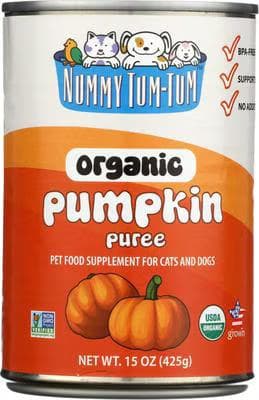
Pure USDA-organic pumpkin puree, no fillers or additives. Adds gentle soluble fiber to firm up loose stool and settle a mildly upset stomach. A simple vet-favorite topper.
Petful may earn a commission when you click through to Chewy, at no extra cost to you.
- Xylitol: This is the deal-breaker. Xylitol (sometimes labeled birch sugar) is found in many sugar-free, low-sugar, or diabetic-friendly applesauces and it is highly toxic to dogs. Even small amounts can cause hypoglycemia, seizures, liver failure, or death within hours.
- Added sugar: Sweetened applesauce (most regular grocery brands) packs in extra sugar that contributes to weight gain, dental issues, and pancreatitis risk over time.
- Cinnamon and spices: Small amounts of cinnamon are not toxic, but in larger doses or combined with other spices like nutmeg (which contains myristicin and is dangerous for dogs), they can cause irritation, upset stomach, or worse. Skip cinnamon-flavored applesauce as a default.
- Apple seeds and core: Apple seeds contain trace cyanide and the core can be a choking hazard. Quality applesauce strains these out, but if you make it at home, always remove the core and seeds first.
- Quantity: Even safe applesauce, in too-large amounts, can cause loose stool or stomach upset. The 10 percent rule applies: treats and extras shouldn't exceed 10 percent of your dog's daily calories.
Is Applesauce Good for Dogs? Nutritional Benefits
Yes, applesauce is good for dogs in small amounts. The pectin (a soluble fiber) in cooked apple supports digestion and can help firm up loose stools, while vitamin C and vitamin A boost immune function, vision, and coat condition. The high water content also makes plain unsweetened applesauce a useful soft food for dogs recovering from illness or surgery, and a teaspoon mixed into kibble is one of the easiest ways to disguise pills.
Beyond being a tasty snack, plain applesauce delivers a small but meaningful nutrient hit. Used as an occasional treat, it can support digestion, immunity, and overall vitality. The standout benefits:
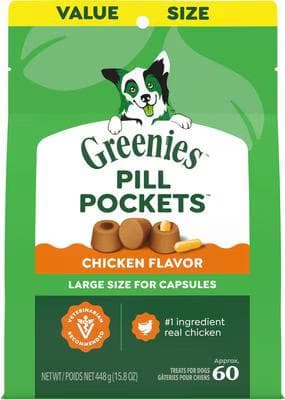
Hide capsules in a soft, chicken-flavored treat your dog actually wants. Vet-recommended, with real chicken as the #1 ingredient.
Petful may earn a commission when you click through to Chewy, at no extra cost to you.
- Soluble fiber: Cooked apples are a source of pectin, a soluble fiber that supports healthy digestion and can help firm up loose stools.
- Vitamin C: Supports immune function and acts as an antioxidant. Dogs make their own vitamin C, but extra dietary sources still help.
- Vitamin A: Important for vision, skin health, and coat condition.
- Antioxidants: Apples contain quercetin and other polyphenols that help fight oxidative stress at the cellular level.
- Hydration boost: Applesauce is mostly water, which makes it useful for dogs who don't drink enough or need a soft, gentle food after illness or surgery.
- Low calorie: Plain unsweetened applesauce runs about 50 to 60 calories per half cup, making it a useful option for dogs on a weight-management plan.
How Much Applesauce Can Dogs Eat? Portion Sizes by Weight
When asking how much can dogs eat applesauce, the answer scales with body weight. Treats (including applesauce) should make up no more than 10 percent of your dog's daily calories. Here's a practical starting point for plain, unsweetened applesauce, offered as an occasional treat (no more than 2 to 3 times per week):
- Extra small dogs (under 10 lbs): Less than 1 teaspoon (Chihuahuas, Yorkies, Pomeranians).
- Small dogs (10 to 25 lbs): About 1 teaspoon (Beagles, Cocker Spaniels, French Bulldogs).
- Medium dogs (25 to 60 lbs): About 1 to 2 teaspoons (Border Collies, Bulldogs, Australian Shepherds).
- Large dogs (60 to 100 lbs): About 2 to 3 teaspoons (Labradors, German Shepherds, Golden Retrievers).
- Giant dogs (100+ lbs): Up to 1 tablespoon (Great Danes, Saint Bernards, Newfoundlands).
Always start with half the suggested amount the first time and watch for any digestive upset over the next 24 hours before working up to the full portion.

Apple Sauce vs Applesauce: Are They the Same Thing?
If you've searched can dogs eat apple sauce (two words) or can dogs have apple sauce, you're asking the same question as everyone searching for applesauce (one word). They're identical: cooked, mashed apples, sometimes with water, lemon juice, ascorbic acid, or sugar added. The two-word spelling is more common in British English, while applesauce as one word is the standard in the US. The safety guidance, portion sizes, and brand recommendations in this guide apply to both.

Multiple ridges and valleys slow eating, reduce gas and bloating, and turn mealtime into a fun puzzle. Non-skid base, dishwasher safe, 4-cup capacity.
Petful may earn a commission when you click through to Chewy, at no extra cost to you.
Can Dogs Eat Cinnamon Applesauce, Sugar-Free, Mott's, or Canned?
The single most important rule: read the label. The right brand or variety is plain and unsweetened. The wrong one can range from upsetting to dangerous.
Cinnamon Applesauce
A trace of cinnamon (think a light dusting in homemade) is not toxic, but commercial cinnamon applesauce often contains added sugar, more cinnamon than a dog's stomach handles well, and sometimes nutmeg (which contains myristicin and is unsafe for dogs). Skip cinnamon applesauce as a daily option. If you really want a hint of cinnamon flavor, make your own and use a tiny pinch of pure cinnamon (no nutmeg, no sugar) in your dog's serving.
Sugar-Free or Low-Sugar Applesauce
This is the most dangerous category. Sugar-free, low-sugar, no-sugar-added (with sweeteners), and diabetic-friendly applesauces frequently use xylitol or other artificial sweeteners. Xylitol is highly toxic to dogs in even tiny amounts. Always check the ingredients list for xylitol, birch sugar, sorbitol, or other sugar substitutes before sharing. When in doubt, do not feed it.
Mott's and Other Major Brands
Mott's Original Applesauce contains added sugar (high-fructose corn syrup), so it's not the best choice for regular feeding. However, Mott's Natural Applesauce (no sugar added, just apples and ascorbic acid) is dog-safe in small amounts. Other commonly stocked unsweetened brands like GoGo squeeZ Original Apple, Trader Joe's Organic Unsweetened Applesauce, and Whole Foods 365 No Sugar Added Applesauce are also safe in small portions, as long as no flavored versions sneak through. Always read the label every time, since formulas can change.
Canned Applesauce
Canned applesauce is fine for dogs as long as it's plain and unsweetened. The container (can, jar, or pouch) doesn't matter. The ingredient list does. Canned versions sometimes have a slightly higher sodium count, so single-serve squeeze pouches and glass jars labeled unsweetened are usually the cleanest options.
Homemade Applesauce
Homemade is the gold standard. You control the apples (organic, washed, peeled, cored, seeded), you skip the sugar and spices entirely, and you can make a small batch and freeze portions in an ice cube tray for quick treats. The recipe section below has two simple options to start with.
Can Applesauce Help an Upset Stomach or Constipation?
Plain unsweetened applesauce is sometimes recommended as a gentle, easy-to-digest food during a mild bout of digestive upset. The pectin (a soluble fiber) in cooked apple can help firm up loose stools, while the high water content keeps your dog hydrated. A teaspoon or two mixed into bland food (like plain boiled chicken and rice) can be soothing. On the constipation side, the fiber and water in applesauce can also help things move along.
That said, applesauce is not a substitute for veterinary care. If your dog has been vomiting for more than 24 hours, has bloody stool, refuses water, seems lethargic, or has a hard, painful belly, call your vet right away. The same goes for chronic constipation: if your dog hasn't passed stool in more than 48 hours, get them seen.
Can Dogs Eat Applesauce Every Day?
No, applesauce should not be a daily food. Even the plainest unsweetened applesauce contains natural sugar from the apples, and daily feeding adds up calorically. Most veterinary nutritionists recommend offering applesauce as an occasional treat (2 to 3 times a week at most), and pulling back to once a week or less for diabetic, overweight, or pancreatitis-prone dogs. The exception: a teaspoon stirred into food once a day for a short stretch can be a useful tool to disguise medication or to help with a passing GI issue, on your vet's recommendation.
Apple and Applesauce Allergies in Dogs
True apple allergies in dogs are uncommon, but any new food can trigger a reaction. Watch for these signs after the first few servings:
- Skin irritation: Itching, redness, hives, hot spots, or excessive licking and scratching.
- Digestive issues: Vomiting, diarrhea, gas, or sudden changes in appetite. Mild loose stool the first time can be diet-introduction related rather than allergy.
- Ear problems: Recurring ear infections, head shaking, or scratching can sometimes signal a food allergy.
- Respiratory symptoms: Less common but possible: sneezing, coughing, or labored breathing.
- Anaphylaxis or xylitol poisoning: Facial swelling, severe difficulty breathing, weakness, or collapse is a medical emergency. If you suspect xylitol exposure (any sugar-free product), get to a vet immediately, even if your dog seems fine. Symptoms can appear within 30 minutes.

Get a free quote in 90 seconds. Coverage for vet emergencies like obstruction surgery and allergic reactions.
- AI-powered claims paid in minutes
- Cancel anytime, no fees
- Covers accidents and illnesses
Petful may earn a commission when you click through to Lemonade, at no extra cost to you.
Stop feeding applesauce at the first sign of any reaction and contact your vet for guidance. Pet Poison Helpline (855-764-7661) and the ASPCA Animal Poison Control Center (888-426-4435) are both 24/7 if xylitol is a possibility.
Frequently Asked Questions
No. Plain unsweetened applesauce is safe as an occasional treat (2 to 3 times a week at most), but daily feeding adds natural sugars and calories that can lead to weight gain, dental issues, or pancreatitis flare-ups in sensitive dogs.
Mott's Natural Applesauce (no sugar added, just apples and ascorbic acid) is safe for dogs in small amounts. Mott's Original (with high-fructose corn syrup) is too sugary for regular feeding. Always check the label, since regular and natural look similar on the shelf.
A small amount of pure cinnamon is not toxic, but commercial cinnamon applesauce typically contains added sugar and sometimes nutmeg (which is unsafe for dogs). Skip the flavored varieties and stick to plain unsweetened applesauce.
Yes. Ascorbic acid is just vitamin C, used as a natural preservative to keep applesauce from browning. It's safe for dogs in the small amounts found in plain unsweetened applesauce.
Be very careful. Many sugar-free, low-sugar, or diabetic-friendly applesauces contain xylitol (sometimes labeled birch sugar), which is highly toxic to dogs. Read the ingredient list carefully. If it says xylitol, sorbitol, or birch sugar, do not feed it. Choose no-sugar-added (no sweeteners) varieties instead.
Applesauce isn't a true laxative, but the soluble fiber (pectin) and high water content can help with mild constipation by softening stool. A teaspoon or two mixed into food can help things move along. If your dog hasn't passed stool in 48 hours, see your vet rather than relying on applesauce alone.
Yes, in small amounts. Plain unsweetened applesauce is gentle on the stomach and can help firm up loose stools thanks to its pectin content. Mix a teaspoon or two into bland food (boiled chicken and rice). If symptoms last more than 24 hours, contact your vet.
Puppies can have a tiny lick or two of plain unsweetened applesauce once they're comfortably eating solid food, but their primary diet should be a complete puppy formula. Skip applesauce for very young puppies under 8 weeks and check with your vet before adding any treat to a young puppy's diet.
Yes, and it's the safest option. Homemade applesauce lets you skip the sugar, cinnamon, nutmeg, xylitol, and preservatives entirely. Just peel, core, and seed the apples (apple seeds contain trace cyanide), simmer with a little water, and mash or puree.
Easy Homemade Applesauce Recipes for Dogs
Two simple, dog-safe applesauce recipes you can make in 20 minutes with one pot.
Basic Unsweetened Dog-Safe Applesauce
Ingredients: 4 to 5 medium apples (any sweet variety like Gala, Fuji, or Honeycrisp), 1/2 cup water. No sugar, cinnamon, or other spices.
Instructions:
- Wash the apples thoroughly. Peel them, cut out the cores, and remove every seed (apple seeds contain trace cyanide and are not dog-safe).
- Chop the apples into small chunks for even cooking.
- Combine the apple chunks and water in a medium pot. Cover and simmer over low heat for 15 to 20 minutes, stirring occasionally, until the apples are soft.
- Mash with a potato masher for a chunky texture, or blend with an immersion blender for smooth applesauce. Cool completely before serving.
- Refrigerate in a sealed container for up to 5 days, or freeze portions in an ice cube tray for up to 3 months.
Frozen Applesauce Pupsicles
Ingredients: 1 cup plain unsweetened applesauce (homemade or store-bought), 1/2 cup plain unsweetened Greek yogurt (xylitol-free), silicone ice cube tray or small molds.
Instructions:
- Whisk the applesauce and yogurt together until smooth.
- Spoon into silicone molds and freeze for at least 4 hours.
- Pop one out as a hot-day treat. Stick to one small pupsicle a day for medium dogs (less for small breeds).
More Dog-Safe Human Foods to Explore
Curious about other foods you can share with your dog? Start with these guides: Can Dogs Eat Apples?, Can Dogs Eat Blueberries?, Can Dogs Eat Bananas?, Can Dogs Eat Strawberries?, and Can Dogs Eat Watermelon?.
Sign up for expert-backed reviews and safety alerts all in one place.